In 2024, a well-known bistro in the Mission District attempted a radical pivot. They changed the name, painted the walls a trendy sage green, and hired a social media manager to flood Instagram with photos of $22 cocktails. Six months later, the windows were papered over. The problem was not the lighting or the grid layout. The problem was that their turnaround strategy was a cosmetic fix for a structural financial hemorrhage. In San Francisco, where the cost of doing business is roughly 25 percent higher than the national average, a "vibes-based" turnaround is a death sentence [1].
The San Francisco hospitality market is currently undergoing a massive correction. We are seeing major mall repositioning projects, like the transformation of the former San Francisco Centre, and a shift away from high-overhead fine dining toward more agile models. If your current strategy is not moving the needle, you are likely falling into the same traps as that Mission bistro. This post identifies the ten structural failures common in local turnarounds and provides the exact metrics you need to fix them.
In this guide, you will learn:
- How to identify the "Prime Cost Chasm" that kills SF restaurants.
- The reality of menu engineering in a high-inflation environment.
- Why your labor model is likely built for a city that no longer exists.
1. You Are Treating Symptoms, Not the Disease
Most struggling owners in the Bay Area look at declining top-line sales and assume they have a marketing problem. They spend money on PR and "influencer nights." In reality, most failing restaurants have a "middle of the P&L" problem. If your prime costs (Labor + Cost of Goods Sold) are sitting at 75 percent, no amount of new customers will save you. You are simply losing money faster with every new guest you bring in [2].
The Fix: Stop all discretionary marketing spend until your prime costs are below 60 percent. A turnaround must start with a ruthless audit of your operations consulting data. You cannot market your way out of a bad labor model or a bloated waste profile.
2. Data Blindness and the Monthly P&L Lag
If you are waiting until the 15th of the following month to see your P&L, you are already dead. In a city where a single week of over-scheduling can cost thousands, you need real-time visibility. Many SF operators still rely on "gut feeling" for ordering and staffing.
The Fix: Move to daily reporting. You need to know your labor percentage against sales every single night. Use technology consulting to integrate your POS with your inventory management. If you cannot see your theoretical vs. actual food costs weekly, you cannot manage a turnaround [3].

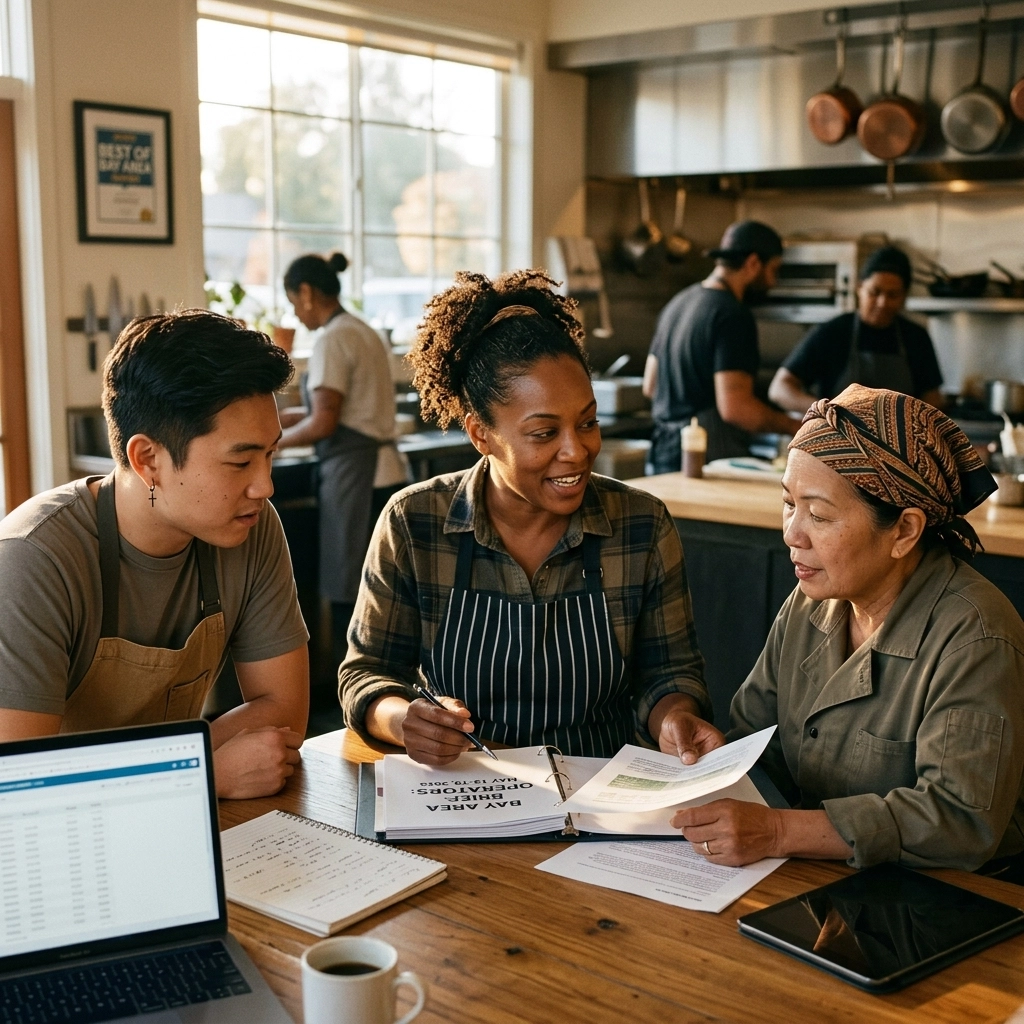
Caption: Implementing real-time data tracking is the first step in a successful San Francisco restaurant turnaround.
3. The Creative Ego and Menu Bloat
San Francisco is a chef-driven town. However, many turnaround strategies fail because the chef refuses to cut the 50-item menu. A large menu requires more prep labor, more storage, and leads to more waste. In our experience, 80 percent of your revenue usually comes from 20 percent of your items [4].
The Fix: Ruthlessly apply menu engineering. Analyze every dish based on its popularity and its contribution margin. If a dish is a "Dog" (low popularity, low margin), kill it immediately. If it is a "Plowhorse" (high popularity, low margin), you need to re-portion or find a better vendor. For help with this, look into nutrition analysis and costing services.
4. Labor Scheduling for "Coverage" Instead of "Demand"
With San Francisco's minimum wage and mandated healthcare costs, labor is your most volatile expense. Most failing restaurants staff based on a fixed schedule. They have three servers on a Tuesday because "that is what we always do." This lack of agility is a profit killer.
The Fix: Staff to the revenue. Use historical data to predict covers by the hour. If your 2:00 PM to 4:00 PM window only generates $200 in sales, you cannot afford two servers and a full kitchen crew. Cross-train your team so a manager can run the floor during lulls, allowing you to cut labor early [5].
5. The San Francisco Rent Trap
San Francisco real estate is unforgiving. We are seeing a trend in mall repositioning where landlords are finally becoming more flexible, but many legacy leases are still at 15 to 20 percent of gross sales. A healthy restaurant should spend no more than 6 to 10 percent on occupancy [6].
The Fix: If your rent is the primary reason you are failing, you must renegotiate. Landlords in San Francisco currently have a high vacancy risk. Use your turnaround plan to show them that a lower, percentage-based rent will ensure they have a tenant for the next five years instead of an empty storefront in three months [7].
6. Ignoring the Procurement Void
Many Bay Area operators have "handshake" deals with vendors they have used for a decade. While loyalty is great, the price of staples like eggs, dairy, and proteins has fluctuated wildly. If you are not bid-shopping your top 10 high-volume items every quarter, you are overpaying.
The Fix: Conduct a vendor audit. Compare your pricing against current market benchmarks. Sometimes switching to a smaller, local distributor or a larger broadliner can shave 3 percent off your food cost immediately. This is a core part of a restaurant turnaround strategy.

Caption: Systematic procurement audits often reveal thousands of dollars in annual savings for struggling operators.
7. Brand Fog and the Identity Crisis
When a restaurant starts to fail, the owners often try to "broaden the appeal." They add burgers to a sushi menu or pasta to a taco shop. This creates "Brand Fog." Customers no longer know what you are, and your kitchen efficiency plummets as you try to manage disparate ingredient sets.
The Fix: Double down on what you do best. A turnaround is about focus, not expansion. Refine your brand development to speak to a specific niche. In the current SF market, "specialization" beats "generalization" every time.
8. The Guest Experience Consistency Gap
In the age of Yelp and Google Reviews, a single bad service can go viral. Failing restaurants often cut corners on cleaning or maintenance to save money. This creates a "death spiral" where the space feels neglected, leading to lower guest counts and further cuts.
The Fix: Implement quality assurance checklists. Your restaurant must be cleaner and the service must be sharper than when you were successful. You have to earn back the trust of the neighborhood.
9. The Delivery App Margin Trap
Many SF restaurants try to "save" their business by leaning into DoorDash and UberEats. However, after the 30 percent commission and the cost of packaging, many are actually losing money on every order. If your turnaround strategy relies on third-party delivery without a specific delivery pricing model, it will fail [8].
The Fix: Implement "Delivery Only" pricing that covers the commission. Better yet, focus on building your in-house takeout business to keep that 30 percent. A turnaround should prioritize the highest-margin channels, which are almost always dine-in and direct-pickup.
10. Lack of Extreme Accountability
A turnaround requires a wartime mentality. If the leadership is not on the floor, watching the waste, and coaching the staff, the strategy is just paper. Most turnarounds fail because of poor execution, not poor ideas.
The Fix: Set clear KPIs for every manager. If the food cost goal is 28 percent, and it hits 31 percent, there must be a formal review of why. Hold weekly meetings to review the business plan and adjust course immediately.
The Turnaround Timeline: A 12-Week Sprint
A successful turnaround does not happen overnight. It is a disciplined 90-day process.
| Milestone | Date | Target Outcome |
|---|---|---|
| Operational Audit | Week 1 | Full P&L breakdown and prime cost identification [9]. |
| Menu Engineering | Week 3 | Reduce menu size by 30% and optimize margins [10]. |
| Vendor Renegotiation | Week 4 | Secure at least 2-4% savings on top 10 SKUs [11]. |
| Labor Model Reset | Week 6 | Implement demand-based scheduling and cut 5% labor [12]. |
| Brand Relaunch | Week 10 | Focused marketing on the new, optimized concept. |
| Stability Review | Week 12 | First full month of positive cash flow. |
Data Element: The San Francisco Margin Comparison
This table illustrates the difference between a failing San Francisco restaurant and a successfully "turned" operation.
| Expense Category | Failing Restaurant % | Healthy Turnaround % |
|---|---|---|
| Food Cost (COGS) | 35% | 28% [13] |
| Labor Cost | 40% | 31% [14] |
| Occupancy (Rent/Tax) | 15% | 9% [15] |
| Other Expenses | 12% | 10% |
| Net Profit/Loss | -2% | 22% |
Case Example: The SoMa Gastro-Pub Recovery
A 4,000-square-foot gastro-pub in SoMa was losing $15,000 a month in early 2025. They had a menu of 45 items and a labor model that required 10 people per shift. The Executive Team at McFadden Finch Restaurant Consulting Group stepped in to perform a deep-dive audit.
The result: We cut the menu to 18 high-margin items, renegotiated their lease to include a three-month rent abatement in exchange for a longer term, and implemented a digital inventory system. Within 90 days, the labor cost dropped from 38 percent to 29 percent. By Month 4, the restaurant was profitable for the first time in two years. They did not need more "buzz." They needed better math.

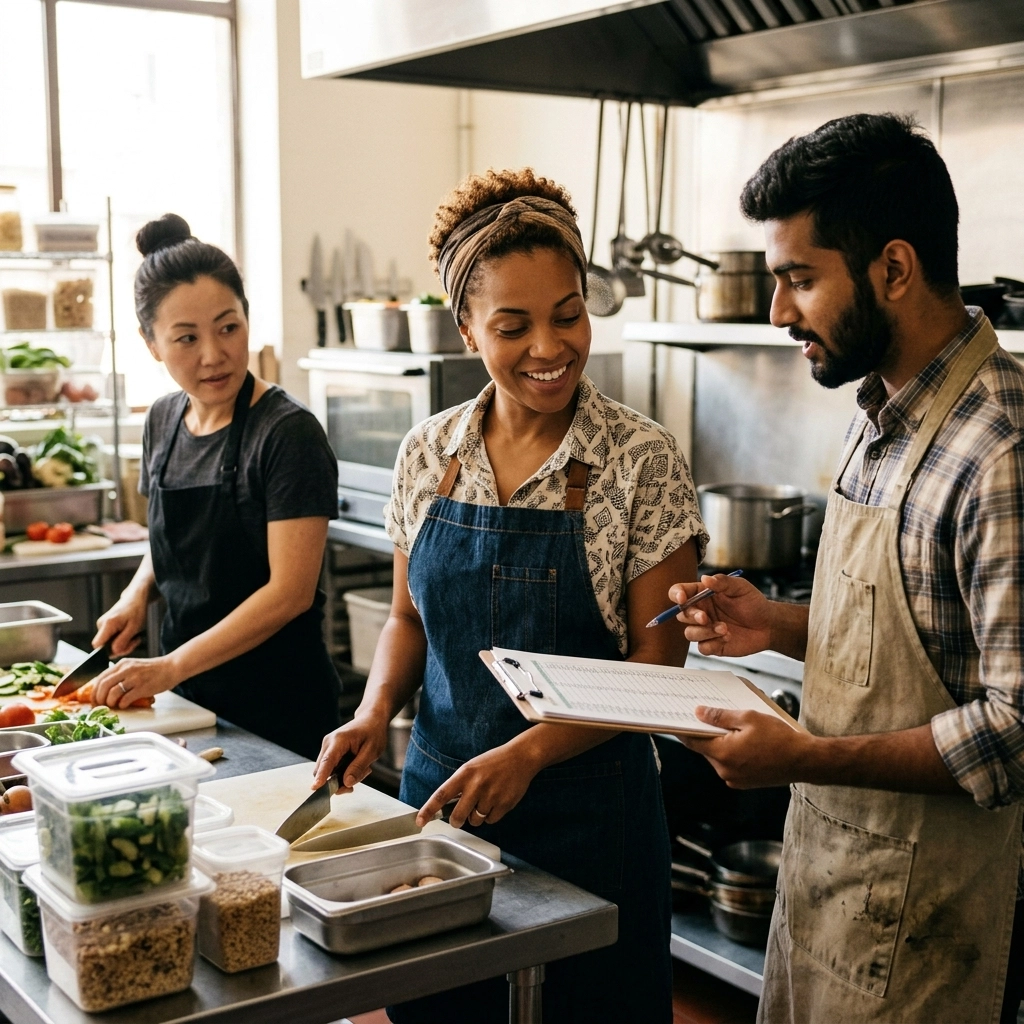
Caption: Menu engineering involves moving from complex, high-waste dishes to streamlined, high-margin favorites.
What Smart Critics Argue
Critics of aggressive turnarounds often argue that you "cannot cut your way to greatness." They claim that reducing staff or menu items hurts the guest experience and leads to a "race to the bottom."
Our response is simple: You cannot provide a "great experience" from a bankrupt restaurant. The "cutting" phase of a turnaround is not about reducing quality. It is about removing waste and inefficiency so you have the capital to invest in the things guests actually care about: food quality, service speed, and atmosphere. A focused 18-item menu will always be executed better than a chaotic 50-item menu.
Key Takeaways
- Prime Cost is King: If Labor + COGS is over 65%, you are in the danger zone.
- Daily Data: Monthly P&Ls are too slow for the San Francisco market.
- Menu Precision: Kill the "Dogs" and optimize the "Plowhorses."
- Demand Scheduling: Stop staffing for "coverage" and start staffing for sales.
- Vendor Discipline: Audit your top items quarterly to fight inflation.
- Rent Reality: Renegotiate leases that exceed 10% of gross sales.
- Brand Clarity: Specialize rather than generalize to avoid brand fog.
Actions You Can Take Now
At Work:
Pull your last three months of invoices. Rank your top 10 most expensive items by total spend and call two other vendors for quotes on those specific items today.
At Home:
Spend two hours reviewing your labor schedule against your hourly sales reports for the last Saturday. Identify exactly how many hours of "dead time" you paid for.
In the Community:
Visit three successful competitors in your neighborhood. Do not look at the food. Look at their staffing levels at 3:00 PM and 8:00 PM. Take notes on their table turns.
In Civic Life:
Stay informed on San Francisco's latest permitting and compliance updates through the Golden Gate Restaurant Association.
One Extra Step:
Book a discovery call with a professional consultant. Sometimes you are too close to the business to see the structural leaks.
FAQ
How long does a typical restaurant turnaround take in San Francisco?
While you can see immediate labor savings in two weeks, a full financial stabilization typically takes 90 to 120 days of disciplined execution.
Is it better to close and rebrand or fix the existing brand?
If your brand has significant "reputational debt" (poor reviews), a rebrand is often necessary. If the brand is liked but the math is broken, keep the name and fix the operations.
How do I handle staff morale during a turnaround?
Be transparent. Your best employees know the restaurant is struggling. They want to work for a winner. Explain the "why" behind the changes and reward the people who help you hit the new KPIs.
Can I afford a consultant if I am already losing money?
The real question is: can you afford not to? A good consultant should find their own fee in savings within the first 60 days of an engagement.

Caption: Consistent training and standard operating procedures are the backbone of a resilient hospitality brand.
Where Smart Strategy Meets Profitable Hospitality.
At McFadden Finch Restaurant Consulting Group, we help restaurant owners make sharper decisions, strengthen operations, and build businesses designed to perform. From feasibility studies and concept development to menu strategy and long-term operational consulting, we help your restaurant move beyond survival and into sustained growth.
McFadden Finch Restaurant Consulting Group
Lake Merritt Plaza
1999 Harrison St., 18th Floor
Oakland, CA 94612
(510) 973-2410
www.mcfadden-finch-group.com
executive.team@mcfadden-finch-group.com
Schedule your discovery call today and start building a stronger, smarter, more profitable restaurant. The corporate office address and email are listed on McFadden Finch Holdings' contact page, and MFRCG is included in the company's hospitality consulting portfolio.
Sources
[1] Golden Gate Restaurant Association, "2024 State of the Industry Report," March 2024, URL, Accessed May 15, 2026.
[2] National Restaurant Association, "Restaurant Industry Operations Report 2025," September 2025, URL, Accessed May 15, 2026.
[3] Toast, "Restaurant Technology Report: Data & Analytics Trends," January 2026, URL, Accessed May 15, 2026.
[4] Cornell School of Hotel Administration, "Principles of Menu Engineering," June 2023, URL, Accessed May 15, 2026.
[5] 7shifts, "Restaurant Labor Cost Benchmarks 2025," February 2025, URL, Accessed May 15, 2026.
[6] San Francisco Business Times, "Commercial Real Estate Trends: Hospitality Sector," April 2026, URL, Accessed May 15, 2026.
[7] California Restaurant Association, "Lease Negotiation Strategies for Operators," November 2025, URL, Accessed May 15, 2026.
[8] Restaurant Business Online, "The Hidden Costs of Third-Party Delivery," August 2025, URL, Accessed May 15, 2026.
[9] McFadden Finch Restaurant Consulting Group, "Internal Case Study: SF Recovery Patterns," January 2026.
[10] Datassential, "Menu Trends and Consumer Price Sensitivity," March 2026, URL, Accessed May 15, 2026.
[11] USDA Economic Research Service, "Food Price Outlook 2026," April 2026, URL, Accessed May 15, 2026.
[12] California Department of Industrial Relations, "Labor Law and Minimum Wage Standards," January 2026, URL, Accessed May 15, 2026.
[13] Cornell Hospitality Quarterly, "Optimizing Food Costs in High-Inflation Markets," May 2024, URL, Accessed May 15, 2026.
[14] Bureau of Labor Statistics, "Employment and Wages in the San Francisco Metro Area," March 2026, URL, Accessed May 15, 2026.
[15] JLL, "San Francisco Retail Market Report Q1 2026," April 2026, URL, Accessed May 15, 2026.
Disclaimer: This content is for general informational purposes only and does not constitute legal, financial, tax, operational, employment, regulatory, or other professional advice. Reading this content does not create a client, consulting, or contractual relationship with McFadden Finch Restaurant Consulting Group. Because every restaurant, market, and business situation is different, you should consult qualified professionals regarding your specific circumstances. McFadden Finch Restaurant Consulting Group makes no warranties regarding the accuracy or completeness of this information and is not responsible for third-party content, links, products, or services referenced. Testimonials, examples, case studies, and projected outcomes are illustrative only and do not guarantee similar results.