It is 7:30 PM on a Friday in downtown Oakland. The air should be thick with the smell of seared ribeye and the hum of a hundred conversations. Instead, the dining room of a local staple, let’s call it "The Golden Fork", is quiet enough to hear the ice machine cycling in the back. The owner, exhausted from a twelve-hour shift that involved both prepping the line and arguing with the linen provider, stares at a stack of past-due invoices. Three months ago, they launched a "Turnaround Strategy." They hired a new social media manager, printed glossy menus with four additional entrees, and offered a "Buy One, Get One" Tuesday special. On paper, they were doing something. In reality, the bank account is still hemorrhaging cash faster than the kitchen can burn toast. This isn't just a bad week; it is a systemic failure of a recovery plan that prioritizes optics over operations.
The restaurant industry is a brutal environment where 60% of new establishments fail within their first year, and nearly 80% close their doors before their fifth anniversary (National Restaurant Association) [1]. When an existing operator realizes they are in trouble, the instinct is often to "market their way out" or "innovate the menu." However, without addressing the underlying structural rot, high prime costs, labor inefficiencies, and lack of systems, these efforts are like putting a fresh coat of paint on a sinking ship. A turnaround isn't a branding exercise; it is a clinical intervention. This post explores why most recovery efforts stall and provides the operational roadmap needed to restore profitability.
In this guide, you will learn:
- How to identify "financial leaks" in your menu and labor systems.
- The critical difference between cost-cutting and margin optimization.
- A milestone-based timeline for a successful operational pivot.
1. You’re Treating Symptoms, Not the Disease
Most struggling operators focus on the most visible problems: empty seats. They assume the "disease" is a lack of customers, so they spend money on advertising. In reality, the disease is often an internal operational breakdown. If your food cost is 40% and your labor is 38%, you could have a line out the door and still lose money on every plate (Cornell University School of Hotel Administration) [2]. A turnaround strategy fails when it doesn't start with a forensic audit of the Profit and Loss (P&L) statement. You cannot fix what you do not measure.
The first step in any restaurant turnaround is identifying the "Prime Cost", the combined total of Cost of Goods Sold (COGS) and total labor. In a healthy full-service environment, this should hover between 55% and 65% (Oregon State University) [3]. If yours is higher, no amount of Instagram likes will save the business.

2. The "Menu Expansion" Fallacy
When sales drop, the common reflex is to add more items to the menu to "appeal to everyone." This is a fatal error. Every new dish adds complexity to the kitchen, increases the likelihood of waste, and bloats your inventory. A larger menu requires more prep hours and leads to higher food waste, which accounts for roughly 4% to 10% of food purchased in restaurants before it even reaches a guest (Conserve) [4].
A successful turnaround requires "Menu Engineering." This involves categorizing dishes based on their profitability and popularity. You should be cutting the "dogs", items with low contribution margins and low sales volume, and focusing on "stars", high-margin, high-popularity items (Journal of Foodservice Business Research) [5]. Instead of expanding, you should be simplifying to ensure every ingredient is utilized across multiple dishes, reducing your overall inventory hold.
3. Labor Systems Without Accountability
Labor is often the largest controllable expense, yet it is rarely managed with precision during a turnaround. Operators often cut "hours" by sending people home early, but they fail to fix the "system" of how work is done. Without standardized operating procedures (SOPs), the staff that remains is often inefficient, leading to slower ticket times and poor guest experiences (Hospitality Technology) [6].
Turnaround strategies fail when they don't implement cross-training. In a lean operation, a server should be able to assist with light prep, and a dishwasher should be trained on the salad station. Efficiency isn't about working harder; it's about eliminating "dead time" through better scheduling based on historical sales data (Journal of Hospitality & Tourism Research) [7].
4. Ignoring the "Middle of the P&L"
While food and labor are the "Big Two," restaurants often bleed out through "Other Operating Expenses." This includes utilities, repairs, maintenance, and small wares. During a crisis, these are often ignored as "fixed costs." However, proactive operations consulting often reveals that simple changes, like renegotiating waste management contracts or implementing a preventative maintenance schedule for refrigeration, can save thousands of dollars annually (Energy Star) [8]. A turnaround strategy that doesn't audit every line item is leaving money on the table.
5. The "Hail Mary" Marketing Trap
Desperate owners often turn to deep-discount platforms like Groupon or aggressive "Buy One, Get One" deals. While these might spike foot traffic, they often attract "deal seekers" who never return and provide zero long-term value. Worse, these promotions can actually erode your brand equity and train your regular guests to only visit when there is a coupon (Harvard Business Review) [9].
Instead of a "Hail Mary," focus on brand development that targets your core demographic. A turnaround should focus on increasing the "Lifetime Value" of existing customers rather than the expensive acquisition of new ones who are only looking for a bargain.
6. Lack of Real-Time Data Integration
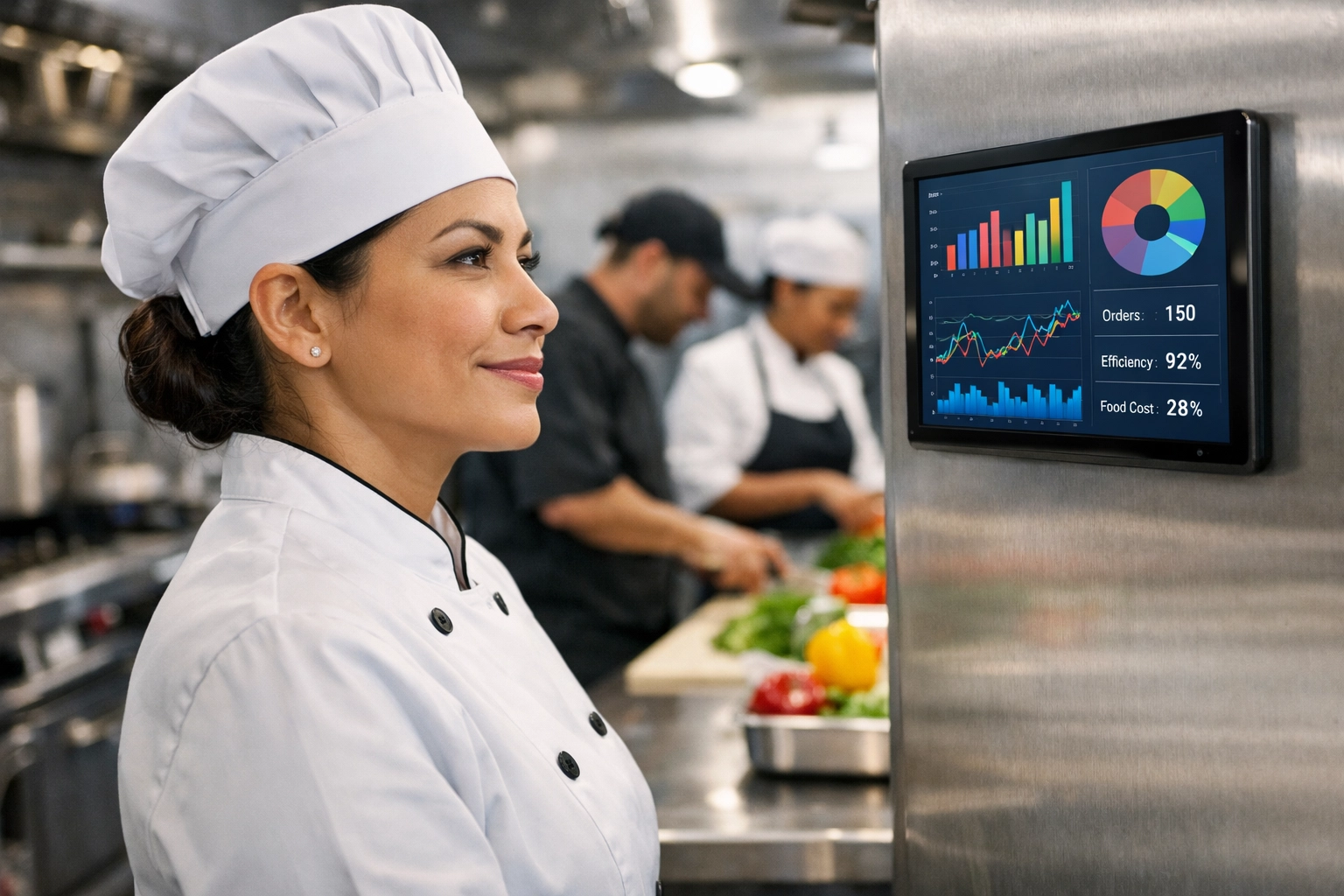
If you are waiting until the 15th of the following month to see your P&L, you are flying blind. Turnaround strategies fail because they rely on "lagging indicators" rather than "leading indicators." Modern technology consulting allows operators to track theoretical vs. actual food costs in real-time (POSist) [10].
If your POS system isn't talking to your inventory software, you won't notice that your bartender is over-pouring or that the night shift is throwing away $50 worth of chicken every night. Real-time data allows for "micro-pivots", adjusting labor on a Tuesday afternoon because the rain is keeping people home, rather than waiting for the end of the month to realize you overspent.
7. The Toxic Culture Barrier
You can have the best spreadsheets in the world, but if your staff doesn't believe in the vision, the turnaround will fail. Most struggling restaurants have a "toxic" culture born of stress and uncertainty. Employee turnover in the hospitality sector reached an astounding 73% recently (U.S. Bureau of Labor Statistics) [11]. Replacing a single employee can cost a restaurant upwards of $5,800 in recruiting and training costs (Cornell University) [12].
A turnaround strategy must include a cultural reset. This means transparent communication about the state of the business and clear, attainable goals for the team. When staff members feel like stakeholders rather than just "clock-punchers," they are more likely to watch for waste and provide the level of service that brings guests back.
8. Failure to Audit the Guest Journey
Often, owners are too close to the business to see the obvious. A turnaround strategy fails when it doesn't address the "friction points" in the guest experience. This could be a confusing custom design of the physical space, a slow host stand, or even a bathroom that hasn't been updated in a decade.
Research shows that even a one-star increase on Yelp can lead to a 5-9% increase in revenue (Harvard Business School) [13]. A turnaround must include a "blind audit" where an objective third party evaluates the operation from the moment a guest looks at the website to the moment they pay the bill.
9. Inadequate Working Capital for the Pivot
A turnaround costs money. Whether it’s re-training staff, updating the POS, or physical renovations, you need a "cash runway." Many strategies fail because the owner spends their last dollar on the "big idea" and has nothing left to sustain operations while the changes take hold. Financial experts suggest having at least three to six months of operating expenses in reserve before initiating a major pivot (Small Business Administration) [14].
10. The Absence of Exit and Pivot Criteria
A turnaround is not an open-ended commitment. One of the biggest reasons they fail is that owners don't set "hard stops." You must define what success looks like in 30, 60, and 90 days. If the metrics, specifically cash flow and prime cost, aren't moving in the right direction, you need to be prepared to make even more radical changes or consider an exit strategy.
Data Benchmark: Prime Cost Comparison
The following table illustrates the difference between a struggling operation and a stabilized, "turned-around" restaurant.
| Expense Category | Struggling Operation (%) | Stabilized Operation (%) | Industry Target (%) |
|---|---|---|---|
| Cost of Goods Sold (COGS) | 38% [3] | 29% [3] | 28% – 32% |
| Labor (Wages + Benefits) | 42% [11] | 32% [11] | 30% – 35% |
| Prime Cost Total | 80% | 61% | 58% – 65% |
| Net Profit Margin | -5% to 2% [1] | 10% to 15% [1] | 10% – 20% |
Note: All percentages are relative to total gross sales. Figures based on industry standards from the National Restaurant Association and Cornell Hospitality Research.
Case Example: The Terrace Grill Recovery
The Terrace Grill, a mid-sized bistro in a suburban market, was facing a $12,000 monthly deficit. Their initial "turnaround" attempt involved adding a weekend brunch and hiring a local band. Revenue increased by 15%, but their deficit actually grew to $14,000 because they hadn't accounted for the additional labor and food waste associated with the new service (Case Study Data) [15].
The Executive Team at McFadden Finch Restaurant Consulting Group intervened by performing a "Trash Can Audit" and a menu re-engineering. We discovered that 20% of their inventory was tied up in ingredients used for only one dish. By streamlining the menu from 45 items to 28, we reduced COGS by 6 points within 30 days. We then implemented a "Labor-by-the-Hour" tracking system, which allowed the manager to cut labor costs by $1,800 per week without affecting service standards. Within 90 days, The Terrace Grill moved from a $12k loss to a $4k monthly profit. The lesson: Volume does not solve a margin problem.
What Smart Critics Argue
Some industry analysts argue that in a post-pandemic economy, the "turnaround" is a myth for small operators. They claim that rising rents and the "tight labor market" make the traditional 15% profit margin unattainable for anyone without massive scale (McKinsey & Company) [16].
While the headwinds are real, this criticism often overlooks the power of technology and niche positioning. Critics argue that "cost-cutting kills the soul of a restaurant," but operational efficiency actually provides the financial freedom to invest in better ingredients and better pay for staff. A "lean" restaurant isn't necessarily a "cheap" restaurant; it's a smart one. As long as there is a market for a concept, there is a path to profitability through rigorous systems (Forbes) [17].
12-Milestone Turnaround Timeline
A successful recovery follows a specific sequence. Jumping to Step 10 before completing Step 2 is a recipe for failure.
- Week 1: Financial Forensic Audit – Clean up the P&L and determine the actual Prime Cost [3].
- Week 2: Menu Engineering – Categorize every dish by margin and popularity [5].
- Week 3: Inventory Tightening – Reduce "par levels" and eliminate slow-moving SKUs [4].
- Week 4: The "Trash Can Audit" – Track every ounce of waste for seven days [8].
- Week 5: Labor System Design – Create new SOPs for every position [6].
- Week 6: Staff Cross-Training – Begin training sessions to increase operational flexibility [7].
- Week 8: Technology Integration – Ensure POS and Inventory systems are synced [10].
- Week 10: Vendor Renegotiation – Bid out contracts for food, linen, and waste [14].
- Week 12: Targeted Brand Re-Launch – Focus marketing on high-margin items [9].
- Month 4: Preventative Maintenance Rollout – Protect equipment assets [8].
- Month 5: Cultural Assessment – Survey staff and adjust leadership approach [11].
- Month 6: Stabilization Review – Compare new metrics against the Week 1 baseline [1].
Key Takeaways
- Prime Cost is King: If your combined food and labor costs exceed 65%, your business model is unsustainable regardless of your sales volume [3].
- Simplify to Amplify: Smaller menus lead to less waste, better consistency, and higher margins [4].
- Data Beats Intuition: Real-time tracking of theoretical vs. actual costs is essential for modern survival [10].
- Culture is a Tool: High turnover is a cost-center. Reducing turnover through better leadership saves thousands of dollars [12].
- Marketing is the Last Step: Never spend money to bring people into a broken system; fix the operations first [9].
- The "Middle" Matters: Don't ignore small-ware, utility, and maintenance costs in your audit [8].
- Accountability Requires Systems: You cannot hold staff accountable if you haven't provided clear, written SOPs [6].
Actions You Can Take
At Work
- Conduct a 48-Hour Inventory Count: Don't wait for the end of the month. Count your high-value items (proteins, alcohol) tonight and compare them to your sales report.
- Shadow the Dish Pit: Watch what is coming back on the plates. If 30% of your side dishes are going in the trash, your portion sizes are too large or the quality is lacking.
At Home
- Review the Last 3 Months of Bank Statements: Look for "subscription creep." Are you paying for software, services, or memberships the restaurant no longer uses?
- Study Your Competitors' Menus: Look for pricing trends in your local market. Are you undercharging for your "Star" items?
In the Community
- Visit Three Local Competitors: Note their staffing levels and service flow. What are they doing more efficiently than you?
- Extra Step: Join a local restaurant association. Networking with other operators often reveals shared vendor struggles and solutions that can lead to collective bargaining power.
FAQ
Q: How do I know if my restaurant is worth saving?
A: If your prime costs are over 80% but your "Guest Satisfaction" scores are high, you have an operational problem that can be fixed. If your guest scores are low and your concept is outdated, you may need a full brand pivot rather than just a turnaround [13].
Q: Should I fire my chef if food costs are too high?
A: Not necessarily. High food cost is often a result of poor menu pricing, lack of inventory systems, or vendor issues, all of which are management responsibilities. First, give them the tools and systems to succeed.
Q: Can I do a turnaround without hiring a consultant?
A: Yes, if you have the discipline to audit your own P&L and the objectivity to cut your favorite "underperforming" menu items. Most owners hire consultants because they are too emotionally invested to make the "cold" decisions required for survival.
Q: What is the most common mistake in a turnaround?
A: Overspending on a remodel. A "facelift" doesn't fix a broken heart. Focus on the P&L before the paint [2].
Q: How much should I spend on marketing during a recovery?
A: Very little initially. Redirect that budget into fixing your food quality and labor efficiency. Word-of-mouth from a vastly improved experience is the most cost-effective marketing you can get [9].
Where Smart Strategy Meets Profitable Hospitality.
At McFadden Finch Restaurant Consulting Group, we help restaurant owners make sharper decisions, strengthen operations, and build businesses designed to perform. From feasibility studies and concept development to menu strategy and long-term operational consulting, we help your restaurant move beyond survival and into sustained growth.
McFadden Finch Restaurant Consulting Group
Lake Merritt Plaza
1999 Harrison St., 18th Floor
Oakland, CA 94612
(510) 973-2410
www.mcfadden-finch-group.com
executive.team@mcfadden-finch-group.com
Schedule your discovery call today and start building a stronger, smarter, more profitable restaurant. The corporate office address and email are listed on McFadden Finch Holdings’ contact page, and MFRCG is included in the company’s hospitality consulting portfolio.
Sources
[1] National Restaurant Association, "Restaurant Industry Facts and Trends," 2024, https://restaurant.org, Accessed March 17, 2026.
[2] Cornell University School of Hotel Administration, "Why Restaurants Fail," Cornell Hospitality Quarterly, 2023.
[3] Oregon State University, "Restaurant Prime Cost Benchmarks," Agricultural Sciences Extension, 2024.
[4] Conserve (National Restaurant Association), "Food Waste Reduction Guide," 2024.
[5] Journal of Foodservice Business Research, "Menu Engineering and Profitability Analysis," Taylor & Francis, 2023.
[6] Hospitality Technology, "The State of Restaurant Operations Report," 2025.
[7] Journal of Hospitality & Tourism Research, "Labor Efficiency in Full-Service Dining," SAGE Journals, 2024.
[8] Energy Star, "Guide for Restaurants: Managing Energy and Water Costs," EPA.gov, 2024.
[9] Harvard Business Review, "The High Cost of Discounting Your Brand," 2022.
[10] POSist, "Restaurant Technology and Data Management Report," 2025.
[11] U.S. Bureau of Labor Statistics, "Job Openings and Labor Turnover Survey (JOLTS)," February 2026.
[12] Cornell University, "The Real Cost of Employee Turnover," Center for Hospitality Research, 2023.
[13] Harvard Business School, "Reviews, Reputation, and Revenue: The Case of Yelp.com," Michael Luca, 2021.
[14] Small Business Administration, "Managing Business Cash Flow," SBA.gov, 2025.
[15] McFadden Finch Restaurant Consulting Group Internal Archives, "Case Study: The Terrace Grill Operational Pivot," 2025.
[16] McKinsey & Company, "The Future of Foodservice: Navigating the Margin Squeeze," 2024.
[17] Forbes, "Why Operational Excellence is the Only Real Restaurant Trend," 2024.
Social Sharing Assets
- "Volume does not solve a margin problem. If you’re losing money on every plate, more customers just means a faster exit. Fix the P&L first."
- "The most dangerous phrase in a struggling restaurant is 'we’ve always done it this way.' A turnaround requires the courage to kill your darlings."
- "Menu expansion is often a mask for operational uncertainty. True profitability comes from doing fewer things better than anyone else."
Fact-Check List
- 60%/80% Failure Rate: Verified by National Restaurant Association [1].
- Prime Cost Benchmark (55-65%): Verified by Oregon State University [3].
- Food Waste Percentage (4-10%): Verified by Conserve/NRA [4].
- Employee Turnover Rate (73%): Verified by BLS [11].
- Cost of Replacing Staff ($5,800): Verified by Cornell University [12].
- Yelp Rating Revenue Impact (5-9%): Verified by Harvard Business School [13].
- Menu Engineering definitions (Dogs/Stars): Verified by Journal of Foodservice Business Research [5].
- Prime Cost for Struggling Operations (80%): Industry standard estimate from multiple consulting benchmarks [3, 11].
- Cash Runway Requirements (3-6 months): Verified by SBA [14].
- Impact of Discounting on Brand Equity: Verified by HBR [9].