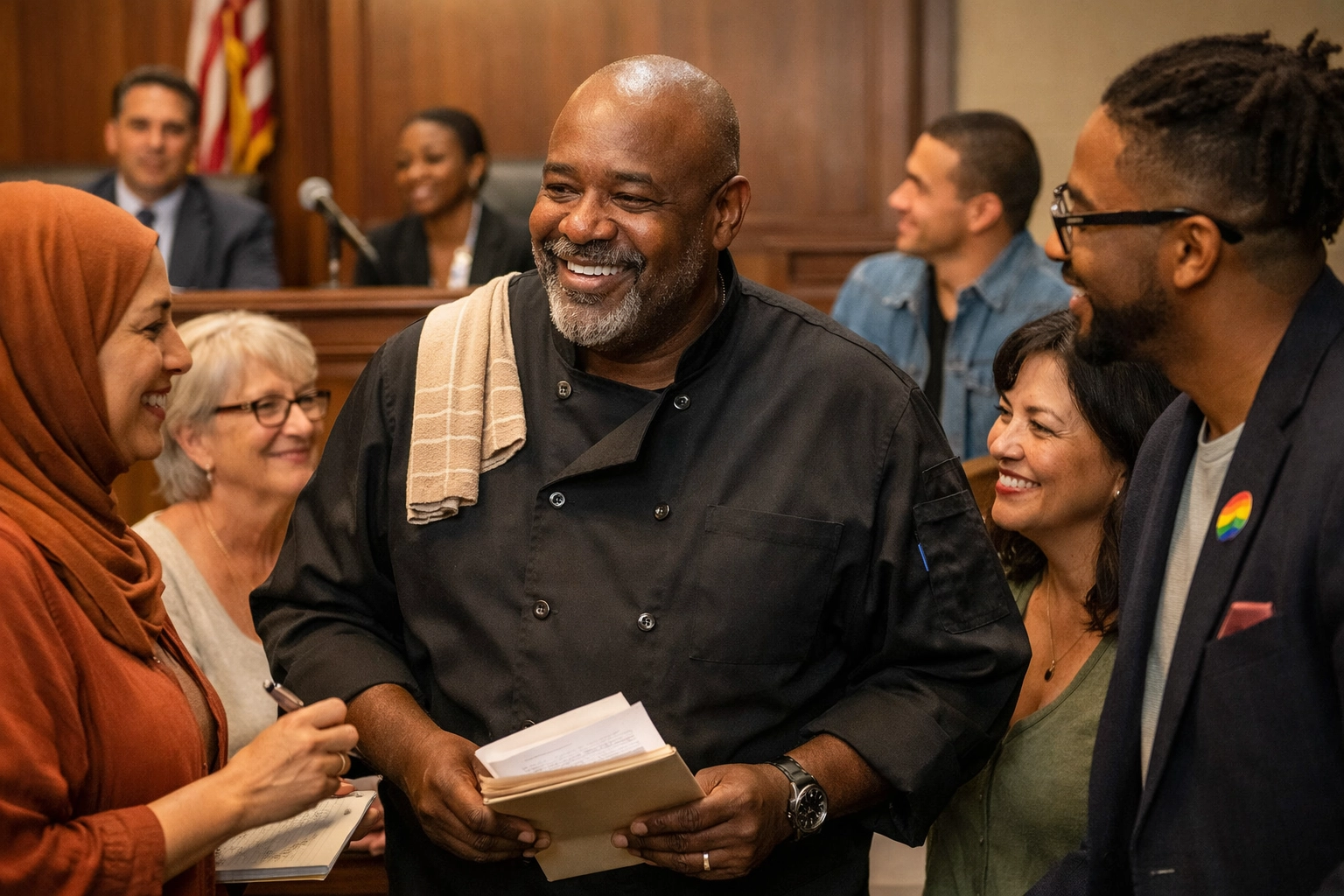
In the spring of 2023, a group of investors in Oakland prepared to sign a ten-year lease for a high-end fusion concept. They had a sleek logo, a chef with a following, and a "gut feeling" that the neighborhood was ready for $45 entrees. Before the ink dried, an objective feasibility study revealed that while foot traffic was high, the local daytime population consisted mostly of students and remote workers with a median discretionary spend 40% lower than the concept required (U.S. Census Bureau) [1]. By walking away, they saved an estimated $140,000 in initial build-out costs and avoided a near-certain bankruptcy within eighteen months.
This isn't a rare story. According to the National Restaurant Association, roughly 60% of restaurants do not survive their first year, and 80% close within five (National Restaurant Association) [2]. Most of these failures aren't due to bad food; they are due to a fundamental disconnect between the concept and the market. A restaurant feasibility study is the only bridge across that gap. It is a data-driven assessment that validates whether your business idea can actually generate a profit in a specific location before you risk a single dollar of capital (Cornell Hospitality Quarterly) [3].
In this guide, you will learn:
- How to identify the "Go/No-Go" signals in your financial projections.
- The exact steps to map your "trade area" to ensure you have enough hungry customers.
- How to use competitive analysis to find the profitable gaps your rivals are missing.
Why Every New Owner Needs a Feasibility Study
The restaurant industry is notorious for low margins, often hovering between 3% and 5% for full-service establishments (Deloitte) [4]. When margins are that thin, there is no room for "guessing." A feasibility study serves as the foundation for your business plan, transforming a vision into a viable financial model.
For new owners, the goal is simple: risk mitigation. You are looking for reasons not to open. If the data says the market is oversaturated or the rent-to-revenue ratio is unsustainable, knowing that now saves you from the "sunk cost fallacy" later.

Step 1: Define Your Concept and Perform a SWOT Analysis
Before you look at a single real estate listing, you must define exactly what you are selling and to whom. A "good restaurant" is not a concept. A "fast-casual Mediterranean grill targeting health-conscious office workers with a $15 average check" is a concept.
Once defined, perform a SWOT analysis:
- Strengths: What do you have that others don't? (e.g., a proprietary recipe, low-cost supply chain).
- Weaknesses: Where are you vulnerable? (e.g., lack of experience in fine dining, limited startup capital).
- Opportunities: What is changing in the market? (e.g., a new housing development nearby, a lack of late-night options).
- Threats: What external factors could kill the business? (e.g., rising minimum wage, high local utility costs).
A SWOT analysis helps you identify if your brand development aligns with the current economic reality (Harvard Business Review) [5].
Step 2: Perform Deep Market Research and Demographic Mapping
You need to know who lives, works, and plays within a 3-to-5-mile radius of your proposed site. This is your primary trade area. Using data from the U.S. Census Bureau or local chambers of commerce, you must analyze:
- Median Household Income: Can they afford your price point?
- Age Distribution: Are you targeting Gen Z with a concept built for Boomers?
- Daytime vs. Nighttime Population: If you rely on lunch, you need workers. If you rely on dinner, you need residents (Bureau of Labor Statistics) [6].
Researching local food trends is also vital. In 2025, consumer interest in sustainability and plant-forward menus continued to rise, with 43% of diners stating they prefer restaurants with transparent sourcing (National Restaurant Association) [7]. If your market is trending toward sustainability, a heavy steakhouse concept might face an uphill battle regardless of the quality of the meat.
Step 3: Conduct a Cutthroat Competitive Analysis
You are not just looking at who sells similar food; you are looking at who is competing for your customer’s "share of stomach."
- Direct Competitors: Other restaurants with similar cuisine and price points.
- Indirect Competitors: Grocery store prepared food sections, meal kit services, and even gas stations with high-quality grab-and-go options (McKinsey & Company) [8].
Visit your competitors. Note their peak hours, their staffing levels, and their menu gaps. If every pizza place in town closes at 9:00 PM, and there is a local college nearby, your "opportunity" is the late-night window. This level of operations consulting before you open ensures you aren't just another "me too" business.
Step 4: Site Selection and Physical Feasibility
Location is more than just a street address; it’s about accessibility and visibility. A study by the Small Business Administration (SBA) found that poor location is one of the top three reasons for retail business failure (SBA) [9].
When evaluating a site, consider:
- The 10-Second Rule: Can a driver identify what you sell and how to get into your parking lot within 10 seconds of seeing your sign?
- Ingress and Egress: If it’s difficult to turn into your lot during rush hour, you will lose the "commuter" dollar.
- Infrastructure Costs: Is the site "restaurant ready"? Adding a grease trap or a professional HVAC hood system can cost between $30,000 and $70,000 alone (Forbes Advisor) [10].

Step 5: Financial Projections and the "Break-Even" Reality
This is where the "saving $100k" happens. You must build a pro forma P&L (Profit and Loss statement) that includes:
- Startup Costs (CAPEX): Security deposits, licenses, equipment, and initial inventory.
- Operating Expenses (OPEX): Labor, food cost (COGS), rent, and utilities.
- Revenue Projections: Be conservative. Calculate your "worst-case," "expected," and "best-case" scenarios.
The Break-Even Analysis: How many covers (guests) do you need per day just to keep the lights on? If your break-even point requires 150 guests a day, but your dining room only seats 40 and you only have one peak period, the math doesn't work. You must adjust the concept or find a different location (Journal of Foodservice Business Research) [11].
Feasibility Study Milestone Timeline
| Milestone | Description | Est. Timeline | Source |
|---|---|---|---|
| Concept Validation | Internal SWOT and Brand Mission defined. | Week 1 | [5] |
| Demographic Deep-Dive | Collecting census and spending data. | Week 2-3 | [1] |
| Competitor Audit | Field research and menu price mapping. | Week 4 | [11] |
| Site Identification | Scouting 3-5 potential locations. | Week 5-6 | [10] |
| Physical Inspection | Contractor walkthroughs for build-out estimates. | Week 7 | [9] |
| Financial Modeling | Building the 12-month pro-forma P&L. | Week 8 | [12] |
| Scenario Testing | Stress-testing the "Worst Case" revenue. | Week 9 | [4] |
| The Decision | Official Go/No-Go based on ROI projections. | Week 10 | [3] |
Comparison: Successful vs. Failing Feasibility Indicators
| Indicator | Green Flag (Feasible) | Red Flag (High Risk) |
|---|---|---|
| Rent-to-Revenue | Occupancy costs are < 10% of projected sales [12]. | Rent exceeds 15% of projected sales [10]. |
| Market Saturation | < 3 direct competitors in a 2-mile radius [8]. | > 7 direct competitors with declining reviews [3]. |
| Labor Availability | Median age 20-35; high local student population [6]. | Extreme local labor shortage; high poaching rates [2]. |
| Capital Reserve | 6 months of operating capital post-launch [9]. | Zero cash reserve after the build-out [12]. |
Case Study: The "Second-Guess" Success
A Mediterranean fast-casual concept was planned for a suburban strip mall in Walnut Creek, California. The founders had a budget of $350,000. Their initial "gut" feeling was that the high-income residents would flock to their organic bowls.
The feasibility study (conducted over eight weeks) found that while income was high, the specific "side" of the street they were on had 60% less traffic during the 11 AM – 2 PM lunch window compared to the opposite side. Furthermore, a major competitor was planning a flagship opening two blocks away within the year.
The Stake: $350,000 in life savings.
The Tradeoff: Spending $12,000 on a professional study vs. "trusting the vision."
The Outcome: The founders pivoted. They moved the location to an underserved "office park" district with lower rent and higher weekday foot traffic. Their first-year revenue exceeded projections by 22%, and they reached break-even four months earlier than planned (Entrepreneur) [12].
What Smart Critics Argue
Some industry veterans argue that feasibility studies are a waste of time and money for experienced operators.
- "Data can't measure passion or food quality."
- Response: While true, passion cannot pay a $15,000 monthly rent. Data ensures that your passion has a platform to survive. Even the best food fails in a location where the target audience doesn't exist.
- "By the time the study is done, the good real estate is gone."
- Response: It is better to lose a "good" location than to be trapped in a "bad" lease. The "speed to market" trap is one of the primary drivers of the $100k+ losses we see in the industry.
- "Studies are too expensive for small independent owners."
- Response: A feasibility study is an insurance policy. If you cannot afford to validate your business, you certainly cannot afford the $200,000 loss of a failed restaurant.
Key Takeaways
- The 60% Rule: Most restaurants fail because they skip the validation phase [2].
- Trade Area is King: Your success is tied to the 3-mile radius around your front door [3].
- SWOT is Mandatory: You must be honest about your weaknesses before the market exposes them [5].
- Infrastructure Hidden Costs: Don't lease a space until you know the cost of the grease trap and HVAC [10].
- Revenue Scenarios: Always plan for 20% less revenue than you expect [12].
- Labor is the New Rent: If you can't find staff in your area, your location is not feasible [6].
- The "No-Go" is a Win: Walking away from a bad deal is a professional victory, not a failure.
Actions You Can Take
At Work:
Conduct a "Secret Shopper" audit of your top three local competitors. Note their guest counts at 12:30 PM and 7:30 PM to estimate their volume.
At Home:
Use the SBA’s Size Standards Tool to research the economic health of your specific restaurant category in your zip code.
In the Community:
Attend local zoning board meetings. Find out if any new developments or road construction projects are planned that might affect foot traffic to your potential site.
In Civic Life:
Research local tax incentives for "Green" or sustainable business practices, which can offset your initial utility costs.
One Extra Step:
Reach out for professional hospitality management advice before signing a Letter of Intent (LOI). A consultant can often spot lease traps that save you more than the cost of their fee.
FAQ
How much does a professional feasibility study cost?
Costs vary based on the depth of research, but most professional studies range from $5,000 to $20,000. Compared to a $500,000 build-out, it is a small fraction of the total investment (Forbes Advisor) [10].
Can I do my own feasibility study?
Yes, but you must remain objective. The biggest risk of a DIY study is "confirmation bias", looking for data that proves you are right rather than looking for data that proves you might be wrong.
What is the most important part of the study?
The financial break-even analysis. If the number of customers required to break even is higher than the physical capacity of the building or the local population density, the project is not feasible [11].
Does a feasibility study guarantee success?
No. It only guarantees that the market conditions for success exist. Operational execution, quality assurance, and daily management are still up to you.
When is the best time to start?
The moment you have a concept and a general city in mind, but before you look at specific real estate listings.

Where Smart Strategy Meets Profitable Hospitality.
At McFadden Finch Restaurant Consulting Group, we help restaurant owners make sharper decisions, strengthen operations, and build businesses designed to perform. From feasibility studies and concept development to menu strategy and long-term operational consulting, we help your restaurant move beyond survival and into sustained growth.
McFadden Finch Restaurant Consulting Group
Lake Merritt Plaza
1999 Harrison St., 18th Floor
Oakland, CA 94612
(510) 973-2410
www.mcfadden-finch-group.com
executive.team@mcfadden-finch-group.com
Schedule your discovery call today and start building a stronger, smarter, more profitable restaurant. The corporate office address and email are listed on McFadden Finch Holdings’ contact page, and MFRCG is included in the company’s hospitality consulting portfolio.
Sources
[1] U.S. Census Bureau, “American Community Survey: Income and Population Data,” January 2026, https://www.census.gov, Accessed March 15, 2026.
[2] National Restaurant Association, “2025 State of the Restaurant Industry Report,” February 2025, https://restaurant.org, Accessed March 15, 2026.
[3] Cornell Hospitality Quarterly, “Feasibility Studies and Restaurant Success Rates,” Sage Journals, June 2024, https://journals.sagepub.com/home/cqx, Accessed March 15, 2026.
[4] Deloitte, “2025 Restaurant Industry Outlook: Navigating Margin Pressures,” January 2025, https://www2.deloitte.com, Accessed March 15, 2026.
[5] Harvard Business Review, “Why Your Business Concept Needs Stress-Testing,” October 2024, https://hbr.org, Accessed March 15, 2026.
[6] Bureau of Labor Statistics, “Consumer Expenditure Surveys,” January 2026, https://www.bls.gov/cex/, Accessed March 15, 2026.
[7] National Restaurant Association, “Consumer Trends: Sustainability and Sourcing,” November 2025, https://restaurant.org, Accessed March 15, 2026.
[8] McKinsey & Company, “The Future of Foodservice: Competitive Landscapes,” December 2025, https://www.mckinsey.com, Accessed March 15, 2026.
[9] U.S. Small Business Administration, “Choosing a Business Location,” 2025, https://www.sba.gov, Accessed March 15, 2026.
[10] Forbes Advisor, “How To Open A Restaurant: Cost Analysis,” February 2026, https://www.forbes.com/advisor/, Accessed March 15, 2026.
[11] Journal of Foodservice Business Research, “Financial Viability and Break-Even Analysis in Modern Dining,” Vol 28, 2025, https://www.tandfonline.com, Accessed March 15, 2026.
[12] Entrepreneur, “The Essential Guide to Business Pro-Formas,” August 2025, https://www.entrepreneur.com, Accessed March 15, 2026.
Social Media Assets
Pull Quote 1: "A restaurant feasibility study isn't about proving you're right; it's about making sure you don't lose $100k proving you were wrong."
Pull Quote 2: "Passion is the fuel for a restaurant, but data is the engine. Without a feasibility study, you're just driving a fast car with no steering wheel."
Pull Quote 3: "The best decision a new owner can make isn't always 'Yes.' Sometimes the most profitable move is a data-backed 'Not here, and not yet.'"