Restaurant feasibility studies determine whether your concept succeeds or fails before opening day. Poor feasibility analysis kills profitable restaurant ideas and wastes significant capital investment. These seven mistakes destroy restaurant concepts during the planning phase.
Mistake #1: Conducting Limited Market Research
Insufficient market research represents the primary cause of restaurant concept failure. Many entrepreneurs assume market demand exists without validating customer interest through comprehensive analysis.
Effective market research examines primary market size, secondary market opportunities, and tertiary market potential. The study must verify whether sufficient customers exist within your target demographic and geographic radius.

Market validation requires direct customer surveys, focus groups, and competitive analysis. Analyzing comparable restaurants within a five-mile radius reveals market saturation levels and pricing strategies. Demographics data confirms whether your target customers live and work in the area.
Restaurant concepts without verified market demand fail within the first year regardless of food quality or service execution.
Mistake #2: Rushing Through the Feasibility Process
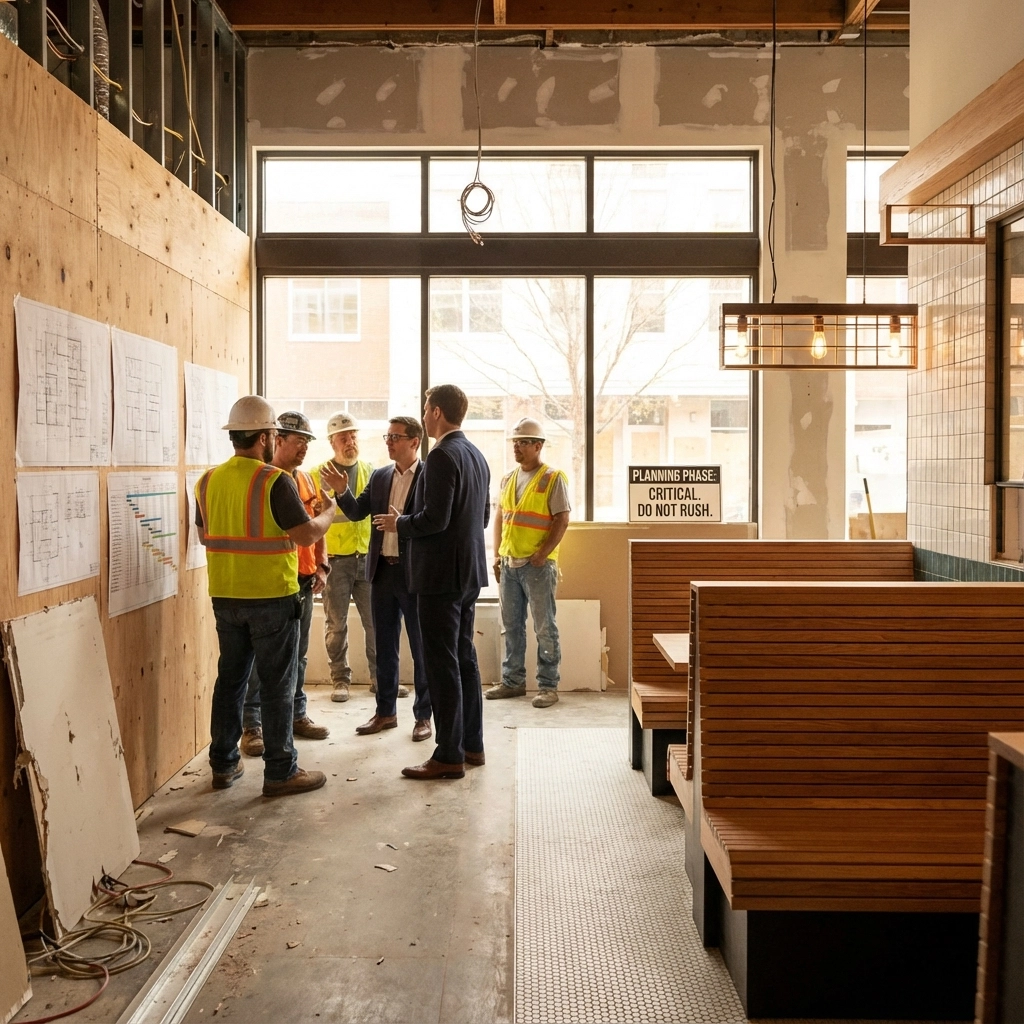
Time pressure forces entrepreneurs to skip critical feasibility study components. Compressed timelines prevent thorough analysis of location factors, financial projections, and operational requirements.
Comprehensive feasibility studies require 4-6 weeks minimum for proper completion. This timeframe allows detailed market analysis, financial modeling, and risk assessment. Rushed studies miss important factors that surface as expensive problems after opening.
The feasibility phase saves money by identifying problems before lease signing and equipment purchases. Inadequate study duration increases failure risk and capital loss significantly.
Mistake #3: Inadequate Location Analysis
Location determines restaurant success more than menu quality or service levels. Many operators select locations based on availability or lease rates rather than customer accessibility and market fit.
Proper location analysis examines foot traffic patterns, parking availability, public transportation access, and visibility from major roads. The study must evaluate demographic match between location residents and target customers.
Competition density within the immediate area affects customer acquisition costs and market share potential. High-performing locations feature complementary businesses that drive consistent foot traffic throughout operating hours.
Signing leases before completing location analysis locks operators into unsuitable spaces with long-term financial obligations regardless of concept viability.
Mistake #4: Inaccurate Financial Projections
Unrealistic revenue forecasts and underestimated operating expenses cause concept failure during the first operating year. Many feasibility studies project optimistic sales figures without considering market realities or seasonal fluctuations.
Operating expense forecasting requires detailed analysis of labor costs, food costs, utilities, insurance, and maintenance expenses. First-time operators typically underestimate these costs by 20-30% compared to industry standards.
Capital requirements extend beyond initial buildout costs to include working capital for the first six months of operations. Restaurants require significant cash reserves for inventory, payroll, and unexpected expenses during the startup phase.

Professional restaurant business plan development includes conservative financial modeling based on comparable restaurant performance data and local market conditions.
Mistake #5: Assembling the Wrong Consulting Team
Single-specialty consultants create incomplete feasibility studies that miss critical operational and market factors. Restaurant-only specialists may overlook broader market conditions that affect concept success.
Effective feasibility teams include market research analysts, financial modeling experts, and operational consultants with diverse industry experience. This combination provides comprehensive analysis across all business aspects.
Selecting consultants based solely on cost rather than expertise creates expensive oversights during the feasibility phase. Budget-focused consulting often misses critical details that surface as major problems during construction and operations.
Experienced restaurant consulting firms provide integrated analysis across market research, financial modeling, and operational planning components.
Mistake #6: Overemphasis on Technical Specifications
Focusing feasibility analysis primarily on kitchen equipment, building codes, and technical requirements ignores customer demand and market fit factors. Technical feasibility represents only one component of overall concept viability.
Most restaurant failures result from misunderstanding customer preferences, inadequate market research, or poor financial planning rather than technical problems. Equipment specifications and building compliance are necessary but insufficient for concept success.

Customer experience design, menu development, and service model creation require equal attention during feasibility analysis. These factors determine revenue generation more directly than technical specifications.
Balanced feasibility studies evaluate technical requirements within the context of customer needs and market demand rather than treating them as isolated factors.
Mistake #7: Inadequate Menu Cost Analysis
Poor menu pricing destroys restaurant profitability regardless of customer volume levels. Many operators price menu items by copying competitor prices without calculating actual food costs, labor requirements, and profit margins.
Accurate menu costing requires detailed ingredient cost analysis, portion control specifications, and labor time calculations for each menu item. Food cost percentages must account for waste, spoilage, and price fluctuations.
Menu engineering identifies high-profit items and eliminates low-margin offerings before opening. This analysis prevents operational losses from poorly designed menu structures.
Comprehensive cost analysis includes both direct food costs and indirect costs such as utilities, equipment maintenance, and administrative overhead allocated to each menu category.
Preventing Feasibility Study Failures
Successful restaurant feasibility studies require comprehensive market analysis, realistic financial projections, and experienced consulting guidance. Proper feasibility analysis prevents expensive concept failures and identifies profitable opportunities.
Professional feasibility studies examine all business aspects including market demand, competition analysis, location evaluation, financial modeling, and operational requirements. This integrated approach reduces opening risks and improves success probability.
McFadden Finch Restaurant Consulting Group provides comprehensive feasibility analysis for restaurant concepts throughout the Bay Area and nationwide. Our integrated approach examines market opportunities, financial requirements, and operational factors to determine concept viability.
Contact our team to schedule a feasibility study consultation for your restaurant concept. Proper analysis during the planning phase saves significant capital and increases opening success rates.
Ready to validate your restaurant concept? Schedule a consultation today.
McFadden Finch Restaurant Consulting Group
Website: www.mcfadden-finch-group.com
Email: executive.team@mcfadden-finch-group.com
Phone: 510-973-2410