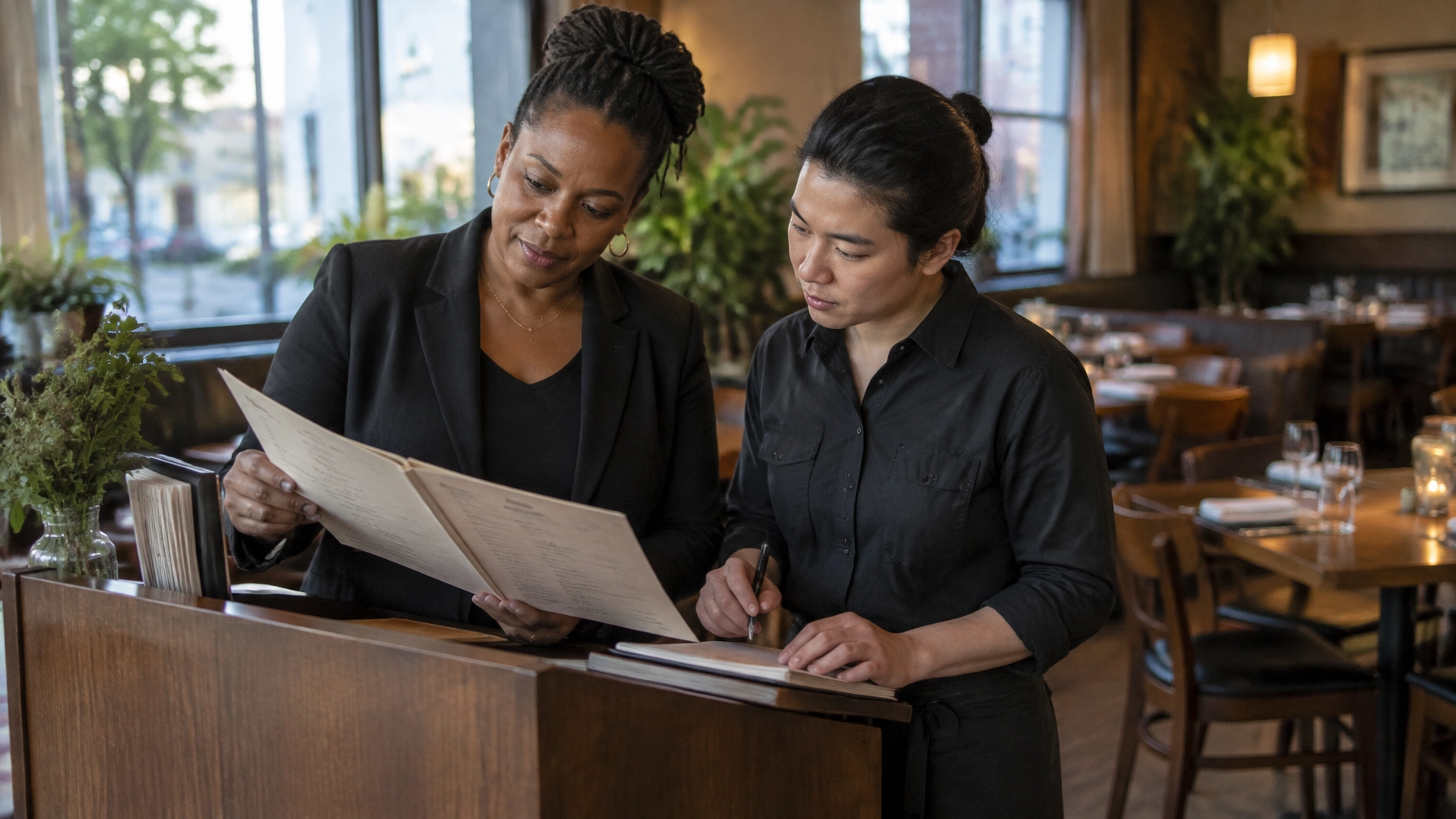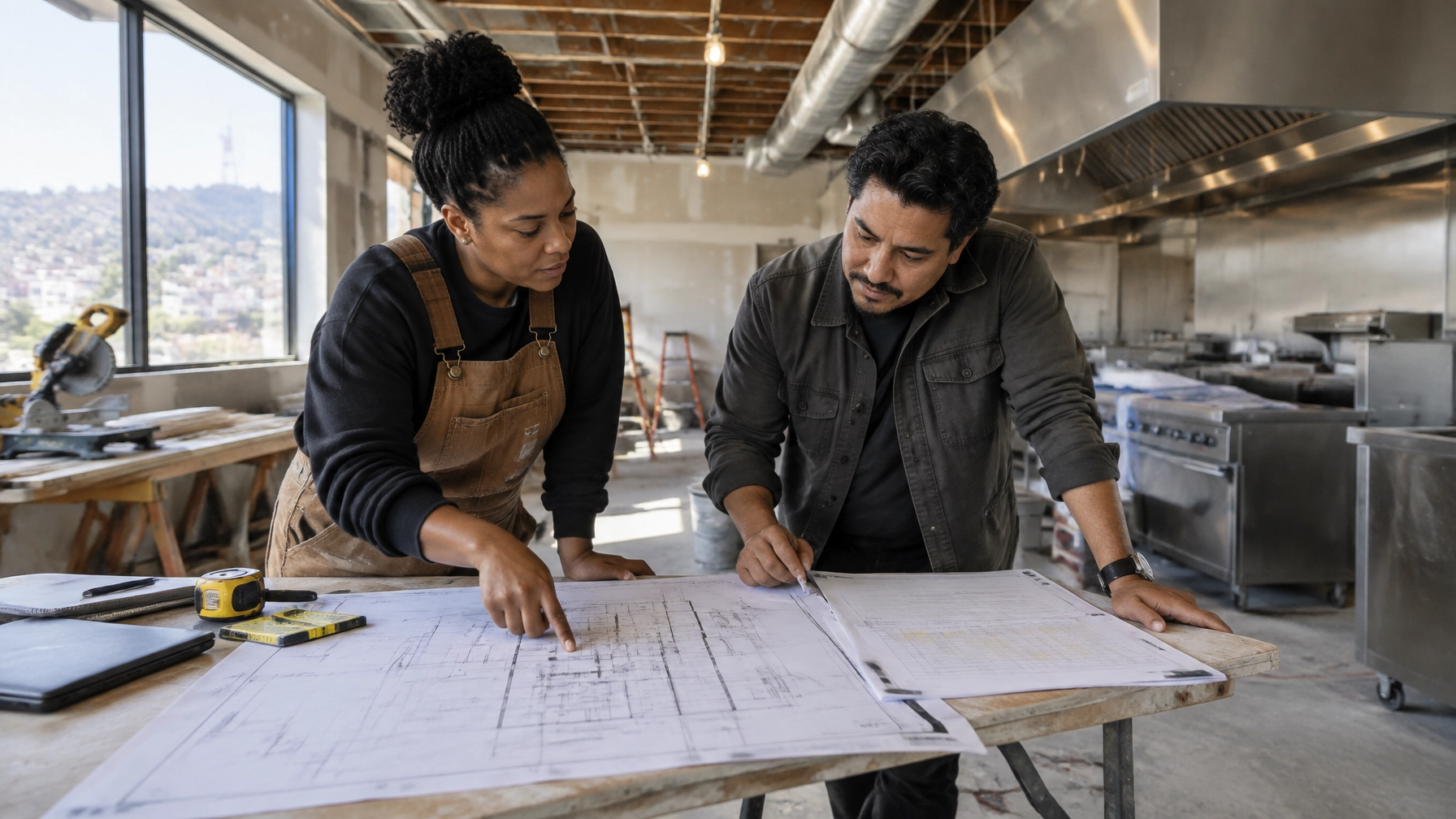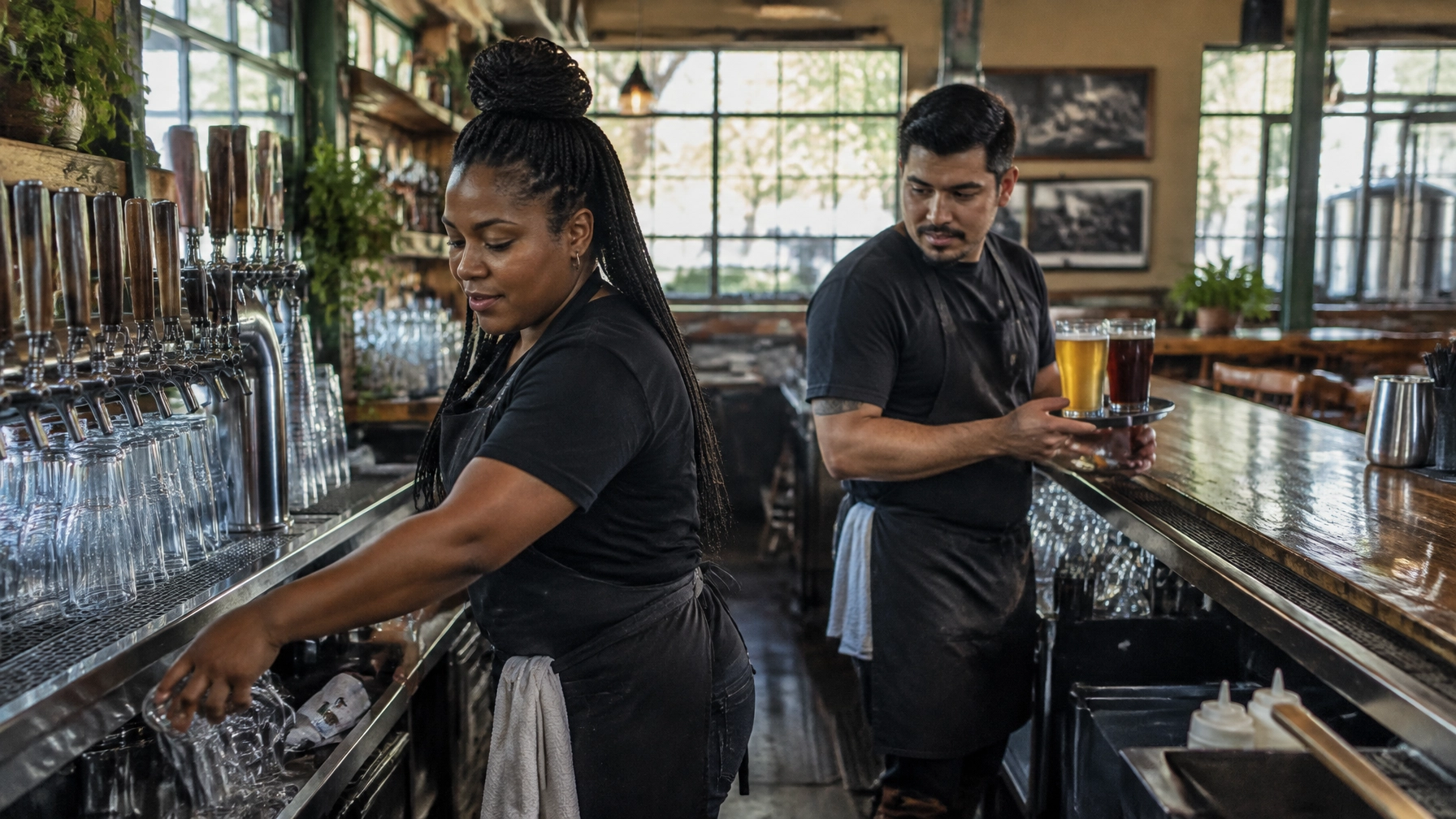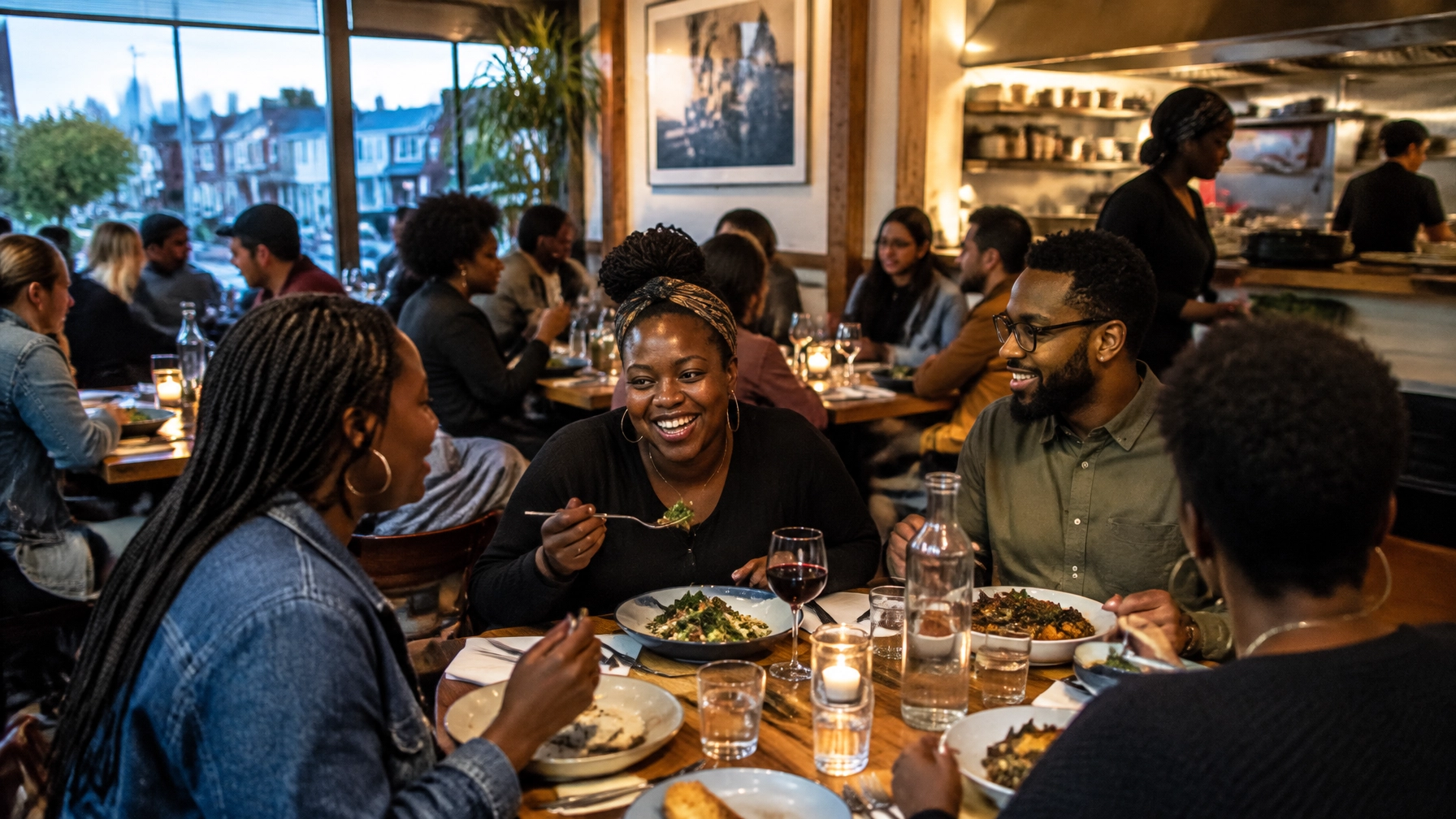

There are restaurants that open in a neighborhood. Then there are restaurants that return something to it.
At 1375 Fillmore St., Minnie Bell's Soul Movement carries the feeling of a homecoming meal. Chef and owner Fernay McPherson grew up in the Fillmore as a third-generation resident. She named the restaurant for her great-aunt Minnie and her grandmother, Lillie Bell, the women who taught her the family recipes that now fill the room with rosemary fried chicken, baked macaroni and cheese, cornbread, greens, and rotating oxtail specials. [1]
This is more than a restaurant opening story. It is a story about memory becoming a business, family recipes becoming a public gathering place, and a chef returning to the neighborhood that shaped her.
What readers will learn
- How Minnie Bell's Soul Movement grew from catering and a food truck into a Fillmore restaurant.
- Why the restaurant's menu connects Texas family history with San Francisco ingredients.
- What the restaurant's walls, dishes, and hospitality say about the Fillmore's past and future.
- Why supporting neighborhood restaurants matters to the broader health of a city.
A restaurant built from a family journey
McPherson's family came to San Francisco from Texas in the 1960s during the Great Migration. Before they left, her grandmother made fried chicken and pound cake for the journey. That pound cake lives on at Minnie Bell's in the form of caramel cake, prepared from the same family tradition McPherson learned growing up. [1]
That detail tells you a lot about the restaurant.
The food is not trying to recreate a museum version of the South. It carries the family forward. The rosemary in the fried chicken is a San Francisco touch, inspired by the herb bushes that grow throughout the city. The result is a dish that connects two places without pretending they are the same.
McPherson has described the approach as tradition with a twist. The twist is measured. The food still needs to feel like home.
That restraint matters. A restaurant can honor its roots without freezing them in place.
The Fillmore was always the destination
McPherson did not stumble into the Fillmore by accident. She had wanted a place there for years.
The neighborhood was once known as the Harlem of the West, a center of Black-owned businesses, jazz clubs, restaurants, and nightlife. Urban renewal projects from the 1950s through the 1970s displaced tens of thousands of Black families and closed most of the neighborhood's Black-owned businesses. [1]
That history gives the restaurant's address real weight.
Opening Minnie Bell's in the Fillmore in April 2024 was not simply a move from one market to another. It was a return to a community where McPherson's family lived, worked, and built a life. The opening received support in part through San Francisco's Dream Keeper Initiative, a city effort connected to the revitalization of Black communities and businesses. [1]
A restaurant cannot repair decades of displacement on its own. No single business can carry that burden. But it can create a place where history is visible, local ownership is present, and people have another reason to gather on the same block.
That is not a small thing.
The path from food truck to Fillmore dining room
Minnie Bell's developed through several formats before reaching its permanent home.
McPherson launched a food truck in 2013, then opened at Emeryville's Public Market in 2018. Those earlier stages gave her a way to build recognition, refine recipes, and learn the hard mechanics of serving customers consistently. [1][2]
Food businesses often grow in public. The customer sees a finished plate, but behind it are years of recipe testing, purchasing decisions, staffing challenges, equipment problems, prep schedules, and long service days.
The Fillmore restaurant represents the visible part of that work. It also reflects an operator's willingness to grow in steps rather than forcing a concept into its largest form too early.
Minnie Bell's Soul Movement timeline
| Milestone | What happened |
|---|---|
| 2013 | McPherson launched the Minnie Bell's food truck. [2] |
| 2018 | Minnie Bell's opened at Emeryville's Public Market. [1][2] |
| April 2024 | The full-service Fillmore restaurant opened at 1375 Fillmore St. [1] |
| May 2026 | The Michelin Guide added Minnie Bell's Soul Movement to the California Guide. [2][3] |
The timeline is encouraging because it is practical. The restaurant did not appear fully formed. It moved from mobile service to a food hall and then to a neighborhood dining room.
That is a real path for restaurant founders. Start with the food. Learn the operation. Build the audience. Then take on the larger fixed costs when the concept is ready.
The room keeps the family in view

The room does not hide the story behind the food.
A mural shows Fillmore Street during its 1960s heyday. Large photographs honor Minnie in her high school cap and gown and Lillie Bell at 21. The images look into the dining room, giving the restaurant a sense of ancestry without turning the space into a memorial. [1][2]
The effect is warm and direct. Guests are not just eating recipes associated with two women. They are eating in a room where those women remain part of the business.
That is smart hospitality. The design gives customers context, but it does not lecture them. It lets the food and the room speak together.
For restaurant operators, there is a useful lesson here. A strong concept does not separate menu, interior, service, and story into different departments. They should reinforce one another. Minnie Bell's is named for family, decorated with family, and built around food that came from family.
The pieces line up.
The menu brings comfort with precision
The signature rosemary fried chicken is the obvious anchor. Eater described the chicken as tender and seasoned through, with rosemary worked into the preparation and fried rosemary adding another layer of flavor. [2]
But the sides are not filler. The baked macaroni and cheese combines sharp cheddar, fontina, and Parmesan. The brown butter cornbread brings sweetness and richness. The collard greens are vegan-friendly, braised in a rich vegetable stock rather than meat, while still carrying the depth diners expect from a long-cooked side. [2][3]
The menu also leaves room for appetite and occasion. Hot honey wings offer a more casual order. Oxtail appears as a rotating special. For dessert, Eater praised the bruleed banana pudding and also listed the caramel cake tied to McPherson's family history. [1][2]
Menu and price highlights
| Dish | Reported price | Why it matters |
|---|---|---|
| Fried chicken combo with cornbread and sides | Starts at $20 | The restaurant's signature family recipe with a San Francisco rosemary touch. [2] |
| Roasted chicken combo | $22 | A substantial alternative for guests seeking a different preparation. [2] |
| Baked macaroni and cheese | $7 small, $18 large | Made with cheddar, fontina, and Parmesan. [2] |
| Vegan collard greens | $7 small, $18 large | Braised in rich vegetable stock. [2] |
| Bruleed banana pudding | $10 | A dessert Eater called phenomenal. [2] |
| Oxtail special | $35 | Available when listed on the specials board. [2] |
The pricing also shows how a restaurant can offer a range of entry points. A guest can order a signature combination, add a side, share a special, or come in for dessert and a drink. Good menu structure gives people choices without losing the identity of the house.
Hospitality is the point, not decoration
McPherson has said she wants guests to feel as if they are sitting at her family's kitchen table. [1]
That idea explains the restaurant better than any marketing phrase could.
A family table is generous, but it is not careless. The food still has to be right. McPherson's great-aunt Minnie continues to critique the cooking, and McPherson has described that approval as meaningful validation. [1]
The restaurant also champions Black-owned wine companies on its list, including McBride Sisters Wine Company and P. Harrell Wines. [2] That choice extends the restaurant's sense of welcome beyond the plate. It creates room for more Black ownership and more stories within the beverage program.
Hospitality is often discussed as a feeling. At Minnie Bell's, it is also a set of decisions. Which recipes stay? Which suppliers and producers receive attention? Which family members appear on the walls? What does the guest learn without being asked to study?
Those decisions accumulate.
Why this homecoming matters
Minnie Bell's Soul Movement does not erase what the Fillmore lost. It does something more grounded. It adds a living business to the neighborhood, one connected to local history and operated by someone whose family has been part of that history for generations.
The Michelin Guide's May 2026 addition recognizes the restaurant's cooking and its place in the California dining landscape. [2][3] That recognition is useful, but it is not the whole story.
The deeper achievement happened before the listing. It happened when McPherson kept developing the business through catering, a food truck, and the Emeryville Public Market. It happened when she chose the Fillmore. It happened when family photographs went on the wall and when a dish of fried chicken carried Texas memory into a San Francisco dining room.
That is the heart of the story.
Key takeaways
- A restaurant's identity becomes stronger when its name, menu, design, and service point in the same direction. [1][2]
- Minnie Bell's grew through multiple operating formats before reaching its permanent neighborhood location. [1][2]
- The menu connects Southern family recipes with ingredients and ideas rooted in San Francisco. [1]
- Historical context can be part of hospitality when it is presented with warmth and clarity. [1][2]
- A rotating special such as oxtail can create a reason for guests to return without changing the core menu. [2]
- Vegan-friendly sides can expand the table while preserving the restaurant's culinary character. [2]
- Black-owned wine companies can be given meaningful space in a restaurant's beverage program. [2]
- Recognition matters, but sustained execution and community connection come first. [2][3]
Six ways to support a restaurant with roots
At work
When planning a team meal, client dinner, or celebration, consider a locally owned restaurant with a clear connection to its neighborhood. A group reservation can provide meaningful revenue during a slower period.
At home
Order with intention. Try a signature dish, a side, and a dessert that tells part of the restaurant's story. Talk about where the food comes from instead of treating the meal as anonymous takeout.
In the community
Share accurate information about neighborhood restaurants. Mention the address, official website, and current operating details so people can support the business without relying on outdated listings.
In civic life
Learn how local programs support small businesses, cultural districts, and historically displaced communities. Public investment can help create opportunities that individual customers cannot create alone. [1]
With your spending
When you visit, consider ordering from the restaurant's beverage program as well as the kitchen. At Minnie Bell's, that can include Black-owned wine companies featured on the list. [2]
Extra step
If you operate a restaurant, study the Minnie Bell's model. Build your concept around a clear point of view, test it in manageable stages, and make sure the guest experience carries the same message as the food.
Frequently asked questions
Where is Minnie Bell's Soul Movement?
Minnie Bell's Soul Movement is located at 1375 Fillmore St. in San Francisco's Fillmore District. [1][3]
Who is the restaurant named for?
The restaurant is named for McPherson's great-aunt Minnie and her grandmother, Lillie Bell, who taught her the family recipes. [1][3]
What is Minnie Bell's known for?
The restaurant is known for rosemary fried chicken, baked macaroni and cheese, brown butter cornbread, collard greens, hot honey wings, rotating oxtail specials, and desserts including bruleed banana pudding and caramel cake. [1][2][3]
When did Minnie Bell's open in the Fillmore?
The Fillmore restaurant opened in April 2024 after McPherson had operated a food truck and an Emeryville Public Market location. [1][2]
Is Minnie Bell's in the Michelin Guide?
Yes. The Michelin Guide added Minnie Bell's Soul Movement to the California Guide in May 2026. [2][3]
Does Minnie Bell's offer a vegan-friendly dish?
Yes. The collard greens are braised in rich vegetable stock and are described as vegan-friendly. [2]
Three pull quotes
“A restaurant can honor its roots without freezing them in place.” [1]
“The timeline is encouraging because it is practical. Start with the food. Learn the operation. Build the audience.” [1][2]
“The deeper achievement happened before the listing. It happened when McPherson chose the Fillmore.” [1][2][3]
Where Smart Strategy Meets Profitable Hospitality.
At McFadden Finch Restaurant Consulting Group, we help restaurant owners make sharper decisions, strengthen operations, and build businesses designed to perform. From feasibility studies and concept development to menu strategy and long-term operational consulting, we help your restaurant move beyond survival and into sustained growth.
McFadden Finch Restaurant Consulting Group
Lake Merritt Plaza
1999 Harrison St., 18th Floor
Oakland, CA 94612
(510) 973-2410
www.mcfadden-finch-group.com
executive.team@mcfadden-finch-group.com
Schedule your discovery call today and start building a stronger, smarter, more profitable restaurant. The corporate office address and email are listed on McFadden Finch Holdings' contact page, and MFRCG is included in the company's hospitality consulting portfolio.
Sources
[1] KQED, “Minnie Bell's New Soul Food Restaurant in the Fillmore Is a Homecoming,” April 18, 2024, https://www.kqed.org/arts/13956178/minnie-bells-soul-food-restaurant-fillmore-sf-opening, Accessed September 7, 2026.
[2] Eater SF, “Find a Phenomenal Bruleed Banana Pudding at This Michelin-Approved Soul Food Spot,” June 8, 2026, https://sf.eater.com/dining-report/212797/minnie-bells-review, Accessed September 7, 2026.
[3] MICHELIN Guide, “Minnie Bell's Soul Movement,” Michelin Guide, https://guide.michelin.com/us/en/california/san-francisco/restaurant/minnie-bell-s-soul-movement, Accessed September 7, 2026.
[4] Minnie Bell's Soul Movement, “Official Website,” https://www.minniebellssoul.com/, Accessed September 7, 2026.
[5] SFGATE, “The SF restaurant homecoming everyone should care about,” April 24, 2024, https://www.sfgate.com/food/article/minnie-bells-fried-chicken-sf-fillmore-19406782.php, Accessed September 7, 2026.
Disclaimer: This content is for general informational purposes only and does not constitute legal, financial, tax, operational, employment, regulatory, or other professional advice. Reading this content does not create a client, consulting, or contractual relationship with McFadden Finch Restaurant Consulting Group. Because every restaurant, market, and business situation is different, you should consult qualified professionals regarding your specific circumstances. McFadden Finch Restaurant Consulting Group makes no warranties regarding the accuracy or completeness of this information and is not responsible for third-party content, links, products, or services referenced. Testimonials, examples, case studies, and projected outcomes are illustrative only and do not guarantee similar results.