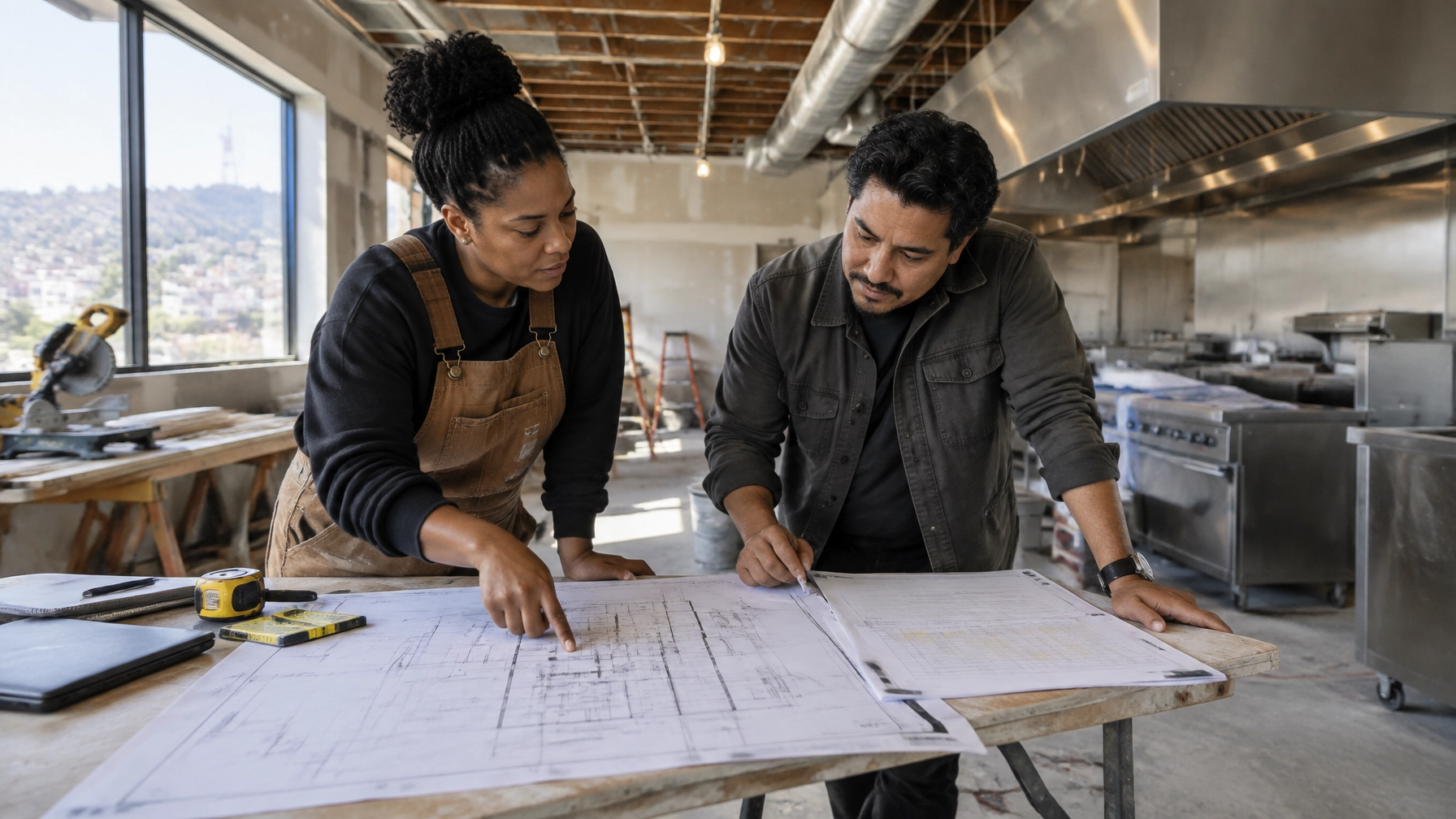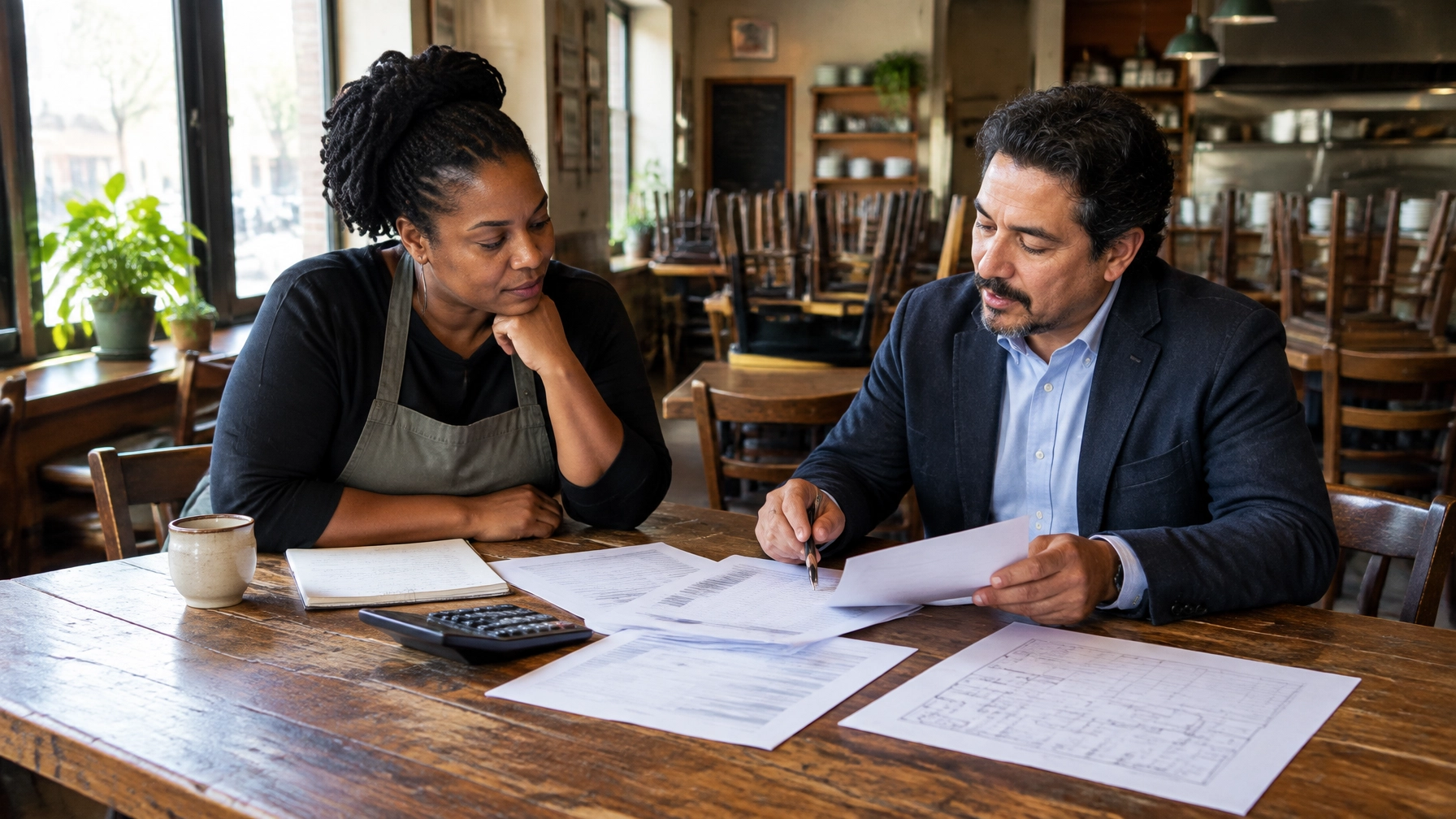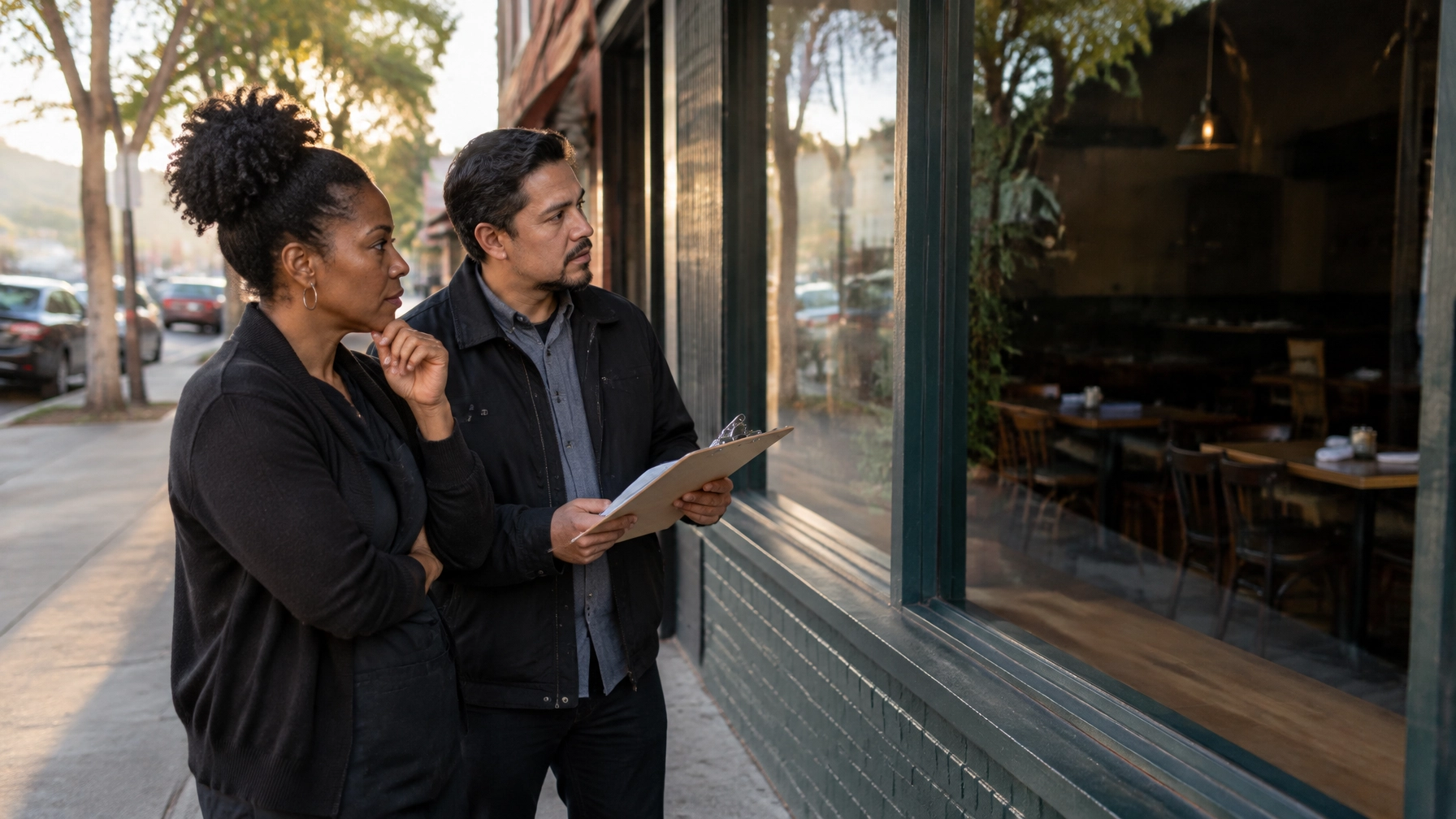
A familiar scene plays out before many Bay Area restaurant leases are signed. An operator has a concept, a broker has shown several spaces, and everyone wants one clean answer: What will the buildout cost? The contractor's number is only the first budget. The real question is how to price the infrastructure, owner-furnished items, lease economics, permits, and cash reserve that determine whether the project can actually open.
YCD Studio describes receiving that call from operators trying to underwrite a project before they commit to a lease. The problem is that the per-square-foot number rarely answers the question that matters. A former restaurant with a permitted hood, usable electrical service, and a correctly sized grease interceptor can behave like an entirely different investment from a retail shell, even when the two spaces have the same square footage. YCD Studio documents the difference between headline construction pricing and the existing conditions that actually drive the budget. [1]
The core point is simple: Bay Area restaurant buildout and startup cost is not the contractor's bid. It is the contractor's bid, the second budget, the lease economics, and enough working capital to survive the opening ramp.
That distinction matters in a market where restaurant demand remains substantial, but costs continue to pressure margins. The National Restaurant Association projects $1.55 trillion in restaurant and foodservice sales for 2026, yet reports that 42% of operators said their restaurants were not profitable in 2025. More than 9 in 10 cited food, labor, insurance, energy, and payment processing costs as significant challenges. [2]
Before you sign an LOI, this article will help you:
- Compare a former restaurant space with a cold shell or non-restaurant conversion.
- Build the owner-furnished budget that may sit outside the general contractor's proposal.
- Negotiate TI allowance, free rent, and rent commencement terms as part of the project budget.
- Set a working capital reserve that reflects the opening ramp rather than the opening party.
The per-square-foot number is a starting point, not a decision
Bay Area restaurant tenant improvement costs in 2026 generally fall into four broad tiers:
| Space and scope | Typical TI range | Illustrative 2,000-square-foot construction budget |
|---|---|---|
| Cosmetic refresh in an existing restaurant | $40 to $90 per square foot [1] | $80,000 to $180,000 [1] |
| Partial buildout with an existing kitchen | $120 to $200 per square foot [1] | $240,000 to $400,000 [1] |
| Full buildout from a cold shell or non-restaurant use | $200 to $320 per square foot [1] | $400,000 to $640,000 [1] |
| Adaptive reuse or heritage-building conversion | $200 to $350 per square foot [1] | $400,000 to $700,000 [1] |
For a sharper comparison, consider two otherwise similar 2,000-square-foot spaces:
| Scenario | Working assumption | Construction math | What it leaves unresolved |
|---|---|---|---|
| Former restaurant | Partial buildout at $130 per square foot [1] | $260,000 [1] | Equipment, furniture, technology, permits, opening costs, reserve |
| Retail or office conversion | Full buildout at $280 per square foot [1] | $560,000 [1] | The same second-budget items, plus greater code and schedule risk |
The difference is $300,000 before the operator buys a plate, hires a manager, or pays for the first week of utilities. That is why comparing spaces by rent alone is a poor habit. The cheaper lease can be the more expensive project.
Existing infrastructure is worth more than a low asking rent

The best lease candidate is often not the prettiest space. It is the one with infrastructure that can be verified, permitted, and reused.
A former restaurant with a permitted and inspected Type I hood, a correctly sized grease interceptor, and adequate electrical service can save approximately $60,000 to $120,000 compared with a cold shell or retail conversion. [1]
But “existing” needs to mean more than “still hanging from the ceiling.”
Before relying on the value of that infrastructure, verify:
- The Type I hood is permitted and inspected.
- The hood is sized for the equipment your concept actually needs.
- The grease interceptor is correctly sized and accessible for service.
- The electrical service has enough capacity for the proposed kitchen.
- Exhaust routing, make-up air, roof penetrations, and structural supports are usable.
- The previous restaurant's permits match the space's current condition.
An electrical panel upgrade and utility coordination may cost $8,000 to $25,000. Replacing or upsizing an in-slab grease interceptor may cost $15,000 to $40,000, and the work can disrupt the site for weeks. A hazardous materials survey may cost $1,500 to $4,500, with abatement adding $8,000 to $40,000 if lead, asbestos, or other regulated materials are found. [1]
This is where an architect, contractor, or restaurant consultant earns the fee before construction begins. A pre-lease walk-through can expose a deal that looks affordable on paper but has no practical path to a permitted kitchen.
The second budget is not optional
The general contractor's bid may cover construction labor, materials, subcontractors, and certain permit administration. It usually does not cover every item required to open a functioning restaurant.
For a small to mid-size Bay Area restaurant, the second budget commonly totals $80,000 to $200,000. [1] It can include:
- Owner-furnished equipment and smallwares: $25,000 to $60,000.
- Furniture, fixtures, and equipment: $20,000 to $50,000 for tables, chairs, banquettes, decorative lighting, and art.
- Signage and exterior identity: $8,000 to $25,000.
- Alcohol licensing support: $1,500 to $4,000 for a license consultant. A Type 47 transfer state fee is $13,800 or more. A beer and wine filing is $475. [1]
- Health department plan review: $500 to $2,500.
- Pre-opening utilities, hood cleaning, initial inventory, and deep cleaning: $4,000 to $10,000.
- AV, POS, surveillance, music licensing, and Wi-Fi: $8,000 to $25,000.
These are not decorative extras. They are the pieces that turn a construction project into an operating business.
A common mistake is to include commercial kitchen equipment in the construction budget without determining who is purchasing it, who is receiving it, and who is responsible for installation. Another is to price the dining room as if tables and chairs will somehow appear after final inspection. They will not.
The second budget should be listed line by line before the lease is signed. If a cost has no owner, assume it belongs to you.
The lease can fund the project, but timing matters
A TI allowance is valuable. It is not the same as cash in the bank.
In 2026, Bay Area Class A and B retail leases commonly carry TI allowances of approximately $20 to $80 per square foot. On a 2,000-square-foot space, a $60 per square foot allowance would equal $120,000. [1]
The catch is reimbursement timing. TI funds are often released after documentation such as lien waivers, paid invoices, inspections, and completion of the approved scope. The tenant may need to front the construction cash before the landlord reimburses it.
That makes the lease economics a cash-flow issue, not just a negotiation victory.
Free rent is another form of project capital. Three to six months of abated rent is commonly negotiated during buildout. On a $7,500 monthly lease, six months of free rent equals $45,000 in avoided occupancy cost.
Consider the combined effect:
- 2,000 square feet.
- $60 per square foot TI allowance: $120,000.
- Six months of abated rent at $7,500 per month: $45,000.
- Effective project support: approximately $165,000. [1]
The lease still requires careful drafting. The operator should examine:
- Whether rent begins on a fixed calendar date or after delivery of the premises.
- Whether rent starts at possession, permit issuance, final inspection, or opening.
- Whether the TI allowance covers design, permits, equipment, and soft costs, or only approved construction.
- What happens if plan review takes longer than expected.
- Whether the landlord warrants existing roof, HVAC, plumbing, and electrical conditions.
- Whether the tenant can terminate or extend abatement if the project cannot be permitted.
San Francisco and East Bay retail conditions are not identical. Q2 2026 retail conditions differ between the San Francisco and East Bay markets, and tenants should use current market data when negotiating lease terms. The Kidder Mathews Q2 2026 San Francisco and East Bay retail reports are the reference. [9] [10]
The lease should reflect the space, jurisdiction, and risk. A standard form rarely does that work for you.
Change of use can create the biggest budget shock
Changing a space from Mercantile or Business use to Assembly use can add $40,000 to $80,000 in code-driven scope. It can also extend plan review from approximately 4 to 6 weeks to 10 to 16 weeks. [1]
The cost may include accessibility work, fire and life safety upgrades, occupant-load review, restroom changes, energy compliance, and other code requirements that do not apply to a like-for-like restaurant tenant improvement.
In San Francisco, a like-for-like restaurant improvement may qualify for over-the-counter review when the scope is simple and does not trigger other review requirements. A change-of-use project typically enters standard plan check, often taking 8 to 14 weeks or longer. Labor rates inside San Francisco city limits can also run approximately 10% to 15% above the East Bay for comparable trades. [1]
That schedule has a direct financial effect. During a delayed buildout, the business may be paying insurance, design fees, storage, utilities, management payroll, and possibly rent without generating restaurant revenue.
The broker may describe a space as “restaurant-ready.” That phrase has no financial meaning until the permit history, occupancy classification, infrastructure, and existing conditions are verified.
Labor costs begin before opening night
A restaurant model should not use the posted minimum wage as the full labor cost.
San Francisco's minimum wage is $19.61 per hour as of July 1, 2026. San Francisco's Office of Labor Standards Enforcement lists the current local rate and explains that it applies to employees performing work in the city. [5] California's statewide minimum wage is $16.90 per hour effective January 1, 2026. The California Department of Industrial Relations published the 2026 wage order. [6]
The operating model needs to add payroll taxes, workers' compensation, healthcare contributions, training time, overtime exposure, scheduling inefficiency, and management payroll. The effective hourly cost will be materially higher than the posted wage.
The same discipline applies to the opening ramp. A restaurant may pass final inspection and still operate below its stabilized sales level for 60 to 90 days. The reserve should cover three to six months of fixed operating expenses, including rent, payroll, insurance, utilities, and debt service. For independent concepts, that reserve commonly falls between $80,000 and $300,000. [1]
The National Restaurant Association reported that 33% of operators said their restaurants were not profitable during the first half of 2026. It also reported that food and labor costs each account for approximately 33 cents of every sales dollar in the average restaurant, while insurance, taxes, card fees, and other expenses add further pressure. [3]
The latest BLS establishment-age data reports an 85.3% first-year survival rate for accommodation and food services establishments in the cohort ending in March 2024. The U.S. Bureau of Labor Statistics publishes survival data by industry and establishment age. [4]
That is not a reason to avoid the business. It is a reason to fund the period when the business is still learning how to operate.
Validate the concept before committing to the lease

A low-cost test cannot prove every part of a permanent restaurant model. It can reveal whether the menu travels, whether guests understand the offer, how much labor the service requires, and whether the price creates resistance.
San Francisco's food pop-up process requires a licensed food facility or caterer, a host-facility authorization, a proposed menu, a floor plan, and an operational plan. The city advises starting at least 2 to 4 weeks before opening. [7]
A typical single pop-up event may cost approximately $1,500 to $10,000 all in, depending on venue terms, menu, staffing, insurance, equipment, and guest count. Planning ranges include $100 to $500 for permits, $100 to $400 for insurance, $200 to $800 for smallwares and disposables, and $300 to $1,000 for two to four staff members. [10]
That is not free. It is simply a smaller risk than signing a lease before learning whether the concept works in service.
The test should be structured. Track:
- Sales per service hour.
- Average check or ticket price.
- Food usage and waste.
- Labor hours per guest served.
- Ticket cancellations and no-shows.
- Most frequently returned or misunderstood menu items.
- Whether the host kitchen can support the menu without unsafe workarounds.
A good pop-up will not eliminate the need for a feasibility study. It can make the feasibility study less theoretical.
Timeline: the capital decisions that should happen before the lease
-
September 21, 2026: Establish the project budget as four separate buckets: construction, second budget, lease support, and working capital. [1]
-
Before the next broker tour: Request permit history, prior occupancy classification, equipment schedules, utility information, and any existing-condition reports. [1]
-
Two to four weeks before a pop-up: Begin San Francisco's food pop-up process, secure host authorization, and prepare the menu, floor plan, and operating plan. [7]
-
Before signing an LOI: Walk the space with qualified design and construction professionals. Verify the hood, grease interceptor, electrical service, exhaust path, roof conditions, and hazardous materials risk. [1]
-
During LOI negotiation: Price the TI allowance, free rent, rent commencement trigger, permitting contingency, and existing-condition representations as cash-flow items. [1]
-
January 1, 2026: Use California's 2026 statewide minimum wage of $16.90 as the wage floor for applicable employees outside higher local wage jurisdictions. [6]
-
July 1, 2026: Use San Francisco's current minimum wage of $19.61 for employees performing work in the city. [5]
-
Before final lease execution: Confirm whether the project is like-for-like or a change of use. Build the added code scope and longer plan review into the schedule and reserve. [1]
-
Before construction documents are finalized: Lock equipment, utility loads, finishes, signage, technology, and owner-furnished items. [1]
-
Before opening: Fund the three-to-six-month fixed-cost reserve and separate it from construction cash. [1] [3]
Case example: two spaces, one concept, different risk
Consider an independent operator evaluating two 2,000-square-foot spaces for the same full-service concept.
Space A is a former restaurant. Its construction assumption is $130 per square foot, or $260,000. Space B is a retail conversion requiring a fuller buildout. Its assumption is $280 per square foot, or $560,000. The initial construction difference is $300,000. [1]
Both projects need the second budget. Allow $80,000 to $200,000 for owner-furnished equipment, furniture, signage, licensing support, health review, technology, opening supplies, and related items. Both also need a working capital reserve that could run from $80,000 to $300,000 depending on rent, payroll, debt, and the expected ramp. [1]
Space A may require more diligence because the existing hood, grease interceptor, and electrical service need to be verified. Space B may offer a lower lease rate, but the change of use can add $40,000 to $80,000 in code-driven scope and extend plan review by several weeks. [1]
Now add lease support. A $60 per square foot TI allowance contributes $120,000. Six months of free rent on a $7,500 monthly lease contributes another $45,000 in avoided occupancy cost. [1]
The choice is not “cheap rent versus expensive rent.” It is a comparison of infrastructure, cash timing, permitting risk, lease support, and reserve requirements. Space A may still be wrong if the infrastructure is unusable. Space B may still work if the landlord funds enough scope and the operator has enough runway. The right answer comes from the full capital stack, not the contractor's headline number.
What Smart Critics Argue
“A broad cost range is too vague to make a decision.”
That criticism is fair. A range such as $120 to $320 per square foot cannot replace a site walk, equipment plan, or permit review. It is useful only as an early filter. The answer is not to ignore the range. It is to narrow it before signing. [1]
“A former restaurant is not automatically a bargain.”
Correct. A former restaurant may have an undersized interceptor, unpermitted equipment, damaged roof penetrations, or electrical capacity that cannot support the new menu. Existing infrastructure only has value when it is legal, serviceable, and appropriate for the proposed operation. [1]
“Landlords will not give a first-time operator every lease concession.”
Often true. Credit, concept quality, term length, guaranties, market conditions, and landlord motivation affect the negotiation. That is precisely why TI allowance, free rent, rent commencement, and permitting contingencies should be discussed before the LOI becomes difficult to change. [1]
“Pop-ups do not prove a permanent restaurant will work.”
They do not. A pop-up cannot fully test rent, nightly staffing, neighborhood frequency, maintenance, or a permanent dining room. It can still test menu execution, pricing, demand signals, and service flow for a fraction of the brick-and-mortar commitment. [7] [10]
“The reserve range is too conservative.”
It may be too high for a proven operator taking over a turnkey space. It may be too low for a first-time founder entering a change-of-use project. The point is not to pick a universal reserve. The point is to model the fixed expenses that continue when sales arrive slowly. [1] [3]
Key Takeaways
- A contractor's bid is not an opening budget.
- The same 2,000-square-foot space can produce dramatically different construction outcomes based on existing infrastructure and occupancy classification. [1]
- A permitted hood, correctly sized grease interceptor, and adequate electrical service can save $60,000 to $120,000. [1]
- The second budget may add $80,000 to $200,000 before working capital. [1]
- TI allowance is often reimbursed after documentation, so the tenant may need to front the cash. [1]
- Six months of free rent at $7,500 per month equals $45,000 in avoided occupancy cost. [1]
- Change of use can add $40,000 to $80,000 and extend plan review. [1]
- The posted minimum wage is not the effective labor cost. [5] [6]
- A three-to-six-month fixed-cost reserve is part of the project, not a nice extra. [1] [3]
- A structured pop-up can produce useful evidence before a founder signs a long lease. [7] [10]
Actions to Take Now
At work
-
Build a four-column project budget for construction, second-budget items, lease support, and working capital. Do not allow any line item to sit under “miscellaneous.”
-
Schedule a pre-lease site walk with a qualified design or construction professional. Ask for written answers on the hood, grease interceptor, electrical service, exhaust route, occupancy classification, and hazardous materials.
At home
- Separate personal emergency savings from restaurant capital. Do not use the same cash reserve to fund construction and household expenses during the opening ramp.
In the community
- Run a permitted pop-up or host-kitchen test with a short menu. Track labor, food usage, ticket price, service time, and guest questions instead of relying on compliments.
In civic life
- Check the local building, health, labor, and alcohol requirements before making lease commitments. San Francisco's proposed MEHKO framework is a useful example of how local regulation can shape low-cost food entrepreneurship, but the city had not yet adopted the program as of September 21, 2026. [11] San Mateo County, by contrast, has an established MEHKO permitting program under state authorization. [12]
Optional extra step
- Ask the landlord to provide a written TI exhibit that defines eligible costs, reimbursement timing, inspection requirements, rent commencement, and the consequences of permitting delays. Have qualified legal and financial professionals review it before execution.
Frequently Asked Questions
What is the second budget for a restaurant?
It is the collection of costs outside the general contractor's core construction bid. In a small to mid-size Bay Area restaurant, it may include equipment, smallwares, furniture, signage, licenses, health review, technology, opening supplies, and other items totaling approximately $80,000 to $200,000. [1]
How much does a Bay Area restaurant buildout cost in 2026?
The range depends on the space. Cosmetic refreshes may run $40 to $90 per square foot. Partial buildouts with existing kitchens may run $120 to $200. Full buildouts from cold shells or non-restaurant uses may run $200 to $320. Adaptive reuse or heritage-building conversions may reach $350 per square foot. [1]
Is a former restaurant always the best space?
No. It is often worth investigating first because existing infrastructure may reduce cost, but the hood, interceptor, electrical service, permits, and occupancy classification must be verified. [1]
How much working capital should a new restaurant hold?
A common planning range is three to six months of fixed operating expenses. For independent concepts, the reserve may run from $80,000 to $300,000 depending on rent, payroll, insurance, utilities, debt service, and the expected ramp. [1]
What is San Francisco's minimum wage in 2026?
San Francisco's minimum wage is $19.61 per hour as of July 1, 2026. California's statewide minimum wage is $16.90 per hour effective January 1, 2026. Operators should model the additional employer costs that sit above the posted wage. [5] [6]
Can a pop-up replace a feasibility study?
No. A pop-up is a limited operating test. It can provide evidence about menu execution, pricing, labor, and guest response, but it cannot fully model permanent rent, maintenance, staffing depth, permitting, or year-round demand. [7] [10]
Can a San Francisco resident currently operate a MEHKO?
San Francisco had not yet adopted a MEHKO program as of September 21, 2026. State law allows local jurisdictions to opt in, and San Mateo County operates a permitted program. Local requirements, health inspections, food safety certification, and landlord approval can apply. [11] [12]
Three Pull Quotes
“Bay Area restaurant buildout and startup cost is not the contractor's bid. It is the contractor's bid, the second budget, the lease economics, and enough working capital to survive the opening ramp.” [1] [3]
“Existing infrastructure only has value when it is legal, serviceable, and appropriate for the proposed operation.” [1]
“The right answer comes from the full capital stack, not the contractor's headline number.” [1]
Where Smart Strategy Meets Profitable Hospitality.
At McFadden Finch Restaurant Consulting Group, we help restaurant owners make sharper decisions, strengthen operations, and build businesses designed to perform. From feasibility studies and concept development to menu strategy and long-term operational consulting, we help your restaurant move beyond survival and into sustained growth.
McFadden Finch Restaurant Consulting Group
Lake Merritt Plaza
1999 Harrison St., 18th Floor
Oakland, CA 94612
(510) 973-2410
www.mcfadden-finch-group.com
executive.team@mcfadden-finch-group.com
Schedule your discovery call today and start building a stronger, smarter, more profitable restaurant. The corporate office address and email are listed on McFadden Finch Holdings' contact page, and MFRCG is included in the company's hospitality consulting portfolio.
Sources
[1] YCD Studio, “What Actually Drives Bay Area Restaurant TI Cost in 2026: An Architect's Field Guide,” May 12, 2026, https://ycd.studio/blog/restaurant-ti-cost-bay-area-2026, Accessed September 21, 2026. Provides the Bay Area construction tiers, infrastructure savings, second-budget ranges, change-of-use costs, lease economics, and jurisdictional considerations.
[2] National Restaurant Association, “Persistent Cost Increases and Enduring Demand Will Shape the Restaurant Industry in 2026,” February 12, 2026, https://www.restaurant.org/research-and-media/media/press-releases/persistent-cost-increases-and-enduring-demand-will-shape-the-restaurant-industry-in-2026/, Accessed September 21, 2026. Provides 2026 industry sales projections and operator profitability and cost-pressure data.
[3] National Restaurant Association, “Restaurants Remain Resilient Despite Challenging Business Conditions,” July 22, 2026, https://www.restaurant.org/research-and-media/research/restaurant-economic-insights/analysis-commentary/restaurants-remain-resilient-despite-challenging-business-conditions/, Accessed September 21, 2026. Provides first-half 2026 profitability, food and labor cost, employment, and operating-condition data.
[4] U.S. Bureau of Labor Statistics, “Establishment Age and Survival Data,” https://www.bls.gov/bdm/bdmage.htm, Accessed September 21, 2026. Provides establishment survival data for accommodation and food services.
[5] San Francisco Office of Labor Standards Enforcement, “Minimum Wage Ordinance,” accessed September 21, 2026, https://www.sf.gov/information–minimum-wage-ordinance, Accessed September 21, 2026. Confirms the San Francisco minimum wage effective July 1, 2026.
[6] California Department of Industrial Relations, “California Minimum Wage MW-2026,” https://dir.ca.gov/iwc/MW-2026.pdf, Accessed September 21, 2026. Confirms the California statewide minimum wage effective January 1, 2026.
[7] San Francisco Department of Public Health and SF.gov, “Open a Food Pop-Up,” accessed September 21, 2026, https://www.sf.gov/step-by-step–open-food-pop, Accessed September 21, 2026. Provides San Francisco pop-up permit timing, host authorization, menu, floor plan, operational plan, and food safety requirements.
[8] Restaurantware, “How To Start A Pop-Up Restaurant,” updated August 27, 2026, https://www.restaurantware.com/blogs/restaurant-management/how-to-start-a-pop-up-restaurant, Accessed September 21, 2026. Provides the planning range and cost categories for a single pop-up event.
[9] Kidder Mathews, “San Francisco Retail Market Report, Q2 2026,” https://kidder.com/market-reports/san-francisco-retail-market-report/, Accessed September 21, 2026. Provides Q2 2026 San Francisco retail vacancy, rent, absorption, and supply data.
[10] Kidder Mathews, “Oakland/East Bay Retail Market Report, Q2 2026,” https://kidder.com/market-reports/east-bay-retail-market-report/, Accessed September 21, 2026. Provides Q2 2026 East Bay retail vacancy, rent, absorption, and construction pipeline data.
[11] San Francisco Standard, “SF could soon let people sell hot food from their homes,” September 21, 2026, https://sfstandard.com/2026/09/21/homemade-food-sales-legislation-mehko/, Accessed September 21, 2026. Reports San Francisco's proposed MEHKO legislation and the city's status before adoption.
[12] San Mateo County Health, “Microenterprise Home Kitchen Operations (MEHKO),” https://www.smchealth.org/node/4020, Accessed September 21, 2026. Confirms San Mateo County's MEHKO permitting program, requirements, and state authorization context.
Disclaimer: This content is for general informational purposes only and does not constitute legal, financial, tax, operational, employment, regulatory, or other professional advice. Reading this content does not create a client, consulting, or contractual relationship with McFadden Finch Restaurant Consulting Group. Because every restaurant, market, and business situation is different, you should consult qualified professionals regarding your specific circumstances. McFadden Finch Restaurant Consulting Group makes no warranties regarding the accuracy or completeness of this information and is not responsible for third-party content, links, products, or services referenced. Testimonials, examples, case studies, and projected outcomes are illustrative only and do not guarantee similar results.