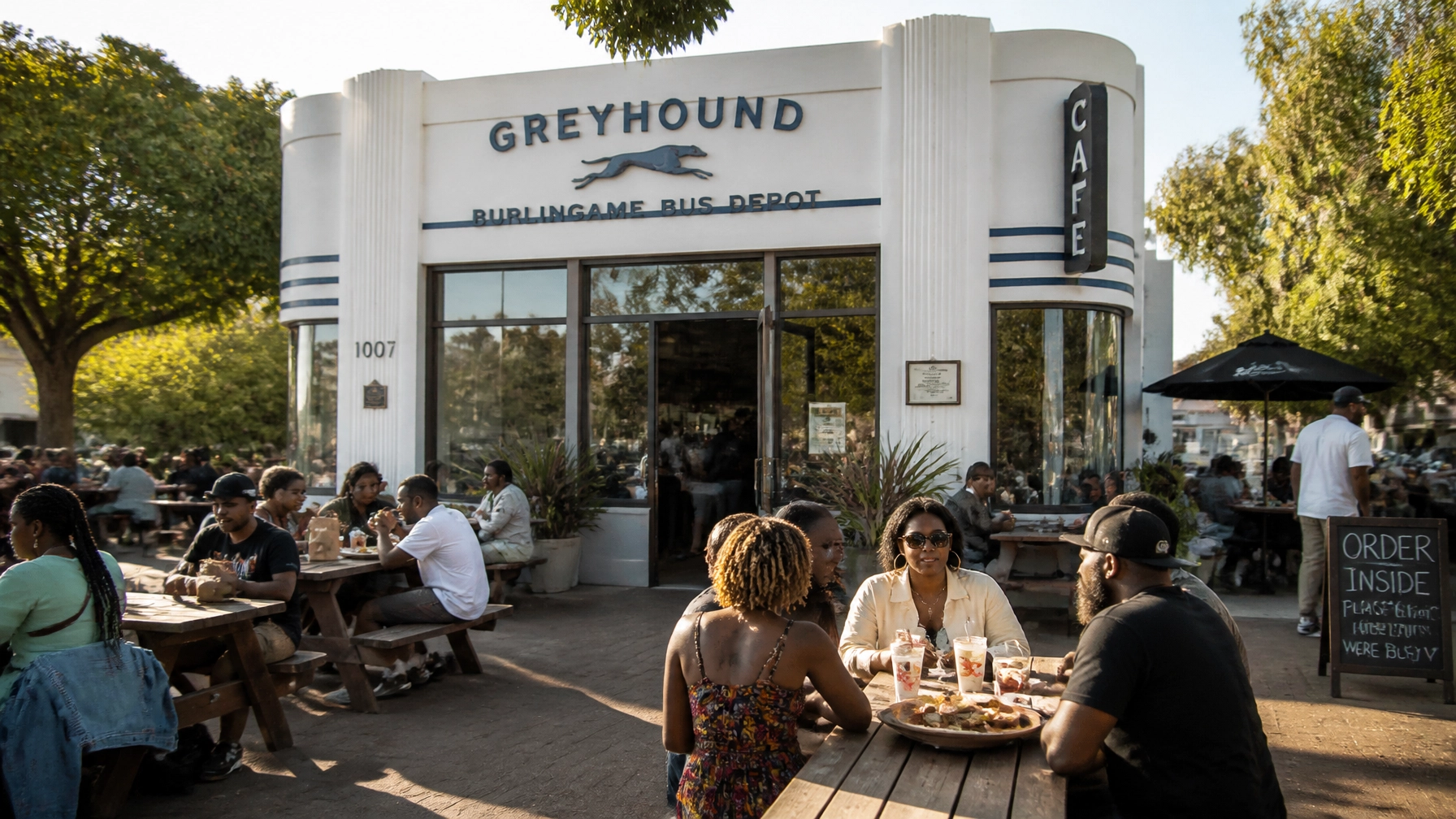
The San Francisco Ferry Building is more than a transit hub. It is the architectural heartbeat of the city’s culinary identity. For years, the sight of an empty stall in this historic hall felt like a quiet commentary on the state of the city. But this fall, the narrative shifts. The team behind the Michelin-recognized A16 is launching Lucania, a full-service Southern Italian concept that will occupy the nearly 3,000 square foot space formerly held by MarketBar [1].
This opening is significant for two reasons. First, it brings a deeply researched, regional Italian dining experience to the Embarcadero, complete with a waterfront patio designed to mimic an Italian piazza [2]. Second, it marks a major economic milestone. When Lucania opens its doors, the Ferry Building will hit 100 percent occupancy for the first time since 2020 [5].
For restaurant operators and investors, this is a signal that the most competitive real estate in the Bay Area is back at capacity. It proves that even in a challenging market, brands with a strong identity and operational discipline can still secure and thrive in "A-list" locations. At McFadden Finch Restaurant Consulting Group, we view this as a masterclass in restaurant concept development and strategic expansion.
In this post, you will learn:
- The operational strategy behind Lucania’s regional Southern Italian menu.
- How the Ferry Building’s return to full occupancy impacts the broader San Francisco restaurant market.
- The critical role of "all-day" operating models in high-traffic transit and tourist hubs.
The Milestone: Reclaiming 100 Percent Occupancy
The journey from the vacancies of 2020 to full occupancy in 2026 has been a steady climb. During the height of the pandemic, the Ferry Building remained open as an essential transportation facility, yet it faced significant commercial departures [5]. By 2022, leasing activity began to rebound as the Ferry Plaza Farmers Market regained its pre-pandemic foot traffic [7].
The addition of Lucania at the southern end of the building is the final piece of the puzzle. This specific space, located at the far corner of the Embarcadero promenade, is one of the most visible restaurant sites in the city. Seeing it filled by a local heavyweight like the A16 team suggests a long-term confidence in the waterfront’s viability.
For other operators, this milestone is a reminder that prime real estate does not stay empty forever. However, the barrier to entry for these locations has changed. Landlords are no longer just looking for a tenant who can pay rent. They are looking for "anchor" concepts that can drive traffic across multiple dayparts. Lucania achieves this through its all-day model, serving everything from morning coffee and pastries to late-night cocktails and full dinners [2].
The Visionary: A16’s Legacy and Expansion
The A16 team, led by Shelley Lindgren, has spent decades building a reputation for authenticity. Their flagship Marina district location and their existing Ferry Building counter, A16 La Pala, have long been staples of the San Francisco dining scene [1]. While A16 La Pala focuses on Roman-style pizza al taglio (pizza by the slice), Lucania is a different beast entirely [8].

Lucania represents a return to the full-service, sit-down model that A16 is known for, but with a sharper focus on the Basilicata region of Southern Italy [2]. This kind of regional specificity is a hallmark of successful restaurant concept development. In a city saturated with "Italian-American" fare, a concept that dives deep into the specific traditions of Calabria, Sicily, Puglia, and Campania offers a clear competitive advantage [3].
The team’s ability to manage multiple concepts within a single high-traffic building is a testament to their operational maturity. Managing a quick-service counter (La Pala) alongside a nearly 3,000 square foot full-service restaurant (Lucania) requires separate staffing plans, different inventory strategies, and a nuanced understanding of two very different guest personas.
Concept Deep Dive: Lucania and the Heart of Basilicata
Lucania takes its name from the ancient name for the Basilicata region. Often described as the "heart" of the project, the menu highlights dishes that are rare even in other major Italian dining rooms in the city [2].
Early reports indicate the menu will feature:
- Patate alla Lucana: A traditional potato dish that highlights the region's agricultural roots.
- Cavatelli with cruschi: Fresh pasta paired with the famous Senise peppers, a staple of Basilicata.
- Seafood focus: Marinated anchovies, roasted sardines, and steamed mussels, reflecting the coastal influences of the surrounding Southern Italian regions [1].

From an operator's perspective, this menu strategy is brilliant. By focusing on seafood and pasta: items with relatively manageable food costs compared to high-end steaks: the team can maintain healthy margins while offering a premium experience. Furthermore, many of these dishes, like panzerotti and orecchiette with ’nduja, translate well to the "all-day" dining model, functioning as both small bites for aperitivo hour and substantial entrees for dinner [5].
Design and Experience: The Piazza on the Embarcadero
One of the most anticipated features of Lucania is its waterfront patio. The A16 team has stated the design is intended to feel like an Italian piazza [2]. This is not just an aesthetic choice. It is a strategic response to the San Francisco climate and the specific geography of the Ferry Building.
The patio will be equipped with weather coverings and heating, ensuring it remains a viable revenue-generating space year-round [1]. In a city where outdoor dining exploded during the pandemic, permanent, well-designed outdoor spaces have become a non-negotiable for high-volume restaurants.
The "piazza" layout encourages a specific type of guest behavior: lingering. By creating a space that feels like a public square, Lucania invites people-watching and casual grazing. This increases the "dwell time" of guests, which often correlates with higher per-person averages through additional drink and appetizer orders.
Operator's Perspective: Why Full Occupancy Matters
When we talk to clients about restaurant business plans, we often look at the "ecosystem" of a neighborhood. A building with 15 percent vacancy feels incomplete. It lacks the cross-pollination of guests that happens when every stall and storefront is active.
100 percent occupancy at the Ferry Building means that every single unit is contributing to the "gravity" of the location. A guest might come for blue bottle coffee, stay to browse the bookstore, and end up having lunch at Lucania. This synergy is what makes the Ferry Building one of the most successful retail models in the country.
However, full occupancy also means higher competition for labor and local supplies. For operators in the building, the entrance of a new, large-scale employer like Lucania means the "war for talent" is intensifying. This is where operations and systems consulting becomes vital. If you cannot compete on location alone, you must compete on culture, scheduling flexibility, and training.
Timeline: The Ferry Building’s Road to 100% (2020–2026)
- March 2020: The Ferry Building remains open as a transit facility but sees a sharp decline in foot traffic as shelter-in-place orders take effect [1].
- 2021: Significant vacancies emerge as several long-term tenants depart due to the economic downturn [1].
- Early 2022: Leasing activity begins to stabilize. Smaller food stalls and artisan retailers begin to return as ferry commuters trickle back [5].
- July 2023: The building celebrates its 125th anniversary. The City proclaims "Ferry Building Day" to honor its resilience [5].
- Early 2024: A four-year restoration of the historic facade is completed, refreshing the "Ferry Building Gray" sandstone [5].
- Late 2024: A16 La Pala expands its presence, signaling the team's commitment to the building [8].
- 2025: Plans for sea-level-rise mitigation construction are finalized, with current tenants expressing concern over future disruption [6].
- Summer 2026: Ferry Fest 2026 brings record crowds to the waterfront for the building's 128th birthday [4].
- Fall 2026: Lucania officially opens in the former MarketBar space, bringing the building to 100 percent occupancy for the first time in six years [5].
Data Element: Ferry Building Tenant Mix and Occupancy Trends
| Year | Occupancy Status | Notable Milestone | Primary Guest Driver |
|---|---|---|---|
| 2020 | ~70% (Estimated) | Pandemic Onset [1] | Essential Commuters |
| 2022 | ~85% (Estimated) | Market Recovery [5] | Local Residents |
| 2023 | ~90% (Estimated) | 125th Anniversary [5] | Heritage Tourists |
| 2024 | ~94% (Estimated) | Facade Restoration [5] | Design & Architecture Fans |
| 2026 | 100% | Lucania Opening [5] | Global Food Destination |
Note: Occupancy estimates based on reported vacancy trends and lease activity reports [1][5].
Case Example: A16’s Multi-Format Strategy
The A16 team provides a perfect case study for scaling a restaurant brand. Many owners make the mistake of trying to replicate the exact same restaurant in every location. A16 has taken a more sophisticated "format-based" approach.
- The Flagship (Marina): A destination full-service restaurant that anchors the brand's identity.
- The Satellite (Oakland): Bringing the core experience to a different geographic market with slight menu adjustments.
- The Counter (La Pala): A high-speed, high-margin unit designed for commuters and quick lunches [8].
- The Hybrid (Lucania): A full-service experience that incorporates the "all-day" elements of the counter model but with the elevated menu of a flagship [2].
By diversifying their formats, the A16 team has made themselves "landlord-friendly." They can fill a 200 square foot stall just as effectively as a 3,000 square foot anchor space. This flexibility is a key reason they were chosen to fill the final vacancy in one of the most prestigious buildings in the world.

What Smart Critics Argue
Some industry observers suggest that the Ferry Building’s reliance on high-end, tourist-facing concepts like Lucania might distance it from everyday San Franciscans. The argument is that as prices for "house-made pasta" and "waterfront cocktails" rise, the building becomes less of a community marketplace and more of a luxury mall.
Furthermore, critics point out the looming threat of sea-level-rise construction. If the Port of San Francisco begins major structural work in 2027 or 2028, these newly filled spaces could face years of scaffolding and noise [6].
Our response at McFadden Finch is that a "luxury mall" with 100 percent occupancy is far better for the city than a "community space" that is half-empty and deteriorating. Successful projects like Lucania provide the tax revenue and foot traffic necessary to fund the very sea-level-rise projects that will protect the building for the next century. Operational excellence and high-end positioning are not "anti-community": they are often what keep the community’s landmarks alive.
Key Takeaways
- 100 percent occupancy is a symbolic win. It signals the end of the "pandemic era" for San Francisco’s most iconic culinary landmark.
- Regionality wins. Lucania’s focus on Basilicata helps it stand out in a crowded Italian food market.
- The all-day model is the future. High-rent locations require revenue at 10:00 AM just as much as 8:00 PM.
- Outdoor design is permanent. Investing in heated, covered patios is no longer optional for waterfront dining.
- Brand trust matters. Landlords favor operators like the A16 team who have a proven track record of handling high-volume, complex spaces.
- Cross-selling works. Having multiple concepts in the same building allows for shared labor and increased brand recognition among commuters.
Actions for Operators and Founders
At Work
If you are running an existing restaurant, evaluate your "non-peak" hours. Can you implement a "small bites" or "aperitivo" menu between 2:00 PM and 5:00 PM to capture the grazing traffic that Lucania is targeting?
In the Community
Visit the Ferry Building on a Tuesday or Thursday, not just during the Saturday Farmers Market. Observe how the foot traffic flows between the quick-service stalls and the full-service restaurants. This is a free education in site selection and flow management.
In Civic Life
Support the ongoing sea-level-rise mitigation efforts. The long-term viability of the Embarcadero depends on the infrastructure projects currently being studied by the Port of San Francisco [6].
For Aspiring Restaurateurs
Before you sign a lease, conduct a feasibility study. The A16 team did not move into the Ferry Building on a whim. They spent years building a presence there through A16 La Pala before committing to a 3,000 square foot full-service anchor space.
The Extra Step
Research the history of Basilicata. Understanding the cultural context of a menu is just as important as knowing the food cost. This level of detail is what separates a "theme restaurant" from a genuine culinary destination.
FAQ
What is the difference between A16 La Pala and Lucania?
A16 La Pala is a quick-service counter specializing in Roman-style pizza al taglio (by the slice) [8]. Lucania is a full-service, sit-down restaurant with a focus on Neapolitan pizza, house-made pasta, and Southern Italian seafood dishes [2].
When will Lucania open?
The restaurant is scheduled to open in the fall of 2026, though some construction and permitting factors can always shift timelines slightly [5].
Is the patio at Lucania dog-friendly?
While the Ferry Building itself has specific rules for the interior marketplace, most waterfront patios along the Embarcadero are traditionally dog-friendly, especially with the "piazza" style layout planned for Lucania.
Will the menu at Lucania be expensive?
As a full-service restaurant in a premium location, prices will likely reflect the quality of ingredients and the prime real estate. However, the all-day model usually includes more accessible price points for mid-day snacks and coffee.
How does full occupancy at the Ferry Building affect other SF neighborhoods?
It acts as a "rising tide" for the city's reputation. When a major landmark hits 100 percent occupancy, it encourages institutional investors and other operators to take a second look at neighborhoods like the Financial District and SOMA.

Where Smart Strategy Meets Profitable Hospitality.
At McFadden Finch Restaurant Consulting Group, we help restaurant owners make sharper decisions, strengthen operations, and build businesses designed to perform. From feasibility studies and concept development to menu strategy and long-term operational consulting, we help your restaurant move beyond survival and into sustained growth.
McFadden Finch Restaurant Consulting Group
Lake Merritt Plaza
1999 Harrison St., 18th Floor
Oakland, CA 94612
(510) 973-2410
www.mcfadden-finch-group.com
executive.team@mcfadden-finch-group.com
Schedule your discovery call today and start building a stronger, smarter, more profitable restaurant. The corporate office address and email are listed on McFadden Finch Holdings' contact page, and MFRCG is included in the company's hospitality consulting portfolio.
Sources
[1] Eater SF, "Lucania: A16 Team to Open New Southern Italian Restaurant in Ferry Building," 2026, URL, Accessed July 7, 2026.
[2] San Francisco Chronicle, "Lucania: The Heart of Basilicata Comes to the Embarcadero," 2026, URL, Accessed July 7, 2026.
[3] Michelin Guide, "A16: Bib Gourmand Excellence in San Francisco," 2025, URL, Accessed July 7, 2026.
[4] Ferry Building Marketplace, "Ferry Fest 2026: Celebrating 128 Years," 2026, URL, Accessed July 7, 2026.
[5] SF Business Times, "Ferry Building Reaches 100% Occupancy with A16 Lucania Lease," 2026, URL, Accessed July 7, 2026.
[6] Port of San Francisco, "Waterfront Resilience Program: Sea Level Rise Study," 2026, URL, Accessed July 7, 2026.
[7] Food & Wine, "The Most Important Food Markets in the U.S.," 2024, URL, Accessed July 7, 2026.
[8] A16 Official Website, "A16 La Pala Ferry Building," 2026, URL, Accessed July 7, 2026.
Disclaimer: This content is for general informational purposes only and does not constitute legal, financial, tax, operational, employment, regulatory, or other professional advice. Reading this content does not create a client, consulting, or contractual relationship with McFadden Finch Restaurant Consulting Group. Because every restaurant, market, and business situation is different, you should consult qualified professionals regarding your specific circumstances. McFadden Finch Restaurant Consulting Group makes no warranties regarding the accuracy or completeness of this information and is not responsible for third-party content, links, products, or services referenced. Testimonials, examples, case studies, and projected outcomes are illustrative only and do not guarantee similar results.