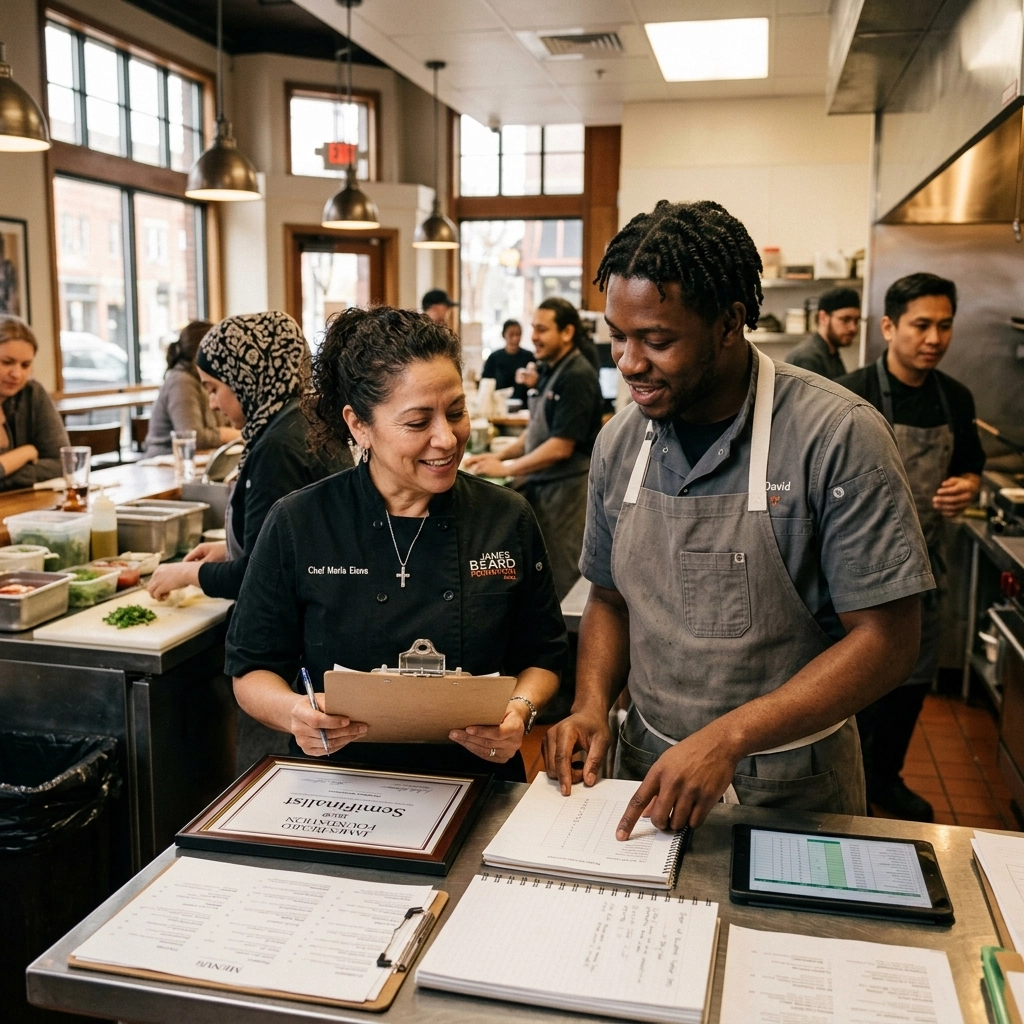
In January 2026, Chef Celina Tio, a James Beard Award winner, did something most chefs wouldn't dare: she let artificial intelligence design a five-course tasting menu for her restaurant. Then she cooked her own version of the exact same menu and served both to paying guests without telling them which was which.
The experiment, called "Bits & Bytes," took place at Ground Control, Tio's 22-seat tasting room in Kansas City. According to (Kansas City Business Journal)[1], Tio gave AI a simple prompt: "Give me a five-course tasting menu I can serve in Kansas City, Missouri, on this date." The AI returned titles, descriptions, and full recipes. Tio looked only at the titles and descriptions to craft her take, while chef Steven Branson prepared the AI versions exactly as written.
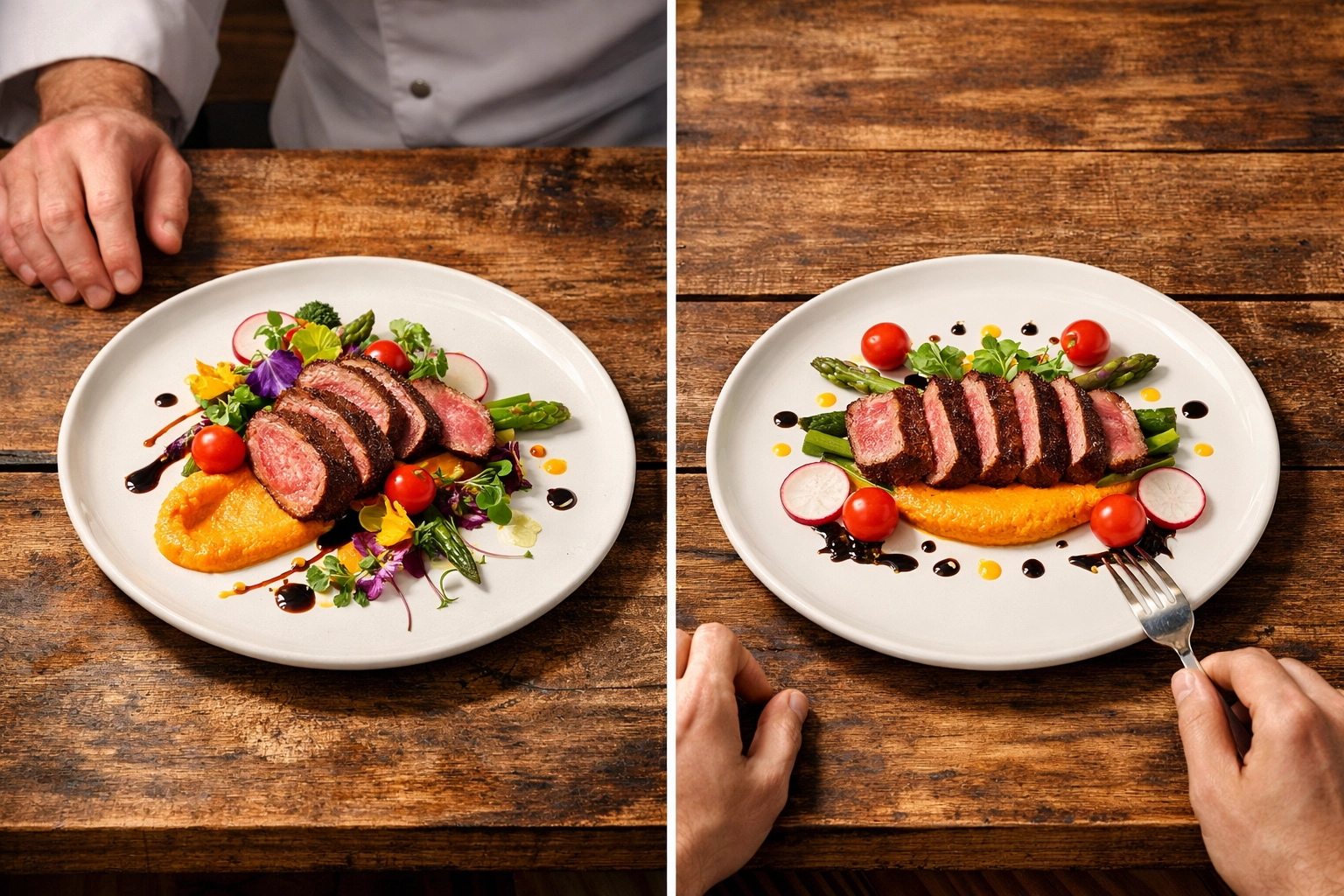
Diners came in pairs. One person received the AI dish, the other received Tio's interpretation. They didn't know who made what until the end of the night. The result? AI produced dishes with "good flavor," but every guest could still identify which plates came from Tio. Her dishes had what she calls "an elevated flair", the human touch that comes from decades of cooking, storytelling, and lived experience (Kansas City Business Journal)[1].
This isn't just a fun experiment. It's a signal for every restaurant operator trying to figure out where AI fits in their kitchen. The answer: it's a powerful tool for brainstorming, consistency, and efficiency, but it cannot replace the creative soul that builds a brand.
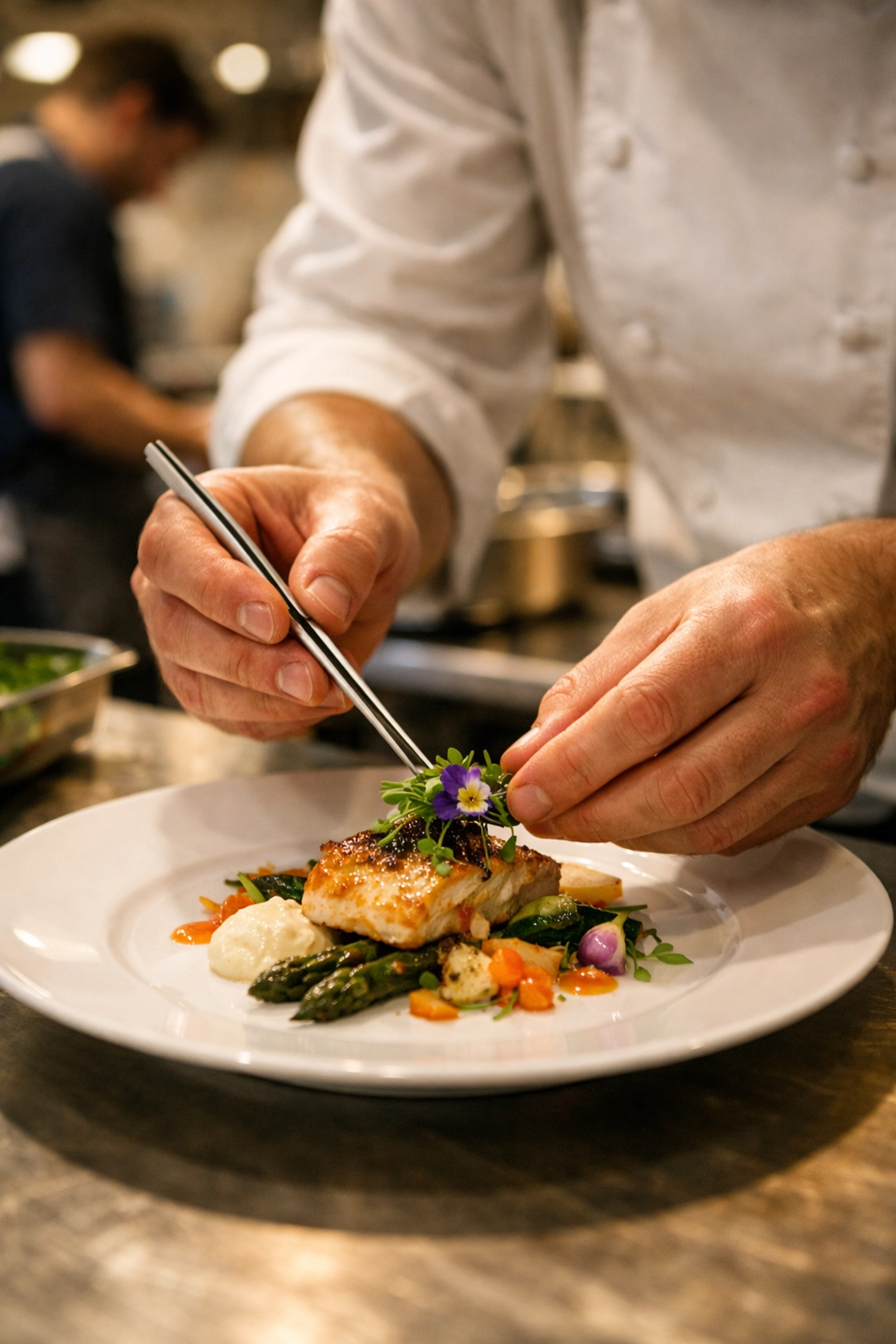
The Setup: How the AI vs. Human Experiment Worked
Tio's "Bits & Bytes" tasting menu wasn't a publicity stunt. It was a controlled test of whether AI could match the creativity of a chef who won a James Beard Award in 2007 for Best Chef: Midwest while running The American Restaurant in Kansas City.
Here's how it worked:
- The Prompt: Tio asked the AI for a five-course tasting menu appropriate for Kansas City in January 2026.
- The Output: AI returned a full menu with dish titles, descriptions, and recipes.
- The Split: Tio only read the titles and descriptions. She then created her own dishes. Chef Steven Branson, who leads The Belfry Collective, cooked the AI recipes without deviation.
- The Service: Diners came in pairs. Each course was served blind, one person got the AI version, the other got Tio's. Plates alternated, so both diners tasted both versions across the five courses.
- The Reveal: At the end of the meal, Tio told guests which dishes were hers and which were AI-generated (Kansas City Business Journal)[1].
The January menu included dishes like roasted celery root velouté, beef cheek with red wine and cocoa, and olive oil polenta cake with blood orange marmalade. On paper, both versions sounded sophisticated. In execution, Tio's versions had a narrative thread, each dish connected to a memory, a technique, or a regional ingredient story that the AI couldn't replicate.
What Diners Could Taste: The "Soul" Difference
Every guest at the September 2025 and January 2026 dinners correctly identified which dishes were Tio's. That consistency isn't luck, it's evidence of what researchers call "uniqueness neglect," the tendency for people to undervalue the irreplaceable aspects of human creativity until they experience them side-by-side with algorithmic output.
Tio's dishes had what she describes as storytelling. When she competed on "Iron Chef America," she made povitica, a Croatian sweet bread, because her babysitter used to bake it for her in winter. That's not a recipe an AI can generate. It's a memory encoded into flavor (Kansas City Business Journal)[1].
"A human can tell a better story because I have experiences and an actual palate and actual eyes and knowledge," Tio said. She compared it to songwriting: "They're writing a song based on their hurt, their joy, and their life experiences. Their music comes from a feeling" (Kansas City Business Journal)[1].
The AI dishes had "good flavor," but they lacked layering, the kind of intentional contrast and progression that comes from understanding not just what tastes good, but what feels right in a specific moment, for a specific diner, in a specific place. That's computational gastronomy's ceiling: it can optimize for known variables, but it can't invent meaning.
Where AI Actually Helps: The Operations Side
Here's the part that matters for restaurant operators: AI didn't fail, it just operated within its lane. And that lane is incredibly useful if you know how to use it.
According to (IBM Research)[2], computational gastronomy refers to the use of data science and AI to analyze flavor compounds, predict ingredient pairings, and generate recipes based on existing culinary databases. AI can pull from millions of recipes in seconds, identify patterns, and suggest combinations that a human chef might not think of immediately.
For restaurant operators, that means AI is a strong tool for:
- Menu brainstorming: Generate 20 variations of a seasonal dish in under a minute.
- Inventory optimization: Suggest dishes based on ingredients you already have in stock.
- Consistency: Standardize recipes across locations so every location serves the same dish the same way.
- Dietary customization: Auto-generate gluten-free, vegan, or allergen-safe versions of existing dishes.
But AI cannot:
- Taste.
- Adjust seasoning based on the batch of tomatoes you got this week.
- Make a dish "lighter" or "richer" based on intuition.
- Tell a story that connects your restaurant to your community.
Chef Branson, who proposed the AI experiment, found the process frustrating. "Steven didn't like doing it," Tio said. "He's cooking with his hands tied behind his back, and he's a creative person" (Kansas City Business Journal)[1]. That's the operational lesson: AI recipes are starting points, not endpoints.
The Brand-Building Power of the Human Chef
Tio's experiment reveals something critical for independent restaurants: your chef's story is part of your brand equity.
Food critic Morgan Wujkowski notes that AI "lacks common sense and culinary experience" and "follows algorithms, not tastebuds," while human creativity and intuition remain "paramount in recipe development" (Spoon University)[3]. This isn't just about taste, it's about trust. Diners want to know who is cooking their food and why it matters.
This is especially important in 2026, when foot traffic in many urban markets is still recovering from pandemic-era disruptions. According to (CoStar Group)[4], office occupancy in major metros remains 20-40% below pre-2020 levels, meaning fewer lunch customers and fewer automatic weeknight covers. Restaurants competing for a smaller pool of diners need differentiation.
What differentiates you isn't just the food, it's the narrative around the food. Tio's James Beard Award, her history at The American, her connection to Kansas City, and her willingness to experiment publicly all build a brand that AI cannot replicate. That's why Tio can charge premium prices for a 22-seat tasting menu in a mid-sized market.
For smaller operators, the lesson is similar: your chef's Instagram stories, your menu descriptions, your response to a Yelp review, all of these touch points communicate whether a human is steering the ship or whether you're just running a kitchen on autopilot.
What Smart Critics Argue
Not everyone agrees that AI is inherently limited in the kitchen. Some technologists argue that as machine learning models improve, AI will eventually develop "taste" through sensor integration and feedback loops. IBM's Chef Watson project, launched in 2014 and later discontinued, attempted exactly this, pairing ingredient databases with user feedback to "learn" flavor preferences (IBM Research)[2].
Others point out that many restaurant dishes are already partially algorithmic. Chain restaurants use centralized recipe databases, pre-portioned ingredients, and strict plating guides to ensure consistency. In that environment, AI isn't replacing creativity, it's enhancing an already systematized process.
The counterargument here is valid but narrow. Yes, AI will improve. Yes, some restaurants should use AI to standardize operations. But the Bits & Bytes experiment wasn't testing whether AI could replicate a Chili's appetizer. It was testing whether AI could match a James Beard winner's tasting menu: a format built entirely on creativity, surprise, and chef-driven narrative.
In that context, AI did well but lost decisively. And that tells us where the boundary is today: AI is a co-pilot, not a pilot. It's a tool for computational gastronomy: the science of flavor and structure: but not for narrative gastronomy, which is what Tio's diners actually paid for.
What to Do Next: A Practical Roadmap for Operators
If you're running a restaurant and trying to figure out where AI fits, here's how to approach it:
-
Start with inventory and waste reduction. Use AI tools like (Winnow)[5] or (Leanpath)[6] to track food waste and suggest menu changes based on what's expiring. This saves money immediately and doesn't touch your creative process.
-
Use AI for menu brainstorming, not menu finalization. Tools like ChatGPT or (ChefGPT)[7] can generate 50 variations of a dish in seconds. Your chef picks the three that feel right, then refines them by hand.
-
Standardize your recipes with AI-assisted documentation. If you're scaling to multiple locations, AI can help convert a chef's loose notes into precise, repeatable recipes. This protects consistency without forcing your chef to spend hours writing procedure manuals.
-
Test AI cocktails before AI food. Cocktails are more formulaic than plated dishes. Tio's experiment included AI-generated cocktails from John Phelps of ANNX Spirits Co., which performed better than the food because cocktails rely more on ratios and less on storytelling (Kansas City Business Journal)[1].
-
Never let AI write your menu descriptions. Menu copy is brand voice. Diners read it before they taste anything. If your descriptions sound like they were written by a chatbot, you've lost trust before the food arrives.
-
Track your chef's creative output separately from efficiency metrics. Your POS system can tell you which dishes sell. It cannot tell you which dishes build your reputation. Make sure you're measuring both.
-
If you're doing a marketing stunt like Bits & Bytes, make it educational. Tio's experiment worked because it was honest and transparent. She didn't claim AI was bad: she showed where it fits and where it doesn't. That's a story local media will cover, and it builds credibility with diners.
-
Use AI to make your staff's jobs easier, not to replace them. AI can auto-generate prep lists, suggest reordering schedules, and even draft training manuals. That frees your chef to do what they do best: cook.
-
If you're a James Beard–level chef, consider your own version of this experiment. Tio's Bits & Bytes dinners sold out. Diners want to understand how AI works in restaurants, and they'll pay to participate in the conversation.
-
Keep the human in the loop. No matter how sophisticated the AI, always have a human chef review, taste, and adjust before service.
Frequently Asked Questions
Can AI actually create new recipes, or is it just remixing existing ones?
AI generates recipes by analyzing patterns in existing culinary databases. According to (IBM Research)[2], AI can identify novel flavor pairings based on shared chemical compounds, but it's still working from a dataset of human-created dishes. It's remixing at a high level, not inventing from scratch.
Will AI eventually replace line cooks?
Not in the way most people think. Robotic kitchens like those tested by (Miso Robotics)[8] can flip burgers or fry wings, but they struggle with tasks requiring dexterity, judgment, or adaptation. AI is more likely to assist line cooks: automating repetitive tasks: than replace them entirely.
How much does it cost to integrate AI into a restaurant kitchen?
It depends on the use case. Software tools for inventory management or recipe generation cost $50–$500/month. Robotic cooking equipment starts around $30,000 and goes up from there. For most independent operators, the ROI is in software, not hardware.
Did Chef Tio lose any money running the Bits & Bytes experiment?
She doesn't say, but the dinners sold out, and the press coverage likely drove more traffic to her other concepts. Even if the margins were tight, the brand-building value was significant (Kansas City Business Journal)[1].
What happens if diners prefer the AI version?
In Tio's case, they didn't. But if they did, that would tell you the AI nailed the flavor profile for that specific dish. The chef's job would then be to reverse-engineer why it worked and build on it. AI as feedback loop, not replacement.
Is this just a gimmick, or is it a real trend?
It's both. The Bits & Bytes dinner is a gimmick in the best sense: it's a smart marketing play that also generates genuine insights. But the broader trend: AI in restaurant operations: is very real and accelerating fast.
Key Takeaways
- Chef Celina Tio's Bits & Bytes experiment proved that AI can generate technically competent recipes, but it cannot replicate the storytelling and creative intuition of an experienced chef.
- Diners consistently identified Tio's dishes over AI dishes, demonstrating that human creativity remains a measurable competitive advantage in fine dining.
- AI is best used as a brainstorming tool, not a replacement for chefs: it excels at pattern recognition and efficiency but lacks lived experience and taste.
- For restaurant operators, AI's value lies in inventory management, recipe standardization, and computational gastronomy: not in brand-building or menu creativity.
- Chef-driven narrative is a core component of brand equity, especially in markets where foot traffic and dining frequency remain below pre-pandemic levels.
- The experiment also revealed that AI-generated cocktails performed better than AI-generated food, suggesting that more formulaic culinary applications are better suited to algorithmic design.
- Operators should use AI to make their staff's jobs easier: automating documentation, prep lists, and waste tracking: not to eliminate human judgment from the kitchen.
Let's Talk About Your Menu
Whether you're rethinking your menu for efficiency, exploring how AI fits into your operations, or just trying to build a stronger connection between your kitchen and your brand, we can help. McFadden Finch Restaurant Consulting Group works with independent operators and emerging chains to design systems that scale without losing soul.
Call us at (510) 973-2410 or visit our services page to book a discovery call.
Sources
[1] Leslie Collins, "James Beard winner pits her cooking against AI," Kansas City Business Journal, February 10, 2026, https://www.bizjournals.com/kansascity/, Accessed February 10, 2026.
[2] IBM Research, "Computational Gastronomy," IBM Topics, https://www.ibm.com/topics/computational-gastronomy, Accessed February 10, 2026.
[3] Morgan Wujkowski, "AI vs. Human Creativity in Recipe Development," Spoon University, https://spoonuniversity.com/, Accessed February 10, 2026.
[4] CoStar Group, "Office Occupancy and Foot Traffic Data 2026," CoStar Analytics, https://www.costar.com/, Accessed February 10, 2026.
[5] Winnow Solutions, "AI-Powered Food Waste Tracking," https://www.winnowsolutions.com/, Accessed February 10, 2026.
[6] Leanpath, "Food Waste Prevention Technology," https://www.leanpath.com/, Accessed February 10, 2026.
[7] ChefGPT, "AI Recipe and Menu Generator," https://www.chefgpt.xyz/, Accessed February 10, 2026.
[8] Miso Robotics, "Robotic Kitchen Automation Systems," https://misorobotics.com/, Accessed February 10, 2026.
McFadden Finch Restaurant Consulting Group is a full-service consulting firm specializing in restaurant operations, kitchen design, turnaround strategies, and technology integration. We work with independent operators, emerging chains, and hospitality groups to build systems that scale without sacrificing quality or soul. From menu engineering to staff training to sustainability audits, we help you run a tighter, smarter, more profitable operation.
📞 (510) 973-2410
🌐 mcfadden-finch-group.com