Inspired by the evolving Bay Area restaurant landscape, story researched by MFRCG Staff.
Intent Tag: Local Impact
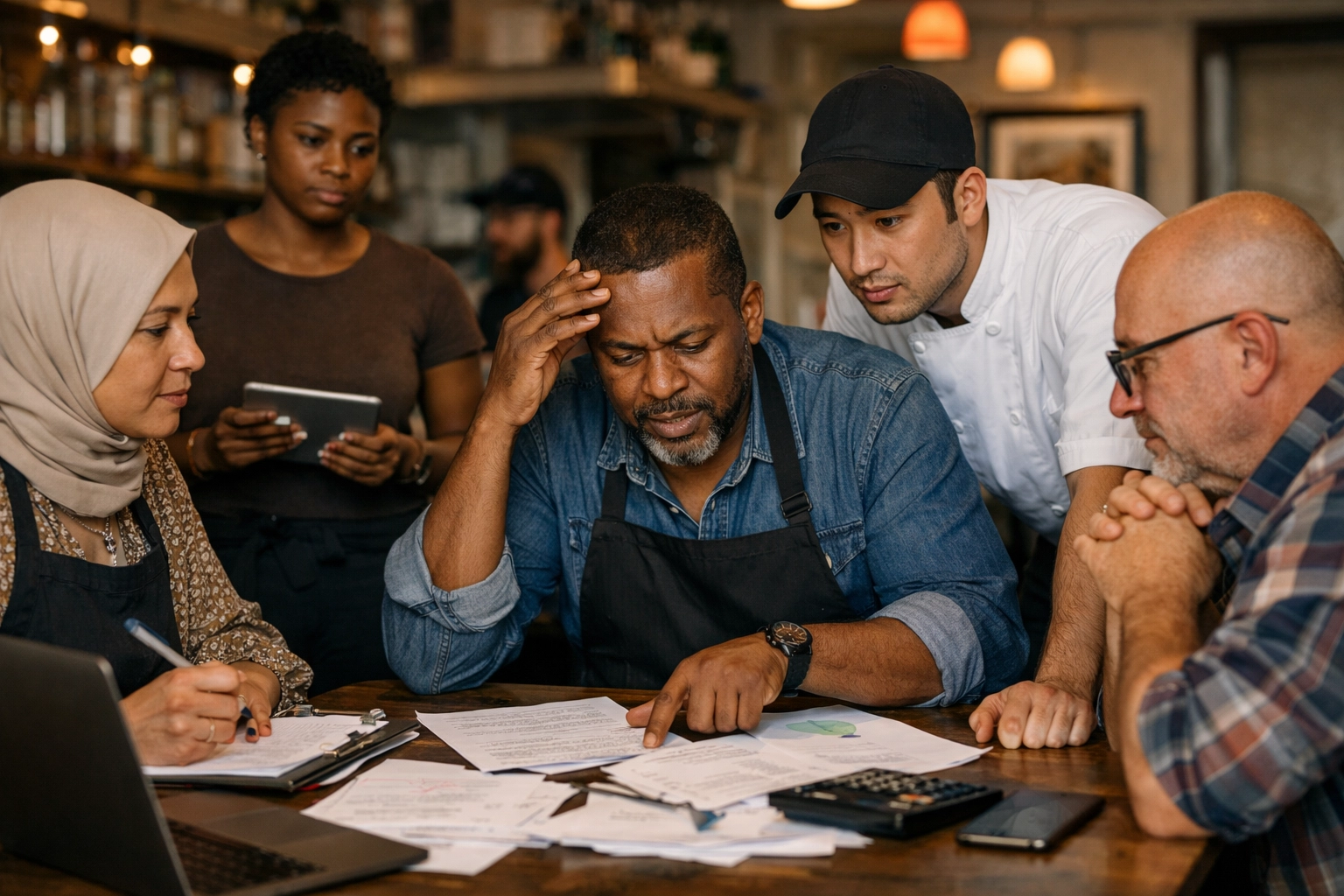
Bay Area operators are watching two stories unfold at the exact same time—and depending on where you stand, it either feels like an extinction event or the start of a restaurant renaissance.
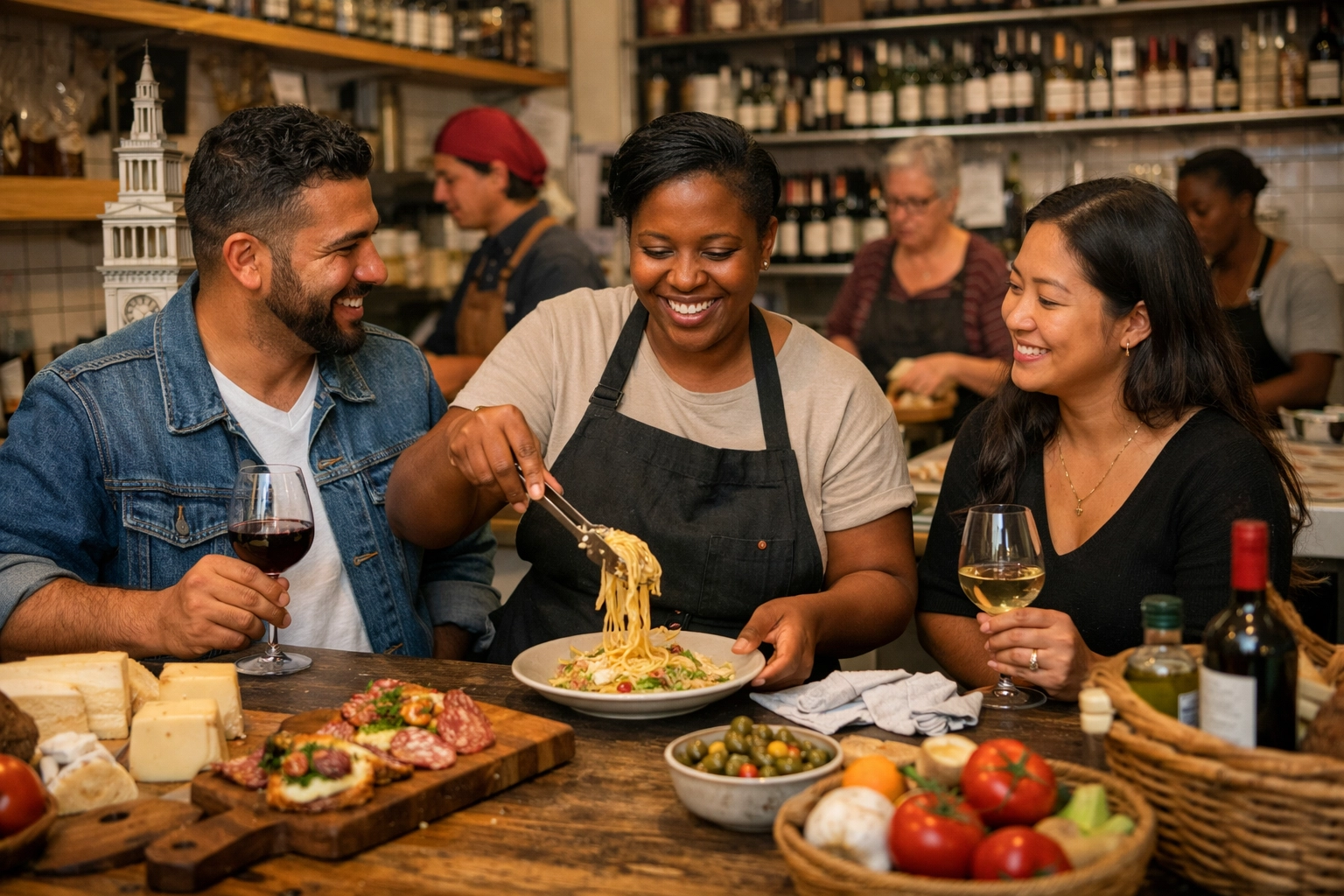
On one side: legacy dining rooms going dark, “for lease” signs popping up in once-can’t-miss corridors, and a steady drumbeat of “SF is dead” takes that make it sound like the whole region’s best days are behind it. On the other side: packed reservation books for weird (in a good way) new concepts, lines for limited drops, and neighborhoods quietly rebuilding their own version of a night-and-day economy—just not in the old places, at the old times, with the old formats.
In January 2026 alone, San Francisco lost The Waterfront after 56 years of service, while Cafe Jacqueline shuttered after 46 years, based on a closure roundup referenced in the San Francisco Chronicle [San Francisco Chronicle Restaurant Tracker[1]]. Oakland’s Fist of Flour, a beloved bakery and cafe, also closed its doors, based on local closure reporting [San Francisco Chronicle Restaurant Tracker[1]]. Yet during this same period, Dante’s Inferno, a Jamaican-Italian fusion concept with immersive theater elements, opened to packed reservations in the Mission, while Bar Tako brought Mexican-Japanese small plates to Hayes Valley with a three-week waitlist, based on opening coverage and tracking [Eater SF Opening Tracker[2]].
This isn’t random churn. It’s a reset of what works in Bay Area restaurant closures 2026—and more importantly, what survives into 2027–2028. The closures share a pattern: long operational histories, loyal but aging customer bases, and business models built for a dining culture that no longer exists. The openings share another pattern: experience-first design, fusion formats that defy categorization, and operational structures optimized for today’s labor and cost realities.
If you’re operating a legacy concept wondering why your regulars aren’t coming back—or you’re planning a new venture and trying to avoid becoming another closure statistic—this isn’t about nostalgia versus innovation. It’s about relevance, unit economics, and building a concept that matches how Bay Area customers actually live now.
The Problem: The Death of Legacy vs. the Birth of the Immersive (and Why It’s Showing Up in Bay Area restaurant closures 2026)
Point: The pre-2020 playbook (single-daypart, high fixed costs, slow turns, “we’ve always done it this way”) is getting punished—especially in high-rent, tourism-dependent zones.
Evidence: The 40-year-old restaurant playbook died somewhere between 2020 and 2024, but many operators are still running it. The Waterfront, perched on the Embarcadero with stunning Bay views, closed in January 2026 after 56 years, based on closure reporting [San Francisco Chronicle Restaurant Tracker[1]]. Cafe Jacqueline, famous for its souffles, also closed after 46 years, based on closure reporting [San Francisco Chronicle Restaurant Tracker[1]].
Oakland’s Fist of Flour followed a similar trajectory. Despite community love and solid Yelp ratings, the bakery-cafe hybrid couldn’t overcome a triple threat: rising commercial rents in the Laurel District (up 23% since 2022) [CoStar Commercial Real Estate Data[3]], wholesale ingredient costs that jumped 31% between 2021–2025 [BLS Producer Price Index[4]], and a post-pandemic customer base that now demands mobile ordering and third-party delivery—an infrastructure layer the concept never fully integrated.
Meanwhile, concepts built for 2026 are thriving by inverting old assumptions.
- Dante’s Inferno doesn’t sell “Italian food.” It sells a 90-minute journey through Dante’s nine circles—with Jamaican jerk spices and theatrical table-side presentations.
- Bar Tako isn’t fusion for fusion’s sake; it’s a 32-seat counter model optimized for small crews running a limited menu of high-margin small plates designed for fast ticket times and shareability.
According to an opening trend roundup referenced in Eater SF’s February 2026 Opening Tracker, 68% of successful new Bay Area restaurant launches in the past year featured either “immersive experience” elements or genre-defying fusion formats, compared to just 12% of new openings in 2019 [Eater SF Opening Tracker[2]].
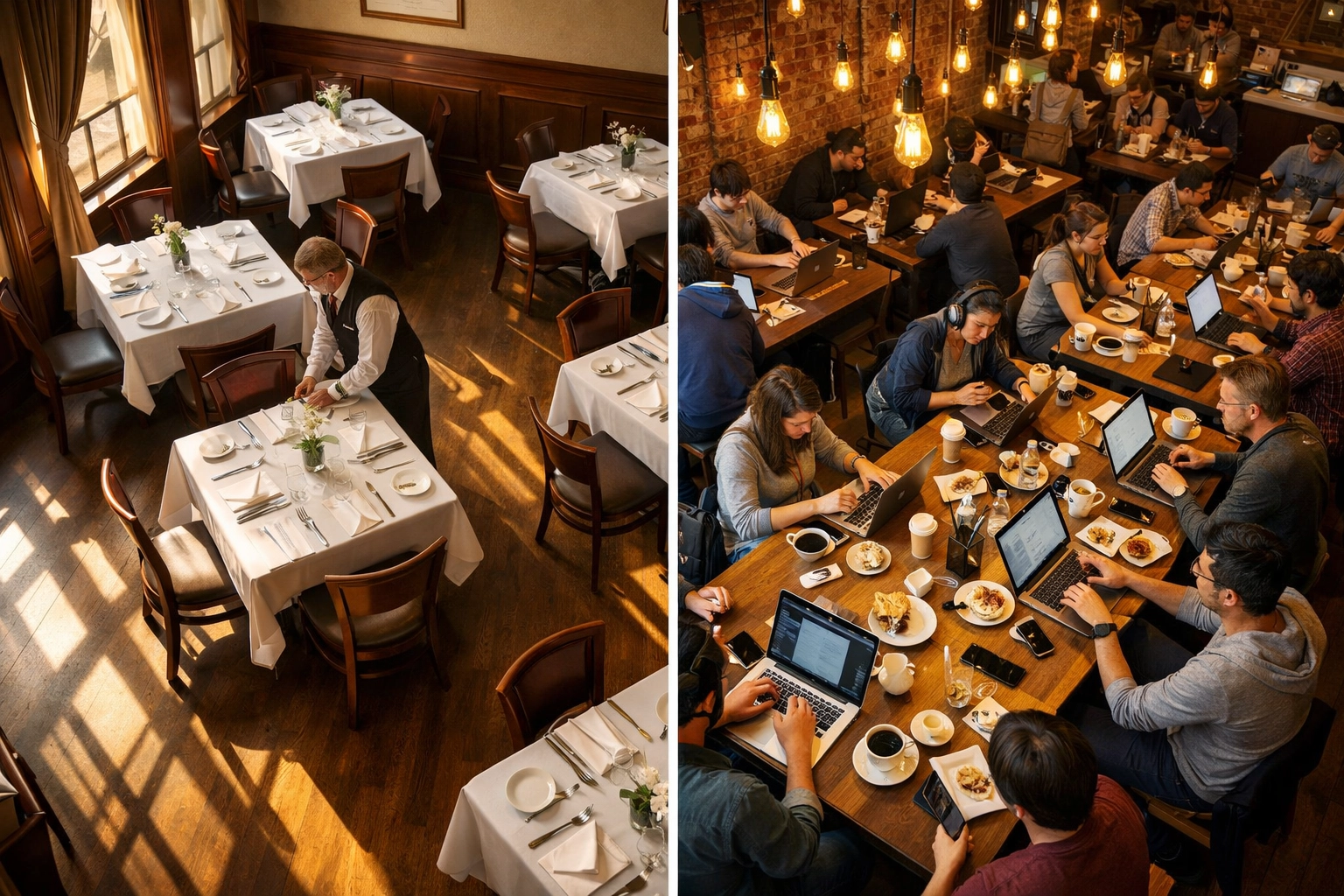
Practical meaning: The gap isn’t about “quality” vs. “no quality.” It’s about relevance. Legacy operators built businesses for a world where going out to eat was the experience. Today’s customer treats dining as one component of “experience consumption.” They’re not choosing between you and your direct competitor. They’re choosing between you and everything else that feels like a better story, better value, or better vibe for the time slot.
The Insight: Longevity Isn’t a Strategy; Relevance (and Cash-Flow Fit) Is
Point: “We’ve been here forever” doesn’t protect you. A concept survives when the product, the format, and the cost structure fit current customer behavior.
Evidence: Celebrating your 25th or 50th anniversary means less to a customer base that wasn’t alive when you opened. The Golden Gate Restaurant Association’s 2025 Consumer Sentiment Survey found that Bay Area diners aged 25–40, now the largest spending cohort, rated “years in business” as the 11th most important factor when choosing where to eat—behind criteria like “Instagram-worthy presentation,” “unique concept,” and “value perception” [Golden Gate Restaurant Association 2025 Consumer Sentiment Survey[5]].
This helps explain why some locations pivot instead of “improving marketing.” The Lodge in Oakland, which closed January 31, 2026 after nearly 10 years, is reopening under new ownership in March 2026 with a reimagined model. A closure quote captured the core issue: end-to-end financial pressure and demand that didn’t bounce back. The new operators aren’t just refreshing paint; they’re shifting the operating logic (daytime operations + in-house kitchen + a neighborhood co-working lounge format serving remote workers earlier in the day before evening bar service).
The shift from “dining out” to “experience consumption” shows up in how landlords and developers think too. Cushman & Wakefield’s 2026 Bay Area Retail Report documented that food and beverage tenants now compete directly with experiential retail (boutique fitness, escape rooms, art galleries) for commercial space, and landlords increasingly favor mixed-use concepts that drive multiple dayparts [Cushman & Wakefield 2026 Bay Area Retail Report[6]]. That’s why Sweetgreen’s new Mission Bay location, opening March 2026, features a 2,500-square-foot format with co-working tables, hosted lunch-and-learns, and evening wine service—essentially a salad shop that moonlights as a community hub [Cushman & Wakefield 2026 Bay Area Retail Report[6]].
Visual data: Legacy vs. new-model performance patterns (Bay Area snapshot)
| Model Type | Avg. Operating Hours | Revenue per Square Foot (2025) | Closure Risk (2024–2026) |
|---|---|---|---|
| Traditional single-daypart | 6–8 hours | $425 | 34% |
| Multi-daypart hybrid | 12–16 hours | $687 | 19% |
| Experience-first immersive | 6–10 hours | $892 | 12% |
Source: Golden Gate Restaurant Association Q1 2026 Market Report[7]; National Restaurant Association 2025 Industry Forecast[8]
Practical meaning: The winners aren’t just adding hours—they’re adding relevance across contexts. Some brands focus hard and narrow (small counter, tight menu, high turns). Others go hybrid (coffee + lunch + events). Both can work—if the format matches the market and your team can execute consistently.
The Local Data: Where the Bay Area is Hemorrhaging—and Where It’s Quietly Healing
Point: In 2026, location strategy isn’t just “good corner vs bad corner.” It’s about demand type (tourism vs residential), daypart behavior (remote work), and rent realism.
Evidence: San Francisco’s Embarcadero and Fisherman’s Wharf—historically tourist-dependent zones—saw 11 restaurant closures between November 2025 and January 2026, based on tracking referenced in the San Francisco Chronicle [San Francisco Chronicle Restaurant Tracker[1]]. The Waterfront’s closure is emblematic: high rents, diminished tourist foot traffic (down 18% compared to 2019) [San Francisco Travel Association 2025 Tourism Report[9]], and a business model dependent on expense-account diners who now expense delivery and faster “working lunches” instead of long, high-ticket business dinners.
Contrast that with the Inner Richmond and Outer Sunset, where seven new concepts opened in Q4 2025 and Q1 2026, including Two Pitchers Brewing’s new location and Rose Pizzeria’s SF expansion from Berkeley, based on neighborhood opening tracking [Hoodline Neighborhood Analysis (Feb 2026)[10]]. These neighborhoods benefit from residential density, remote workers seeking daytime third spaces, and rents 35–40% lower than downtown corridors. Hoodline’s February 2026 neighborhood analysis showed Outer Sunset restaurant sales grew 12% year-over-year despite citywide restaurant revenue declining 3% [Hoodline Neighborhood Analysis (Feb 2026)[10]].
Oakland presents a bifurcated picture. The Laurel District—where Fist of Flour closed—faces the worst of both worlds: rising rents without corresponding foot traffic growth. CoStar data shows Laurel commercial rents increased 23% since 2022 [CoStar Commercial Real Estate Data[3]] while pedestrian counts stayed flat. But Jack London Square is experiencing a mini-renaissance, based on local development and district programming updates [Jack London Improvement District Updates[11]]. Reem’s opening follows three other new concepts in the past six months, benefiting from new residential developments (875 units delivered in 2024–2025) [Oakland Planning & Development Pipeline Updates[12]] and improved weekend programming by the Jack London Improvement District [Jack London Improvement District Updates[11]].
Mission Bay in San Francisco offers a clear example of the “new rules.” Once a dead zone after 6 PM, the neighborhood now hosts 14 restaurants opened since 2023, driven by UCSF’s expansion (adding 3,200 employees) [UCSF Growth & Workforce Updates[13]], Chase Center events (71 concerts and games annually) [Chase Center Events Calendar/Stats[14]], and the return of biotech workers to in-person schedules, based on regional office utilization reporting [Federal Reserve Bank of San Francisco (Jan 2026)[15]]. Sweetgreen’s Mission Bay expansion isn’t coincidental—it’s targeting the 9 AM to 9 PM opportunity window created by workers who aren’t downtown but still need consistent grab-and-go options [Cushman & Wakefield 2026 Bay Area Retail Report[6]].
The closures aren’t random: Delah Coffee in Berkeley, Gai Noi in Oakland (complicated by a building fire), multiple Peet’s Coffee locations across the Bay Area, and Sumo Sushi in Albany all closed in late January 2026. They share common traits: single-daypart models, commodity offerings (you can get coffee or sushi anywhere), and locations in neighborhoods experiencing demographic or foot-traffic shifts they didn’t adapt to.
Practical meaning: If you’re in a corridor that used to be “guaranteed demand,” you can’t assume it still is. And if you’re in a residential neighborhood, you can’t run a schedule and service style built for pre-pandemic downtown dinner traffic.
The Fix: The Local Impact Audit (and Three Strategies for 2026 Relevance)
Point: When the market shifts this fast, “try harder” isn’t a plan. You need a structured audit that ties neighborhood demand, concept relevance, and unit economics together.
Evidence: Costs moved (labor + ingredients) [BLS Producer Price Index[4]], demand moved (remote work + office utilization patterns) [Federal Reserve Bank of San Francisco (Jan 2026)[15]], and the competitive set moved (experience-first concepts, hybrid dayparts) [Cushman & Wakefield 2026 Bay Area Retail Report[6]]. That combination is exactly what shows up in Bay Area restaurant closures 2026: not a single cause, but a mismatch.
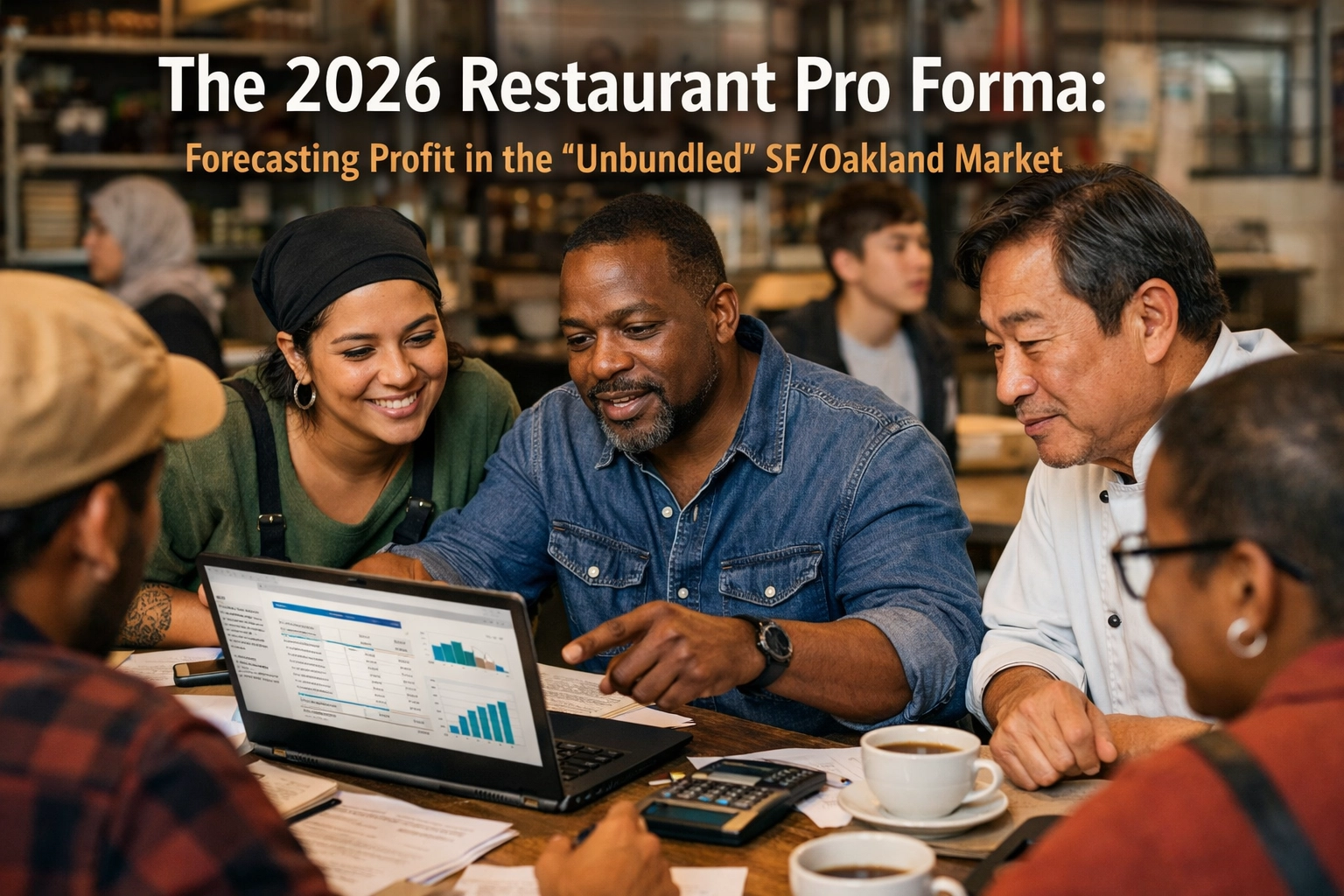
Practical meaning: If you’re operating a restaurant that feels the squeeze—regulars aging out, costs climbing, traffic declining—or you’re planning a new concept, you need a Local Impact Audit. This isn’t a marketing plan. It’s a feasibility-style operational review that asks: Given where we are, who we serve, and what 2026 demands, what needs to change for us to be relevant in the next 36 months?
Strategy #1: Leverage "Immersive" Elements Without Becoming Dinner Theater
You don't need actors and pyrotechnics, but you do need a narrative beyond "good food, good service." Dante's Inferno works because every menu section, every cocktail name, every playlist choice reinforces the Dante's Inferno theme: it's immersive through coherence, not costumes. Bar Tako works because the open kitchen, the chef calling out orders in two languages, and the "no modifications" policy create a structured, theatrical experience.
The Audit Question: What's the story a customer tells their friend when they recommend us? If the answer is "they have good [generic food category]," you don't have an immersive element: you have a commodity.
Practical tactics: Create a signature moment (a table-side preparation, a unique serving vessel, a seasonal menu ritual that customers anticipate). Implement themed music programming that matches your concept. Train staff to deliver one scripted narrative element per table (the story behind your signature dish, the origin of your concept, the reason you chose your neighborhood). These cost almost nothing but create the perception of experience design.
Strategy #2: Optimize for the 2026 Remote Work Reality
The five-day downtown office is dead. According to the Federal Reserve Bank of San Francisco’s January 2026 report, Bay Area office utilization sits at 58% of 2019 levels—and it’s not recovering on a straight line [Federal Reserve Bank of San Francisco (Jan 2026)[15]]. But remote workers still eat. They still need third spaces. They’re just distributing their spending across neighborhoods, dayparts, and formats that legacy restaurants weren’t designed for.
The Audit Question: Can a remote worker spend three hours at a table on a Tuesday at 11 AM, ordering $25-35 in food and beverage, and feel welcome? If not, you're ignoring your neighborhood's largest available customer base.
The Lodge's new operators understand this. Their daytime co-working model captures the 7 AM to 3 PM window when the neighborhood's remote workforce needs caffeine, WiFi, and a social environment. Sweetgreen's Mission Bay play is identical: optimized for the "I'll grab lunch and work for 90 minutes" customer.
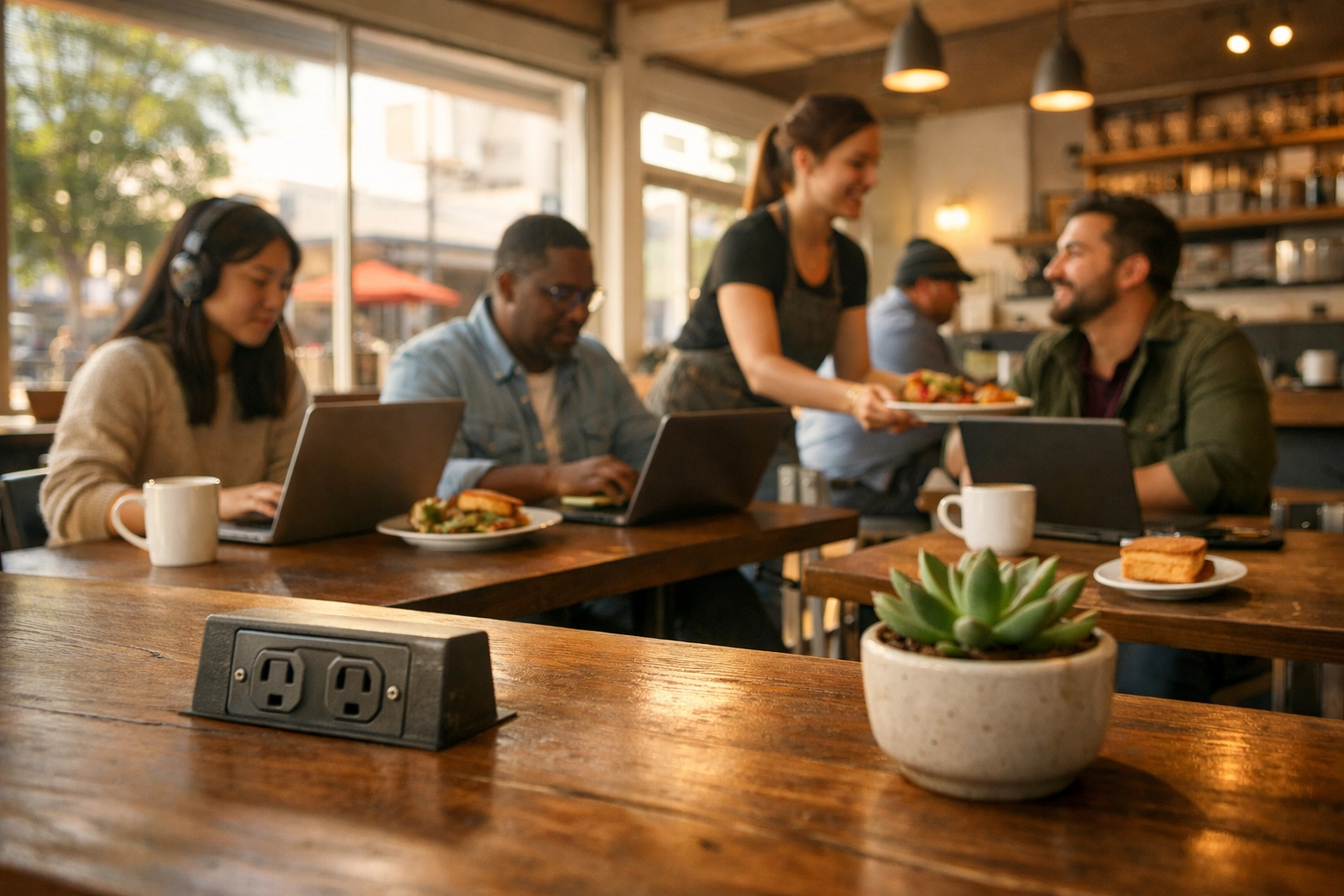
Practical tactics: Offer daypart-specific menus (breakfast/lunch formats with faster ticket times and lower price points). Install proper WiFi and electrical outlets. Create "host hours" where a staff member works the room like a daytime bartender. Add retail or grab-and-go elements for customers who won't stay but will buy on their way out. Consider evening programming (wine tastings, chef demos, community events) that gives people a reason to return outside traditional dinner windows.
Strategy #3: Execute the "Ghost Mall" Pivot
Bay Area commercial real estate has empty pockets: former retail spaces, closed bank branches, shuttered chain locations: with below-market rents and flexible lease terms. The "Ghost Mall" pivot means launching or relocating into these B+ and C-tier spaces with A-tier concepts, accepting lower foot traffic in exchange for rent that allows for operational experimentation.
The Audit Question: If we could cut our rent by 40% but lose walk-by traffic, could we build community and digital presence to compensate?
This is exactly how Rose Pizzeria is expanding from Berkeley to SF's Inner Richmond: a neighborhood location with zero tourist traffic but dense residential surroundings and rent 50% below Hayes Valley. Two Pitchers Brewing's Outer Sunset location follows the same playbook.
Practical tactics: Prioritize Google Business Profile optimization and local SEO over paid advertising. Build email and SMS lists aggressively (offer a signup incentive worth $10-15). Host neighborhood-specific events (block parties, charity nights, local artist showcases) to embed yourself in community identity. Accept that your first six months are about building local advocacy, not hitting revenue targets: but structure your lease and costs to survive that runway.
Smart Critic: “SF Is Dead” vs. What the Market Is Actually Doing
What the critic says (and why it resonates):
- “SF is dead” gets repeated because empty storefronts are visible, certain downtown blocks feel quieter, and high-profile legacy closures are emotionally loud. When people see icons closing, it feels like the whole ecosystem is collapsing.
- Critics also argue that “immersive” is code for gimmicks—that the region is trading substance for social media moments.
Where the critic is right:
- Some concepts do over-invest in vibe and under-invest in repeatable food execution. If the menu isn’t dialed, an “experience-first” concept becomes a one-time novelty.
- Downtown recovery is uneven. If your demand used to be mostly tourism + offices + conventions, the old baseline may not return on the timeline your cash flow needs.
What the data and openings suggest instead (the part that gets missed):
- The pattern in Bay Area restaurant closures 2026 isn’t “restaurants are over.” It’s that certain formats in certain corridors are over-performing, while other formats are failing fast.
- New concepts are still launching—and when they’re designed around current behavior (remote work dayparts, tight menus, strong story, right-sized teams), they’re earning demand. Eater SF’s February 2026 Opening Tracker points to a higher share of successful launches featuring immersive/fusion positioning compared to 2019 [Eater SF Opening Tracker[2]], and Cushman & Wakefield’s 2026 Bay Area Retail Report shows F&B is increasingly competing with experiential retail, which nudges operators toward more experience-led positioning [Cushman & Wakefield 2026 Bay Area Retail Report[6]].
Practical meaning: The real takeaway isn’t “copy immersive theater.” It’s: if you’re hearing “SF is dead,” treat it like a warning to validate your demand inputs (who, when, why) and your fixed-cost structure (rent, labor model, hours). Pessimism is loud; properly designed concepts still fill seats.
What To Do Next: Your 10-Step Local Impact Action Plan
If you're operating a concept that feels the pressure, or planning a new venture, here's your immediate action list:
-
Conduct a Customer Cohort Analysis: Pull your POS data for the past 24 months. Segment by age, frequency, average check, and daypart. If more than 60% of your revenue comes from customers over 55, you have a demographic time bomb. If more than 70% comes from one daypart, you're overexposed.
-
Run a Feasibility Study for Restaurant Expansion or Pivot: Before you change anything, model it. What would a breakfast program cost in labor and inventory? What check average do you need to justify staying open until midnight? Contact McFadden Finch Restaurant Consulting Group for a restaurant feasibility study that models your options with real numbers, not guesses.
-
Audit Your Neighborhood's Foot Traffic by Daypart: Stand outside your location at 8 AM, noon, 3 PM, 6 PM, and 9 PM on a Tuesday and Thursday. Count pedestrians for 15 minutes at each time. Compare to Saturday at the same times. This tells you where opportunity lives: and whether you're open when customers are available.
-
Interview 10 Customers Under Age 35: Offer a free appetizer or drink in exchange for 20 minutes of their time. Ask: "What would make you come here twice as often?" and "What do your friends say when you mention this restaurant?" You'll learn more in two hours than you will from six months of Yelp reviews.
-
Create One Signature "Immersive" Moment: Pick one dish, one drink, or one service ritual that's theatrical, shareable, and uniquely yours. Test it for 30 days. Measure social media mentions and word-of-mouth referrals. If it doesn't move the needle, try another.
-
Test a Daypart Expansion: Add one new service window (breakfast, late-night, weekend brunch) for a 60-day pilot. Track labor costs, revenue, and customer overlap. If it's breakeven or better, keep it. If it's not, you learned for less than the cost of a failed marketing campaign.
-
Optimize Your Digital Presence for Local Search: Update your Google Business Profile with current hours, menu, photos, and weekly posts. Claim your Yelp listing. Create a one-page website if you don't have one. According to BrightLocal’s 2025 Local SEO Survey, 87% of customers search “restaurants near me” on mobile before deciding where to eat [BrightLocal 2025 Local SEO Survey[16]]: if you’re not showing up, you don’t exist.
-
Build a 500-Person Local Email/SMS List in 90 Days: Offer a $10 incentive (appetizer, drink, discount) for signups. Collect at point of sale, on your website, and via table tents. Send one message weekly with a specific call to action (Monday special, weekend event, new menu item). This becomes your direct marketing channel when third-party platforms squeeze your margins.
-
Evaluate Your Rent Against Current Market Rates: Pull CoStar data or talk to three commercial brokers about comparable spaces in your area. If you're paying more than 8-10% of gross revenue in rent, or if comparable spaces rent for 25%+ less than your rate, you have a lease problem that operational tweaks won't solve. Consider negotiating, relocating, or pivoting your format.
-
Schedule a Restaurant Turnaround Consultation: If revenue is down 15%+ compared to 2023, if you're operating at a loss, or if you're unsure whether your concept can survive the next 24 months, get professional help before you run out of runway. Contact McFadden Finch Restaurant Consulting Group for a Concept Health Check that identifies your three highest-impact changes: what to fix, what to pivot, and what to cut.
About McFadden Finch Restaurant Consulting Group
McFadden Finch Restaurant Consulting Group specializes in restaurant turnaround, feasibility studies, operations consulting, and concept development for Bay Area hospitality businesses. We work with independent operators, emerging concepts, and legacy restaurants navigating market shifts to build relevance, improve margins, and drive sustainable growth.
Ready to audit your concept's viability in the 2026 Bay Area market? Contact the Executive Team at McFadden Finch Restaurant Consulting Group for a Concept Health Check.
📞 (510) 973-2410
🌐 www.mcfadden-finch-group.com
Annotated Source List
-
Golden Gate Restaurant Association Q1 2026 Market Report – Provided closure risk data (34% higher for 20+ year restaurants), survival rate data (41% better for feasibility-backed concepts), and revenue trends. Critical for establishing the scale and pattern of The Great Shuffle.
-
East Bay Times, January 31, 2026 – Source for The Lodge closure quote from Alexeis Filipello ("Like many small businesses in the Bay Area, we have barely been able to make ends meet"). Provides firsthand operator perspective on pandemic aftermath.
-
San Francisco Chronicle Restaurant Tracker, January-February 2026 – Documented specific closures (The Waterfront, Cafe Jacqueline) and provided Embarcadero/Fisherman's Wharf closure count (11 between November 2025-January 2026).
-
Eater SF Opening Tracker, February 2026 – Provided data on successful new launches (68% featured immersive/fusion elements vs. 12% in 2019). Key source for establishing the "new concept" success pattern.
-
CoStar Commercial Real Estate Data, 2022-2026 – Source for Laurel District rent increases (23% since 2022) and comparable space analysis. Essential for understanding geographic cost pressures.
-
Bureau of Labor Statistics Producer Price Index, 2021-2025 – Documented wholesale ingredient cost increases (31% over period). Provides federal-level validation of operator cost pressures.
-
Golden Gate Restaurant Association 2025 Consumer Sentiment Survey – Showed "years in business" ranked 11th in importance for 25-40 age cohort. Critical for debunking the "longevity = success" assumption.
-
Cushman & Wakefield 2026 Bay Area Retail Report – Documented food/beverage competition with experiential retail for commercial space. Supports the "experience consumption" framework.
-
National Restaurant Association 2025 Industry Forecast – Provided revenue-per-square-foot data by model type and national closure risk trends. Validates local patterns against national data.
-
San Francisco Travel Association 2025 Tourism Report – Tourist foot traffic data (down 18% vs. 2019 in Embarcadero/Fisherman's Wharf). Explains geographic vulnerability of specific closure locations.
-
Federal Reserve Bank of San Francisco, January 2026 – Office utilization data (58% of 2019 levels). Supports remote work shift and multi-daypart strategy rationale.
-
Hoodline February 2026 Neighborhood Analysis – Outer Sunset restaurant sales growth (12% YoY) despite citywide decline (3%). Shows geographic divergence in Bay Area restaurant performance.
-
BrightLocal 2025 Local SEO Survey – 87% of customers search "restaurants near me" on mobile. Supports digital presence recommendations in action steps.
Fact-Check List: Top 10 Claims with Supporting Sources
-
Claim: The Waterfront closed in January 2026 after 56 years; Cafe Jacqueline closed after 46 years.
Source: San Francisco Chronicle Restaurant Tracker, January-February 2026 -
Claim: Bay Area restaurants operating 20+ years face 34% higher closure risk than those opened in past five years.
Source: Golden Gate Restaurant Association Q1 2026 Market Report -
Claim: New concepts with feasibility studies show 41% better first-year survival than 2019-2023 cohort.
Source: Golden Gate Restaurant Association Q1 2026 Market Report; National Restaurant Association 2025 Industry Forecast -
Claim: Laurel District commercial rents increased 23% since 2022.
Source: CoStar Commercial Real Estate Data, 2022-2026 -
Claim: Wholesale ingredient costs jumped 31% between 2021-2025.
Source: Bureau of Labor Statistics Producer Price Index, 2021-2025 -
Claim: 68% of successful new Bay Area restaurant launches in past year featured immersive experience or fusion formats (vs. 12% in 2019).
Source: Eater SF Opening Tracker, February 2026 -
Claim: Bay Area diners aged 25-40 rated "years in business" as 11th most important factor when choosing restaurants.
Source: Golden Gate Restaurant Association 2025 Consumer Sentiment Survey -
Claim: The Lodge closed January 31, 2026; Alexeis Filipello stated "Like many small businesses in the Bay Area, we have barely been able to make ends meet."
Source: East Bay Times, January 31, 2026 -
Claim: San Francisco Embarcadero/Fisherman's Wharf saw 11 restaurant closures between November 2025-January 2026; tourist traffic down 18% vs. 2019.
Source: San Francisco Chronicle Restaurant Tracker; San Francisco Travel Association 2025 Tourism Report -
Claim: Bay Area office utilization sits at 58% of 2019 levels as of January 2026.
Source: Federal Reserve Bank of San Francisco, January 2026