Fisherman's Wharf has a problem. For years, the iconic San Francisco waterfront has been bleeding restaurants, foot traffic, and relevance. The closure of historic spots like Alioto's, Castagnola's, and Fisherman's Grotto No. 9 left gaping holes in the streetscape. Pandemic-era struggles with crime, homelessness, and declining tourism only accelerated the decline.
Now, Mayor Daniel Lurie's office and the Port of San Francisco are taking a swing at revitalization with Fisherman's Wharf Forward, a $10 million initiative that replaces the vacant Alioto's Restaurant building with a public plaza designed by SITELAB urban studio. The 97-year-old structure, shuttered since 2022, will be demolished to make way for picnic tables, Bay views, retail pop-ups, and a sculpture-slash-seating area. The goal: reconnect Taylor Street to the lagoon, boost maritime culture, and give local fishers a place to sell directly from their boats.
It's an ambitious plan. But can a plaza actually save Fisherman's Wharf? And what does this mean for restaurant operators trying to make it work in one of San Francisco's most challenging neighborhoods?
The Weight of a Vacant Landmark
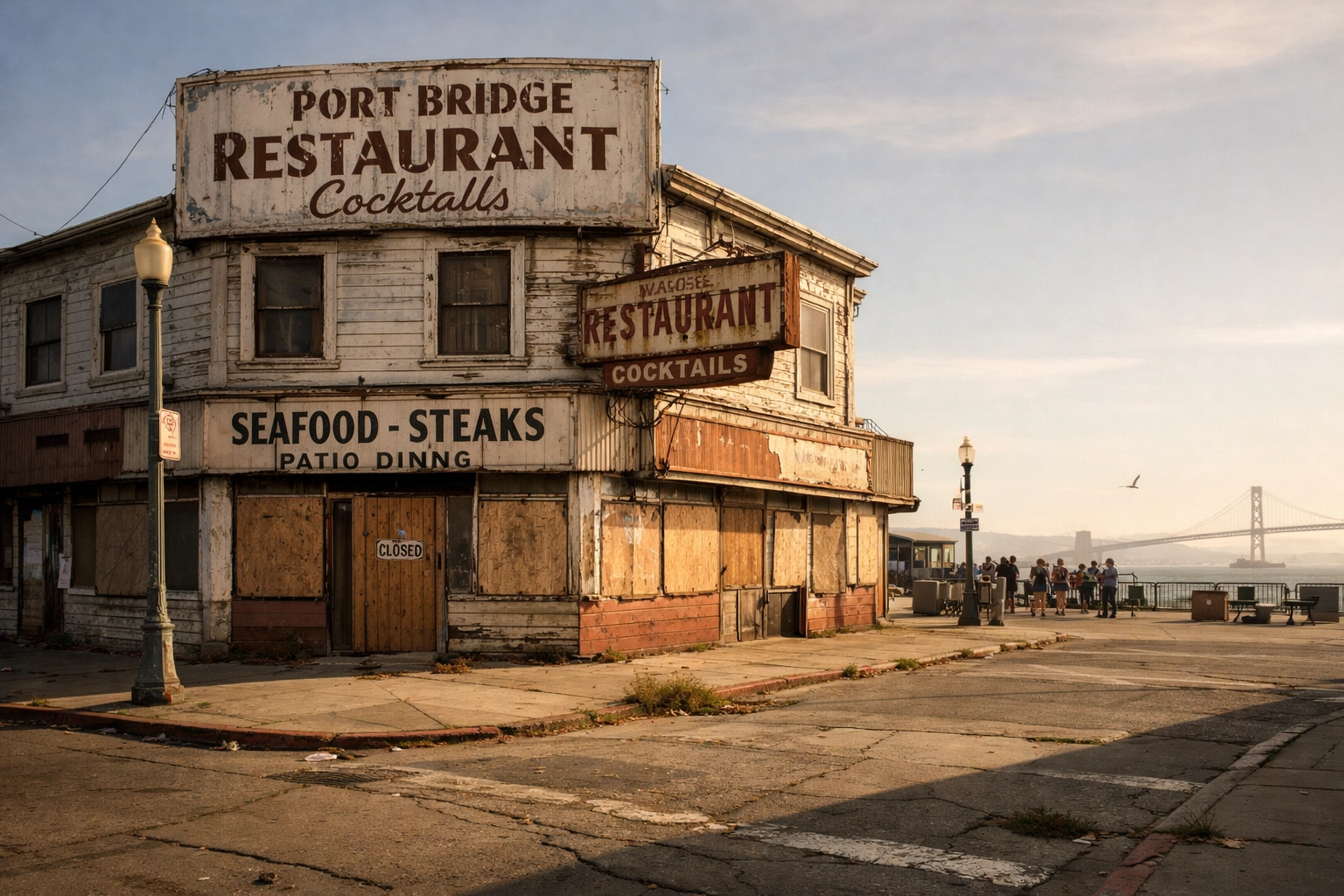
From a restaurant consulting perspective, Alioto's wasn't just another closed restaurant. It was a 97-year-old anchor that became a millstone. When a landmark space sits vacant, it signals failure. It tells potential diners, investors, and operators that the neighborhood isn't viable. Every day that building sat empty, it drained confidence from the surrounding businesses.
This is where the plaza strategy gets smart. Instead of trying to fill the space with another restaurant (a tough sell in a struggling district), the Port is removing the problem entirely. A public plaza increases foot traffic, creates dwell time, and shifts the perception from "dying tourist trap" to "place worth visiting." For the restaurants that remain: and the new concepts moving in: that perception shift is everything.
Dwell time is the secret sauce. Tourists on a mission to snap a photo and leave don't spend money. People who sit down, relax, and watch the boats go by? They get hungry. They wander. They discover. The plaza becomes the neighborhood's new center of gravity, pulling foot traffic past storefronts and restaurant patios that desperately need it.
The Bigger Picture: A $550M Bet
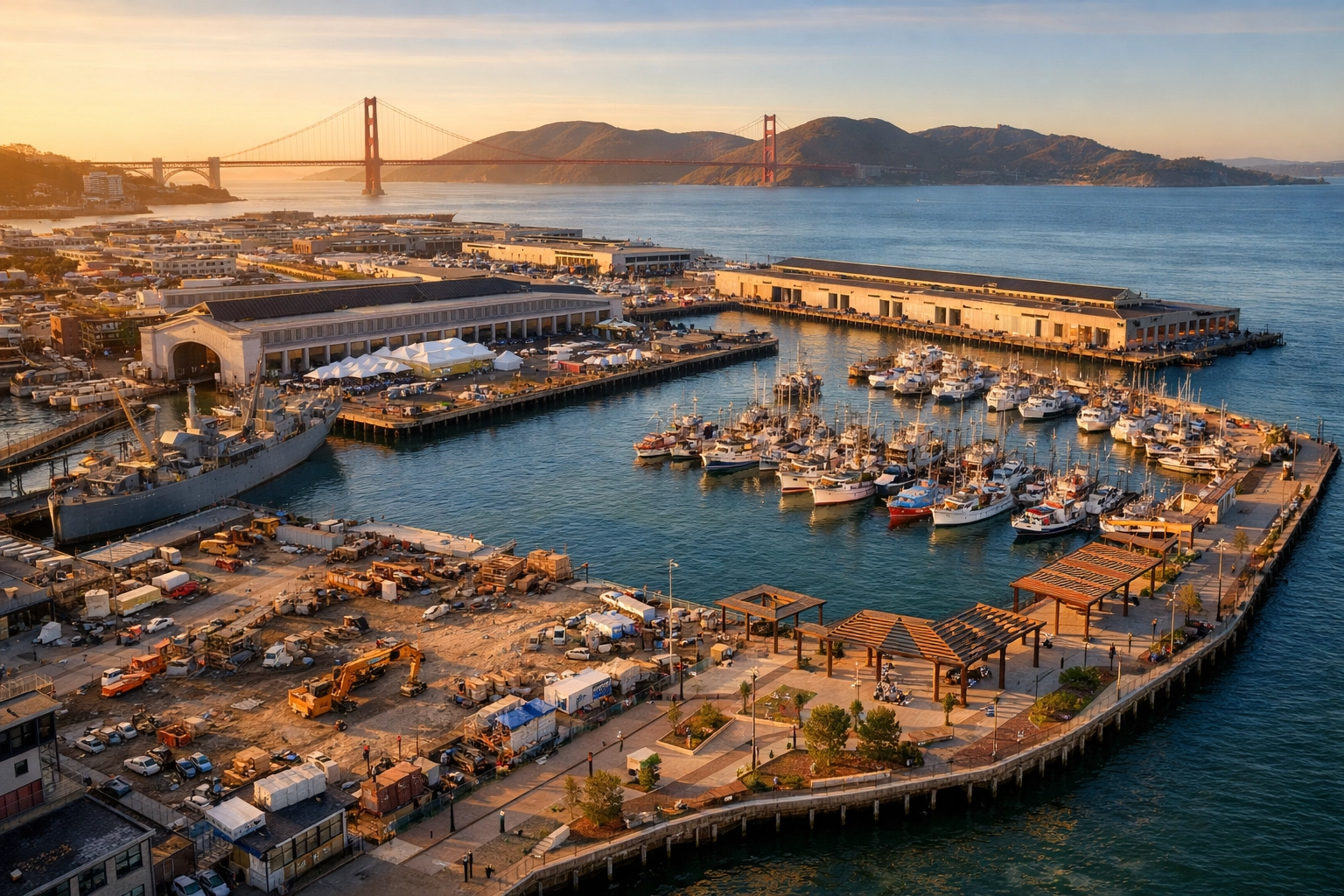
The plaza isn't working alone. It's part of a much larger $550 million redevelopment vision centered on Pier 45. That includes a food hall, brewery, seismic upgrades, seawall improvements, and flood-proofing. The Port is essentially treating the Wharf like a restaurant turnaround project: identifying the core problems, addressing infrastructure, and building a foundation for long-term viability.
The promenade project launched in 2024 with pergolas, planters, and micro-retail kiosks adds another layer. These aren't just aesthetic improvements. They're strategic moves designed to make the area feel safer, cleaner, and more inviting. For restaurant operators, that matters. A neighborhood's environment directly impacts feasibility. High crime, visible drug use, and a sense of neglect kill restaurant performance no matter how good the food is.
What Restaurant Operators Need to Know
If you're considering opening or operating a restaurant at Fisherman's Wharf, the plaza changes the game: but only if you play it right.
The tourist-trap menu is dead. For years, the Wharf survived on generic seafood, overpriced bread bowls, and captive-audience pricing. That model is collapsing. The restaurants that will thrive in the new Fisherman's Wharf are the ones offering authentic, high-quality concepts. Look at Chasca Rio, the Peruvian-Asian fusion spot that opened in 2024. It's not trying to be another generic seafood shack. It's bringing something real to the neighborhood.
Dwell time is your new metric. If the plaza succeeds, people will stay longer. That means more opportunities for multiple transactions: coffee in the morning, lunch, afternoon drinks, dinner. Operators need to think about how their concept fits into a longer visit cycle. Quick-service concepts with outdoor seating options will benefit most.
Maritime culture matters. The plaza's focus on reconnecting the street to the lagoon and supporting local fishers isn't just marketing. It's a signal that the Wharf is doubling down on its authentic identity. Restaurants that lean into that story: showcasing local catch, partnering with fishing boats, emphasizing San Francisco's maritime heritage: will resonate with both tourists and locals.
Feasibility depends on the neighborhood. A beautiful concept won't save you if the surrounding area is still struggling. The plaza is one piece. Operators need to watch how the broader $550M vision unfolds. Are the seismic upgrades happening? Is the crime situation improving? Is foot traffic actually increasing? Restaurant feasibility analysis for the Wharf needs to account for these macro-level factors, not just unit economics.
The Consultant's Take: Macro-Level Turnarounds

At McFadden Finch, we think about turnarounds at multiple scales. Most of the time, we're working with individual restaurants: fixing operations, redesigning kitchens, improving menu economics. But sometimes, the problem isn't the restaurant. It's the neighborhood.
Fisherman's Wharf is a textbook example of a macro-level turnaround. The individual businesses can execute perfectly, but if the surrounding environment is hostile, they'll fail. The plaza addresses that by:
- Removing the visible symbol of failure (the vacant Alioto's building)
- Creating a new center of gravity (public gathering space)
- Increasing foot traffic and dwell time (more potential customers)
- Signaling investment and commitment (we're not giving up on this neighborhood)
This is infrastructure-level consulting. It's not about tweaking prime cost or optimizing kitchen flow. It's about creating the conditions where restaurants can succeed in the first place.
For operators, the lesson is clear: location feasibility isn't just about demographics and traffic counts. It's about neighborhood trajectory. Is the area improving or declining? Are there public or private investments happening? Is the perception shifting? The Wharf is at an inflection point. The plaza and broader redevelopment could tip it toward renaissance or fall flat. Timing your entry: or exit: matters.
Can It Actually Work?
Stakeholders are cautiously optimistic. The Fisherman's Wharf Community Benefit District called the plaza "a good first step" to bring economic activity. Representatives from the Crab Boat Owners Association supported the plan's balance between visitor amenities and fishing industry needs. But everyone acknowledges this is a long game.
The plaza is scheduled for completion by summer 2026. That's when we'll get the first real test. Will foot traffic increase? Will dwell time go up? Will the new concepts filling vacant spots succeed where the old guard failed?
One plaza alone won't save Fisherman's Wharf. But it could be the catalyst. The key is execution across all fronts: public spaces, infrastructure, new restaurant concepts, safety improvements, and marketing. If those pieces come together, the Wharf could shift from a declining tourist trap to a legitimate dining and maritime destination.
If they don't, the plaza becomes a nice place to eat lunch while watching a neighborhood die.
The Bottom Line
Fisherman's Wharf's future depends on more than picnic tables and Bay views. It depends on whether the restaurant operators, property owners, and city officials can collectively execute a turnaround strategy at neighborhood scale. The plaza is a smart move: removing a visible problem, creating gathering space, boosting dwell time: but it's just the opening play.
For restaurant operators, the message is simple: watch, wait, and be ready. If the broader redevelopment succeeds, the Wharf could offer real opportunities for concepts that move beyond bread bowls and generic seafood. If it stalls, stay away.
Either way, this is restaurant consulting at the macro level; and we're here for it.
Thinking about a neighborhood-shifting concept of your own? Contact the Executive Team at McFadden Finch Restaurant Consulting Group: https://mcfadden-finch-group.com/contact/