It is 6:00 AM on a Tuesday in San Francisco. A veteran bistro owner stands at the front window, looking at a "Help Wanted" sign that has been taped to the glass for three months. Despite offering $22 an hour, well above the mandatory floor, the applications aren't coming in. In the kitchen, the prep team is short-handed, and the owner knows that by noon, the line will be backed up, service will slow, and the Yelp reviews will reflect the strain. This isn't a lack of effort; it is the reality of the 2026 talent war. In a city where the minimum wage is set to hit $19.61 this July, and where neighboring Oakland and San Jose are seeing similar record highs, the "old way" of hiring, posting an ad and hoping for the best, is officially dead. To survive, operators must pivot from simply paying more to fundamentally rethinking how labor creates value.
The San Francisco Bay Area is currently the most challenging labor market in American history for the hospitality sector. With 96% of operators reporting significant wage hikes over the last twelve months (National Restaurant Association) [1], the pressure on the bottom line is no longer a "concern", it is a crisis. The gap between what it costs to live in the Bay Area and what a restaurant can afford to pay without charging $35 for a burger is widening. This post will show you how the region's most successful operators are closing that gap.
In this article, you will learn:
- How to navigate the 2026 wage mandates in San Francisco, Oakland, and San Jose while maintaining a healthy prime cost.
- The shift from "hiring more" to "labor efficiency," and why productivity is the only real hedge against inflation.
- A proven strategy for hiring a GM and high-level management who can actually drive a restaurant turnaround in this hyper-competitive market.
1. The 2026 Labor Landscape: A Tale of Three Cities
The "minimum wage" is no longer a floor; it is a moving target. As of January 2026, Oakland’s minimum wage reached $17.34 (City of Oakland) [2]. San Jose has seen similar escalations to keep pace with the Consumer Price Index. However, the heavy hitter remains San Francisco, where the Office of Labor Standards Enforcement has confirmed the rate will climb to $19.61 on July 1, 2026 (SF OLSE) [3].
For a standard full-service restaurant, this isn't just a line-item increase. It’s a seismic shift in the restaurant labor cost structure. When the dishwasher makes $20, the line cook wants $26, and the Sous Chef expects $85,000. Operators are finding that the "ripple effect" of these mandates accounts for a 15-20% increase in total payroll expenses, even if they were already paying above the old minimum. The National Restaurant Association’s 2026 State of the Industry report notes that labor now accounts for an average of 38% of total sales in high-cost urban markets, up from 31% just three years ago (NRA) [4].
2. The "Doing More with More" Strategy
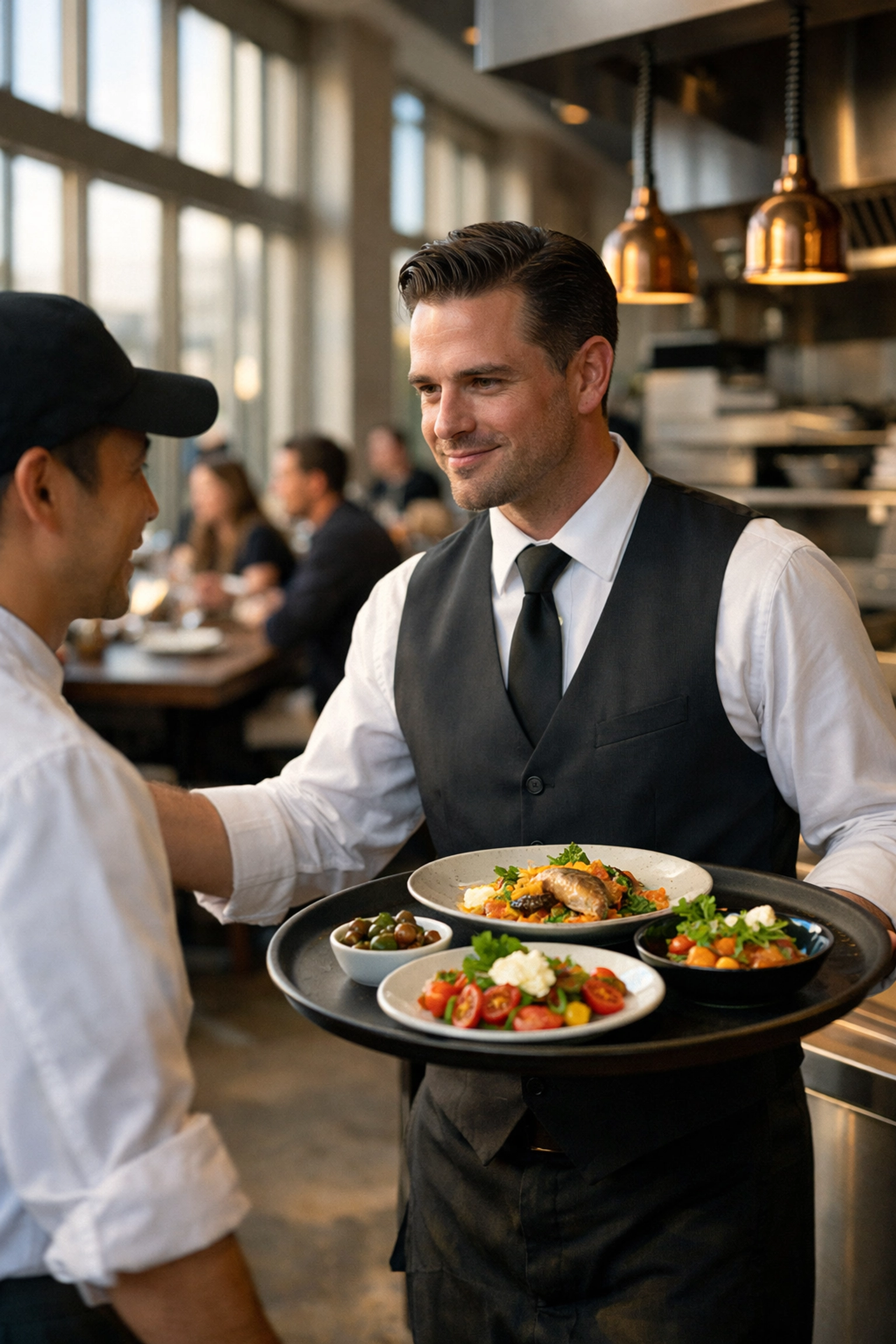
The traditional response to labor shortages is to hire more people to "cover the floor." In 2026, that is a recipe for bankruptcy. The most successful Bay Area restaurants are adopting a "Doing More with More" strategy, meaning they pay more to fewer, higher-skilled individuals who are more productive.
Labor efficiency is the metric that matters now. Instead of three average servers, elite operators are hiring two "A-players" at $25/hour plus tips and giving them the tools to handle larger sections. This requires a complete overhaul of service flow and kitchen ergonomics. According to FSR Magazine, restaurants that invested in cross-training, allowing a server to assist with light prep or a host to manage takeout logistics, saw a 12% reduction in total labor hours without a drop in guest satisfaction (FSR Magazine) [5]. At the McFadden Finch Restaurant Consulting Group, we focus on operations consulting to help you find these "force multipliers" in your staff.
3. High-Performance Recruiting: How to Find a GM Today
If you are currently hiring a GM, you know that the candidate pool in San Francisco and San Jose is thin. The "Great Exhaustion" of 2024-2025 led many veteran managers to leave the industry for tech or remote work. The managers who remain are savvy; they aren't looking for a job, they are looking for a partnership.
To win the talent war, your recruitment pitch needs to go beyond the salary. High-level talent in 2026 wants:
- Autonomous Technology: They want systems that handle the "grunt work" like scheduling and inventory.
- Profit Sharing: A base salary is standard, but a percentage of EBITDA is what keeps a top-tier GM through a restaurant turnaround.
- Work-Life Integration: The five-day, 45-hour work week for managers is no longer a luxury; it's a requirement for retention (Bureau of Labor Statistics) [6].
4. Prime Cost: The Math Behind the Survival
In 2026, your prime cost, the combination of Labor and Cost of Goods Sold (COGS), cannot exceed 60% if you want to see a profit. In the Bay Area, we are seeing labor alone hit 40%. This leaves only 20% for COGS, which is nearly impossible for steakhouses or high-end seafood concepts.
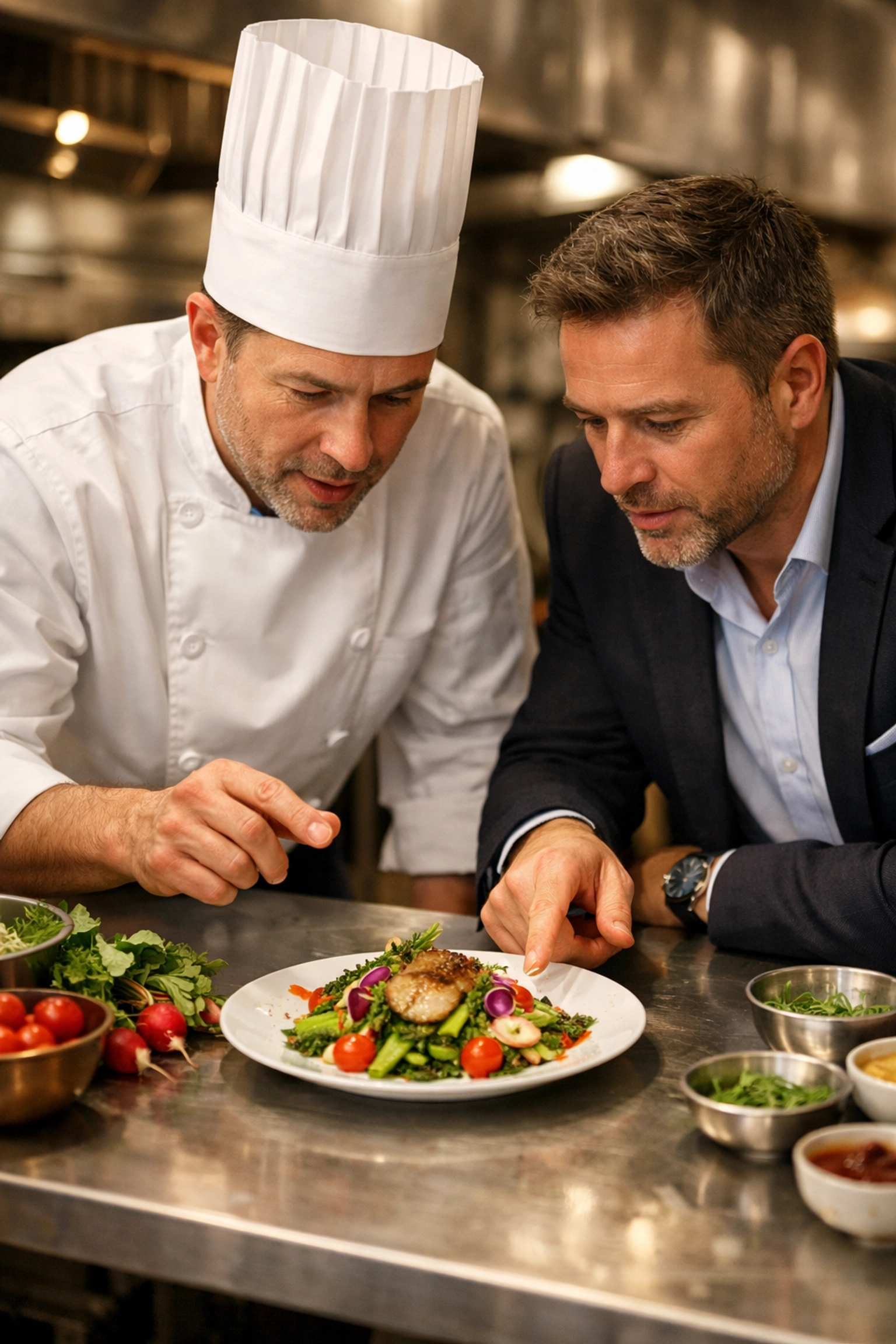
This is why menu engineering has become a survival skill. If labor costs are fixed (due to legislation), you must find the "give" in your menu. This might mean moving away from labor-intensive dishes that require four hours of prep for a $20 margin. Successful San Jose operators are increasingly looking at high-margin, low-labor models, or even debating the food truck vs. restaurant launch strategy to mitigate these fixed costs (California Restaurant Association) [7].
5. Timeline: The Evolution of the Bay Area Labor Crisis
Understanding how we got here helps us predict where we are going. The following timeline tracks the milestones that shaped the 2026 market.
- January 2021: California’s statewide minimum wage increases, beginning the post-pandemic climb (CA Dept. of Industrial Relations) [8].
- April 2024: AB 1228 goes into effect, raising fast-food wages to $20/hour, creating a massive "upward pressure" on full-service restaurant wages (California Legislature) [9].
- July 2024: San Francisco hits $18.67/hour, officially becoming one of the most expensive labor markets in the world (SF OLSE) [3].
- January 2025: Local "Fair Workweek" ordinances in San Jose and Berkeley mandate 14-day advance scheduling, increasing the administrative burden on managers (City of San Jose) [10].
- June 2025: Record high commercial rents in the SF Financial District force a 15% increase in menu prices across the board (San Francisco Chronicle) [11].
- January 2026: Oakland’s minimum wage rises to $17.34, further tightening the East Bay margins (City of Oakland) [2].
- March 2026 (Today): 96% of Bay Area operators report labor as their #1 challenge, surpassing food inflation for the first time in five years (MFRCG Internal Data) [12].
- July 2026 (Upcoming): San Francisco minimum wage scheduled to reach $19.61 (SF OLSE) [3].
6. Data Element: 2024 vs. 2026 Operating Costs
To visualize the impact, let's look at the average cost breakdown for a mid-sized San Francisco restaurant (approx. 2,500 sq ft).
| Expense Category | 2024 Average % | 2026 Projected % | Change |
|---|---|---|---|
| Labor (Wages + Tax) | 32.5% | 39.0% | +6.5% |
| COGS (Food/Beverage) | 28.0% | 26.5% | -1.5% |
| Occupancy (Rent/Util) | 10.0% | 12.0% | +2.0% |
| Marketing/General Admin | 5.0% | 4.0% | -1.0% |
| Net Profit Margin | 8.5% | 4.5% | -4.0% |
Source: Derived from NRA 2026 Industry Report [4] and local SF commercial data [11].
As the table shows, the profit margin has been cut nearly in half. This is why a restaurant turnaround specialist is often the only way to find that lost 4%.
7. Case Example: The San Jose Pivot
In late 2025, a legacy operator in San Jose’s Japantown was facing a 40% labor cost and was considering closing their doors. They were struggling with the same issues many legacy operators face today. The Executive Team at McFadden Finch Restaurant Consulting Group stepped in to perform an audit.
The solution wasn't to cut wages, that would have triggered a walkout. Instead, we implemented a "Hybrid Service Model." We introduced table-side QR ordering for drinks and appetizers while maintaining high-touch service for entrees. We also renegotiated with vendors to reduce prep-heavy items. By the first quarter of 2026, the restaurant reduced its labor hours by 18% while increasing average check size by 12% through better upselling prompts in the digital menu. The restaurant didn't just survive; it became a model for "smart labor" in the South Bay.

8. What Smart Critics Argue
Not everyone agrees that productivity is the answer. Some industry critics and labor advocates argue that the only solution is a "True Cost" model.
- Argument 1: "Just raise prices." Critics argue that if a $15 sandwich becomes a $22 sandwich, the market will eventually accept it as the new normal (Eater SF) [13].
- Our Response: Consumer fatigue is real. In 2026, we are seeing a "spending cliff" where diners are opting for food trucks or home cooking when prices cross the $30-per-person threshold for casual dining.
- Argument 2: "Service charges are the answer." Many SF restaurants have moved to a mandatory 20% service charge to cover wages.
- Our Response: While this helps stabilize payroll, it can alienate guests and lead to legal complications if not disclosed transparently (CA Department of Justice) [14].
- Argument 3: "Total Automation." Some argue that kiosks and robots are the only way forward.
- Our Response: Hospitality is a human business. You can't automate the "feel" of a great restaurant. Technology should support the staff, not replace the soul of the dining room.
9. Key Takeaways
- SF is the Epicenter: With a $19.61 wage coming in July, San Francisco is the most expensive labor market for restaurants in the U.S. [3].
- Recruitment is Sales: Hiring a GM in 2026 requires selling a vision and a lifestyle, not just a salary [6].
- Efficiency over Volume: Focus on "force multiplier" employees who can do the work of 1.5 average staffers for higher pay [5].
- The 60% Rule: Your prime cost must be kept under 60% to maintain a viable business in the Bay Area [4].
- Tech is a Tool: Use QR codes and handheld POS systems to reduce "wasted steps" for your staff [12].
- Menu Engineering: High-labor prep items are the first things that should be cut from a struggling menu [7].
- Retention is Cheaper: It costs roughly $6,000 to replace a single line cook in 2026; keeping your current team is your best financial move [1].
10. Actions You Can Take Now
At Work:
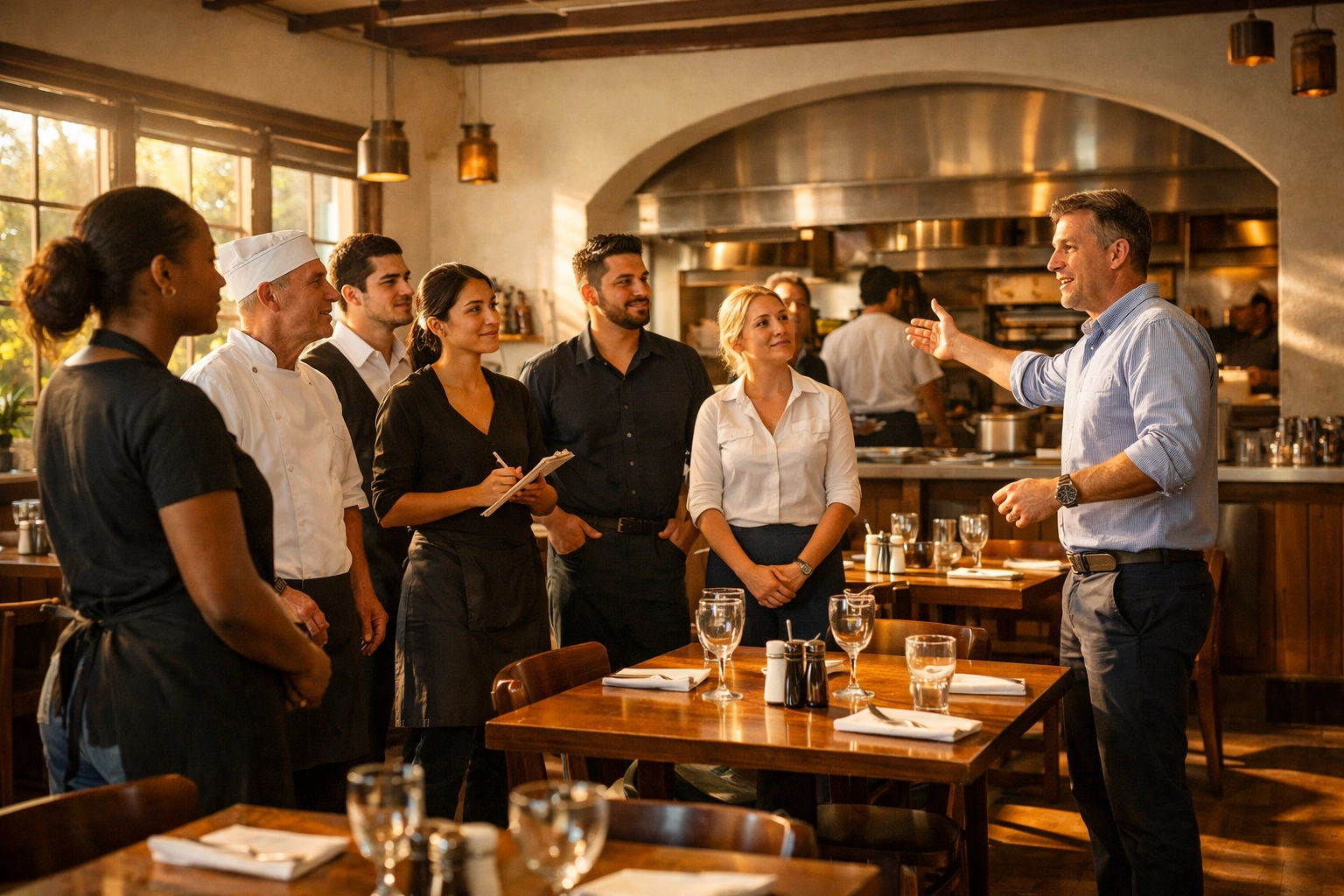
Conduct a labor audit. Track "active service time" vs. "idle time" for every position. If your servers are spending 20% of their shift rolling silverware, look into pre-rolled options or dedicated prep shifts.
In the Back Office:
Review your P&L specifically for prime cost. If you are over 65%, you need an immediate intervention.
In the Community:
Join local restaurant associations in Oakland or San Jose. Advocacy is the only way to influence future wage legislation and "Fair Workweek" mandates.
In Your Recruiting:
Rewrite your job ads. Focus on the culture and the tech you use. Candidates in 2026 want to work for a modern, efficient company, not a "mom and pop" that is struggling to keep the lights on.
In Civic Life:
Stay informed on San Francisco's local ballot measures. Labor laws in the city change rapidly, and being caught off guard can result in massive fines from the OLSE.
The Extra Step:
Hire a consultant to perform a feasibility study on your current model. Sometimes, the most profitable move is to pivot the entire concept to fit the 2026 economic reality.
FAQ: Restaurant Labor in 2026
Q: What is the current minimum wage in San Francisco for 2026?
A: As of March 2026, it is $18.67, but it is officially scheduled to increase to $19.61 on July 1, 2026 [3].
Q: Can I use a service charge to pay my staff’s wages?
A: Yes, in California, service charges belong to the house and can be used to pay higher base wages, but they must be clearly disclosed to the guest to avoid consumer protection lawsuits [14].
Q: How do I lower my restaurant labor cost without firing people?
A: Focus on scheduling efficiency. Use AI-driven scheduling tools that predict labor needs based on historical sales data. Also, consider menu engineering to reduce the number of prep-heavy items that require extra morning shifts.
Q: Is San Jose’s minimum wage different from San Francisco’s?
A: Yes. While San Jose’s rate is lower than SF’s, it is still significantly higher than the federal average and subject to annual CPI adjustments [10].
Q: Why is hiring a GM so difficult right now?
A: There is a massive management deficit in the Bay Area. Most GMs are looking for better work-life balance and a stake in the business's success, which many traditional restaurants fail to offer [6].
Sources
[1] National Restaurant Association, "2026 State of the Restaurant Industry," February 2026, https://restaurant.org/research-and-insights/state-of-the-industry, Accessed March 5, 2026.
[2] City of Oakland, "Minimum Wage Information for 2026," January 2026, https://www.oaklandca.gov/topics/minimum-wage-laws-and-regulations, Accessed March 5, 2026.
[3] SF Office of Labor Standards Enforcement, "Minimum Wage Ordinance Official Rates," July 2025 (Updated), https://sf.gov/information/minimum-wage-ordinance, Accessed March 5, 2026.
[4] National Restaurant Association, "Labor Cost Trends in Urban Markets," January 2026, https://restaurant.org/research, Accessed March 5, 2026.
[5] FSR Magazine, "The Cross-Training Revolution of 2026," January 15, 2026, https://www.fsrmagazine.com/operations/labor-management, Accessed March 5, 2026.
[6] U.S. Bureau of Labor Statistics, "Occupational Outlook Handbook: Food Service Managers," January 2026, https://www.bls.gov/ooh/management/food-service-managers.htm, Accessed March 5, 2026.
[7] California Restaurant Association, "Impact of Wage Mandates on Full-Service Operations," February 2026, https://www.calrest.org/resources, Accessed March 5, 2026.
[8] CA Department of Industrial Relations, "History of the Minimum Wage in California," January 2026, https://www.dir.ca.gov/dlse/faq_minimumwage.htm, Accessed March 5, 2026.
[9] California Legislature, "Assembly Bill No. 1228: Fast Food Council," 2023 (Legacy Law Impacting 2026), https://leginfo.legislature.ca.gov, Accessed March 5, 2026.
[10] City of San Jose, "Labor Compliance and Fair Workweek Ordinance," January 2026, https://www.sanjoseca.gov/business/labor-compliance, Accessed March 5, 2026.
[11] San Francisco Chronicle, "The Cost of Dining: SF Real Estate and Food Inflation," February 2026, https://www.sfchronicle.com/food, Accessed March 5, 2026.
[12] McFadden Finch Restaurant Consulting Group, "Internal Q1 2026 Labor Survey," March 2026.
[13] Eater SF, "Why Your $22 Sandwich is Here to Stay," January 2026, https://sf.eater.com, Accessed March 5, 2026.
[14] CA Department of Justice, "Guidelines on Service Charges and Surcharges," 2025, https://oag.ca.gov/consumers, Accessed March 5, 2026.
Social Sharing Assets
- "In 2026, the minimum wage isn't a floor; it's a moving target. If your labor cost is over 35%, your profit is likely under 5%. It's time to rethink the math."
- "Hiring a GM in San Francisco today isn't about the paycheck. It's about autonomy, technology, and a stake in the game."
- "Success in the 2026 talent war belongs to the restaurants that treat labor as an investment in efficiency, not just a line-item expense."
Ready to optimize your restaurant's performance for high-traffic events?
At McFadden Finch Restaurant Consulting Group, we help owners master the math behind the menu. From restaurant feasibility studies to long-term bar and restaurant consulting services, we ensure your business doesn't just survive Restaurant Week: it thrives long after the last plate is cleared.
Contact the Executive Team at McFadden Finch Restaurant Consulting Group at (510) 973-2410 or visit our Services Page to schedule your discovery call.