The former Neiman Marcus site in downtown Walnut Creek has sat empty since 2021. That changes in 2028.
RH (formerly Restoration Hardware) has signed a lease to transform the shuttered department store into a 50,000 square foot food, wine, art, and design hub. The development will occupy two buildings at Broadway Plaza, one of the East Bay's most prominent commercial intersections.
This is not a furniture store with a café attached. This is a full-scale hospitality operation anchoring a retail brand. And it signals a broader shift in how prime real estate gets activated.
Credit: Reporting by George Avalos, Bay Area News Group.
The Project Details
According to planning documents filed with the City of Walnut Creek and statements from Macerich (the real estate firm that owns Broadway Plaza), the new RH Gallery will feature:
- Six contemporary Venetian-plastered Mediterranean buildings
- Four gated courtyards connecting the structures
- A 30-foot-high glass atrium garden restaurant
- Fireplaces, fountains, and an outdoor wine experience
Construction is slated to begin mid-2026. The anticipated opening is early 2028.
Broadway Plaza general manager Shelly Dress confirmed the lease is fully executed. Douglas Healey, Macerich's senior executive vice president for leasing, described the project as "an inspiring integration of food, wine, art, and design with an immersive retail experience."
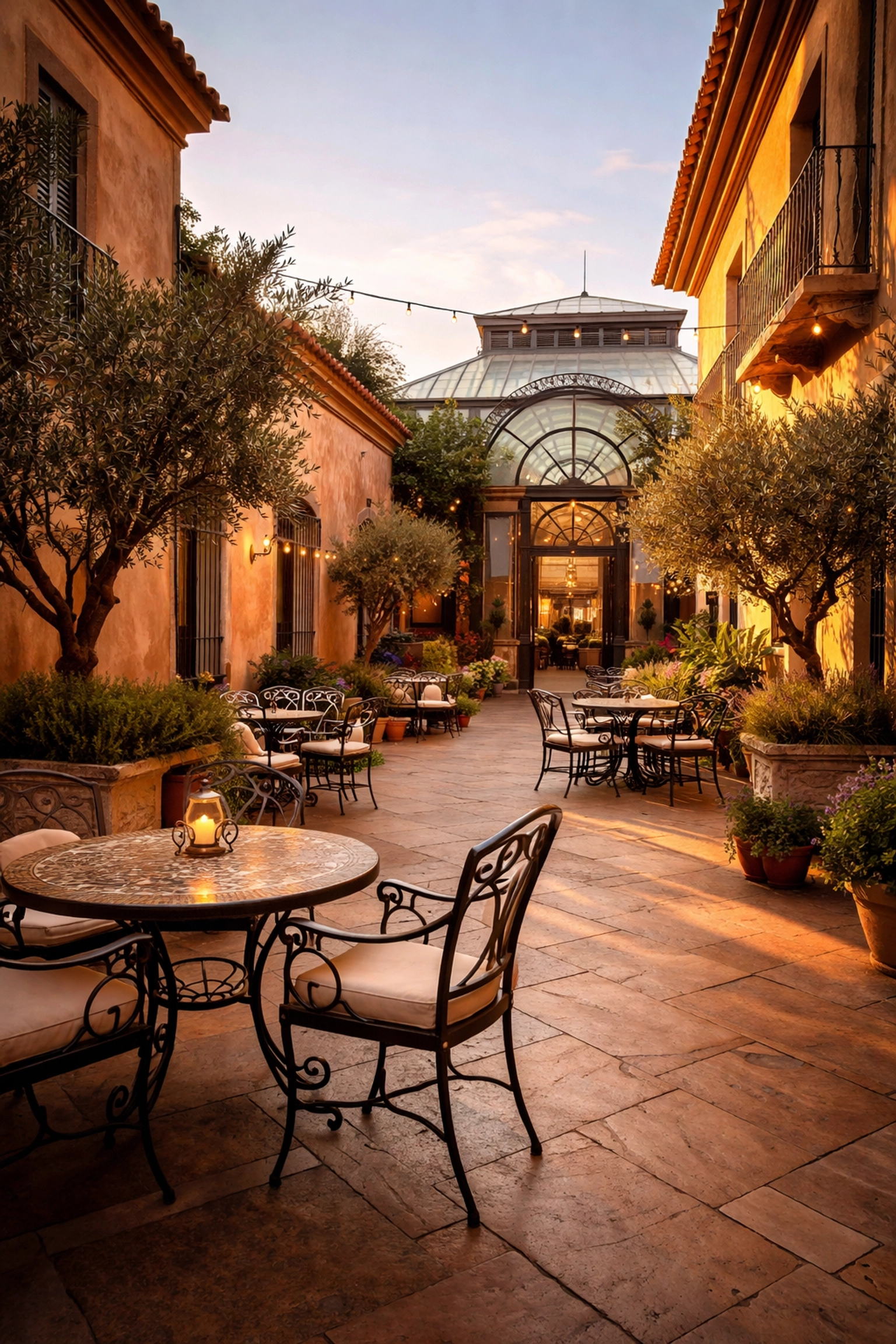
The design follows a similar model to RH's Stanford Mall location in Palo Alto, which opened in 2024 and includes rooftop dining and integrated hospitality amenities.
Why a Furniture Company Is Building Restaurants
RH's strategy is not accidental. The company has been systematically integrating hospitality into its retail footprint for years.
Their Cleveland gallery features a rooftop restaurant. Their planned Aspen development includes 20 guest rooms, a spa, and rooftop dining. The Stanford Mall location proved the concept works in the Bay Area market.
The logic is straightforward: hospitality drives foot traffic, extends dwell time, and creates emotional connection to a brand.
When customers spend two hours dining in a Mediterranean courtyard surrounded by RH furniture, lighting, and décor, they are not just eating. They are experiencing the brand. They are sitting in the products. They are imagining those products in their own homes.
This is "integrated hospitality" in its clearest form. The restaurant is not a separate business. It is a brand extension that serves strategic marketing, real estate activation, and revenue diversification goals simultaneously.
The Adaptive Reuse Angle
The Walnut Creek project also demonstrates a shift in RH's real estate approach.
Rising construction costs have pushed the company toward adaptive reuse of existing commercial buildings rather than ground-up development. Converting a shuttered Neiman Marcus into a Mediterranean village is more cost-effective than building new.
Macerich's Healey called it "transformational leasing and the repurposing of a vacant anchor store."
This matters for restaurant operators and hospitality developers watching the market. Prime retail sites that once seemed inaccessible are now available. Department store closures, mall vacancies, and shifting consumer behavior have created opportunities for operators willing to think beyond traditional restaurant formats.
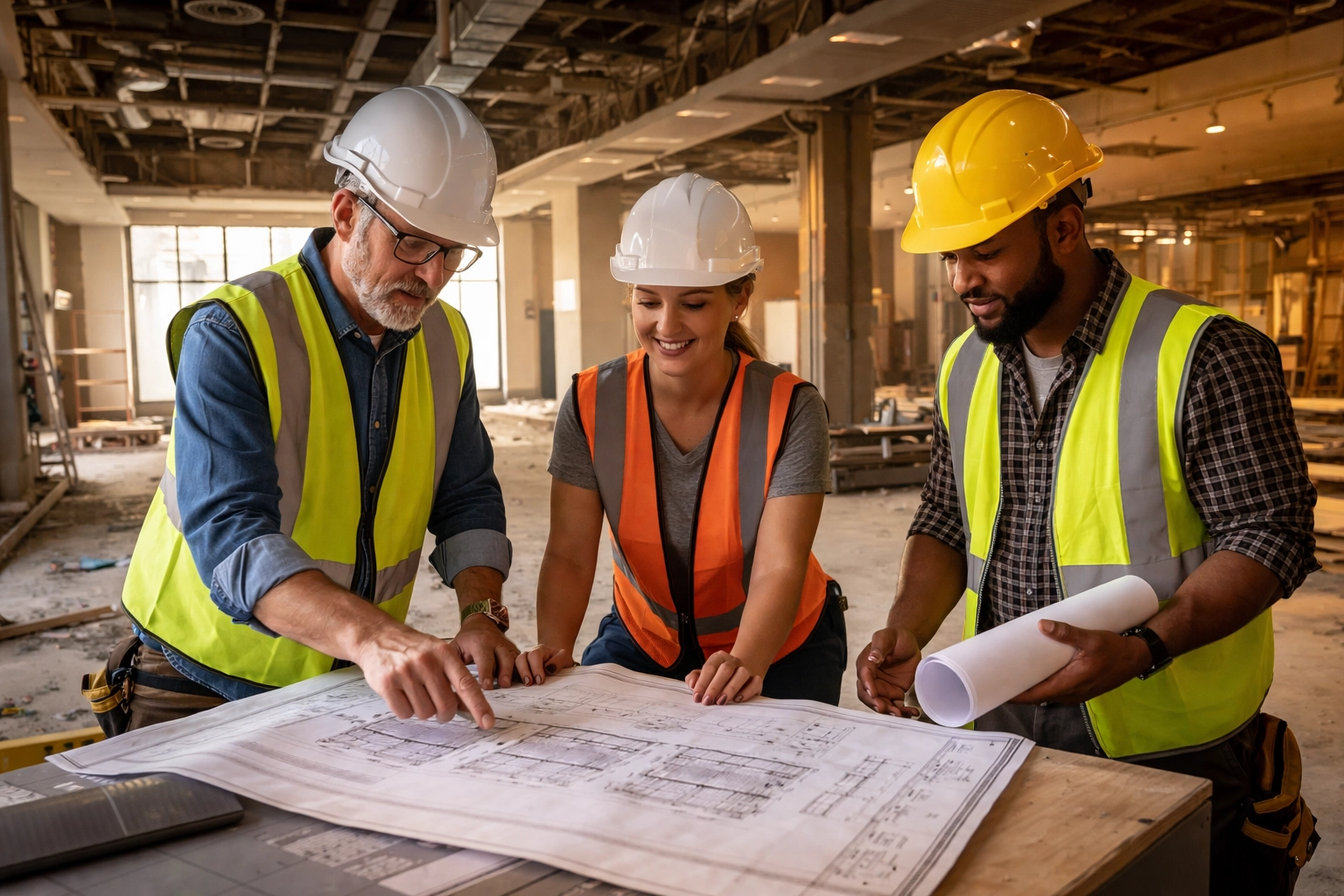
The question is not whether these spaces are available. The question is whether operators can develop concepts that justify the square footage, activate the foot traffic, and deliver returns on unconventional layouts.
What This Means for Restaurant Operators
RH is not a restaurant company. But they are now operating restaurants at scale, in premium locations, as a core component of their business model.
This creates two realities for traditional restaurant operators:
1. Competition for prime real estate is evolving.
Restaurant groups are no longer just competing with other restaurant groups for high-traffic locations. They are competing with lifestyle brands, experiential retail concepts, and hybrid operators who see hospitality as a strategic tool rather than a standalone business.
A landlord evaluating a 50,000 square foot anchor space may prefer a tenant who can deliver foot traffic, brand prestige, and multi-year lease stability. RH checks all three boxes.
2. The definition of "restaurant concept" is expanding.
The most successful hospitality developments in 2026 and beyond may not look like traditional restaurants. They may be embedded within larger experiences. They may serve brand-building functions as much as revenue functions. They may require concept development frameworks that account for retail integration, experiential design, and non-traditional revenue streams.
Operators who can think in these terms will find opportunities. Operators who cannot may find themselves competing for smaller, lower-margin spaces.
The Feasibility Challenge
Developing hospitality concepts in unconventional spaces requires different feasibility analysis than a standard restaurant opening.
Consider the RH Walnut Creek project:
- Multiple buildings with different structural requirements
- Outdoor spaces requiring weather mitigation, permitting, and seasonal planning
- Integration with retail operations that have different peak hours, staffing needs, and customer expectations
- Design requirements that serve brand identity rather than pure operational efficiency
- A two-year construction timeline with capital deployed long before revenue begins
Traditional restaurant feasibility studies focus on seat counts, average check, and labor models. Projects like this require feasibility analysis that accounts for:
- Brand value attribution (how much revenue is driven by the restaurant versus the retail halo effect)
- Real estate economics across multiple use types
- Permitting complexity for mixed-use adaptive reuse
- Operational integration between hospitality and retail teams
- Long-term lease structures that align incentives between landlord and tenant

This is where restaurant feasibility studies need to evolve. The old models work for traditional formats. The new models need to accommodate hybrid concepts, unconventional spaces, and strategic objectives beyond pure hospitality P&L.
Lessons for 2026 and Beyond
The RH Walnut Creek project offers several takeaways for restaurant operators, developers, and investors:
Prime real estate is being reimagined. The closure of traditional retail anchors has created inventory. The winners will be operators who can activate large, complex spaces with concepts that justify the square footage.
Hospitality is a brand tool. For companies like RH, restaurants are not standalone businesses. They are customer acquisition channels, brand experience platforms, and real estate activation strategies. Operators who can position their concepts as strategic assets (not just food service businesses) will find new partnership opportunities.
Adaptive reuse requires specialized expertise. Converting a department store into a Mediterranean village is not a standard restaurant buildout. It requires kitchen and bar design consulting that accounts for unusual layouts, infrastructure limitations, and multi-use requirements.
Long timelines require strong planning. A 2026-to-2028 development cycle means capital is at risk for years before opening. Business planning must account for market shifts, cost escalations, and competitive changes during construction.
The Bottom Line
RH is building a 50,000 square foot hospitality complex in downtown Walnut Creek. It will feature a glass atrium restaurant, outdoor wine experiences, and Mediterranean-style courtyards.
This is not a restaurant opening. This is a signal about where hospitality development is headed.
The operators who succeed in this environment will be the ones who understand integrated hospitality, adaptive reuse economics, and feasibility frameworks that go beyond traditional restaurant analysis.
The space is available. The question is who can fill it.
#WalnutCreekRestaurants #RestaurantConsulting #ConceptDevelopment #HospitalityTrends2026 #RestaurantFeasibility