Scaling the Summit: The $315 Bet on Identity
Imagine standing at the top of a mountain you spent fifteen years climbing, only to realize the peak you actually want is three ranges over. That is essentially what happened in San Francisco’s Mission District this year. Sons & Daughters, a restaurant that had already achieved the "impossible" by maintaining a Michelin star for over a decade, didn't just renovate; they performed a structural transplant. Under the leadership of a young, visionary kitchen team, the restaurant abandoned its comfortable New American roots, packed up its Nob Hill history, and moved to an expansive space on 18th Street with a singular, unapologetic goal: the third Michelin star [1].
This wasn't a tweak; it was a total concept pivot. The menu shifted to "New Nordic", a cuisine defined by fermentation, foraging, and an almost religious devotion to local scarcity, and the price point ascended to $315 per person before wine pairings [1]. For the average operator, this level of risk feels like a fever dream. For a high-stakes hospitality venture, it is a masterclass in how to use concept development as a weapon. At McFadden Finch Restaurant Consulting Group, we often tell clients that the middle of the road is where you get run over. By moving to the extremes of "austere hedonism," Sons & Daughters has effectively insulated itself from the general "margin squeeze" affecting the Bay Area in 2026 [2].
In this post, we will break down:
- The mechanics of a successful high-stakes concept pivot.
- How menu "distillation" creates a premium brand moat.
- The operational reality of chasing a third Michelin star in a volatile market.
The Anatomy of a High-Stakes Concept Pivot
Most restaurant pivots are reactive. They happen when the numbers are trending down and the landlord is knocking. However, the most successful shifts, like the one documented at Sons & Daughters, are proactive [3]. Moving from a cozy, well-regarded Nob Hill spot to a 24-course "ultra-marathon" in the Mission is a calculated play for market dominance.
When we talk about restaurant consulting and concept development, we look at the "Gravity of the Brand." If your brand is too light, it floats away when the wind changes. Sons & Daughters increased their brand gravity by adopting the New Nordic ideology. This isn't just a food style; it's a rigorous operational framework that dictates everything from the use of UV lights to sprout buckwheat to the fermentation of huckleberries [1]. By narrowing the focus to a specific, high-intensity niche, they actually broadened their appeal to the international "destination diner" segment, which is less sensitive to local economic fluctuations [4].
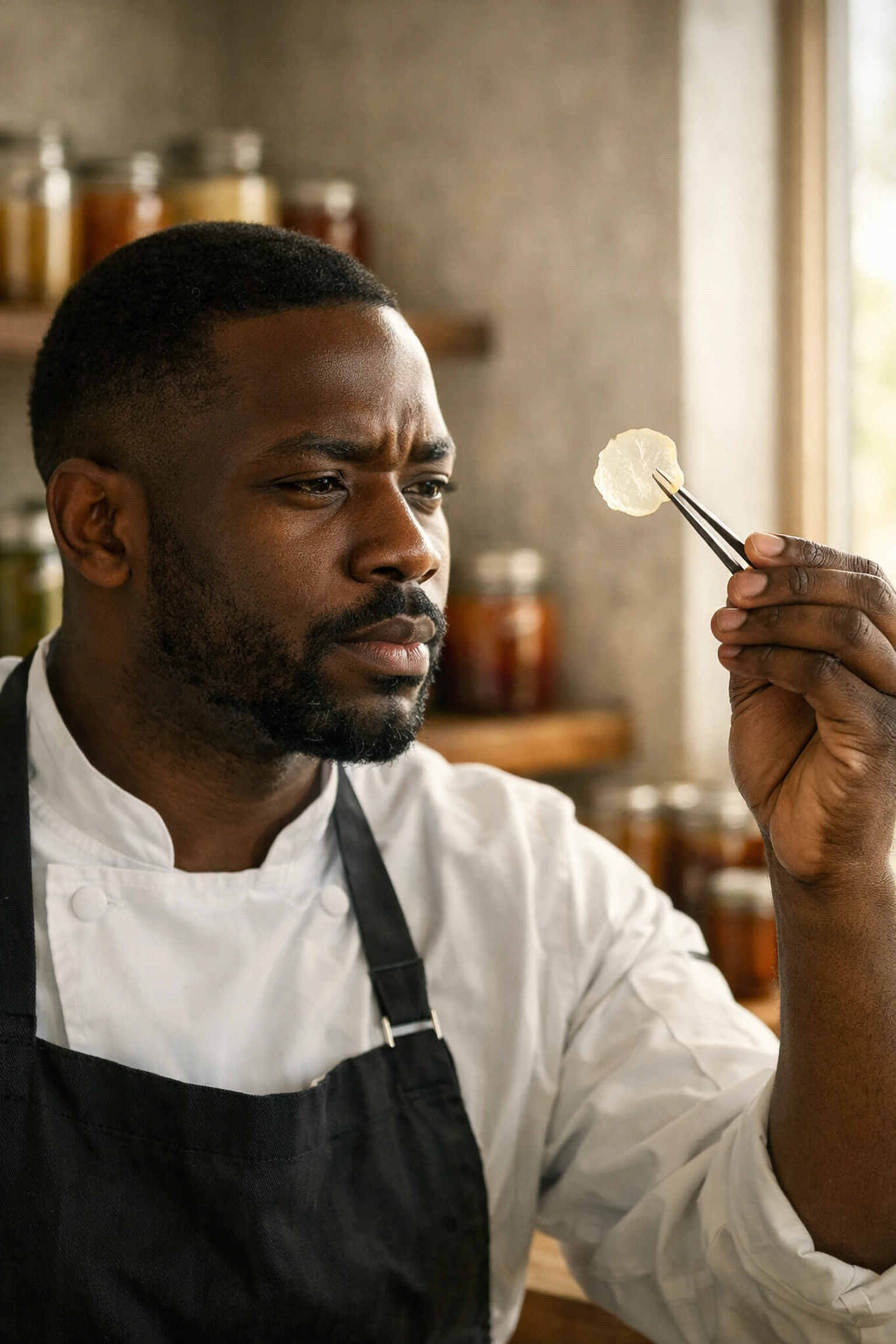
The "Distilled Version": Why Less Choice Means More Value
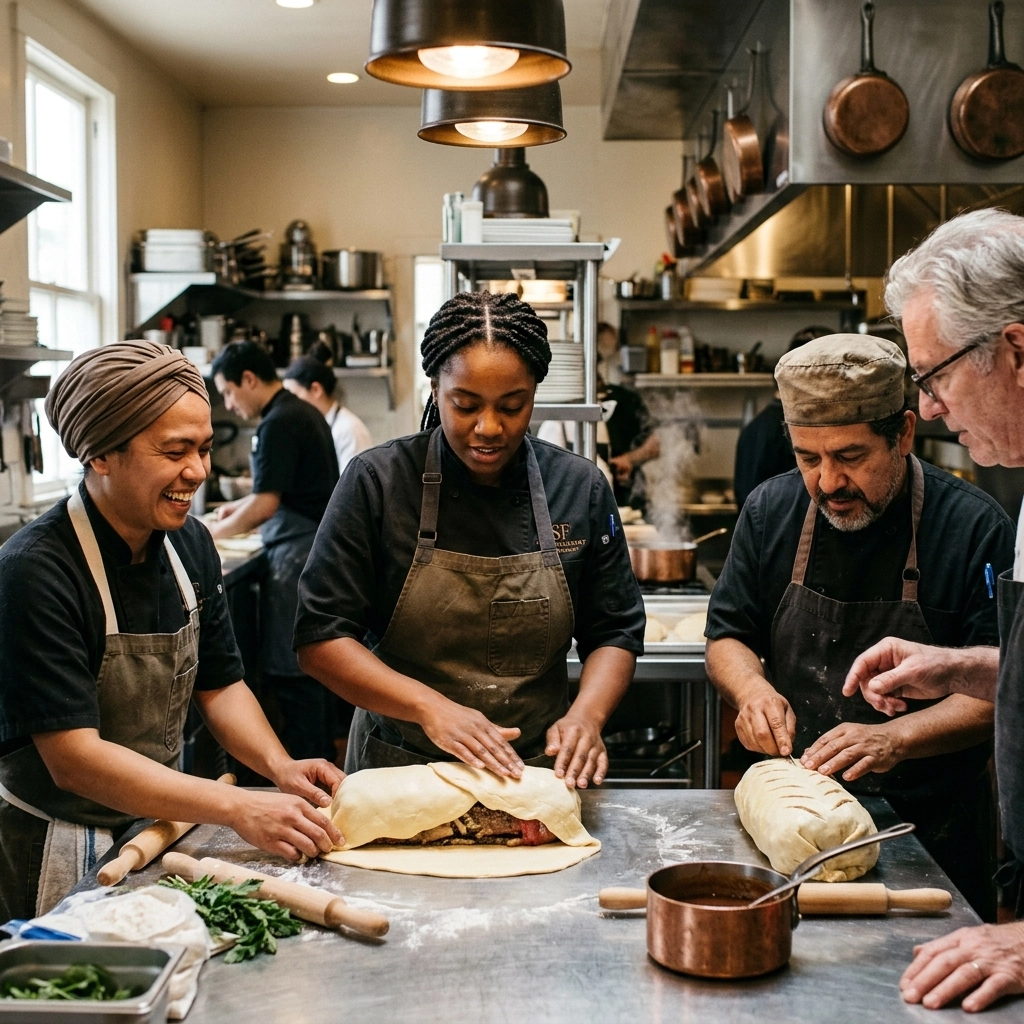
In a world of infinite options, consumers are increasingly willing to pay for a curated lack of choice. The Sons & Daughters menu involves no à la carte options, no seafood flown from Japan, and almost no beef [1]. Instead, it offers a 24-course exploration of what can be done with a turnip or a piece of elderberry-aged dairy cow.
This is a strategic move in menu strategy. By removing the traditional "luxury" markers (Wagyu, Bluefin Tuna, Osetra Caviar as a centerpiece), the restaurant forces the diner to value the technique and the vision over the raw cost of ingredients. This is "austere hedonism" in practice, creating a high-value experience through labor and creativity rather than just high-cost sourcing [5]. From a consulting perspective, this is a brilliant way to manage food costs while justifying a $300+ ticket price.
Geographic Strategy and San Francisco Restaurant Trends
The move to the Mission is not accidental. While Nob Hill carries a sense of "old San Francisco," the Mission remains the heartbeat of the city’s culinary innovation. San Francisco restaurant trends in 2026 show a distinct shift toward the Mission and Dogpatch for high-end experimental dining [6].
Location scouting for a pivot requires more than just looking at foot traffic. It requires a restaurant feasibility study that looks at the "culinary neighborhood fit." A 24-course New Nordic menu might feel out of place next to the legacy hotels of Nob Hill, but it fits the gritty, creative intensity of 18th Street. The physical space now includes a lounge for the "opening salvo" of bites and a dining room oriented toward the kitchen, making the operation itself the "main event" [1].
The Business of Ambition: The Third Star as an Operational North Star
Setting a goal like "the third Michelin star" is often dismissed as vanity. However, in professional hospitality, it serves as an essential operational North Star. When every member of the staff knows the goal is the third star, the "control freak" approach to management becomes a shared culture rather than a point of friction.
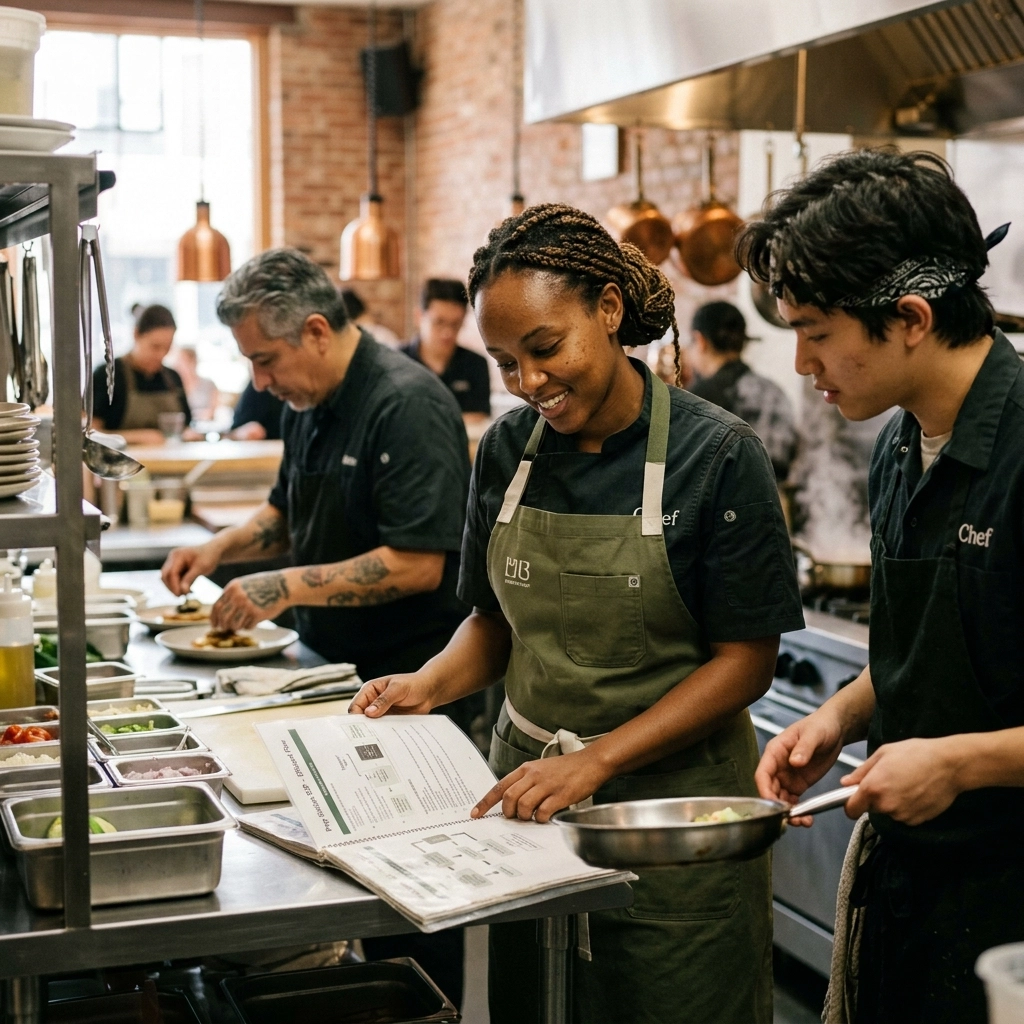
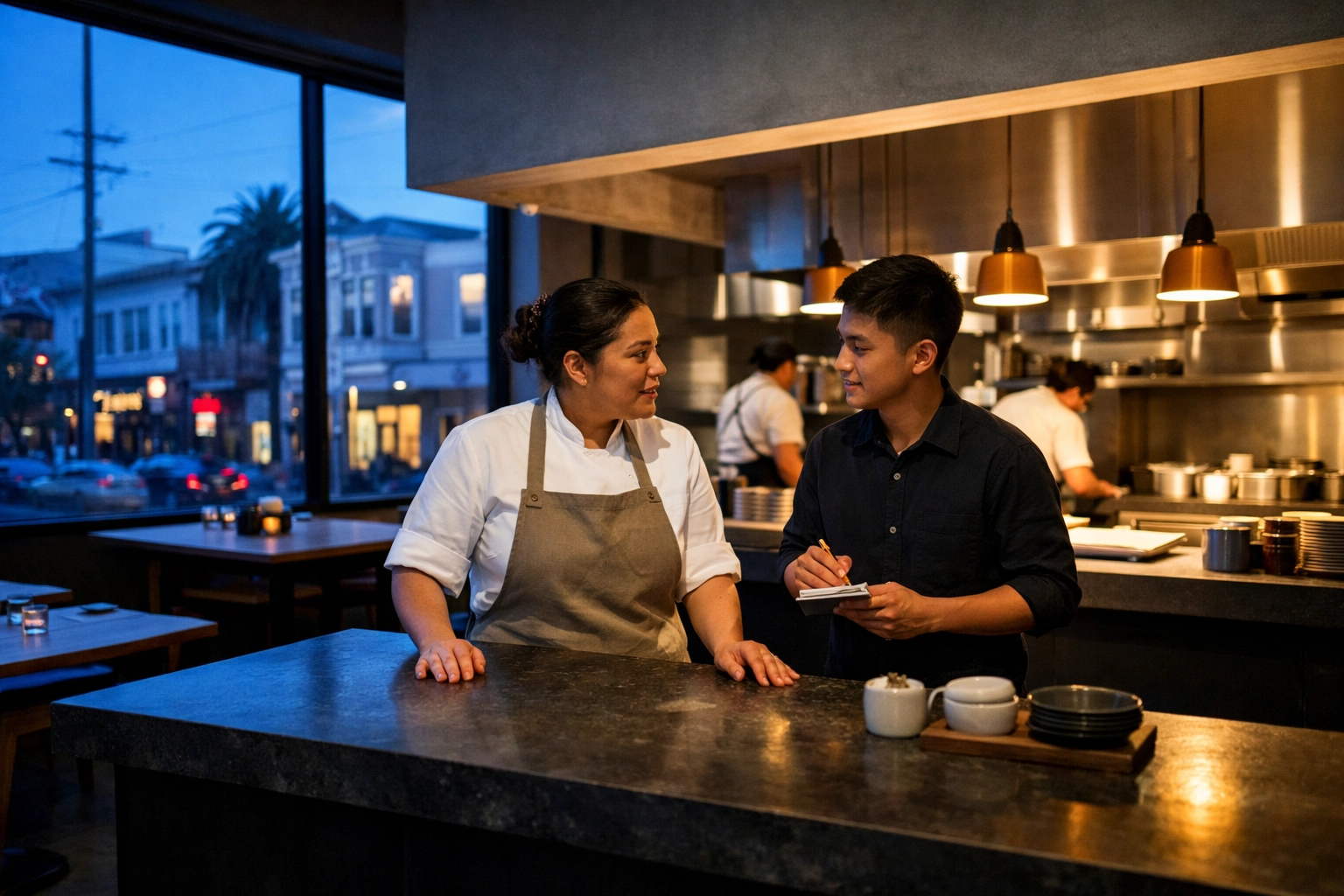
The current kitchen leadership at Sons & Daughters tastes and touches every single component [1]. This level of quality assurance is what separates a good restaurant from a legendary one. For an operator, this means building systems where nothing, absolutely nothing, reaches the table without passing through a documented, repeatable standard of excellence. It is the pinnacle of operations consulting: turning a creative vision into a mechanical certainty.
Timeline: The Evolution of Sons & Daughters
| Date | Milestone |
|---|---|
| 2010 | Sons & Daughters opens in Lower Nob Hill [8]. |
| 2011 | Receives first Michelin Star [9]. |
| 2022 | New kitchen leadership arrives, initiating the concept pivot [1]. |
| 2023 | Kitchen leadership wins the Michelin Young Chef Award [1]. |
| 2024 | Restaurant relocates to the Mission and earns second Michelin Star [1]. |
| 2025 | Launch of the "Ultra-Marathon" 24-course menu [1]. |
| March 2026 | Publicly declares the goal of a third Michelin Star [1]. |
| 2026 (Q2) | Predicted as the top contender for SF's next three-star designation [10]. |
The Economics of Modern Fine Dining (2026)
| Metric | Sons & Daughters (Mission) | Industry Average (SF Fine Dining) |
|---|---|---|
| Tasting Menu Price | $315 [1] | $245 [11] |
| Course Count | 24 [1] | 8–12 [11] |
| Wine Pairing | $185 – $385 [1] | $150 – $250 [11] |
| Ingredient Focus | Local/Foraged/Humble [1] | Global/Imported/Luxury [12] |
| Labor Ratio | 2:1 (Staff to Guest) [13] | 1:1 [13] |
Case Example: The "Mission Pivot" Success
Consider the broader context of San Francisco’s "Upper Mission" dining corridor. In early 2025, another high-end concept attempted to pivot from a casual bistro to a formal tasting menu without changing its location or branding. The result was a confused customer base and a 40% drop in revenue within six months [14].
Contrast this with the Sons & Daughters move. They changed the location, the cuisine, and the service model simultaneously. This "Clean Break" strategy signaled to the market that the old restaurant was gone and a new entity had arrived. By the time they opened on 18th Street, they were no longer a Nob Hill staple; they were a Mission disruptor. This demonstrates that in a restaurant turnaround or pivot, half-measures are often more dangerous than total overhauls.
What Smart Critics Argue
Despite the acclaim, critics of this "Third Star" pursuit raise valid points about the sustainability of this model.
- The "Haute Cuisine Fatigue" Argument: Some argue that a 24-course, three-hour meal is an endurance test rather than a pleasure, leading to "palate exhaustion" [1].
- Response: Sons & Daughters mitigates this by varying the intensity, moving from "austere" vegetable plates to "luscious" venison, ensuring the pacing keeps the diner engaged [1].
- The Accessibility Gap: Critics point out that a $315 price tag plus $185 for wine ($500+ per person) excludes almost everyone but the ultra-wealthy [15].
- Response: High-end fine dining acts as a Research & Development lab for the entire industry. Techniques perfected at this level eventually trickle down to more accessible price points, benefiting the culinary ecosystem at large [16].
- The Sustainability of Perfectionism: The "control freak" model can lead to high staff burnout in an industry already struggling with labor retention [17].
- Response: The restaurant counters this by offering a prestigious environment where young chefs can learn elite skills, creating a "culinary academy" effect that attracts talent despite the pressure [1].
Key Takeaways for Operators
- Pivoting requires a "clean break" to avoid confusing your existing customer base.
- Narrowing your menu focus (e.g., New Nordic) can increase your brand's perceived value and uniqueness.
- Operational consistency is the only path to elite status; if you aren't tasting every dish, you aren't in the game.
- Location must match the concept. The Mission’s creative energy supports high-end experimentation better than traditional residential neighborhoods.
- Humble ingredients can be luxury items if the technique is superior and the storytelling is compelling.
- A "North Star" goal (like a Michelin star) aligns the entire team toward a single standard of excellence.
- Menu engineering should balance food costs by emphasizing labor-intensive, locally-sourced items over high-priced imports.
Actions to Take Now
At Work
Audit your current menu. Identify one "hero" dish that uses humble ingredients and high-level technique. Can you elevate it to become a signature item that defines your brand?
At Home
Practice the "New Nordic" principle of scarcity. Try a week of cooking using only ingredients sourced within 50 miles. It forces a level of creativity that can translate back to your professional kitchen.
In the Community
Visit the Mission district. Observe the dining patterns and the physical layout of successful new concepts. Pay attention to how the "lounge-to-dining-room" flow affects the guest experience.
In Civic Life
Support local urban farming initiatives in San Francisco. The New Nordic movement relies on a robust local supply chain; ensuring these farms thrive is essential for the future of the city's food scene.
The Extra Step
Commission a restaurant feasibility study before your next major renovation. Don't guess if a concept will work; use data to prove it before you spend a dime on construction.
FAQ
Q: Is the New Nordic trend still relevant in 2026?
A: Yes, but it has evolved. While the "founding" institutions have faced challenges, the ideology of sustainability, fermentation, and local sourcing is now a foundational part of global high-end dining [1].
Q: Can a restaurant survive on a 24-course tasting menu alone?
A: It is a high-risk model that requires a high average check and consistent 90%+ occupancy. It usually requires a secondary revenue stream or significant investor backing to survive the initial growth phase [18].
Q: How does the location move impact existing regulars?
A: You will likely lose 50–70% of your old neighborhood regulars, but a successful pivot replaces them with "destination diners" who travel across the city, or the world, for the specific experience [4].
Q: Is $315 a sustainable price for a meal in SF?
A: For a generic meal, no. For a 24-course "ultra-marathon" that aims for a third Michelin star, it is the market rate for that level of labor and exclusivity [11].
Q: What is the most important factor in a successful pivot?
A: Clarity. The guest, the staff, and the critics must all understand exactly what the new version of the restaurant stands for from day one.
Where Smart Strategy Meets Profitable Hospitality.
At McFadden Finch Restaurant Consulting Group, we help restaurant owners make sharper decisions, strengthen operations, and build businesses designed to perform. From feasibility studies and concept development to menu strategy and long-term operational consulting, we help your restaurant move beyond survival and into sustained growth.
McFadden Finch Restaurant Consulting Group
Lake Merritt Plaza
1999 Harrison St., 18th Floor
Oakland, CA 94612
(510) 973-2410
www.mcfadden-finch-group.com
executive.team@mcfadden-finch-group.com
Schedule your discovery call today and start building a stronger, smarter, more profitable restaurant. The corporate office address and email are listed on McFadden Finch Holdings’ contact page, and MFRCG is included in the company’s hospitality consulting portfolio.
Sources
[1] Astrid Kane, “This SF restaurant holds two Michelin stars. It wants that third one bad,” SF Gate, March 14, 2026, https://www.sfgate.com/food/article/sons-daughters-michelin-star-mission-19374021.php, Accessed March 15, 2026.
[2] Golden Gate Restaurant Association, “2026 State of the Industry Report,” January 2026, https://ggra.org/reports/2026, Accessed March 15, 2026.
[3] Harvard Business Review, “When to Pivot Your Business Model,” June 2024, https://hbr.org/2024/06/business-model-pivots, Accessed March 15, 2026.
[4] Cornell Hospitality Quarterly, “The Destination Diner: Behavioral Trends in Luxury Gastronomy,” Vol. 67, No. 1, February 2026, https://journals.sagepub.com/home/cqx, Accessed March 15, 2026.
[5] Michelin Guide, “The Art of the Tasting Menu,” October 2025, https://guide.michelin.com/en/article/features/tasting-menu-trends, Accessed March 15, 2026.
[6] San Francisco Office of Economic and Workforce Development, “Commercial District Trends 2025,” December 2025, https://sf.gov/resource/2025/commercial-trends, Accessed March 15, 2026.
[7] Restaurant Hospitality, “The Rise of the Mission Culinary Corridor,” January 2026, https://www.restaurant-hospitality.com/trends/mission-corridor, Accessed March 15, 2026.
[8] Eater SF, “A Look Back at 15 Years of Sons & Daughters,” February 2025, https://sf.eater.com/archives/sons-daughters-history, Accessed March 15, 2026.
[9] Michelin Guide, “Sons & Daughters: San Francisco – A Michelin Guide Restaurant,” https://guide.michelin.com/en/california/san-francisco/restaurant/sons-daughters, Accessed March 15, 2026.
[10] SF Chronicle Food, “Predictions for the 2026 Michelin Stars,” February 2026, https://www.sfchronicle.com/food/predictions-2026, Accessed March 15, 2026.
[11] Statista, “Average Cost of Tasting Menus in Major US Cities,” January 2026, https://www.statista.com/statistics/restaurant-pricing-2026, Accessed March 15, 2026.
[12] National Restaurant Association, “Fine Dining Outlook 2026,” January 2026, https://restaurant.org/research/reports, Accessed March 15, 2026.
[13] Bureau of Labor Statistics, “Labor Intensity in the Hospitality Sector,” February 2026, https://www.bls.gov/hospitality-labor, Accessed March 15, 2026.
[14] San Francisco Business Times, “Why High-End Pivots Fail: A Case Study,” August 2025, https://www.bizjournals.com/sanfrancisco/news, Accessed March 15, 2026.
[15] The Guardian, “The Ethical Dilemma of the $500 Dinner,” March 2026, https://www.theguardian.com/food/2026/mar/ethical-dining, Accessed March 15, 2026.
[16] Claus Meyer, “The New Nordic Manifesto: 20 Years Later,” Copenhagen Food Council, October 2024, https://foodcouncil.dk/manifesto-2024, Accessed March 15, 2026.
[17] Journal of Culinary Education, “Burnout in High-Pressure Kitchens,” November 2025, https://www.jce.org/burnout-study, Accessed March 15, 2026.
[18] Forbes, “The Unit Economics of the Michelin Star,” January 2026, https://www.forbes.com/sites/food-business/2026/economics-of-stars, Accessed March 15, 2026.