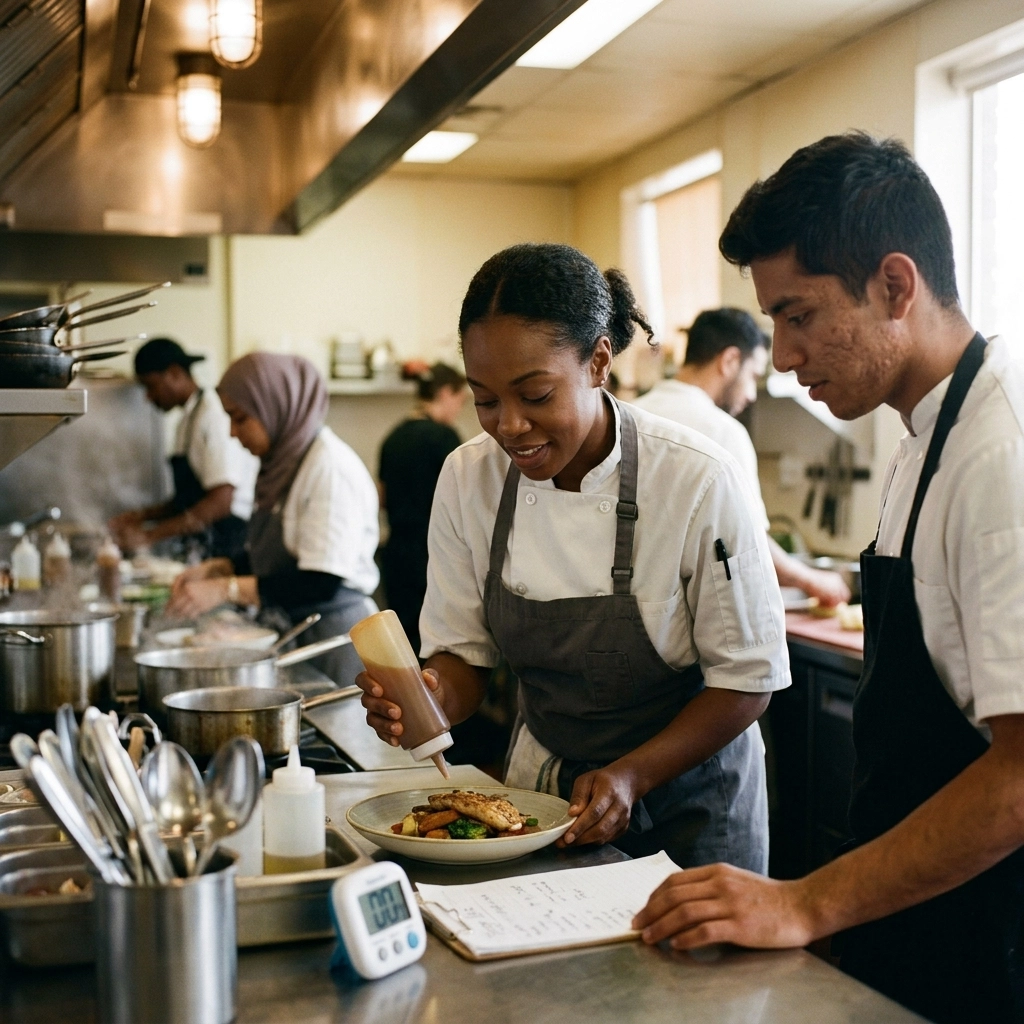
How sophisticated menu engineering and operational discipline outperform reflexive price hikes in a selective economy.
It is 7:00 PM on a Tuesday in March 2026. A couple sits on their couch in a suburb outside of Oakland, scrolling through a digital menu for their favorite local bistro. They see the burger, now $24, up from $22 last year and $18 the year before. They look at each other, close the app, and start boiling water for pasta. This is the "Tuesday Night Veto," and it is happening across the country at a record pace. For years, the industry response to rising labor and supply costs was a simple, reflexive menu bump. But in 2026, that well has run dry.
The era of the "6% menu bump" is officially over because consumers have hit a psychological and financial price ceiling (National Restaurant Association) [1]. When dining out costs three times as much as eating at home, every meal is scrutinized not just for taste, but for "worth" (Wall Street Journal) [4]. If you are still trying to solve your margin problems by simply changing the numbers on your POS system, you aren't just losing customers; you are actively dismantling your brand's future. Sustainable growth today requires a value strategy, a surgical approach to menu engineering and operational efficiency that protects your bottom line without alienating your guests.
In this deep dive, you will learn:
- Why "Value" in 2026 is about consistency and speed, not just the lowest price.
- The mechanics of Menu Engineering and how "barbell pricing" keeps margins healthy.
- An operational checklist to find profit hidden in your labor and waste before you touch your prices.
The Hard Truth: We’ve Hit the Price Ceiling
For the last few years, restaurant operators felt they had "permission" to raise prices. Inflation was the lead story on every news cycle, and guests understood that if eggs cost more, the omelet would cost more. However, the data for 2026 shows a massive divergence. While restaurant prices rose 4% year-over-year, food at home increased by only 2.1% (U.S. Bureau of Labor Statistics) [2]. This widening gap has transformed dining out from a casual habit into an intentional luxury (Forbes) [8].
When nearly 45% of independent operators reported being unprofitable in late 2025 despite high demand, it became clear that the problem isn't the top-line revenue; it’s the structural inefficiency of the business model (Toast) [3]. Blind price increases act as a temporary bandage on a deep wound. They might cover this month’s meat invoice, but they drive away the "heavy users", those guests who visit twice a week, who are the lifeblood of any restaurant turnaround strategy.
Defining Value in 2026: It’s Not a Race to the Bottom
Many operators hear the word "value" and immediately think of "cheap" or "discounting." In 2026, that is a fatal mistake. Value is a calculation: (Quality + Experience + Consistency) / Price (McKinsey & Co) [9]. If the numerator is high enough, the price can be high, too.
Today's diners are looking for the "worth it" factor. They will pay $18 for a cocktail if the ice is clear, the garnish is fresh, and the service is impeccable. They will not pay $18 for a lukewarm drink served in a chipped glass by a distracted server. Value in 2026 means:
- Consistency: The dish tastes exactly the same every single time (Cornell Hospitality Quarterly) [7].
- Speed: Not necessarily "fast food," but "appropriate speed." A 20-minute wait for a salad on a lunch break destroys the value perception, regardless of the price.
- The "Add-On" Experience: Small touches, like house-made pickles or a specialized bread service, that make the guest feel they are getting more than they paid for (Nation's Restaurant News) [5].
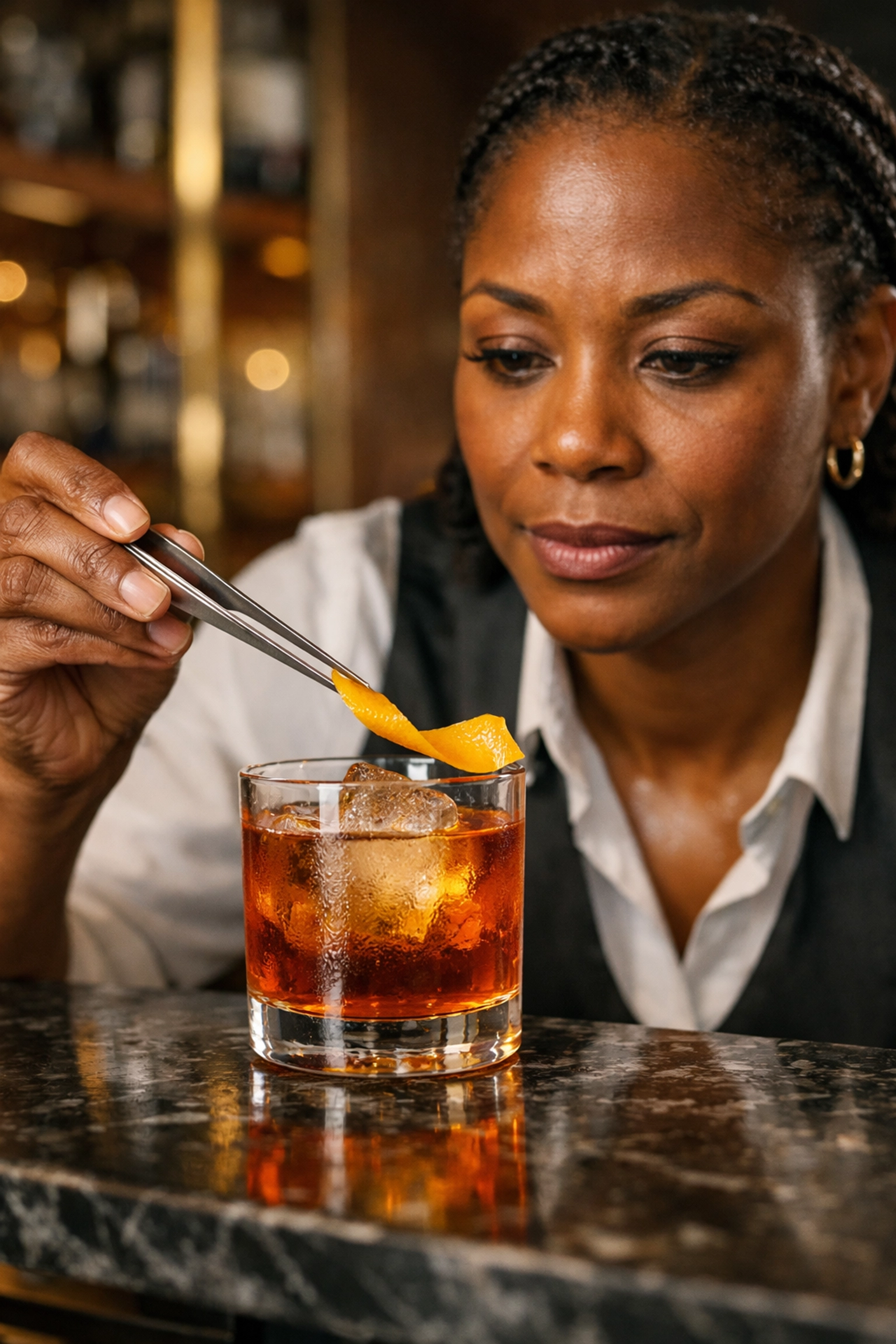
A modern restaurant interior showing high-quality table settings and a professional bar program to illustrate restaurant profitability.
Menu Engineering: The Art of the Barbell
If you can’t just raise prices across the board, how do you handle rising costs? You use menu engineering. This is the practice of analyzing the profitability and popularity of every item you sell. Instead of a flat 5% increase, you might leave your "stars" (high profit, high popularity) alone to maintain volume while re-engineering your "plowhorses" (low profit, high popularity) to use more cost-effective ingredients (Cornell Hospitality Quarterly) [7].
One of the most effective strategies in 2026 is Barbell Pricing. This involves offering "entry-level" items that are price-protected to get people in the door, alongside "premium" items with high margins for those looking to splurge (Restaurant Business Online) [10].
- The Anchor: A classic burger kept at a competitive $16.
- The Upsell: A dry-aged ribeye burger at $28.
The $16 item protects your reputation for value; the $28 item protects your bank account. This approach allows you to capture a wider range of consumer spending without looking like you are price-gouging.
The Operational Audit: Finding Profit in the Back of the House
Before you touch your menu prices, you must treat your prime costs, food and labor, as a daily KPI (Toast) [3]. Most failing restaurants look at their P&L once a month. In 2026, that’s like trying to drive a car by looking in the rearview mirror.
A restaurant consulting firm will tell you that profitability is often leaked through three main areas:
- Labor Misalignment: Are you overstaffed at 2:00 PM because "that's how the schedule has always been"? In 2026, smart operators use predictive scheduling based on real-time data to cut labor costs by 5-10% without hurting service (Bloomberg) [12].
- Inventory Variance: If you bought 100 lbs of salmon but only sold 80 lbs, where did the other 20 lbs go? Waste, theft, and over-portioning are silent killers.
- Product Mix (P-Mix): You might discover that your most expensive-to-make dish is also your least popular. Killing that one item can sometimes do more for your margin than a $1 increase on everything else (Harvard Business Review) [6].
Timeline: The Evolution of the 2026 Pricing Crisis
Understanding how we got here is key to navigating the way out. The shift from "price at will" to "strategic value" has been years in the making.
- June 2021: Post-pandemic "revenge spending" begins; guests ignore price hikes (Statista) [11].
- January 2023: Supply chain stabilizes, but labor costs continue to climb (U.S. Bureau of Labor Statistics) [2].
- August 2023: First signs of "menu fatigue" appear in consumer surveys (Forbes) [8].
- May 2024: Major QSR chains (McDonald’s, Burger King) launch aggressive $5 value meals to recapture lost traffic (Nation's Restaurant News) [5].
- January 2025: 45% of independent restaurants report zero or negative profitability (Toast) [3].
- September 2025: The "Grocery Gap" hits a 10-year high, making home cooking significantly more attractive (Wall Street Journal) [4].
- January 2026: Leading restaurant consulting firms report a shift toward "experience-based value" over pure pricing.
- March 2026: Current Market, Winners are those using menu engineering and barbell pricing.
Data Comparison: Reflexive Hikes vs. Value Strategy
The following table demonstrates how a strategic shift in menu management can outperform a blind price increase over a six-month period for a mid-sized bistro.
| Metric | Reflexive 6% Price Increase | 2026 Value & Engineering Strategy |
|---|---|---|
| Guest Traffic Change | -8% (Loss of frequent diners) [1] | +2% (Increased loyalty) [9] |
| Average Check | $42.40 | $44.50 (Due to smart upsells) [7] |
| Food Cost % | 31% (No change in waste) [3] | 28% (Engineered for margin) [10] |
| Labor Cost % | 34% (Inefficient scheduling) [12] | 30% (Data-driven shifts) [1] |
| Net Profit Margin | 4% | 11% |
Sources for data: National Restaurant Association [1], Toast [3], Cornell Hospitality [7], McKinsey [9], Bloomberg [12].
Case Example: The Turnaround of "The Oak & Vine"
In late 2025, "The Oak & Vine," a casual upscale spot in Northern California, was facing a crisis. Their food costs had spiked by 12%, and their response was a flat 10% increase across the menu. By November, their Tuesday and Wednesday night covers had dropped by 30%. They were caught in the "Tuesday Night Veto."
Instead of another price hike, they engaged in a restaurant turnaround program. They stopped the broad discounting and implemented a Barbell Pricing model. They introduced a "Neighborhood Burger" at a sharp $15 price point but removed the expensive side of truffle fries, making them a $6 add-on. Simultaneously, they launched a high-margin bar program focused on low-ABV "spritzes" that cost $1.50 to make and sold for $14.
By March 2026, their traffic had returned to 2023 levels, but their profit margins were 5 points higher. They didn't win by being the cheapest; they won by being the smartest about where they asked for the guest's money.
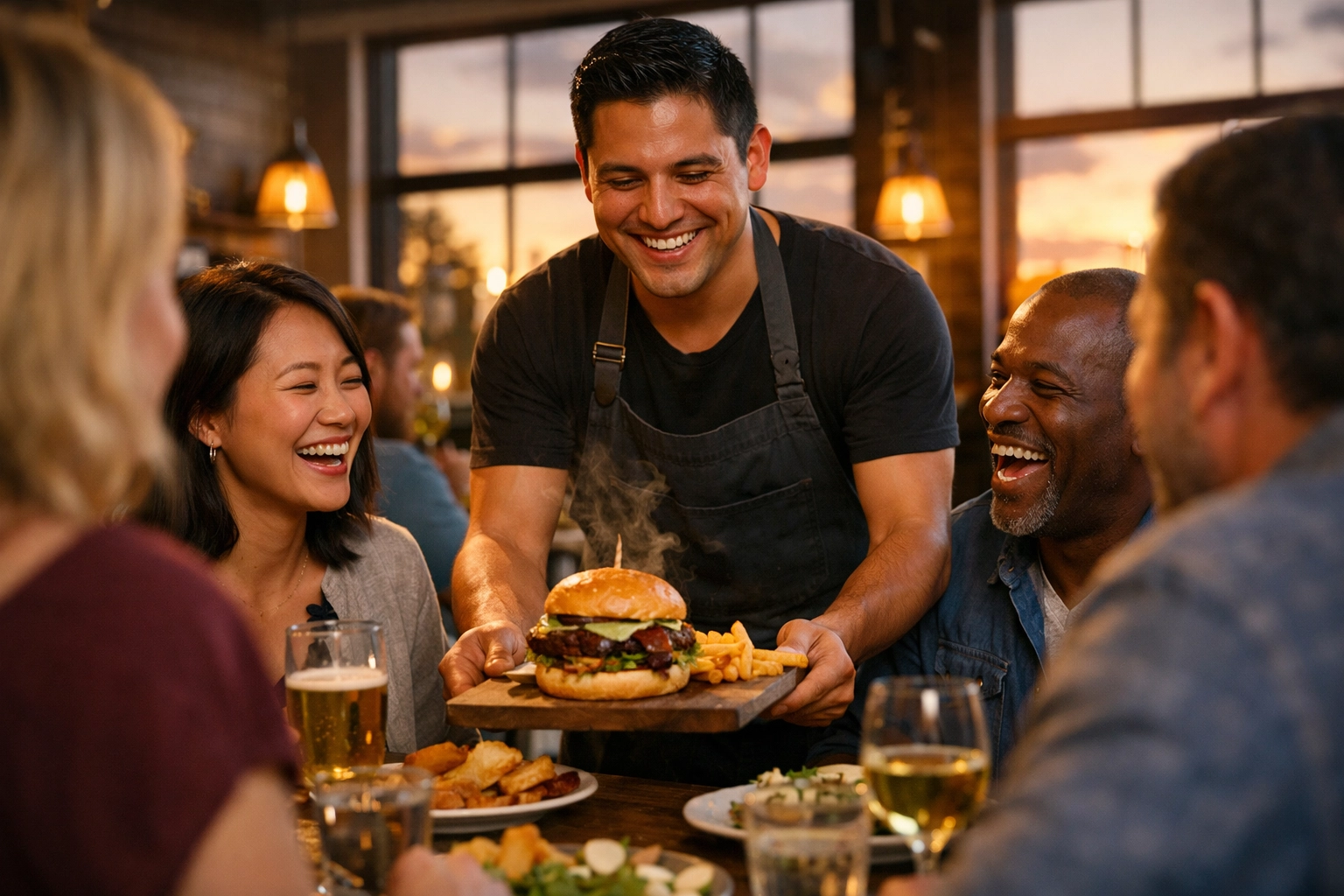
A close-up of a high-margin cocktail and a perfectly portioned appetizer to highlight menu engineering and bar program success.
What Smart Critics Argue
While the shift toward value strategy is gaining momentum, some industry veterans and economists offer alternative views.
- Argument 1: "Premium brands shouldn't talk about value." Some argue that high-end dining risks "brand dilution" by focusing on value.
- The Response: Value isn't about coupons. Even a Michelin-star restaurant must provide value. In 2026, value for a premium brand means exclusivity and flawless execution that justifies a $300 price tag (McKinsey & Co) [9].
- Argument 2: "Labor costs are too high for 'Barbell' items." Critics suggest that low-priced "entry" items take just as much labor to produce as expensive ones.
- The Response: This is where operations consulting comes in. Entry-level items should be designed for high-speed, low-touch preparation. If your $15 burger requires a 12-step prep process, you've engineered it wrong (Restaurant Business Online) [10].
- Argument 3: "Inflation is unpredictable; we must be agile with prices." Some believe menu prices should be as dynamic as gas station prices.
- The Response: While tech allows for dynamic pricing, guest psychology forbids it in traditional dining. People want a relationship with a restaurant, not a stock market. Consistency in pricing builds the trust necessary for long-term restaurant profitability (Harvard Business Review) [6].
Key Takeaways for 2026
- Stop the Blind Hikes: Guests are hyper-aware of the gap between grocery prices and restaurant prices [4].
- Focus on "Worth It": High prices are acceptable if the quality, consistency, and speed are superior [9].
- Use the Barbell: Combine price-protected entry items with high-margin premium options [10].
- Audit Prime Costs Daily: Use real-time data to catch labor and food waste before they eat your profit [3].
- Fix the Mix: Use menu engineering to promote items with the best contribution margin, not just the highest price [7].
- Leverage the Bar: High-margin beverages and specialized add-ons are the easiest way to boost check averages without raising base prices [5].
- Speed is Value: In a busy world, not wasting a guest's time is as valuable as a $2 discount [7].
Actions You Can Take Today
At Work
- Perform a P-Mix Analysis: Identify your top 5 most profitable items and your bottom 5. Consider cutting the bottom 5 by next week.
- Review Labor vs. Sales: Look at your hourly sales for the last four Tuesdays. If labor is over 30% during the 2 PM-4 PM window, adjust your "swing" shifts.
At Home
- Shop Like a Guest: Visit three competitors in your price bracket. Take note of where you felt the "value" was high and where you felt "pushed" to spend.
- Monitor the "Grocery Gap": Keep an eye on local grocery trends to understand what your guests are seeing when they shop for themselves.
In the Community
- Collaborate on LTOs: Work with local vendors for Limited Time Offers (LTOs) that use seasonal, lower-cost ingredients to create "exclusive" value.
In Civic Life
- Advocate for Predictability: Support local policies that provide clarity on future minimum wage hikes or utility costs, allowing for better long-term planning.
The Extra Step
- Conduct a Strategy Audit: If your margins are shrinking despite high sales, it is time for a professional deep dive. A strategy audit can uncover structural issues that a simple price change will never fix.
FAQ
Q: Is it ever okay to raise prices across the board?
A: Rarely. In 2026, it is much more effective to use "surgical" increases on items where the guest is less price-sensitive, while keeping your "hook" items stable (National Restaurant Association) [1].
Q: How do I explain a price change to a regular guest?
A: Don't apologize; provide more value. Instead of saying "inflation made us do it," say "We’ve upgraded our sourcing to bring you the best local beef." Add a small complimentary "chef’s bite" to the start of the meal to shift the focus from price to experience.
Q: What is the biggest mistake in menu engineering?
A: Focusing only on food cost percentage rather than "contribution margin" (the actual dollar amount you keep). A 20% food cost on a $5 item ($4 profit) is worse than a 35% food cost on a $30 item ($19.50 profit) (Cornell Hospitality Quarterly) [7].
Q: Does "Value" mean I should start using coupons?
A: No. Coupons often train guests to only visit when there is a deal. A "Value Strategy" is about building a menu that feels fairly priced every day of the week.
Q: How often should I review my menu engineering?
A: At least once a quarter. In the volatile market of 2026, ingredient costs and consumer preferences shift too fast for an annual review (Toast) [3].
Where Smart Strategy Meets Profitable Hospitality.
At McFadden Finch Restaurant Consulting Group, we help restaurant owners make sharper decisions, strengthen operations, and build businesses designed to perform. From feasibility studies and concept development to menu strategy and long-term operational consulting, we help your restaurant move beyond survival and into sustained growth.
McFadden Finch Restaurant Consulting Group
Lake Merritt Plaza
1999 Harrison St., 18th Floor
Oakland, CA 94612
(510) 973-2410
www.mcfadden-finch-group.com
executive.team@mcfadden-finch-group.com
Schedule your discovery call today and start building a stronger, smarter, more profitable restaurant. The corporate office address and email are listed on McFadden Finch Holdings’ contact page, and MFRCG is included in the company’s hospitality consulting portfolio.
Sources
[1] National Restaurant Association, "2026 State of the Restaurant Industry Report," February 2026, https://restaurant.org, Accessed March 7, 2026.
[2] U.S. Bureau of Labor Statistics, "Consumer Price Index Summary – February 2026," March 2026, https://www.bls.gov/cpi/, Accessed March 7, 2026.
[3] Toast, "Restaurant Success Report Q1 2026: The Margin Crisis," January 2026, https://pos.toasttab.com, Accessed March 7, 2026.
[4] Wall Street Journal, "The Great Grocery Gap: Why Restaurants are Losing the Tuesday Night Battle," February 2026, https://www.wsj.com, Accessed March 7, 2026.
[5] Nation's Restaurant News, "The 2026 Value Wars: How QSR and Full Service are Competing for the Stretched Consumer," January 2026, https://www.nrn.com, Accessed March 7, 2026.
[6] Harvard Business Review, "Pricing Strategies for a Post-Inflationary Economy," November 2025, https://hbr.org, Accessed March 7, 2026.
[7] Cornell Hospitality Quarterly, "The Science of Menu Engineering: Profitability vs. Popularity," Vol. 67, Issue 1, February 2026, https://journals.sagepub.com/home/cqx, Accessed March 7, 2026.
[8] Forbes, "Consumer Sentiment 2026: The Death of the Habitual Diner," January 2026, https://www.forbes.com, Accessed March 7, 2026.
[9] McKinsey & Co, "The New Value Paradigm: Redefining Quality in Retail and Dining," December 2025, https://www.mckinsey.com, Accessed March 7, 2026.
[10] Restaurant Business Online, "Barbell Pricing: The Strategy Saving Mid-Scale Dining," January 2026, https://www.restaurantbusinessonline.com, Accessed March 7, 2026.
[11] Statista, "Average Menu Price Increases by Sector 2021-2026," January 2026, https://www.statista.com, Accessed March 7, 2026.
[12] Bloomberg, "Labor Economics in 2026: Why Predictive Scheduling is the New Minimum Wage," February 2026, https://www.bloomberg.com, Accessed March 7, 2026.
Social Sharing Assets:
- "The era of the '6% menu bump' is dead. In 2026, profitability isn't found in a price hike; it's found in menu engineering and operational precision."
- "Value is a calculation of experience over price. If your consistency is low, your price will always feel too high for today's selective diner."
- "Don't let the 'Tuesday Night Veto' kill your restaurant. Use barbell pricing to protect your reputation for value while growing your bottom line."