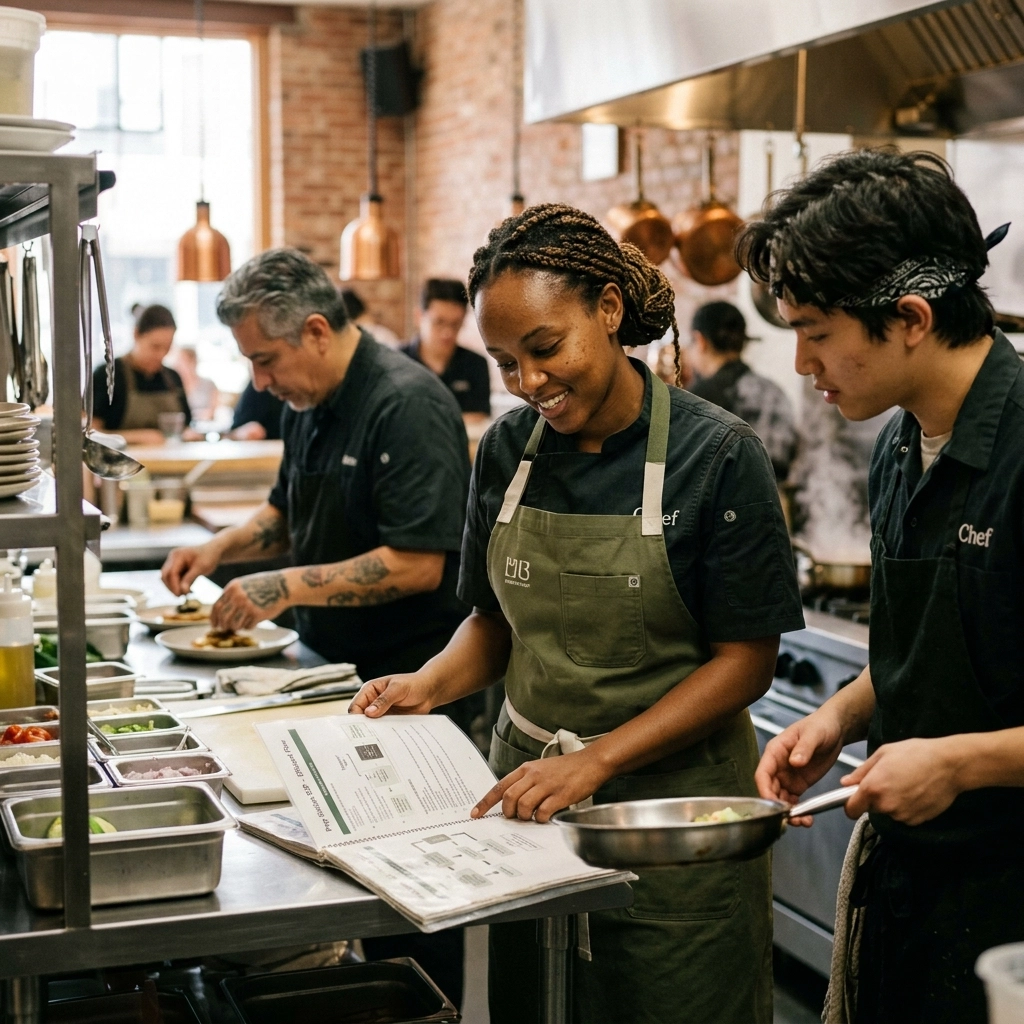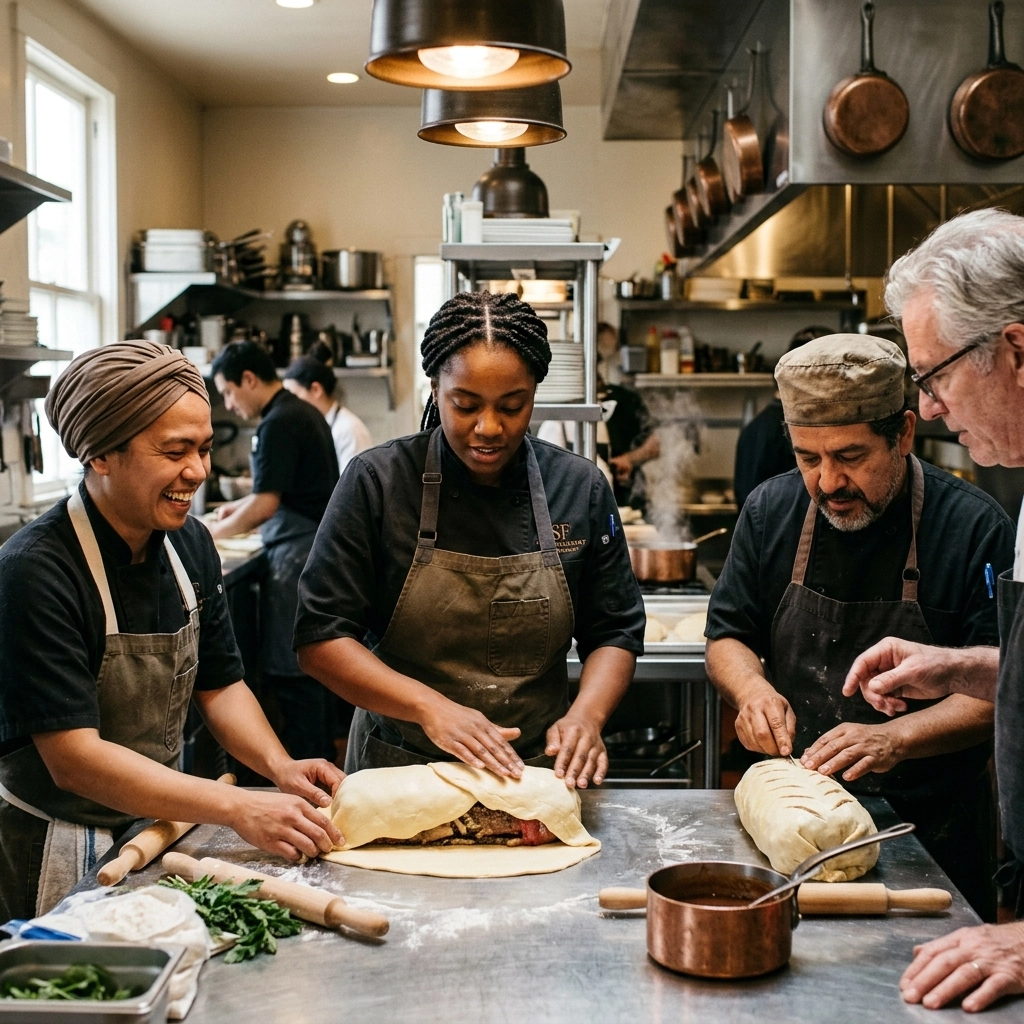
Los Angeles County is now issuing permits for Microenterprise Home Kitchen Operations, MEHKOs, and it's changing the game for aspiring restaurant operators. Under California's Assembly Bill 626, signed into law in 2018, home cooks can legally sell full, hot meals directly from their residential kitchens without opening a commercial storefront (California Legislative Information)[1]. This isn't about selling cookies at a farmers market. We're talking tacos, fresh pasta, curries, birria, pho, real restaurant meals prepared at home and sold to neighbors, all above board and fully permitted.
For restaurant consultants, this is fascinating. A MEHKO is essentially a built-in feasibility study with real revenue potential. You test your concept, refine your menu, build a customer base, and collect data, all while keeping overhead lower than any brick-and-mortar operation. The question isn't whether MEHKOs are legitimate; California law settled that. The question is whether this model fits your goals, your market, and your path to scale. If you've been sitting on a restaurant idea but hesitating because of the capital required to launch, LA's home restaurant revolution might be your cleanest entry point.
What Is a MEHKO? (And Why It's Not a Bake Sale)
A Microenterprise Home Kitchen Operation is a licensed, inspected, permitted food business that operates out of a private home. It's authorized under California Health and Safety Code Section 114365, which allows home cooks to prepare and sell meals directly to consumers (California Department of Public Health)[2]. This is fundamentally different from cottage food operations, which are limited to non-potentially hazardous foods like baked goods, jams, and granola.
MEHKOs can serve hot meals. That means you can cook, plate, and sell dishes that require refrigeration and present higher food safety risks, exactly the kind of food that drives restaurant concepts. The law was designed to lower barriers to entry for small-scale food entrepreneurs, particularly in communities where access to commercial kitchen space is limited or prohibitively expensive.
Los Angeles County, through its Department of Public Health, began issuing MEHKO permits in recent years as part of a phased rollout across California. Not every county has adopted the ordinance yet, but LA County's participation signals a major shift in how food businesses can launch and operate (Los Angeles County Department of Public Health)[3].
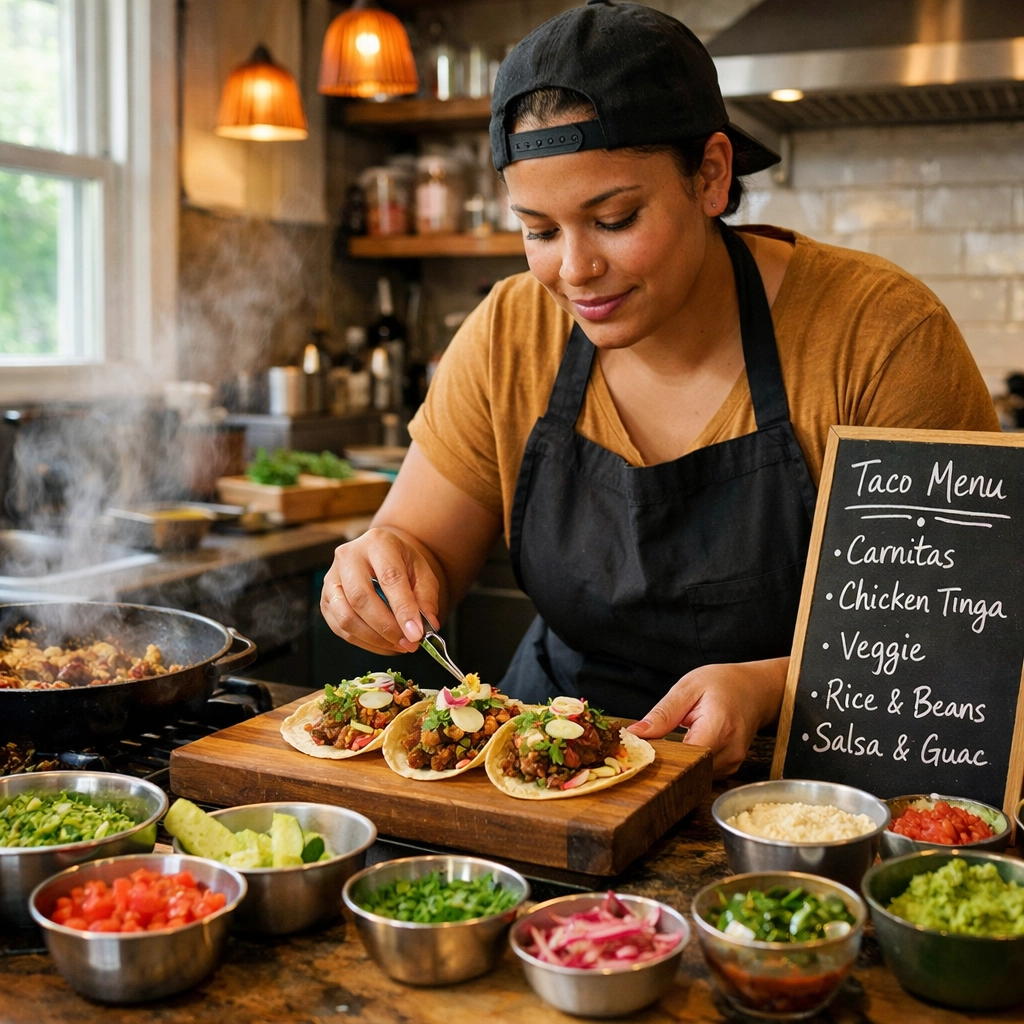
The Numbers: What You Can (and Can't) Do
California law caps MEHKO operations to keep them genuinely micro. Here's what the limits look like as of 2026:
- 30 meals per day
- 90 meals per week
- Annual gross sales capped between $50,000 and $100,000 (adjusted periodically for inflation)
These aren't arbitrary numbers. They're designed to prevent home kitchens from becoming de facto restaurants without the infrastructure, zoning compliance, or public safety systems that commercial operations require. For context, 30 meals a day could mean 30 individual orders or 30 family-sized portions, the law doesn't specify portion size, only the number of discrete meal transactions.
Revenue caps vary slightly depending on county implementation, but most jurisdictions align with the state's original $50,000 ceiling, adjusted upward as cost-of-living indices change. Some operators report functional caps closer to $100,000 to $150,000 in high-cost areas like Los Angeles, though official documentation should be confirmed with the LA County Department of Public Health.
From a consulting perspective, these limits are actually useful. They force discipline. You can't scale recklessly, which means you have time to refine operations, test pricing, and validate demand before committing to a larger footprint.
Requirements: What It Takes to Go Legal
Operating a MEHKO isn't a free-for-all. California and LA County impose specific requirements to ensure food safety and consumer protection. Here's what you need:
1. Certified Food Protection Manager Certificate
At least one person involved in the operation must hold a valid Food Protection Manager certification from an ANSI-accredited program. This is the same certification required for commercial restaurant managers and covers foodborne illness prevention, safe food handling, and sanitation protocols (ServSafe, Prometric)[4].
2. Public Health Permit
You must apply for and obtain a MEHKO permit from the LA County Department of Public Health. This involves submitting an application, paying fees, and undergoing an initial inspection of your home kitchen. The permit is specific to MEHKOs and is not the same as a standard restaurant health permit.
3. Kitchen Inspection
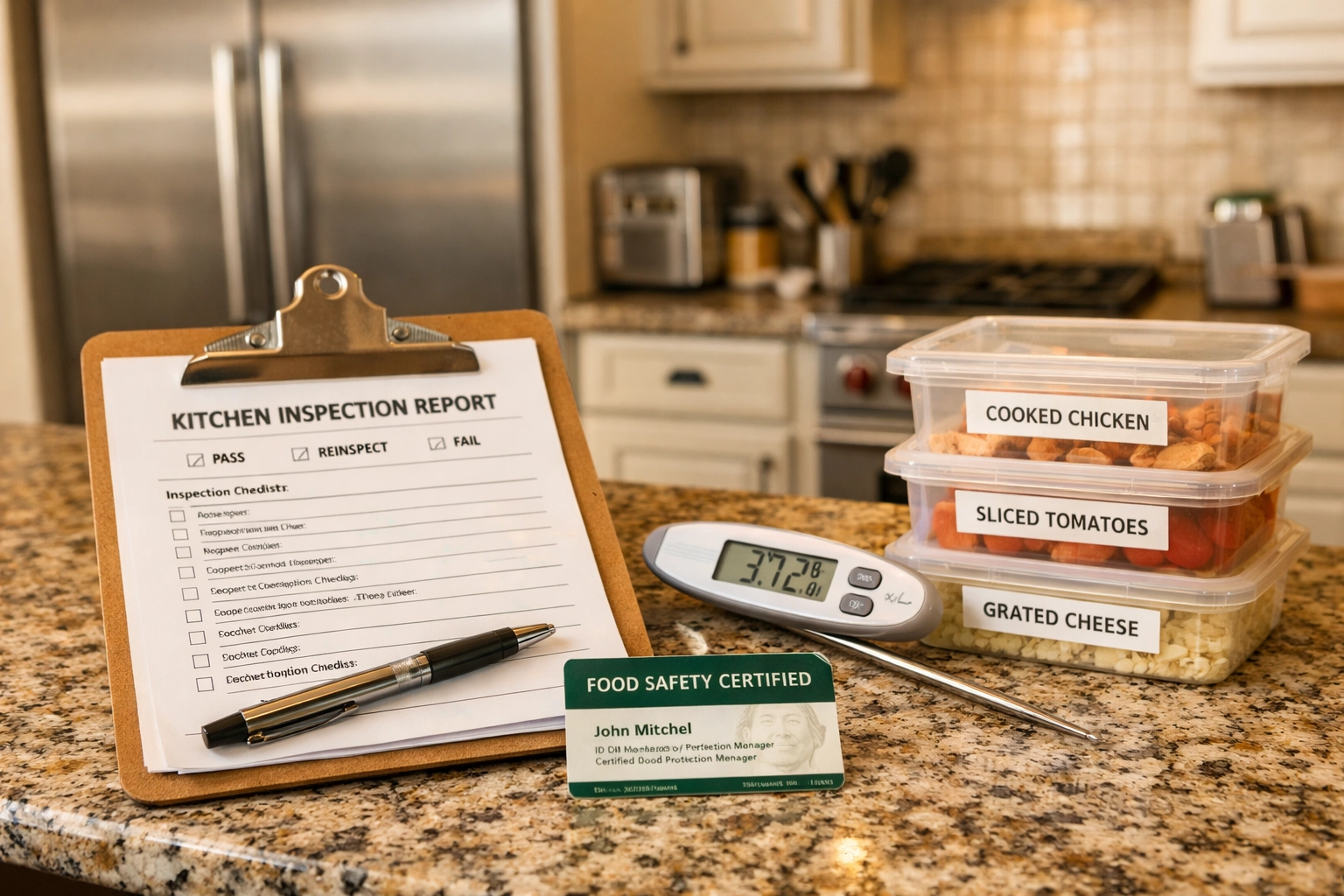
A county health inspector will visit your home to assess your kitchen setup. They'll check for proper refrigeration, handwashing stations, food storage, waste disposal, and pest control. Your kitchen must meet the same food safety standards as a commercial operation, even though it's in a residential space.
4. Labeling and Disclosure
All meals must be labeled with the name and address of the MEHKO, a list of ingredients, and a disclosure statement informing consumers that the food was prepared in a home kitchen that is not subject to routine restaurant inspections. Transparency is non-negotiable.
5. Sales Restrictions
MEHKOs can only sell directly to consumers, no wholesale, no retail distribution, no third-party sales through grocery stores or other businesses. You can deliver, offer pickup, or serve on-site (with limitations), but you can't sell through intermediaries.
These requirements are stricter than cottage food laws but far less complex than opening a commercial restaurant. It's a middle ground that keeps the public safe while giving small operators room to breathe.
The Consultant Angle: Your MEHKO Is a Feasibility Study
Here's where it gets interesting for anyone serious about opening a restaurant. A MEHKO is the best feasibility study you'll ever run, and it pays you while you do it.
Traditional restaurant feasibility studies cost $5,000 to $25,000 and involve market research, site analysis, pro forma financials, and concept validation. They're valuable, but they're theoretical. A MEHKO lets you test the same variables in real time with actual customers and real revenue.
You're testing:
- Menu viability: Do people actually want your food, or just the idea of it?
- Pricing strategy: Can you hit your target food cost and labor margins?
- Customer acquisition: How hard is it to build a base in your neighborhood?
- Operational capacity: Can you handle 30 meals a day without breaking?
- Scalability: What breaks first when you push volume?
Every order is a data point. Every week is a stress test. And unlike a feasibility study that sits in a binder, a MEHKO generates cash flow while you learn. For restaurant consulting firms like McFadden Finch, this model is a no-brainer for clients who are concept-ready but capital-constrained. You can recommend a MEHKO as a structured pilot phase before committing to a full business plan or site build-out.
Scaling: From Home Kitchen to Brick-and-Mortar
The endgame for most MEHKO operators isn't staying at 30 meals a day forever, it's using the home kitchen as a launchpad for something bigger. Here's how the scaling path typically unfolds:
Phase 1: MEHKO Launch (Months 1–12)
You're building the foundation, menu, systems, customer base, reputation. You're learning what works and what doesn't without the pressure of a commercial lease or full-time staff.
Phase 2: Data Collection (Months 6–18)
You're tracking sales, customer feedback, repeat rates, peak days, and operational bottlenecks. This data becomes the backbone of your business plan and pitch deck when you're ready to raise capital or approach lenders.
Phase 3: Transition Planning (Months 12–24)
You're exploring next steps: commissary kitchen, food truck, ghost kitchen, or brick-and-mortar. Your MEHKO performance gives you leverage. Investors and lenders want proof of concept, and you've got revenue history, customer testimonials, and a validated menu.
Phase 4: Scale or Pivot (Months 18–36)
You either scale into a larger operation or pivot based on what the MEHKO revealed. Maybe you realize your concept works better as a catering business. Maybe you discover your neighborhood can't support a full restaurant but a food truck could crush it. The MEHKO gives you permission to change course without catastrophic losses.
This isn't theoretical. Successful MEHKO operators across California have used the model as a stepping stone to food trucks, shared commissary spaces, and eventually full-service restaurants. The home kitchen becomes proof that the concept has legs.

Geography Matters: LA County vs. City Health Departments
Not every city in LA County follows the same MEHKO rules. Some municipalities, like Pasadena, Long Beach, and Vernon, operate their own health departments independent of LA County. That means they may have different permitting processes, fee structures, or even different interpretations of California's MEHKO law.
Before you apply, confirm which health department has jurisdiction over your address. If you live in unincorporated LA County, you'll work with the LA County Department of Public Health. If you live in a city with its own health department, start there. Some cities have been faster to adopt MEHKO permitting than others, and a few have opted out entirely due to zoning or political concerns.
This is where local knowledge matters. If you're serious about launching a MEHKO, don't assume the process is identical everywhere. Check your city's website, call the local health department, and ask specific questions about MEHKO permits in your jurisdiction. Geography isn't just about your market, it's about your legal pathway to operate.
What Smart Critics Argue
Not everyone thinks MEHKOs are a great idea. Here are the most common criticisms and why they're worth considering:
"Home kitchens aren't safe for public food service."
This is the biggest objection, and it's rooted in legitimate food safety concerns. Critics argue that residential kitchens aren't built to the same standards as commercial kitchens, no three-compartment sinks, no separate prep areas, no commercial ventilation. The counterargument: MEHKOs are inspected and regulated. They must meet food safety standards, and operators must be certified. The safety risk is mitigated through training and oversight, just like any other food business.
"MEHKOs undercut legitimate restaurants."
Some restaurateurs argue that home-based operators have an unfair advantage because they don't pay commercial rent, don't follow commercial zoning laws, and operate with lower overhead. This concern isn't baseless, but it misses the scale issue. A MEHKO serving 30 meals a day isn't competing with a 100-seat restaurant. They're serving different markets at different scales. MEHKOs fill gaps, especially in underserved neighborhoods where commercial restaurant density is low.
"The revenue cap is too limiting."
True. If you're generating $75,000 to $100,000 in annual revenue and hitting the cap, you're stuck. You can't grow without transitioning to a commercial operation. But that's the point. The cap forces you to either stay small or scale up properly. It's a feature, not a bug. The MEHKO isn't meant to be a permanent business model, it's a stepping stone.
These criticisms are fair, but they don't disqualify the model. They highlight its limitations, which every operator should understand before jumping in.
Key Takeaways
- MEHKOs are legal, regulated, and scalable starter models for restaurant concepts in LA County.
- Limits are strict: 30 meals/day, 90 meals/week, and annual revenue caps around $50,000–$100,000.
- Requirements include certification, permitting, and inspection, this isn't a shortcut around food safety laws.
- A MEHKO functions as a real-world feasibility study that generates revenue while you test your concept.
- Scaling paths exist: food trucks, commissary kitchens, ghost kitchens, and brick-and-mortar are all viable next steps.
- Geography matters: Not every city in LA County has adopted MEHKO permitting, so check your local health department.
- Critics raise valid concerns about safety, competition, and growth limits, address them honestly in your planning.
What to Do Next
If you're considering a MEHKO, here's your roadmap:
-
Confirm your jurisdiction. Contact your local health department (LA County or city-specific) and verify that MEHKO permits are available in your area.
-
Get certified. Enroll in a Food Protection Manager certification course through ServSafe, Prometric, or another ANSI-accredited provider. Budget $150–$300 and plan for 8–16 hours of study.
-
Assess your kitchen. Walk through your home kitchen with food safety eyes. Do you have adequate refrigeration? A functional handwashing station? Proper waste disposal? Identify gaps before the inspector does.
-
Draft your menu. Keep it tight. Focus on 5–10 items that you can execute consistently at volume. Test recipes with friends and family before going public.
-
Build your business plan. Even if you're starting small, document your concept, target market, pricing strategy, and growth plan. If you need help, McFadden Finch's business planning services are built for exactly this scenario.
-
Apply for your permit. Submit your MEHKO application to the appropriate health department. Expect a 4–8 week processing timeline, plus an inspection appointment.
-
Set up compliance systems. Create labeling templates, ingredient lists, and order tracking. Build these systems early so they scale with you.
-
Launch with a limited audience. Start with neighbors, coworkers, and social media followers. Don't try to serve 30 meals on day one, ramp up as you dial in operations.
-
Track everything. Sales, costs, customer feedback, peak times, operational hiccups. This data becomes your business case when you're ready to scale.
-
Plan your next move. After 6–12 months, evaluate. Are you hitting your revenue cap? Is demand strong? Are you ready to transition to a commercial model? Use your MEHKO performance to make an informed decision about what comes next.
FAQ
Can I operate a MEHKO if I rent my home?
Yes, but you'll need written permission from your landlord. Some leases prohibit commercial activity, so check your lease agreement and get approval in writing before applying for a permit.
Can I hire employees for my MEHKO?
No. California law limits MEHKOs to the members of the household. You can't hire outside staff, which is another factor that keeps the operation truly micro.
Can I use food delivery apps like DoorDash or Uber Eats?
Yes, as long as you're selling directly to consumers. Third-party delivery platforms are allowed, but you still can't wholesale your meals to other businesses.
What happens if I exceed the meal limits?
You risk losing your permit and facing fines. The meal limits are enforced through self-reporting and spot checks. If you're consistently hitting your cap, it's time to transition to a commercial model.
Do I need special insurance?
Yes. Standard homeowners or renters insurance won't cover commercial food activity. You'll need commercial general liability insurance and possibly product liability coverage. Budget $500–$2,000 annually depending on coverage limits.
Can I operate a MEHKO and a cottage food business at the same time?
No. California law prohibits operating both simultaneously from the same address. You'll need to choose one or the other.
Ready to turn your home kitchen into a revenue-generating concept test? The MEHKO model is live, legal, and proven in LA County: but only if you build it right. At McFadden Finch Restaurant Consulting Group, we help operators like you move from idea to execution with real strategy, not guesswork. Whether you're planning a MEHKO launch, scaling to a commercial space, or need a full feasibility study before you commit, we've got the tools and experience to guide you.
Let's build something that works. Call us at (510) 973-2410 or explore our services to see how we support restaurant operators at every stage: from home kitchens to full-service operations.
Sources
[1] California Legislative Information, "Assembly Bill No. 626," California State Legislature, 2018, https://leginfo.legislature.ca.gov/faces/billTextClient.xhtml?bill_id=201720180AB626, Accessed February 15, 2026.
[2] California Department of Public Health, "Microenterprise Home Kitchen Operations," CDPH Food and Drug Branch, 2020, https://www.cdph.ca.gov/Programs/CEH/DFDCS/Pages/FDBPrograms/FoodSafetyProgram/MEHKO.aspx, Accessed February 15, 2026.
[3] Los Angeles County Department of Public Health, "Microenterprise Home Kitchen Operations (MEHKO)," Environmental Health, 2025, http://publichealth.lacounty.gov/eh/MEHKO.htm, Accessed February 15, 2026.
[4] ServSafe and Prometric, "Food Protection Manager Certification," National Restaurant Association, 2025, https://www.servsafe.com, Accessed February 15, 2026.
McFadden Finch Restaurant Consulting Group partners with independent operators, emerging brands, and established restaurants to solve real problems: from feasibility and concept development to turnarounds and operational optimization. We don't do fluff. We do strategy, systems, and results.