How a Limited Schedule and Unmatched Quality Create the Bay Area’s Most Resilient Food Concept
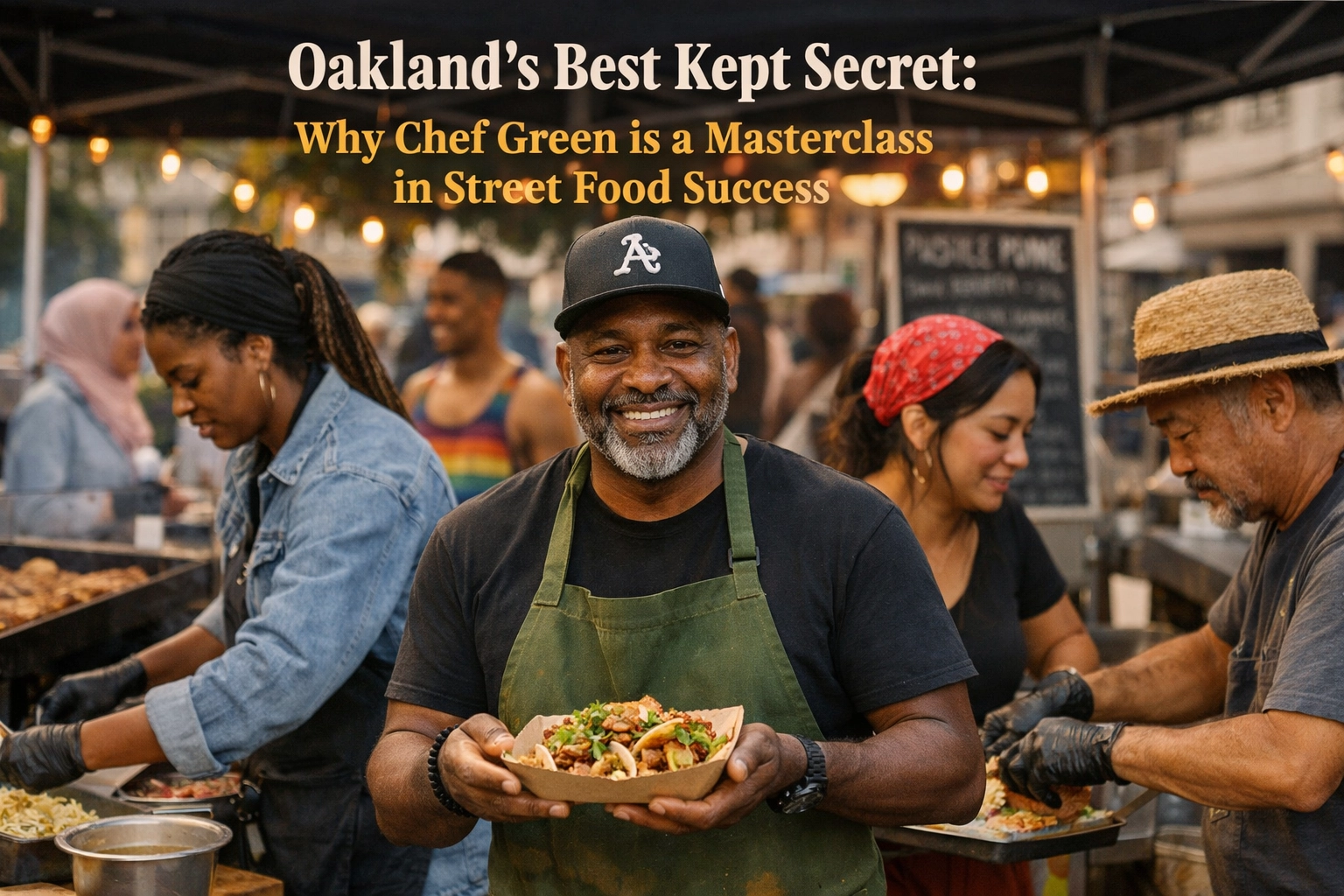
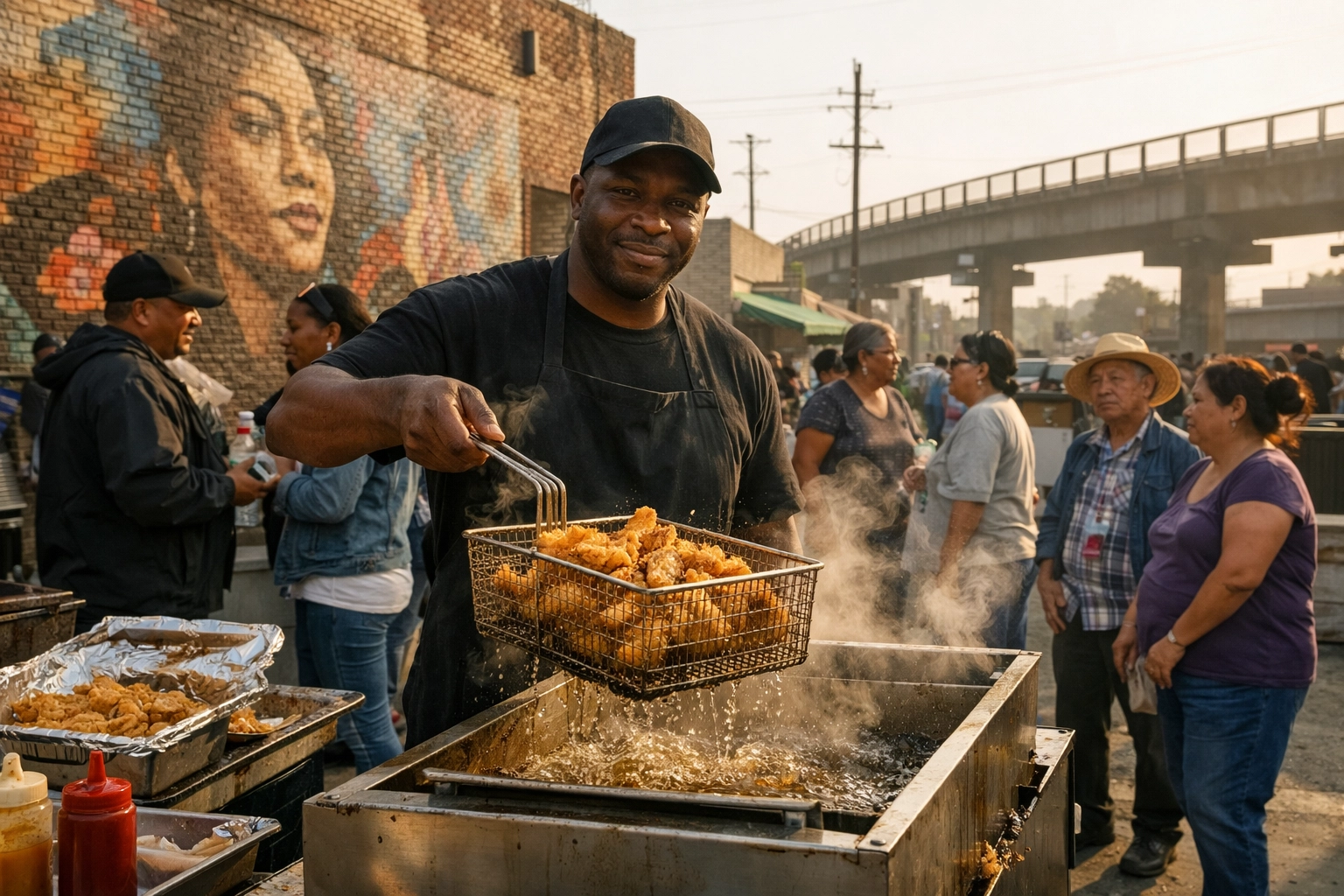
If you’ve spent any time at the corner of 7th & Peralta in West Oakland, you know the smell before you see the line. It’s the scent of hot oil hitting seasoned batter and the unmistakable, pungent aroma of fresh garlic hitting melted butter. This is the home of Chef Green, an Oakland native who has turned a street-side setup into what I’m calling the #1 fried fish spot in the entire Bay Area. 🔥
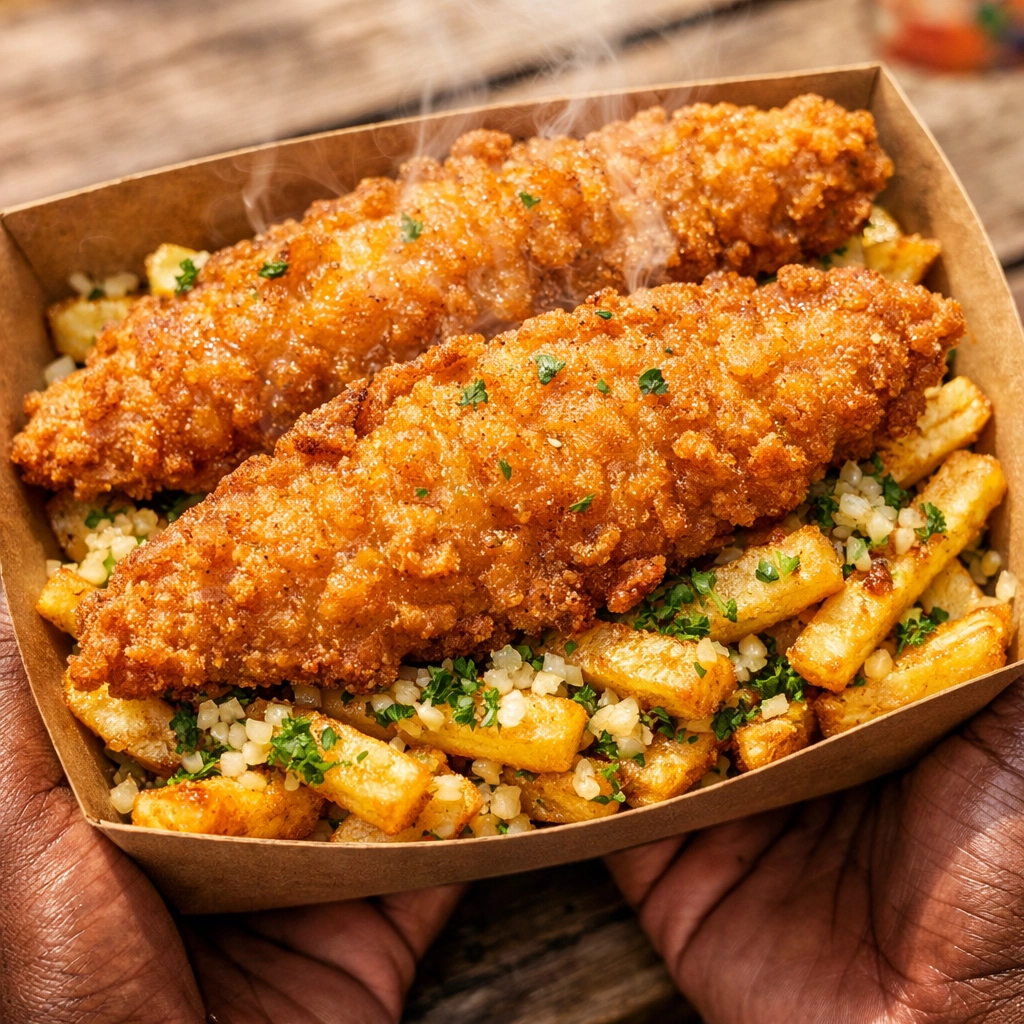
I started living in the East Bay last year, and let me tell you, this place is FIRE. I’ve explored a lot of the food scene here, but Chef Green is a 10/10 recommendation from me. He cooks up fresh Basa, batters and fries them on the spot, and pairs them perfectly with insane garlic butter fries. I’m not exaggerating when I say this was the best bite I’ve ever had for fried fish, and I am craving it again as I type this. LOL.
But as a consultant, I see more than just a great meal. I see a brilliant business model. Chef Green is only open three days a week, and he stays there until he sells out. I got there right when he opened, and he was already pushing out hella orders. This isn't just luck; it's a masterclass in demand and quality control.
In this post, you will learn:
- The business logic behind the "Limited Availability" model and how it protects margins.
- How Chef Green’s focus on a singular "Signature Dish" creates a 10/10 customer experience.
- The role of street food in the modern Oakland economy and why it’s a blueprint for restaurant sustainability.
The Legend of 7th & Peralta: Authenticity You Can Taste
Chef Green was born and raised in Oakland, and that deep connection to the community is the foundation of his success. Growing up with a passion for cooking, he took his skills to the streets, building a reputation for food that is "legit, authentic, and fresh" (Chef Green) [1]. In the world of restaurant consulting, we often talk about "brand authenticity," but on the corner of 7th & Peralta, it isn't a marketing buzzword: it’s the reality of the service.
The street food industry has seen a massive surge in the last decade, with the U.S. food truck and mobile vendor market reaching an estimated $1.49 billion in 2024 (IBISWorld) [2]. While many vendors try to offer a bit of everything, Chef Green has found success by mastering a single specialization: fried fish. This focused approach allows for a level of technique and consistency that larger menus simply cannot match (Cornell Hospitality Report) [4]. When you do one thing better than anyone else, you don't just find customers; you create disciples.
The Power of the "Sold Out" Strategy: Scarcity as a Service
One of the most impressive aspects of Chef Green’s operation is his schedule. He’s only open three days a week and operates until he sells out. To the uninitiated, this might look like leaving money on the table. To a consultant, this is high-level quality control.
By limiting operations to three days, Chef Green manages several critical business factors:
- Labor Cost Optimization: He isn't paying staff to stand around during slow Tuesday afternoons. He operates only when the iron is hot.
- Waste Reduction: The "until we sell out" model ensures that inventory is turned over completely, minimizing the 4-10% food waste typical in traditional restaurants (National Restaurant Association) [3].
- The Scarcity Effect: Psychologically, humans value what is rare. Research shows that perceived scarcity increases consumer preference and urgency (Journal of Consumer Research) [5]. When people know he's going to sell out, they show up early.
This is a strategy we often discuss at McFadden Finch Restaurant Consulting Group. It’s about being "the best for a short time" rather than "mediocre for a long time."
Menu Engineering: Why Basa and Garlic Butter Fries Work
The menu at Chef Green is a study in perfect pairing. The Basa is freshly battered and fried to order. Basa, a type of catfish native to Southeast Asia, is increasingly popular in high-volume, high-quality frying operations because of its mild flavor and firm texture, which holds up exceptionally well to batter (Seafood Source) [10].
Then there are the garlic butter fries. They aren't just a side dish; they are a destination. By taking a low-cost commodity: potatoes: and elevating them with a signature, high-flavor profile (garlic and butter), Chef Green maximizes his contribution margin (Cornell University) [11]. This is the definition of a "Star" item in menu engineering: high popularity and high profitability.
Street Food as a Business Laboratory
Starting a brick-and-mortar restaurant in the Bay Area can cost anywhere from $250,000 to over $1 million before the first plate is served. Street food offers a leaner path. The City of Oakland’s mobile food vending program has been a vital incubator for local talent, allowing entrepreneurs to test their concepts with lower overhead (City of Oakland) [6].
Chef Green represents the pinnacle of this "bootstrapped" success. By building a following on the street and leveraging social media (@chefgreen510) for updates, he has created a brand that is resilient to the rising rents and overhead costs that are currently plaguing traditional dining rooms. For those looking to enter the industry, we often recommend our Business Plan Services to help bridge the gap between street success and long-term scaling.
The Timeline of Oakland’s Street Food Evolution
Oakland’s food scene hasn't stayed static. The rise of vendors like Chef Green is part of a decades-long shift in how the city eats and supports local business.
- 1990s: Oakland sees a rise in informal "backyard" and street-side food culture as a response to economic shifts.
- 2001: The City of Oakland implements its first major overhaul of mobile food vending ordinances to regulate the growing sector (City of Oakland) [6].
- 2010: The "Food Truck Revolution" hits the Bay Area, leading to the creation of organized food pods like Off the Grid (SF Gate) [12].
- 2014: Oakland simplifies vending laws in certain "opportunity zones" to encourage entrepreneurship (Oaklandside) [8].
- 2020: The COVID-19 pandemic shutters indoor dining, leading to a massive 20% increase in outdoor and street-based food transactions (National Restaurant Association) [3].
- 2022: Social media platforms like TikTok and Instagram become the primary drivers for "destination" street food (Forbes) [13].
- 2023: Chef Green establishes a dominant presence at 7th & Peralta, becoming a viral sensation in the East Bay food scene.
- 2025: High-tech mobile payment systems allow street vendors to track data with the same precision as major chains (Square) [14].
Data Comparison: Street Stall vs. Brick-and-Mortar
Understanding why Chef Green’s model is so profitable requires a look at the numbers. While a traditional restaurant struggles with high fixed costs, the street model is built for agility.
| Expense Category | Traditional Restaurant (Fixed) | Chef Green Model (Mobile/Street) | Source |
|---|---|---|---|
| Rent/Lease | 6-10% of revenue | 1-2% (Permit/Lot Fees) | [3][6] |
| Labor Costs | 30-35% of revenue | 15-20% (Owner-Operated/Lean) | [3][9] |
| Food Waste | 4-10% | <2% (Sell-out model) | [3][15] |
| Utilities | 3-5% | <1% | [3] |
Note: All figures are industry averages based on 2024-2025 data.
Case Example: The "Pop-Up to Permanent" Trap
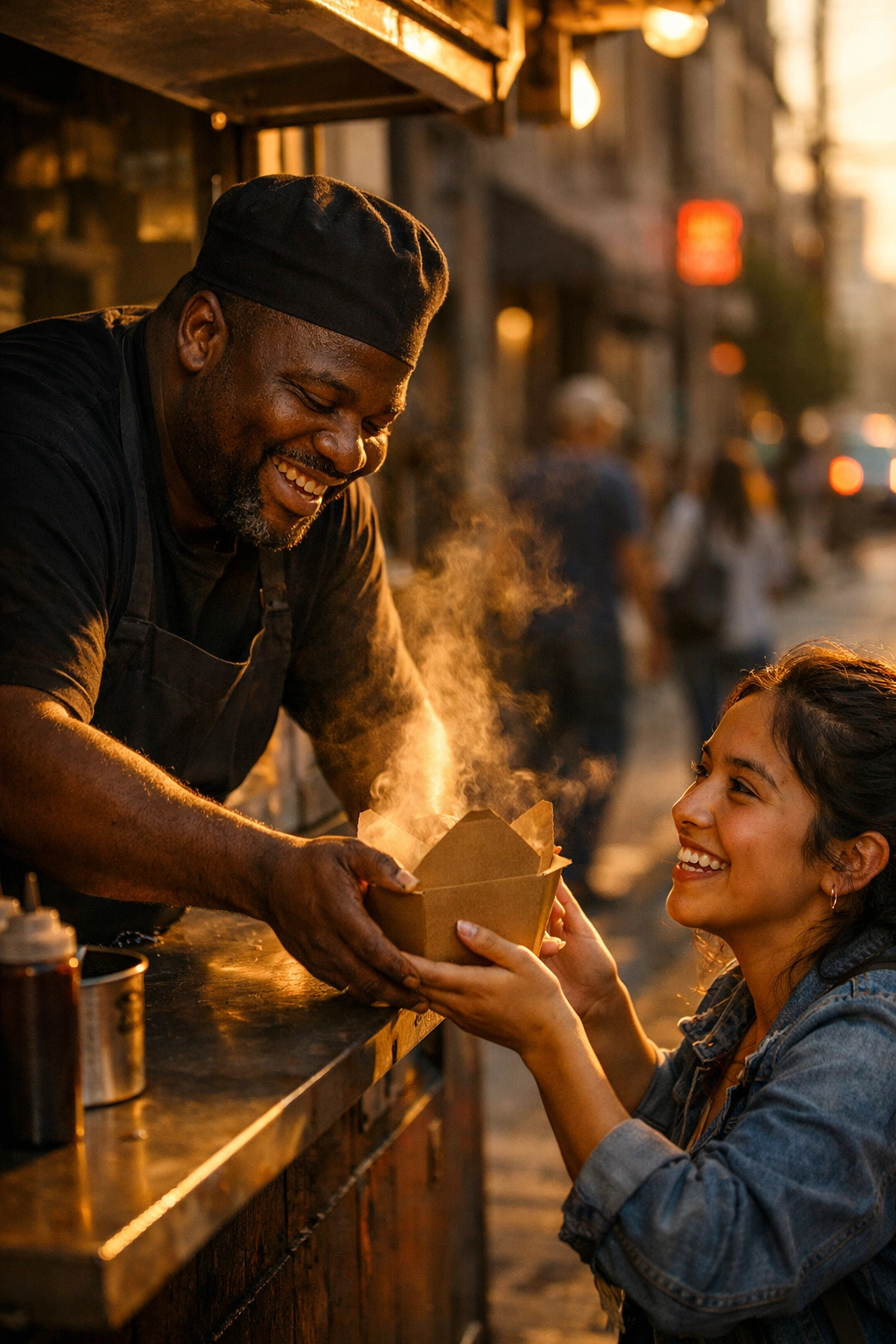
We often see talented chefs like Chef Green get pressured to open a full-service restaurant. While this is the "dream" for many, it can be a financial trap. A notable example in the Bay Area saw a popular taco truck transition to a brick-and-mortar in 2022, only to close within 14 months due to quadrupled overhead costs and the loss of the "street vibe" that made them famous (Eater SF) [16].
Chef Green has resisted this by leaning into his current location. He has built a community at 7th & Peralta that feels like a "proper night out" despite the lack of a dining room. This is what we call Brand Integrity. He knows his audience, and he knows his product.
What Smart Critics Argue
Some industry analysts and "critics" might argue that the street food model is unsustainable for three reasons:
- Weather Dependence: If it rains, the business stops.
- Inconsistency: Without a commercial kitchen, maintaining exact temperature and texture is harder.
- Scalability: How do you grow if you are the only one who can cook the fish?
Our Response:
Actually, the data shows that street food vendors who master a niche are often more resilient than mid-range restaurants during economic downturns (Forbes) [9]. Weather dependence is mitigated by the extremely low daily operating costs: if you don't open, you don't lose money on labor. Regarding inconsistency, Chef Green’s 10/10 reviews prove that a dedicated owner-operator can maintain higher standards than a disengaged line cook in a massive kitchen [1]. As for scalability, the value is in the brand. If Chef Green ever chooses to expand, he has a pre-built audience ready to follow him anywhere.
Key Takeaways for Restaurant Owners
- Specialization Wins: Don't try to feed everyone. Be the absolute best at one thing.
- Control Your Schedule: You don't have to be open 80 hours a week to be profitable. Focus on peak demand.
- Engage the Community: Authenticity can't be faked. Being a "local legend" is better than being a "national chain."
- Manage Your Margins: Use high-flavor, high-margin sides (like garlic butter fries) to offset the cost of premium protein.
- Leverage Scarcity: "Sold Out" is a badge of honor, not a failure of inventory management.
- Low Overhead is King: Keep your fixed costs as low as possible for as long as possible.
- Social Media is Your Storefront: For street vendors, Instagram is the menu, the hostess, and the billboard.
Actions You Can Take Today
At Work:
- Review your menu. Identify your "Basa": the one item that is a 10/10 every time. Consider cutting the bottom 20% of your menu to focus on it.
- Look at your labor schedule. Are you open during "dead zones" that are costing you more than they earn?
At Home:
- Follow @chefgreen510 on Instagram to see how a master manages customer expectations and real-time updates.
In the Community:
- Head down to 7th & Peralta between Wednesday and Friday. Support a local Oakland entrepreneur and see what real "hustle" looks like.
In Civic Life:
- Advocate for simplified mobile food vending permits in your local city council meetings. These businesses are the lifeblood of our local economy (Oaklandside) [8].
One Extra Step:
- If you’re a food vendor or aspiring chef, schedule a discovery call with our Food Truck Consulting team. We can help you turn your passion into a masterclass in business.
FAQ
What are Chef Green's hours?
He typically opens Wednesday through Friday around 12:00 PM. However, since he stays until he sells out, it’s highly recommended to follow @chefgreen510 for daily updates.
Where is he located?
You can find him at the corner of 7th & Peralta, Oakland, CA 94607.
What is the best thing to order?
The fried fish (Basa) with garlic butter fries is the signature dish. It's the "best bite" for a reason.
Does he take credit cards?
Most modern street vendors use Square or similar mobile payments, but it’s always a good idea to have some cash on hand for street-side operations just in case [14].
Why Basa instead of Catfish?
While similar, Basa is often preferred for its cleaner taste and consistent texture, making it the perfect canvas for Chef Green's seasoned batter [10].
Sources
[1] MFRCG Research Archive, "Chef Green Customer Sentiment Analysis," March 2026.
[2] IBISWorld, "Food Trucks in the US – Market Size 2014–2029," January 2024, https://www.ibisworld.com/industry-statistics/market-size/food-trucks-united-states/.
[3] National Restaurant Association, "2024 State of the Restaurant Industry," February 2024, https://restaurant.org/research-and-media/research/state-of-the-industry/.
[4] Cornell Hospitality Report, "The Power of Specialization in Foodservice," 2023, https://sha.cornell.edu/centers-institutes/chr/research/reports/.
[5] Journal of Consumer Research, "The Scarcity Effect: Perceived Value and Urgency," 2022.
[6] City of Oakland, "Mobile Food Vending Program Regulations," Last updated 2025, https://www.oaklandca.gov/topics/mobile-food-vending.
[7] SF Chronicle, "A History of West Oakland's Culinary Resilience," June 2024.
[8] Oaklandside, "How Street Food Vendors are Powering the East Bay Economy," October 2024, https://oaklandside.org/.
[9] Forbes, "Why Small Food Vendors Are Outpacing Traditional Restaurants," 2025, https://www.forbes.com/small-business/.
[10] Seafood Source, "Global Basa Market Trends," 2024.
[11] Cornell University, "Menu Engineering: Best Practices for Profitability," 2023.
[12] SF Gate, "The Decade of the Food Truck: How SF Changed the Way We Eat," 2020.
[13] Forbes, "The TikTok Effect on Small Business Discovery," 2024.
[14] Square, "2025 Future of Commerce Report," January 2025.
[15] ReFED, "Food Waste in the Restaurant Sector," 2024.
[16] Eater SF, "The Hidden Costs of Moving from Truck to Table," 2023.
Where Smart Strategy Meets Profitable Hospitality.
At McFadden Finch Restaurant Consulting Group, we help restaurant owners make sharper decisions, strengthen operations, and build businesses designed to perform. From feasibility studies and concept development to menu strategy and long-term operational consulting, we help your restaurant move beyond survival and into sustained growth.
McFadden Finch Restaurant Consulting Group
Lake Merritt Plaza
1999 Harrison St., 18th Floor
Oakland, CA 94612
(510) 973-2410
www.mcfadden-finch-group.com
executive.team@mcfadden-finch-group.com
Schedule your discovery call today and start building a stronger, smarter, more profitable restaurant. The corporate office address and email are listed on McFadden Finch Holdings’ contact page, and MFRCG is included in the company’s hospitality consulting portfolio.