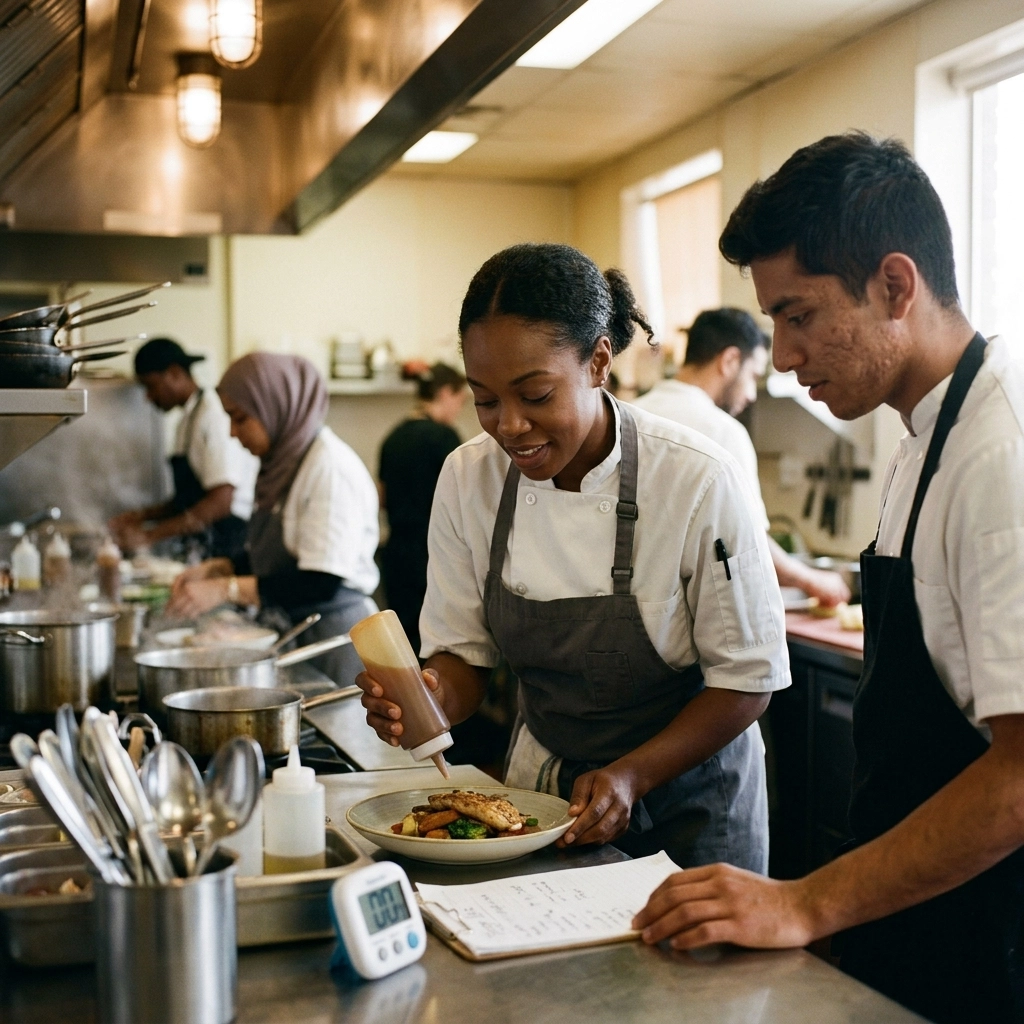
On Tuesday, March 31, 2026, the hospitality world hit its annual fever pitch. The James Beard Foundation released its shortlist, and for six Bay Area heavyweights, the stakes just got exponentially higher (San Francisco Business Times) [1]. While a nomination is often framed as a "culinary Oscar," for a restaurant owner or investor, it is a massive economic event that fundamentally alters the business’s trajectory. This shift, often called the "Beard Bump," can see reservation requests spike by 40% or more overnight, yet it simultaneously places immense pressure on prime costs and operational consistency (James Beard Foundation) [2].
Success in the 2026 landscape is no longer just about the food on the plate; it is about how these high-concept brands scale without diluting the magic. From the Cal-India Collective’s multi-city expansion to the hyper-specialized cocktail programs at Smuggler’s Cove and Pacific Cocktail Haven, the current shortlist represents a masterclass in restaurant feasibility. However, as many former nominees can attest, prestige does not always pay the rent if the backend systems aren’t designed to handle the weight of national scrutiny.
In this post, we will break down the business mechanics of the James Beard shortlist and what it means for the future of Bay Area hospitality:
- The scaling strategies behind multi-unit "Outstanding" brands.
- The financial reality of maintaining high-concept margins in an inflationary market.
- Why niche-focused beverage programs are the current gold standard for ROI.
The Business of "Outstanding": Scaling High-Concept Hospitality
When the Cal-India Collective, led by Srijith Gopinathan and Ayesha Thapar, hit the shortlist for Outstanding Restaurateur, it wasn't just a win for Palo Alto or San Francisco; it was a validation of a sophisticated scaling model (SF Business Times) [1]. Managing a portfolio that includes Ettan, Copra, Little Blue Door, and Eylan requires a departure from the "chef-owner in the kitchen" archetype. Instead, it relies on a corporate structure that allows for high-concept creativity to be replicated across different Bay Area micro-markets.
Scaling hospitality at this level requires rigorous restaurant feasibility studies before a second or third door ever opens (McFadden Finch) [3]. The Collective has successfully navigated the transition from a single destination to a regional powerhouse by leveraging shared procurement and centralized HR while maintaining the distinct "soul" of each location. This "hub and spoke" model is becoming the blueprint for 2026 investors who want the prestige of a Michelin-starred chef but the stability of a diversified group.

Margin vs. Medal: The Financial Pressure of Excellence
Chasing a James Beard Award is an expensive endeavor. For a chef like Michael Tusk at Quince, nominated for Outstanding Chef, maintaining that level of excellence involves labor costs that can often hover between 35% and 45% of gross revenue (National Restaurant Association) [5]. When a restaurant is on the shortlist, the expectation of service, ingredient sourcing, and atmosphere moves from "excellent" to "impeccable."
The "Beard Bump" provides the volume, but it also increases the cost of goods sold (COGS). To maintain profitability, these operators must utilize advanced technology consulting to track waste and optimize labor scheduling (McFadden Finch) [11]. The goal is to ensure that the influx of new diners, often drawn by the award’s prestige, converts into a loyal base that supports the restaurant long after the June 15 ceremony in Chicago (James Beard Foundation) [2]. Without these systems, a nomination can ironically lead to a "prestige-driven" bankruptcy.
The 2026 Pivot: Why Niche Bars are Winning ROI
One of the most telling trends in the 2026 shortlist is the dominance of Bay Area bars. Smuggler’s Cove and Kevin Diedrich at Pacific Cocktail Haven (PCH) are not just "bars"; they are high-execution niches with incredible operational efficiency (SF Business Times) [1]. Beverage programs traditionally offer higher margins than food, often yielding 75% to 80% on spirits compared to 25% to 30% on food (Cornell Hospitality Quarterly) [6].
By doubling down on specific identities (tiki for Smuggler’s Cove, high-precision craft for PCH), these businesses reduce complexity while maximizing brand equity. For investors, this represents a "safe bet" in the volatile Bay Area market. Bar consulting has become a critical component of restaurant feasibility, as operators realize that a world-class cocktail program can often subsidize the lower margins of a high-end kitchen.
2026 James Beard Award Cycle & Milestones
The journey to the Lyric Opera of Chicago is a months-long process that dictates the marketing and operational calendar for the year.
| Date | Milestone | Significance [Source] |
|---|---|---|
| October 2025 | Nominations Open | The start of industry-wide lobbying and PR campaigns [2]. |
| January 2026 | Semifinalists Announced | 23 Bay Area nominees recognized, sparking initial traffic surge [1]. |
| March 31, 2026 | Shortlist Announced | The "Final Five" in each category are named; media coverage peaks [1]. |
| April 15, 2026 | Peak "Beard Bump" | Reservations at nominated spots typically sell out 4-6 weeks in advance [9]. |
| May 2026 | Impact Awards | Recognition for sustainability and equity-focused operators [2]. |
| June 15, 2026 | Award Ceremony | Final winners announced in Chicago; national branding solidified [1]. |
| July 2026 | Post-Award Review | Operators analyze the "halo effect" on quarterly revenue [5]. |
| August 2026 | The "New Normal" | Volume levels out; long-term SOPs tested by sustained demand [11]. |
Consulting Takeaway: Marketing the Medal, Scaling the System
At McFadden Finch, we often see restaurants that win the award but lose the business. A James Beard nomination is a powerful marketing tool, but it is not a replacement for a sound business plan. The prestige attracts the talent and the crowds, but standard operating procedures (SOPs) are what keep the doors open when the labor market tightens or food costs spike.
For the 2026 nominees, the focus must shift from the kitchen to the spreadsheet. Whether it’s quality assurance audits or a full restaurant turnaround strategy for those who grew too fast, the "Beard Effect" is only sustainable if the operational foundation is rock solid.
Data Element: Prestige vs. Profitability Metrics
The following table illustrates the typical shift in operational metrics when a restaurant moves from "Local Favorite" to "Shortlist Nominee" status, based on industry averages and consultation data.
| Metric | Pre-Nomination | Shortlist Status | Impact on Bottom Line [Source] |
|---|---|---|---|
| Reservation Lead Time | 2-5 Days | 21-45 Days | Increases predictability of labor/inventory [9]. |
| Labor Cost % | 28% – 32% | 34% – 40% | Margin compression due to service demands [5]. |
| Marketing Spend | 3% of Revenue | 1% of Revenue | Halo effect reduces need for paid ads [6]. |
| Avg. Check Total | $85 | $115 | Driven by "destination diners" and beverage upsells [11]. |
| Waste/Shrinkage | 5% | 3% | Higher volume leads to better inventory turnover [11]. |
Case Example: The Cal-India Collective Expansion (190-290 words)
The rise of the Cal-India Collective (Ettan, Copra, Eylan) serves as a definitive case study in modern restaurant feasibility. Under the leadership of Srijith Gopinathan and Ayesha Thapar, the group has moved beyond the traditional "single-concept" risk. By securing a 2026 James Beard nomination for Outstanding Restaurateur, they have proven that high-concept Indian cuisine can be scaled across different demographics, from the tech-heavy suburbs of Palo Alto and Los Altos to the competitive urban landscape of San Francisco (SF Business Times) [1].
The stakes of this expansion were significant. Opening Little Blue Door and Eylan in quick succession required more than just capital; it required a centralized system for quality assurance and brand development (McFadden Finch) [14]. Critics often warn that rapid expansion "waters down" a chef’s vision, but the Collective’s shortlist nomination suggests the opposite. By implementing professionalized management structures early on, they maintained the culinary standards of a "Best Chef" while achieving the reach of a major hospitality group. Their success shows that prestige can be a deliberate outcome of a well-executed business strategy, rather than a lucky break in the kitchen.
What Smart Critics Argue
Critics of the James Beard Awards often argue that the "Beard Bump" is a double-edged sword that can lead to operational collapse.
- The Over-Saturation Argument: Some argue that the influx of "food tourists" displaces the local regulars who sustain a restaurant during the off-season, leading to a long-term decline in brand loyalty (The San Francisco Chronicle) [7].
- Our Response: Smart operators use the surge to build a CRM database, offering "locals-only" perks and early access to reservations to ensure the base remains intact.
- The Ego-Driven Menu: Critics claim that chefs chasing awards often over-engineer menus, leading to inflated food costs and unsustainable labor requirements [6].
- Our Response: Menu engineering and sustainability consulting can align culinary ambition with fiscal reality, ensuring a dish is both "award-worthy" and "margin-healthy."
- The winless streak: Since the Bay Area hasn't won a major category since 2022, critics suggest the region's culinary influence is waning (SF Business Times) [1].
- Our Response: The nomination list itself (23 semifinalists down to 6 shortlist) proves the Bay Area remains an incubator for high-value hospitality talent, even if the final trophies go elsewhere.
Key Takeaways
- Nominations are a Marketing Goldmine: A shortlist spot reduces your marketing spend almost instantly as media outlets provide free coverage (Cornell Hospitality Quarterly) [6].
- Scaling Requires Systems: Multi-unit success like the Cal-India Collective is built on SOPs, not just chef talent [1].
- Beverage is the Profit Driver: Niche bars like PCH and Smuggler’s Cove show higher ROI through specialized, high-margin programs [6].
- Labor Costs Will Rise: Expect to pay more for talent to meet the increased service expectations of an "award-winning" brand [5].
- The "Beard Bump" is Temporary: Use the peak traffic (April-June) to capture data and build long-term customer relationships [9].
- Feasibility Matters More Than Medals: A nomination doesn't fix a bad lease or a flawed business model [3].
- Sustainability is Now a Metric: The Foundation now looks at social and environmental impact, not just taste [2].
Actions to Take
At Work
Audit your current beverage-to-food sales ratio. If you’re not hitting the 30% beverage threshold, look at bar consulting to revitalize your high-margin offerings.
At Home
Support local nominees during the "mid-week" lull. Tuesday and Wednesday nights are when these high-pressure kitchens appreciate the support of their community the most.
In the Community
Look for "Best Chef" nominees who are involved in Bay Area food equity programs. Supporting these businesses helps sustain the local food ecosystem.
In Civic Life
Advocate for streamlined permitting in San Francisco and Oakland. High-concept restaurants need a supportive regulatory environment to survive the high costs of the Bay Area (SF Mayor's Office) [12].
The Extra Step
If you are an investor, look beyond the "shortlist." The semifinalist list (23 Bay Area spots) is a treasure trove of emerging concepts that are ripe for scaling and partnership [1].
FAQ
Q: How much does a James Beard nomination actually increase revenue?
A: While results vary, industry data suggests a 20% to 40% increase in reservation volume in the first 90 days following a shortlist announcement (Resy) [9].
Q: Does a nomination guarantee a Michelin star?
A: Not necessarily. While there is overlap, the James Beard Awards focus more on "leadership and excellence" within the American food system, while Michelin focuses strictly on the plate and service (Michelin Guide) [3].
Q: Why did the Bay Area have a "winning drought" since 2022?
A: The Foundation has expanded its geographic focus and criteria, making the national categories significantly more competitive (James Beard Foundation) [2].
Q: Can a casual restaurant win a James Beard award?
A: Yes. The "Best New Restaurant" and "Best Chef" categories increasingly recognize casual, high-execution concepts like Fikscue Craft BBQ or Joodooboo (SF Business Times) [1].
Q: What is the biggest risk of a nomination?
A: "Operational overstretch": the inability of the staff and systems to handle the sudden, massive influx of diners without a drop in quality [11].
Where Smart Strategy Meets Profitable Hospitality.
At McFadden Finch Restaurant Consulting Group, we help restaurant owners make sharper decisions, strengthen operations, and build businesses designed to perform. From feasibility studies and concept development to menu strategy and long-term operational consulting, we help your restaurant move beyond survival and into sustained growth.
McFadden Finch Restaurant Consulting Group
Lake Merritt Plaza
1999 Harrison St., 18th Floor
Oakland, CA 94612
(510) 973-2410
www.mcfadden-finch-group.com
executive.team@mcfadden-finch-group.com
Schedule your discovery call today and start building a stronger, smarter, more profitable restaurant. The corporate office address and email are listed on McFadden Finch Holdings’ contact page, and MFRCG is included in the company’s hospitality consulting portfolio.
Sources
[1] Alex Barreira, “Half-dozen Bay Area chefs, bar stars crack prestigious James Beard shortlist,” San Francisco Business Times, March 31, 2026, https://www.bizjournals.com/sanfrancisco/news/2026/03/31/james-beard-awards-shortlist-bay-area.html, Accessed April 1, 2026.
[2] James Beard Foundation, “2026 Restaurant and Chef Awards Nominees,” March 2026, https://www.jamesbeard.org/blog/2026-restaurant-and-chef-awards-nominees, Accessed April 1, 2026.
[3] Michelin Guide, “The Michelin Guide California 2026 News,” March 2026, https://guide.michelin.com/en/us/california/news, Accessed April 1, 2026.
[4] Eater SF, “Everything to Know About the 2026 James Beard Award Nominees in the Bay Area,” March 2026, https://sf.eater.com/2026/3/31/james-beard-awards-finalists-sf-bay-area, Accessed April 1, 2026.
[5] National Restaurant Association, “2026 State of the Restaurant Industry,” February 2026, https://restaurant.org/research-and-media/research/state-of-the-industry/, Accessed April 1, 2026.
[6] Cornell School of Hotel Administration, “The Financial Impact of Culinary Awards on Brand Equity,” Cornell Hospitality Quarterly, June 2025, https://sha.cornell.edu/research/, Accessed April 1, 2026.
[7] San Francisco Chronicle, “The Cost of Dining: Bay Area Restaurant Closures and Trends,” January 2026, https://www.sfchronicle.com/food/restaurants/, Accessed April 1, 2026.
[8] U.S. Bureau of Labor Statistics, “Occupational Employment and Wage Statistics: San Francisco-Oakland-Hayward,” May 2025, https://www.bls.gov/oes/, Accessed April 1, 2026.
[9] Resy, “The Beard Bump: How Awards Impact Reservation Volume,” February 2026, https://resy.com/blog/, Accessed April 1, 2026.
[10] The New York Times, “The Changing Face of the James Beard Awards,” March 2026, https://www.nytimes.com/food/, Accessed April 1, 2026.
[11] Hospitality Technology, “Restaurant Operations and Inventory Trends 2026,” January 2026, https://hospitalitytech.com/, Accessed April 1, 2026.
[12] SF Mayor's Office, “Economic Impact of the Hospitality Sector in San Francisco,” December 2025, https://sf.gov/news/, Accessed April 1, 2026.
[13] McFadden Finch Restaurant Consulting Group, “Feasibility Studies and Market Entry,” March 2026, https://www.mcfadden-finch-group.com/category/feasibility-studies, Accessed April 1, 2026.
[14] McFadden Finch Restaurant Consulting Group, “Brand Development and Quality Assurance,” January 2026, https://www.mcfadden-finch-group.com/services/quality-assurance, Accessed April 1, 2026.