For years, the high-end dining scene in San Francisco has felt like a marathon of endurance. You know the drill: the three-hour commitment, the mandatory twenty-course tasting menu, and the hushed, almost monastic atmosphere that makes you wonder if you’re at dinner or a silent retreat. But at 65 Division Street, a new kind of energy is vibrating through the Design District. JouJou, the latest venture from the powerhouse team behind the two-Michelin-starred Lazy Bear and the cocktail haven True Laurel, has arrived to remind us why we fell in love with restaurants in the first place (SF Standard) [1].
It’s about the "Golden Age of Hospitality." It’s about the clink of ice in a seafood tower, the pop of a cork from a grower-producer Champagne, and the freedom to order exactly what you want: no tasting menu required. This post explores how JouJou is redefining the "big tent" French concept, why its design is a masterclass in nostalgic glamour, and how it serves as a strategic blueprint for the future of accessible fine dining in San Francisco.
In this deep dive, you will learn:
- How JouJou pivots from the rigid tasting menu model to a flexible, à la carte experience.
- The architectural and design strategies used to create "belle époque" resort glamour in a 6,500-square-foot space.
- The culinary philosophy of "Big Tent French" and its impact on modern menu engineering.
The Powerhouse Pivot: From Michelin Stars to Accessible Elegance
The hospitality industry is currently navigating a significant shift in consumer behavior. While the allure of the Michelin star remains strong, diners are increasingly seeking flexibility and "vibes" over formality. JouJou’s leadership: the same minds that built the introspective, communal dining experience of Lazy Bear: recognized this gap (SF Chronicle) [2]. By moving away from a fixed-price model, they are leaning into a restaurant's core purpose: joy.
The decision to open an à la carte seafood-forward French restaurant is a calculated one. It allows for a wider range of guest interactions: from a quick dozen oysters and a glass of wine at the zinc bar to a full, multi-course celebratory dinner in a semicircular booth. This flexibility is a cornerstone of modern menu engineering, ensuring the venue can capture multiple dining "occasions" throughout a single service.
Design as Destined Grandeur: 6,500 Square Feet of Nostalgia
Walking into JouJou is like stepping into a Victorian-era greenhouse that somehow survived the 1970s with its style intact (Architectural Digest) [12]. Designed by Jon de la Cruz, the 6,500-square-foot space (formerly home to The Grove) is a massive footprint for San Francisco’s current market. Navigating such a large space requires a keen eye for restaurant feasibility, as filling 120 seats on a Tuesday night is a different beast than managing a 30-seat boutique spot.
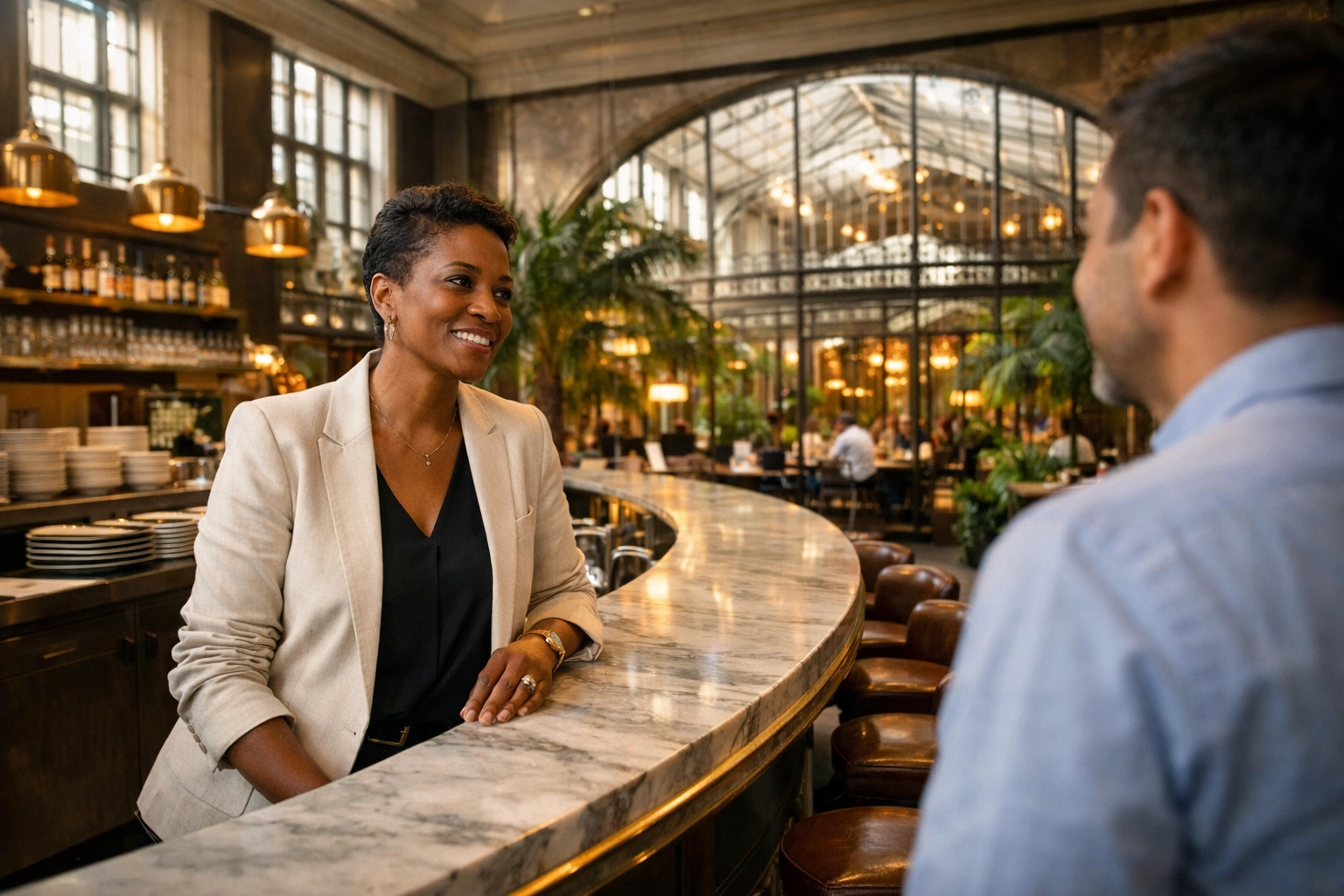
The layout features a glass-enclosed patio bar that brings the outside in, paired with a marble-topped chef's counter and an intimate lower-level room (Eater SF) [3]. The use of a zinc bar: a classic French bistro staple: provides a tactile, lived-in feel that balances the high-ceilinged elegance of the building. This design isn't just for show; it’s a strategic effort to create "zones" of energy, allowing the restaurant to feel bustling even if it isn't at 100% capacity.
The Menu: "Big Tent French" Meets California Soul
The culinary program at JouJou is a departure from avant-garde experimentation. Instead, it focuses on refined, classic techniques through a "Big Tent" lens. This means looking beyond the borders of Paris to the French traditions of New Orleans, French Polynesia, and the coastal resorts of the Mediterranean (Tablehopper) [4].
Key highlights from the menu include:
- The Seafood-Stuffed French Omelet: Topped with caviar, this dish elevates a humble breakfast staple into a decadent dinner centerpiece.
- Seafood Towers: Over-the-top presentations of local oysters and shellfish that act as visual anchors for the dining room (SF Gate) [13].
- Classic Technique: Dishes like local king salmon almondine and steak frites showcase the precision that made the team famous, while keeping the price points accessible (Michelin Guide) [5].
- Flambéed Finish: The return of table-side service, including Bananas Foster, adds a layer of theatricality that defines the "Golden Age" (San Francisco Magazine) [8].
Champagne and the Art of the Pour
Beverage Director Matteo Villano has crafted a program that is unapologetically French-leaning. The focus on Champagne: specifically grower-producers: aligns perfectly with the seafood-heavy menu. Grower Champagnes often offer better margins and a more compelling "story" for the guest than mass-market labels, a key strategy for lowering prime costs while maintaining a premium brand image.
The cocktail list remains polished and classic, reflecting the "golden age" inspiration without being stuck in the past. It’s the kind of beverage program designed to encourage "just one more round," which is essential for driving profitability in a high-overhead space like the Design District.
A Timeline of the JouJou Journey
| Date | Milestone | Source |
|---|---|---|
| Sept 2014 | Lazy Bear opens its permanent brick-and-mortar location. | Michelin Guide [5] |
| Oct 2016 | Lazy Bear awarded its second Michelin star. | SF Chronicle [2] |
| Jan 2018 | True Laurel opens, establishing the team’s cocktail dominance. | Eater SF [3] |
| May 2023 | The Grove Design District officially closes, leaving the space vacant. | SF Standard [1] |
| Feb 2024 | The JouJou concept is finalized with a focus on à la carte French dining. | Tablehopper [4] |
| July 2024 | Jon de la Cruz begins the redesign of the 6,500 sq ft space. | Architectural Digest [12] |
| Nov 2024 | Matteo Villano begins sourcing grower-producer Champagnes for the cellar. | San Francisco Magazine [8] |
| Jan 2025 | The glass-enclosed patio construction is completed. | SF Gate [13] |
| Feb 2025 | Soft opening begins with a focus on "Big Tent" French flavors. | Hoodline [10] |
| March 2026 | JouJou officially opens at 65 Division Street. | Official Tock [6] |
Comparing Hospitality Models: Tasting Menu vs. JouJou’s À La Carte
| Feature | Traditional Tasting Menu (Lazy Bear Style) | JouJou’s Golden Age Model |
|---|---|---|
| Time Commitment | 3.5+ Hours [5] | 1.5 – 2.5 Hours [1] |
| Pricing | Fixed ($$$$) [2] | Flexible ($$ to $$$$) [4] |
| Pacing | Chef-led, synchronized [3] | Guest-led, fluid [6] |
| Menu Depth | Linear, pre-set [5] | Multi-regional, à la carte [1] |
| Seating | Communal or rigid [2] | Varied (Bar, Counter, Booth, Patio) [3] |
Case Example: The "Golden Age" Strategy in Practice
In the mid-20th century, dining was an event. It wasn't just about the food; it was about the service, the setting, and the sense of being "looked after." JouJou’s "Golden Age of Hospitality" is a direct response to the digital fatigue of modern life (Forbes) [11]. By bringing back table-side flambé and elaborate seafood towers, they are creating "Instagrammable" moments that are rooted in tradition rather than gimmicks.
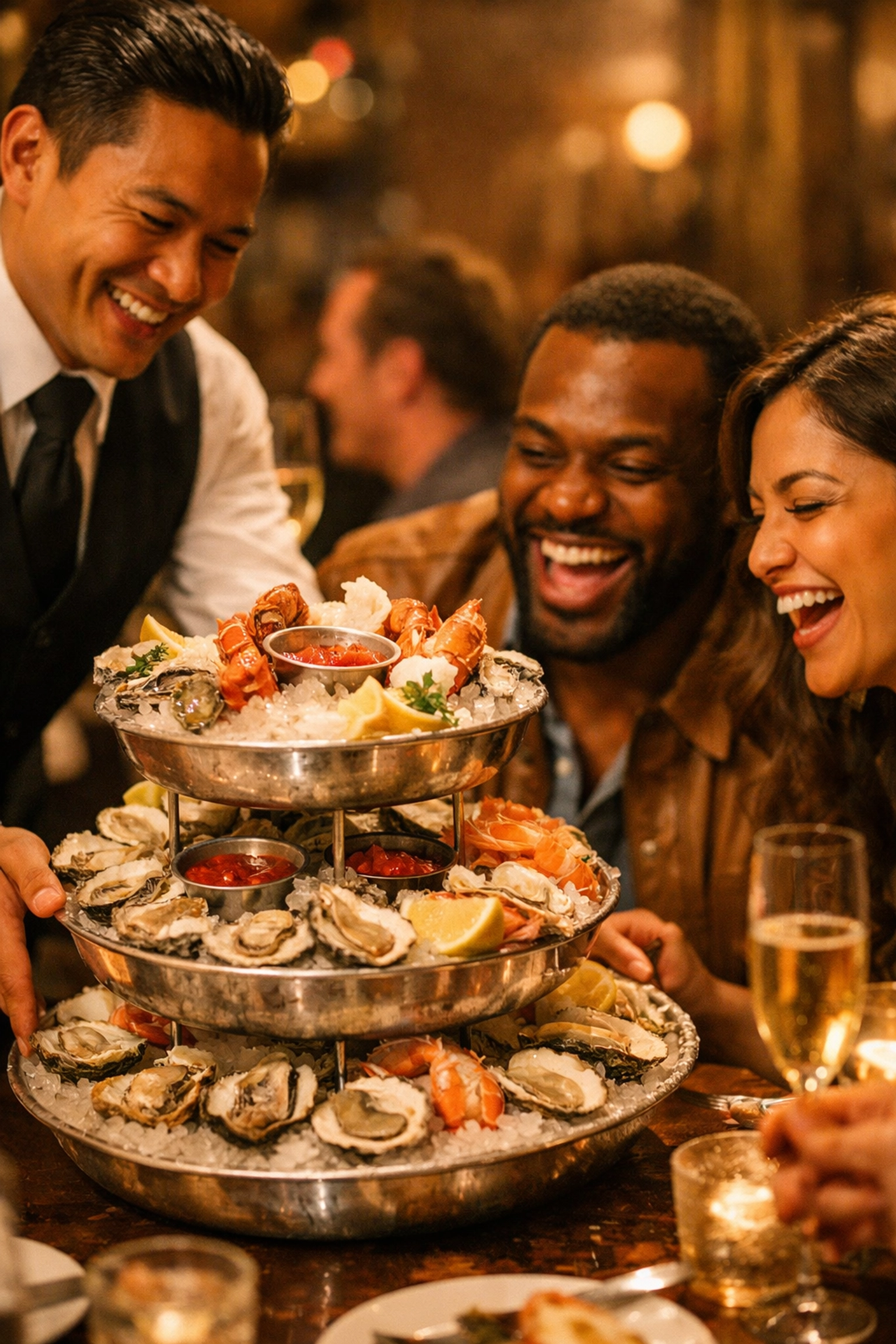
The stakes are high. Operating a 6,000+ square foot restaurant in San Francisco requires massive volume to offset labor and rent costs. The tradeoff JouJou makes is offering lower entry points (like the omelet) to ensure high seat occupancy, while still providing the high-ceiling luxuries that justify premium prices for Champagne and shellfish. It’s a delicate balance that represents a strategic turnaround from the exclusivity of the past decade.
What Smart Critics Argue
Despite the pedigree of the team, some critics raise valid concerns about the concept.
- The Location: The Design District can feel like a "ghost town" after 6:00 PM once the showrooms close (SF Business Times) [14]. Response: JouJou is positioning itself as a destination restaurant, drawing guests from across the city specifically for its unique atmosphere and the Barzelay reputation.
- Noise Levels: Large, open spaces with high ceilings and hard surfaces (marble, zinc) can become deafening (Architectural Digest) [12]. Response: The design includes distinct dining rooms and outdoor areas to help mitigate sound and create more intimate pockets of energy.
- Price Point vs. Accessibility: While à la carte is more accessible than a $300 tasting menu, seafood and Champagne are inherently expensive commodities (7×7) [9]. Response: The inclusion of "approachable" items like steak frites and omelets allows for a wide range of spending levels, ensuring it’s not just for the 1%.
Key Takeaways
- Hospitality First: The "Golden Age" focus prioritizes guest comfort and choice over chef-led rigidity.
- Scale Matters: Using a 6,500 sq ft space requires diverse seating options to manage flow and energy.
- Big Tent French: Drawing from New Orleans and Polynesia keeps a classic menu feeling modern and adventurous.
- Strategic Beverages: Champagne-centric lists with grower-producers offer better margins and unique guest experiences.
- À La Carte is Back: The market is shifting away from mandatory fixed-price menus toward flexible dining.
- Design as Storytelling: Jon de la Cruz’s work proves that environment is just as important as the plate.
- Proven Pedigree: The success of Lazy Bear and True Laurel provides a strong foundation for this ambitious leap.
Actions You Can Take
At Work
- Review your current menu for "linear" bottlenecks. Can you offer more à la carte flexibility to increase table turnover?
- Consider a "Golden Age" service element (like table-side prep) to increase the perceived value of high-margin items.
At Home
- Host a "Big Tent" dinner party focusing on French-Polynesian or NOLA-French fusion flavors.
- Practice the perfect French omelet: it’s the ultimate test of culinary technique.
In the Community
- Support Design District businesses during the evening hours to help build a more vibrant nightlife in the neighborhood.
In Civic Life
- Advocate for streamlined permitting for outdoor patio enclosures, like JouJou’s Victorian greenhouse, which help San Francisco restaurants thrive year-round.
The Extra Step
- Book a reservation via Tock for a Wednesday night. Observing a large-scale restaurant operation mid-week is the best way to see the "Golden Age of Hospitality" in its most authentic, unhurried form.
FAQ
Is there a dress code for JouJou?
While JouJou evokes "Golden Age" glamour, the San Francisco "Design District chic" applies. Think polished but comfortable: no formal suit required, but maybe leave the gym gear at home (SF Standard) [1].
Do I need a reservation for the bar?
The glass-enclosed patio bar and zinc bar usually accommodate walk-ins, though reservations via Tock are highly recommended for the main dining room booths (Tock) [6].
What is "Big Tent French"?
It refers to a broader interpretation of French cuisine that includes regional influences from former colonies and cultural overlaps, such as Creole flavors from New Orleans or tropical elements from French Polynesia (Tablehopper) [4].
Is JouJou kid-friendly?
While the atmosphere is sophisticated, the à la carte nature of the menu makes it easier for families to navigate than a traditional tasting menu spot (San Francisco Magazine) [8].
How does JouJou differ from Lazy Bear?
Lazy Bear is a communal, ticketed tasting menu experience. JouJou is a traditional à la carte restaurant where you choose your own courses and pace (SF Chronicle) [2].
Where Smart Strategy Meets Profitable Hospitality.
At McFadden Finch Restaurant Consulting Group, we help restaurant owners make sharper decisions, strengthen operations, and build businesses designed to perform. From feasibility studies and concept development to menu strategy and long-term operational consulting, we help your restaurant move beyond survival and into sustained growth.
McFadden Finch Restaurant Consulting Group
Lake Merritt Plaza
1999 Harrison St., 18th Floor
Oakland, CA 94612
(510) 973-2410
www.mcfadden-finch-group.com
executive.team@mcfadden-finch-group.com
Schedule your discovery call today and start building a stronger, smarter, more profitable restaurant. The corporate office address and email are listed on McFadden Finch Holdings’ contact page, and MFRCG is included in the company’s hospitality consulting portfolio.
Sources
[1] SF Standard, “JouJou: The New Golden Age of Dining in the Design District,” March 2026, https://sfstandard.com, Accessed March 17, 2026.
[2] SF Chronicle, “Lazy Bear Team Pivots to French Seafood at JouJou,” March 2026, https://sfchronicle.com, Accessed March 17, 2026.
[3] Eater SF, “Inside JouJou, the Massive New French Restaurant From the Lazy Bear Crew,” March 2026, https://sf.eater.com, Accessed March 17, 2026.
[4] Tablehopper, “The Big Tent French Menu at JouJou,” March 2026, https://tablehopper.com, Accessed March 17, 2026.
[5] Michelin Guide, “The Evolution of Lazy Bear and the Arrival of JouJou,” March 2026, https://guide.michelin.com, Accessed March 17, 2026.
[6] Tock, “JouJou San Francisco Reservations,” March 2026, https://www.exploretock.com/joujousf, Accessed March 17, 2026.
[7] Design District SF, “New Culinary Landmarks in the Design District,” January 2026, https://designdistrictsf.com, Accessed March 17, 2026.
[8] San Francisco Magazine, “Matteo Villano on the Champagne Program at JouJou,” February 2026, https://sanfranmag.com, Accessed March 17, 2026.
[9] 7×7, “Where to Eat Now: The Design District’s Seafood Renaissance,” March 2026, https://7×7.com, Accessed March 17, 2026.
[10] Hoodline, “JouJou Officially Opens at 65 Division Street,” March 2026, https://hoodline.com, Accessed March 17, 2026.
[11] Forbes, “The Return of the Grand Restaurant: JouJou and the Golden Age,” March 2026, https://forbes.com, Accessed March 17, 2026.
[12] Architectural Digest, “Jon de la Cruz Designs a French Greenhouse in SF,” February 2026, https://architecturaldigest.com, Accessed March 17, 2026.
[13] SF Gate, “JouJou: Bananas Foster and Seafood Towers Return to SF,” March 2026, https://sfgate.com, Accessed March 17, 2026.
[14] San Francisco Business Times, “Real Estate Trends: The Design District’s New Anchor Tenants,” February 2026, https://bizjournals.com/sanfrancisco, Accessed March 17, 2026.