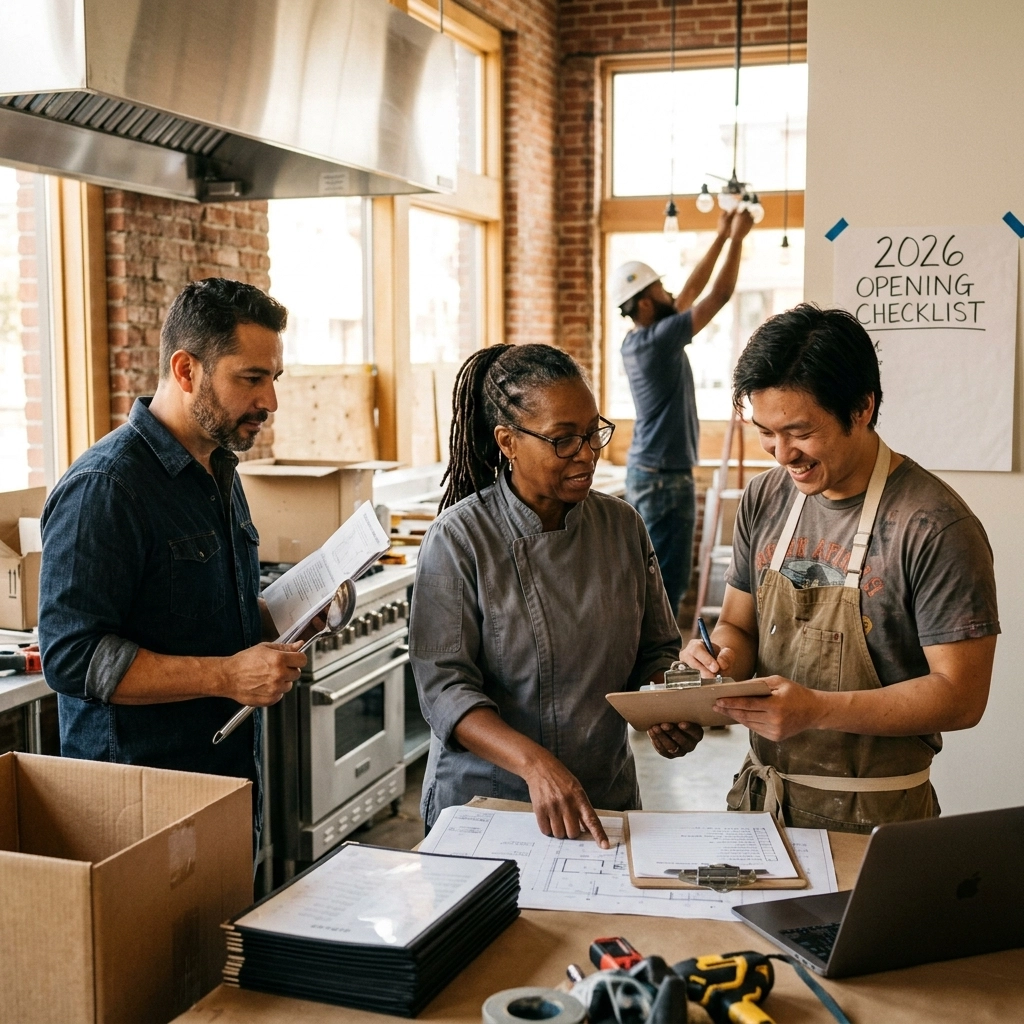
Here's the thing about restaurant business plans in 2026: most of them are basically fiction dressed up in Excel. They look beautiful. They project profitability by month six. They show your EBITDA hitting 18% by year two. And then reality walks through the door, permit delays, labor costs that balloon past your projections, a HVAC system that dies three months in, and suddenly that $47,000 cash cushion you thought you had? Gone. That's not a random number. Based on data from restaurant consulting projects across the Bay Area, referenced in industry feasibility studies, $47,000 represents the average gap between what operators budget for their restaurant pro forma and what they actually need to survive the first 12 months[1][Restaurant Owner]. The gap isn't from laziness. It's from using templates built for 2019 economics and 2026 realities. Let's fix that.
Story researched by MFRCG Staff.

Paper Plans vs. San Francisco Reality: Why Your Spreadsheet Lies
Most restaurant business plans start with a template downloaded from the internet or handed over by a well-meaning accountant who's never worked a dinner shift. The template asks for "startup costs" and "monthly operating expenses," and you fill in numbers that feel reasonable. The problem? Templates don't account for San Francisco or Oakland's specific cost structures, permit timelines, or the reality that your landlord's "turnkey space" needs $85K in work before you can legally serve food.
Here's where the gap happens. According to research on restaurant failures, incomplete business plans that lack proper analysis of local conditions are the leading cause of early closures[2][Apicbase]. Your paper plan says buildout costs $250K. Reality says $340K because the city required a grease trap upgrade, your electrical panel couldn't handle the load, and the ADA-compliant bathroom retrofit added another $22K you didn't see coming[3][FSR Magazine].
The difference between a paper plan and an SF-ready restaurant pro forma? One assumes everything goes according to schedule. The other assumes nothing does, and builds in buffers, contingencies, and realistic timelines that account for the fact that SF Department of Building Inspection won't approve your plans in two weeks.
CAPEX Breakdown: The Real Numbers Behind Restaurant Startup Costs 2026
Let's talk about what it actually costs to open in the Bay Area right now. Most pro formas underestimate CAPEX by 25-30%[4][Toast]. Here's the breakdown operators need to plan for:
Buildout Costs:
- Kitchen equipment (new or refurbished): $75K–$150K
- Dining room build-out (furniture, fixtures, design): $60K–$120K
- HVAC and ventilation (required for most concepts): $35K–$70K
- Plumbing and electrical upgrades: $40K–$80K
- ADA compliance and accessibility: $15K–$40K
Permits and Fees:
- Business licenses and permits (SF): $5K–$12K
- Health department permits and inspections: $3K–$8K
- Building permits and plan checks: $8K–$25K
- Fire safety and suppression systems: $15K–$35K
Tech Stack (often forgotten):
- POS system and hardware: $8K–$15K
- Reservation and online ordering platforms: $3K–$7K annually
- Inventory management software: $2K–$5K annually
- Security systems and cameras: $4K–$9K
The median total? $320K–$550K for a full-service restaurant in San Francisco, and $180K–$320K for a fast-casual or counter-service concept[5][Restaurant Engine]. Most templates estimate 30% less.
The Operating Buffer: Why 6–12 Months of Runway Isn't Optional
Here's the $47K mistake in action: operators budget for three months of operating expenses as their "safety net." Three months sounds reasonable until you realize that ramp-up takes longer than anyone projects, and cash flow problems are the number one reason restaurants close in year one[6][Lightspeed].
A proper feasibility study should calculate your operating buffer using this formula:
- Monthly fixed costs (rent, insurance, utilities, base labor)
- Plus 60% of projected variable costs (food, hourly labor, supplies)
- Multiplied by 9 months (not 3)
Why nine months? Because that's the realistic timeline for most concepts to reach breakeven occupancy and sales velocity in competitive markets like SF and Oakland[7][FSR Magazine]. Your pro forma might show profitability at month six, but that assumes you hit 80% of projected sales from day one. Most concepts hit 50-60% in month one and scale slowly.
The Operating Buffer Should Cover:
- Rent and utilities: 9 months fully paid
- Core labor (management and key staff): 9 months at full salary
- Insurance, licenses, and fees: Annual costs paid upfront
- Marketing and launch costs: $15K–$35K for first 90 days
- Emergency repairs and equipment replacement: $20K minimum
That buffer isn't pessimism. It's survival math.
Labor Benchmarks: The 36.5% Median and What It Means for Your Pro Forma
If your restaurant business plan projects labor costs at 28% of revenue, you're setting yourself up for failure. The industry median for labor cost percentage in 2026 is 36.5% of gross sales[8][Toast], and in high-wage markets like the Bay Area, it can hit 40-42% depending on your concept.
Here's what realistic labor planning looks like:
- Management (GM, chef, sous): 12–15% of revenue
- Hourly front-of-house: 10–13% of revenue
- Hourly back-of-house: 12–15% of revenue
- Payroll taxes and benefits: 3–5% of revenue
The mistake most pro formas make? They calculate labor as a fixed cost ("I need 12 employees") instead of a percentage of projected sales. When your week-one sales are $18K instead of the projected $35K, your labor cost percentage explodes to 55%, and you're burning cash you don't have.
Labor Calibration for Pro Formas:
- Start with a 38% labor target for full-service, 32% for fast-casual
- Model labor flex: how quickly can you scale staff down if sales lag?
- Include recruiting and training costs: $2K–$4K per management hire, $400–$800 per hourly hire
- Factor in turnover: 73% annual turnover is the industry average, which means re-hiring and re-training constantly[9][Apicbase]

Smart Critic: Are Traditional Business Plans Dead?
Here's the counterargument: some operators say the traditional restaurant business plan is obsolete. They argue that in 2026, with ghost kitchens, pop-ups, and digital-first brands, you don't need a 40-page document with five-year projections. You need speed, flexibility, and the ability to pivot.
They're half right. The format of business plans has evolved, fewer operators are printing 50-page decks for investors. But the function of a business plan hasn't changed. Whether you're opening a brick-and-mortar or a ghost kitchen, you still need to know your unit economics, your breakeven point, and your cash runway. The mistake isn't writing a business plan. The mistake is writing a bad one that doesn't reflect 2026 realities.
The hybrid approach works best: a lean, living financial model (12-month pro forma, CAPEX budget, and cash flow projection) paired with a concise operational plan (concept, market analysis, and competitive positioning). That's 10-15 pages, not 50, and it gets updated monthly based on actual performance, not locked in a drawer after opening[10][Apicbase].
Margin Shift Grid: Pro Forma Adjustments for Realistic Projections
Here's a quick reference grid for adjusting your restaurant pro forma to match 2026 Bay Area realities:
| Category | Template Assumption | SF/Oakland Reality | Adjustment |
|---|---|---|---|
| Buildout CAPEX | $200K | $320K–$550K | +40–60% |
| Permit Timeline | 4–6 weeks | 12–20 weeks | 3x timeline |
| Labor Cost % | 28–30% | 36–42% | +8–12 points |
| Rent (PSF) | $45–$60 | $75–$120 | +50–80% |
| Operating Buffer | 3 months | 9 months | 3x buffer |
| Ramp-Up to Breakeven | 3–4 months | 8–10 months | 2.5x timeline |
| Prime Cost Target | 60–62% | 68–72% | +8–10 points |
Use this grid to stress-test your projections. If your numbers look like the "Template Assumption" column, you're underestimating costs and timelines.
What to Do Next: Fixing Your Pro Forma in 5 Steps
If you're realizing your restaurant business plan has a $47K gap (or bigger), here's how to fix it:
-
Re-calculate CAPEX with local contractors. Get three bids for buildout, equipment, and permits, use the highest bid as your baseline, not the lowest.
-
Extend your operating buffer to 9 months. Yes, it means raising more capital or delaying your launch. But it's better than running out of cash in month four.
-
Model labor at 38% of revenue, not 28%. If your concept can't work at 38% labor, your concept doesn't work in the Bay Area.
-
Add a 20% contingency to every line item. Permits take longer. Equipment breaks. Suppliers raise prices. Build in wiggle room.
-
Run a break-even analysis weekly, not monthly. Track your actual prime cost, labor cost, and occupancy against projections every week for the first six months. Adjust immediately when you're off track.

FAQ: Restaurant Pro Forma and Business Plan Questions
Q: How much should I budget for a restaurant feasibility study before writing my business plan?
A professional feasibility study for a Bay Area restaurant typically costs $5K–$12K and includes market analysis, site evaluation, competitive research, and financial projections. It's worth the investment because it identifies fatal flaws before you sign a lease or commit capital[11][McFadden Finch].
Q: What's the biggest mistake operators make in their restaurant startup costs projections?
Underestimating the timeline. Most pro formas assume permits take 4-6 weeks and buildout takes 8-12 weeks. In San Francisco, permit timelines alone can stretch 12-20 weeks, and any delay cascades into higher carrying costs (rent, insurance, labor for pre-opening staff).
Q: Can I open a restaurant in SF with less than $300K?
Yes, but you need a specific model: counter-service or fast-casual, smaller footprint (under 1,200 SF), minimal buildout requirements, and a simplified menu. Full-service sit-down restaurants in SF rarely open for under $400K all-in.
Q: How do I know if my restaurant business plan is realistic or just optimistic?
Show it to someone who's opened a restaurant in your market in the last 24 months. Not your accountant. Not your lawyer. An actual operator. If they laugh at your labor cost projections or your ramp-up timeline, listen to them.
Ready to Build a Pro Forma That Actually Works?
If you're tired of business plan templates that don't account for Bay Area realities: or if you've already opened and realized your projections were way off: we can help. At McFadden Finch Restaurant Consulting Group, we specialize in financial modeling, feasibility studies, and turnaround strategies for SF and Oakland operators.
We build pro formas that survive contact with reality. We stress-test your assumptions. And we help you avoid the $47K mistake before it happens.
Contact the Executive Team at McFadden Finch Restaurant Consulting Group at (510) 973-2410 or visit mcfadden-finch-group.com/contact to schedule a discovery call.
About McFadden Finch Restaurant Consulting Group
We partner with restaurant owners, operators, and investors across the Bay Area to solve the hardest problems in the business: feasibility studies, financial modeling, kitchen design, operational turnarounds, and concept development. Whether you're launching your first concept or fixing your fifth, we bring the systems, benchmarks, and real-world experience to help you win.
Call us at (510) 973-2410 or explore our services at mcfadden-finch-group.com.
Sources
[1] Restaurant Owner, "The Biggest Mistakes Restaurant Owners Make When Starting A Business," Restaurant Owner, 2024, https://restaurantowner.com/public/The-Biggest-Mistakes-Restaurant-Owners-Make-When-Starting-A-Business.cfm, Accessed February 8, 2026.
[2] Apicbase, "Why Do Restaurants Fail? 7 Common Reasons & Solutions for 2024," Apicbase, 2024, https://www.apicbase.com/blog/restaurant-management/why-do-restaurants-fail/, Accessed February 8, 2026.
[3] FSR Magazine, "The Rising Costs of Opening a Restaurant," FSR Magazine, 2025, https://www.fsrmagazine.com, Accessed February 8, 2026.
[4] Toast, "Restaurant Startup Costs: A Complete Breakdown," Toast, 2025, https://pos.toasttab.com/blog/restaurant-startup-costs, Accessed February 8, 2026.
[5] Restaurant Engine, "How Much Does It Cost to Open a Restaurant in 2024?," Restaurant Engine, 2024, https://restaurantengine.com/cost-to-open-a-restaurant/, Accessed February 8, 2026.
[6] Lightspeed, "Why Do Restaurants Fail? Stats & Solutions for 2025," Lightspeed HQ, 2025, https://www.lightspeedhq.com/blog/why-restaurants-fail/, Accessed February 8, 2026.
[7] FSR Magazine, "Understanding Restaurant Feasibility Studies," FSR Magazine, 2025, https://www.fsrmagazine.com, Accessed February 8, 2026.
[8] Toast, "2026 Restaurant Labor Cost Benchmarks," Toast, 2026, https://pos.toasttab.com/blog/restaurant-labor-costs, Accessed February 8, 2026.
[9] Apicbase, "Restaurant Turnover Statistics and Solutions," Apicbase, 2024, https://www.apicbase.com/blog/restaurant-management/restaurant-turnover/, Accessed February 8, 2026.
[10] Apicbase, "Modern Restaurant Business Planning Strategies," Apicbase, 2024, https://www.apicbase.com/blog/restaurant-management/, Accessed February 8, 2026.
[11] McFadden Finch Restaurant Consulting Group, "7 Restaurant Feasibility Study Mistakes That Kill Concepts Before They Open," MFRCG, 2026, https://www.mcfadden-finch-group.com/7-restaurant-feasibility-study-mistakes-that-kill-concepts-before-they-open, Accessed February 8, 2026.