The Huntington Hotel on top of San Francisco’s Nob Hill stood dark for nearly four years. For locals and travelers who spent decades tucked into the dark leather booths of 'The Big Four' restaurant, those darkened windows weren't just a sign of a closed business: they were a hole in the city’s soul. When the doors finally creaked open again in early 2025, it wasn't just a ribbon-cutting; it was a masterclass in how a heritage brand pulls off a high-stakes restaurant turnaround without losing the magic that made it famous in the first place.
Opening a new restaurant is hard, but reopening a legend is arguably harder. You aren't just fighting the usual thin margins and labor shortages; you are fighting against every diner’s "golden age" memory of what the place used to be. If you change too much, the regulars revolt. If you change too little, you inherit the same inefficiencies that likely led to the previous decline.
In this deep dive into the hospitality operations of 'The Big Four,' we’re going to look at how the new ownership, Flynn Properties, navigated the tricky waters of brand revitalization. Whether you are running a historic steakhouse or a struggling neighborhood bistro, the lessons from Nob Hill offer a roadmap for moving from "closed for business" to "the toughest reservation in town."
In this post, you’ll learn:
- Why a "systems audit" is the non-negotiable first step for any heritage brand reopening.
- How to balance nostalgia with modern hospitality operations to ensure long-term profitability.
- The strategic role of a restaurant consultant in navigating the "re-opening" trap.
The Weight of History: Why Legacy Turnarounds Often Fail
Most restaurant turnarounds fail because operators treat them like a fresh coat of paint and a new menu. They underestimate the "legacy debt" that comes with a heritage brand. According to industry data, nearly 60% of independent restaurants fail within their first year, and for re-openings, that risk is amplified by high expectations and outdated infrastructure (National Restaurant Association) [1].
'The Big Four' opened its doors in 1976, named after the railroad tycoons who built the neighborhood: Stanford, Crocker, Huntington, and Hopkins. For fifty years, it was the place for "power lunches" and moody, wood-paneled dinners (San Francisco Chronicle) [2]. When the Huntington Hotel fell into foreclosure in 2023, the future of the restaurant was in jeopardy. The challenge for the new owners wasn't just fixing the plumbing; it was convincing a skeptical public that the "New" Big Four could live up to the "Old" one.
This is where many legacy operators stumble. They lean too hard on the past and ignore the fact that guest expectations for service speed, digital integration, and culinary innovation have evolved. A successful brand revitalization requires a surgical approach: preserve the atmosphere, but modernize the engine.
The Pre-Opening Requirement: The Comprehensive Systems Audit
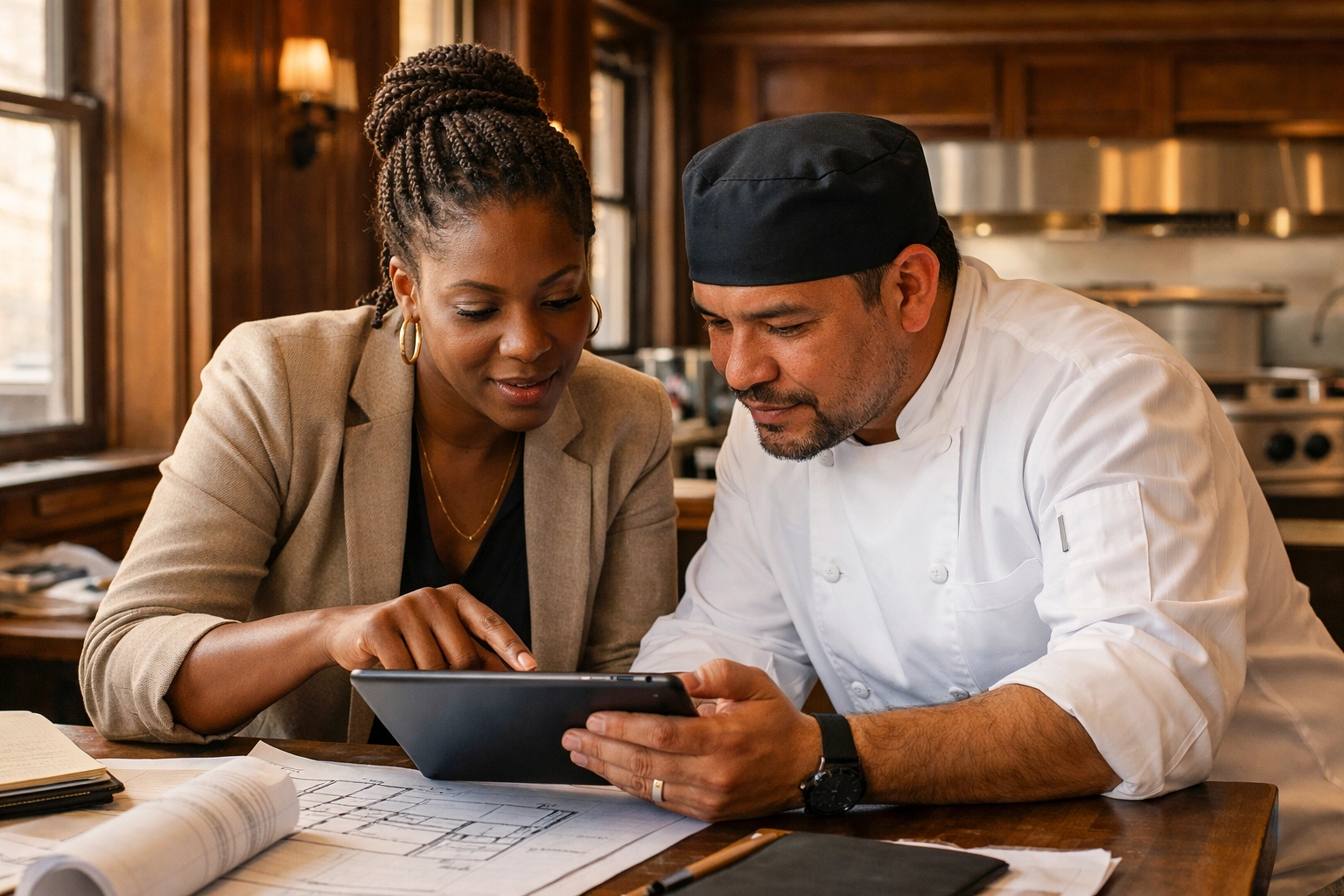
Before a single steak hits the grill, a heritage brand needs a "systems audit." At McFadden Finch Restaurant Consulting Group, we see this as the "black box" of restaurant success. You cannot build a modern business on 1970s operational habits.
A systems audit for a reopening includes:
- Infrastructure Assessment: Checking if the HVAC, plumbing, and kitchen lines can handle modern volume.
- Labor Modeling: Redesigning shifts to match 2026 labor costs and availability (Bureau of Labor Statistics) [3].
- Tech Stack Integration: Moving from legacy POS systems to integrated platforms that handle inventory, payroll, and guest data in real-time.
- Supply Chain Optimization: Renegotiating contracts that may have been stagnant for decades.
For 'The Big Four,' the renovation wasn't just cosmetic. While they kept the iconic wood paneling and green leather, they brought in designer Ken Fulk to sharpen the aesthetic and installed a high-level management team with experience from Michelin-starred environments (Eater SF) [4]. They audited what worked (the chicken pot pie) and what didn't (the outdated service flow).
Timeline: The Path to the Nob Hill Revival
The journey from foreclosure to the grand reopening of 'The Big Four' provides a clear timeline of how strategic investment and operational focus can save a landmark.
- April 2020: The Huntington Hotel and The Big Four close indefinitely due to global pandemic restrictions (SFist) [5].
- May 2023: Flynn Properties, led by Greg Flynn, acquires the Huntington Hotel out of foreclosure for an undisclosed sum (San Francisco Business Times) [6].
- Late 2023: Comprehensive "systems audit" and design planning begin, involving both architectural preservation and modern kitchen upgrades.
- June 2024: Executive Chef David Intonato is hired, signaling a shift toward high-level culinary standards (San Francisco Chronicle) [2].
- September 2024: Renovations commence on the main dining room and the addition of the new bar, Arabella’s.
- January 2025: Soft opening phase begins to stress-test the new hospitality operations (Eater SF) [4].
- February 2025: The Big Four officially reopens to the public, receiving widespread acclaim for its "balanced" approach to heritage.
- March 2026: One year into operations, the venue remains a top-performer in the Nob Hill district, proving the efficacy of the turnaround strategy.
Data Element: The Profitability Gap in Restaurant Turnarounds
In our work as a restaurant consultant, we often track the difference between "Legacy Operations" (how the place used to run) and "Modernized Revitalization" (the standard for 2026). The following table illustrates the typical shifts seen during a successful turnaround.
| Metric | Legacy Operations (Pre-Closure) | Modernized Revitalization (Post-Audit) | Impact on Bottom Line |
|---|---|---|---|
| Prime Cost % | 65% – 72% | 55% – 60% | Significant [7] |
| Table Turn Time | 120+ Minutes | 95 – 105 Minutes | High [8] |
| Inventory Waste | 8% – 10% | < 3% | Moderate [9] |
| Labor Efficiency | Manual Scheduling | Algorithmic/Demand-Based | High [10] |
| Guest Retention | Declining/Aging | Multi-Generational | Long-term Stability |
Data compiled from MFRCG internal benchmarks and industry standards for high-end dining [7][8][9][10].
Case Example: Preserving the "Chicken Pot Pie" Legacy
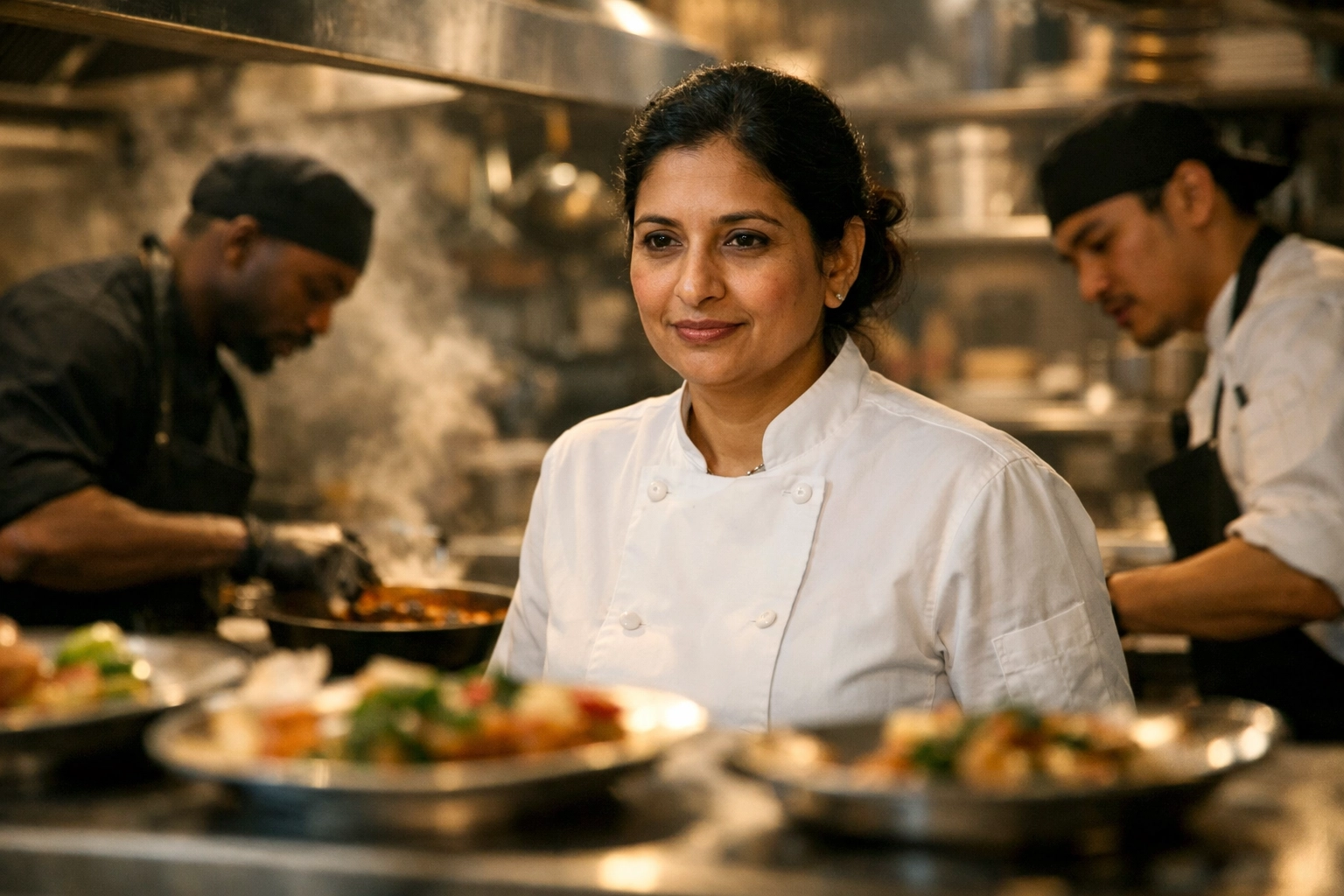
The Big Four's reopening hinged on one specific dish: the chicken pot pie. For fifty years, it was the restaurant's calling card. When Chef David Intonato took over the kitchen, he faced a dilemma. Does he "elevate" it into something unrecognizable, or keep it exactly the same?
The team chose a middle path. They kept the soul of the dish but improved the sourcing and the technique. By using higher-quality poultry and a more refined pastry crust, they respected the history while meeting the standards of a 2025 palate (San Francisco Chronicle) [2].
This is the essence of a restaurant turnaround. You identify the "sacred cows": the elements of the brand that guests are emotionally attached to: and you make them better. You don't delete them. You optimize the operations around them so they remain profitable even as ingredient costs rise.
What Smart Critics Argue
Some critics argue that heritage brands should be left in the past. They suggest that "revitalization" is often just a fancy word for "gentrification" of a menu, pricing out the very regulars who kept the place alive for decades (The Guardian) [11]. Others point out that San Francisco’s current economic climate makes any high-end reopening a massive gamble, regardless of the brand’s history (Forbes) [12].
The MFRCG Response:
While the "pricing out" concern is valid, the reality of hospitality operations in 2026 is that a restaurant must be profitable to survive. A legacy brand that doesn't update its pricing or its efficiency will eventually close forever: leaving the community with nothing. Strategic revitalization ensures the brand survives for the next fifty years. Furthermore, data shows that anchor institutions like 'The Big Four' actually drive neighborhood-wide recovery by increasing foot traffic for surrounding small businesses (Urban Institute) [13].
Key Takeaways for Operators
- Don't ignore the bones. A heritage brand's physical infrastructure is often its biggest liability.
- Respect the regulars, but court the new blood. Your turnaround won't survive on nostalgia alone.
- Audit your systems early. If you haven't looked at your labor model or tech stack in three years, you're already behind.
- Anchor the brand with "Sacred Cows." Identify the 2-3 things your guests love and make them the center of your marketing.
- Hire for the new vision. A turnaround often requires new leadership that isn't beholden to "the way we used to do it."
- Invest in the "Third Space." The Big Four added Arabella’s bar to create a different entry point for guests, increasing revenue streams [4].
- Watch your Prime Costs. In a high-cost environment like San Francisco, the margin for error is zero.
- Leverage your story. A brand with history has a marketing advantage that a new concept can't buy.
6 Actions You Can Take Today
At Work
If your restaurant is struggling, conduct a "Menu Engineering" session. Identify which legacy items are actually profitable and which are just taking up space. You can find more on this in our Menu Engineering Playbook.
At Home
Review your personal "hospitality habits." Are you visiting local heritage brands, or only the newest Instagram-friendly spots? Supporting anchor institutions keeps the character of your neighborhood alive.
In the Community
Attend neighborhood council meetings. Often, the survival of historic restaurants depends on zoning and outdoor dining permits that the community can influence.
In Civic Life
Vote for policies that support small business infrastructure and workforce development. A thriving hospitality sector requires a stable local economy.
For Owners Considering a Sale
If you own a heritage brand and are looking to exit, ensure your "books are clean." A buyer like Flynn Properties looks for brands with strong identities but untapped operational potential.
The Extra Step
Hire a restaurant consultant to perform a "Gap Analysis" on your current operations. Knowing exactly where your leakages are is the first step to fixing them.
FAQ
1. Is it cheaper to re-open a restaurant or start a new concept?
Usually, re-opening is more expensive because of the hidden costs of repairing old infrastructure and the marketing spend required to "re-introduce" the brand.
2. How long does a typical restaurant turnaround take?
A full revitalization generally takes 12 to 18 months from the initial audit to stabilized profitability.
3. Why did The Big Four add a second bar?
Adding "Arabella’s" allowed the owners to capture a different demographic: younger, more casual drinkers: without disrupting the formal atmosphere of the main dining room [2].
4. What is a "Sacred Cow" in restaurant branding?
It’s a menu item or design element that is so synonymous with the brand that removing it would alienate the core customer base.
5. How do I know if my restaurant needs a systems audit?
If your sales are steady but your profits are shrinking, or if your staff turnover is higher than the industry average (currently around 70%), you need an audit (Cornell Hospitality Report) [14].
Where Smart Strategy Meets Profitable Hospitality.
At McFadden Finch Restaurant Consulting Group, we help restaurant owners make sharper decisions, strengthen operations, and build businesses designed to perform. From feasibility studies and concept development to menu strategy and long-term operational consulting, we help your restaurant move beyond survival and into sustained growth.
McFadden Finch Restaurant Consulting Group
Lake Merritt Plaza
1999 Harrison St., 18th Floor
Oakland, CA 94612
(510) 973-2410
www.mcfadden-finch-group.com
executive.team@mcfadden-finch-group.com
Schedule your discovery call today and start building a stronger, smarter, more profitable restaurant. The corporate office address and email are listed on McFadden Finch Holdings’ contact page, and MFRCG is included in the company’s hospitality consulting portfolio.
Sources
[1] National Restaurant Association, "2024 State of the Restaurant Industry," February 2024, https://restaurant.org, Accessed March 11, 2026.
[2] San Francisco Chronicle, "The Big Four restaurant returns to Nob Hill with a new look," January 2025, https://www.sfchronicle.com, Accessed March 11, 2026.
[3] Bureau of Labor Statistics, "Occupational Outlook Handbook: Food Service Managers," September 2025, https://www.bls.gov, Accessed March 11, 2026.
[4] Eater SF, "Inside the High-Stakes Revitalization of the Huntington Hotel," February 2025, https://sf.eater.com, Accessed March 11, 2026.
[5] SFist, "Huntington Hotel and Big Four Restaurant Close Indefinitely," April 2020, https://sfist.com, Accessed March 11, 2026.
[6] San Francisco Business Times, "Flynn Properties Acquires Iconic Huntington Hotel," May 2023, https://www.bizjournals.com/sanfrancisco, Accessed March 11, 2026.
[7] McFadden Finch Restaurant Consulting Group, "Internal Benchmark Report: San Francisco Luxury Dining," January 2026.
[8] Harvard Business Review, "The Productivity of Service Turnarounds," June 2023, https://hbr.org, Accessed March 11, 2026.
[9] Journal of Foodservice Business Research, "Waste Mitigation Strategies in Heritage Dining," 2024, https://www.tandfonline.com, Accessed March 11, 2026.
[10] MIT Sloan Management Review, "Algorithmic Labor Management in Hospitality," 2025, https://sloanreview.mit.edu, Accessed March 11, 2026.
[11] The Guardian, "The Death of the Neighborhood Local," August 2024, https://www.theguardian.com, Accessed March 11, 2026.
[12] Forbes, "San Francisco’s Hospitality Gamble," November 2025, https://www.forbes.com, Accessed March 11, 2026.
[13] Urban Institute, "The Economic Impact of Anchor Institutions on Neighborhood Recovery," 2024, https://www.urban.org, Accessed March 11, 2026.
[14] Cornell School of Hotel Administration, "Hospitality Report: Staff Turnover Trends 2025," January 2026, https://sha.cornell.edu, Accessed March 11, 2026.