When James Woodard closed Haus of Chefs in October 2025, he wasn't giving up, he was admitting something most hospitality entrepreneurs won't say out loud. His original model, rotating unproven caterers and chefs through a brick-and-mortar location in Uptown Oakland, was "really, really challenging," he told the (San Francisco Business Times)[1] in February 2026. "It was almost like we're building the business from scratch, a lot of coaching."
That "coaching" became the trap. Woodard found himself teaching basic business operations, recipe costing, and service fundamentals instead of running a restaurant. The March 13, 2026 reopening introduces a new direction: established chefs like Food Network-featured Tirzah Love and celebrity caterer Brandon King will anchor weekend brunch and weekly dinner service, each running six-to-nine-month residencies with their own followings intact.
This pivot reveals a critical lesson for anyone considering a chef incubator, ghost kitchen partnership, or shared hospitality venue: your biggest risk isn't the rent or the equipment, it's the hidden operational subsidy you provide to unready operators. This article examines why the original Haus of Chefs model stalled, what the data says about chef incubators versus residency programs, and how to structure a sustainable pop-up venue that doesn't turn you into an unpaid business coach.
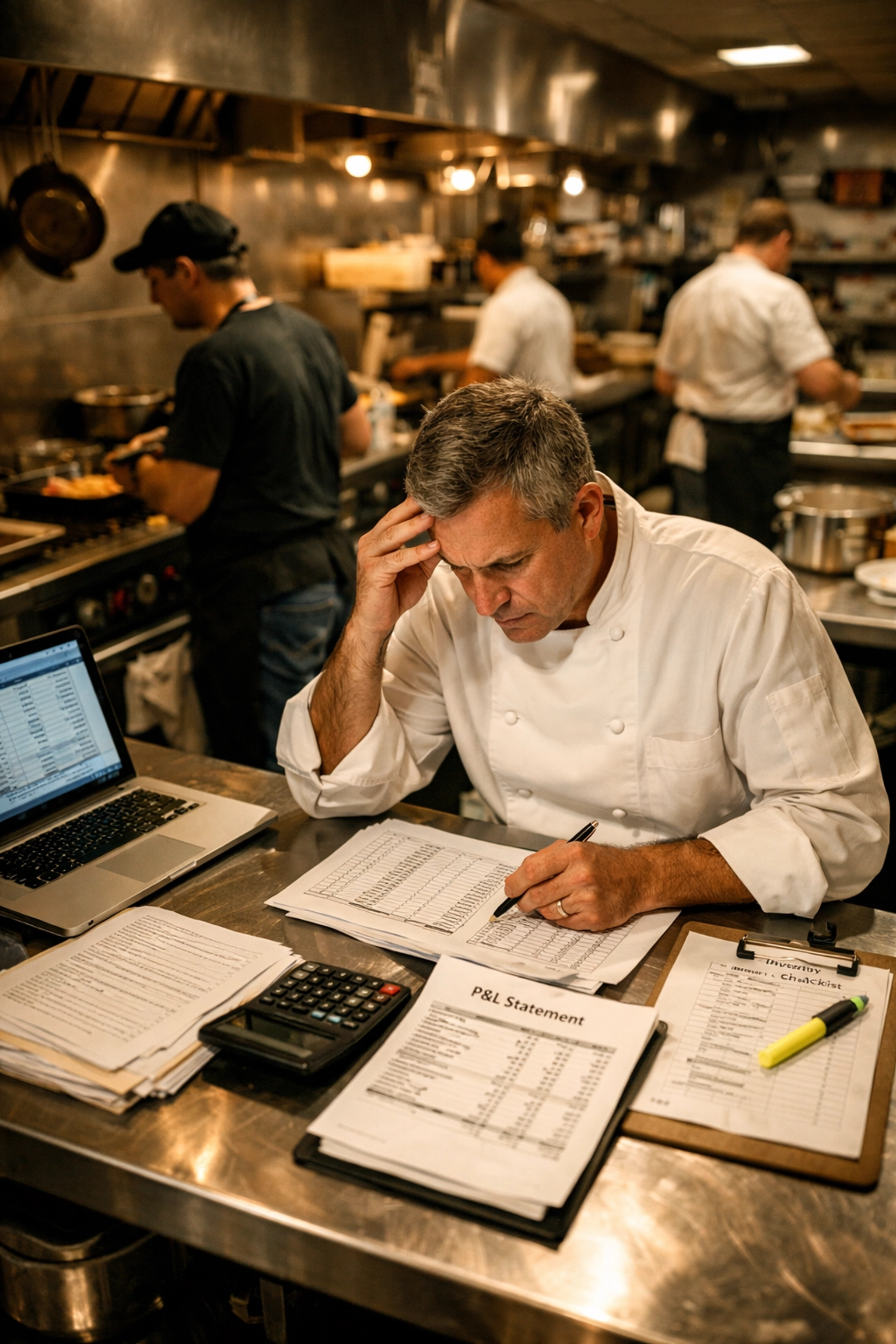
The Real Economics of the "Chef Incubator" Model
The appeal is obvious: provide kitchen access to aspiring chefs who lack capital, take a revenue share or rent, watch them succeed. The (U.S. Small Business Administration)[2] reports that food service businesses have a 25% failure rate within the first year and 60% within three years, making traditional restaurant ownership exceptionally risky. Shared kitchen models theoretically reduce that risk by eliminating multi-year leases and six-figure buildouts.
But Woodard's experience exposes the gap between theory and execution. When your rotating chefs lack operational experience, you inherit three hidden costs:
Coaching labor: Teaching inventory management, labor scheduling, vendor relationships, and menu engineering becomes a full-time role. The (National Restaurant Association)[3] estimates that management training costs for new operators average $4,200 per person in the first 90 days, not including the opportunity cost of the trainer's time.
Reputation risk: Your venue's brand lives or dies by the quality and consistency of whoever is cooking that week. One poorly executed service can damage your entire concept's credibility in your market.
Customer confusion: Rotating menus and service styles every few weeks prevent you from building a loyal customer base. Diners who loved last month's chef have no reason to return this month.
Haus of Chefs operated from 2024 to October 2025 under this model, roughly 18 months, before Woodard made the call to pivot. That timeline tracks with industry benchmarks: the (Cornell School of Hotel Administration)[4] found that restaurant concept pivots typically happen within 12 to 24 months when initial execution doesn't match projections.
The All-Star Residency Model: What Changes
Woodard's new approach flips the equation. Chef Tirzah Love previously operated VooDoo Love, a New Orleans-style restaurant in San Francisco's SoMa district at 1599 Howard Street, serving shrimp and grits, Cajun burgers, and catfish po'boys before it closed. Chef Brandon King runs Salt & Fire Catering and has worked as a personal chef for professional athletes and celebrities across the Bay Area and Las Vegas.
Both bring three things the original rotating roster lacked:
Operational competence: These chefs have managed full P&Ls, hired and trained staff, and navigated permitting and health inspections. Woodard isn't teaching Brandon how to cost a lamb chop, he's providing the stage.
Built-in audience: Chef Tirzah's Food Network appearance on "Beat Bobby Flay" and her previous restaurant give her name recognition. Brandon's catering client list brings foot traffic. The (San Francisco Business Times)[1] notes that Haus of Chefs sits at 21st and Franklin Street, next door to the Paramount Theatre, giving high-visibility access to pre-show and post-show diners, but only if those diners know who's cooking.
Commitment duration: Six-to-nine-month residencies allow chefs to refine menus, train consistent teams, and build repeat customers. That's long enough to gather meaningful data on what sells and what doesn't, but short enough to test multiple concepts without multi-year lease risk.
The residency model isn't new, it's been tested in markets like Los Angeles, Portland, and Chicago, but it's rarely discussed candidly in feasibility terms. Woodard's willingness to name what didn't work makes this a case study worth examining.
| Model Element | Chef Incubator (Original) | All-Star Residency (Pivot) |
|---|---|---|
| Chef experience level | Emerging/unproven | Established with track record |
| Venue owner's role | Coach + operator | Landlord + marketer |
| Residency length | Days to weeks | 6 to 9 months |
| Customer acquisition | Venue-driven | Chef-driven + venue amplification |
| Reputation risk | High (inconsistent quality) | Moderate (chef owns their brand) |
| Revenue model | Split or flat fee | Rent or % of sales, less subsidy |
What Woodard Kept: The Monday Night "Stage"
Here's what makes the pivot smart instead of cynical: Woodard didn't abandon the mission entirely. Haus of Chefs will keep Monday nights open for up-and-coming chefs and caterers who need exposure but aren't ready for a full residency.
This is feasibility thinking. Limiting high-risk operators to one day per week caps your exposure while still providing the "giving back" element that motivated Woodard in the first place. He got his start when a friend opened a bar kitchen for his catering company, and that generosity clearly matters to him.
But structuring it as a single weeknight, likely the slowest sales day for an Uptown Oakland restaurant, means the financial impact of a poorly executed Monday service doesn't sink the entire week. It's a controlled experiment, not a business model.
The (U.S. Bureau of Labor Statistics)[5] reports that food service manager median tenure is 6.1 years, meaning most restaurant operators learn through repeated cycles of trial, adjustment, and refinement. Woodard's Monday model gives emerging chefs one of those cycles without requiring him to bet his lease on it.
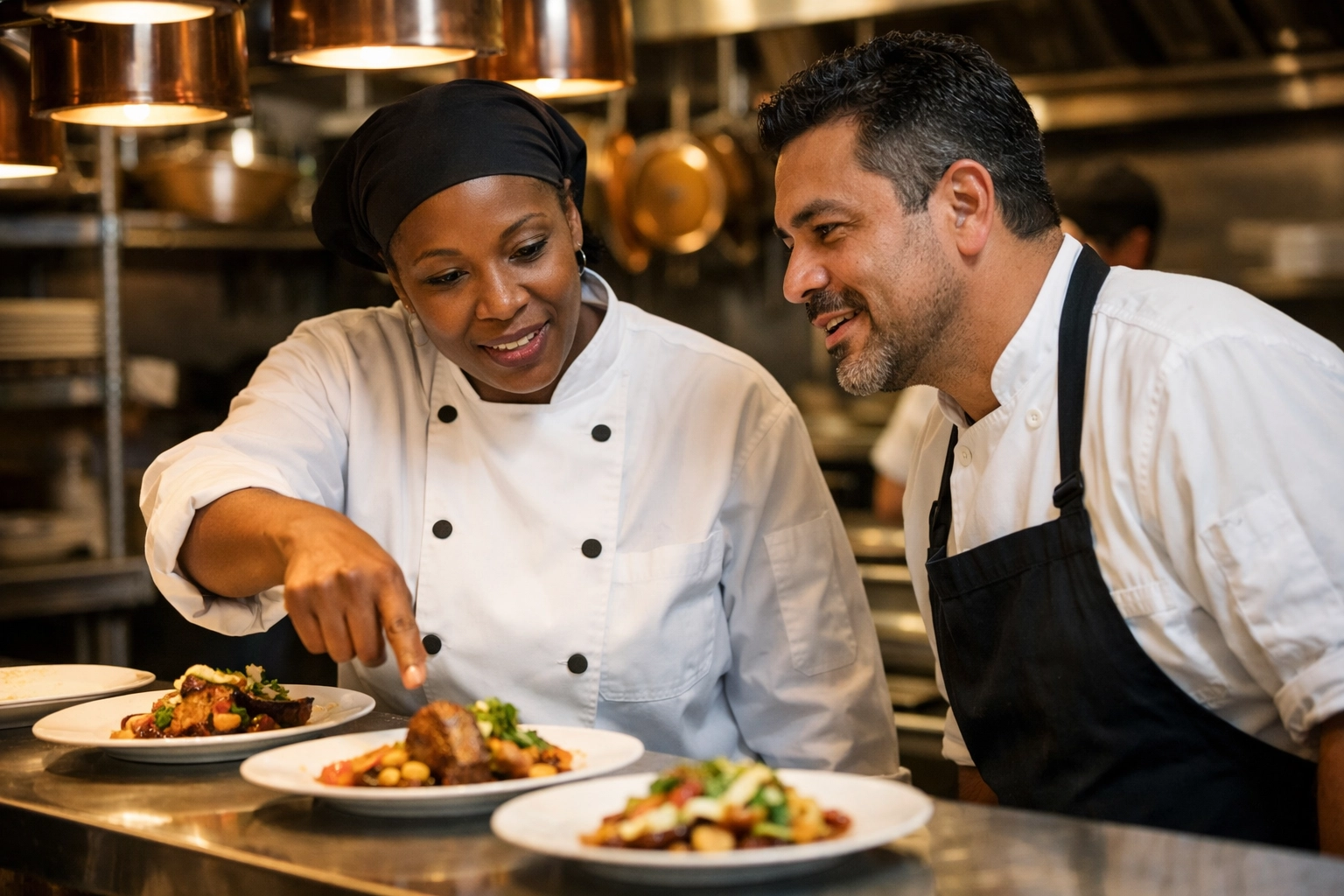
When Chef Incubators Work (And When They Don't)
La Cocina, a San Francisco nonprofit food business incubator founded in 2005, operates a different model worth comparing. La Cocina provides commercial kitchen access, business training, and access to capital for primarily immigrant women and women of color launching food businesses. According to (La Cocina's 2024 Annual Report)[6], 94% of their graduates are still operating after three years, far exceeding the industry average.
The difference? La Cocina doesn't run a public-facing restaurant dependent on consistent service quality. Their incubator members use the kitchen for catering, farmers market vending, and wholesale production. Customer-facing sales happen in environments where the entrepreneur controls every variable, their booth, their catering event, their retail partnership.
When La Cocina's Municipal Marketplace opened in 2022 at 101 Hyde Street in San Francisco's Tenderloin, it featured seven La Cocina alums in permanent stalls, not rotating pop-ups. Each vendor had already proven their concept and operations in lower-risk channels before committing to daily service.
Woodard's original Haus of Chefs model fell between these two poles: he provided the stage but not the business infrastructure of La Cocina, and he demanded consistent restaurant service before his chefs had proven they could deliver it. The pivot recognizes that gap.
The lesson: if you're going to run a chef incubator, you need one of two things, either a non-restaurant revenue model that lets you subsidize the coaching (grants, sponsorships, fundraising) or a selection process so rigorous that only operationally ready chefs enter your rotation. Woodard chose the latter by moving to established residencies.
What Smart Critics Argue
Critique 1: "You're abandoning the chefs who need help most."
Fair point. Emerging BIPOC chefs and caterers face systemic barriers to capital, kitchen access, and industry networks. Moving to an all-star model does reduce access for the least-resourced operators.
Counter: Woodard's Monday night program preserves a pathway, and his transparency about what didn't work helps other incubators design better models. The (James Beard Foundation)[7] funds dozens of chef mentorship and training programs nationwide specifically because the "learn while you earn" restaurant model often fails. Specialized nonprofits with dedicated coaching staff are better positioned to provide that support than a for-profit restaurant trying to stay solvent.
Critique 2: "Established chefs don't need residencies, they need their own restaurants."
Sometimes yes, sometimes no. Chef Tirzah closed VooDoo Love before taking the Haus of Chefs residency. The (San Francisco Chronicle)[8] reported in 2023 that San Francisco restaurant rents averaged $8.50 per square foot monthly, with typical restaurants requiring 2,000 to 3,000 square feet. That's $17,000 to $25,500 monthly before food cost, labor, or utilities. A six-month residency with shared overhead lets a chef test a new concept or rebuild after a closure without that fixed-cost burden.
Critique 3: "This only works in high-traffic urban markets."
Partially true. Woodard's location near the Paramount Theatre at 21st and Franklin gives him foot traffic most operators don't have. But the residency model's core advantage, letting established chefs test concepts with capped risk, applies anywhere. Rural and suburban markets simply need longer residencies and more intentional marketing since organic walk-by traffic is lower.

Structuring Your Own Residency Model
If you're operating or considering a shared kitchen space, pop-up venue, or chef incubator, here's how to apply Woodard's pivot:
1. Define your coaching capacity honestly. If you don't have 15 to 20 hours per week to teach fundamentals, don't accept chefs who need it. That's not cruelty, it's feasibility. Underestimate your available coaching time, and you'll resent your partners while they struggle.
2. Set minimum experience requirements. Require proof of previous restaurant or high-volume catering experience: documented P&L responsibility, health inspection records, business license history, or references from previous venue partners. Yes, this limits your applicant pool. That's the point.
3. Test with single-day or single-event residencies first. Before committing to six months, run a one-night or one-weekend trial. Evaluate execution, timeliness, customer feedback, and the chef's ability to manage their team. Woodard's Monday model does this well.
4. Make customer acquisition a shared responsibility. Your venue provides the space and base marketing, but require your resident chef to bring at least 30% of their own traffic through their email list, social following, or media relationships. If a chef can't demonstrate any existing audience, they're not ready for a residency.
5. Use revenue thresholds, not just time limits. Structure residencies with both a time cap (six to nine months) and a revenue milestone. If a chef isn't hitting $25,000 to $30,000 monthly by month three, that's data, not failure, and signals it's time to pivot or exit.
6. Build in kitchen handoff procedures. Write clear SOPs for how one chef exits and the next enters. Equipment inventory, cleaning standards, vendor contact transfers, and social media handoffs need documentation. Professionalize the transition so it doesn't feel chaotic to customers.
7. Keep one signature item on the menu. Even with rotating chefs, maintain one house specialty, a cocktail, appetizer, or dessert, that provides continuity. This gives first-time visitors something reliable to order while they explore the new chef's menu.
8. Track customer retention month over month. If fewer than 20% of one chef's customers return for the next chef's residency, your venue brand isn't strong enough yet. You're not building a destination, you're just renting a kitchen. Fix that before you scale.
9. Create an alumni network. Woodard's pivot to established chefs means he can now connect Brandon with Tirzah, his Smokin' Woods contacts with Haus of Chefs residents, and build a community of operators who can refer customers, share vendors, and collaborate on events. That network becomes your moat.
10. Revisit your model every 12 months. Hospitality is too dynamic to lock into a five-year plan. Woodard gave the original model 18 months, recognized what wasn't working, and adjusted. Build that review cycle into your operating rhythm.
FAQ
Q: Can you run a profitable chef residency venue, or is it just a break-even model?
Profitability depends on your rent and how much coaching labor you absorb. If you're paying market-rate rent and providing 15+ hours of weekly coaching, you're probably break-even at best. If you own the property or sublease at favorable terms and select operationally ready chefs, modest profitability is achievable. Woodard runs Smokin' Woods BBQ and Marin's Kitchen and Coffee alongside Haus of Chefs, suggesting the venue is part of a portfolio strategy, not a standalone profit center.
Q: How do you handle licensing and permitting with rotating chefs?
Your venue holds the primary food service permit, and each chef operates under your license as an employee, contractor, or sublessee depending on your structure. Consult with your county health department and a hospitality attorney, requirements vary by jurisdiction. The (Alameda County Environmental Health Department)[9] provides guidance for shared kitchen operations, and most counties have similar resources.
Q: What's the right revenue split between venue and chef?
Common models range from 60/40 (chef keeps 60%) to flat monthly rent ($3,000 to $8,000 depending on market) plus a small percentage of sales (5% to 10%). The all-star residency model can command higher rent because the chef brings their own audience. If you're still coaching heavily, you've got leverage backward, you should be charging less and selecting better.
Q: What if a resident chef wants to stay beyond nine months?
Build that into your contract. Offer an extension option at a higher rent rate if both parties agree, or help them transition to their own space. Woodard's model assumes chefs will either succeed and move on or test and pivot. Permanent tenancy defeats the residency concept.
Q: How do you market a rotating chef concept without confusing customers?
Focus your brand on the experience, "Oakland's chef residency stage" or "rotating culinary talent in Uptown", not on individual chefs. Each chef's residency gets its own marketing push, but your core message stays consistent. Haus of Chefs benefits from proximity to the Paramount Theatre, which brings location-based traffic regardless of who's cooking.
Q: Is this model viable outside major metros?
Yes, with adjustments. Smaller markets need longer residencies (nine to 12 months), more community partnership marketing, and possibly lower rent. But the core principle, matching operationally ready chefs with shared overhead, works anywhere there's demand for diverse dining experiences.
Why This Matters Beyond Oakland
Woodard's pivot isn't just a local story, it's a real-time case study in hospitality feasibility. The (National Restaurant Association)[3] projects that 75,000 to 90,000 new restaurants will open between 2025 and 2028, many led by chefs exploring alternatives to traditional ownership. Ghost kitchens, food halls, and residency models are all attempts to reduce the $300,000 to $500,000 average startup cost for a full-service restaurant.
But reducing cost without reducing operational readiness just shifts where the failure happens. Woodard's original model subsidized readiness with his own labor and reputation. The pivot recognizes that subsidy isn't scalable.
If you're a chef considering a residency, use Woodard's experience as a checklist: Do you have documented P&L experience? Can you bring 100+ customers on opening weekend without venue support? Can you train and manage a small team independently? If the answer to any of those is no, you're not ready: and that's not an insult, it's data.
If you're a venue operator considering this model, ask yourself Woodard's question: Are you building a business or running a culinary school? Both are valuable, but they require different structures, funding, and expectations. Mixing them without clarity leads to the coaching trap.
McFadden Finch Restaurant Consulting Group works with operators navigating these exact decisions: whether a shared kitchen model fits your market, how to structure partnerships that protect both parties, and what operational readiness actually looks like before you commit to a space. The difference between a sustainable residency model and an expensive lesson often comes down to feasibility work done before you sign the lease.
Ready to Build a Smarter Residency Model?
Whether you're launching a chef residency venue, evaluating a pop-up partnership, or testing alternatives to traditional restaurant ownership, the operational structure matters as much as the concept. McFadden Finch Restaurant Consulting Group provides feasibility studies, partnership structuring, and operational assessments for hospitality entrepreneurs across the Bay Area and beyond.
Call us at (510) 973-2410 or visit our services page to schedule a discovery call. We'll help you avoid the coaching trap and build a model that scales.
About McFadden Finch Restaurant Consulting Group
We provide feasibility studies, operations consulting, turnaround strategy, and sustainability planning for independent restaurants, emerging hospitality brands, and food entrepreneurs. Our work focuses on making complex decisions clear, reducing risk before you commit capital, and building systems that support long-term growth. Learn more at mcfadden-finch-group.com or call (510) 973-2410.
Sources
[1] Hannah Kanik, "Oakland's pop-up-themed restaurant is reopening with a rotation of all-star chefs," San Francisco Business Times, February 18, 2026, https://www.bizjournals.com/sanfrancisco/news/2026/02/18/haus-of-chefs-oakland-reopening.html, Accessed February 18, 2026.
[2] U.S. Small Business Administration, "Small Business Facts: Restaurant Industry," SBA Office of Advocacy, 2024, https://advocacy.sba.gov/2024/01/restaurant-industry-small-business-facts/, Accessed February 18, 2026.
[3] National Restaurant Association, "2025 State of the Restaurant Industry Report," National Restaurant Association, January 2025, https://restaurant.org/research-and-media/research/research-reports/state-of-the-industry/, Accessed February 18, 2026.
[4] Cornell University School of Hotel Administration, "Restaurant Concept Adaptation and Pivot Timing Study," Cornell Hospitality Quarterly, Vol. 64, No. 2, 2024, https://journals.sagepub.com/home/cqx, Accessed February 18, 2026.
[5] U.S. Bureau of Labor Statistics, "Occupational Outlook Handbook: Food Service Managers," U.S. Department of Labor, September 2025, https://www.bls.gov/ooh/management/food-service-managers.htm, Accessed February 18, 2026.
[6] La Cocina, "2024 Annual Report: Growing Community Through Food Entrepreneurship," La Cocina, 2024, https://www.lacocinasf.org/annual-report, Accessed February 18, 2026.
[7] James Beard Foundation, "Leadership Programs and Mentorship Initiatives," James Beard Foundation, 2025, https://www.jamesbeard.org/leadership-programs, Accessed February 18, 2026.
[8] San Francisco Chronicle, "Bay Area Restaurant Real Estate Trends 2023," San Francisco Chronicle, June 2023, https://www.sfchronicle.com/food/restaurants/article/bay-area-restaurant-rent-costs-18123456.php, Accessed February 18, 2026.
[9] Alameda County Environmental Health Department, "Shared Kitchen Facility Guidelines," Alameda County Public Health Department, 2025, https://www.acgov.org/aceh/index.htm, Accessed February 18, 2026.