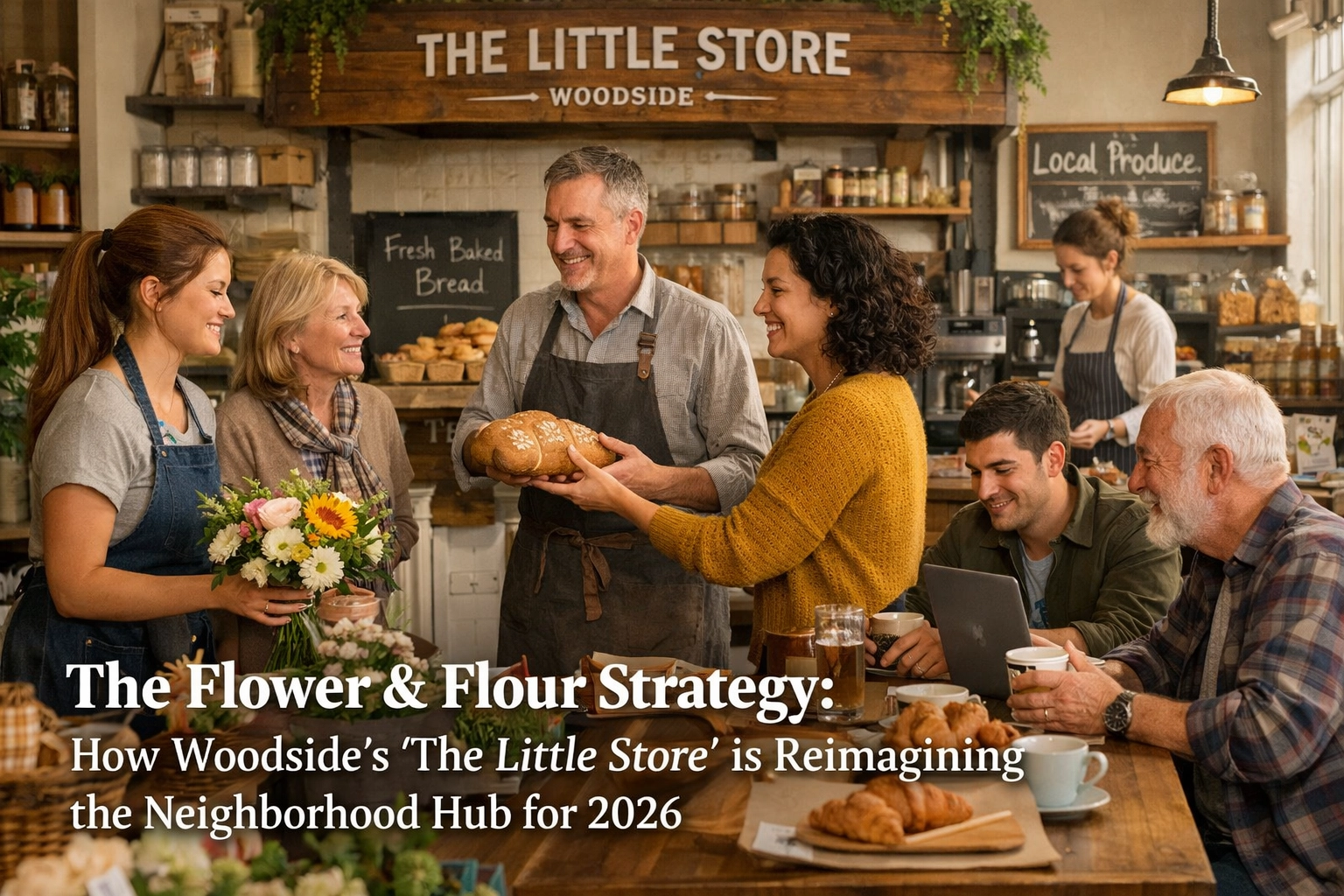
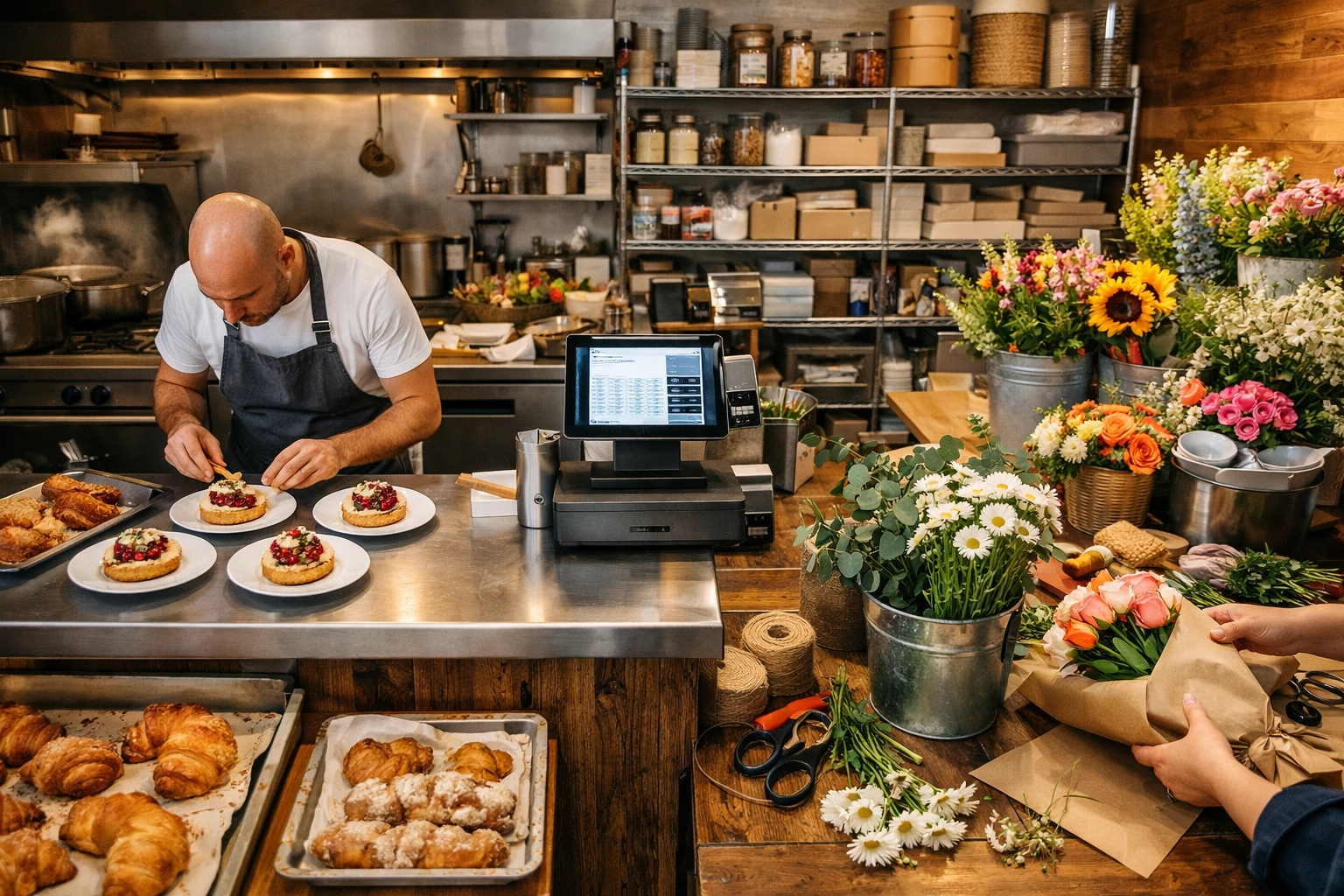
For five years, Aubriana Kasper drove past the olive-tinted facade of The Little Store in Woodside and saw the same thing every day: a locked door, a hand-painted sign reading "Since 1902," and a building that once served the community but had been repurposed as a private test kitchen for Hero Bread. In a town of fewer than 5,500 residents where the median home price exceeds $4.2 million according to Zillow[1], community gathering spaces are scarce. Coffee shops close early. Restaurants cater to weekend cyclists. There's nowhere to buy flowers on a Tuesday afternoon or grab a cappuccino while your kids are at school.
About 18 months ago, Kasper: who raises three children in Woodside with her husband Rowan MacNiven, proprietor of the legendary Buck's of Woodside[2]: got what she calls "this little idea" to transform The Little Store into something the town desperately needed: a flower shop and cafe in one space. Not a florist with a coffee counter tacked on. Not a cafe that happens to sell bouquets. A genuine hybrid model where both revenue streams are designed to support each other operationally, financially, and strategically.
This is the exact type of restaurant feasibility challenge that most restaurant consulting firms handle incorrectly. They either dismiss hybrid models as "too complex" or greenlight them without stress-testing the operational reality. The Little Store: now co-owned by Kasper, MacNiven, and Gena Winter, and led in the kitchen by Michelin-background chef Sierra Hazel: represents a blueprint for how to revitalize legacy spaces in underserved markets without overbuilding or overpromising. Here's how they're doing it, and what the rest of us can learn.
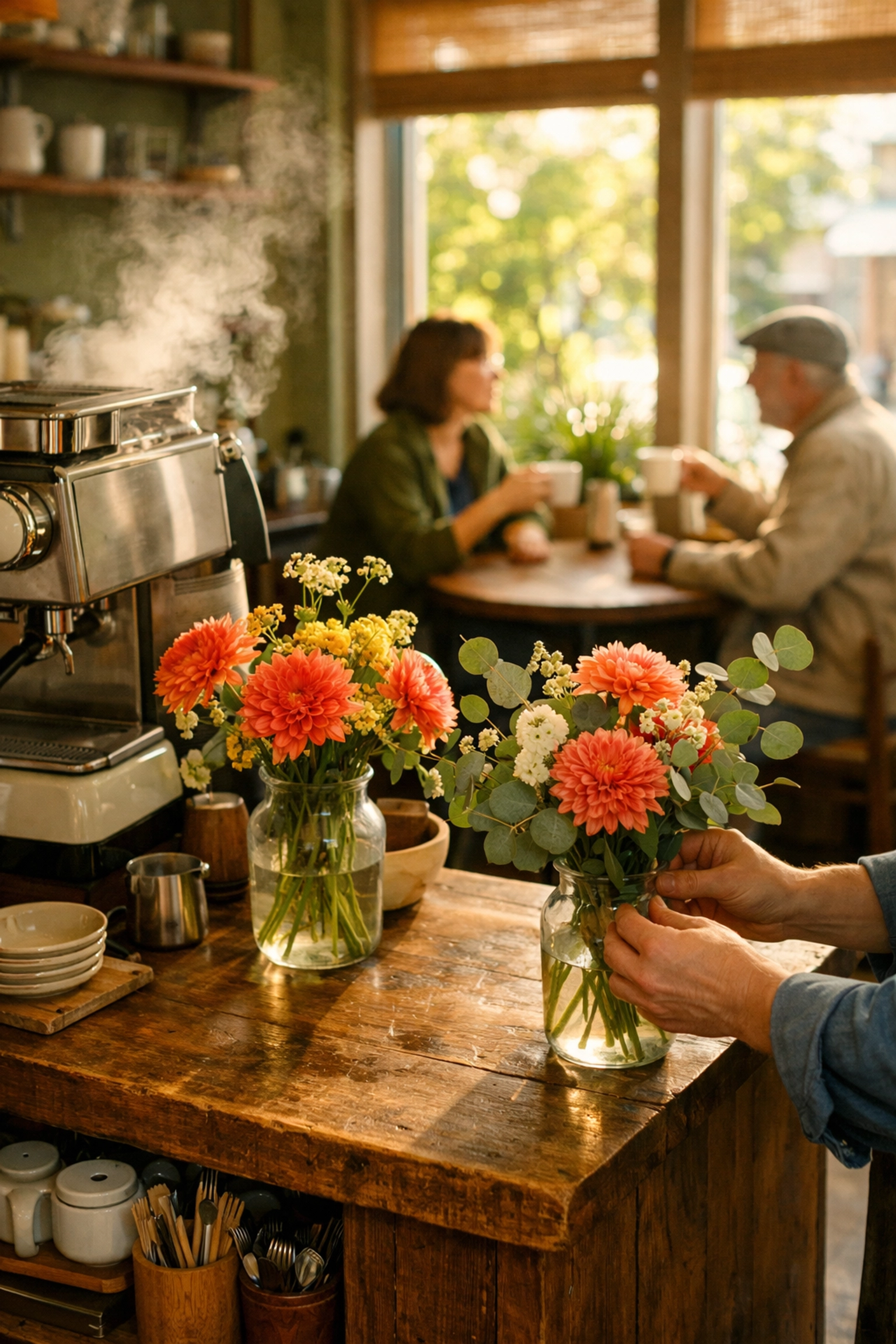
Why the 'Third Place' is the Hardest Business Model to Justify (and Why It Still Works)
The "third place" concept: coined by sociologist Ray Oldenburg in his 1989 book The Great Good Place[3]: describes informal gathering spots that aren't home (first place) or work (second place). Coffee shops, diners, bookstores, and barber shops historically filled this role. But in 2026, the economics of third places are brutal. Rent is high. Labor is expensive. Customers linger for hours over a $5 latte. The business case often doesn't pencil out, especially in small towns where population density is low and traffic patterns are seasonal.
Yet third places remain essential to community health. According to research from the Knight Foundation on community attachment, access to social infrastructure like cafes and gathering spots correlates directly with residents' sense of belonging and civic engagement[4]. In Woodside: a town where residents are spread across hillside estates and ranches: the lack of walkable, casual meeting spots creates isolation, particularly for parents, retirees, and remote workers.
The Little Store's hybrid model solves the financial problem by layering two complementary revenue streams:
- Flowers provide high-margin impulse purchases and event-based sales (weddings, birthdays, memorials) with predictable inventory cycles.
- Cafe service drives daily foot traffic, repeat visits, and longer customer dwell time, which increases basket size for both categories.
This isn't a new concept: European markets have combined cut flowers and cafes for decades: but it's rarely executed well in the U.S. outside of urban boutique settings. The key difference here is intentionality: The Little Store is designed from the ground up as a dual-use space, not a cafe with flowers as an afterthought.
The Legacy Building Advantage: Why Starting with a 122-Year-Old Structure is Smarter Than You Think
Most restaurant consulting firms push clients toward new construction or Class A retail spaces with modern HVAC, ADA-compliant restrooms, and grease traps already installed. The logic makes sense: fewer surprises, faster permitting, cleaner pro formas. But in small markets like Woodside, those spaces either don't exist or come with rents that kill margin before you open the doors.
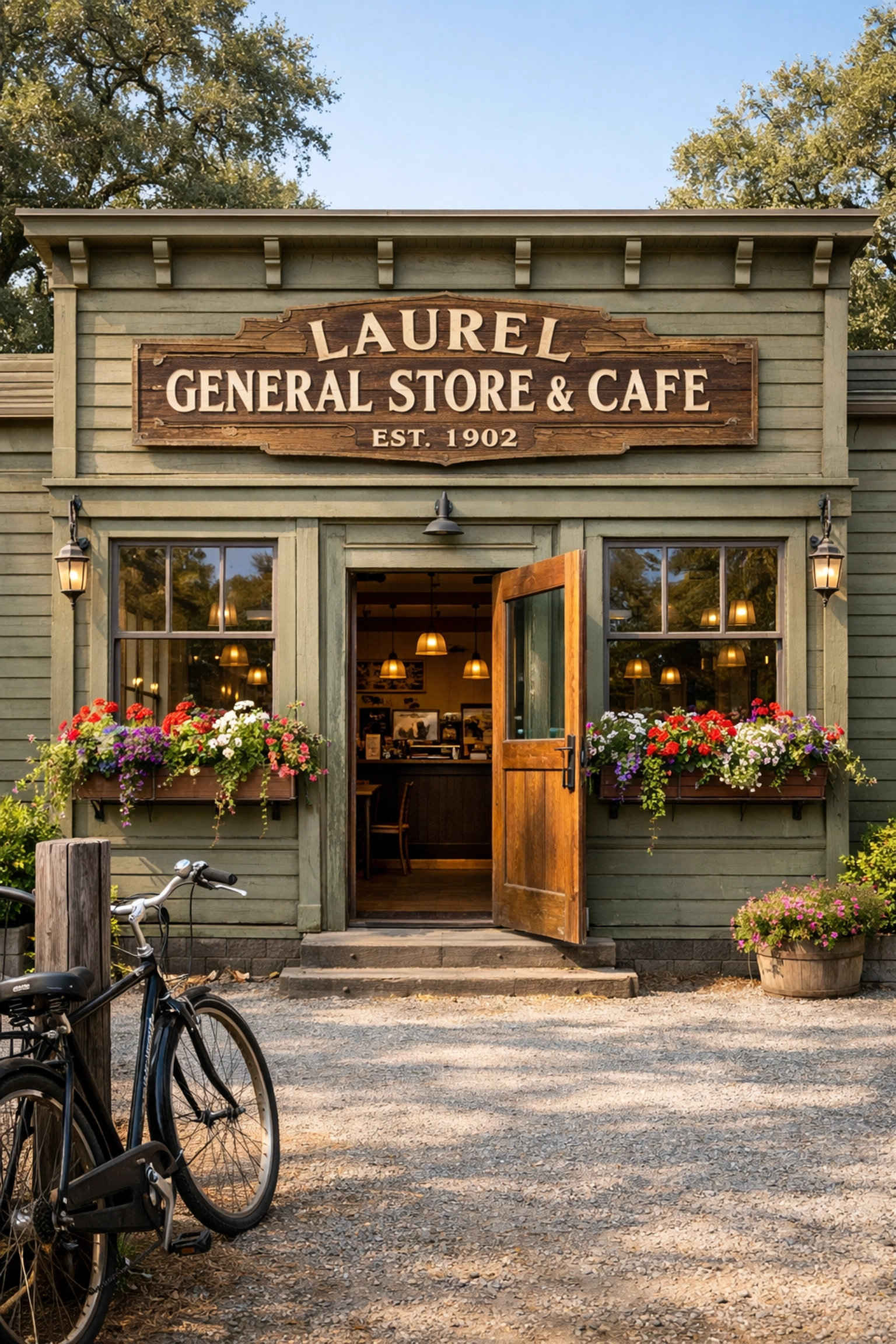
The Little Store's 1902 building: a wood-frame structure with original siding and hand-carved signage: offers three strategic advantages:
1. Lower Rent and Favorable Lease Terms
Historic buildings in small towns often sit vacant for years because they require specialized retrofitting. Landlords are motivated to lease to operators willing to invest in improvements, which creates leverage for tenant improvement allowances, rent abatement during construction, or percentage-rent deals.
2. Built-In Brand Equity
According to the National Trust for Historic Preservation, adaptive reuse projects generate an average of 30% more community goodwill than new construction because they preserve local character[5]. In Woodside, where civic identity is tied to ranching heritage and Old West aesthetics, The Little Store's century-old facade signals authenticity before a single latte is poured.
3. Reduced Competition for Space
New retail developments attract chains with deep pockets. Legacy buildings attract independents. This self-selects for a competitive landscape where you're not fighting Starbucks for the same lease.
The trade-off, of course, is upfront capital expenditure. Bringing a 1902 building up to health code, fire code, and ADA standards isn't cheap. But in feasibility terms, it's often the difference between a $400K buildout with $12K monthly rent versus a $150K buildout with $4K monthly rent. The latter scenario buys you 18 months of breathing room to dial in operations before breaking even.
The Operational Reality of Running Two Businesses in One Space
Here's where most hybrid models fail: They assume that operating a flower shop and a cafe simultaneously is just a matter of dividing square footage and hiring staff who can "do both." The reality is more nuanced.
Labor Efficiency vs. Specialization
Flowers require knowledge of stem care, arrangement techniques, vendor relationships, and event coordination. Cafe service requires barista skills, food safety certification, and high-speed order fulfillment during rush periods. The temptation is to cross-train everyone, but according to research from the Cornell School of Hotel Administration, cross-training reduces service speed by 12-18% during peak periods because task-switching creates cognitive load[6].
The smarter approach: likely what The Little Store is implementing with chef Sierra Hazel's Michelin background: is to staff specialists for each function but design workflows that allow overlap during slow periods. For example:
- Morning rush (7-10 AM): Full cafe team on espresso bar and pastry service; flower team preps arrangements in back-of-house.
- Midday lull (10 AM-12 PM): Cafe staff can assist with bouquet wrapping and restocking; flower team handles walk-in consultations.
- Afternoon pickup (3-6 PM): Flower team manages event deliveries; cafe team handles post-school parent traffic.
This requires a shared POS system, cross-visible inventory, and managers who understand both businesses: not easy, but doable with the right systems.
Inventory and Shrinkage Management
Flowers and food both have short shelf lives, but their waste cycles are opposite. Flowers lose value gradually over 5-7 days. Food loses value catastrophically after 2-3 days (or hours, for prepared items). Combining the two under one roof means you need separate cold storage, separate waste tracking, and separate vendor delivery schedules.
The upside: Shared overhead. One lease, one utilities bill, one marketing budget, one manager salary (in some cases), and one liquor license if you're serving wine with cheese boards.
The Buck's of Woodside Connection: Why Hospitality Legacy Matters
Rowan MacNiven's ownership of Buck's of Woodside[7]: a 50-year-old Woodside institution known for its pancake breakfasts, eclectic decor, and role as a Silicon Valley power-meeting spot: provides The Little Store with an intangible but critical asset: hospitality credibility.
In small towns, your reputation precedes you. If MacNiven were an unknown operator with no track record, The Little Store would face skepticism from day one. Instead, the Buck's connection signals to Woodside residents that the people behind this project understand local culture, know how to run a sustainable operation, and aren't flipping the concept for a quick exit.
This also creates operational synergies. Buck's likely shares:
- Vendor relationships: Coffee roasters, dairy suppliers, and produce distributors often offer better pricing to multi-location operators.
- Staffing pipelines: Experienced cafe and kitchen staff from Buck's can rotate into The Little Store during training periods or seasonal surges.
- Marketing channels: Buck's Instagram following, email list, and community ties become free distribution channels for The Little Store's launch.
None of this shows up on a pro forma, but it's the difference between a 6-month ramp to profitability and an 18-month slog.
The Smart Critic: Does the Hybrid 'Flower & Flour' Model Add Value or Just Operational Complexity?
Let's pressure-test the model. Critics of hybrid retail-hospitality concepts raise three legitimate concerns:
1. Diluted Brand Identity
Are you a flower shop or a cafe? Customers dislike ambiguity. They want to know what you're best at. A poorly executed hybrid confuses the value proposition and creates decision fatigue. ("Do I come here for coffee or flowers? If I need flowers, should I go to a 'real' florist?")
Response: The key is co-equal branding. The Little Store can't be "a cafe that also sells flowers." It must be presented as a curated lifestyle experience where flowers and coffee are two expressions of the same ethos: beauty, quality, and community. The Instagram aesthetic, the menu design, and the physical layout must reinforce this equally.
2. Margin Cannibalization
If customers come in for a $6 cappuccino but leave without buying a $40 bouquet, you've just subsidized low-margin traffic with high-rent square footage. Conversely, if someone orders flowers online for delivery, they never step inside the cafe.
Response: This is why layout matters. The cafe should be positioned to create a "pathway to purchase" for flowers: display arrangements near the ordering counter, offer single-stem add-ons at checkout, and design the seating area with a clear sightline to the flower cooler. On the flip side, flower customers should be offered a "while you wait" coffee discount if arrangements are being prepared on-site.
3. Seasonal Volatility
Flower demand spikes around holidays (Valentine's Day, Mother's Day, Memorial Day). Cafe demand is steadier but dips in summer if locals leave town. Without careful cash flow planning, you could have a February where flower revenue triples but cafe labor costs stay flat, followed by a July where both revenue streams drop 40%.
Response: This is where the pro forma has to model worst-case scenarios. Most restaurant consulting firms build projections on "average monthly revenue." Better operators model by week, accounting for seasonal peaks, local event calendars (Woodside hosts an annual rodeo and equestrian events), and school schedules. The hybrid model should smooth volatility, not compound it: but only if you plan for it.
What This Means for Other Underserved Markets
Woodside isn't unique. Across California and the broader U.S., small towns with wealthy but dispersed populations face the same challenge: high real estate costs, low foot traffic density, and a shortage of "just-right" commercial spaces. The Little Store model works because it:
- Activates underutilized real estate: That 1902 building wasn't generating tax revenue or serving residents. Now it is.
- Serves multiple needs with one lease: Parents can grab coffee and flowers in one stop instead of driving to two separate towns.
- Creates a defensible niche: A standalone cafe in Woodside competes with Buck's, Starbucks, and home espresso machines. A flower-and-cafe hybrid has no direct competition within 15 miles.
This strategy applies to other hybrid models gaining traction in 2026:
| Hybrid Model | Primary Revenue | Secondary Revenue | Shared Asset |
|---|---|---|---|
| Bookstore + Wine Bar | Book sales, events | Wine, small plates | Seating, ambiance |
| Bakery + Flower Shop | Pastries, cakes | Bouquets, events | Morning foot traffic |
| Coffee Shop + Bike Repair | Coffee, pastries | Tune-ups, parts | Cyclist clientele |
| Garden Center + Cafe | Plants, soil, tools | Coffee, breakfast | Weekend family traffic |
The common thread: Each model serves a specific community need that isn't being met by existing businesses, and each uses shared overhead to improve unit economics.
What to Do Next: A Feasibility Checklist for Hybrid Hospitality Models
If you're considering a dual-revenue concept like The Little Store, here's how to validate feasibility before signing a lease:
1. Map the Competitive Landscape Within a 5-Mile Radius
Identify every cafe, coffee shop, flower shop, and grocery store that sells either product. Note their hours, price points, and Google review themes. If there's already a beloved flower shop 2 miles away, your hybrid model needs a differentiated angle (e.g., same-day custom arrangements, or hyper-local sourcing).
2. Model Revenue by Daypart, Not by Month
Build a spreadsheet that projects sales by morning (7-11 AM), midday (11 AM-3 PM), and afternoon (3-7 PM). Assign revenue percentages to cafe vs. flowers for each period. This will reveal whether your concept actually smooths demand or just creates two businesses with conflicting peak hours.
3. Walk the Space with Both Concepts in Mind
Before signing a lease, physically map out where the espresso machine, flower cooler, POS counter, seating, and storage will go. If the space can't accommodate both functions without one feeling like an afterthought, the model won't work.
4. Stress-Test Labor Costs at 3 Staffing Levels
Model your P&L with: (A) Full specialization (separate teams for cafe and flowers), (B) Partial cross-training (cafe staff can wrap bouquets, flower staff can pour drip coffee), and (C) Full cross-training (everyone does everything). Identify the break-even point for each scenario.
5. Source Dual-Use Suppliers
Find vendors who can provide both cafe and flower inventory. For example, some produce distributors carry both edible herbs and decorative greenery. Consolidating suppliers reduces delivery fees and strengthens pricing leverage.
6. Design for Instagram from Day One
Hybrid models rely on word-of-mouth and social proof. Every corner of the space should be photogenic: the flower wall, the latte art, the vintage signage. This isn't superficial: it's marketing infrastructure.
7. Plan for Seasonal Cash Flow Gaps
If January and July are slow months, model how you'll cover rent and payroll. Options include catering packages, wholesale flower sales to event planners, or subscription coffee delivery to local offices.
8. Secure Multiple Revenue Contracts Before Opening
Don't rely on walk-in traffic alone. Pre-sell flower subscriptions to local businesses (weekly lobby arrangements), book cafe catering for HOA meetings, or partner with nearby hotels for in-room welcome bouquets.
9. Hire a Manager Who Understands Both Businesses
This is the hardest hire. You need someone with hospitality experience and retail operations knowledge. If you can't find one person, hire co-managers with clear domains and aligned incentives.
10. Test the Model with a Pop-Up or Soft Opening
Before the full buildout, consider a weekend pop-up in the space (or a nearby location) to validate demand. Sell coffee and bouquets for 3 days and track which products move, what customers ask for, and how long transactions take.
Frequently Asked Questions
Q: Is a hybrid model more expensive to open than a single-concept business?
A: Not necessarily. If you're already building out a commercial kitchen and front-of-house, adding flower coolers and display shelving is incremental: often $15K-$30K in additional upfront costs. The bigger expense is dual inventory and staffing, which hits your operating budget, not your opening budget.
Q: Can you run a hybrid model without prior experience in both industries?
A: Yes, but you need to hire experienced leads for each function. Aubriana Kasper and Rowan MacNiven have hospitality experience through Buck's, and they brought in chef Sierra Hazel (Michelin background) and co-owner Gena Winter to fill knowledge gaps. Don't try to learn floristry and cafe operations simultaneously while also managing a buildout.
Q: What's the biggest operational risk with a flower-and-cafe hybrid?
A: Inventory waste. If you over-order flowers for a slow week, you're stuck with $500 in dead stems. If you under-order pastries for a busy Saturday, you lose $1,000 in potential sales. The solution is tight data tracking: Use your POS to identify weekly patterns, then adjust orders dynamically.
Q: How do you market a dual-concept business without confusing customers?
A: Lead with the customer benefit, not the product categories. The Little Store isn't marketing "We sell flowers and coffee." They're marketing "Your neighborhood gathering spot for beauty, connection, and great coffee." The products are proof points, not the headline.
Q: Does the hybrid model work in urban markets, or only in small towns?
A: It works in both, but for different reasons. In small towns, hybrids solve the "missing amenity" problem. In cities, they solve the "differentiation" problem: there are 50 cafes within walking distance, but only one that pairs single-origin espresso with farm-direct dahlias.
Q: What permits and licenses do you need for a flower-and-cafe hybrid?
A: At minimum: Business license, health permit (for food service), seller's permit (for retail sales), and potentially a florist license depending on your state. If you're serving alcohol (wine, beer, or coffee cocktails), add a liquor license. Work with a restaurant consulting firm experienced in feasibility and permitting to avoid delays.
The Bottom Line: Why 2026 is the Year of the Neighborhood Hybrid
The Little Store represents a larger shift in how we think about community-facing hospitality. In an era of rising rents, labor shortages, and delivery apps that commoditize food, the businesses that survive are the ones that offer something un-replicable: a sense of place, a reason to gather, and a product mix that serves multiple needs in one visit.
Aubriana Kasper saw a vacant building and a missing piece of her town's social fabric. Rather than accept the status quo, she and her partners are building a business model that layers revenue streams, leverages legacy assets, and creates value for residents who don't just want coffee: they want connection.
This is exactly the type of strategic thinking that separates feasibility exercises from successful openings. If you're exploring a hybrid retail-hospitality concept, or if you're trying to revitalize a legacy space in an underserved market, the lessons from The Little Store are clear: Start with community need, design for dual-use efficiency, and don't assume that "more complex" means "less profitable."
Story researched by MFRCG Staff.
Ready to Validate Your Concept?
At McFadden Finch Restaurant Consulting Group, we specialize in restaurant feasibility analysis for hybrid models, legacy space revitalization, and community-focused hospitality concepts. Whether you're transforming a 122-year-old building or launching a dual-revenue model in an underserved market, we'll help you stress-test the numbers, design for operational efficiency, and build a pro forma that reflects reality: not wishful thinking.
Let's talk about your project.
Call us at (510) 973-2410 or visit mcfadden-finch-group.com/contact to schedule a discovery call.
McFadden Finch Restaurant Consulting Group is a full-service restaurant consultancy specializing in feasibility studies, operations consulting, kitchen design, and turnaround strategies. We work with independent operators, legacy concepts, and emerging brands to build sustainable, community-focused hospitality businesses. Learn more at www.mcfadden-finch-group.com.
Sources
[1] Zillow, "Woodside, CA Home Prices & Home Values," Zillow Research, 2026, https://www.zillow.com/woodside-ca/home-values/, Accessed February 9, 2026.
[2] Buck's of Woodside, "About Buck's Restaurant," Buck's of Woodside Official Site, 2026, https://www.bucksofwoodside.com, Accessed February 9, 2026.
[3] Ray Oldenburg, The Great Good Place: Cafes, Coffee Shops, Bookstores, Bars, Hair Salons, and Other Hangouts at the Heart of a Community, Marlowe & Company, 1989.
[4] Knight Foundation, "Soul of the Community: Why People Love Where They Live and Why It Matters," Knight Foundation Research, 2010, https://knightfoundation.org/sotc/, Accessed February 9, 2026.
[5] National Trust for Historic Preservation, "The Greenest Building: Quantifying the Environmental Value of Building Reuse," Preservation Green Lab, 2012, https://www.preservationnation.org, Accessed February 9, 2026.
[6] Cornell School of Hotel Administration, "The Hidden Costs of Employee Cross-Training in Service Operations," Cornell Hospitality Quarterly, 2018, https://journals.sagepub.com/home/cqx, Accessed February 9, 2026.
[7] Silicon Valley Business Journal, "Buck's of Woodside: The Restaurant Where Silicon Valley Deals Get Done," 2022, https://www.bizjournals.com/sanjose, Accessed February 9, 2026.