The Numbers Don't Lie
$60,000 per day to $2,200 per day.
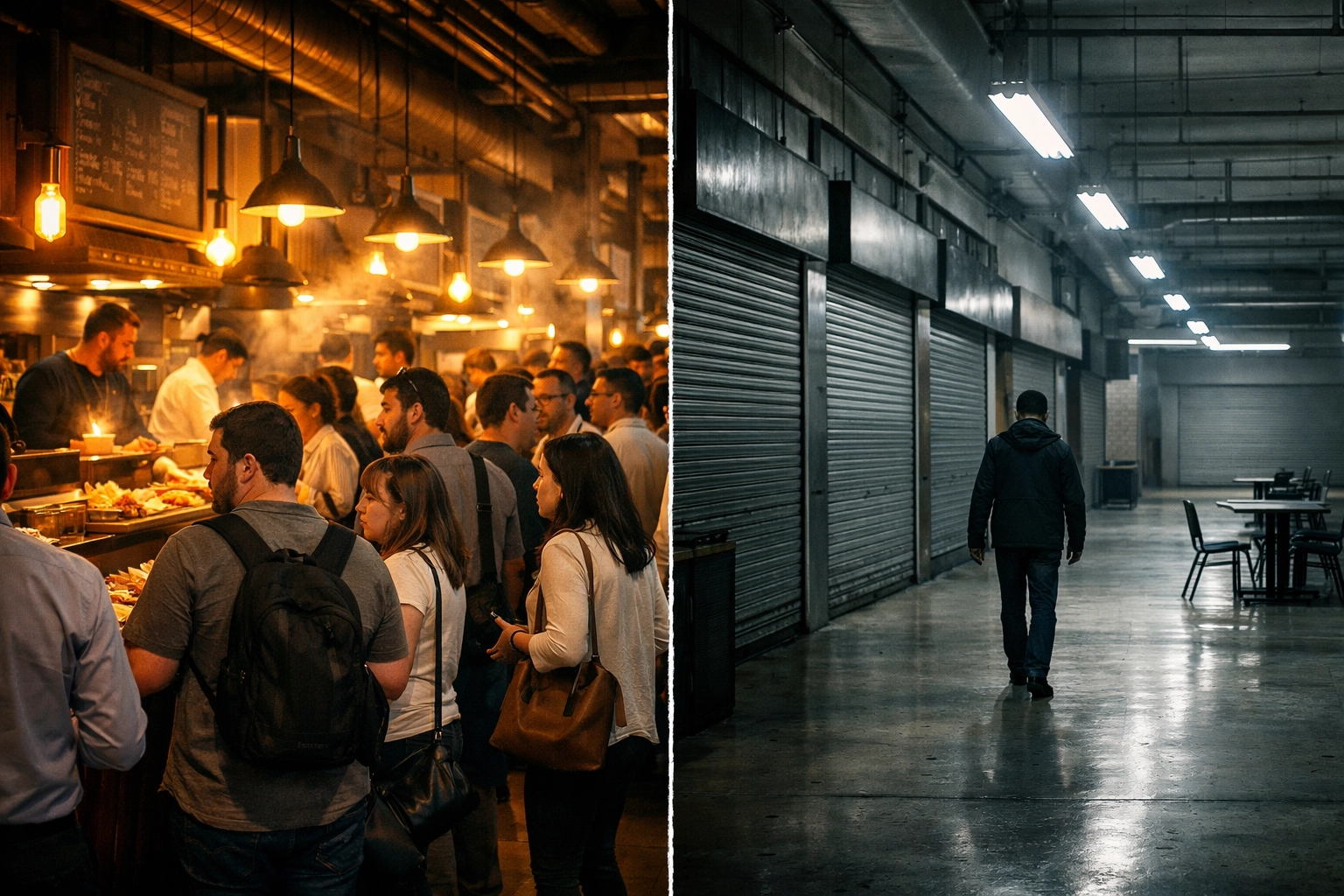
That's not a typo. That's what happened to The Market, the food hall that lived inside Twitter's San Francisco headquarters. When X (formerly Twitter) packed up and relocated to Texas in 2024, the vendors left behind watched their sales crater by 96%.
Sixty. Thousand. To two thousand.
If you're in the restaurant business, those numbers should make your stomach drop.
What Actually Happened Here
The Market wasn't some random food court. It was a curated collection of restaurants and vendors that serviced Twitter's sprawling Mid-Market headquarters. Twitter employed thousands of people. Those people needed lunch. They needed coffee. They needed a quick breakfast burrito before the 9 AM stand-up.
The vendors at The Market built their entire business model around that captive audience. And why wouldn't they? Daily sales of $60,000 meant they were crushing it. Lease negotiations probably felt like a no-brainer. The location was golden. The foot traffic was consistent. Twitter wasn't going anywhere.
Except it did.
When X officially vacated its 450,000+ square foot headquarters in September 2024, those vendors were left holding a very expensive bag. The foot traffic evaporated overnight. Mid-Market, already a struggling neighborhood, lost its largest anchor tenant, the very company the city had bet $70 million in tax breaks on to revitalize the area.
Revitalization never really took off as intended. And when the anchor pulled up, everything tethered to it sank.
Anchor Tenant Dependency: The Silent Killer
Here's what most operators miss during the excitement of a promising location: anchor tenant dependency is a feasibility death trap.
An anchor tenant is a large, established business that drives foot traffic to a location. Shopping malls have them. Office complexes have them. Mixed-use developments have them. They're the big name that brings everyone else along for the ride.
The problem? If your restaurant's success is directly tied to that anchor tenant's presence, you don't actually have a business. You have a parasite relationship. And when the host leaves, the parasite dies.

The Market's operators weren't thinking about what happens if Twitter moves. They were looking at current foot traffic, current sales, current reality. But restaurant feasibility isn't about today. It's about stress-testing tomorrow.
Questions they should have been asking:
- What's our customer retention if the anchor tenant leaves?
- What percentage of our revenue comes from this single source?
- Is there organic foot traffic independent of the anchor?
- What's the neighborhood's actual economic health?
- Are we building a brand that travels beyond this location?
These aren't hypothetical questions. They're the foundation of proper feasibility analysis. And skipping them costs operators everything.
The Mid-Market Mirage
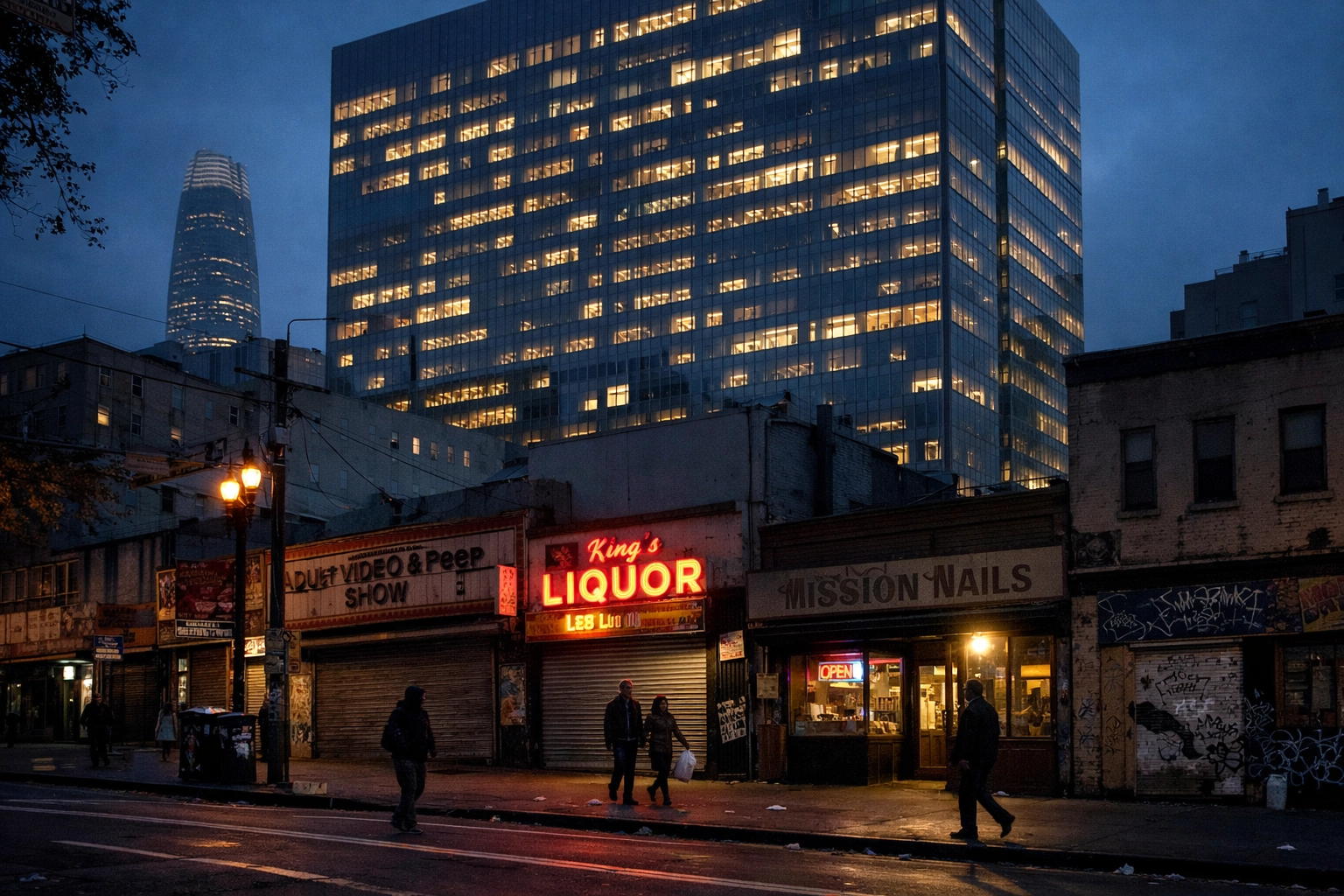
San Francisco's Mid-Market district is a textbook case of "urban revitalization through tech" falling flat. The city lured Twitter there in 2012 with massive tax incentives, hoping the company would be an economic fortress that lifted the entire neighborhood.
It didn't work.
Yes, Twitter brought jobs. Yes, some ancillary businesses sprouted up. But the area never developed the diverse, sustainable economic ecosystem that real revitalization requires. It remained dependent on one company, one industry, one fragile bubble.
When that bubble popped: when X moved to Texas: the vulnerability was exposed. The Market wasn't alone. Dozens of coffee shops, lunch spots, bars, and service businesses all felt the impact. Some shuttered immediately. Others are limping along on life support.
This is the risk of betting your restaurant on a single narrative: tech boom, corporate relocation, stadium construction, convention center expansion. If the narrative changes, you're done.
Lessons for Restaurant Operators
The collapse of The Market offers brutal but valuable lessons for anyone opening or operating a restaurant:
1. Diversify Your Customer Base
Never let one source represent more than 30% of your revenue. If you're considering a location because of a big office building, a university campus, or a shopping center anchor, make sure there's enough independent traffic to sustain you without it.
2. Vet the Neighborhood, Not Just the Corner
A great corner in a bad neighborhood is still a bad bet. Look at:
- Residential density and demographics
- Multiple employment centers (not just one)
- Public transit access
- Evening and weekend activity
- Long-term development plans (and their realistic timelines)
3. Understand Lease Flexibility
If you're moving into a location with high anchor tenant dependency, negotiate lease terms that protect you. Co-tenancy clauses, sales-based rent, early exit options: these aren't just legal details. They're survival tools.
4. Build Brand Loyalty Beyond Location
The Market's vendors were location-dependent. They didn't have brand loyalty that extended beyond the building. If your customers only come because you're convenient, you don't have customers. You have traffic.
5. Run Proper Feasibility Studies
This is where restaurant consulting firms earn their keep. A proper feasibility study doesn't just count heads. It models scenarios. It stress-tests assumptions. It asks uncomfortable questions like "what if the anchor leaves?"
How to Vet Long-Term Location Viability
Real feasibility analysis goes beyond gut feel and broker promises. Here's what it looks like:
Foot Traffic Analysis
Count foot traffic at different times, different days, different seasons. Don't just trust the landlord's numbers. Sit there yourself. Watch. Count. Track patterns.
Economic Resilience Testing
What happens if:
- The anchor tenant leaves?
- A recession hits?
- Remote work becomes permanent?
- A competitor opens nearby?
- Parking rates increase?
If your model collapses under any of these scenarios, your model is broken.
Demographic Deep Dive
Who lives here? Who works here? Who visits here? What's their spending power? What are their dining habits? And most importantly: are these people here by choice, or because they're required to be?
Twitter employees were required to be in Mid-Market. When that requirement disappeared, so did they.
Alternative Use Planning
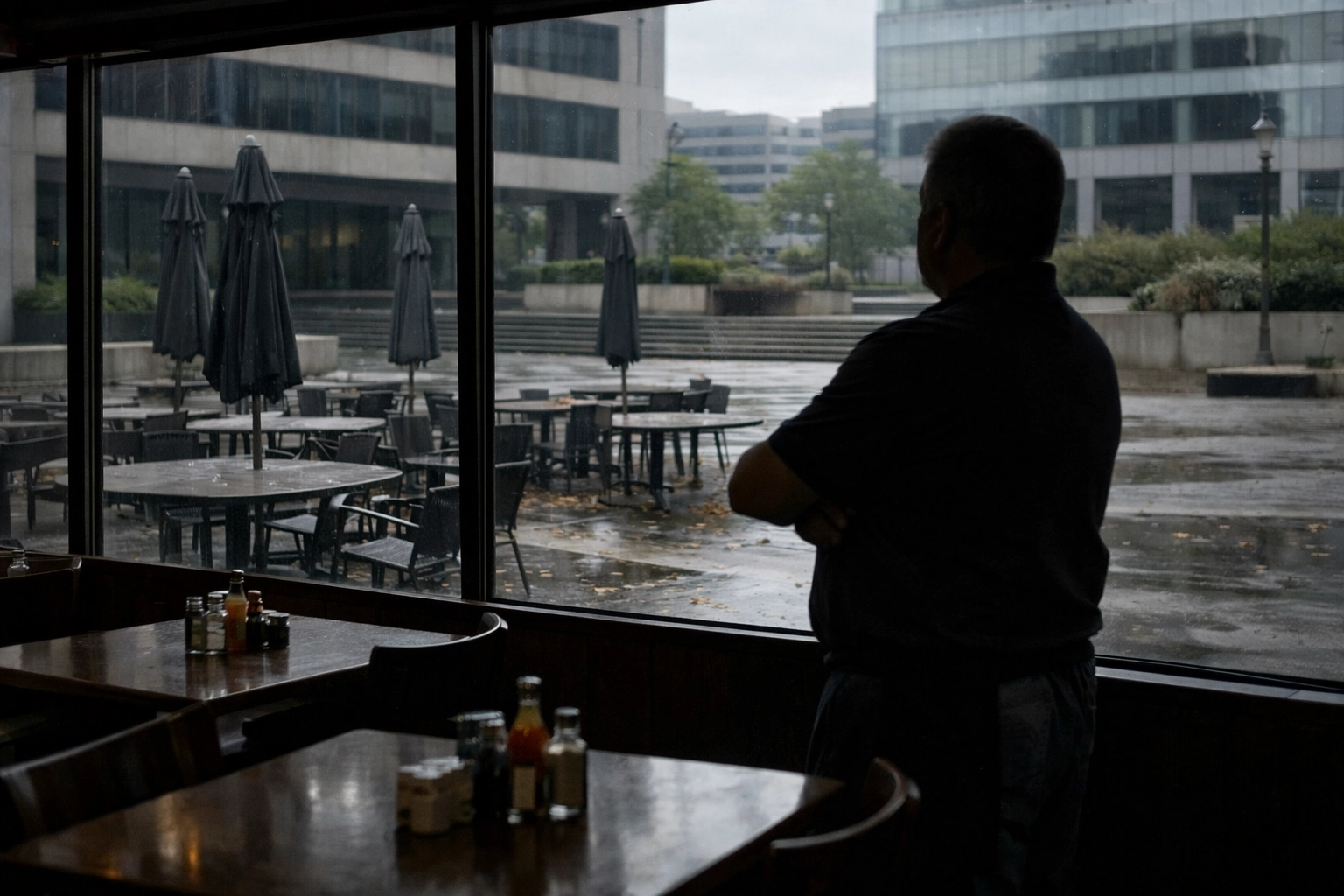
If the primary customer base evaporates, do you have a Plan B? Evening crowd? Weekend brunch scene? Delivery and takeout demand? A concept that can pivot?
The vendors at The Market had no Plan B. Their entire operation was optimized for weekday lunch. When weekday lunch disappeared, they had nothing.
The Role of Restaurant Feasibility & Turnaround Services
This is exactly why professional restaurant feasibility analysis exists. It's not about being pessimistic. It's about being realistic.
A proper feasibility study doesn't just validate your dream. It challenges it. It looks for the weaknesses, the dependencies, the what-ifs that can sink you three years in.
And when a restaurant is already in trouble: when the anchor tenant has left, when sales have cratered, when the model isn't working: that's when restaurant turnaround services become critical.
Turnaround isn't about optimism. It's about brutal honesty and strategic pivots:
- Can this location be saved with a different concept?
- Can the cost structure be renegotiated?
- Is there an untapped customer segment?
- Should we cut losses and exit strategically?
The Executive Team at McFadden Finch Restaurant Consulting Group specializes in both: preventing disasters through upfront feasibility work, and salvaging operations when the original assumptions prove wrong.
The Bottom Line
The Market's collapse from $60,000 to $2,200 in daily sales is a cautionary tale that every restaurant operator should memorize. It's not about bad luck. It's not about an unpredictable market shift. It's about fundamental feasibility failure.
When you tie your success to a single anchor tenant, you're not building a restaurant. You're building a gamble. And when that anchor moves: not if, when: you lose.
The solution isn't avoiding locations with anchor tenants. It's understanding the dependency, modeling the risk, diversifying your appeal, and having contingency plans that go beyond hope.
Or you can skip all that and just watch your sales drop 96% overnight.
Your choice.
Need help stress-testing a location before you sign the lease? Or struggling with a concept that's no longer working? Contact the Executive Team at McFadden Finch Restaurant Consulting Group. We specialize in telling you what you need to hear, not what you want to hear. Get in touch.