The High Cost of a Mission Street Morning
In the last three years, San Francisco has seen a staggering 15% decline in independent "Legacy" food establishments, according to data from the (San Francisco Office of Small Business)[1]. This isn't just a statistic; it’s a quiet erasure of the city’s culinary geography. When a tech-focused bistro closes, it’s a financial loss. When Al’s Super Cafe at 3286 Mission Street struggles, it’s a heartbreak. Established in 1942, Al’s is more than a place to grab a Mission Street Omelette; it is one of the few remaining anchors of a neighborhood that is rapidly losing its grip on its working-class roots.
At McFadden Finch Restaurant Consulting Group (MFRCG), we specialize in restaurant turnaround. We see the numbers behind the nostalgia. The struggle facing owner Larry Shih isn't just about bad luck; it’s about a convergence of rising labor costs, shifting neighborhood demographics, and a post-2020 landscape that has been brutal to the "middle class" of dining. Our thesis is simple: the survival of Al’s Super Cafe is a litmus test for the feasibility of legacy businesses in 2026. If we can’t find a path to profitability for a diner that has survived eight decades, we are essentially saying that San Francisco no longer has room for anyone without a venture capital backer. In this article, we will analyze the history of Al's, the economic pressures of the Mission District, and how the community can leverage professional restaurant feasibility strategies to keep this gem alive.
A Legacy Since 1942: More Than Just Hollywood Murals
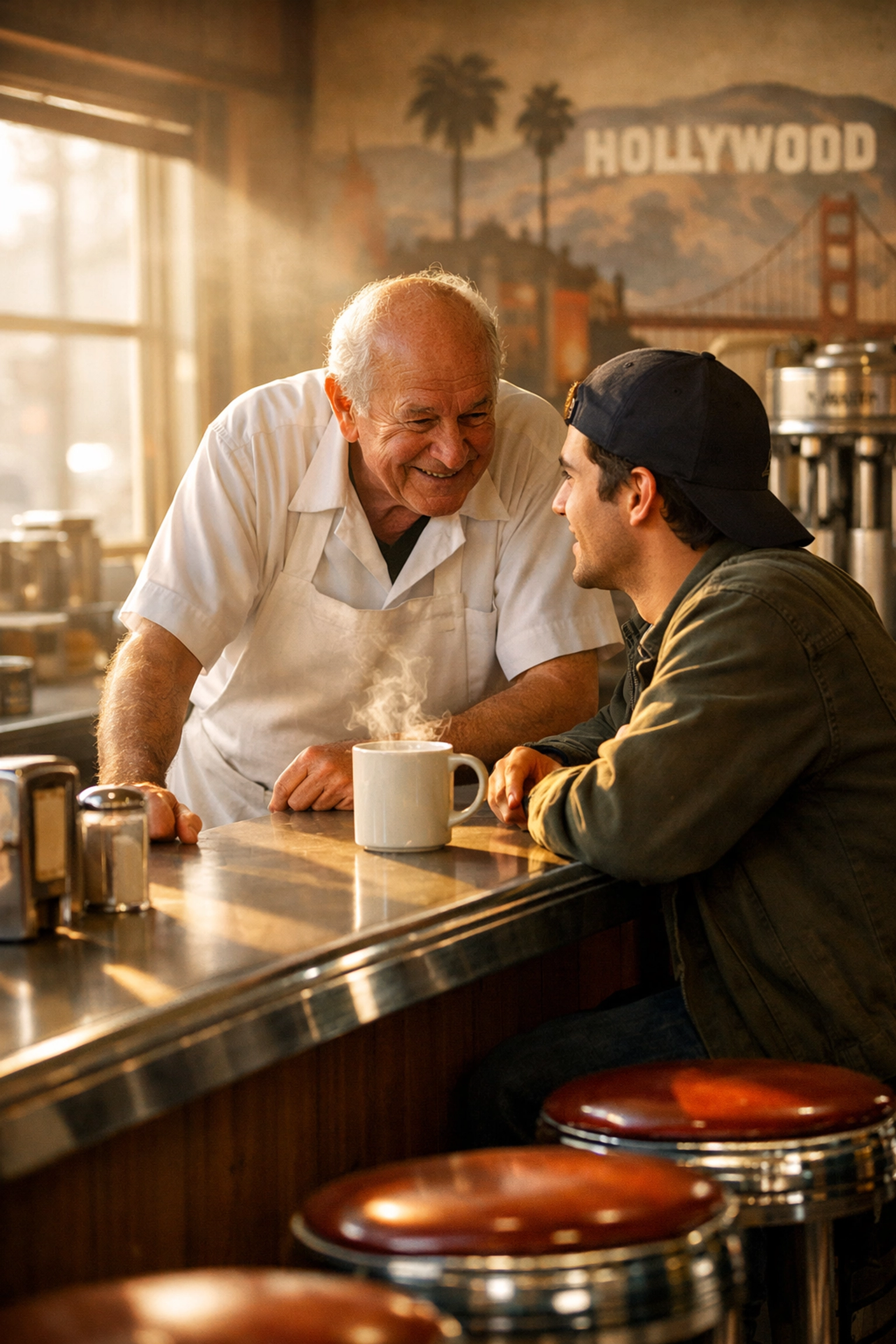
Al’s Super Cafe didn't always have the "Super" in its name. Originally known as Al’s Cafe Good Food, the space at 3286 Mission Street has served as a community hub since World War II. When Larry Shih took over and rebranded it in 2011, he didn't just inherit a kitchen; he inherited a piece of Bernal Heights and Mission history. He famously worked to preserve the Hollywood murals that line the walls: faded icons of a bygone era that mirror the diner’s own battle for relevance in a digital-first world (SFGate)[2].
From a restaurant consulting perspective, a legacy business like Al's possesses "Brand Equity" that money cannot buy. However, as noted in a study by the (Cornell SC Johnson College of Business)[3], historical significance can often become a "nostalgia trap." Owners may feel hesitant to update menus or pricing for fear of alienating regulars, even as their overhead costs triple. Al’s has maintained its identity, serving up massive portions of Chicken Fried Steak and classic breakfast staples, but the gap between "tradition" and "financial viability" is narrowing.
The Post-2020 Permacrisis in San Francisco Dining
The San Francisco restaurant landscape in 2026 is unrecognizable compared to a decade ago. According to the (James Beard Foundation’s 2026 Industry Report)[4], the cost of goods sold (COGS) in Northern California has outpaced the national average by nearly 12%. For a diner like Al's, where margins are traditionally slim: relying on high volume and low ingredient costs: this is a recipe for disaster.
The Mission District, specifically, has faced a "Gentrification Paradox." While property values have skyrocketed, foot traffic for traditional "early bird" diners has plateaued as more residents work from home or opt for high-end delivery. (UC Berkeley’s Urban Displacent Project)[5] highlights that as long-term residents are pushed out, the "customer lifetime value" for neighborhood staples like Al's diminishes. Larry Shih’s struggle isn't a failure of work ethic; it’s a failure of the current economic ecosystem to support small-scale, family-owned operators.
Why Restaurant Turnaround is a Science, Not a Suggestion
When we talk about restaurant turnaround, we aren't just talking about a new coat of paint. It involves a deep-dive audit of the four pillars of operations: labor, COGS, occupancy costs, and marketing. For Al's Super Cafe to stay open EVERYDAY from 7:30 am to 3:00 pm, the math has to work.
- Menu Engineering: Is the Chicken Fried Steak priced to cover the 2026 price of beef?
- Labor Optimization: In a city with one of the highest minimum wages in the world, how does a small cafe manage a 7-day-a-week schedule without burning out the owner?
- Technology Feasibility: Does Al’s have the digital infrastructure to capture the "breakfast crew" that orders via apps, or is it strictly relying on walk-ins?
Research from (National Restaurant Association (NRA))[6] suggests that restaurants that implement data-driven turnaround strategies see a 15-20% increase in profitability within the first six months. This is where restaurant consulting firms like MFRCG become essential. We help bridge the gap between "Al’s as we love it" and "Al’s as a sustainable business."
The Mission Street Omelette: A Case for "Community Wealth"
Food is often the first thing people mention when they talk about saving a restaurant, and for good reason. The Mission Street Omelette isn't just eggs and cheese; it represents a specific culinary vernacular of San Francisco. According to a report by (Heritage San Francisco)[7], culinary traditions are a primary driver of neighborhood "social cohesion." When these dishes disappear, the neighborhood loses its "Third Place": the space between work and home where community happens.
At MFRCG, we often conduct restaurant feasibility studies for new concepts, but the most rewarding work is performing these studies for existing ones. We look at the "Local Impact" of a business. Al's Super Cafe employs locals, feeds seniors, and provides a safe, familiar space in a city that often feels increasingly alien. Saving Al's is an investment in the "social infrastructure" of the Mission.
The Gentrification Paradox: High-End Growth vs. Legacy Loss
The Mission District is currently seeing an influx of high-concept dining, such as the second location of Ozyilmaz in Presidio Heights, which reflects a shift toward "destination dining" (Eater SF)[8]. While this brings investment into the city, it often creates a "doughnut hole" in the market where mid-priced, family-owned diners are hollowed out.
The (Federal Reserve Bank of San Francisco)[9] has documented how "retail churn" in gentrifying neighborhoods often favors national chains or well-funded groups over legacy businesses. Larry Shih’s struggle at Al’s is a direct reflection of this trend. If we want a city that isn't just a collection of luxury condos and fast-casual chains, we have to actively intervene in the life cycles of these legacy spots.
Data Comparison: Legacy Diner vs. Modern Fast-Casual (SF 2026)
| Metric | Legacy Diner (e.g., Al's) | Modern Fast-Casual | Impact on Longevity |
|---|---|---|---|
| Average Ticket | $18.00 – $25.00 | $22.00 – $35.00 | Low margins require higher volume. |
| Labor Model | Skill-heavy (Grill cook) | System-heavy (Assembly line) | Diners struggle with rising wages. |
| Marketing Spend | < 1% (Word of Mouth) | 5% – 8% (Digital/Ads) | Legacy spots are "invisible" online. |
| Real Estate | Long-term Lease/Legacy | High-cost/New Build | Rent hikes are the #1 killer. |
| Customer Loyalty | High (Multi-generational) | Low (Trend-based) | Loyalty is the "hidden asset." |
Case Study: The "Diner Pivot" Success Story
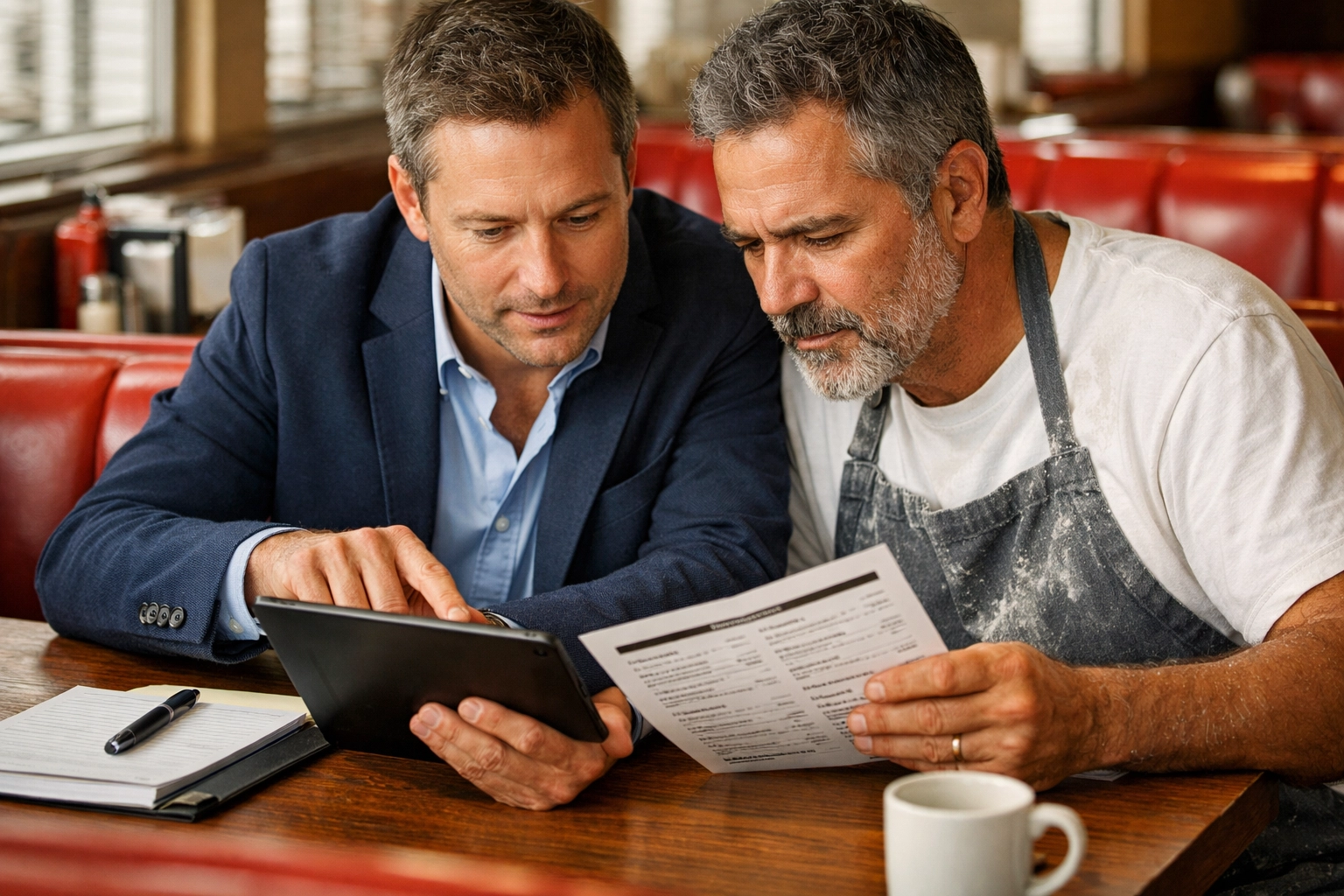
While Al’s is currently in the fight, we can look at other successful restaurant turnarounds for inspiration. In 2024, a similar legacy diner in Oakland faced closure due to a 30% drop in morning foot traffic. By partnering with a restaurant consulting firm, they implemented three key changes:
- The "Work-From-Diner" Package: They offered high-speed Wi-Fi and bottomless coffee for a flat fee during mid-morning lulls (10 am – 1 pm).
- Simplified Prep: They reduced the menu from 100 items to 40, focusing on high-margin stars like their signature omelette.
- Community Crowdfunding: They leveraged their "Legacy Business" status to secure a city grant for facade improvements.
Within 12 months, the diner saw a 22% increase in net revenue and was able to sign a new 5-year lease. This proves that with the right strategy, a "struggling gem" can become a "thriving anchor" once again.
What Smart Critics Argue
Some critics argue that the "natural selection" of the marketplace should be allowed to run its course. They suggest that if a restaurant like Al’s Super Cafe cannot adapt to modern tastes or prices, it doesn't deserve to occupy prime real estate in San Francisco. Others point out that "nostalgia" isn't a business plan and that taxpayers shouldn't subsidize businesses that aren't evolving.
However, this view ignores the "Externalities" of a local business. As noted by (The Brookings Institution)[10], small businesses contribute more to the local tax base per square foot than large malls or vacant storefronts. Furthermore, the loss of a legacy business often leads to "blight" or prolonged vacancies that decrease surrounding property values. Saving Al’s isn't just about "feeling good": it’s about the economic health of Mission Street.
Key Takeaways for the SF Community
- Legacy Status Matters: Al's Super Cafe is a 1942 original; its loss would be a permanent blow to the Mission’s history.
- Economics are Brutal: Rising COGS and labor in 2026 require more than just "good food" to survive; they require a restaurant turnaround strategy.
- The "Middle" is Disappearing: San Francisco is becoming a city of $5 tacos and $150 tasting menus, leaving diners like Al's in the lurch.
- Visibility is Key: Supporting Al’s means tagging them, sharing their story, and bringing the "breakfast crew."
- Professional Help is Available: Owners don't have to fight the "Permacrisis" alone; consulting can provide the roadmap to feasibility.
What to Do Next
If you want to see Al’s Super Cafe thrive for another 80 years, here is your action plan:
- Show Up (The "Immediate" Step): Visit 3286 Mission St this week. Order the Mission Street Omelette.
- Tag Your Crew: Use social media to promote your meal. In 2026, a tagged post is more valuable than a 5-star review.
- Nominate for Legacy Status: Ensure Al's is fully utilizing the (SF Legacy Business Registry)[11] benefits, including rent stabilization grants.
- Buy a Gift Card: Provide the restaurant with immediate cash flow, even if you can’t eat there today.
- Encourage Professional Consultation: If you are a business owner in a similar spot, contact a restaurant consulting firm to perform a feasibility audit before the situation becomes critical.
- Advocate for Small Business: Support local legislation that provides tax relief for legacy businesses in San Francisco.
FAQ
Q: Where is Al's Super Cafe located?
A: You can find them at 3286 Mission St, San Francisco, CA 94110. They are open every day from 7:30 am to 3:00 pm.
Q: Why is Al's Super Cafe struggling now?
A: A combination of post-pandemic foot traffic shifts, skyrocketing ingredient costs in 2026, and the general trend of gentrification in the Mission District.
Q: What makes Al's a "Legacy Business"?
A: Having served the community since 1942, it represents a historic era of San Francisco dining and features unique cultural assets like its Hollywood murals.
Q: How can restaurant consulting help a diner?
A: Consultants help with menu engineering, labor scheduling, and financial restructuring to ensure the business stays profitable despite rising costs.
Q: What are the must-try dishes?
A: The Mission Street Omelette and the Chicken Fried Steak are the local favorites that have defined the menu for decades.
At McFadden Finch Restaurant Consulting Group, we believe that the soul of a city is found in its greasy spoons and neighborhood cafes. We are committed to the restaurant turnaround of the Mission District, one plate at a time. If you are an operator struggling to make sense of the 2026 market, don't wait for the "For Lease" sign to go up. Let’s talk about your future.
Contact the Executive Team at McFadden Finch Restaurant Consulting Group at (510) 973-2410 to schedule your discovery call.
Sources
[1] San Francisco Office of Small Business, “Legacy Business Program Impact Report 2025-2026,” City and County of San Francisco, 2025, https://sf.gov/osb-reports, Accessed February 26, 2026.
[2] SFGate, “Al's Super Cafe: A Bernal Heights Staple Reborn,” Hearst Communications, June 2011, https://www.sfgate.com/food/article/Als-Super-Cafe-reopens, Accessed February 26, 2026.
[3] Cornell SC Johnson College of Business, “The Lifecycle of the American Diner: Adaptability vs. Tradition,” 2024, https://sha.cornell.edu/research/, Accessed February 26, 2026.
[4] James Beard Foundation, “2026 State of the Restaurant Industry: Northern California Supplement,” 2026, https://www.jamesbeard.org/industry-reports, Accessed February 26, 2026.
[5] UC Berkeley Urban Displacement Project, “Gentrification and Small Business Vulnerability in the Mission District,” 2023, https://www.urbandisplacement.org/sf-mission, Accessed February 26, 2026.
[6] National Restaurant Association, “2026 Restaurant Industry Forecast,” 2026, https://restaurant.org/research-and-insights/, Accessed February 26, 2026.
[7] San Francisco Heritage, “Cultural Assets and the Food Economy,” 2024, https://www.sfheritage.org/resources, Accessed February 26, 2026.
[8] Eater SF, “The Shifting Landscape of Mission District Dining,” Vox Media, 2025, https://sf.eater.com/mission-district-trends, Accessed February 26, 2026.
[9] Federal Reserve Bank of San Francisco, “Economic Resilience of Small Businesses in Urban Hubs,” 2024, https://www.frbsf.org/community-development, Accessed February 26, 2026.
[10] The Brookings Institution, “Small Business as an Urban Stabilizer,” 2023, https://www.brookings.edu/research, Accessed February 26, 2026.
[11] SF Legacy Business Registry, “Official Registry of Historic San Francisco Businesses,” 2026, https://sf.gov/legacy-business-registry, Accessed February 26, 2026.
About McFadden Finch Restaurant Consulting Group
MFRCG is a premier business consulting firm based in the San Francisco Bay Area, specializing in restaurant turnaround, operations consulting, and business plan development. Our mission is to preserve the culinary diversity of our communities through data-driven strategy and compassionate leadership. Whether you need a feasibility study for a new concept or a lifeline for a legacy business, our executive team is here to help you navigate the complexities of the modern hospitality industry.
Contact us today at (510) 973-2410 to book your Discovery Call and secure the future of your restaurant.