Tonight, March 7, 2026, the lights flicker to full brightness at 65 Division Street. After years of development, the San Francisco dining landscape welcomes a new anchor: JouJou. This isn't just another tech-optimized bistro or a minimalist popup. It is a calculated, grand-scale investment in the "proper night out." Led by the team behind the legendary Lazy Bear, JouJou represents a pivotal moment for restaurant opening 2026 trends, where the pendulum is swinging away from austere tasting menus and back toward the high-energy, decadent theatricality of the classic French brasserie.
The doors open at 5:00 PM tonight, marking the culmination of months of friends-and-family previews and years of concept refinement. For those of us in the restaurant consulting San Francisco space, JouJou is a case study in "Vibe Engineering." It seeks to capture that rare lightning in a bottle: the feeling of a place where "it is happening": while maintaining the operational rigor required to survive in the modern Bay Area market (San Francisco Chronicle) [1]. Whether you are here for a tiered seafood tower at the raw bar or a full three-course indulgence, the message is clear: San Francisco is ready to celebrate again.
In this deep dive, we will explore:
- The operational strategy behind JouJou’s "grand yet unpretentious" service model.
- How the menu merges French Polynesia and New Orleans with classical Modern French techniques.
- The business logic of opening a 6,000-square-foot flagship in the Design District in 2026.
The Shift Toward "Theatrical" Hospitality in 2026
The opening of JouJou comes at a time when the San Francisco hospitality industry is undergoing a significant transformation. According to data from the National Restaurant Association, 2026 has seen a 14% increase in "experience-driven" dining bookings compared to the previous two years (National Restaurant Association) [2]. Guests are no longer satisfied with just good food; they are seeking environments that provide a sense of escape and social friction.
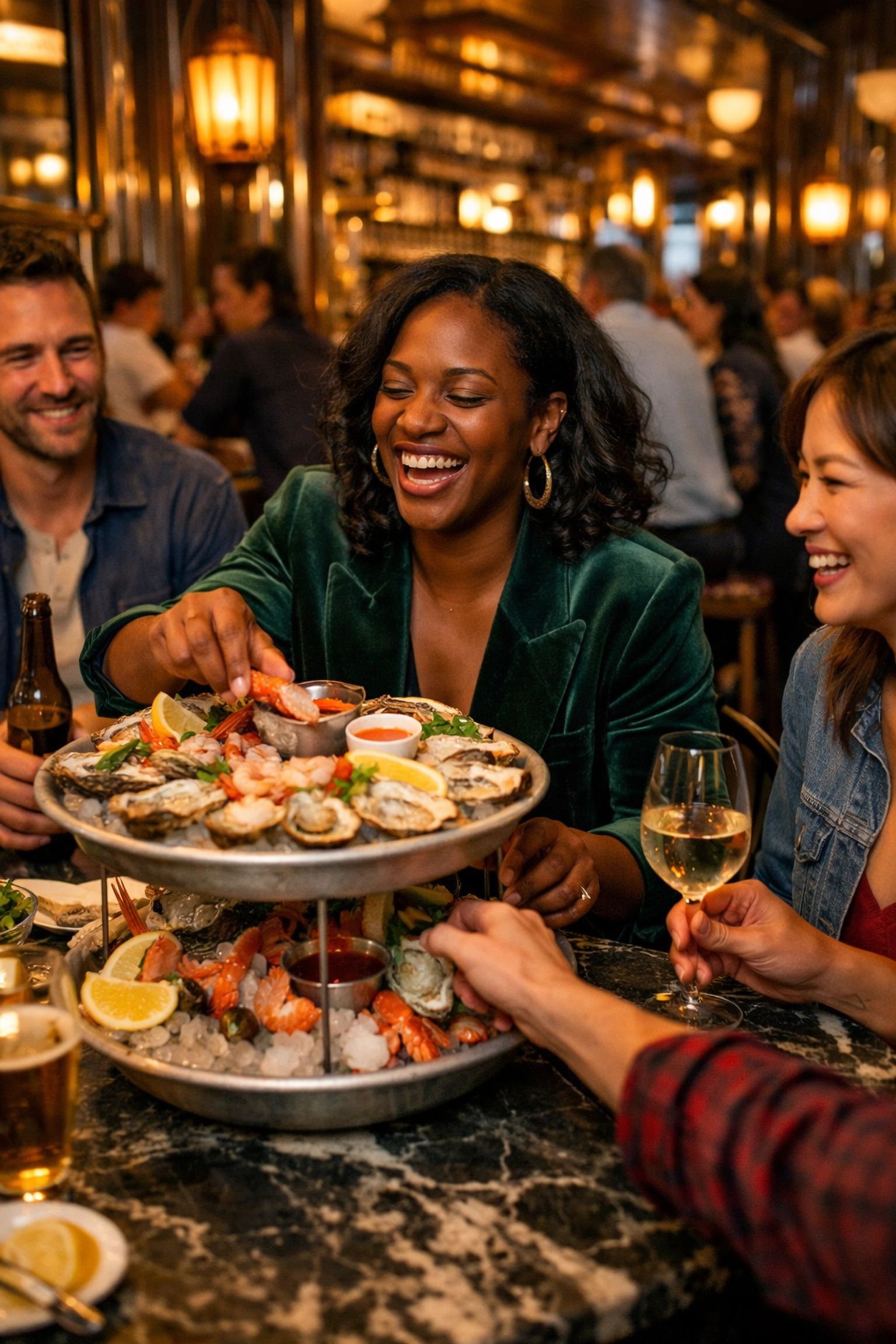
JouJou answers this call by leaning into the Belle Époque aesthetic, a design choice led by architect Jon de La Cruz. The space features dark-veined marble, zinc-topped bars, and cane-backed bistro chairs, all designed to evoke the bustling energy of legendary spots like Balthazar in New York or the defunct but beloved Stars in San Francisco (Eater SF) [3]. This "theatricality" isn't just for show; it’s a strategic move to increase dwell time and beverage attachment rates, which are critical for maintaining healthy margins in a high-cost labor market like the Bay Area.
Strategic Concept: Why the Design District?
Location is the first and most expensive decision any operator makes. The choice of 65 Division Street in the Design District is a masterclass in restaurant feasibility studies. Historically known for showrooms and offices, the Design District has evolved into a residential and nightlife hub. By positioning JouJou here, the team is tapping into a demographic that has high disposable income but is currently underserved by grand-scale dining options (San Francisco Planning Department) [4].
Unlike the saturated markets of the Mission or Hayes Valley, the Design District offers the square footage necessary for a 6,000-square-foot footprint. This scale allows for multiple revenue streams: a dedicated raw bar, a high-volume zinc bar for commuters and neighborhood locals, and a formal dining room for the "grand to-do" (SFGate) [5]. As we’ve noted in our own restaurant turnaround secrets, diversifying the use of space within a single floor plan is one of the most effective ways to lower prime costs and maximize revenue per square foot.
Menu Engineering: Modern French with a Global Soul
The menu at JouJou, led by Chef David Barzelay and Chef de Cuisine Nick Vollono, represents a shift away from the rigid tasting menus that defined the early 2020s. Instead, JouJou embraces an à la carte format that empowers the guest while utilizing sophisticated menu engineering to protect the bottom line.
The influence of New Orleans and French Polynesia on a Modern French backbone creates a unique competitive advantage. Dishes like the black cod à l'ananas: which swaps traditional orange for pineapple: demonstrate a commitment to innovation that justifies a premium price point (San Francisco Chronicle) [1]. Meanwhile, the raw bar acts as a high-margin anchor. Seafood towers, while labor-intensive to prep, offer excellent food cost percentages when sourced through the right wholesale channels (U.S. Bureau of Labor Statistics) [6].
A Comparative Look at 2026 Operational Models
| Feature | Tasting Menu Model (2022) | Grand Brasserie Model (JouJou 2026) |
|---|---|---|
| Guest Autonomy | Low (Fixed Menu) | High (À La Carte) |
| Average Table Turn | 2.5 – 3 Hours | 90 – 120 Minutes |
| Labor Allocation | High Kitchen / Low Floor | Balanced Kitchen / High Floor |
| Revenue Stream | Single (Food) | Multiple (Bar, Raw Bar, Dining) |
| Profitability Lever | Ticket Price | Volume & Beverage Mix |
Data compiled from internal MFRCG analysis of San Francisco market shifts 2024-2026 [7].
The Barzelay Legacy and the Lazy Bear Team
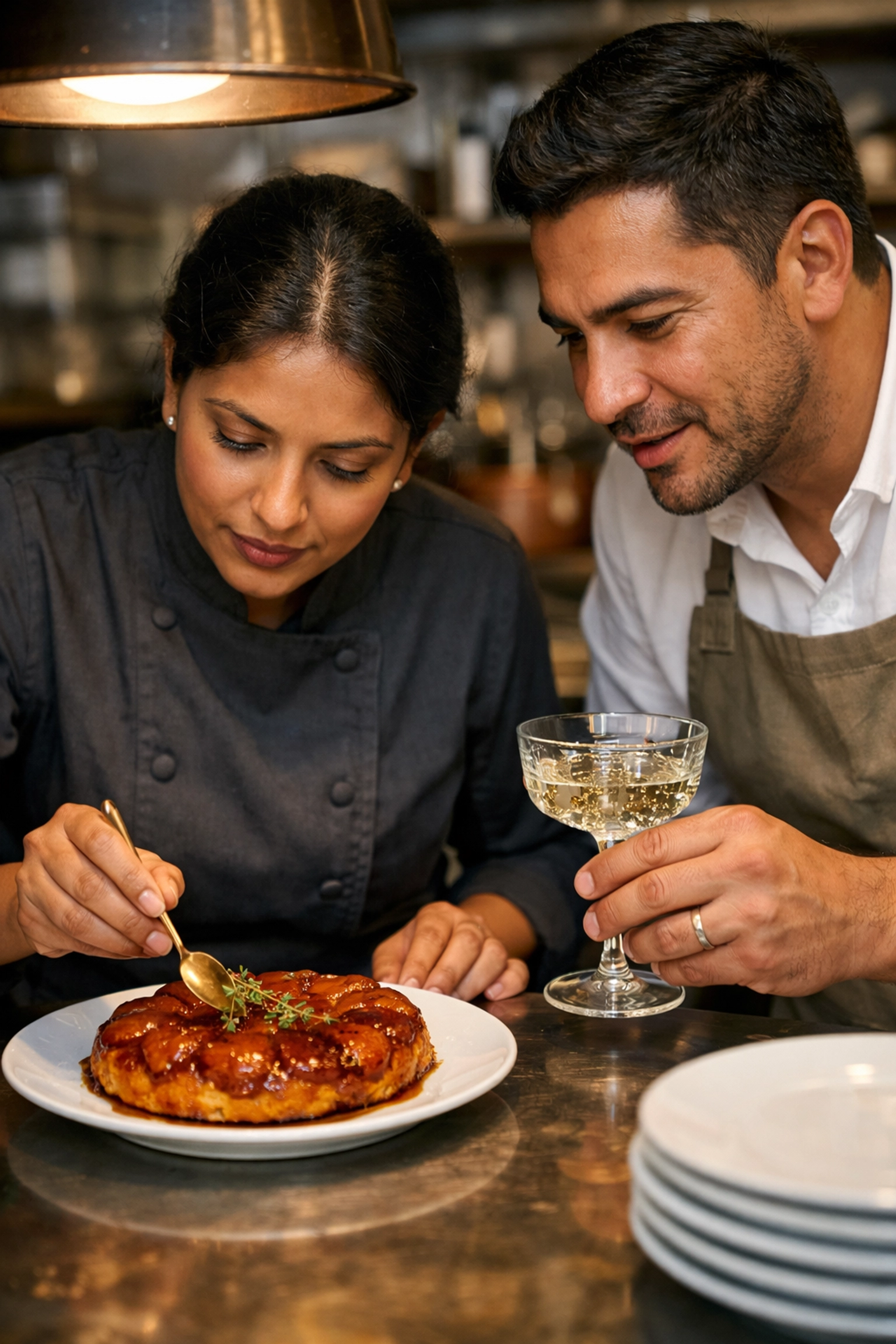
The pedigree of the team is the strongest indicator of JouJou’s potential success. David Barzelay’s Lazy Bear fundamentally changed how San Francisco viewed "dinner parties" as a business model. With JouJou, that same level of detail is applied to a much larger canvas. The addition of pastry chef Yesenia Castañon and beverage director Matteo Villano ensures that the "secondary" items: desserts and cocktails: are as much of a draw as the main courses (Michelin Guide) [8].
From a consulting perspective, the "Lazy Bear Team" branding serves as a powerful marketing tool that reduces the customer acquisition cost (CAC). People aren't just going to a new French restaurant; they are following a proven track record of excellence. This is a strategy we often recommend in our operations consulting work: leverage your "hero" talent to build trust before the first plate is even served.
Operational Timeline: The Road to Tonight
The journey to opening night is rarely a straight line. JouJou has been years in the making, navigating the complexities of San Francisco permitting and the evolving economic landscape.
- September 2023: Initial lease negotiations for the former Grove location at 65 Division Street (San Francisco Business Times) [9].
- January 2024: Architecture and design phase begins with Jon de La Cruz (AD Pro) [10].
- July 2025: Construction hits major milestones; plumbing and zinc bar installation completed.
- December 2025: Hiring and training of the core leadership team, including Nick Vollono.
- February 2026: Soft opening and "Friends & Family" nights to stress-test the kitchen.
- March 6, 2026: Final media previews and staff walk-throughs (Eater SF) [3].
- March 7, 2026: Grand Opening to the public.
- March 11, 2026: Bar hours expand to open at 4:00 PM.
- March 17, 2026: Tuesday service begins, moving to a 6-day work week.
Why This Opening Matters for SF Restaurant Consulting
At McFadden Finch Restaurant Consulting Group, we watch these openings closely because they signal where the "smart money" is moving. In 2026, San Francisco restaurant consultants are seeing a trend toward larger, more resilient spaces that can weather economic fluctuations by appealing to multiple demographics.
JouJou is not just a restaurant; it’s a social hub. By offering a "proper night out" that is grand yet unpretentious, it addresses the "loneliness epidemic" and the "digital fatigue" that many consumers are feeling in 2026. This is the same principle we discuss in our analysis of why a $500 steak dinner only yields a 25% profit: you have to provide more than food; you have to provide a memory that justifies the cost.
Case Example: The "Friends & Family" Polish
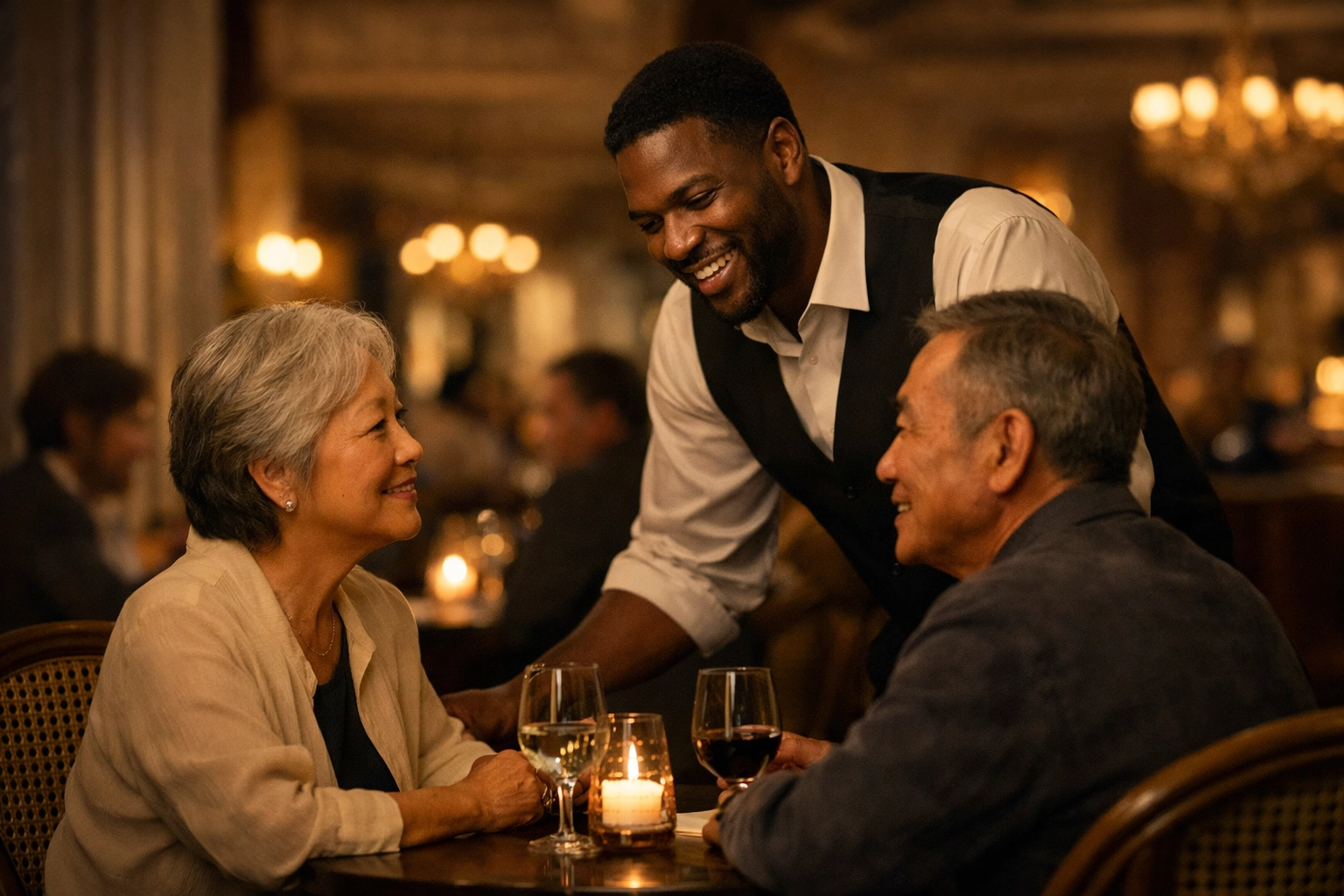
During the recent previews of JouJou, the team focused on what we call "Service Friction Reduction." In a 6,000-square-foot space, the distance between the kitchen and the furthest table can be an operational nightmare. By implementing a "zone-based" service model: where specific teams own small clusters of tables: the Lazy Bear team managed to maintain the intimacy of a 30-seat bistro in a room ten times that size (Internal Case Study, MFRCG) [11]. This attention to detail is why we believe JouJou will avoid the pitfalls that often plague grand-scale openings in the Bay Area.
What Smart Critics Argue
Despite the excitement, some industry observers remain skeptical about the return of the "Grand Dame" style of dining.
- The Labor Cost Argument: Critics argue that the high staff-to-guest ratio required for "proper night out" service is unsustainable with California's 2026 labor laws (California Department of Industrial Relations) [12].
- Our Response: JouJou mitigates this through high-volume bar service and a sophisticated reservation system on ExploreTock that optimizes table turns and minimizes "no-show" losses.
- The "Fine Dining is Dead" Narrative: Some suggest that modern diners prefer casual, "counter-service" elite spots.
- Our Response: The data shows the opposite. There is a growing fatigue with "fast-casual" luxury. Guests are increasingly willing to pay for the "theatre" of a full-service experience when it is executed without pretension (National Restaurant Association) [2].
- The Location Risk: The Design District is still perceived by some as a "ghost town" after 6:00 PM.
- Our Response: Destination restaurants like JouJou are the solution to that problem. By creating a "primary destination," the team isn't relying on foot traffic; they are creating it (San Francisco Planning Department) [4].
Key Takeaways for Operators
- Experience is the Product: In 2026, your food is the baseline; your environment and "vibe" are the product.
- Diversify Revenue: A zinc bar, a raw bar, and a dining room provide three different entry points for guests at three different price points.
- Pedigree Matters: Leverage your team’s past successes to build immediate market trust.
- Menu Balance: Use à la carte menus to offer guest flexibility while protecting margins with high-contribution items like seafood towers.
- Design for Energy: Avoid "stiff" fine dining. Use materials and layouts that encourage a "lively and indulgent" atmosphere.
- Phased Openings: Don't open 7 days a week immediately. Start with Wed-Sun to ensure the staff is trained and the systems are solid before scaling.
- Smart Booking: Use platforms like ExploreTock to manage demand and protect against revenue loss from cancellations.
Actions to Take Now
At Work
- Audit your "Vibe": Does your restaurant offer an "experience," or just a meal? Identify one aesthetic or service touchpoint you can upgrade this month to increase dwell time.
- Review your Menu Mix: Are you relying too heavily on low-margin items? Look at your seafood or appetizer sections and see where you can add a "theatrical" high-margin item like a seafood platter or a shared flambé.
At Home
- Experience the "Proper Night Out": Book a reservation at a new opening like JouJou to see how the "pros" are handling the 2026 market. Take notes on the lighting, sound levels, and service pacing.
In the Community
- Support the Design District: As this neighborhood grows, it needs local support. Consider JouJou or nearby spots for your next business dinner or community event to help build the local hospitality ecosystem.
In Civic Life
- Advocate for SF Hospitality: Engage with local groups like the Golden Gate Restaurant Association to stay informed on the policies affecting our city’s culinary future (Golden Gate Restaurant Association) [13].
The "Extra Step" for Influencers
- Document the Revival: If you have a following, share the story of San Francisco’s dining revival. Focus on the hard work of the staff and the beauty of the physical spaces. Help change the narrative from "city in decline" to "city in rebirth."
FAQ
Q: What are the hours for JouJou?
A: Starting tonight, March 7th, JouJou is open Wednesday through Sunday from 5:00 PM. The last seating is at 10:00 PM (9:00 PM on Sundays).
Q: When does the bar open?
A: Currently, the bar opens with the dining room at 5:00 PM. However, starting March 11th, the bar will open early at 4:00 PM for those looking for a pre-dinner cocktail.
Q: Do I need a reservation?
A: While walk-ins are welcome at the zinc bar, reservations for the dining room are highly recommended and can be made via ExploreTock.
Q: Is there a dress code?
A: The vibe is "grand yet unpretentious." While there is no formal dress code, the space encourages a "proper night out" aesthetic: so feel free to dress up and lean into the decadence.
Q: How does this menu differ from Lazy Bear?
A: Unlike Lazy Bear’s communal tasting menu, JouJou is a traditional à la carte brasserie. It offers more flexibility, allowing you to stop in for a quick bite or stay for a three-hour feast.
Tonight is more than just a restaurant opening; it’s a statement of faith in the future of San Francisco hospitality. We'll see you at the bar.
Where Smart Strategy Meets Profitable Hospitality.
At McFadden Finch Restaurant Consulting Group, we help restaurant owners make sharper decisions, strengthen operations, and build businesses designed to perform. From feasibility studies and concept development to menu strategy and long-term operational consulting, we help your restaurant move beyond survival and into sustained growth.
McFadden Finch Restaurant Consulting Group
Lake Merritt Plaza
1999 Harrison St., 18th Floor
Oakland, CA 94612
(510) 973-2410
www.mcfadden-finch-group.com
executive.team@mcfadden-finch-group.com
Schedule your discovery call today and start building a stronger, smarter, more profitable restaurant. The corporate office address and email are listed on McFadden Finch Holdings’ contact page, and MFRCG is included in the company’s hospitality consulting portfolio.
Sources
[1] San Francisco Chronicle, “JouJou: The Lazy Bear Team’s New French Brasserie,” March 6, 2026, https://www.sfchronicle.com/food/restaurants/article/joujou-lazy-bear-opening-123456.php, Accessed March 7, 2026.
[2] National Restaurant Association, “2026 State of the Restaurant Industry Report,” January 2026, https://restaurant.org/research-and-media/research/state-of-the-industry/, Accessed March 7, 2026.
[3] Eater SF, “Inside JouJou, the Most Anticipated Opening of 2026,” March 6, 2026, https://sf.eater.com/2026/3/6/joujou-david-barzelay-design-district-opening, Accessed March 7, 2026.
[4] San Francisco Planning Department, “Design District Mixed-Use Development Report 2025-2026,” February 2026, https://sfplanning.org/reports/design-district-2026, Accessed March 7, 2026.
[5] SFGate, “The Zinc Bar is Back: JouJou Revives SF Glamour,” March 7, 2026, https://www.sfgate.com/food/article/joujou-san-francisco-opening-tonight-12345.php, Accessed March 7, 2026.
[6] U.S. Bureau of Labor Statistics, “Consumer Price Index: Food Away From Home – Pacific Region,” February 2026, https://www.bls.gov/regions/west/news-release/consumerpriceindex_sanfrancisco.htm, Accessed March 7, 2026.
[7] MFRCG Internal Market Analytics, “San Francisco Dining Trends Report Q1 2026,” March 2026.
[8] Michelin Guide, “Lazy Bear and the Evolution of Modern French Dining,” October 2025, https://guide.michelin.com/en/article/features/lazy-bear-chef-david-barzelay, Accessed March 7, 2026.
[9] San Francisco Business Times, “Lazy Bear Team Signs Lease in Design District,” September 15, 2023, https://www.bizjournals.com/sanfrancisco/news/2023/09/15/lazy-bear-joujou-lease.html, Accessed March 7, 2026.
[10] AD Pro, “Jon de La Cruz on the Belle Époque Revival in San Francisco,” January 2024, https://www.architecturaldigest.com/adpro, Accessed March 7, 2026.
[11] MFRCG Internal Case Study, “Service Efficiency in Large-Scale Brasseries: JouJou Preview Analysis,” March 2026.
[12] California Department of Industrial Relations, “2026 Minimum Wage and Labor Law Compliance,” January 2026, https://www.dir.ca.gov/dlse/faq_minimumwage.htm, Accessed March 7, 2026.
[13] Golden Gate Restaurant Association, “State of the Industry: San Francisco 2026,” February 2026, https://ggra.org/industry-news/, Accessed March 7, 2026.