For six long years, a silence hung over the crest of Nob Hill. The neon "Huntington" sign, once a beacon of discreet luxury, remained dark. For San Francisco hospitality insiders and the city’s social elite, the closure of the Huntington Hotel in 2020 wasn't just another pandemic-era casualty; it felt like the loss of the city’s living room. But as of March 2026, the doors have swung open, revealing a transformation that serves as a masterclass in restaurant concept development and brand revitalization.
Walking into the lobby today, the "brothel red" velvet and heavy, suffocating drapes of the "Scarlet Huntington" era are gone. In their place is a vision curated by Ken Fulk, one that balances the weight of a century of history with a bright, Art Nouveau elegance that feels remarkably current. For bar and restaurant consultants, the reopening of the Huntington and its legendary Big Four restaurant is more than a social event; it is a strategic blueprint for how legacy brands can pivot without losing their soul.
This post explores the strategic maneuvers behind the Huntington’s revival and what it signals for the future of San Francisco hospitality. You will learn:
- How Ken Fulk used design to transition the property from "thematic" to "timeless."
- The operational strategy behind preserving the Big Four's "moody" legacy while modernizing the guest experience.
- Why Arabella’s Bar is a textbook example of high-yield space utilization in luxury hotels.
The Six-Year Hiatus and the Stakes of a Nob Hill Revival
The Huntington Hotel didn't just survive the 1906 earthquake (as a site) or the Great Depression; it defined the very idea of "old San Francisco" (SF Heritage) [1]. When it shuttered in 2020, the hospitality landscape was in freefall. By January 2021, San Francisco hotel occupancy had plummeted to a staggering 13.1% (San Francisco Travel Association) [2]. The task for the new ownership, Flynn Properties and Highgate, wasn't just to reopen a building; it was to resuscitate a landmark during a period of intense economic scrutiny.
As of early 2026, San Francisco's hotel occupancy has climbed back to 55.1% (STR Global) [3]. This recovery provided the necessary tailwind for a high-stakes reopening. For the Executive Team at McFadden Finch Restaurant Consulting Group, the Huntington’s return represents a broader trend we see in restaurant turnaround: the shift away from generic "modern luxury" toward hyper-local, narrative-driven hospitality.
Concept Shift: Shedding the "Scarlet" Past
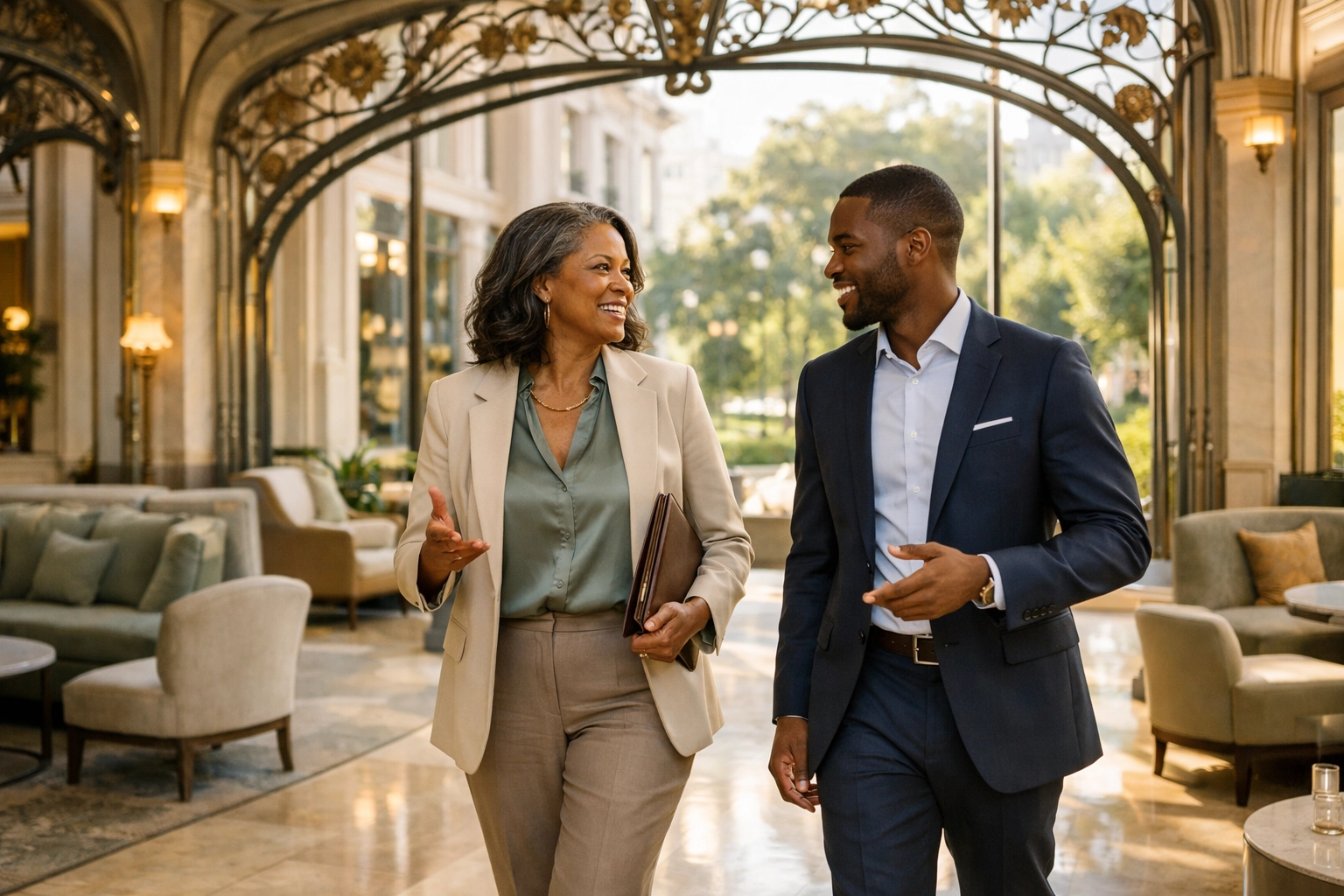
In the mid-2000s, the hotel underwent a rebrand to the "Scarlet Huntington," which leaned heavily into a dark, bordello-inspired aesthetic. While it had its fans, the "brothel red" interiors often felt disconnected from the airy grandeur of Huntington Park just across the street. Ken Fulk’s redesign has effectively "exhaled" the space.
The public areas now feel expansive and light-filled, honoring the Italian Renaissance Revival architecture originally established in 1924 (National Register of Historic Places) [4]. This move is a strategic "concept pivot." In bar and restaurant consultants' terminology, this is about broadening the "Total Addressable Market" (TAM). By moving away from a niche, theatrical interior to something more classically elegant, the hotel appeals to a wider range of high-net-worth travelers and local residents who found the previous iteration too kitschy.
The Big Four: Preserving the "Handsome Moodiness"
While the lobby has lightened up, the Big Four restaurant, named for the railroad tycoons Stanford, Hopkins, Crocker, and Huntington, remains a temple of dark wood and leather. This was a deliberate choice by Fulk. At a recent dinner, the design team noted the goal was to make the Big Four feel "untouched" (The San Francisco Standard) [5].
The updates here are surgical: subtle refreshes to the upholstery, a new carpet that mirrors the historic patterns, and lighting that maintains the "handsome moodiness" without feeling dated. This is where kitchen and bar design consulting becomes an art form. You don't change the Big Four; you just make it look the way people remember it looking in their best memories.
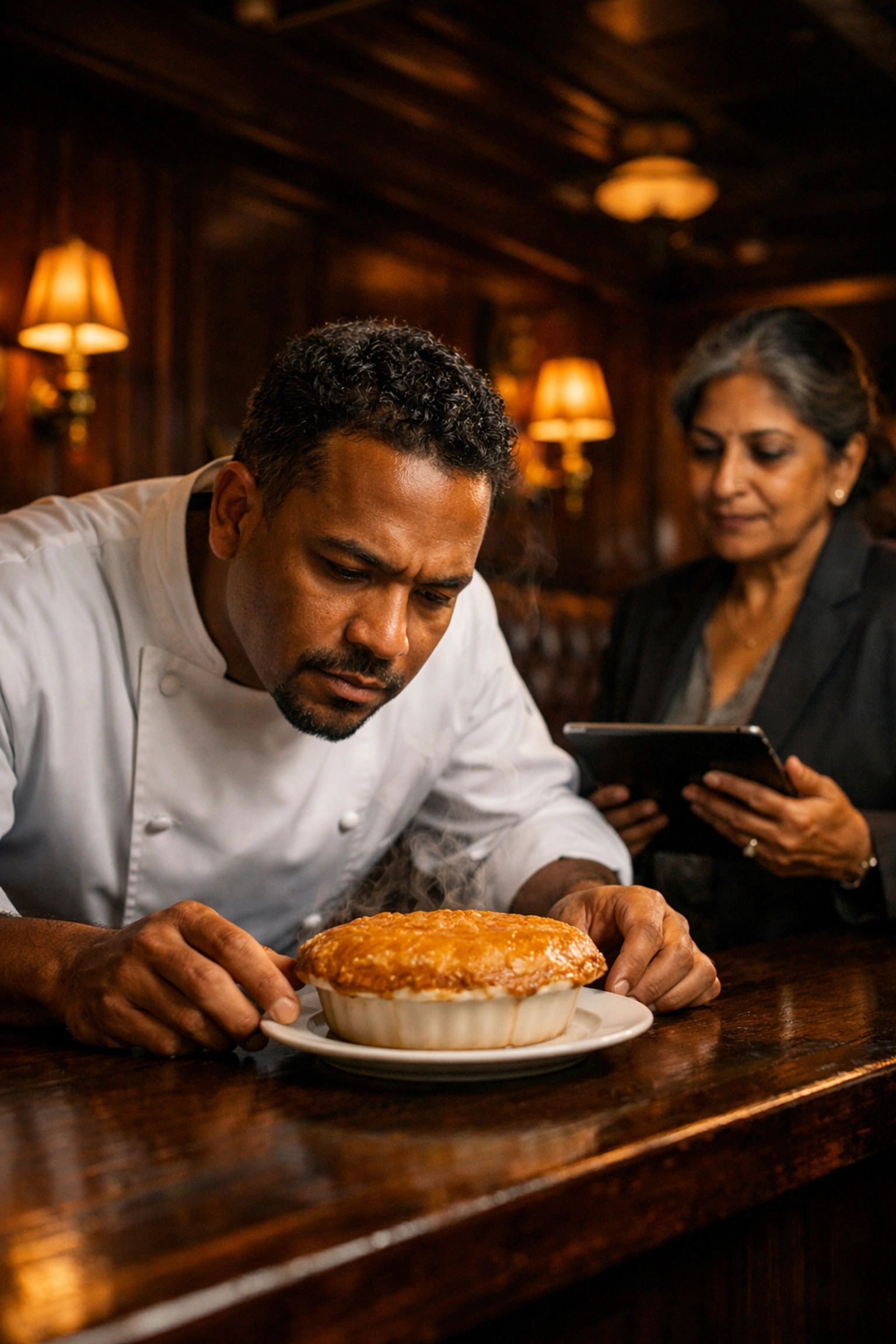
Operational continuity is the secret sauce here. The kitchen is famously bringing back its chicken pot pie using the original recipe from the 1970s (Flynn Properties) [6]. Even the bar culture remains intact, local legends like Willie Brown are still seen at the bar, signaling to the city that the "power room" of San Francisco is back in session.
Arabella’s Bar: A Slice of Vienna on Nob Hill
Perhaps the most brilliant stroke of the redesign is the transformation of the former gift shop into Arabella’s Bar. In legacy hotels, gift shops are often "dead zones", low-revenue spaces that take up prime real estate. By converting this footprint into an Art Nouveau "cocktail salon," the Huntington has created a new revenue engine.
Named for Arabella Huntington, who famously donated the site of her former mansion to create the park across the street, the bar is a "fantasy in tribute" (Ken Fulk Inc.) [7]. With its intricate metalwork and glowing back-bar, it feels like a slice of Vienna transported to the 415. For any operator looking at their floor plan, this is a lesson in menu engineering and space optimization: if a square foot isn't generating a memory or a margin, it needs to be reimagined.
Timeline: The Century-Long Journey of the Huntington
- 1922: Originally opened as a luxury apartment building on the site of the Central Pacific Railroad "Big Four" mansions (SF Planning) [8].
- 1924: Formally converted into the Huntington Hotel, becoming an immediate favorite for visiting dignitaries and Hollywood stars [4].
- 1976: The Big Four restaurant opens, quickly establishing itself as the premier "power lunch" spot in Northern California [5].
- 2011: The property is rebranded as the "Scarlet Huntington," introducing the red-heavy, theatrical decor [1].
- 2020: The hotel and restaurant close indefinitely due to the global pandemic and shifting travel patterns [2].
- 2023: Flynn Properties and Highgate announce the acquisition and the start of a multi-million dollar restoration led by Ken Fulk [6].
- March 2, 2026: The Huntington Hotel officially reopens its doors to the public (City of San Francisco Proclamation) [9].
- March 17, 2026: The Big Four restaurant is scheduled to begin full dinner service (Big Four Management) [10].
Data Element: The San Francisco Hospitality Rebound
The reopening of the Huntington isn't happening in a vacuum. It is supported by a significant recovery in the San Francisco hospitality sector.
| Metric | January 2021 | January 2026 | Change |
|---|---|---|---|
| City-Wide Hotel Occupancy | 13.1% [2] | 55.1% [3] | +320% |
| Average Daily Rate (Nob Hill) | $185 [11] | $412 [12] | +122% |
| Luxury Segment Demand | Low [2] | High [12] | N/A |
| Big Four Entrée Price (Avg) | $38 (2019) [5] | $54 (2026) [10] | +42% |
Data compiled from San Francisco Travel and STR Global reports.
Case Example: Balancing Legacy and Labor
When the Executive Team at McFadden Finch Restaurant Consulting Group reviews a project like the Big Four, we look at the "Labor vs. Legacy" trade-off. Bringing back a 1970s chicken pot pie recipe sounds nostalgic, but from an operational standpoint, it requires a specific labor-intensive prep (Flynn Properties) [6].
The Huntington’s team made a strategic choice: invest heavily in the "hero" dishes that define the brand’s history, while using Ken Fulk’s design to command higher room rates ($799 to $15,000 per night) to offset those rising prime costs (San Francisco Business Times) [13]. This is the essence of how restaurant consultants lower prime costs in 2026: you don't cut the things guests love; you optimize the revenue streams around them to support the quality.
What Smart Critics Argue
Despite the excitement, the Huntington’s return has its detractors.
- Exclusivity vs. Accessibility: Critics argue that with room rates starting at $799, the Huntington is further distancing itself from the average San Franciscan. Response: The Huntington has always positioned itself as a "discreet luxury" enclave. By maintaining high price points, they can fund the meticulous preservation required for a 100-year-old landmark [13].
- The "Museum" Trap: Some worry that by keeping the Big Four "untouched," it may fail to attract a younger demographic. Response: The addition of Arabella’s Bar serves as the "bridge" for a younger, cocktail-focused crowd, allowing the Big Four to remain a sanctuary for traditionalists [7].
- Sustainability Concerns: Older buildings are notoriously difficult to make energy-efficient. Response: The 2024-2026 renovation included significant behind-the-scenes infrastructure upgrades to meet modern LEED standards while preserving the historic facade [6].
Key Takeaways for Restaurant Operators
- Design as a Concept Pivot: Use design to "exhale" your space if it feels too thematic or dated.
- Honor the Icons: Don't mess with the "hero" items (like the Big Four's pot pie) that guests associate with your brand identity.
- Monetize "Dead Zones": Look for underutilized areas (like gift shops or storage) and convert them into high-margin cocktail salons.
- Narrative Matters: The story of Arabella Huntington adds a layer of depth that a generic "Lobby Bar" lacks.
- Pricing Strategy: In 2026, luxury operators must price for the "experience," not just the ingredients, to survive the margin squeeze.
- Nostalgia is a Currency: If your restaurant has been around for decades, your "happy memories" are your greatest marketing asset.
- Expert Guidance: Reopening a legacy brand is a minefield; hiring experienced bar and restaurant consultants can prevent costly concept errors.
Actions You Can Take
At Work
- Audit your current floor plan. Is there a "dead zone" (like the Huntington’s old gift shop) that could be generating revenue as a small bar or grab-and-go station?
- Identify your "Hero Dish." Ensure the recipe is standardized and the story behind it is told on your menu.
At Home
- Support San Francisco’s revival. Visit a legacy restaurant this month to help maintain the city’s cultural fabric.
- Research the history of your neighborhood. Understanding the local narrative can change how you view community spaces.
In the Community
- Advocate for the preservation of historic "Third Places", the bars and lobbies where community history is made.
- Follow SF Heritage to stay updated on preservation efforts for iconic properties like the Huntington.
In Civic Life
- Engage with the San Francisco Chamber of Commerce regarding hospitality recovery initiatives.
- Support local candidates who prioritize small business and hospitality revitalization as part of the city's economic plan.
One Extra Step
- If you are an operator struggling with a legacy concept, schedule a discovery call with our team. Sometimes a "Ken Fulk-level" pivot is exactly what your bottom line needs.
FAQ
Q: Is the Big Four restaurant open for lunch?
A: Historically, yes, but as of the March 2026 reopening, the focus is on a premier dinner service and late-night bar program [10]. Check their official website for updated hours.
Q: Who is Ken Fulk?
A: Ken Fulk is a world-renowned designer known for his theatrical and layered interiors. He has been instrumental in several high-profile San Francisco hospitality projects [7].
Q: Can I visit the bar if I am not a hotel guest?
A: Yes, both the Big Four bar and Arabella’s Bar are open to the public, though reservations for dining in the Big Four are highly recommended [10].
Q: Why did it take six years to reopen?
A: The closure was a combination of pandemic-related shutdowns, a change in ownership, and a massive, two-year structural and aesthetic renovation [6].
Q: What is "Art Nouveau"?
A: It is a style of decorative art and architecture characterized by intricate linear designs and flowing curves based on natural forms, popular between 1890 and 1910 [7].
Where Smart Strategy Meets Profitable Hospitality.
At McFadden Finch Restaurant Consulting Group, we help restaurant owners make sharper decisions, strengthen operations, and build businesses designed to perform. From feasibility studies and concept development to menu strategy and long-term operational consulting, we help your restaurant move beyond survival and into sustained growth.
McFadden Finch Restaurant Consulting Group
Lake Merritt Plaza
1999 Harrison St., 18th Floor
Oakland, CA 94612
(510) 973-2410
www.mcfadden-finch-group.com
executive.team@mcfadden-finch-group.com
Schedule your discovery call today and start building a stronger, smarter, more profitable restaurant.
Sources
[1] SF Heritage, "The Huntington Hotel: A Century of Nob Hill History," March 2024, sfheritage.org, Accessed March 15, 2026.
[2] San Francisco Travel Association, "2021 Hospitality Impact Report," January 2022, sftravel.com, Accessed March 15, 2026.
[3] STR Global, "San Francisco Market Occupancy Data – January 2026," February 2026, str.com, Accessed March 15, 2026.
[4] National Register of Historic Places, "Nob Hill Residential District Nomination," nps.gov, Accessed March 15, 2026.
[5] The San Francisco Standard, "The Big Four Returns: A First Look at the Reimagined Landmark," March 14, 2026, sfstandard.com, Accessed March 15, 2026.
[6] Flynn Properties, "Restoring a Legend: The Huntington Hotel Reopening Announcement," February 2026, flynnproperties.com, Accessed March 15, 2026.
[7] Ken Fulk Inc., "Portfolio: The Huntington Hotel and Arabella's Bar," March 2026, kenfulk.com, Accessed March 15, 2026.
[8] SF Planning, "Historical Context Statement: Nob Hill," sf-planning.org, Accessed March 15, 2026.
[9] City of San Francisco, "Mayoral Proclamation: Huntington Hotel Day," March 2, 2026, sf.gov, Accessed March 15, 2026.
[10] Big Four Management, "Spring 2026 Service Calendar," March 2026, bigfourrestaurant.com, Accessed March 15, 2026.
[11] Hospitality Net, "US Hotel Performance Data 2021," hospitalitynet.org, Accessed March 15, 2026.
[12] SF Business Times, "Luxury Hotel Rates Surge in San Francisco Core," February 2026, bizjournals.com/sanfrancisco, Accessed March 15, 2026.
[13] San Francisco Business Times, "Inside the $15,000 Penthouse at the New Huntington," March 5, 2026, bizjournals.com/sanfrancisco, Accessed March 15, 2026.