Credit: Hannah Kanik, San Francisco Business Times
Flour & Water opened its first location outside San Francisco on January 22, 2026. The destination: Uptown Oakland.
This expansion offers a practical case study for restaurant operators considering growth beyond their home market. The group's approach: testing demand through retail, centralizing production, and embedding in the local community: provides a repeatable framework worth examining.
The Signal: Using Retail Sales to Validate Demand
Before signing a lease in Oakland, Flour & Water had data.
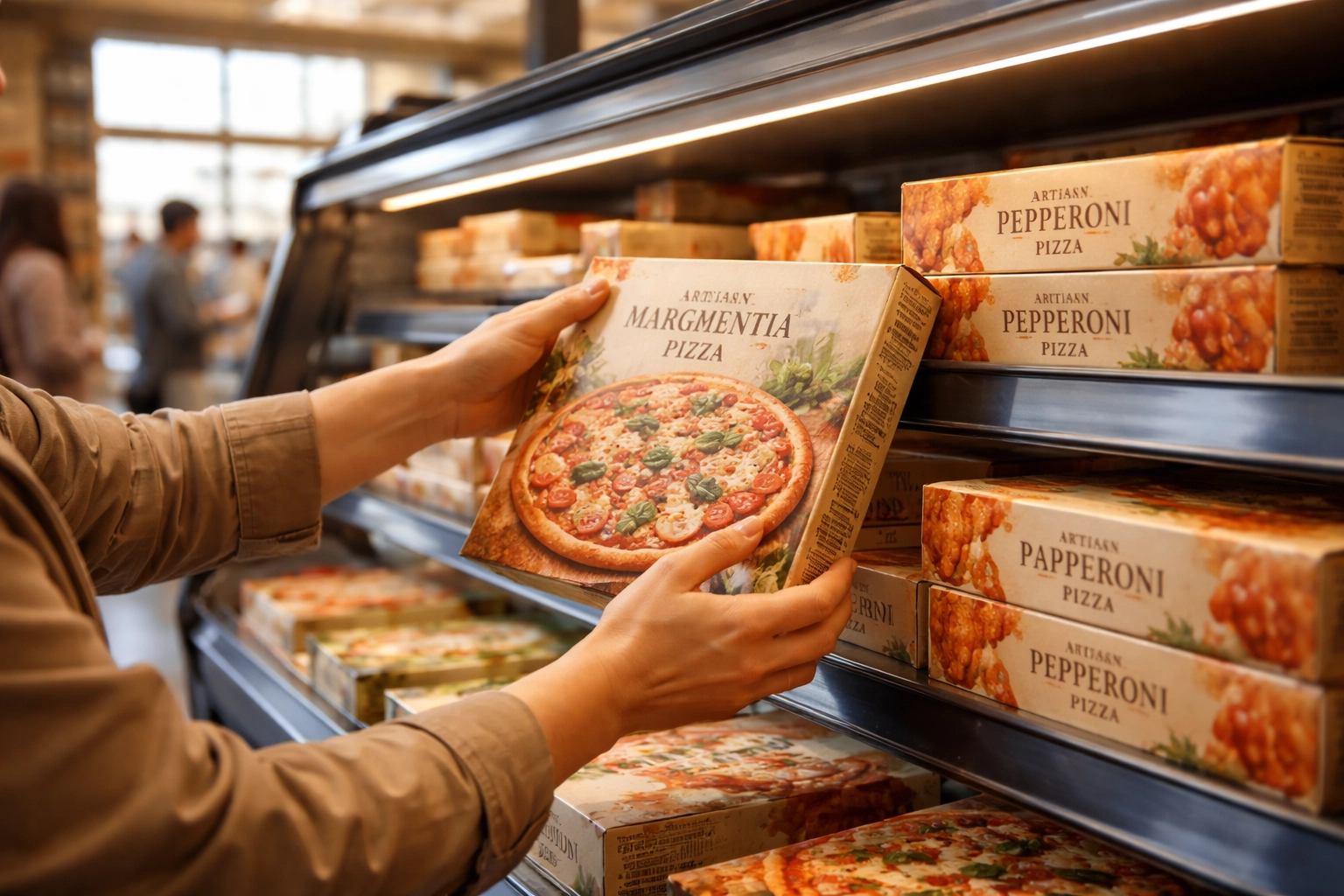
The restaurant group launched frozen pizzas in select Bay Area grocery stores approximately three months before the Oakland opening. One of the first 12 stores to carry the product was the Whole Foods at 230 Bay Place: directly across the street from the new pizza shop location.
That Whole Foods became the top-selling location for Flour & Water frozen pizza in the entire network.
"That's given us the confidence that Oakland is wanting the Flour & Water brand," co-chef Ryan Pollnow told the San Francisco Business Times.
This approach functions as a low-risk pilot program. Rather than committing to a multi-year lease based on assumptions, the frozen pizza sales provided concrete evidence of local demand. The investment required to test a new market through retail distribution is significantly lower than buildout costs for a full restaurant location.
Application for Operators
Restaurants considering expansion can apply this principle through several methods:
- Retail product placement in target neighborhoods
- Pop-up events at local markets or festivals
- Delivery-only ghost kitchen operations before committing to physical space
- Catering partnerships with local businesses
Each method generates data on customer receptivity without the overhead of a full brick-and-mortar commitment.
The Hub-and-Spoke Model: Centralized Production for Satellite Locations
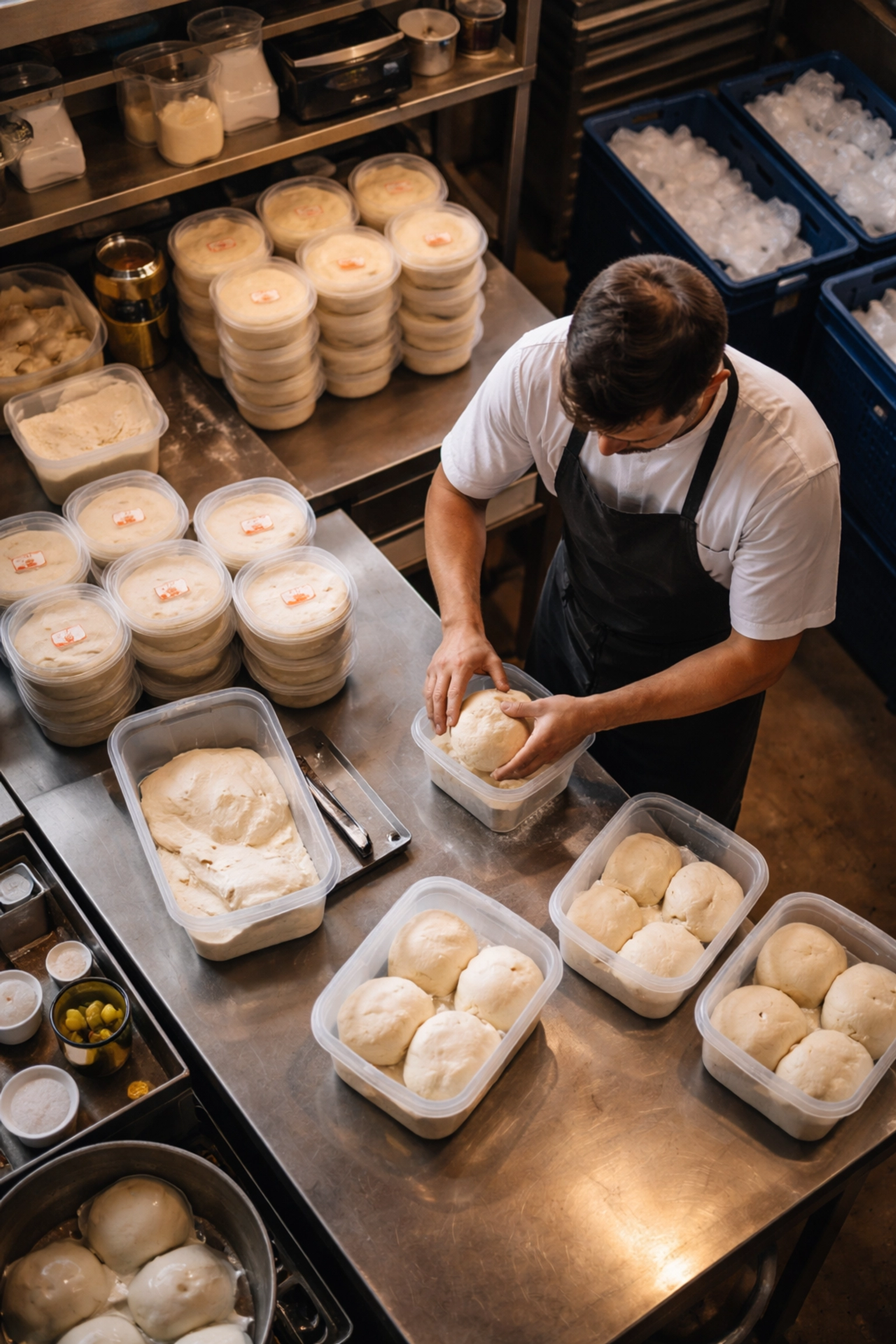
Flour & Water's expansion relies on a hub-and-spoke model for operations. The North Beach flagship location functions as the central production facility. Dough and select sauces are prepared there, then distributed daily via refrigerated trucks to satellite locations including the Mission Bay shop (opened April 2025) and the new Oakland location.
This model offers several operational advantages:
| Benefit | Description |
|---|---|
| Consistency | Product quality remains uniform across all locations |
| Lower Equipment Costs | Satellite locations require less specialized kitchen equipment |
| Faster Buildout | New locations can open with smaller kitchen footprints |
| Quality Control | Centralized prep allows tighter oversight of core products |
The dough uses organic grains from Central Milling with a poolish pre-ferment and multiple days of cold fermentation. Replicating this process at each location would require additional equipment, training, and oversight. Centralizing production eliminates these variables.
Geographic Considerations
The hub-and-spoke model works best within a defined radius from the central kitchen. Flour & Water's current satellite locations: Mission Bay and Oakland: remain within practical delivery distance from North Beach. This geographic constraint shapes site selection for future expansion.
Pollnow indicated the group will continue using this distribution model when evaluating additional locations.
Hyperlocal Partnerships: Integration Over Imposition
Flour & Water's Oakland location does not function as a copy-paste of its San Francisco operations. The team developed Oakland-exclusive menu items and partnered with East Bay businesses throughout the buildout.
Menu Collaborations
- Fried chicken wings with Oaktown Spice Co.'s Grand Lake Shake seasoning
- Green sauce inspired by the Cheese Board Collective
- Lambrusco slushie developed with Hammerling Wines in Berkeley
- "Dough Boy" house Kölsch produced with Temescal Brewing
Design Collaborations
- Interior design by Berkeley-based designer Gavin Knowles
- Abstract dough mural by local artist Nicole Hayden
- Recycled brick tilework from East Bay-based Fireclay Tile
"From a food development perspective, the locations will always have one nod to where we are," Pollnow said.
This approach serves multiple purposes. It generates goodwill within the local business community. It creates differentiated menu items that give residents a reason to visit the new location rather than traveling to San Francisco. It also generates press coverage focused on the local angle.
Senior Director of Operations Amanda Flores noted that approximately half of the restaurant group's staff and leadership already live in the East Bay. The expansion reflects genuine connection to the community rather than opportunistic growth.
Building-Integrated Retail: The Developer Partnership
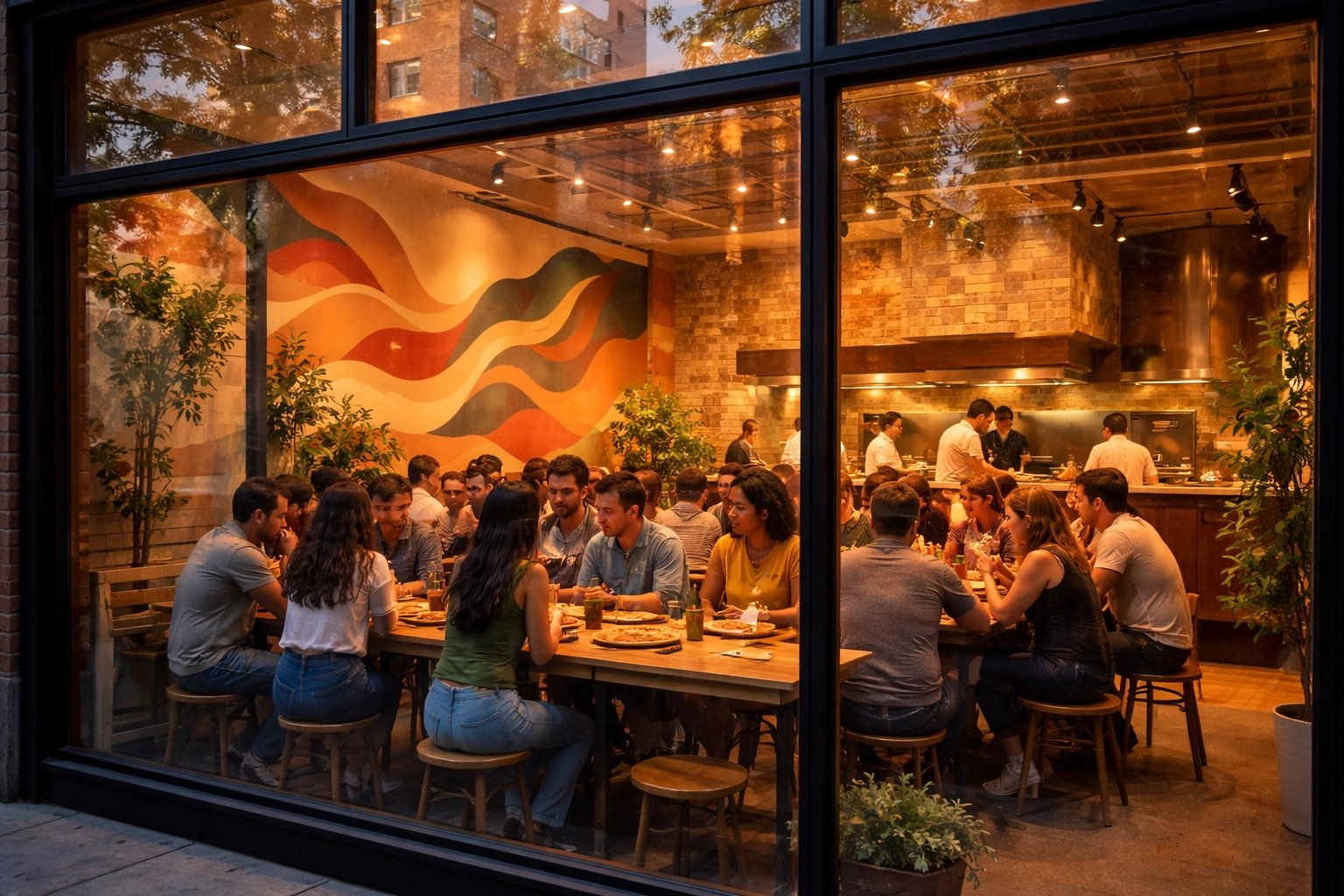
The Oakland location occupies the street level of The Lark, a newly opened apartment building at 24th and Waverly. This placement creates a built-in customer base.
Residents of The Lark and its sister building, Vespr, received a 50% discount during opening week, followed by a 10% lifetime discount. This incentive structure converts hundreds of apartment residents into regular customers.
John Wayland, executive managing director of Holland Partner Group (the developer), emphasized the symbiotic relationship: "This area known as The Northlake District is evolving to be known as a place to live and enjoy the best of Oakland."
For restaurant operators, developer partnerships offer several advantages:
- Reduced lease negotiation complexity when signing with developers seeking amenity tenants
- Marketing support through building communications to residents
- Foot traffic from residents and their guests
- Alignment of interests between successful retail and property values
The Uptown Oakland area, formerly known as Auto Row, has been gradually redeveloped with new apartments, restaurants, and shops. Tartes de Feybesse and Highwire Coffee have also established locations nearby. An enhanced services district has been launched to maintain streets and host events.
Oakland Market Context
Oakland has been ranked the No. 1 food city two consecutive years by Condé Nast Traveler, citing diverse offerings and a community-oriented food scene.
"Oakland's super cool," Pollnow said. "And it's now getting the press that it's deserved for a long time about being a legit food destination: and we want to be part of that conversation."
Brand recognition also factored into site selection. Flores reported that customers in San Francisco dining rooms had requested an East Bay location for years.
For operators evaluating expansion markets, Oakland demonstrates how neighborhood-level reputation can shift. Areas previously overlooked may present opportunities as perception changes and development increases.
For additional context on Bay Area market dynamics, see our analysis of San Jose restaurant closures in 2025.
FAQ: Restaurant Expansion Models
What is a hub-and-spoke model in restaurant operations?
A hub-and-spoke model uses a central production facility (the hub) to prepare and distribute products to multiple satellite locations (the spokes). This centralizes quality control and reduces equipment requirements at each new location.
How can I test demand before expanding to a new market?
Options include retail product placement, pop-up events, ghost kitchen delivery operations, and catering partnerships. Each method generates customer data without requiring a full buildout commitment.
What are the risks of expanding your restaurant too quickly?
Common risks include inconsistent product quality, management bandwidth limitations, supply chain complexity, and capital overextension. The hub-and-spoke model addresses some of these concerns through centralized production.
Should I partner with apartment developers for my restaurant location?
Developer partnerships can provide built-in foot traffic and marketing support. However, lease terms, parking availability, and neighborhood demographics should be evaluated. A restaurant feasibility study can help assess fit.
Next Steps
Operators considering expansion can apply these principles through structured planning and market analysis.
Download the Expansion Readiness Checklist : A framework for evaluating whether your concept is ready for multi-location growth.
Book a Hub-and-Spoke Feasibility Study : Our team can assess centralized production potential and identify optimal satellite markets for your operation.
#expandingyourrestaurant #restaurantconsulting #hubandspoke #oaklandrestaurants #restaurantfeasibilitystudy