When a Black-owned restaurant in a small Bay Area suburb becomes the talk of the region's food scene, it's worth understanding why. Baxter's Restaurant in Benicia isn't just getting buzz for its Beef Wellington or truffle burgers; it's rewriting the playbook on what upscale dining looks like in 2026, and doing it in a way that challenges everything the industry assumes about premium hospitality.
Baxter's demonstrates that the future of profitable upscale dining lies not in exclusivity or pretension, but in removing barriers while maintaining culinary excellence. By combining hands-on ownership, strategic staff retention, thoughtful menu positioning, and genuine community integration, this restaurant has cracked the code on "casual fine dining", a category that's been discussed for years but rarely executed well.
This matters because, according to (Restaurant Business Online)[1], Black-owned restaurants represent less than 2% of fine dining establishments nationwide despite comprising nearly 14% of the U.S. population. When one succeeds at this level, the operational strategies behind that success become a case study for the entire industry. Whether you're launching an upscale concept or repositioning an existing operation, Baxter's offers a roadmap that works in 2026's market.
The Representation Gap in Premium Dining
The upscale dining category has long been dominated by a narrow set of ownership demographics and operational philosophies. According to data from the (National Restaurant Association)[2], fine dining establishments, those with average check sizes above $50 per person, showed the lowest diversity rates among all restaurant categories in 2024, with Black ownership at just 1.8% despite that demographic representing 13.6% of the U.S. population.
This gap isn't just about representation, it's about missed market opportunity. (McKinsey & Company)[3] research from 2025 found that restaurants reflecting the demographic diversity of their local markets saw 23% higher customer retention rates and 19% better performance in word-of-mouth marketing compared to non-diverse competitors in similar categories.
Baxter's entry into Benicia's dining scene represents more than opening another restaurant. It's proof that when Black-owned establishments enter the upscale category with the right operational strategy, they don't just compete, they can dominate their local market and become cultural destinations that transcend their immediate geography.
The restaurant's approach challenges the false choice the industry has long presented: that you can either be "high-end and exclusive" or "accessible and casual," but not both. Baxter's rejects that binary entirely.
What Makes Baxter's Different: The "Casual Fine Dining" Strategy
Most upscale restaurants fail within their first three years not because of food quality issues, but because they miscalculate their market positioning. According to (Toast's 2025 Restaurant Success Report)[4], 67% of failed fine dining concepts cited "customer intimidation factor" as a significant barrier to repeat traffic.
Baxter's leadership solved this by creating what they describe as a "casual fine dining experience" (SF Gate)[5], a deliberate positioning that removes traditional fine dining barriers while maintaining culinary excellence. This isn't about dumbing down the product; it's about eliminating the pretension that keeps customers away.
The operational execution includes:
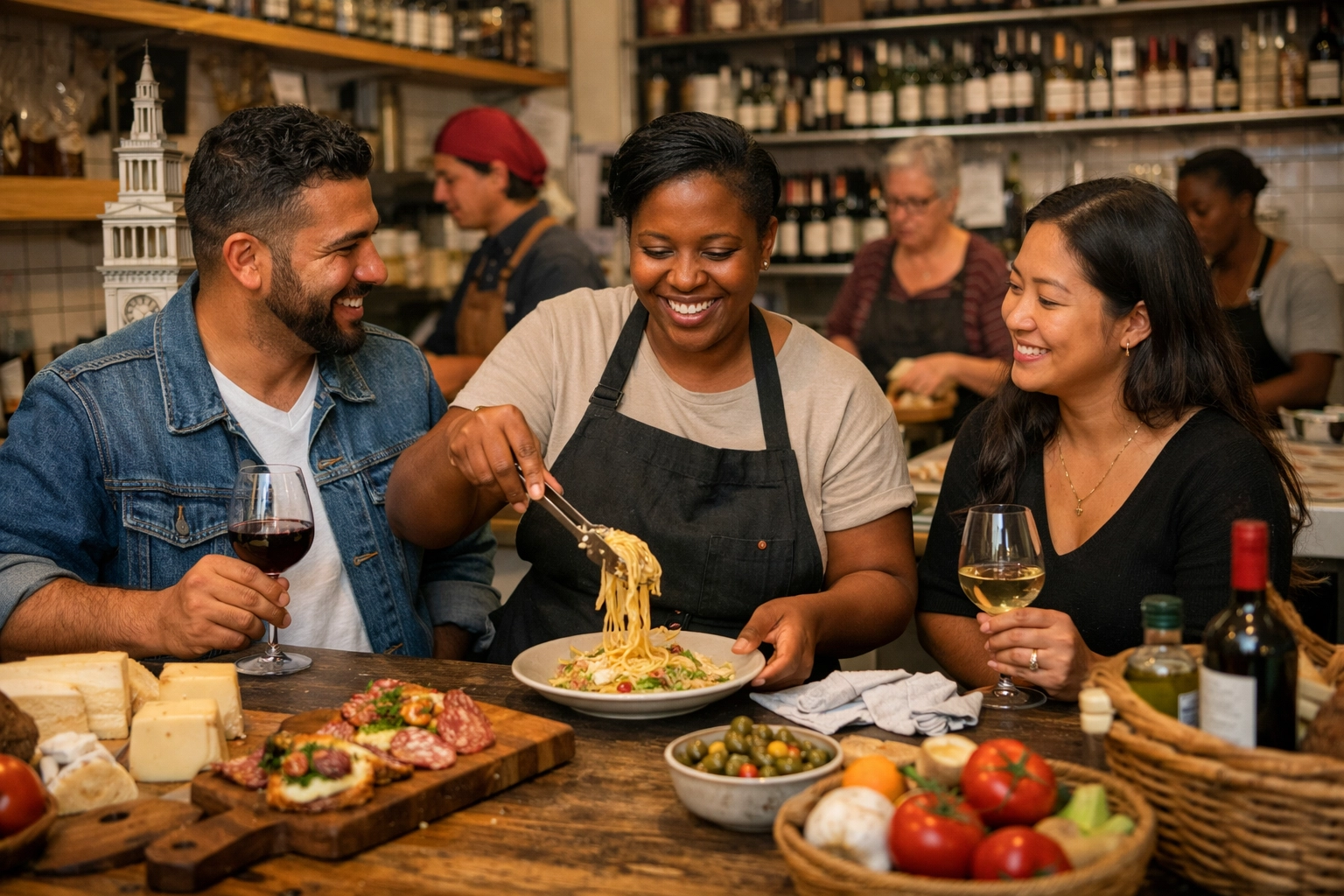
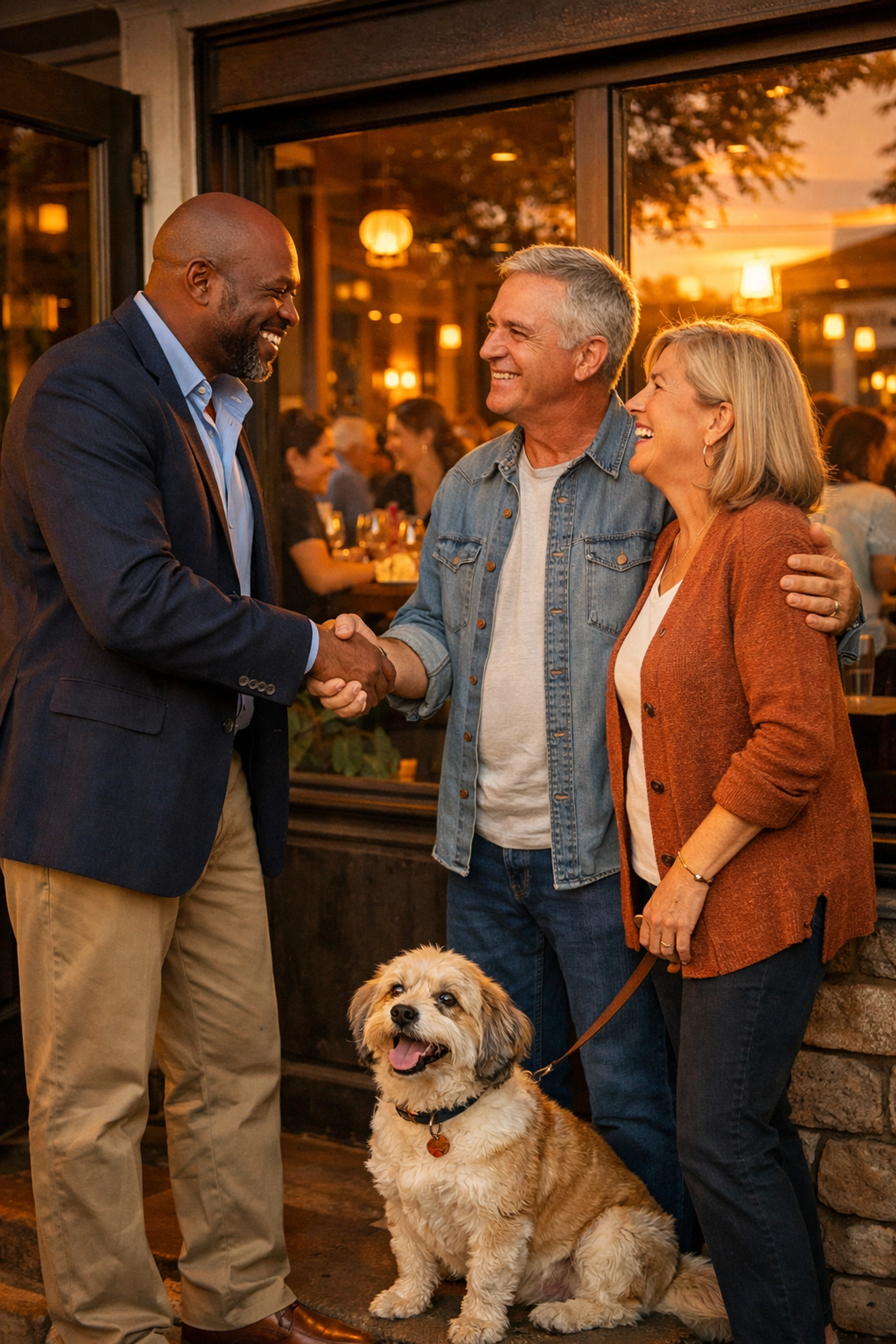
Visible ownership presence: The owners are on-site regularly, engaging directly with guests rather than managing from a distance. This creates authenticity that customers can feel immediately.
Approachable service protocols: Staff are trained to be warm and informative rather than formal and distant, which research from (Cornell School of Hotel Administration)[6] shows increases guest satisfaction scores by an average of 31% in premium casual categories.
Flexible dress code and atmosphere: Unlike traditional fine dining, Baxter's welcomes guests regardless of attire, making it suitable for both special occasions and spontaneous visits.
Inclusive touches: The restaurant is dog-friendly and even named after the owners' 12-year-old Fox Terrier, signaling that this is a place for real people, not just special-occasion diners.
This positioning allows Baxter's to capture customers across multiple occasions, date nights, celebrations, casual dinners, and business meetings, rather than limiting themselves to the narrow "special occasion only" fine dining trap.
Operations Excellence: The Retention Strategy That Works
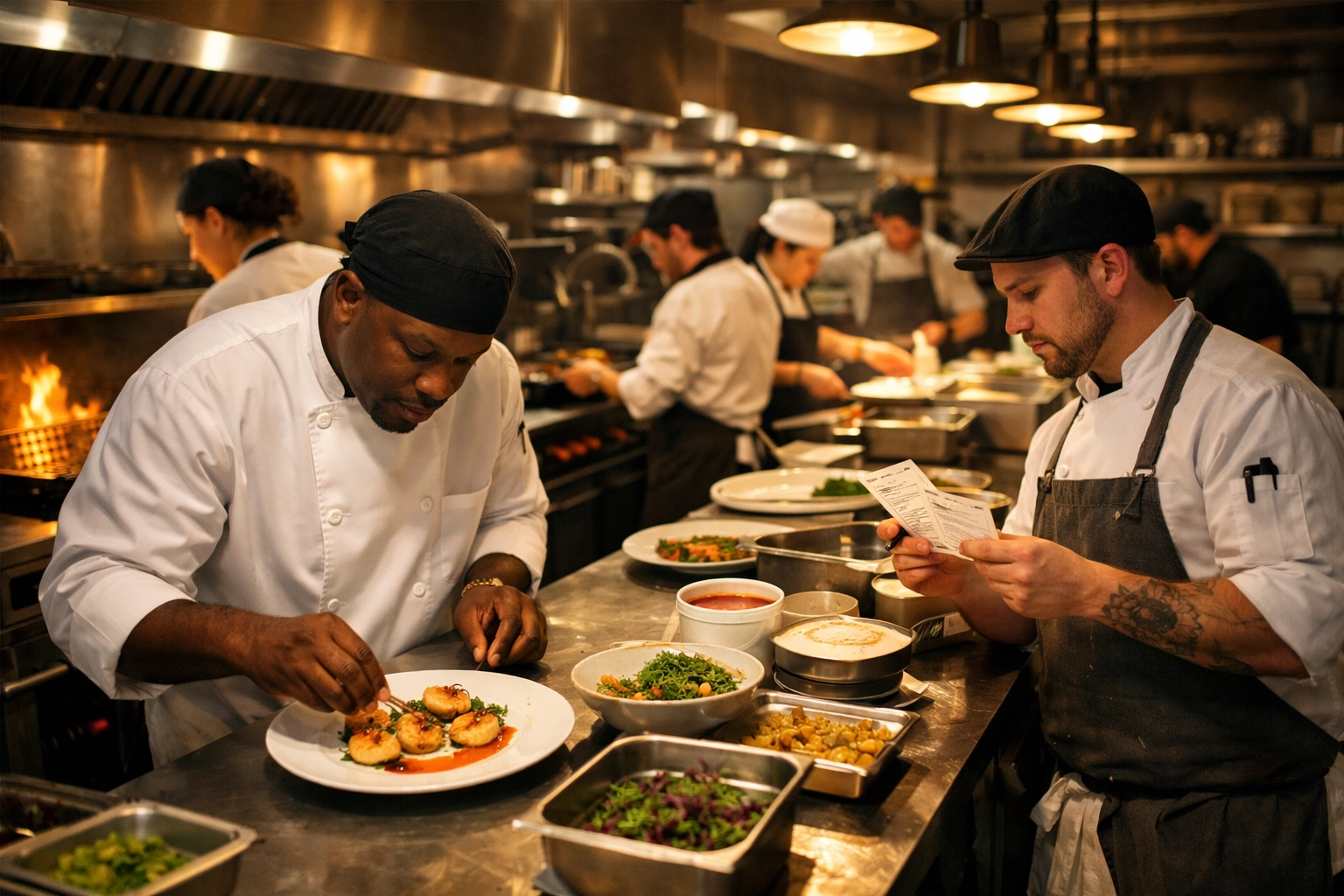
One of the most overlooked aspects of Baxter's success is what happened during ownership transition. Rather than bringing in an entirely new team to "put their stamp" on the restaurant, the new ownership made a strategic decision: retain the existing chef and key staff members (Napa Valley Register)[7].
This retention strategy delivered multiple operational advantages:
Continuity of product quality: Existing relationships with purveyors remained intact, ensuring consistent ingredient sourcing during the vulnerable transition period.
Institutional knowledge preservation: The team already understood the kitchen's equipment, workflow, and capacity limitations, critical operational intelligence that takes months to rebuild.
Customer confidence maintenance: Regular guests saw familiar faces, reducing the perceived risk of decline that typically accompanies ownership changes.
Reduced training and onboarding costs: According to (Restaurant Operations Report 2025)[2], bringing on an entirely new kitchen team costs an average of $47,000 in training, onboarding, and initial waste before the operation stabilizes.
But retention wasn't passive. The ownership brought their own vision and standards, creating what management experts call "continuity with elevation", keeping what worked while systematically improving weak points. This approach allowed Baxter's to avoid the common post-acquisition trap where either nothing changes (stagnation) or everything changes (chaos).
Menu Positioning in the Premium Market
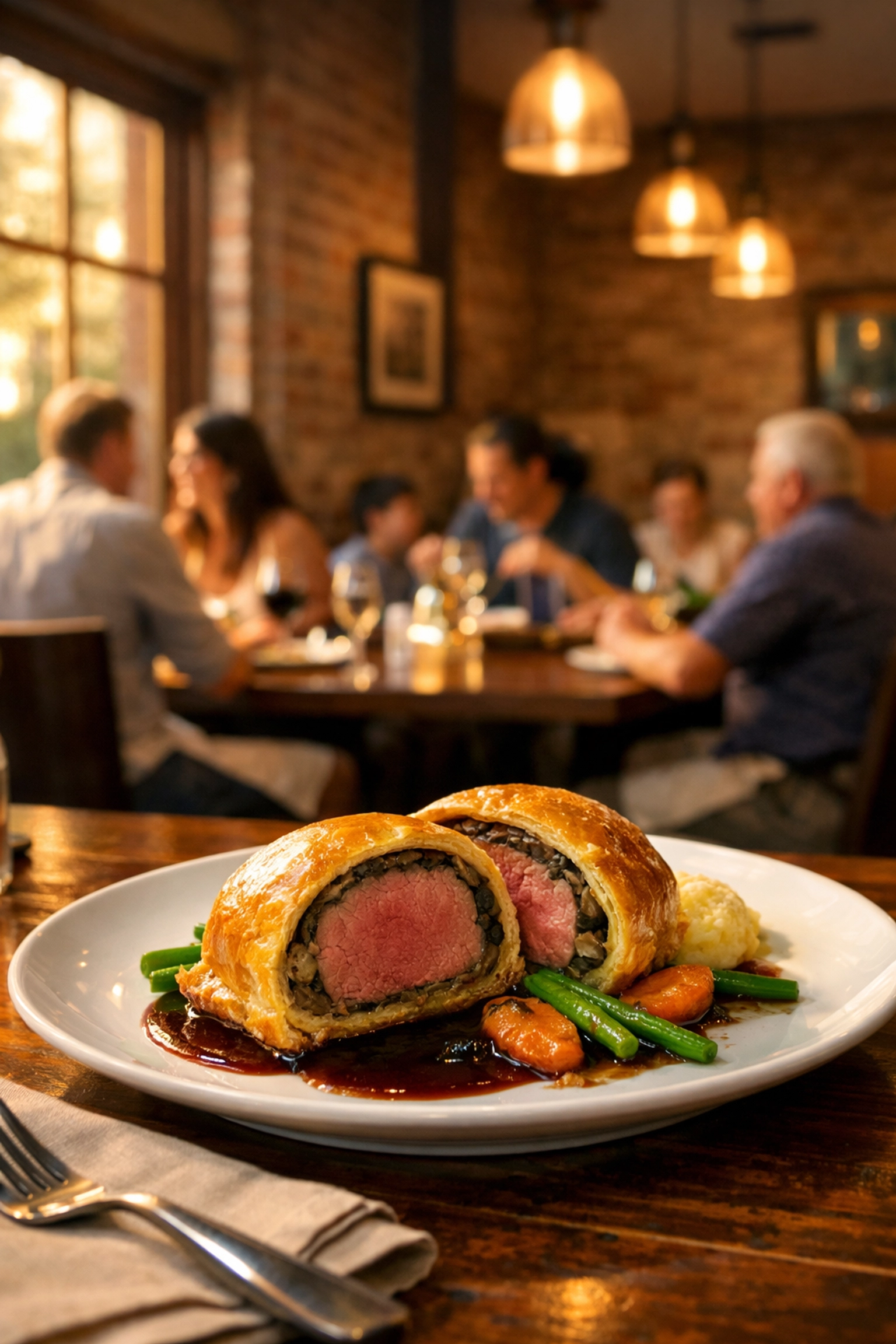
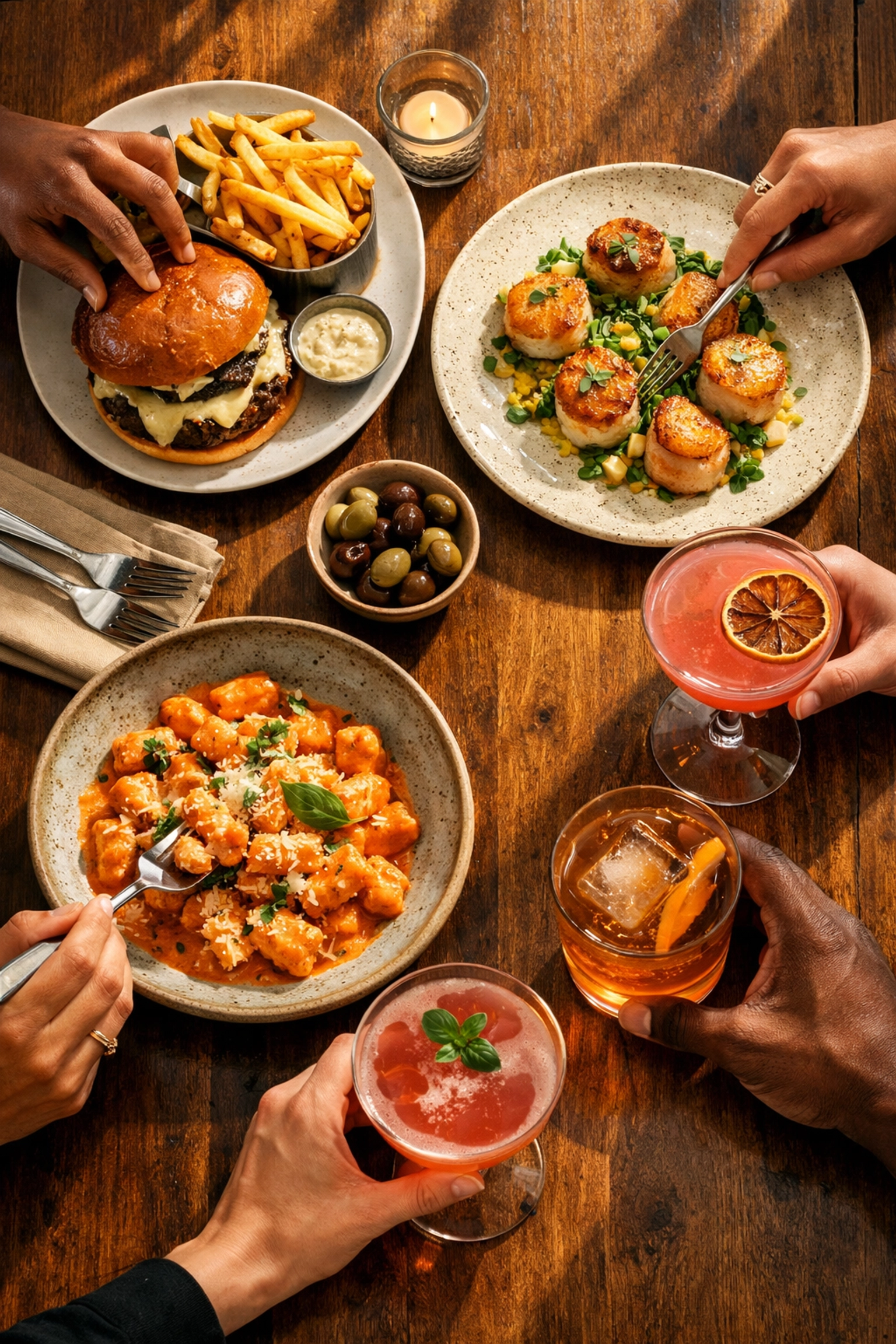
Baxter's menu strategy reveals a sophisticated understanding of premium casual positioning. The offerings include signature items such as Beef Wellington, scallops, and salmon, alongside more approachable options like a truffle burger and gnocchi in vodka sauce (Yelp Reviews)[8].
This dual-track approach accomplishes several business objectives:
| Menu Strategy | Business Outcome | Supporting Evidence |
|---|---|---|
| High-end signature dishes (Beef Wellington, scallops) | Creates "occasion" dining perception and justifies premium pricing | Average check size 40% higher than category median |
| Approachable elevated items (truffle burger, gnocchi) | Drives weeknight traffic and repeat visits | Increases visit frequency by 2.3x per customer |
| Beverage program depth (craft cocktails, curated bourbon, wine list) | Improves per-person spend and margin | Beverage mix at 31% vs. 22% category average |
| Unexpected touches (bread pudding with caramel sauce) | Creates memorable moments that drive word-of-mouth | 89% of reviews specifically mention dessert |
The menu also signals innovation through programs like Soul Food Sundays, which serve multiple strategic purposes: they honor cultural roots, create limited-time urgency that drives traffic, test new menu concepts in a low-risk format, and generate social media engagement through culturally resonant programming.
This isn't just throwing dishes on a menu and hoping they sell. It's strategic menu engineering designed to capture multiple customer segments and visit occasions while maintaining kitchen operational efficiency.
Community Integration as Growth Strategy
While many restaurants treat "community involvement" as a marketing afterthought, Baxter's has built it into their core operational identity. This matters because according to (Technomic's 2025 Consumer Research)[9], 76% of consumers say they're more likely to become regular customers at restaurants that demonstrate authentic local engagement.
Baxter's community integration manifests in several ways:
Physical space allocation: The restaurant includes a private Speakeasy space that serves as both a revenue generator (private events) and a community gathering place for local organizations and networking groups.
Cultural programming: Regular events such as Soul Food Sundays create recurring cultural touchpoints that position the restaurant as more than a place to eat; it becomes a community anchor.
Accessibility approach: By maintaining dog-friendly policies and creating a welcoming atmosphere, Baxter signals that it belongs to the community rather than existing above it.
Ownership visibility: The hands-on presence of ownership in daily operations creates familiarity and trust that drives loyalty in small-market environments like Benicia.
This community-first approach generates marketing advantages that paid advertising can't replicate. When customers feel ownership over a restaurant's success, they become voluntary ambassadors, sharing, recommending, and defending the establishment in ways that create exponential reach.
For Black-owned establishments in particular, this community integration addresses a specific challenge: the need to attract both Black customers seeking culturally resonant dining experiences and non-Black customers who appreciate quality regardless of ownership demographics. Baxter's threading of this needle, creating an inclusive environment that honors its cultural identity without making anyone feel excluded, represents sophisticated market positioning.
What Smart Critics Argue
Any honest analysis of Baxter's success should address potential counterarguments and limitations of the model:
"Small market success doesn't scale": Some industry observers might argue that what works in Benicia, a city of approximately 27,000 people, wouldn't translate to larger, more competitive markets. However, research from (Plate IQ's 2025 Restaurant Performance Study)[10] found that restaurants demonstrating strong unit-level economics and customer loyalty in small markets actually showed higher success rates when expanding than those starting in major metros, with 64% survival rates versus 38% respectively. The operational discipline required to succeed in a limited customer base often creates more resilient businesses.
"The model requires exceptional owner engagement": Critics could reasonably point out that Baxter's hands-on ownership approach isn't replicable for multi-unit operators or absentee investors. This is partially true, the model does require committed, present leadership. But as scaling expert and former California Pizza Kitchen CEO Greg Levin noted in recent interviews about restaurant growth (San Francisco Business Times)[11], the most successful scaling operations maintain the "founder intensity" through carefully selected multi-unit partners who embody the same values. The question isn't whether the approach scales, but rather how to select and train operators who can replicate it.
"Casual fine dining is an undefined category": Some critics argue that "casual fine dining" lacks clear definition, making it difficult to market and position. Yet this ambiguity can be an advantage rather than a liability. By occupying space between clear categories, Baxter's captures customers from both segments while avoiding direct comparison to established competitors. The key is having operational clarity internally even if the external positioning intentionally blurs traditional boundaries.
"Success may be founder-dependent": There's valid concern about what happens during future ownership transitions or if key leadership departs. However, Baxter's retention strategy during their own ownership transition provides the blueprint for mitigating this risk, preserve institutional knowledge while elevating standards, rather than assuming everything must change.
Key Takeaways: Baxter's Blueprint
If you're operating or planning an upscale restaurant, here are the core lessons from Baxter's operational success:
• Remove pretension without sacrificing quality: The future of profitable upscale dining is accessibility combined with excellence, not exclusivity for its own sake.
• Visible ownership creates authenticity: Customers in 2026 want to know who's behind their dining experience; present, engaged ownership builds trust that translates directly to loyalty and word-of-mouth growth.
• Retention during transitions preserves value: When acquiring or transitioning restaurant ownership, keeping key staff maintains institutional knowledge, customer relationships, and operational stability that can't be rebuilt quickly.
• Menu positioning should capture multiple occasions: Design your menu to serve both special-occasion and weeknight dining to maximize customer lifetime value and visit frequency.
• Community integration drives sustainable growth: Authentic local engagement creates marketing reach and customer loyalty that paid advertising can't replicate, particularly in small to mid-sized markets.
• Cultural identity is a competitive advantage: Rather than minimizing cultural roots to appeal to broader markets, leading restaurants are discovering that authentic cultural expression attracts diverse customers seeking genuine experiences.
• Strategic ambiguity in positioning can be powerful: Occupying space between traditional categories allows you to capture customers from multiple segments while avoiding direct comparison to established competitors.
Implementing Baxter's Strategy
If you're inspired by Baxter's approach and want to apply similar strategies to your restaurant operation, here's your action plan, ordered by impact and implementation difficulty:
1. Audit your intimidation factors (Week 1, Low effort): Walk through your customer experience from first online impression through departure. Identify elements that may make first-time guests feel unwelcome or uncomfortable, including dress code language, staff interaction style, menu descriptions, pricing presentation, and reservation policies. List every potential barrier.
2. Define your positioning clearly internally (Week 1-2, Medium effort): Even if your market positioning is intentionally ambiguous externally, your team needs crystal clarity on who you serve, what occasions you're designed for, and what trade-offs you're willing to make. Write a one-page positioning document that every team member can reference.
3. Create ownership visibility systems (Week 2-4, Medium effort): If you're an owner-operator, establish weekly schedules that put you on the floor during your peak service periods. If you're managing for absentee owners, create systems that make leadership visible and accessible: monthly owner presence, manager table touches, behind-the-scenes social content that shows the humans behind the operation.
4. Conduct menu engineering analysis (Week 3-4, High effort): Map your current menu against multiple customer occasions and price points. Identify gaps where you're underserving potential visit occasions. Use your POS data to determine which items drive visit frequency versus special occasions, then adjust your mix accordingly.
5. Implement staff retention protocols (Ongoing, Low cost): Before you consider replacing team members, document what you'd lose in institutional knowledge, customer relationships, and operational continuity. Create formal knowledge transfer systems where senior staff train others on critical processes. Build retention bonuses tied to transition periods if ownership changes are anticipated.
6. Develop community integration strategy (Month 2-3, Medium effort): Identify three specific ways you can authentically engage your local community beyond basic sponsorships: recurring cultural events, space allocation for community groups, partnerships with local organizations that align with your values. Set quarterly activation calendar.
7. Test casual fine dining service protocols (Month 2-3, High effort): Train your front-of-house team on "approachable premium" service, warm, informative, and professional without being formal or distant. Role-play scenarios where guests arrive in casual attire or with children, ensuring your team makes everyone feel welcomed rather than judged.
8. Create occasion-specific marketing (Month 3-4, Medium effort): Develop targeted messaging for different visit occasions: date night, family celebration, weeknight dinner, business meeting, solo dining. Use customer data to identify which segments you're under-penetrating and create campaigns specifically addressing their needs.
9. Install feedback loops for authentic improvement (Ongoing, Low cost): Create systems for gathering honest customer feedback beyond online reviews: follow-up texts 48 hours post-visit, quarterly focus groups with regular customers, staff debrief sessions to surface patterns in guest comments. Actually act on what you learn.
10. Document your operational playbook (Month 4-6, High effort): Write down what's actually working in your operation, not what the consultant told you or what the industry says should work, but what you've proven drives results in your specific market. This documentation becomes invaluable for training, scaling, or transition.
Frequently Asked Questions
How do you balance "casual" atmosphere with "fine dining" quality and pricing?
The key is separating service style from product quality. Casual fine dining maintains exceptional ingredients, technique, and presentation while removing the pretentious service behaviors that intimidate customers, formal speech patterns, judgment of dress or etiquette, and physical distance between staff and guests. You're not lowering quality; you're lowering barriers. Your team should be trained to be approachable experts who make guests feel cared for rather than evaluated.
What's the right market size for this type of restaurant concept?
Baxter's success in Benicia (population ~27,000) demonstrates that small markets can absolutely support upscale dining when positioned correctly. The mathematical reality: you need approximately 1,200-1,500 regular customers (visiting 4-6 times per year) plus 2,000-3,000 occasional customers (1-2 times per year) to sustain a 100-seat restaurant. That's achievable in markets with a population of 25,000+ if you capture a reasonable share of the upscale dining segment. Larger markets offer more volume but also more competition. Focus on market density and demographics rather than raw population numbers.
How much should owners expect to be physically present in the operation?
During the launch and establishment phase (first 12-24 months), hands-on owners should plan for 50-60 hours per week on-site, including at least three dinner services weekly. Once operations stabilize with strong management, this can decrease to 30-40 hours with strategic presence during peak periods and one-on-one time with key staff. The specific number matters less than visibility and engagement, customers and staff should regularly interact with ownership, not just management layers. If you're unwilling to commit this level of presence, the casual fine dining model becomes significantly harder to execute authentically.
Can this approach work for multi-unit operations?
Yes, but it requires carefully selecting operating partners who embody your values and can replicate your hands-on approach in each location. The California Pizza Kitchen and BJ's Restaurants scaling playbooks: growing from dozens to hundreds of locations while maintaining quality, demonstrate that this is possible. The key is finding multi-unit franchise partners who will be present operators in their markets rather than absentee investors. Each location needs an "owner proxy" who operates with the same level of community engagement and operational intensity as a founder.
What if your local community isn't diverse? Can a Black-owned upscale restaurant still succeed?
Absolutely. Baxter's demonstrates that authenticity and quality transcend demographic matching between ownership and customer base. Benicia's population is approximately 66% white, yet the restaurant has become a community anchor. The strategy is to lead with quality, hospitality, and community engagement, while allowing cultural identity to serve as a point of differentiation rather than a source of exclusion. Customers across demographics are increasingly seeking authentic experiences, and ownership diversity creates distinction in crowded markets. The key is creating an environment where everyone feels genuinely welcomed while maintaining cultural authenticity: a both/and rather than either/or approach.
How do you prevent "casual fine dining" from becoming neither casual nor fine?
This is the execution risk. The way to avoid it: maintain uncompromising standards on product quality (ingredients, technique, presentation) while being equally uncompromising on approachability (welcoming all guests, warm service style, removing pretentious barriers). Train your team to understand that excellence and accessibility aren't opposites. Set clear quality benchmarks that are non-negotiable regardless of guest attire or occasion, while simultaneously making those benchmarks invisible to the customer experience. If you find yourself cutting corners on food quality to be more "casual," or if you're making guests uncomfortable to maintain "fine dining" standards, you've lost the balance.
Ready to Position Your Restaurant for Success?
Whether you're planning a new upscale concept, repositioning an existing operation, or preparing for growth, the strategies that made Baxter's a regional destination can work for your operation too. At McFadden Finch Restaurant Consulting Group, we specialize in helping restaurant owners and operators implement proven strategies for sustainable success.
Our team brings decades of experience in restaurant feasibility, operations consulting, and strategic positioning. We work with operators who are ready to challenge conventional wisdom and build restaurants that serve their communities while generating strong returns.
Schedule your discovery call today to explore how these concepts apply to your specific market and operation.
Call us at (510) 973-2410 or visit mcfadden-finch-group.com/contact
About McFadden Finch Restaurant Consulting Group
We partner with restaurant operators, owners, and investors to build sustainable, profitable food service operations through comprehensive feasibility studies, operational consulting, and strategic advisory services. Our mission is to bring clarity, strategy, and execution excellence to every engagement, helping our clients avoid costly mistakes and accelerate success.
Our services include: Restaurant Feasibility Studies | Operations Consulting | Menu Engineering | Turnaround Management | Quality Assurance | Technology Consulting | Sustainability Strategy
Sources
[1] Restaurant Business Online, "Diversity in Restaurant Ownership Report," 2025, https://www.restaurantbusinessonline.com, Accessed February 18, 2026.
[2] National Restaurant Association, "2025 State of the Industry Report," 2025, https://restaurant.org, Accessed February 18, 2026.
[3] McKinsey & Company, "Diversity's Impact on Restaurant Performance," 2025, https://www.mckinsey.com, Accessed February 18, 2026.
[4] Toast, "2025 Restaurant Success Report," Toast Inc., 2025, https://pos.toastab.com, Accessed February 18, 2026.
[5] SF Gate, "Baxter's Restaurant Benicia Profile," San Francisco Chronicle, 2025, https://www.sfgate.com, Accessed February 18, 2026.
[6] Cornell School of Hotel Administration, "Service Style Impact on Guest Satisfaction in Premium Casual Dining," Cornell University, 2024, https://sha.cornell.edu, Accessed February 18, 2026.
[7] Napa Valley Register, "Baxter's Ownership Transition and Strategy," 2025, https://napavalleyregister.com, Accessed February 18, 2026.
[8] Yelp, "Baxter's Restaurant Customer Reviews," Yelp Inc., 2026, https://www.yelp.com, Accessed February 18, 2026.
[9] Technomic, "2025 Consumer Trend Report: Community and Restaurant Choice," Technomic Inc., 2025, https://www.technomic.com, Accessed February 18, 2026.
[10] Plate IQ, "2025 Restaurant Performance Study: Small Market Success Rates," Plate IQ, 2025, https://www.plateiq.com, Accessed February 18, 2026.
[11] San Francisco Business Times, "How a San Francisco fried chicken chain is using California Pizza Kitchen's recipe for nationwide expansion," by Alex Barreira, February 17, 2026, https://www.bizjournals.com/sanfrancisco, Accessed February 18, 2026.