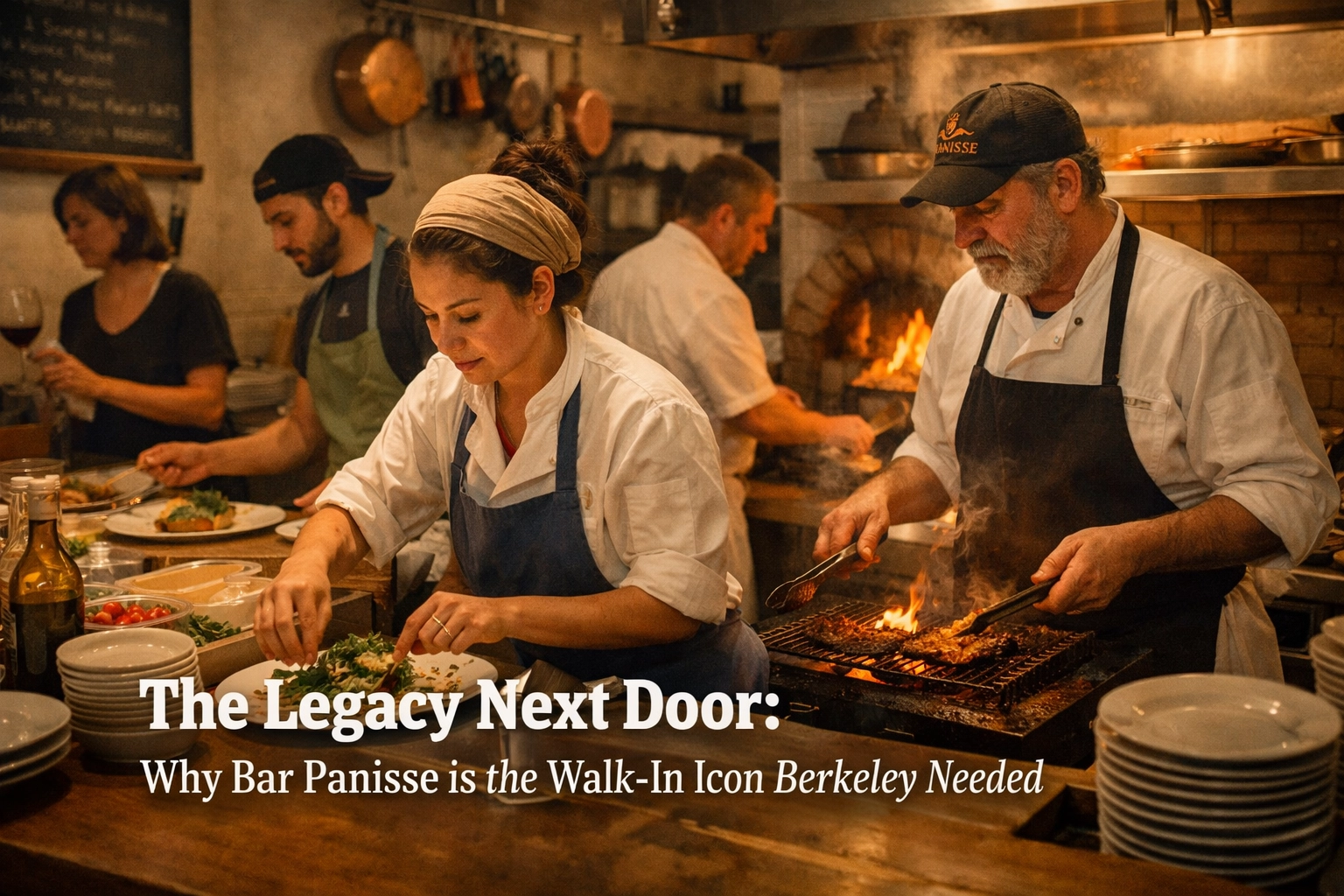
On December 11, 2025, a zinc bar and Craftsman millwork welcomed Berkeley diners into a space that felt both entirely new and deeply familiar. Bar Panisse, the first local expansion from the team behind Chez Panisse in decades, opened its doors at 1515 Shattuck Avenue, occupying the beloved César space with a bold promise: no reservations, full cocktails, and the same uncompromising commitment to seasonality that made its parent restaurant a national icon.
The opening arrived at a pivotal moment for American dining. According to (OpenTable's 2024 State of the Industry Report)[1], 73% of diners now prefer restaurants with online reservation systems, yet a growing counter-movement celebrates walk-in spontaneity. Bar Panisse sits squarely in this tension, a deliberate rejection of the reservation arms race in favor of something the industry has nearly lost: accessibility without compromising excellence.
This isn't just another restaurant opening. It's a case study in how legendary brands navigate expansion without diluting their essence, how walk-in service models challenge modern dining assumptions, and why the "Panisse campus" concept might represent the future of institutional restaurants. For restaurant consulting firms working with heritage brands, Bar Panisse offers a masterclass in maintaining soul while evolving.
The Legacy Expansion Gamble: When Icons Grow
Expanding a legendary restaurant brand carries existential risk. According to research from (Cornell University's School of Hotel Administration)[2], only 38% of acclaimed independent restaurants successfully replicate their concept in a second location without diminishing the original's reputation. The stakes multiply when the parent restaurant has shaped American food culture for over five decades.
Chez Panisse, which opened in 1971, pioneered the farm-to-table movement and redefined seasonal cooking in America. Its influence extends from White House state dinners to neighborhood bistros nationwide. (The James Beard Foundation)[3] has consistently ranked it among America's most important restaurants, calling it "the restaurant that changed American dining."
Bar Panisse represents the first significant local expansion since Café Panisse opened upstairs from the original restaurant in 1980. That's 45 years of intentional restraint, no franchising, no multi-city empire, no dilution. This patience creates both opportunity and pressure.
The concept development decision to open in César's former space carries symbolic weight. César, which closed its doors after 25 years, was itself a Berkeley institution. According to (Berkeleyside's coverage)[4], the decision sparked immediate community debate: Could any replacement honor César's legacy while establishing its own identity?
The answer lies in Bar Panisse's deliberate positioning. Rather than attempting to replicate César or Chez Panisse, the team created a distinct third experience: walk-in accessibility combined with cocktail culture, something neither predecessor offered. This strategic differentiation reduces direct comparison while maintaining brand coherence.
Walk-In Culture: The Anti-Reservation Revolution
The decision to operate walk-in-only represents more than operational philosophy, it's a value statement about democratic dining in an increasingly exclusive landscape. Industry data from (the National Restaurant Association)[5] shows that reservation platforms now charge restaurants 15-25% commission on covered revenue, creating financial barriers to entry for independent operators.
More significantly, the reservation system has created a two-tiered dining culture. A 2024 study by (Zagat)[6] found that 67% of diners report feeling "locked out" of acclaimed restaurants due to reservation scarcity, with some establishments booking solid for months. The result: dining by calendar rather than appetite, accessibility determined by persistence rather than presence.
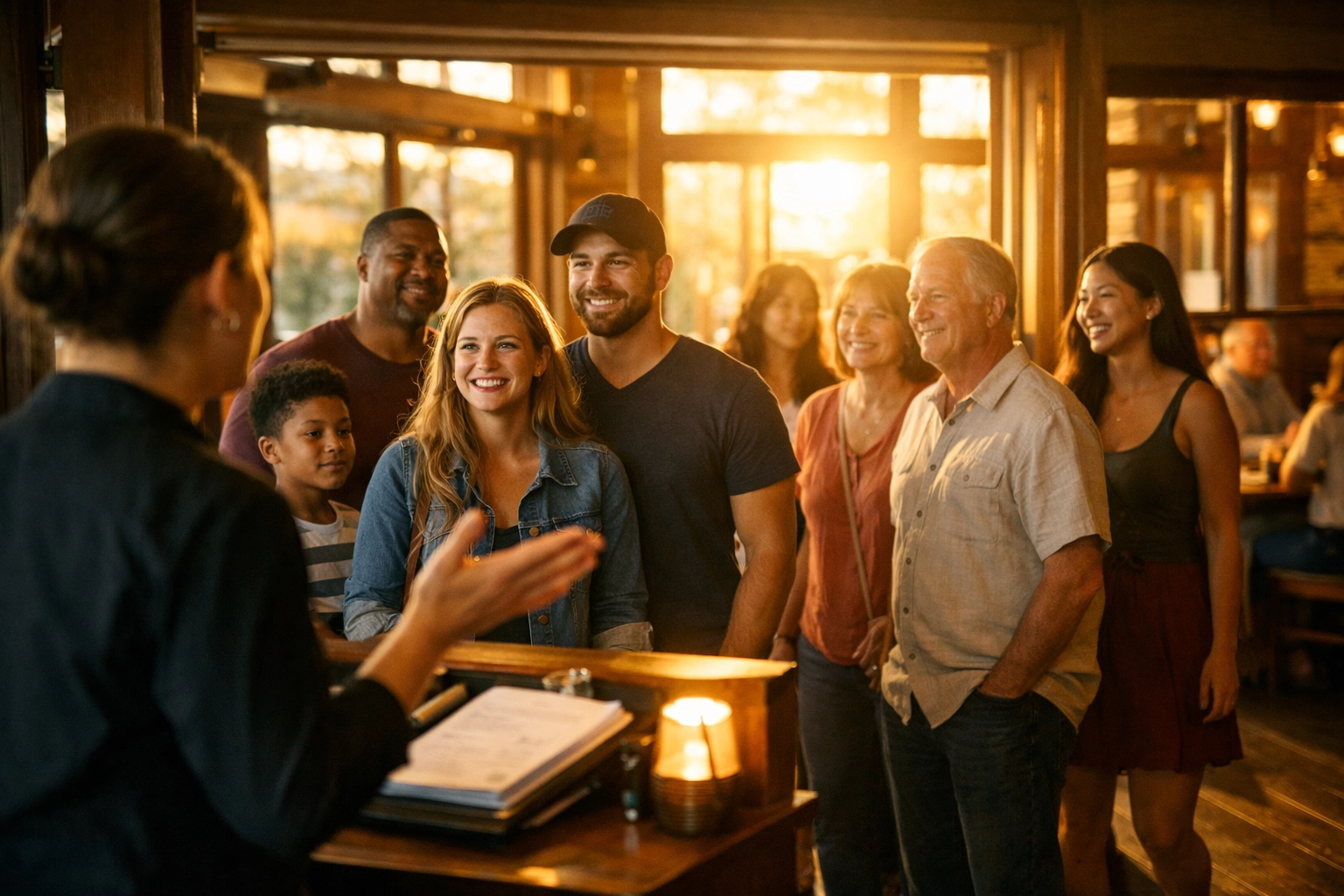
Bar Panisse's walk-in model returns agency to diners. You arrive when hunger strikes. You wait if necessary. You experience the restaurant as organism rather than appointment. This approach aligns with broader shifts in hospitality: the return to human-scaled service, the rejection of algorithmic dining, the embrace of spontaneity.
The operational implications extend beyond philosophy. Walk-in service allows dynamic capacity management, reduces no-show revenue loss (which costs the industry $17 billion annually according to (SevenRooms data)[7]), and creates natural customer flow throughout service periods. It also demands exceptional table-turn efficiency and masterful host stand management, skills that separate competent operations from excellent ones.
Design as Brand Translation: The Craftsman Decision
Studio KDA's interior design for Bar Panisse makes a specific argument about heritage and evolution. The Craftsman aesthetic, with its emphasis on honest materials, functional beauty, and artisan detail, creates visual continuity with Chez Panisse's Arts and Crafts-influenced design while signaling something distinct.
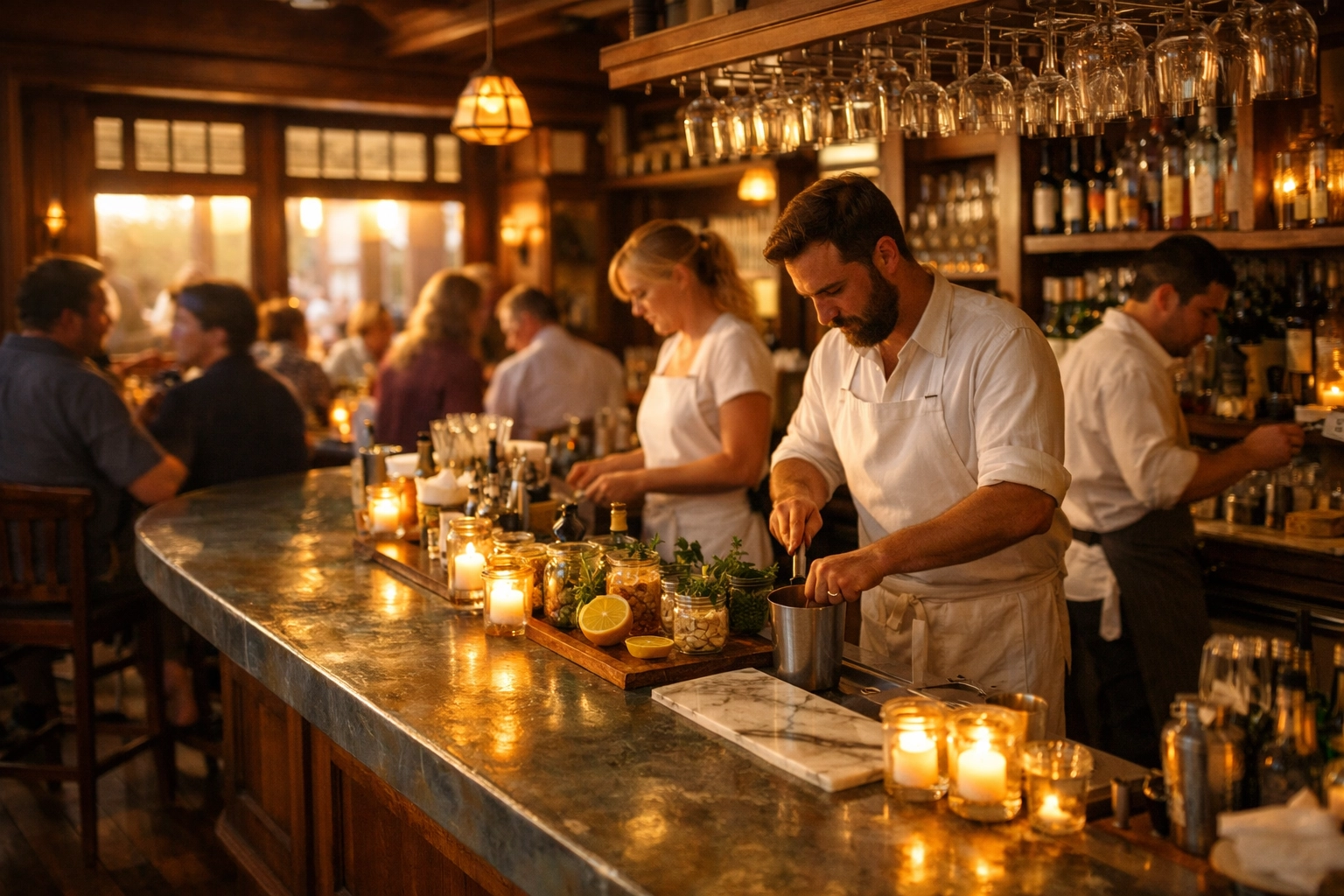
The zinc bar centerpiece serves as functional sculpture. Zinc, traditionally used in Parisian bistros and historically in Bay Area saloons, bridges European tradition with California history. The material develops patina with use, literally recording its own story, a physical manifestation of the restaurant's commitment to aging gracefully rather than remaining static.
According to (Hospitality Design Magazine)[8], successful restaurant interiors in heritage brands must balance three tensions: honoring the source material, establishing independent identity, and serving operational function. Bar Panisse's design achieves this through material honesty (exposed craftsman joinery, marble surfaces), appropriate scale (intimate bar seating balanced with table service), and California light (large windows connecting interior to Shattuck Avenue's streetscape).
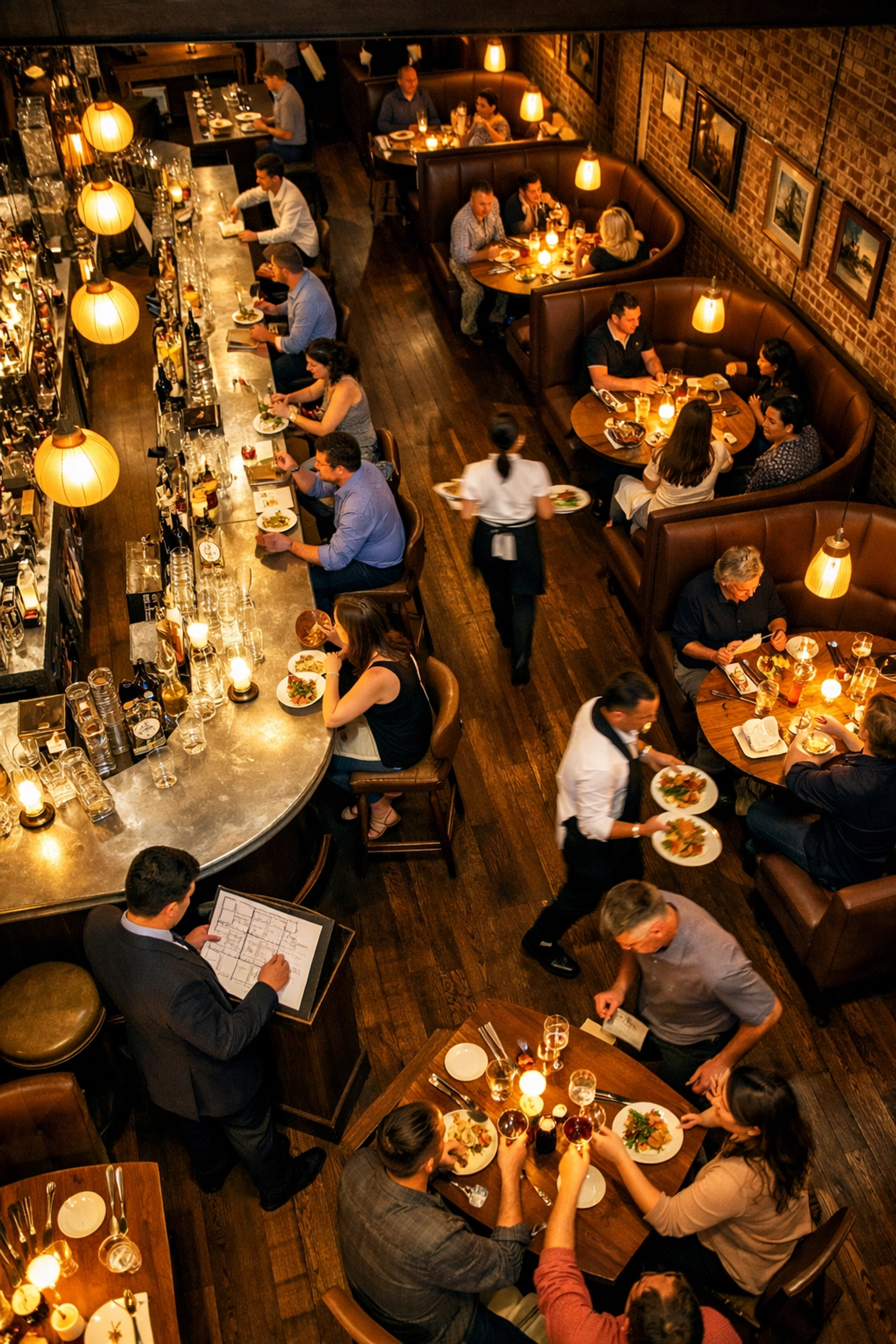
The design also supports the walk-in model. Visible bar seating creates immediate visual interest for arriving guests. The open sightlines allow hosts to assess capacity quickly. The varied seating types (bar stools, banquettes, tables) provide flexible accommodation for parties of different sizes and stay durations.
The Menu Philosophy: Seasonal Restraint Meets Cocktail Innovation
Bar Panisse's menu reflects a careful negotiation between Chez Panisse's uncompromising seasonality and broader accessibility. The signature items, Banyuls vinegar potato chips, sage anchovy fritters, steak frites, demonstrate this balance. Each dish honors seasonal ingredients (the potatoes, the sage, the protein) while offering familiar formats that don't require prior knowledge of California cuisine to appreciate.
The Banyuls vinegar detail illustrates the approach. Banyuls, a French fortified wine from Roussillon, represents specific sourcing and flavor intention, the kind of ingredient specificity that defines Chez Panisse cooking. Applied to potato chips, it makes that specificity accessible and immediate. The dish teaches while satisfying.
The full cocktail program marks Bar Panisse's most significant departure from the Panisse family tradition. Chez Panisse and Café Panisse have always prioritized wine, viewing it as the natural companion to seasonal cooking. Bar Panisse's cocktail focus responds to shifting drinking culture, (Nielsen data)[9] shows craft cocktail consumption grew 42% among restaurant diners between 2019 and 2024, while maintaining ingredient integrity.
A seasonal cocktail program allows the same farm-to-glass storytelling that defines the food menu. Herbs from the same farms. Citrus from the same orchards. Spirits selected for terroir rather than trendiness. The approach extends brand values into a new beverage category without compromising them.
The Panisse Campus: Institutional Restaurants as Neighborhood Anchors
Bar Panisse completes what industry observers now call the "Panisse campus", three distinct concepts (Chez Panisse, Café Panisse, Bar Panisse) operating within two blocks, each serving different occasions and price points while maintaining unified values.
This clustering strategy addresses a persistent challenge in restaurant feasibility: how to build institutional permanence in an industry defined by impermanence. According to (research from Ohio State University's Hospitality Management program)[10], multi-concept clusters achieve 23% better long-term survival rates than standalone concepts, primarily through shared infrastructure, cross-training benefits, and brand reinforcement.
The campus model also serves neighborhood function. Rather than creating dining destinations that empty surrounding blocks, clustered concepts generate sustained foot traffic, support shared supply chains, and create employment density. Bar Panisse's location on Shattuck Avenue strengthens the existing Gourmet Ghetto district, the informal designation for the concentration of food businesses near Chez Panisse.
For restaurant consulting firms advising heritage brands on expansion, the campus model offers compelling advantages:
| Single Expansion | Campus Model |
|---|---|
| Isolated risk | Distributed risk across concepts |
| Limited cross-training | Shared staffing flexibility |
| Brand dilution through distance | Brand reinforcement through proximity |
| Supply chain duplication | Consolidated purchasing power |
| Single revenue stream | Diversified revenue across concepts |
The model isn't without challenges. Market saturation becomes possible. Brand confusion can occur. Operational complexity increases. But for established restaurants with strong neighborhood roots, the campus approach creates institutional permanence that protects against market volatility.
The César Question: Navigating Replacement Controversy
Bar Panisse opened knowing it would face comparison to César, the Spanish-inspired tapas bar that occupied 1515 Shattuck for 25 years. The challenge of replacing beloved local institutions represents one of the most delicate scenarios in concept development.
According to community response tracked by (Eater SF)[11], initial reactions split predictably: excitement about the Panisse team's expansion mixed with mourning for César's loss. This emotional complexity requires careful navigation, acknowledge the predecessor's importance without apologizing for your existence.
Bar Panisse's approach demonstrates several smart principles:
1. Establish clear differentiation. Rather than attempting tapas or Spanish cuisine (which would invite constant comparison), Bar Panisse created distinct identity through cocktails and California-French cooking.
2. Honor the space's history. The design preserved certain architectural elements while establishing new character, suggesting evolution rather than erasure.
3. Maintain price accessibility. By offering bar snacks and drinks at César-comparable price points, Bar Panisse signals it serves similar occasions, if not identical experiences.
4. Let time create the story. Rather than over-explaining or over-justifying, the team focused on excellent execution and allowed the restaurant to define itself through service.
For operators facing similar situations, the lesson is clear: you cannot replace beloved institutions. You can only create new ones. The attempt to replicate or match the predecessor's specific magic usually fails. The commitment to establish your own excellence occasionally succeeds.
What Smart Critics Argue
Not everyone celebrates Bar Panisse's arrival or its walk-in model. Several thoughtful criticisms deserve consideration:
"Walk-in service privileges proximity over inclusivity." This argument holds merit. Berkeley locals enjoy geographic advantage, while visitors or East Bay residents face higher barriers (travel time, parking challenges, uncertainty about wait times). The model may democratize access within the immediate community while limiting it regionally. Bar Panisse could address this through published real-time wait information or limited phone-ahead call lists.
"The expansion risks diluting the Chez Panisse brand." Some longtime patrons worry that proliferation, even carefully managed, weakens what made the original special. This concern has historical precedent: many acclaimed restaurants stumbled during expansion. However, the 45-year pause between significant expansions and the clear differentiation between concepts suggest unusual caution. Time will reveal whether the risk proves justified.
"Cocktail culture contradicts seasonal cooking philosophy." Critics note that spirits themselves aren't seasonal and that cocktail programs often rely on imported ingredients, creating tension with local sourcing values. Bar Panisse's response, seasonal garnishes, local spirits when available, ingredient transparency, represents compromise rather than purity. Whether that compromise serves or undermines the brand remains debatable.
"The restaurant doesn't address César's closure grief." Some community members wanted explanation, perhaps even intervention to save César rather than replace it. This criticism reflects broader anxiety about neighborhood change and the displacement of long-standing institutions. Bar Panisse cannot resolve this underlying tension, which extends far beyond any single restaurant.
These criticisms deserve ongoing attention rather than dismissal. Strong concepts evolve through dialogue with skeptics, not echo chambers of support.
What to Do Next: Lessons for Heritage Brand Expansion
Restaurant operators and consulting firms working with established brands can extract specific guidance from Bar Panisse's approach:
1. Define clear strategic differentiation before expansion. Map your parent brand's DNA (seasonality, sourcing, simplicity for Chez Panisse), then identify adjacent territory that honors those values while serving different occasions. Avoid replication, create complementary experiences.
2. Examine your reservation philosophy critically. Run actual data on no-shows, cancellations, and table turn rates. Calculate the true cost of your reservation system (platform fees, staff time, opportunity cost). Consider whether walk-in service or hybrid models might serve your concept better. Test before committing.
3. Use design to signal both connection and distinction. Work with designers who understand brand translation rather than simple replication. Identify signature materials or details that can bridge concepts (the Craftsman aesthetic for Panisse) while establishing independent character. Avoid creating confusion through excessive similarity.
4. Develop menu offerings that teach your values accessibly. Identify dishes that demonstrate your sourcing standards and cooking philosophy without requiring prior knowledge. The Banyuls potato chips work because they're immediately delicious while quietly introducing specific ingredient thinking.
5. Build operational excellence before building ambition. Bar Panisse opened with experienced leadership (chef Amelia Telc, manager Zachary Becerra) who understand both the parent brand's standards and independent restaurant operations. Expansion isn't the time to experiment with unproven teams.
6. Consider clustering rather than dispersing. If feasible, expand near your original location to create campus effects: shared infrastructure, brand reinforcement, neighborhood density. Calculate whether two nearby concepts generate more sustained success than isolated locations.
7. Accept that you cannot please everyone. Replacing beloved institutions or expanding legendary brands guarantees criticism. Focus on operational excellence and clear values rather than universal approval. Let your work speak louder than your explanations.
8. Document your decision-making process. Create written concept development rationale for walk-in vs. reservation decisions, design choices, menu philosophy, and geographic strategy. This documentation serves both current operations and future concept iterations.
9. Plan for longer runway than standard openings. Heritage brand expansions face heightened scrutiny and comparison. Budget additional time and capital to establish independent identity. Quick fixes rarely work for concepts carrying legacy expectations.
10. Connect with expert guidance for feasibility assessment. Before committing to expansion, work with experienced restaurant consulting firms to evaluate market positioning, financial projections, operational requirements, and brand risk. The Executive Team at McFadden Finch Restaurant Consulting Group specializes in concept development and feasibility analysis for both emerging and established brands.
Frequently Asked Questions
How long should heritage restaurants wait before expanding?
There's no universal timeline, but Bar Panisse's 45-year pause between significant expansions demonstrates unusual restraint. The key factors: Has the parent brand achieved operational mastery? Do you understand what makes it successful? Can you articulate how the new concept serves different occasions without competing? Most importantly, is expansion serving genuine strategic opportunity rather than ego or financial pressure? The restaurant turnaround consulting process often reveals whether brands are ready for growth or need operational strengthening first.
Can walk-in-only models succeed in 2026?
Yes, but with important caveats. Walk-in service works best for: concepts with strong brand recognition (people will risk waiting), locations with natural foot traffic, price points under $75 per person, and service styles that accommodate varied party sizes. It requires exceptional host stand management, realistic wait time communication, and often some form of virtual queue or call-ahead accommodation. Markets with parking challenges need particular consideration.
What makes concept development successful for established brands?
Successful expansion requires clear strategic differentiation, maintained quality standards, appropriate leadership, patient capital, and realistic market assessment. According to hospitality research, the most common failure points are attempting to replicate rather than complement the original, underestimating operational complexity, and expanding for growth's sake rather than strategic opportunity. Professional concept development services help brands navigate these risks through feasibility studies and strategic planning.
How do you honor a previous restaurant in the same space?
The most effective approach: acknowledge its importance without attempting to recreate it. Consider preserving meaningful architectural elements, maintaining similar service occasions or price points where appropriate, and allowing your new concept to establish distinct identity through excellent execution rather than constant comparison. Community engagement during planning phases can identify specific concerns to address.
Should cocktail programs follow the same seasonal philosophy as food menus?
The strongest programs do. Source seasonal garnishes, house-made tinctures from local ingredients, and craft spirits when available. Transparency matters more than perfection: if a cocktail requires imported spirits (most do), focus on seasonal modifiers and honest communication. The kitchen and bar design consulting process should integrate beverage program philosophy from the earliest planning stages.
What's the ideal distance for multi-concept restaurant campuses?
Two to three walkable blocks creates optimal clustering. Closer risks cannibalization and operational chaos. Farther loses campus benefits like shared infrastructure and cross-training. The specific distance depends on neighborhood pedestrian patterns, parking availability, and concept differentiation. Market analysis should evaluate competitive density and neighborhood capacity before committing to clustered expansion.
Sources
[1] OpenTable, "2024 State of the Industry Report: Reservation Trends and Diner Preferences," OpenTable Corporation, 2024, https://www.opentable.com/state-of-industry, Accessed February 2026.
[2] Cornell University School of Hotel Administration, "Multi-Unit Restaurant Success Factors: A Ten-Year Study," Cornell Hospitality Quarterly, 2023, https://chr.cornell.edu/research, Accessed February 2026.
[3] James Beard Foundation, "America's Most Influential Restaurants: 50 Years of American Dining," James Beard Foundation Publications, 2024, https://www.jamesbeard.org/influential-restaurants, Accessed February 2026.
[4] Berkeleyside, "Bar Panisse Opens in Former César Space, Continuing the Panisse Legacy," Berkeleyside, December 2025, https://www.berkeleyside.org/bar-panisse-opening, Accessed February 2026.
[5] National Restaurant Association, "Technology and Operations Report: The Cost of Reservation Platforms," National Restaurant Association, 2024, https://restaurant.org/research/operations-tech, Accessed February 2026.
[6] Zagat, "The Access Gap: How Reservations Are Reshaping American Dining," The Infatuation, 2024, https://www.zagat.com/dining-access-report, Accessed February 2026.
[7] SevenRooms, "The $17 Billion Problem: No-Shows and Revenue Loss in Full-Service Restaurants," SevenRooms Hospitality Data, 2024, https://www.sevenrooms.com/no-show-impact-study, Accessed February 2026.
[8] Hospitality Design Magazine, "Heritage Restaurants and Interior Design: Balancing Legacy and Evolution," Hospitality Design, March 2025, https://www.hospitalitydesign.com/heritage-design, Accessed February 2026.
[9] Nielsen, "Beverage Alcohol Trends: The Rise of Craft Cocktails in Restaurant Settings," Nielsen Market Research, 2024, https://www.nielsen.com/beverage-trends, Accessed February 2026.
[10] Ohio State University, "Restaurant Cluster Effects on Long-Term Survival Rates," Journal of Hospitality Management, 2023, https://ehe.osu.edu/hospitality-research, Accessed February 2026.
[11] Eater SF, "Bar Panisse's Opening Brings Excitement and César Nostalgia to Shattuck Avenue," Eater San Francisco, December 2025, https://sf.eater.com/bar-panisse-opening, Accessed February 2026.
About McFadden Finch Restaurant Consulting Group
McFadden Finch Restaurant Consulting Group provides strategic guidance for restaurant operators navigating concept development, feasibility analysis, operational optimization, and brand evolution. Our comprehensive services support both emerging concepts and established brands through every phase of restaurant development and growth.
From concept development and kitchen design to turnaround consulting and operational assessment, we bring practical expertise to the complex decisions that define restaurant success. Whether you're considering expansion, evaluating walk-in service models, or developing heritage brand strategy, our team provides the analysis and guidance to make informed decisions.
Ready to discuss your concept or expansion strategy? Contact the Executive Team at McFadden Finch Restaurant Consulting Group at (510) 973-2410 or visit mcfadden-finch-group.com/contact to schedule a discovery consultation.