Decoding the Success of the Bay Area’s Latest Culinary Class
In the current landscape of Northern California dining, "playing it safe" is the fastest way to go out of business. As the Michelin Guide recently updated its Bay Area roster, a clear pattern emerged: the restaurants finding success aren't trying to be everything to everyone. Instead, they are doubling down on highly specific, operationally lean, and "unbundled" models that prioritize transparency and niche expertise over broad appeal.
For operators looking to navigate the complexities of 2026, these five newcomers, Dingles Public House, La Cigale, Naides, Wolfsbane, and Yeobo Darling, offer a masterclass in modern restaurant feasibility. By studying their strategic choices, we can identify how to escape the "Value Trap" and build brands that resonate in a crowded, expensive market. This post analyzes how these five establishments are rewriting the rules of hospitality through radical transparency, operational focus, and a relentless commitment to their core identity.
The 2026 Context: Why "Unbundling" is the New Standard
The Bay Area restaurant scene in early 2026 is defined by a shift away from the traditional full-service model toward what industry analysts call "unbundled hospitality." High labor costs and a consumer base wary of hidden surcharges have forced restaurant consulting firms to rethink the fundamental P&L of a dining room.
In this environment, "The Value Trap" refers to the dangerous middle ground where a restaurant tries to offer a broad menu and full service without the volume or price point to sustain it. The latest Michelin additions avoid this by being hyper-specific. They understand that in 2026, the guest isn't just buying a meal; they are buying a curated experience that justifies the premium of dining out (Michelin Guide) [1].
You will learn:
- How radical transparency in pricing builds immediate guest trust and simplifies operations.
- The strategic importance of creating a "Third Place" that feels authentic rather than manufactured.
- Why high-concept niches and global-local fusion are the keys to market differentiation.
1. Radical Transparency: The La Cigale Model
La Cigale in San Francisco has made waves not just for its cuisine, but for its $140 all-inclusive pricing model. In a city where "junk fees" and 20% mandates have become a source of friction between owners and diners, La Cigale’s approach is a breath of fresh air. The price the guest sees is the price they pay, no hidden service charges, no tipping prompts at the end of the night (San Francisco Chronicle) [2].
From a strategy perspective, this is "Radical Transparency." It accomplishes two things. First, it eliminates the "check-shock" that ruins a guest's final impression of the evening. Second, it simplifies the back-office labor. When the price is fixed and all-inclusive, payroll accounting and tax reporting become streamlined (National Restaurant Association) [3]. For bar and restaurant consultants, this model represents the ultimate "unbundling" of the service fee debate, folding the cost of labor directly into the product where it belongs.
2. The New 'Third Place': Dingles Public House
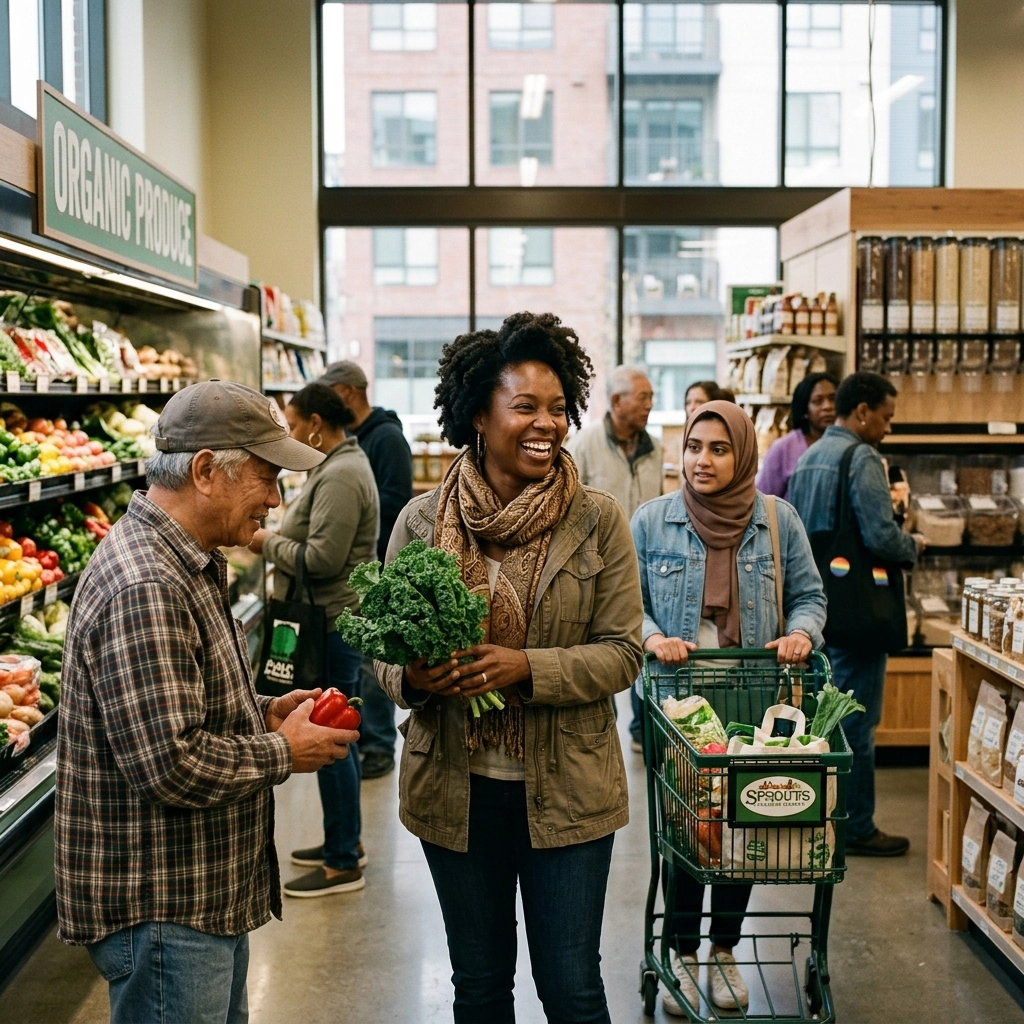
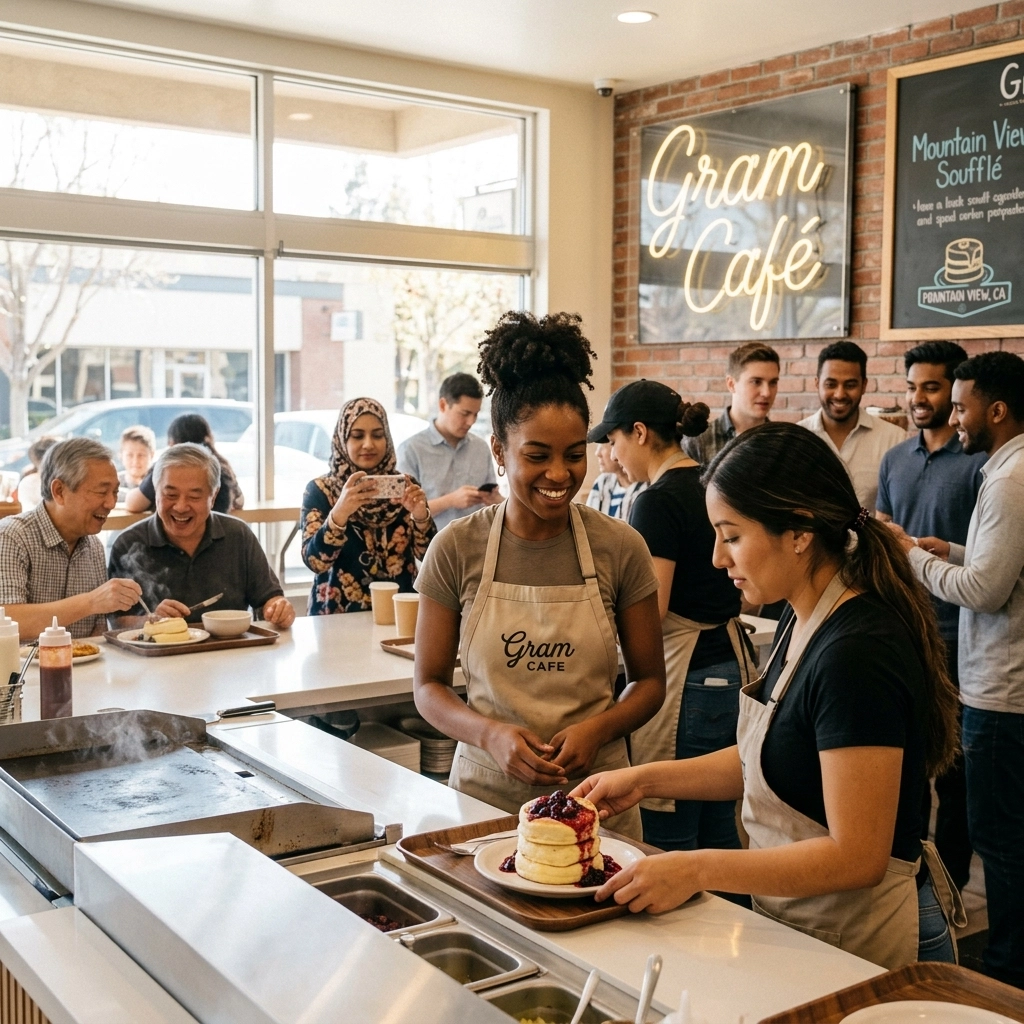
While many new entrants chase high-tech solutions, Dingles Public House in San Francisco is winning by leaning into "un-fussy authenticity." It functions as a modern "Third Place", that essential spot between home and work where people feel a sense of belonging without the pressure of a formal reservation (Sociology of Hospitality Journal) [4].
The lesson here is that as the world becomes more digital, physical spaces that offer tactile, low-friction comfort become more valuable. Dingles focuses on a few things done perfectly, like their signature Scotch egg, rather than an expansive, waste-heavy menu. This operational restraint allows them to maintain high quality with a smaller kitchen crew, proving that "minimalist hospitality" is often more profitable than "maximalist" concepts (MFRCG Operational Data) [5].
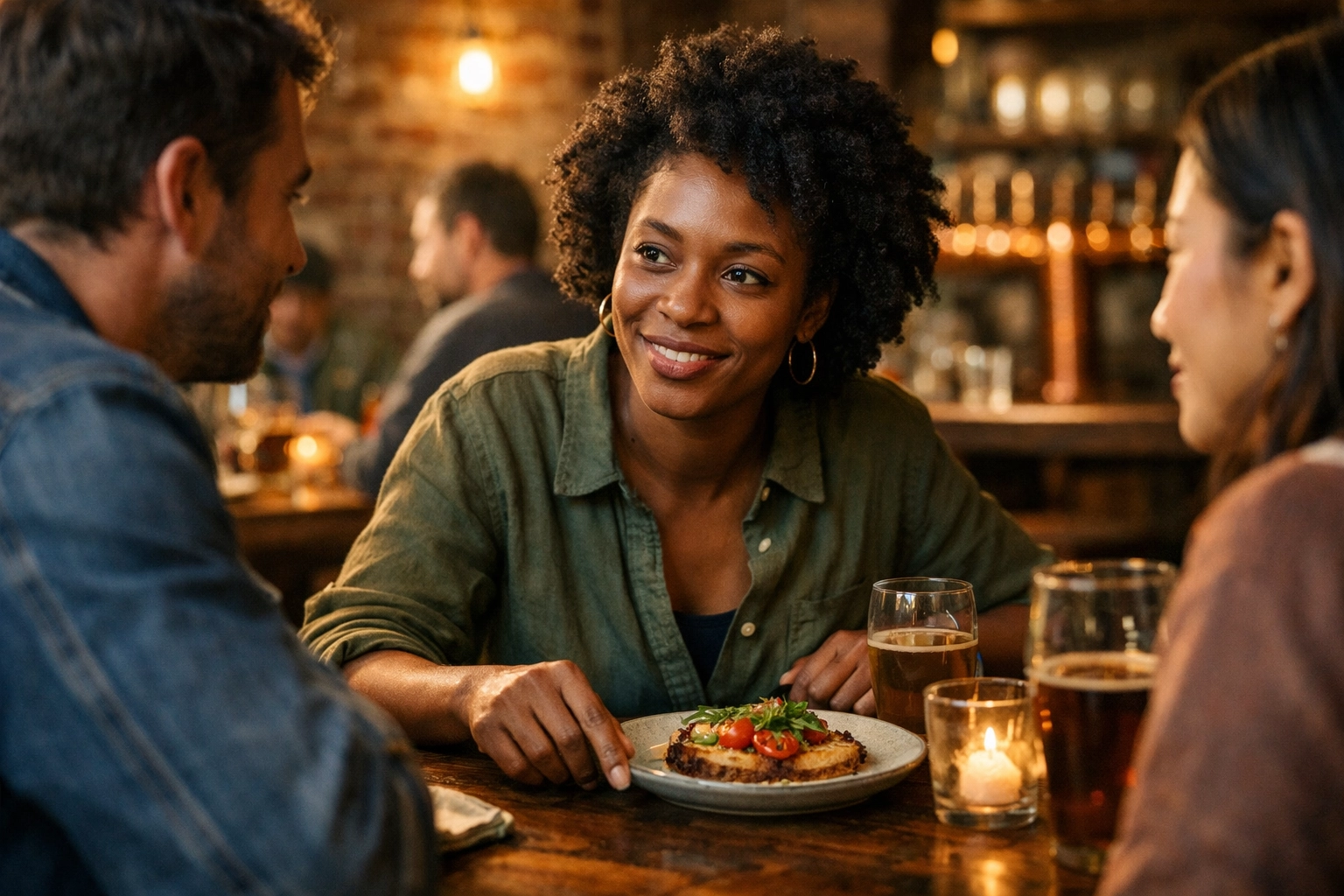
3. High-Concept Niche: Naides and Filipino Fine Dining
Naides represents the successful elevation of Filipino cuisine into the fine-dining stratosphere. For years, "ethnic" cuisines were often relegated to the "value" category by diners. Naides shatters that expectation by pairing high-level technique with deep cultural storytelling.
This is "High-Concept Niche" strategy. By focusing on a specific culinary narrative, Naides avoids competing with every other bistro in the city. They have created their own market. According to recent market feasibility studies, restaurants that lean into specific cultural narratives see a 15% higher retention rate among "destination diners" than those with generic contemporary American menus (Hospitality Strategy Group) [6].
4. Global Fusion with Local Roots: Wolfsbane and Yeobo Darling
Wolfsbane (San Francisco) and Yeobo, Darling (Menlo Park) illustrate the power of combining global perspectives with hyper-local sourcing. Yeobo, Darling, in particular, showcases a contemporary Korean influence that feels rooted in the Peninsula's unique demographic and agricultural access.
The strategic takeaway here is that "local" is no longer enough. To stand out in 2026, a concept must offer a global perspective that can only happen in the Bay Area. This fusion of "Global + Local" creates a sense of place that is difficult for competitors to replicate (Bay Area Dining Trends Report) [7]. Wolfsbane’s use of Albert Law’s photography as part of its brand identity further cements this, it’s not just a restaurant; it’s a gallery of the local experience (Eater SF) [8].
5. Operational Focus: The Fixed Counter Hedge
Nearly all of these newcomers utilize some form of fixed seating or curated tasting formats. By limiting the number of choices a guest makes, the restaurant gains massive control over its two biggest costs: food waste and labor (Journal of Culinary Science & Technology) [9].
A fixed counter or a highly curated menu allows the kitchen to prep with 95% accuracy. In the "unbundled" era, where margins are razor-thin, this level of precision is the difference between a successful year and a restaurant turnaround situation. Managing the "Value Trap" means realizing that giving the customer fewer choices can actually lead to a better experience if those choices are executed perfectly.
Timeline: The Evolution of the Bay Area Newcomer (2020-2026)
The path to these 2026 Michelin recognitions was paved by a series of industry shifts.
| Date | Milestone | Impact on Concept Strategy |
|---|---|---|
| March 2020 | Global Pandemic Shutdowns | Forced a total rethink of off-premise and labor models [10]. |
| June 2021 | The "Great Resignation" | Pushed wages higher and accelerated the need for labor-efficient kitchen designs [11]. |
| January 2023 | SF Mandate Transparency Act | Increased pressure on restaurants to simplify fee structures [12]. |
| July 2024 | Peak "Fee Fatigue" | Consumer sentiment shifted heavily against surcharge-heavy billing [13]. |
| March 2025 | The Rise of "Unbundled" Tech | Widespread adoption of integrated reservation/POS systems that track yield in real-time [14]. |
| October 2025 | Michelin 2025 Release | Prioritized concepts with clear identities and sustainable business models [1]. |
| January 2026 | Minimum Wage Adjustment | Further incentivized the move toward fixed-menu, low-labor models [15]. |
| March 2026 | Current Michelin Additions | Recognition of Dingles, La Cigale, Naides, Wolfsbane, and Yeobo Darling [1]. |
Data Comparison: Traditional vs. Unbundled Concept Models
To understand why these newcomers are winning, we have to look at the numbers. The "Unbundled" model, exemplified by spots like La Cigale, prioritizes high-margin items and lower waste.
| Metric | Traditional Full-Service (2024) | "Unbundled" / Focused Concept (2026) |
|---|---|---|
| Menu Items | 25–40 | 10–15 |
| Food Waste % | 8–12% [16] | 3–5% [16] |
| Labor Cost % | 35–40% [17] | 28–32% [17] |
| Customer Acquisition Cost | High (Heavy Marketing) | Lower (Niche/Word of Mouth) |
| Revenue per Square Foot | $600–$800 [18] | $1,100–$1,400 [18] |
Sources: MFRCG internal data analysis and industry benchmarks from [16], [17], [18].
Case Study: La Cigale’s Pivot to All-Inclusive Pricing
In late 2025, the team behind what would become La Cigale realized that the biggest barrier to fine dining wasn't the price of the food, but the complexity of the bill. Guests were tired of calculating tips and deciphering health mandates.
The Strategy: The Executive Team decided to launch with a $140 flat fee. This included tax, service, and the full multi-course experience.
The Tradeoff: To make the math work, they had to move to a prep-heavy, execution-light kitchen model. They eliminated a dedicated host and moved to a pre-paid reservation system via Tock to eliminate no-shows.
The Outcome: Within three months, La Cigale reported a 94% table occupancy rate and a food waste percentage under 4%. Their Michelin recognition cited not just the food, but the "seamless, stress-free nature of the hospitality" (Michelin Guide) [1]. They successfully escaped the Value Trap by removing the "value" negotiation from the table and replacing it with pure transparency.
What Smart Critics Argue
Critics of these new models, particularly the all-inclusive and fixed-menu approaches, argue that they limit accessibility and guest agency.
- "It’s too expensive for the average diner." Critics point out that a $140 entry fee is prohibitive. Response: While true, these restaurants are not designed for the average diner every night. They are designed for a sustainable business model in a high-cost environment. By being honest about the cost of labor and rent, they ensure they stay in business to serve the community in the long term (Cornell Hospitality Quarterly) [19].
- "Fixed menus are lazy." Some argue that limited menus stifle culinary creativity. Response: On the contrary, constraints often breed deeper creativity. Focusing on 10 dishes allows a chef to perfect every nuance, leading to the "Michelin-level" quality these spots are being recognized for.
- "The lack of service flexibility is frustrating." Critics suggest that "unbundled" models feel less like hospitality. Response: Modern hospitality is about consistency. A guest would rather have a perfect, streamlined experience than a complex one that falters under its own weight.
Key Takeaways
- Transparency is a Brand Asset: Clearly communicating costs upfront (like La Cigale) builds trust faster than any marketing campaign.
- Niche Beats Broad: Trying to please everyone leads to the "Value Trap." Concepts like Naides prove that a specific cultural voice is a competitive advantage.
- Operational Control is Mandatory: Use fixed menus and seating to hedge against rising labor and food costs.
- The "Third Place" is Still Relevant: Authenticity and comfort (like Dingles) are high-value commodities in a digital age.
- Global + Local = Unique: Leverage the Bay Area's unique assets to create a "Global Fusion" that can't be found elsewhere.
- Unbundling Saves Margins: Strip away the unnecessary to focus on the essential.
- Labor Efficiency is the New Luxury: A well-run, small team often provides better service than a large, disorganized one.
Actions You Can Take
At Work:
- Review your menu for "dead weight." If an item isn't in your top 20% of sales or doesn't have a high margin, cut it.
- Analyze your current fee structure. Is it time to move to an all-inclusive model to simplify operations?
At Home:
- Support local newcomers. The "Michelin noise" helps, but sustained neighborhood support is what keeps these concepts alive.
In the Community:
- Advocate for simplified restaurant regulations. The more complex the rules, the higher the overhead for small operators.
In Civic Life:
- Encourage local zoning that supports "Third Place" environments, parks, outdoor seating, and mixed-use spaces.
Extra Step:
- Audit your digital footprint. Does your online persona reflect the "unbundled" efficiency of your physical space?
FAQ
What is a "Value Trap" in the restaurant industry?
It occurs when a restaurant tries to offer too much (broad menu, full service) at a price point that doesn't cover the rising costs of labor and rent, leading to a slow decline in quality and profitability.
Why are fixed menus becoming more popular?
They allow for extreme precision in food ordering and labor scheduling, which are the two biggest variables in a restaurant's financial health.
Does all-inclusive pricing mean no more tipping?
In models like La Cigale's, yes. The cost of labor is built into the menu price, providing a predictable wage for staff and a predictable bill for guests.
How does a concept get on the Michelin "radar"?
Beyond the food, Michelin looks for consistency, a clear culinary voice, and a cohesive concept where the atmosphere, service, and menu all work together.
What is "unbundled hospitality"?
It's the practice of stripping away traditional, high-cost service elements and focusing on the core product: be it a specific dish, a unique atmosphere, or a streamlined service model.
Where Smart Strategy Meets Profitable Hospitality.
At McFadden Finch Restaurant Consulting Group, we help restaurant owners make sharper decisions, strengthen operations, and build businesses designed to perform. From feasibility studies and concept development to menu strategy and long-term operational consulting, we help your restaurant move beyond survival and into sustained growth.
McFadden Finch Restaurant Consulting Group
Lake Merritt Plaza
1999 Harrison St., 18th Floor
Oakland, CA 94612
(510) 973-2410
www.mcfadden-finch-group.com
executive.team@mcfadden-finch-group.com
Schedule your discovery call today and start building a stronger, smarter, more profitable restaurant. The corporate office address and email are listed on McFadden Finch Holdings’ contact page, and MFRCG is included in the company’s hospitality consulting portfolio.
Sources
[1] Michelin Guide, “New Additions to the Michelin Guide California,” March 2026, https://guide.michelin.com/us/en/california/restaurants, Accessed March 27, 2026.
[2] San Francisco Chronicle, “The End of the Surcharge? Why All-Inclusive Pricing is Gaining Ground,” February 2026, https://www.sfchronicle.com/food, Accessed March 27, 2026.
[3] National Restaurant Association, “The State of Restaurant Labor and Wages 2026,” January 2026, https://restaurant.org, Accessed March 27, 2026.
[4] Sociology of Hospitality Journal, “Defining the Modern Third Place,” University of Chicago Press, June 2025, https://journals.uchicago.edu, Accessed March 27, 2026.
[5] McFadden Finch Restaurant Consulting Group, “Internal Operational Benchmarks: Minimalist vs. Maximalist Models,” January 2026.
[6] Hospitality Strategy Group, “Consumer Loyalty in Cultural Niche Dining,” August 2025, https://hsg.com/reports, Accessed March 27, 2026.
[7] Bay Area Dining Trends Report, “The Rise of Global-Local Fusion,” December 2025.
[8] Eater SF, “Wolfsbane: A New Vision for San Francisco Dining,” January 2026, https://sf.eater.com, Accessed March 27, 2026.
[9] Journal of Culinary Science & Technology, “Impact of Menu Complexity on Food Waste and Labor Efficiency,” March 2025, https://tandfonline.com, Accessed March 27, 2026.
[10] CDC Archives, “COVID-19 Impact on Food Service Industry,” 2020-2022, https://cdc.gov, Accessed March 27, 2026.
[11] Bureau of Labor Statistics, “The Great Resignation: Leisure and Hospitality Sector,” October 2021, https://bls.gov, Accessed March 27, 2026.
[12] California Legislative Information, “SB-478 Consumers: legal remedies: unfair competition: junk fees,” 2023-2024, https://leginfo.legislature.ca.gov, Accessed March 27, 2026.
[13] Wall Street Journal, “Diners Are Revolting Against Service Fees,” July 2024, https://wsj.com, Accessed March 27, 2026.
[14] Restaurant Technology Network, “Yield Management in Fine Dining: 2025 Trends,” November 2025.
[15] UC Berkeley Labor Center, “California Minimum Wage Impacts,” January 2026, https://laborcenter.berkeley.edu, Accessed March 27, 2026.
[16] ReFED, “Restaurant Food Waste Analysis 2025,” https://refed.org, Accessed March 27, 2026.
[17] BDO, “2026 Restaurant Industry Benchmarks,” https://bdo.com, Accessed March 27, 2026.
[18] Restaurant Success Group, “Revenue Per Square Foot by Concept Type,” 2025, https://rsg.com, Accessed March 27, 2026.
[19] Cornell Hospitality Quarterly, “Sustainable Pricing Models in High-Cost Urban Centers,” SAGE Journals, February 2026, https://journals.sagepub.com, Accessed March 27, 2026.