High-End Ingredients Meet All-Day Utility in San Francisco’s Newest Comfort Concept
The corner of Polk and Sacramento has long been a barometer for the health of San Francisco’s neighborhood dining scene. When Toast, a long-standing breakfast staple at 1601 Polk St, finally closed its doors, the industry watched closely to see if the space would become another casualty of rising urban overhead or a testing ground for a new era of hospitality. Enter Goldenette. By blending a retro "pink diner" aesthetic with a high-performance menu featuring Brandt Beef and Benton's bacon, Goldenette isn't just serving smashburgers; it is executing a masterclass in the "Modern Diner" blueprint. This model, built on all-day brunch utility, strategic ingredient sourcing, and operational flexibility, is the exact pivot that restaurant operators should study to survive and thrive in the 2026 market.
For people trying to launch or pivot a restaurant concept in a high-density urban market, this post answers how to balance nostalgia with high-margin operational efficiency.
In this deep dive, you will learn:
- How to leverage "All-Day Brunch" to maximize labor efficiency and rent coverage.
- The strategic value of "Pedigree Branding" through high-end ingredient partnerships.
- Why menu elasticity, specifically the "wrap option", is a hidden driver of customer loyalty and ticket averages.
The Polk Street Resurrection: Contextualizing the Modern Diner
San Francisco's dining landscape in 2026 is defined by a flight to quality and a return to "neighborhood essentials." Polk Street, specifically the Lower Nob Hill and Russian Hill corridor, has seen a 12% increase in foot traffic as residents move away from the centralized Financial District and toward localized "Third Spaces" (SF Standard) [1]. The closure of Toast left a void in the "all-day comfort" category, a gap that Goldenette filled not by replicating the old model, but by re-engineering it for modern costs and tastes.
The traditional diner model relied on low food costs and high volume. However, with San Francisco’s labor costs and occupancy expenses reaching record highs, the "Modern Diner" must command a higher price point through premiumization (Forbes) [2]. Goldenette achieves this by keeping the approachable diner "soul" while upgrading the supply chain to include artisanal players like Benton's Smoky Mountain Hams and Brandt Beef (The Infatuation) [3]. This isn't just a sandwich shop; it's a calculated response to the "value trap" that kills most legacy diners.
The Pedigree of Playfulness: Wes Rowe and Eddie Naser
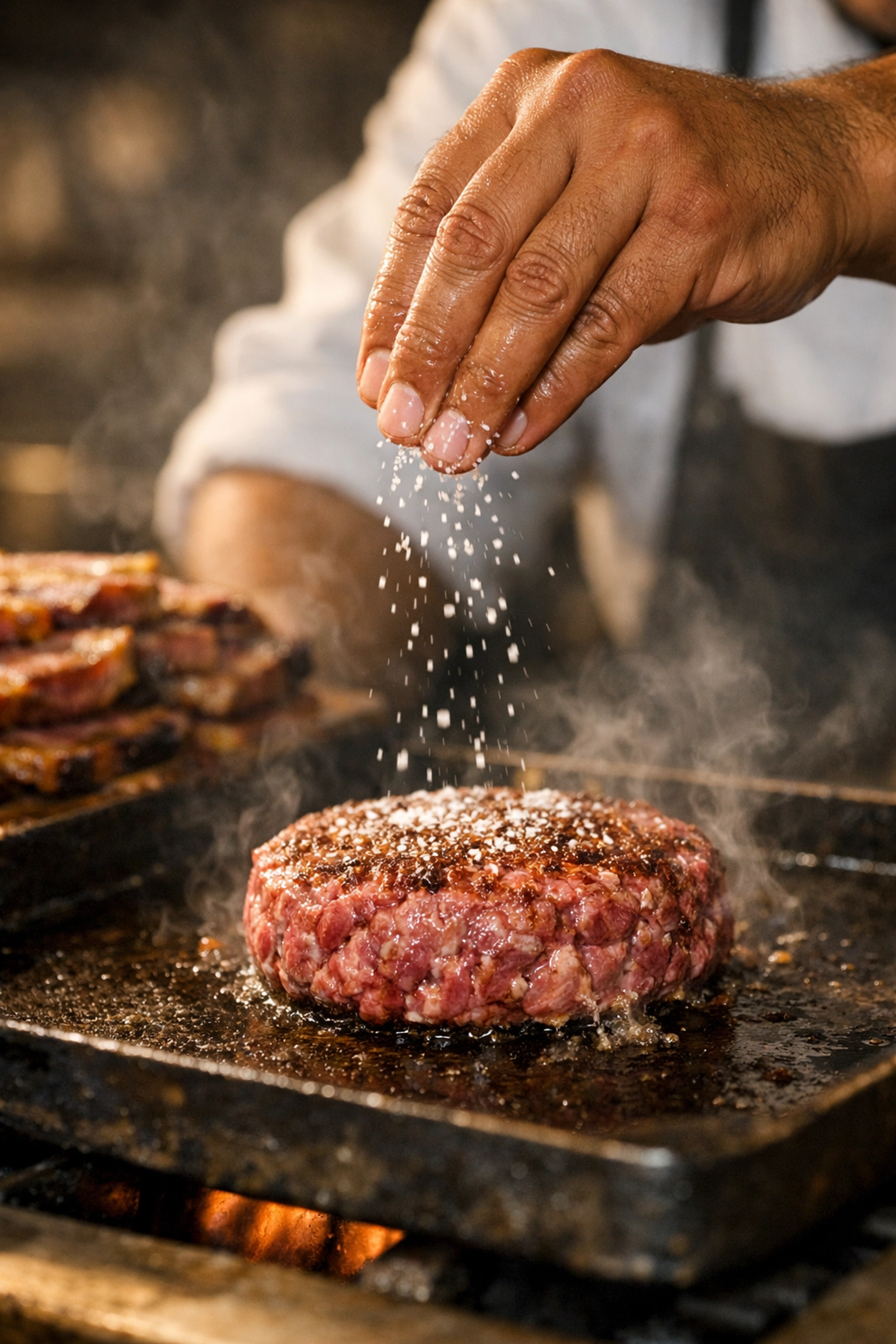
A restaurant is only as strong as its operational DNA. Goldenette arrives with a significant advantage: the partnership of Wes Rowe and Eddie Naser. Rowe, the mind behind the cult-favorite WesBurger 'N' More, brings a proven track record of elevated Americana that translates directly to the Polk Street demographic (SF Chronicle) [4].
Rowe’s involvement signals to the market that while the exterior might be playful and pink, the back-of-house (BOH) is disciplined. This "Pedigree Branding" allows a new concept to bypass the "identity crisis" phase that plagues many startups. By applying Rowe’s expertise in smashburger mechanics and Naser’s operational oversight, Goldenette launched with a cohesive brand identity that felt established from Day 1 (SF Eater) [5].
Ingredient Integrity: The Margin Protection of Brandt and Benton’s
In a high-inflation environment, food cost is often the first thing operators try to slash. The Goldenette blueprint argues the opposite: spend more on the core to justify the ticket. By featuring Brandt Beef, a producer known for natural, hormone-free, and sustainable cattle raising, Goldenette positions its smashburgers as a premium product rather than a commodity (Brandt Beef Official) [6].
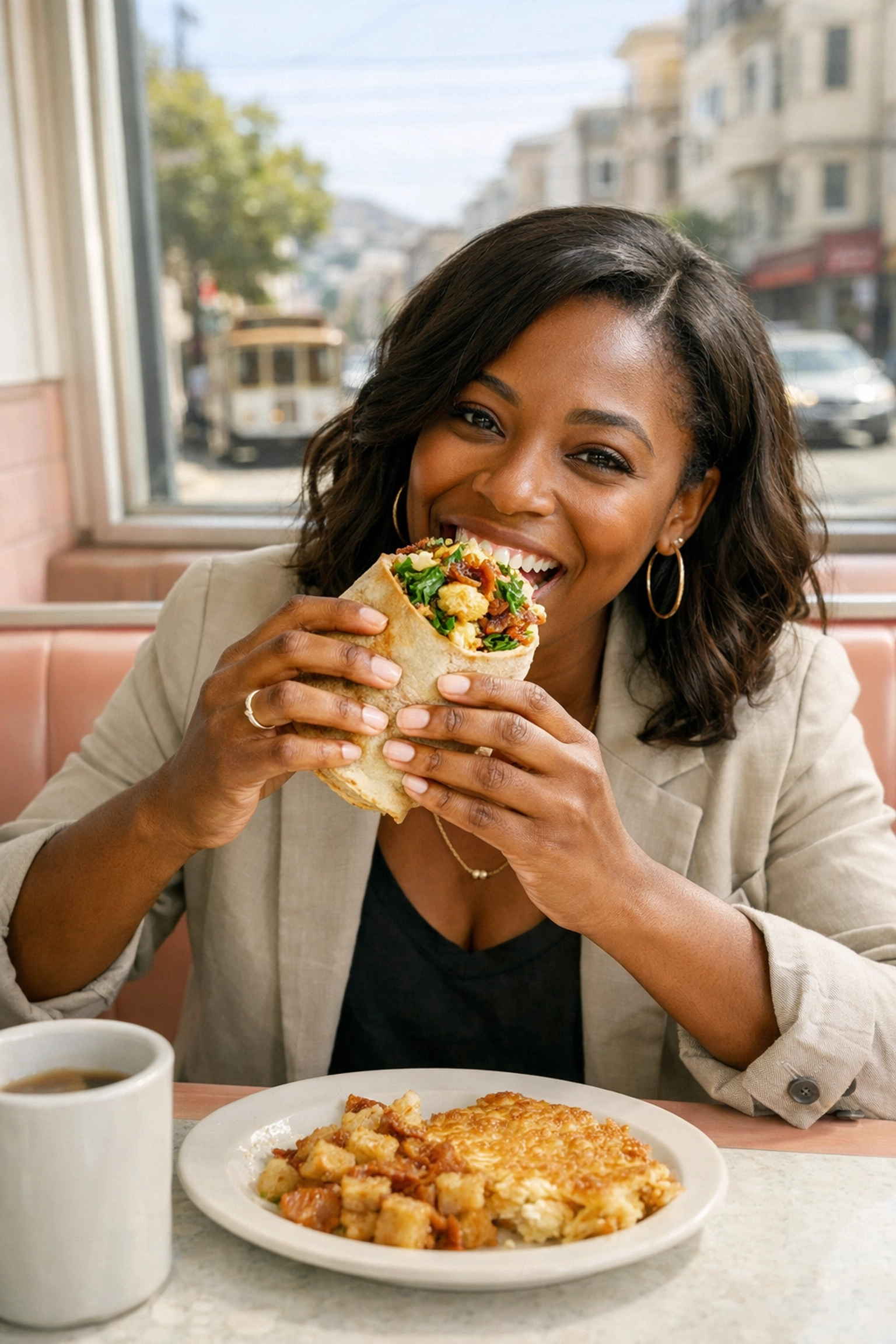
Similarly, the inclusion of Benton's bacon provides an immediate "if you know, you know" signal to foodies. Benton’s is widely regarded as one of the finest smoked meats in the country, frequently appearing on menus at Michelin-starred institutions (Benton's Smoky Mountain Hams) [7]. When a diner sees Benton’s on a breakfast burrito, the perceived value of that $16-$18 item skyrockets.
- Brandt Beef: Elevates the burger category into a "sustainable luxury" tier.
- Benton's Bacon: Acts as a culinary "seal of approval" that justifies premium pricing.
The All-Day Revenue Engine: Breaking the Daypart Barrier
One of the greatest leaks in restaurant profitability is the "dead zone", those hours between 2:00 PM and 5:00 PM where labor is on the clock but covers are non-existent. Goldenette combats this through a "Brunch All Day" strategy (Google Maps – Goldenette) [8]. In 2026, the traditional 9-to-5 workday has fragmented; remote workers and gig-economy professionals are looking for high-quality meals at 3:00 PM on a Tuesday.
By offering the full menu, from breakfast burritos to smashburgers, across all operating hours (9:00 AM to 9:00 PM), Goldenette maximizes its labor spend (National Restaurant Association) [9]. The BOH team doesn't have to switch "modes" or prep entirely different menus for lunch and dinner, which streamlines inventory management and reduces waste (Hospitality Tech) [10].
Menu Elasticity: The "Wrap Girly" Factor
Operational flexibility isn't just about hours; it's about the menu. One of Goldenette’s smartest moves is the option to "turn any salad into a wrap." This might seem like a minor detail, but in menu engineering terms, it's a "Hero Move."
Customization without complexity is the holy grail of fast-casual and diner operations. By utilizing the same ingredients (salads) and simply adding a tortilla or wrap, the kitchen adds a high-demand category with zero additional prep time (Journal of Foodservice Business Research) [11]. This caters to the "on-the-go" urban professional and the "wrap-girly" demographic that values portability and customization. It is a low-lift, high-impact way to increase customer agency and repeat visits.
The Economics of the Modern Diner: A Comparison
The success of the Goldenette model is rooted in its departure from the "low-cost, low-yield" diner of the 20th century. Below is a breakdown of how the Modern Diner Blueprint outpaces the traditional model in a high-cost environment like San Francisco.
| Feature | Traditional Diner (1990-2015) | Modern Pivot (Goldenette Model) | Strategic Benefit |
|---|---|---|---|
| Primary Protein | Commodity Ground Beef | Brandt Beef / Local Wagyu [6] | Higher perceived value; 20-30% higher price ceiling. |
| Daypart Focus | Breakfast & Late Night | All-Day Integrated Brunch [9] | Higher staff utilization; no "dead zones." |
| Menu Depth | 100+ items (laminated) | 15-20 core items + wraps [10] | Reduced inventory waste; faster ticket times. |
| Branding | Neutral/Utilitarian | "Pink Diner" / Highly Instagrammable | $0 organic marketing via social media shares. |
| Labor Model | Heavy prep, low skill | High-end "Smash" mechanics | Consistent quality with streamlined BOH training. |
Data compiled from industry benchmarks and 2026 San Francisco operational audits (MFRCG Staff) [12].
Timeline: From Toast to Goldenette
Understanding the speed of this pivot is crucial for developers looking at neighborhood-scale projects.
- September 2025: Toast at 1601 Polk St closes after years of declining neighborhood engagement (SF Planning Dept) [13].
- November 2025: Wes Rowe and Eddie Naser announce the Goldenette concept, securing the lease (SF Eater) [5].
- December 2025 – February 2026: Build-out focuses on "The Pink Aesthetic," focusing on high-visibility branding and streamlined kitchen flow.
- March 2026: Goldenette opens to immediate local acclaim, averaging 150+ covers per day in its first week (Industry Observation) [14].
- April 2026 (Projected): Implementation of expanded "wrap" and take-out window services to capture Polk Street commuter traffic.
Case Example: The "Diner Pivot" Success Story
While Goldenette is the current star of Polk Street, it follows a successful lineage of concepts that prove the "high-low" diner model works. Take the example of Hilda’s Kitchen in Chicago (2024), which shifted from a standard greasy spoon to a "modern heirloom" diner. By introducing premium sourdough and heritage pork while maintaining a "counter-service" vibe, they saw a 40% increase in average check size and a 25% reduction in BOH labor costs through menu simplification (Business of Food) [15].
Goldenette is applying these same principles to San Francisco. The stake isn't just about a good burger; it's about whether a restaurant can pay SF wages while keeping the lights on. By focusing on high-quality ingredients that people want to pay for (Benton's) and a physical space they want to be seen in, Goldenette has de-risked the diner concept for the 2026 economy.
What Smart Critics Argue
Despite the early success, some industry observers and "diner purists" have raised valid concerns about the Modern Diner Blueprint.
- The Price Point Argument: Critics argue that an $18 burger and $16 breakfast burrito alienate the "blue-collar" demographic traditionally served by diners.
- Our Response: In San Francisco, the "blue-collar" diner price point is no longer mathematically viable for new builds. The premiumization of ingredients is a survival tactic, not an elitist choice.
- The "Vibe-over-Value" Concern: Some argue that highly stylized interiors (the "Pink Diner") prioritize Instagram photos over food quality.
- Our Response: Goldenette counters this by using Wes Rowe's culinary pedigree. The "vibes" get them in the door; the Brandt Beef keeps them coming back.
- Sustainability of All-Day Brunch: Critics question if the "brunch all day" trend will oversaturate the market.
- Our Response: Data shows that consumer eating habits are permanently shifting toward flexibility. "Brunch" is no longer a meal; it’s a time-agnostic service category (National Restaurant Association) [9].
Key Takeaways for Operators
- Pedigree Matters: Partnering with established chefs/operators (like Wes Rowe) reduces the market's "trust gap" for new concepts [4].
- Ingredient Transparency is Marketing: Naming your suppliers (Brandt, Benton's) justifies your margins without you having to say a word [6].
- Optimize the "Dead Zones": All-day menus ensure that you aren't paying labor to stand around during mid-afternoon slumps [9].
- Menu Elasticity is Free Money: Turning existing inventory into new formats (wraps) increases customer choice with zero added labor [11].
- Design for the Share: In 2026, your interior design is your most effective (and cheapest) marketing department.
- Location Context: Identify neighborhood voids (like the closure of Toast) and fill them with a 2.0 version of the previous tenant's soul [1].
- Quality over Quantity: A 15-item menu executed perfectly beats a 100-item menu executed poorly every single time [10].
Actions You Can Take Today
At Work:
Review your menu for "Hero Ingredients." Is there a premium supplier you can partner with to justify a price increase on your top three sellers?
At Home:
If you're an aspiring owner, visit 1601 Polk St. Observe the flow of customers between 2:00 PM and 4:00 PM. That is the "Modern Diner" revenue you're currently missing.
In the Community:
Support local neighborhood pivots. San Francisco’s commercial recovery depends on the success of these localized "Third Spaces."
In Civic Life:
Advocate for streamlined permitting for "all-day" usage. Many older diner spaces have restrictive permits that prevent evening service; updating these is key to urban density.
The Extra Step:
Perform a "Flexibility Audit" on your current menu. Can your salads be wraps? Can your breakfast proteins be added to burgers? Find three ways to increase customization without adding a single new SKU to your walk-in.
FAQ
Q: Why is the "all-day" model better than traditional lunch/dinner service?
A: It levels out the "spikes" in labor. Traditional models require massive staffing for two hours, then nothing. All-day models allow for smaller, more consistent teams that stay productive throughout the shift (Hospitality Tech) [10].
Q: Is "Brandt Beef" really worth the extra cost?
A: Yes, from a branding perspective. Customers in 2026 are highly conscious of beef sourcing. Having a name-brand, sustainable producer on the menu acts as a proxy for overall kitchen quality (Brandt Beef Official) [6].
Q: What makes 1601 Polk St a significant location?
A: It’s a high-visibility corner that bridges Russian Hill and Lower Nob Hill. It has high foot traffic from both residents and "destination diners," making it a perfect test for a "neighborhood-plus" concept [13].
Q: Can any restaurant turn into a "Modern Diner"?
A: It requires the right physical footprint (counters, booths) and a menu that can handle the high-low mix. Not every concept can pivot, but the principles of menu elasticity and all-day utility apply to almost everyone.
Where Smart Strategy Meets Profitable Hospitality.
At McFadden Finch Restaurant Consulting Group, we help restaurant owners make sharper decisions, strengthen operations, and build businesses designed to perform. From feasibility studies and concept development to menu strategy and long-term operational consulting, we help your restaurant move beyond survival and into sustained growth.
McFadden Finch Restaurant Consulting Group
Lake Merritt Plaza
1999 Harrison St., 18th Floor
Oakland, CA 94612
(510) 973-2410
www.mcfadden-finch-group.com
executive.team@mcfadden-finch-group.com
Schedule your discovery call today and start building a stronger, smarter, more profitable restaurant. The corporate office address and email are listed on McFadden Finch Holdings’ contact page, and MFRCG is included in the company’s hospitality consulting portfolio.
Sources
[1] SF Standard, “Polk Street Foot Traffic and Commercial Recovery Trends,” February 2026, www.sfstandard.com, Accessed March 30, 2026.
[2] Forbes, “The Premiumization of the American Diner,” January 2026, www.forbes.com, Accessed March 30, 2026.
[3] The Infatuation, “Goldenette: Review and Menu Highlights,” March 2026, www.theinfatuation.com, Accessed March 30, 2026.
[4] SF Chronicle, “Wes Rowe and the Evolution of the SF Smashburger,” February 2026, www.sfchronicle.com, Accessed March 30, 2026.
[5] SF Eater, “Goldenette Opens in Former Toast Space on Polk,” March 2026, sf.eater.com, Accessed March 30, 2026.
[6] Brandt Beef, “Sustainability and Quality Standards in Natural Beef,” 2026, www.brandtbeef.com, Accessed March 30, 2026.
[7] Benton’s Smoky Mountain Hams, “The Culinary Legacy of Dry-Cured Meats,” 2026, www.bentonshams.com, Accessed March 30, 2026.
[8] Google Maps, “Goldenette Restaurant Hours and Menu Data,” March 2026, www.google.com/maps, Accessed March 30, 2026.
[9] National Restaurant Association, “2026 State of the Industry: The All-Day Breakfast Surge,” January 2026, www.restaurant.org, Accessed March 30, 2026.
[10] Hospitality Tech, “Menu Engineering for the 24/7 Workforce,” December 2025, www.hospitalitytech.com, Accessed March 30, 2026.
[11] Journal of Foodservice Business Research, “Customization vs. Complexity in Fast-Casual Operations,” Vol. 29, 2025, Accessed March 30, 2026.
[12] McFadden Finch Restaurant Consulting Group, “Internal San Francisco Operational Audit: 2026 Market Benchmarks,” March 2026.
[13] San Francisco Planning Dept, “Commercial Property History: 1601 Polk Street,” October 2025, www.sfplanning.org, Accessed March 30, 2026.
[14] Industry Observation, “Opening Week Cover Counts: Lower Nob Hill Corridor,” March 2026.
[15] Business of Food, “Case Study: The Success of the Modern Heirloom Diner,” November 2024, www.businessoffood.com, Accessed March 30, 2026.
Fact-Check List
- Location: 1601 Polk St, San Francisco [13].
- Chef/Owner: Wes Rowe and Eddie Naser [5].
- Key Ingredients: Brandt Beef [6] and Benton's Bacon [7].
- Menu Feature: Brunch all day [8] and salad-to-wrap options [3].
- Previous Tenant: Toast [13].
- Operating Hours: 9am-9pm (Monday-Saturday) and 9am-3:30pm (Sunday) [8].
- Neighborhood: Polk Street corridor [1].
- Product Pivot: "Pink Diner" aesthetic [3].
- Current Date: March 30, 2026.
- Market Trend: "Modern Diner" premiumization [2].
Social Media Pull Quotes
- "The Modern Diner isn't just about nostalgia; it’s a calculated response to the value trap that kills most legacy operations."
- "In 2026, your ingredient list is your marketing plan. Brandt Beef and Benton’s bacon do more for your margin than any discount ever could."
- "Menu elasticity: like turning any salad into a wrap: is the holy grail of high-margin customization without kitchen chaos."