The Sunset Night Market returns February 27th, and if you've been sitting on a restaurant concept, this is your sign.
According to KQED, outdoor food events like the Sunset Night Market have become a launchpad for Bay Area food entrepreneurs. But here's what most aspiring restaurateurs miss: a night market stall isn't just a side hustle. It's a feasibility study for restaurant concepts: without the six-figure lease commitment.
Before you sign anything, consider this low-risk approach to validating your business.
Why Night Markets Work as a Feasibility Study for Restaurant Concepts
A traditional restaurant feasibility report costs time and money. You're projecting sales, estimating foot traffic, and making educated guesses about customer preferences. Night markets flip that script.
Instead of guessing, you're testing.
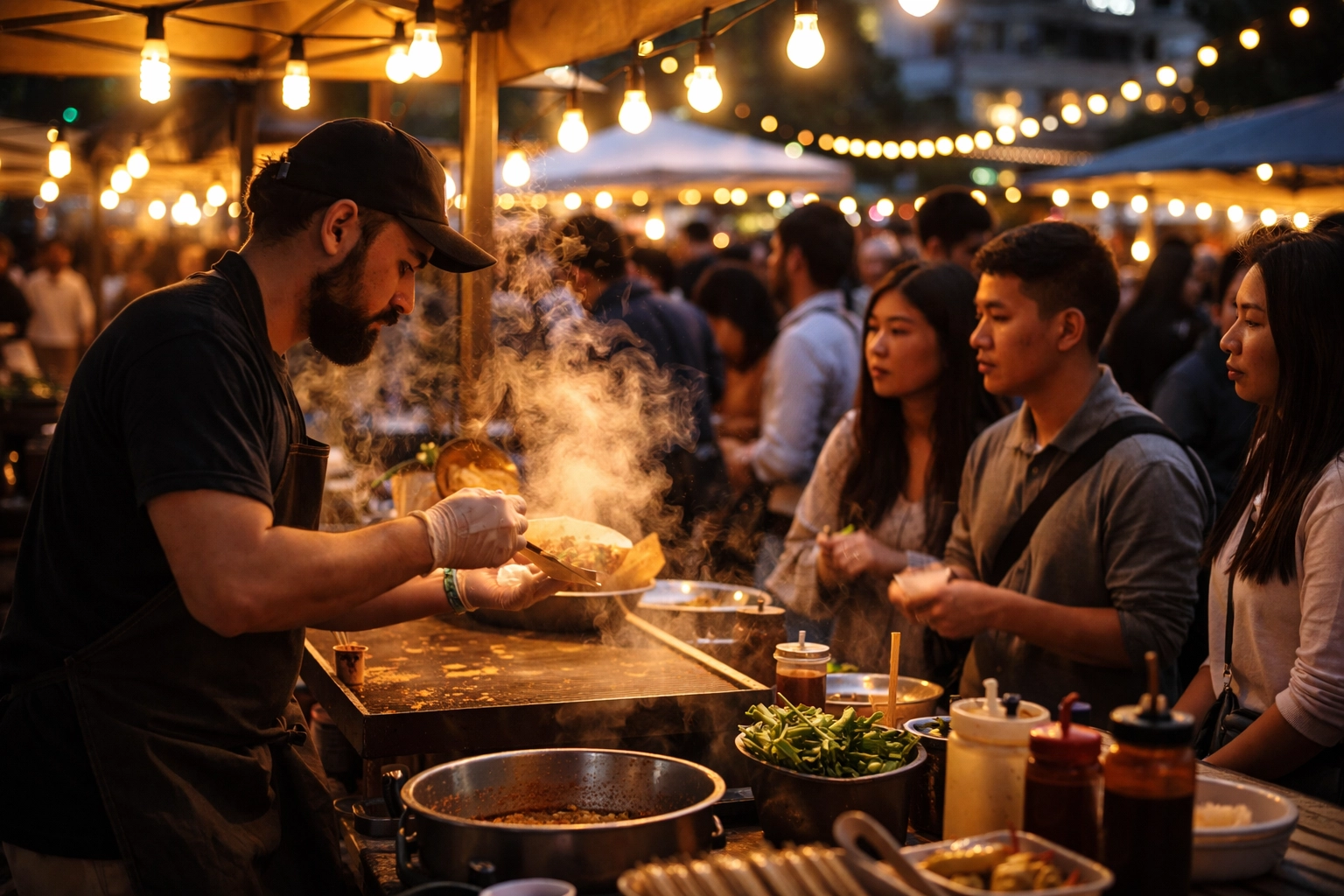
Here's what a night market stall offers:
- Minimal upfront investment. Booth fees typically run a few hundred dollars versus tens of thousands for a commercial lease deposit.
- Real customer feedback. You'll know within hours whether your pricing works and which menu items move.
- Zero long-term commitment. If something doesn't work, you adjust next weekend: not next year.
The Sunset Night Market and similar events attract thousands of visitors per night. That's a built-in focus group you don't have to recruit or pay for.
The Data You Can Actually Gather
A night market stall generates concrete numbers. This data feeds directly into your restaurant feasibility report when you're ready to scale.
Sales Velocity
Track how many units you sell per hour. This tells you:
- Peak demand windows
- Realistic throughput for your kitchen setup
- Whether your price point attracts enough volume
Menu Performance
Not every item on your concept menu will perform equally. Night markets reveal your winners and losers fast. Pay attention to:
- What sells out first
- What gets left behind
- What customers ask for that you don't offer
Customer Demographics
Different night markets attract different crowds. The Sunset Night Market skews toward families and foodies. Other events might pull younger demographics or tourists.
Document who's buying from you. This informs your eventual brick-and-mortar location choice.
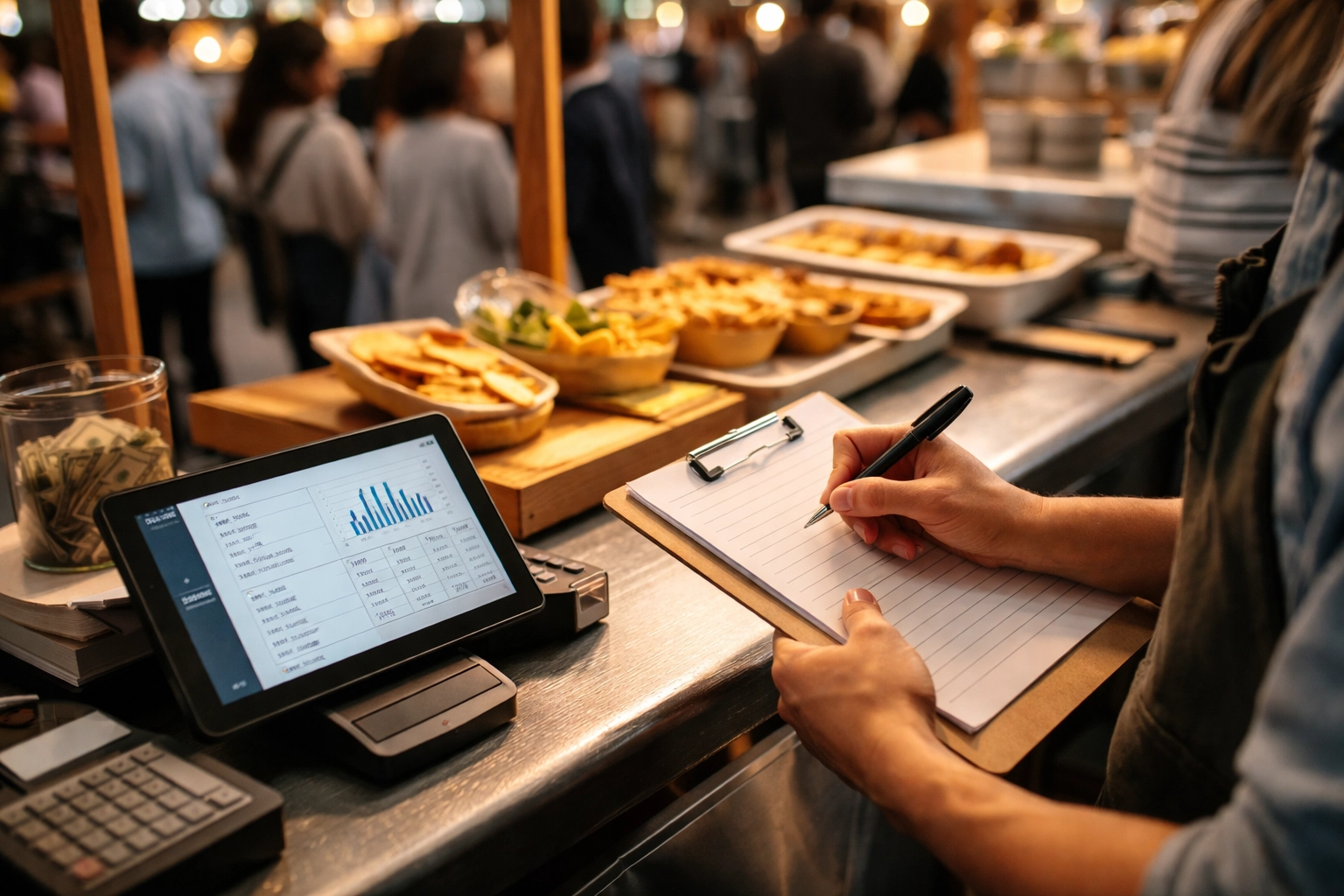
Pricing Sensitivity
Test different price points across multiple events. You'll quickly learn where the ceiling sits for your concept and your audience.
Vendor Logistics: What You Need to Know
Running a night market stall isn't the same as running a restaurant kitchen. The constraints are different, and understanding them helps you extract maximum value from the experience.
Equipment Limitations
Most night markets require you to operate with:
- Portable cooking equipment (propane, induction)
- Limited electrical access
- No running water on-site
This forces you to simplify your menu. That's actually useful: it shows you which items work under constrained conditions and which require full-kitchen infrastructure.
Permitting Requirements
California requires a valid health permit for night market vending. You'll need:
- A food handler's certificate
- Temporary food facility permit (or mobile food facility permit)
- Commissary agreement in most counties
The permitting process itself is a preview of what you'll face when opening a brick-and-mortar. Treat it as practice.
Inventory Management
You're working with limited storage and no walk-in cooler. This teaches you:
- How to forecast demand accurately
- How to minimize waste
- How to manage perishables under real conditions
These skills translate directly to controlling food costs in a permanent location.
The Marketing Value of High-Traffic Popups
Beyond the feasibility data, night markets offer serious marketing upside.
Build an Audience Before You Have an Address
Every customer who tries your food at a night market is a potential day-one customer at your future restaurant. Collect emails. Build an Instagram following. Create anticipation.
Vendors who actively promote on social media during events consistently outperform those who don't. Document your journey: people want to follow the origin story.
Test Your Brand Positioning
Your booth design, signage, and customer interactions all communicate your brand. Night markets let you experiment with:
- Naming and logo variations
- Menu language and descriptions
- Service style and pace
Pay attention to what resonates. Adjust before you commit to permanent signage and buildout.

Generate Press and Word-of-Mouth
Food writers and bloggers regularly cover night market scenes. A standout stall can generate organic coverage that carries over to your eventual opening.
The KQED coverage of events like the Sunset Night Market reaches hundreds of thousands of Bay Area readers. That's exposure you can't easily buy.
Competitive Intelligence on the Ground
Before committing to a permanent lease, use night markets to study your competition.
Request the vendor list from event organizers. Walk the market before you set up. Notice:
- What concepts are already saturated
- Where gaps exist in the offerings
- How competitors price similar items
- What's drawing the longest lines
This ground-level research supplements any desk-based feasibility study for restaurant planning. You're seeing real consumer behavior, not projections.
Making the Transition to Brick-and-Mortar
A successful night market run doesn't guarantee a successful restaurant. But it dramatically improves your odds.
Here's how to use your popup experience when you're ready to scale:
Document Everything
Keep detailed records of:
- Sales by item, by event, by time of day
- Customer feedback (positive and negative)
- Operational challenges and solutions
- Marketing tactics that worked
This documentation becomes the foundation of your restaurant feasibility report and business plan.
Build Relationships
Night markets connect you with:
- Other food entrepreneurs (potential collaborators or mentors)
- Event organizers (who often know about available commercial spaces)
- Suppliers who serve the popup circuit
- Customers who become advocates
These relationships have value beyond the immediate sales.
Know When You've Validated
You're ready to consider a permanent location when:
- You've consistently sold out or near-sold out across multiple events
- You've refined your menu to a core set of proven performers
- You understand your target customer demographic
- You've stress-tested your operations under high-volume conditions
If you're not hitting these markers, keep iterating at the night market level. It's far cheaper to pivot at a popup than after signing a lease.
The Bottom Line
The Sunset Night Market's February 27th return is an opportunity. So are the dozens of other food events happening across the Bay Area this spring.
A night market stall costs a fraction of a restaurant buildout. But the data, the customer relationships, and the operational experience it generates can be worth far more than the booth fee.
Before you sign a lease, test your concept where the stakes are lower and the feedback is immediate.
Need help turning your night market success into a brick-and-mortar feasibility plan? McFadden Finch Restaurant Consulting Group offers comprehensive feasibility study services that translate popup performance data into investor-ready projections. Contact us to discuss your concept.
#RestaurantFeasibility #NightMarket #RestaurantConsulting #FoodBusiness #BayAreaFood