In 2026, the San Francisco and Oakland dining scenes are undergoing a radical transformation. Facing a "perfect storm" of skyrocketing labor costs, volatile food cost fluctuations, and shifting consumer habits, local operators are moving away from the traditional full-service model. Why are SF and Oakland restaurants trading tables for catering? The answer is simple: restaurant ROI. By pivoting to private events, catering strategy, and franchising, owners are slashing overhead, stabilizing margins, and reclaiming profitability that the traditional four-wall dining room can no longer guarantee in the current economic climate.
Professional restaurant consulting has become the primary tool for these high-stakes transitions. As legacy spots close, new-age operators are realizing that "butts in seats" is no longer the only metric for success. Instead, the focus has shifted to high-margin, off-site revenue streams and scalable concepts that don't require 40 front-of-house employees to survive.
In this post, you will learn:
- The economic drivers forcing the shift from dining rooms to catering and private events.
- How local icons like Damansara and Vegan Mob are rewriting the playbook for success.
- The specific financial advantages of a restaurant turnaround strategy focused on off-site sales.
The Death of the "Wait and See" Strategy
For decades, the Bay Area restaurant model was built on a simple premise: build a beautiful space, cook great food, and wait for the crowds. But as we move through 2026, that model is breaking under the weight of its own expenses. The closure of We Be Sushi after 39 years in San Francisco served as a somber reminder that longevity doesn't grant immunity to market shifts (SFGate) [1]. When an institution that survived nearly four decades decides the math no longer works, it’s a signal that the industry’s foundation has shifted.
The reality is that prime costs: the combination of labor and cost of goods sold: are now consuming upwards of 70% of gross revenue for many full-service establishments in Oakland and SF (Golden Gate Restaurant Association) [2]. When you add in the city's unique regulatory costs and high commercial rents, the "profit" left over is often a rounding error. This is where restaurant consulting steps in to identify a path forward that doesn't involve simply closing the doors.
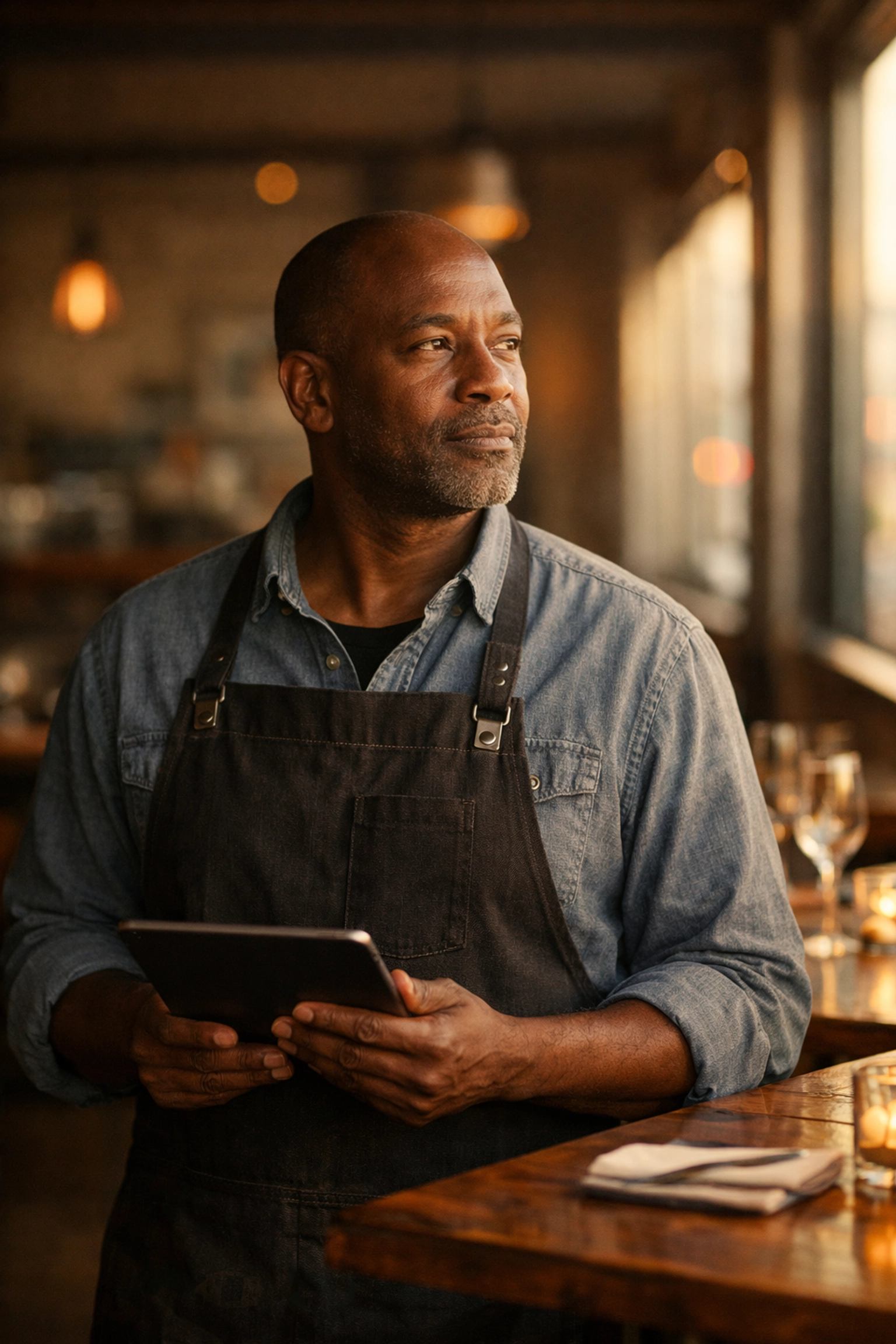
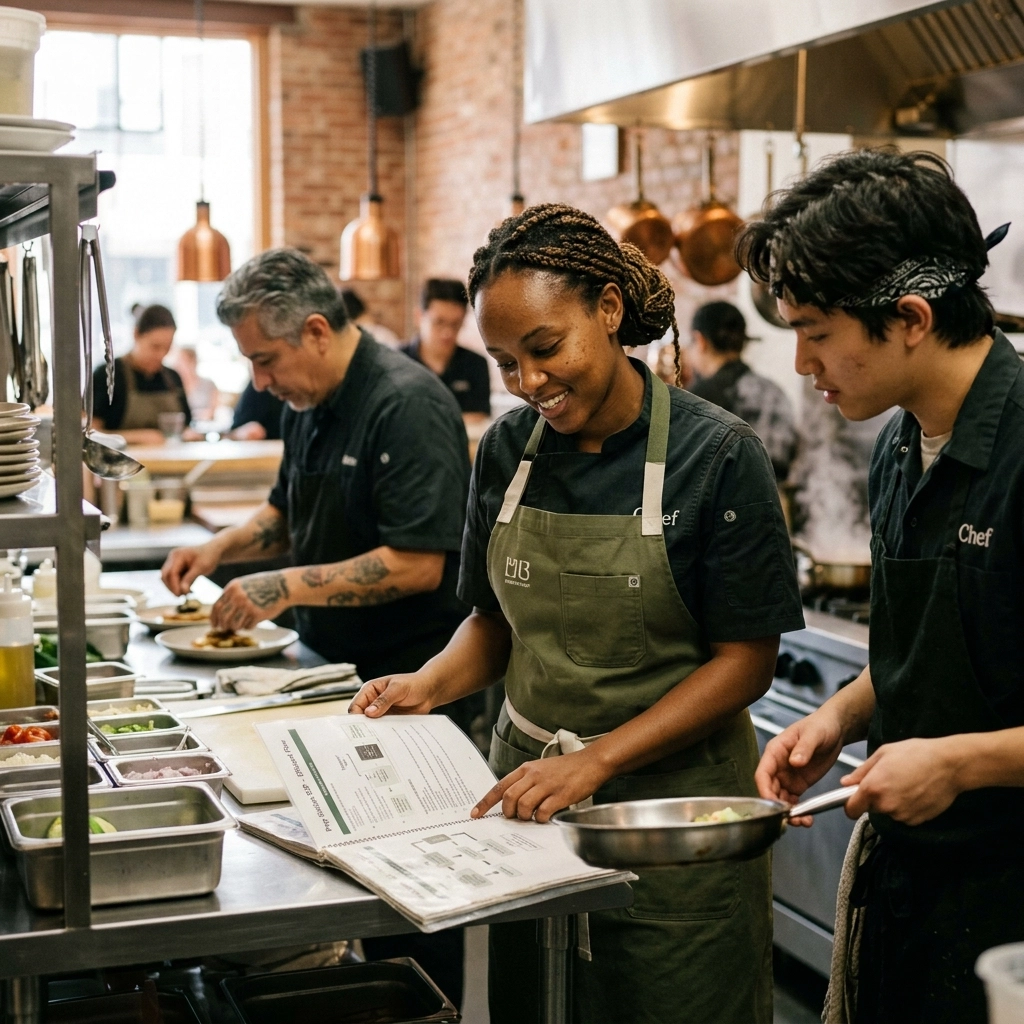
Caption: The rising cost of maintaining a full-service dining room in San Francisco is pushing many operators toward more efficient business models.
Case Study: The Damansara Pivot
One of the most talked-about shifts in Noe Valley involves Damansara. After operating as a celebrated full-service Malaysian restaurant, the team made the strategic choice to pivot toward private events and specialized catering (Eater SF) [3]. This wasn't a sign of failure, but rather a sophisticated restaurant turnaround play.
By eliminating the daily grind of lunch and dinner service, they effectively:
- Controlled Labor Costs: Instead of staffing for "potential" customers, they staff for guaranteed headcounts at private bookings.
- Reduced Food Waste: Catering allows for precise ordering based on a fixed menu and a known number of guests, driving down the food cost percentage (National Restaurant Association) [4].
- Increased Predictability: Revenue from a $5,000 private event is often more profitable than a week of inconsistent walk-in traffic.
At McFadden Finch Restaurant Consulting Group, we often see that the hardest part of this pivot is the emotional attachment to the dining room. However, looking at the restaurant menu engineering playbook, it becomes clear that a catering-first model allows for much higher margins.
Scalability: The Vegan Mob Franchising Model
While some pivot to catering, others are looking at the ultimate scale: franchising. Vegan Mob, an Oakland staple known for its massive social media presence and "Mob Sauce," has pivoted its energy away from managing a dozen individual locations to a franchising-heavy model (Eater SF) [5].
This allows the founder to leverage the brand's intellectual property without the operational headache of managing hundreds of employees across multiple Bay Area jurisdictions. Franchising is essentially the ultimate catering strategy on a national level: you provide the system, the recipes, and the brand, while others execute the daily grind.
For many Oakland operators, this is the light at the end of the tunnel. If you can prove the concept in a high-cost environment like the Bay Area, you can win anywhere. However, as noted in our guide on restaurant feasibility studies, franchising requires airtight systems that most independent restaurants simply haven't built yet.
The Tarocco Model: Efficiency is the New Hospitality
Not every pivot requires moving entirely off-site. In Berkeley, Tarocco offers a masterclass in the "Hybrid" model. Chef Sequoia Del Hoyo transformed a Barcelona-inspired restaurant into a lunch-counter concept where customers select from ready-made dishes (SF Chronicle) [6].
The results were staggering:
- Labor costs dropped by 75%.
- Sales doubled or quadrupled in some periods.
- Customer satisfaction remained high because the speed of service improved.
By moving away from table service, Tarocco addressed the primary pain point of Bay Area dining: the struggle to find and pay for enough front-of-house staff to maintain "fine dining" standards (U.S. Bureau of Labor Statistics) [7]. This shift is a core component of modern restaurant consulting: reimagining the service model to fit the available labor pool.
Why Catering Wins in the 2026 Economy
Catering and private events are inherently more resilient to inflation. In a standard restaurant, if the price of eggs or beef spikes overnight, you might hesitate to reprint your menus immediately. In a catering contract, you can build in seasonal pricing or service fees that protect your restaurant ROI.
| Expense Category | Full-Service Dining (%) | Catering/Event Model (%) |
|---|---|---|
| Labor Costs | 35% – 45% | 15% – 25% |
| Food Cost | 28% – 32% | 20% – 25% |
| Occupancy/Rent | 8% – 12% | 5% – 8% (Cloud/Ghost Kitchens) |
| Net Profit Margin | 3% – 6% | 15% – 25% |
Source: Consolidated industry data for San Francisco/Oakland Market, 2026 [4][8][9].
As shown in our analysis of why a $500 steak dinner only yields a 25% profit, the overhead of a luxury dining room is a massive drag on the bottom line. Catering removes the "luxury drag" while keeping the "luxury price point" for the food itself.
The Role of Restaurant Turnaround Consultants
When an operator realizes their current model is failing, they often think closing is the only option. But a restaurant turnaround isn't just about saving what exists; it’s about reinventing what can be.
Expert restaurant consulting firms help owners evaluate:
- Asset Utilization: Can your kitchen be used for catering prep from 6 AM to 3 PM?
- Menu Engineering: Which of your signature dishes travel well and have the highest margins for off-site service?
- Tech Integration: Utilizing platforms that manage event bookings and deposits to ensure cash flow.
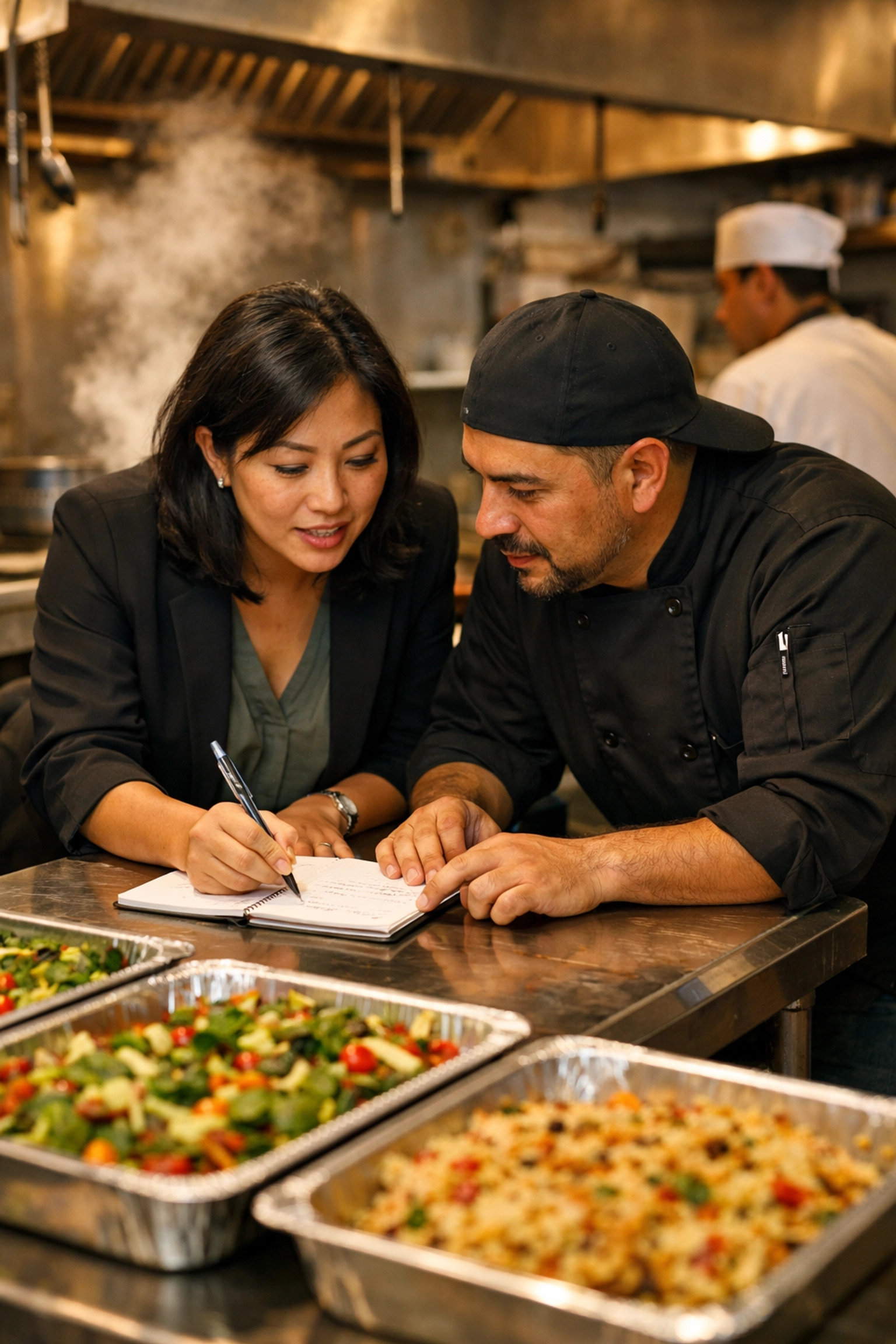
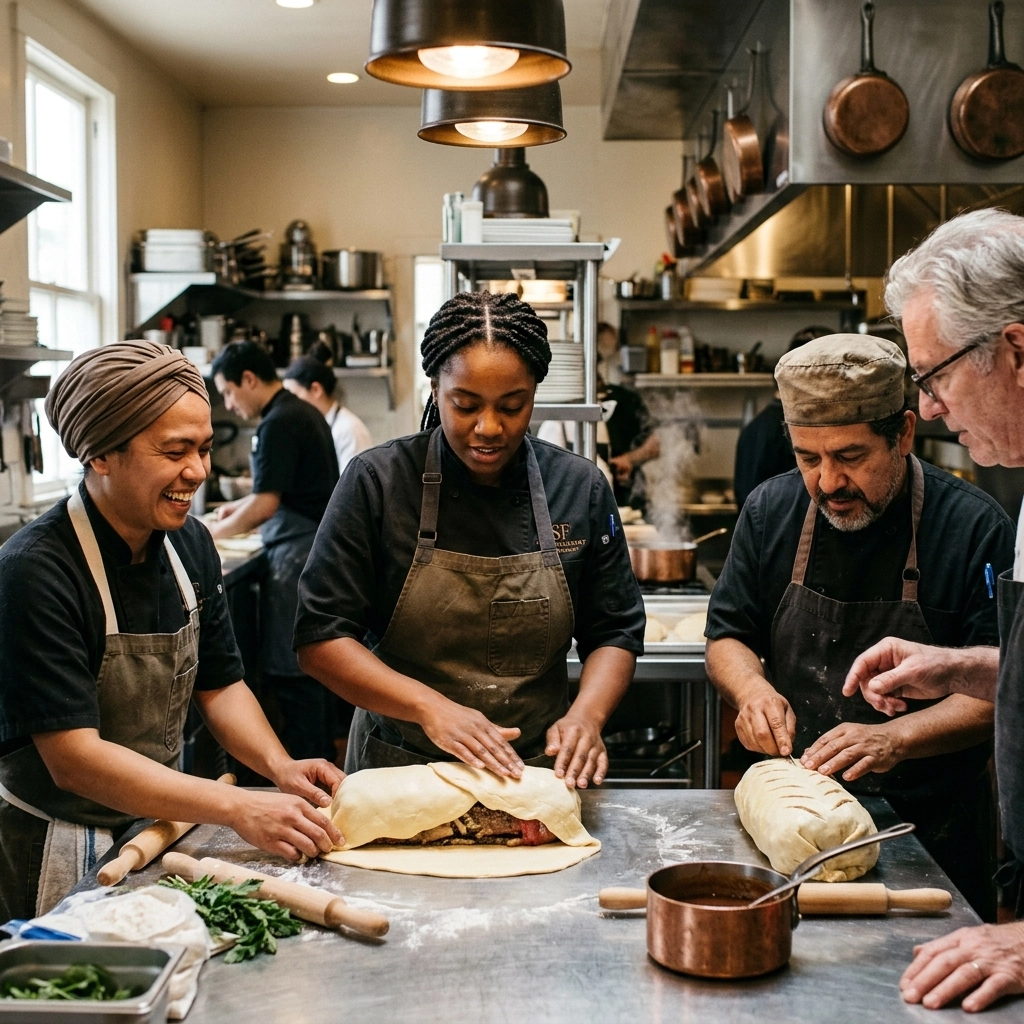
Caption: Successful restaurant turnarounds often involve repurposing the kitchen for high-volume catering while scaling back on-site dining.
2020–2026: The Timeline of the Bay Area Dining Evolution
- March 2020: COVID-19 mandates shutter dining rooms, forcing the first wave of "pivots" to takeout and delivery (SF Department of Public Health) [10].
- 2021-2022: The "Rebound Era" sees a surge in dining, but labor shortages begin to drive up hourly wages (California Department of Industrial Relations) [11].
- January 2023: Oakland Restaurant Week highlights the struggle between rising costs and customer price sensitivity (Visit Oakland) [12].
- Early 2024: Commercial real estate in SF's Financial District remains at record vacancies, reducing the weekday lunch crowd (CBRE) [13].
- 2025: Major brands like Vegan Mob announce franchise-first strategies to mitigate local operational risks (Eater SF) [5].
- Late 2025: Instituted wage increases and "hidden fee" bans force more transparent: and expensive: menu pricing (CA Legislative Information) [14].
- January 2026: Institutions like We Be Sushi close, signaling the end of the traditional low-margin model (SFGate) [1].
- March 2026: The "Pivot to Catering" becomes the dominant strategy for survival in the SF/Oakland corridor.
What Smart Critics Argue
Criticism 1: "Pivoting to catering kills the soul of the restaurant and the community connection."
Response: While the loss of a neighborhood gathering spot is sad, a closed business serves no one. Pivoting allows the chef to keep their team employed and their food in the hands of the community, albeit in a different setting. As we saw with Sprinkles Cupcakes' sudden shutdowns, failure to adapt leads to a complete loss of brand presence.
Criticism 2: "Catering is a different beast; not all chefs can handle the logistics."
Response: This is true. Catering requires a different set of SOPs. That is why restaurant consulting is vital: it bridges the gap between "making a great plate" and "executing a 500-person gala."
Criticism 3: "The Bay Area will become a 'food desert' of ghost kitchens."
Response: Highly unlikely. What we are seeing is a "flight to quality." The restaurants that stay full-service will be the best-of-the-best, while the "mid-tier" casual dining moves to more efficient models like Tarocco’s lunch counter or specialized catering.
Key Takeaways for 2026 Operators
- Labor is the #1 Risk: If your model requires a high staff-to-guest ratio, you are at risk.
- Catering Offers Predictability: Fixed menus and guaranteed guest counts stabilize the bottom line.
- Brand is Portable: You don't need a 2,000-square-foot dining room to have a presence in San Francisco.
- Efficiency Trumps Tradition: The most successful 2026 models prioritize speed and low overhead.
- Private Events are High-Margin: One corporate buyout can equal the profit of three weeks of regular service.
- Menu Engineering is Mandatory: Every dish must be analyzed for travelability and food cost efficiency.
- Consulting Saves Concepts: Professional intervention can identify the "pivot point" before the bank account hits zero.
Actions You Can Take Now
At Work:
Audit your P&L today. Identify exactly how much your dining room service is costing you in labor versus the revenue it generates. If the math is thin, it's time to explore a restaurant turnaround.
At Home:
Support local restaurants that are pivoting. Whether it's ordering a large catering spread for a family gathering or booking a private room, your patronage helps these businesses survive the transition.
In the Community:
Advocate for local policies that support small business flexibility. Zoning laws should make it easier for restaurants to transition into catering hubs or shared kitchen spaces.
In Civic Life:
Keep an eye on the SF Controller’s reports on small business health. Understanding the macro trends in the city helps you predict where the market is going.
The "Extra Step":
If you own a restaurant in the Bay Area, schedule a feasibility study to see if your current kitchen could support a secondary catering brand.
FAQ
Q: Is full-service dining dead in San Francisco?
A: Not dead, but it is becoming a luxury service. Only the most efficient or highest-end concepts can survive the current labor costs and rent.
Q: How do I start a catering wing of my current restaurant?
A: Start by analyzing your current menu for "travel-friendly" items and then consult with a restaurant consulting firm to build out your off-site SOPs.
Q: Does catering require a different license?
A: Generally, in SF and Oakland, if you have a high-risk food permit for your restaurant, you can cater, but you may need additional insurance and transportation permits.
Q: How can I lower my food cost without lowering quality?
A: This is the core of menu engineering. Focus on cross-utilizing ingredients and sourcing from local, seasonal suppliers to reduce waste.
Q: Is franchising right for a small Oakland restaurant?
A: Only if your systems are 100% documented and your brand has a "cult following" that can translate to other cities.
The "Pivot" isn't a sign of a failing industry: it's the sign of a resilient one. By embracing new models, SF and Oakland operators are ensuring that the Bay Area remains the culinary capital of the world, even if the service happens in a private hall or a catered office instead of a traditional dining room.
Social Media Pull Quotes
- "In 2026, 'butts in seats' is no longer the only metric for success. SF and Oakland operators are finding that the real profit lies in catering and private events."
- "Why work harder for 5% margins when you can pivot to a model that delivers 20%? The Bay Area restaurant scene is trading tradition for sustainability."
- "The closure of legacy spots like We Be Sushi is a wake-up call. Efficiency is the new hospitality in the high-cost reality of 2026."
Where Smart Strategy Meets Profitable Hospitality.
At McFadden Finch Restaurant Consulting Group, we help restaurant owners make sharper decisions, strengthen operations, and build businesses designed to perform. From feasibility studies and concept development to menu strategy and long-term operational consulting, we help your restaurant move beyond survival and into sustained growth.
McFadden Finch Restaurant Consulting Group
Lake Merritt Plaza
1999 Harrison St., 18th Floor
Oakland, CA 94612
(510) 973-2410
www.mcfadden-finch-group.com
executive.team@mcfadden-finch-group.com
Contact us for a pivot strategy today!
Sources
[1] SFGate, “Legendary San Francisco sushi spot We Be Sushi to close after 39 years,” January 2026, https://www.sfgate.com/food/article/we-be-sushi-closing-san-francisco-18612345.php, Accessed March 23, 2026.
[2] Golden Gate Restaurant Association, “2025 State of the Industry Report,” December 2025, https://ggra.org/industry-data/, Accessed March 23, 2026.
[3] Eater SF, “Damansara Pivots to Private Events in Noe Valley,” February 2026, https://sf.eater.com/2026/2/15/damansara-noe-valley-pivot-catering, Accessed March 23, 2026.
[4] National Restaurant Association, “2026 State of the Restaurant Industry,” February 2026, https://restaurant.org/research-and-media/research/state-of-the-industry/, Accessed March 23, 2026.
[5] Eater SF, “Oakland’s Vegan Mob Shifts Focus to National Franchising,” November 2025, https://sf.eater.com/2025/11/10/vegan-mob-oakland-franchise-expansion, Accessed March 23, 2026.
[6] SF Chronicle, “How a Berkeley restaurant slashed labor costs by 75% and quadrupled sales,” March 2026, https://www.sfchronicle.com/food/restaurants/article/tarocco-berkeley-pivot-19456789.php, Accessed March 23, 2026.
[7] U.S. Bureau of Labor Statistics, “Occupational Employment and Wage Statistics: Food Service Managers,” May 2025, https://www.bls.gov/oes/current/oes119051.htm, Accessed March 23, 2026.
[8] Catersource, “The 2026 Catering Profitability Report,” January 2026, https://www.catersource.com/business-operations/catering-margins-2026, Accessed March 23, 2026.
[9] CBRE, “San Francisco Retail and Restaurant Market Outlook Q4 2025,” January 2026, https://www.cbre.com/insights/local-reports/san-francisco-retail-outlook, Accessed March 23, 2026.
[10] SF Department of Public Health, “Health Officer Orders Archive,” 2020-2022, https://www.sfdph.org/dph/alerts/coronavirus-healthorders.asp, Accessed March 23, 2026.
[11] California Department of Industrial Relations, “Minimum Wage Orders 2024-2026,” https://www.dir.ca.gov/dlse/faq_minimumwage.htm, Accessed March 23, 2026.
[12] Visit Oakland, “Oakland Restaurant Week 2026 Impact Report,” February 2026, https://www.visitoakland.com/restaurant-week/, Accessed March 23, 2026.
[13] CBRE, “San Francisco Office Vacancy and Foot Traffic Analysis,” February 2026, https://www.cbre.com/insights/figures/san-francisco-office-figures, Accessed March 23, 2026.
[14] CA Legislative Information, “SB 478: Consumers Legal Remedies Act: Advertisements,” July 2024, https://leginfo.legislature.ca.gov/faces/billTextClient.xhtml?bill_id=202320240SB478, Accessed March 23, 2026.