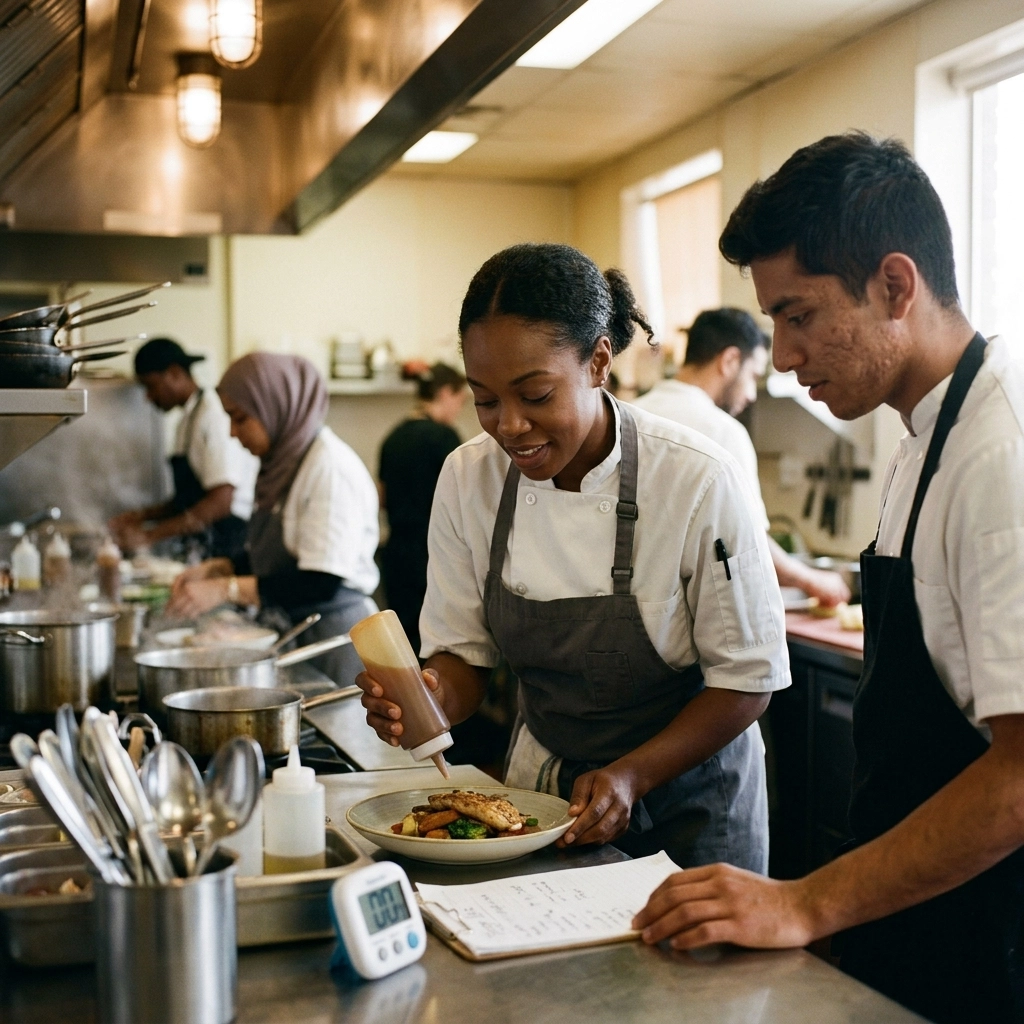
Walk into any struggling Bay Area restaurant at 6 PM on a Friday, and you'll see the same pattern: servers frantically asking the kitchen about ticket times, cooks double-checking portion sizes mid-rush, managers bouncing between stations putting out fires. Now walk into a scaled, profitable multi-unit operation. The difference isn't the talent, it's the systems.
A restaurant SOP template isn't just corporate paperwork. It's the operational DNA that separates restaurants that scale profitably from those that collapse under their own growth. According to the National Restaurant Association[1], restaurants with documented standard operating procedures see 23% lower labor costs and 18% higher profit margins compared to those operating on "tribal knowledge" alone.
In the Bay Area, where minimum wage hits $16.99–$18.07 depending on city ordinances, prime commercial rent runs $60–$120 per square foot annually, and health department inspections carry zero tolerance for procedural violations, you can't afford to wing it. This article breaks down exactly why restaurant operations consulting focused on SOPs delivers measurable ROI, and how to build training manuals that actually work in Oakland, San Francisco, and beyond.
The Chaos vs. Consistency Tax: What Winging It Really Costs
Here's what happens when you don't have standardized restaurant kitchen workflow documentation:
Your best line cook calls in sick. The replacement oversalts the branzino because "Tony always does it different." A customer sends back their entrée. Your food cost spikes 4% that shift. Multiply this across 200 service shifts per year, and you've just donated $15,000–$30,000 to operational chaos.
The U.S. Bureau of Labor Statistics[2] reports that the average restaurant employee turnover rate sits at 75% annually, nearly triple the general workforce average. Every time someone walks out the door, their knowledge walks with them unless you've captured it in a training manual.
Bay Area operators face an additional burden: compliance complexity. San Francisco's Health Code Article 16 requires specific food handler protocols. Oakland's minimum wage increases annually based on CPI adjustments. Alameda County has distinct permitting requirements for ghost kitchens versus brick-and-mortar. Without documented SOPs, you're relying on institutional memory, which evaporates the moment your kitchen manager gets poached by a better offer in Palo Alto.
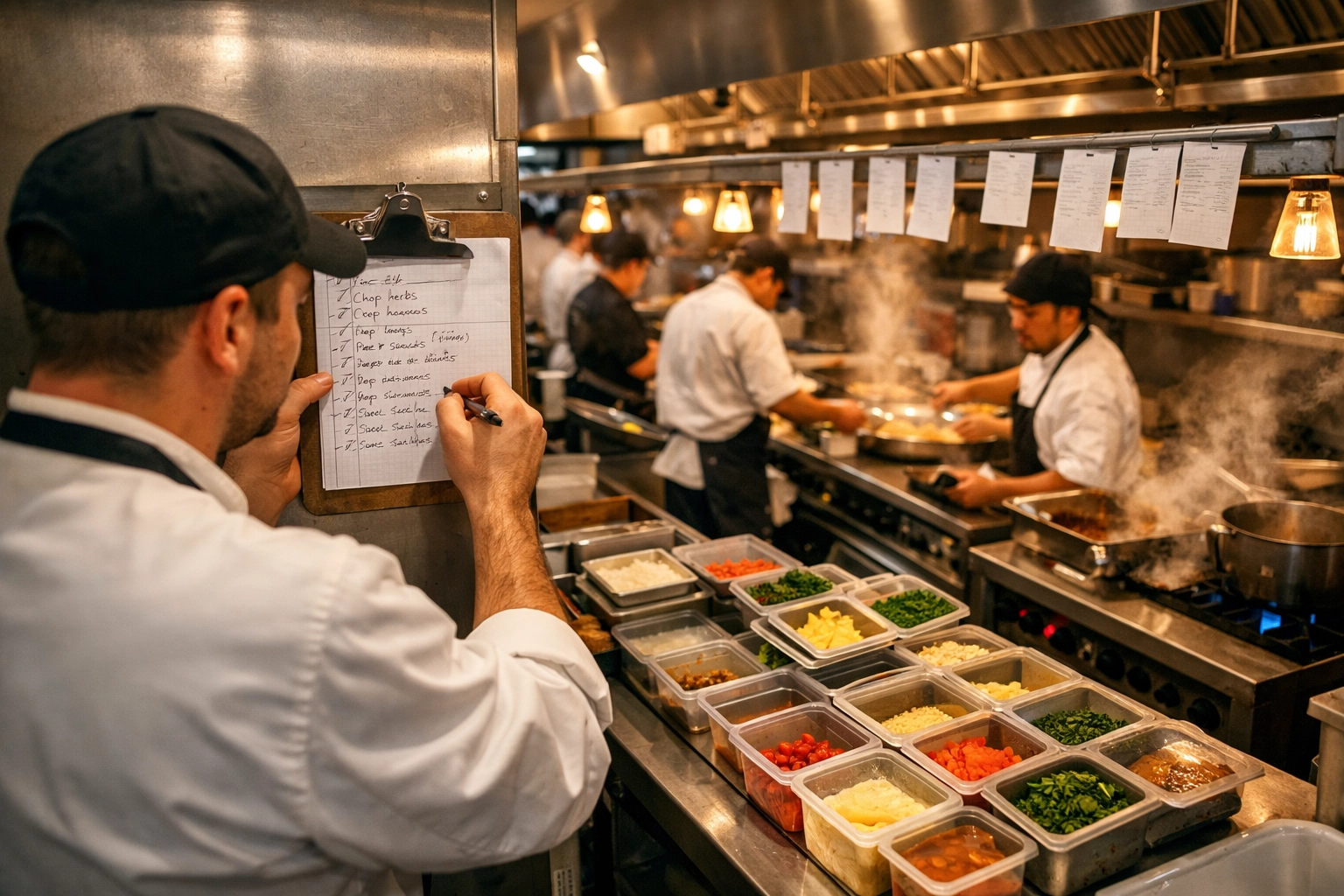
The Prime Cost Connection: How SOPs Cut Your Two Biggest Expenses
Prime cost, the combined total of food and labor, should hover around 60% of revenue for most full-service restaurants. In reality, operators without systems routinely run 68–72%, killing profitability before they account for rent, utilities, or debt service.
SOPs directly attack both components:
Food Cost Reduction
Standardized recipes with exact portioning eliminate the "$0.50 per plate guessing game." When your prep cook knows the romaine for Caesar salad gets cut to 1.5-inch ribbons, not 1-inch, not 2-inch, your yield consistency improves. According to research from Cornell University's School of Hotel Administration[3], restaurants using digital recipe management systems with built-in SOPs reduce food waste by 12–18% within the first six months of implementation.
A typical Oakland gastropub serving 400 covers weekly with $18 average check and 32% food cost can save approximately $1,800–$2,700 monthly just by standardizing portions and reducing waste. That's $21,600–$32,400 annually, enough to fund a marketing campaign or absorb a rent increase.
Labor Cost Optimization
Training time drops when you hand a new hire a step-by-step restaurant training manual instead of shadowing schedules that depend on veteran staff availability. Toast's 2024 Restaurant Success Report[4] found that restaurants with documented onboarding procedures reduce new hire training time by 35% and see 28% lower turnover in the first 90 days.
Calculate it: If training a server costs $800 in direct hours (40 hours at $20/hour) plus $600 in lost productivity and mistakes, cutting that by 35% saves $490 per new hire. With 75% annual turnover on a 12-person FOH team, you're training 9 people per year. Savings: $4,410 annually, on front of house alone.
The Big Four: Essential Restaurant SOPs You Can't Scale Without
Not all procedures deserve documentation. You don't need a three-page SOP for refilling the napkin dispenser. But these four categories are non-negotiable for scaling a restaurant concept:
1. Front of House SOPs
Critical components:
- Opening/closing checklists (cash drawer counts, POS reconciliation, section setup)
- Service sequence (greeting scripts, course timing, check presentation)
- Complaint resolution protocols (who authorizes comps, how to escalate)
- Reservation management (seating rotation, VIP flagging, wait time communication)
The James Beard Foundation's operational guidelines[5] emphasize that consistency in guest experience directly correlates with repeat visit rates. A well-documented FOH system ensures your Saturday night hostess delivers the same experience as your Tuesday lunch server.
2. Back of House SOPs
Critical components:
- Recipe cards with yields, portioning, plating specs
- Prep schedules tied to sales forecasts
- Equipment operation and cleaning protocols
- Inventory receiving procedures (date checking, storage protocols, FIFO rotation)
- Allergen handling and cross-contamination prevention
Bay Area health departments have zero tolerance for foodborne illness. San Francisco's Department of Public Health[6] conducts unannounced inspections with immediate closure authority. Your SOPs need to reflect current California Retail Food Code requirements, which update regularly.
3. Management SOPs
Critical components:
- Shift scheduling (labor targets by daypart, call-out procedures)
- Cash handling and deposit protocols
- Vendor ordering windows and approval thresholds
- Staff performance reviews and documentation
- Emergency procedures (power outage, equipment failure, medical incidents)
Management turnover kills momentum. When your GM leaves for a competitor, documented procedures let the replacement step in without burning cash on "learning the role."
4. Safety and Compliance SOPs
Critical components:
- OSHA workplace safety (slip prevention, knife handling, chemical storage)
- Sexual harassment prevention training (California AB 1825 requirement)
- Workers' comp incident reporting
- Alcohol service (ABC compliance, ID checking, overservice protocols)
- Fire safety (extinguisher locations, evacuation routes, grease trap cleaning schedules)
California employment law is notoriously plaintiff-friendly. A single wage-and-hour lawsuit over improper break documentation can cost $50,000–$150,000 in settlements and legal fees. SOPs provide the paper trail that protects you.
Bay Area Specifics: Navigating Oakland and SF Regulations Through Training
Generic SOPs from a national chain don't cut it here. Local compliance requires local knowledge:
Oakland-Specific Considerations:
Oakland's minimum wage for 2026 is $16.99/hour with annual CPI adjustments. Your labor budgeting SOPs need to account for automatic increases. The city also requires fair scheduling ordinances, providing written schedules 14 days in advance with "predictability pay" for last-minute changes. Without documented scheduling procedures, you'll face fines and employee grievances.
Oakland also has distinct requirements for outdoor dining permits and parklet structures post-pandemic. If you're operating in Jack London Square or Temescal, your setup/breakdown procedures need to match city specifications.
San Francisco-Specific Considerations:
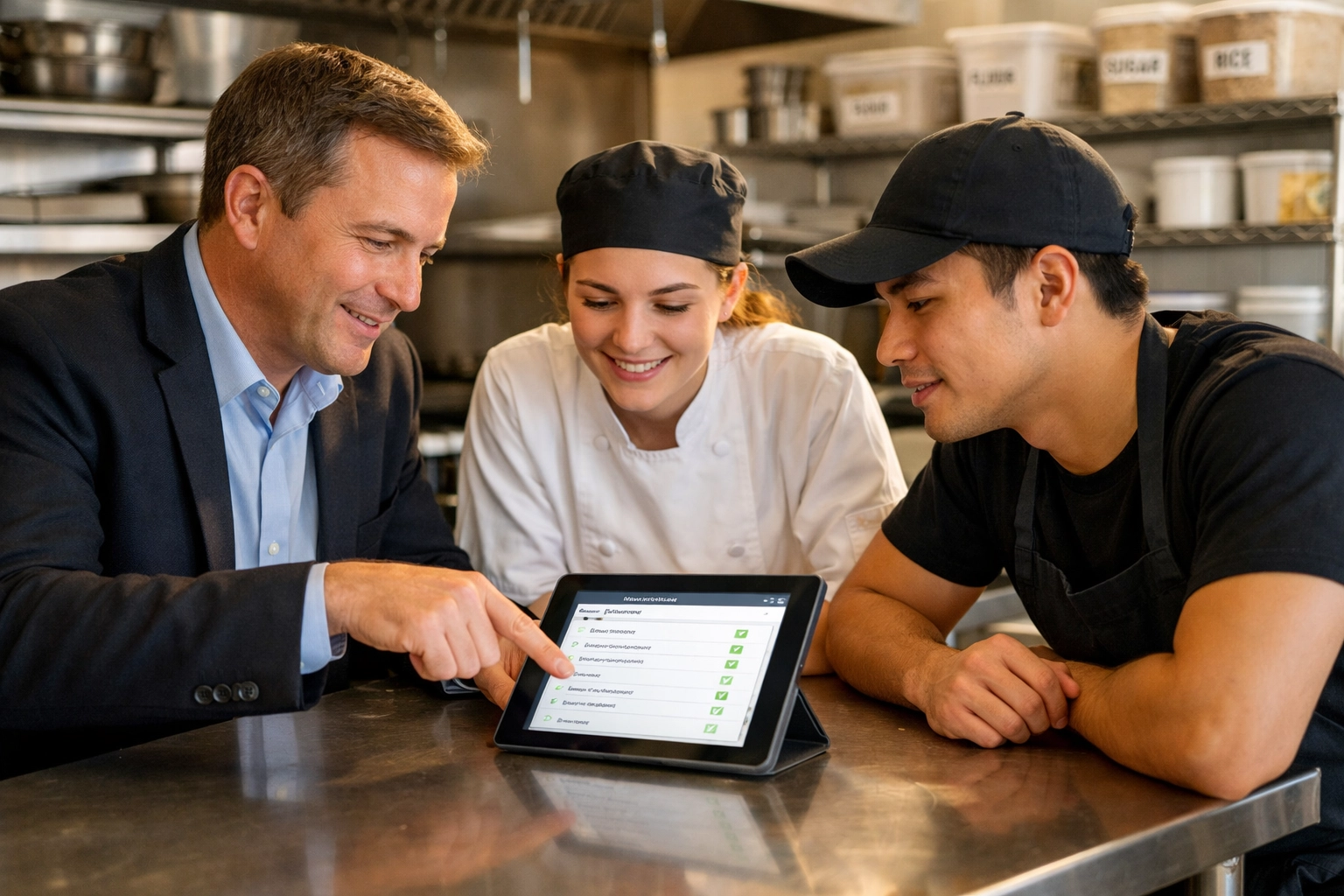
SF's Health Code Article 16 mandates food handler cards for all employees who touch food. Your onboarding SOP must include verification and renewal tracking. The city also has nation-leading composting ordinances, your waste separation procedures must comply with Recology's three-stream system (compost, recycling, landfill), or you risk fines.
The SF Chronicle[7] regularly reports on restaurant violations. Public health inspection scores get posted online. A single procedural failure that tanks your score can crater reservations for months.
| Bay Area Compliance Area | Documentation Required | Penalty for Non-Compliance |
|---|---|---|
| Minimum Wage (Oakland 2026) | Labor budgets, scheduling SOP | Back pay + penalties ($50-$100/violation) |
| Food Handler Cards (SF) | Training verification log | $250-$1,000 per violation |
| Composting (SF) | Waste separation SOP | $100-$500 per inspection failure |
| Fair Scheduling (Oakland) | 14-day advance schedules | Predictability pay (additional wages) |
| Allergen Protocols (Statewide) | Kitchen cross-contamination SOP | Lawsuit exposure + health dept. closure |
Step-by-Step: Building Training Manuals That Don't Collect Dust
Most restaurant training manuals fail because they're either too vague ("Provide excellent service") or too detailed (47-page orientation packets nobody reads). Here's how operations consulting experts build effective documentation:
Step 1: Audit Your Current State
Shadow three shifts across different dayparts. Document every decision point, every question a staff member asks, every time someone says "I'm not sure how we do this." Those gaps become your SOP priority list.
Step 2: Identify High-Impact Procedures First
Focus on tasks that:
- Happen daily or weekly
- Directly impact customer experience
- Involve cash, inventory, or safety
- Require compliance documentation
Skip documenting one-off tasks or procedures that genuinely vary based on context.
Step 3: Use the STAR Format
Each SOP should follow:
- Situation: When does this procedure apply?
- Task: What specific outcome are we achieving?
- Action: Step-by-step instructions (numbered, specific, using photos where helpful)
- Result: What does success look like? How do we verify?
Example: "Closing the Bar (Weekday)" might include 18 specific steps from "Count cash drawer at 10:45 PM" to "Set alarm code 4799 upon final exit."
Step 4: Test With New Hires
Hand your draft SOP to someone unfamiliar with the task. Watch them attempt it without additional coaching. Every question they ask reveals an ambiguity to clarify.
Step 5: Build Digital Accessibility
Paper binders get lost. Laminated sheets get greasy and illegible. Use shared drives (Google Drive, Dropbox) or dedicated platforms (Trainual, Process Street) that staff can access from phones. Version control matters, when you update a procedure, everyone needs the current version.
Step 6: Embed Training in Onboarding
New hires should spend their first 8 hours reading manuals and taking comprehension quizzes before touching anything customer-facing. Create checkpoint certifications: "You cannot run expo until you pass the allergen protocol quiz with 100% accuracy."
Step 7: Schedule Quarterly Reviews
Menu changes, equipment upgrades, and regulation updates make SOPs living documents. Assign ownership, your kitchen manager reviews BOH procedures, your AGM reviews FOH procedures, your owner or GM reviews compliance and management procedures. Set calendar reminders for April, July, October, January.
What Smart Critics Argue: When SOPs Don't Work
Criticism 1: "SOPs kill creativity and make service robotic."
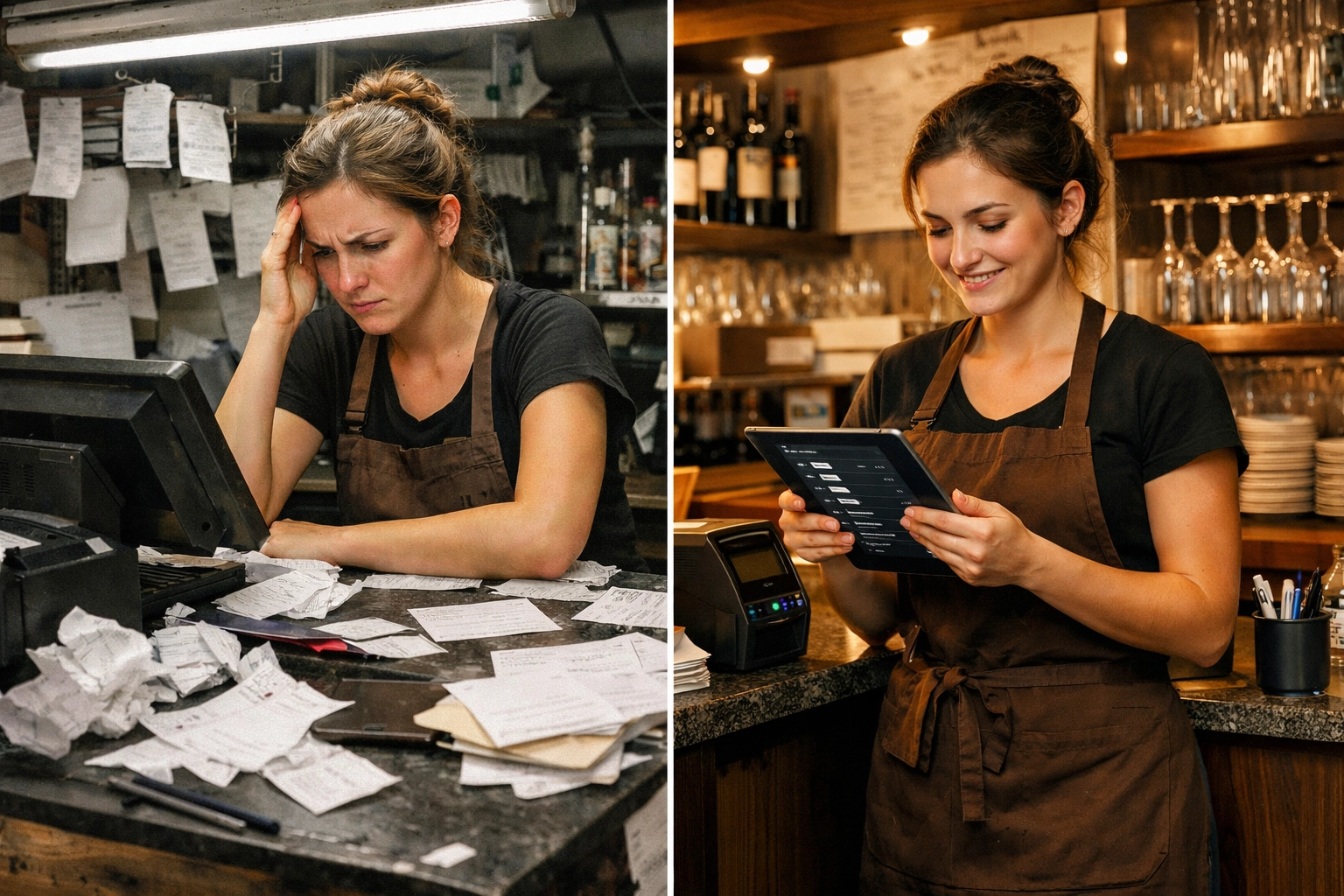
This confuses standardization with inflexibility. SOPs document the baseline, how to execute tasks correctly every time. They free staff to focus creativity where it matters (menu specials, genuine hospitality, problem-solving) instead of wasting mental energy remembering whether the fish gets seasoned before or after searing.
Research from the Restaurant Leadership Conference proceedings[8] shows that staff satisfaction actually increases when procedures are clear, because employees feel competent faster and experience less daily stress from ambiguity.
Criticism 2: "Small restaurants can't afford the time investment."
Creating comprehensive SOPs for a single-unit restaurant requires approximately 40–60 hours of management time. That seems expensive until you calculate the cost of chaos: a single wage-and-hour lawsuit ($50K+), a food safety closure ($20K+ in lost revenue), or chronic food cost overruns ($30K annually). The ROI pays for itself within 3–6 months for most operators.
Criticism 3: "Staff won't read them anyway."
True, if you dump 200 pages on someone and expect compliance. Make them digestible: one-page task cards, video walkthroughs for complex procedures, mobile-accessible formats. And enforce usage: "Did you check the opening SOP?" becomes standard manager response to procedural questions.
What to Do Next: Building Your SOP System
Ready to implement? Here's your prioritized action plan:
- Week 1: Inventory current chaos. List every task that currently operates on "institutional knowledge" or frequent questions. Prioritize by business impact and risk.
- Week 2: Draft 5 critical procedures. Start with: (1) Cash handling, (2) Opening checklist, (3) Closing checklist, (4) Food safety/allergen protocol, (5) Your single most frequently made menu item. Use the STAR format.
- Week 3: Test and refine. Have staff attempt these procedures using only your written documentation. Note every question and ambiguity.
- Week 4: Digitize and deploy. Choose your storage platform. Create access for all staff. Announce the rollout with a team meeting explaining why this matters.
- Month 2: Build out remaining categories. Add 10–15 procedures monthly until you've covered The Big Four categories. Don't try to document everything simultaneously.
- Month 3: Integrate into onboarding. New hires don't touch a station until they've read relevant SOPs and demonstrated comprehension through shadowing or testing.
- Ongoing: Schedule quarterly audits. Put recurring calendar holds for procedure reviews. Assign department ownership. Update as operations evolve.
- Optional: Engage professional help. If you're planning multi-unit expansion or facing restaurant turnaround challenges, professional operations consulting delivers SOPs faster with Bay Area compliance built in from day one.
Frequently Asked Questions
How detailed should a restaurant SOP template be?
Detailed enough that someone unfamiliar with your operation could complete the task successfully, but concise enough that people will actually read it. Aim for 1-2 pages per procedure with numbered steps, photos for complex tasks, and clear success criteria. If your SOP exceeds 3 pages, break it into sub-procedures.
Do I need different SOPs for each location when scaling?
Core procedures (food safety, recipe execution, cash handling) should remain identical across locations. Site-specific elements (equipment variations, local health codes, vendor contacts) require location addendums. This maintains brand consistency while accommodating necessary differences.
What's the biggest mistake operators make with training manuals?
Creating them once and never updating. Menus change, regulations evolve, equipment gets replaced, and best practices emerge. Static manuals become obsolete and lose credibility. Build quarterly reviews into your operating calendar, and assign clear ownership for each section.
Can SOPs reduce my liability in lawsuits?
Yes, significantly: but only if you follow them. Documentation proves you had proper procedures in place. Enforcement proves you actually implemented them. A documented alcohol service policy with signed staff acknowledgments demonstrates reasonable care in ABC compliance. A food allergen protocol with training logs shows due diligence in safety. Courts look favorably on operators who took preventative measures.
How do I get veteran staff to follow SOPs when they've "always done it their way"?
Lead with data, not authority. Show them the food cost improvement when everyone portions consistently. Show them how training time drops when new hires have clear references. Involve veterans in SOP creation: their expertise makes the documentation better, and people support what they help create. But ultimately, following procedures is non-negotiable; consistency is a job requirement, not a suggestion.
Should I hire a consultant or build SOPs in-house?
Depends on your timeline and complexity. Single-unit operators with time can build effective procedures in-house using the framework above. Multi-unit groups, concepts planning rapid expansion, or operators facing compliance issues benefit from professional support. McFadden Finch Restaurant Consulting Group specializes in Bay Area operations consulting with local regulation expertise built in: call (510) 973-2410 for a custom operations audit.
The Scaling Inflection Point
Every successful restaurant hits a moment where informal systems break. You can't remember every vendor contact. Your closing checklist lives in your head, not a document. Training happens through osmosis and hope.
That worked fine for one location with a stable team. It collapses when you open your second spot, or when three staff members quit the same week, or when you're suddenly running ghost kitchen operations alongside dine-in service.
SOPs aren't red tape: they're the operating system that lets you scale profitably instead of just scale chaotically. The difference between a $2M revenue restaurant doing 8% net margin and one doing 15% margin usually isn't the concept, the location, or even the chef. It's whether they documented their success formula and can execute it consistently.
Bay Area operators face unique complexity: aggressive minimum wages, rigorous health departments, sophisticated customers who notice inconsistency, and real estate costs that demand operational excellence. You can't afford to be sloppy.
Ready to Build Operations That Scale?
McFadden Finch Restaurant Consulting Group has helped dozens of Bay Area restaurants move from operational chaos to profitable, scalable systems. We deliver restaurant operations consulting with custom SOP development, training manual creation, and compliance integration specific to Oakland, San Francisco, and the broader Bay Area market.
Whether you're planning to scale from one location to three, facing high labor costs that demand efficiency, or simply tired of firefighting instead of growing, we'll conduct a comprehensive operations audit and deliver actionable improvements within 30 days.
Call the Executive Team at McFadden Finch Restaurant Consulting Group at (510) 973-2410 or visit our services page to schedule your discovery consultation.
Sources
[1] National Restaurant Association, "Restaurant Industry Operations Report," 2024, https://restaurant.org/research-and-media/research/research-reports/restaurant-industry-operations-report/, Accessed February 2026.
[2] U.S. Bureau of Labor Statistics, "Food Services and Drinking Places: NAICS 722," Bureau of Labor Statistics, 2024, https://www.bls.gov/iag/tgs/iag722.htm, Accessed February 2026.
[3] Cornell University School of Hotel Administration, "Food Waste and Recipe Standardization Research," SHA Research Publications, 2024, https://sha.cornell.edu/research/, Accessed February 2026.
[4] Toast, Inc., "2024 Restaurant Success Report," Toast POS Resources, 2024, https://pos.toasttab.com/resources/restaurant-success-report, Accessed February 2026.
[5] James Beard Foundation, "Operational Standards and Best Practices," James Beard Foundation, 2024, https://www.jamesbeard.org/, Accessed February 2026.
[6] San Francisco Department of Public Health, "Food Safety Program," Environmental Health Section, 2024, https://www.sfdph.org/dph/EH/Food/default.asp, Accessed February 2026.
[7] San Francisco Chronicle, "Food Section," SF Chronicle, 2024, https://www.sfchronicle.com/food/, Accessed February 2026.
[8] National Restaurant Association, "Restaurant Leadership Conference Proceedings," Restaurant.org Events, 2024, https://www.restaurant.org/events/restaurant-leadership-conference, Accessed February 2026.
About McFadden Finch Restaurant Consulting Group
We partner with restaurant owners, operators, and investors throughout the Bay Area to transform concepts into profitable realities. Our services include feasibility studies, operations consulting, menu engineering, and full restaurant turnarounds. From Oakland to San Francisco and beyond, we deliver results-driven consulting that improves prime cost, builds scalable systems, and positions restaurants for long-term success.
Contact us today: (510) 973-2410