When a San Francisco fried chicken concept with 19 locations hires the guy who took California Pizza Kitchen national and scaled BJ's Restaurants from 45 to 200+ stores, independent restaurant groups should pay attention. Starbird's February 2026 announcement that Greg Levin is taking over as CEO isn't just another executive shuffle, it's a signal that the franchise expansion game is changing, and the bar for entry is higher than most operators realize.
According to (San Francisco Business Times)[1], Starbird is targeting 200+ new markets over the coming years, positioning itself in what Levin calls the "superpremium" category above chains like Raising Cane's and Chick-fil-A. But here's the thesis independent groups need to understand: this expansion model requires sophisticated, well-capitalized multi-unit operators willing to invest $1.1 million to $1.6 million per location, maintain scratch-kitchen standards at scale, and wait for unit economics to prove out in new markets. The days of traditional franchise "opportunities" where anyone with capital can buy in are giving way to selective partnerships that demand operational excellence and values alignment. If you're running a successful independent restaurant group and considering expansion, whether through franchising someone else's concept or scaling your own, Starbird's playbook offers critical lessons about what modern growth actually requires.
The California Pizza Kitchen Playbook: What Levin Brings to the Table
Greg Levin didn't stumble into this CEO role. His track record speaks directly to what Starbird needs: someone who understands how to maintain premium food standards while achieving national scale. During his time at BJ's Restaurants, Levin grew the company from 45 locations to more than 200 across 31 states, increasing annual revenue from approximately $140 million to $1.4 billion during the craft beer boom (San Francisco Business Times)[1]. Before that, from the late '90s to 2004, he helped transform California Pizza Kitchen into the first national chain focused on gourmet pizza. He eventually took both brands public.
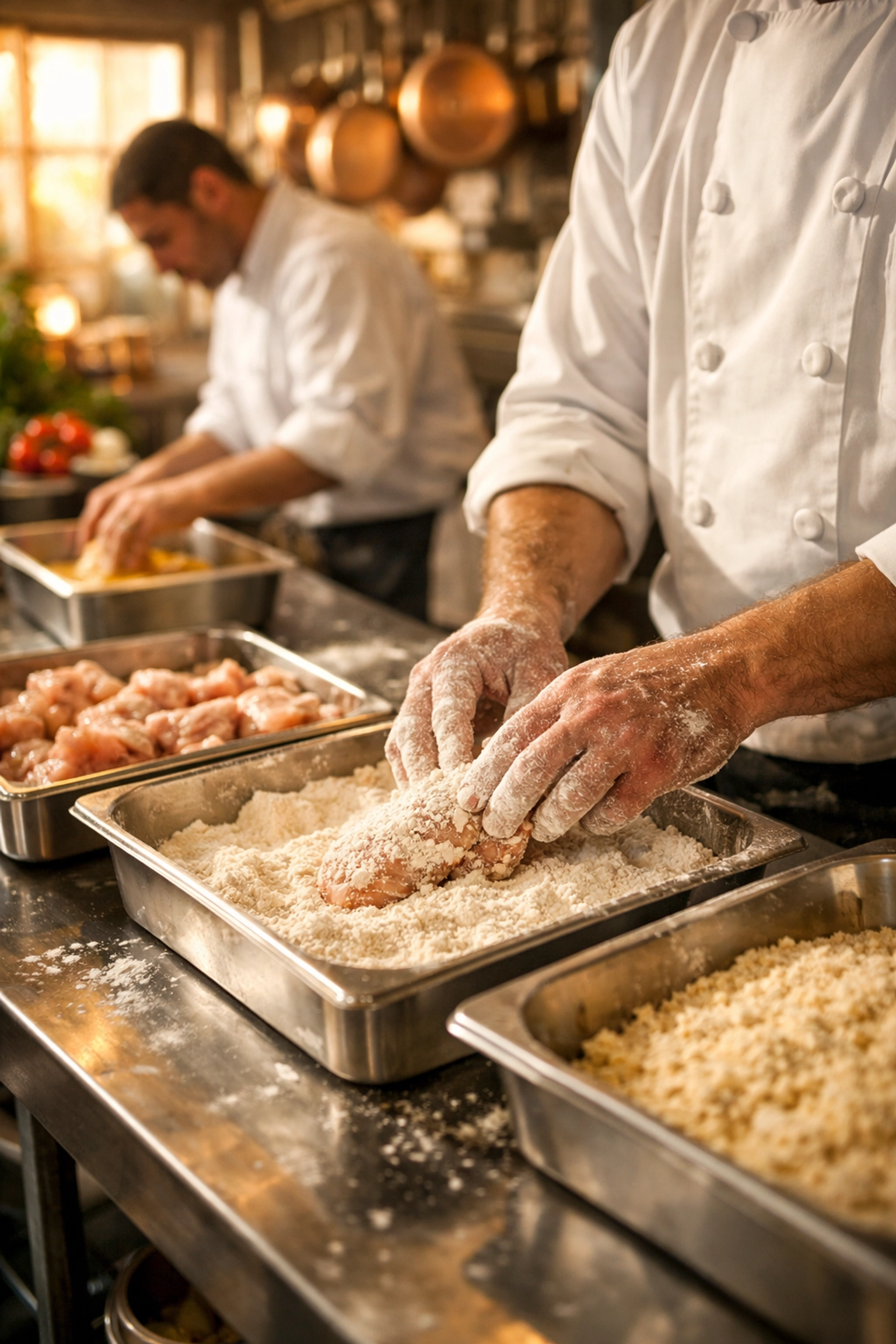
This isn't a CFO who happened to work in restaurants or a marketer who knows how to sell concepts. Levin combines intimate familiarity with premium food operations, the kind that require fresh ingredients, scratch preparation, and quality control at every location, with a CFO's financial discipline and accounting background. For Starbird, which hand-breads chicken daily, uses rice bran oil, and makes 11 sauces from scratch every day to maintain its $4.1 million average unit volume (Franchise Chatter)[3], this combination is essential.
The lesson for independent groups: scaling premium concepts requires leadership that understands both the operational complexity and the financial modeling. You can't fake scratch kitchens at 200 locations, and you can't sustain growth if unit economics don't work. Levin's hire signals that Starbird is serious about maintaining its positioning while expanding, a balance many concepts fail to strike.
The Real Cost of Playing in the 'Superpremium' Category
Let's talk numbers, because this is where many independent operators get reality-checked. Starbird's franchise model requires a total investment between $1.1 million and $1.6 million per unit, with explicit requirements for franchisees: minimum net worth of $3 million and $1 million in liquid capital (Franchise Chatter)[3]. These aren't guidelines, they're gatekeeping criteria designed to ensure only "seasoned multi-unit operators" can join.
Compare that to traditional fast-casual or QSR franchises that cast wider nets, seeking first-time operators with lower capital requirements. Starbird is explicitly not interested in that model. The company has already signed four franchise agreements totaling over 30 committed locations in Denver, Seattle, Salt Lake City, and Chicago (Franchise Chatter)[3], targeting established multi-unit operators who can handle the operational complexity.
Here's the critical question for independent groups evaluating this model: can premium margins survive rapid expansion? Starbird's $4.1 million average unit volume looks attractive on top-line revenue, but the real test is operating margin after accounting for fresh, never-frozen chicken, premium ingredients, daily sauce production, and higher labor standards. As one industry analysis notes, "If the model proves unprofitable for franchisees, the expansion will stall" (Simply Wall St)[1].
For independent operators considering franchise partnerships or scaling their own concepts, the lesson is clear: capital requirements aren't just about having money, they're about having enough runway to weather the learning curve in new markets while maintaining brand standards. If you're undercapitalized, you'll cut corners, damage the brand, and likely fail.

What 'Superpremium' Actually Means in a Crowded Chicken Market
Starbird positions itself above Raising Cane's and Chick-fil-A, a bold claim in a category dominated by those exact brands. But what does "superpremium" actually translate to operationally? According to founder Aaron Noveshen, it's about "more disciplined, data-informed operations with chicken at its most indulgent or in a quality salad" (San Francisco Business Times)[1]. The brand emphasizes complex flavors beyond the hot wings that have dominated the chicken category in recent years.
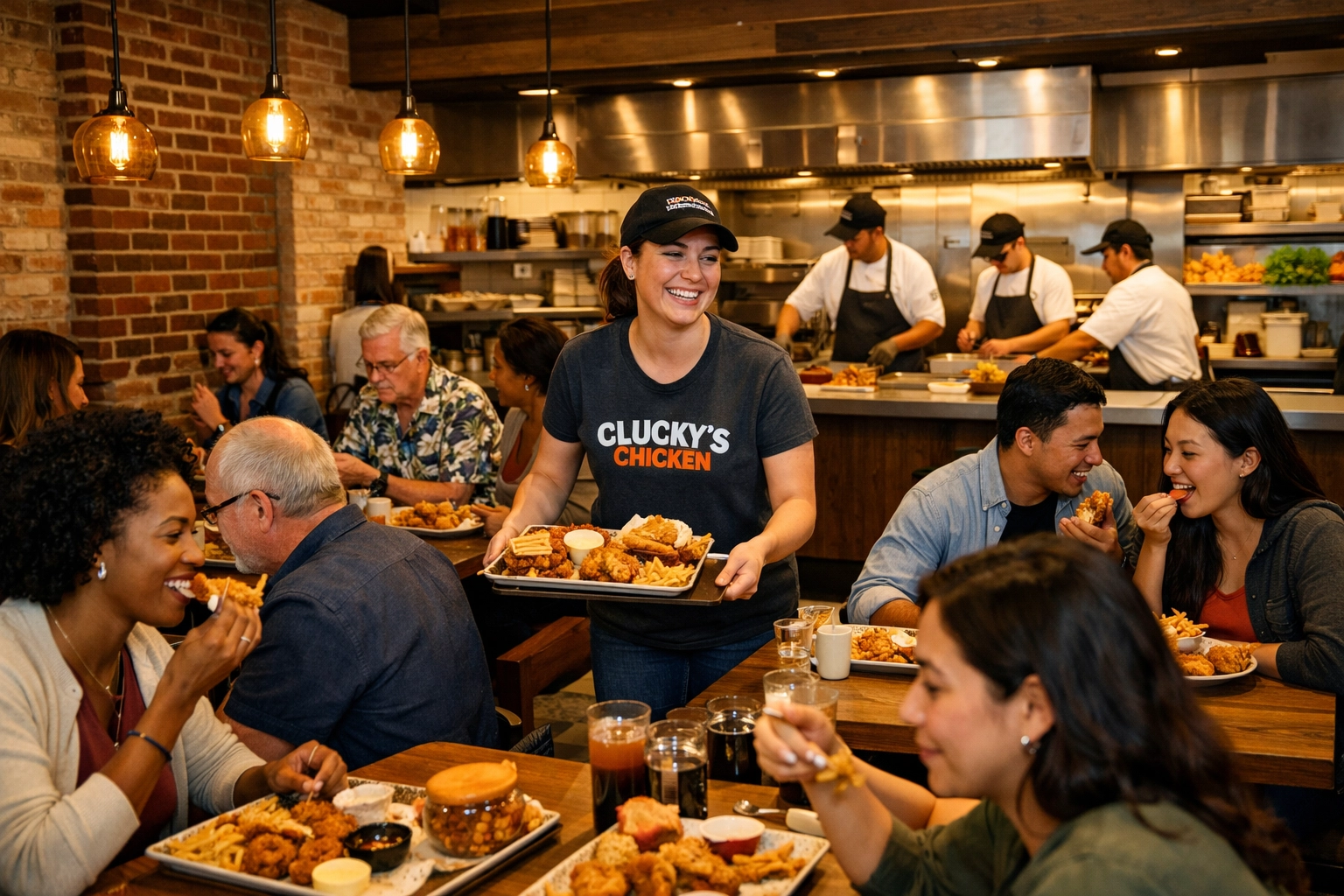
Here's the operational reality: Starbird sells crispy chicken across tenders, wings, sandwiches, and salads, maintaining higher standards for quality and hospitality than typical fast-casual competitors. This requires hand-breading, never-frozen chicken, premium frying oils, and made-from-scratch sauces, all of which increase food and labor costs. The positioning works in the Bay Area where diners expect and will pay for premium quality. The big question is whether it translates to Chicago suburbs, Seattle, Phoenix, and Texas markets where competitive dynamics and customer expectations differ.
For independent groups, the positioning lesson is about defensibility: "superpremium" only works if you can deliver consistently and if the market will support the price premium. Positioning without operational execution just becomes expensive failure. Starbird's leaders believe they can win by combining disciplined operations with indulgent chicken, betting that "not a lot of other brands can compete with that" (San Francisco Business Times)[1].
The Denver Test: Why One Market Matters More Than You Think
Starbird opened its first location outside California in Denver in September 2024 (San Francisco Business Times)[1], and this single store functions as the litmus test for the entire expansion strategy. The Denver franchisee, Whiplash Holdings, committed to seven total Denver units, but that commitment is contingent on the initial location's performance (Simply Wall St)[1].
Think about what that means. A sophisticated multi-unit operator with resources and experience structured their deal to include a performance gate. They're not betting blindly on the brand promise, they're testing whether Starbird's California success can replicate in a new market with different competitive dynamics, customer preferences, and operational challenges.
For potential independent franchisees nationwide, the Denver results over the coming months are crucial data. If that store struggles to maintain premium brand perception and unit economics, it raises serious questions about replicability in Seattle, Phoenix, Chicago, or Texas. If it succeeds, it validates the model and likely accelerates franchise commitments in other markets.
The lesson for independent operators: test markets matter. Whether you're scaling your own concept or evaluating a franchise partnership, early performance in new territory tells you whether the model travels. Smart operators structure deals with contingencies and performance gates rather than committing to full market build-outs based on projections alone.
Franchise vs. Corporate: The Strategic Mix Starbird Is Using
Starbird isn't pursuing pure franchise expansion or pure corporate growth, it's using a strategic mix. In 2026, the company plans to open two to three more stores in California and about five to six beyond it, aiming to reach six states within the next twelve months (San Francisco Business Times)[1]. Some of these will be corporate-owned, some franchised.
The company explicitly states it's "not chasing the fastest scale" but rather "building a brand we can be proud of, one market at a time" (Franchise Chatter)[2]. The appointment of Brian Carmichall as Vice President of Development to oversee both corporate and franchise growth signals tight quality control and operational oversight.
For independent groups, this strategic mix matters because it shows Starbird isn't outsourcing its growth entirely to franchisees. Corporate stores in new markets can serve as training grounds, operational labs, and quality benchmarks. Franchisees benefit from having corporate support and proven models in their markets rather than pioneering alone.
If you're an independent operator considering franchising your own concept, this approach is worth studying. Pure franchise growth can scale faster but risks quality control and brand dilution. Corporate growth offers control but requires more capital and management bandwidth. A strategic mix lets you maintain standards in key markets while leveraging franchisee capital and local expertise in others.
What Independent Groups Need to Know Before Chasing Growth
Here's where we cut through the expansion hype and focus on what actually matters for independent restaurant groups evaluating growth opportunities:
Capital requirements are going up, not down. The era of low-barrier franchise entry is ending in premium segments. Starbird's $3 million net worth and $1 million liquid capital requirements reflect a broader trend toward sophisticated, well-capitalized franchise partners. If you're an independent operator thinking about franchising someone else's concept or scaling your own, you need deeper pockets than you did five years ago.
Values alignment isn't marketing fluff, it's a screening tool. Starbird emphasizes "values-aligned partners" (Franchise Chatter)[2], and while that sounds like corporate speak, it's actually about operational selectivity. The company will be choosy about partnerships, potentially limiting franchise availability even for financially qualified candidates. For independent groups, this means demonstrating brand alignment and operational excellence, not just financial capacity.
Multi-unit commitments are the new normal. Starbird isn't looking for single-unit franchisees. The company wants multi-location partners who can establish market presence, amortize marketing costs, and achieve operational efficiencies across multiple stores. If you're thinking about franchise expansion as an independent group, plan for multi-unit deals from the start.
The profitability question is everything. Starbird's $4.1 million average unit volume sounds impressive, but what matters is whether franchisees can achieve sufficient operating margins to justify their $1.1–$1.6 million investment. Premium ingredients, scratch kitchens, and higher labor standards all compress margins. The real test is whether the premium positioning supports prices high enough to make the unit economics work.
Expansion Opportunities and Market Realities: A Comparison
| Factor | Traditional QSR Franchise | Starbird 'Superpremium' Model | What It Means for Independents |
|---|---|---|---|
| Initial Investment | $500K–$800K typical | $1.1M–$1.6M per unit | Need 2x capital buffer; longer break-even timeline |
| Net Worth Requirement | $1M–$1.5M typical | $3M minimum | Excludes first-time franchisees; targets experienced groups |
| Liquid Capital | $300K–$500K typical | $1M minimum | Must have runway for 12–18 month ramp |
| Average Unit Volume | $1.5M–$2.5M typical | $4.1M | Higher revenue but also higher operating costs |
| Operational Complexity | Standardized, simplified systems | Scratch kitchens, daily prep, premium ingredients | Requires skilled operators; harder to scale without systems |
| Franchisee Profile | Mix of single and multi-unit | Seasoned multi-unit operators only | No room for learning on the job |
| Expansion Speed | Fast, volume-focused | Deliberate, market-by-market | Slower but potentially more sustainable |
What Smart Critics Argue
Not everyone is convinced that Starbird's superpremium positioning can scale successfully. Here are the counterarguments worth considering:
The premium margin compression problem. Critics argue that maintaining scratch kitchens, fresh ingredients, and premium operations at scale inevitably compresses margins to levels that make franchise partnerships unattractive. As one market analysis notes, "If the model proves unprofitable for franchisees, the expansion will stall, and the stock's growth narrative will be in serious doubt" (Simply Wall St)[1]. The concern is that Starbird's unit economics work in high-income Bay Area markets but won't translate to secondary markets where customers have lower price tolerance.
The response: Starbird's $4.1 million average unit volume suggests strong top-line performance. The company is deliberately choosing multi-unit operators with financial cushion to weather the learning curve. More importantly, the Denver test market specifically addresses this concern, if unit economics don't work there, the franchise commitments have built-in escape clauses.
The operational complexity scaling wall. Another criticism is that "superpremium" is code for "operationally complex and hard to replicate." Maintaining 11 daily-made sauces, hand-breaded chicken, and premium hospitality across 200+ locations requires exceptional systems, training, and quality control. Many concepts that succeed with 20 locations struggle at 50, and most that reach 100 have simplified their operations significantly.
The response: This is where Levin's hire matters. His track record shows he understands how to maintain premium standards at scale. BJ's didn't simplify its craft beer program and scratch kitchen model when expanding, it systematized it. California Pizza Kitchen maintained gourmet pizza quality across hundreds of locations. The operational complexity is real, but Starbird hired someone who's solved this exact problem before.
The chicken category saturation concern. Critics point out that chicken is already the most crowded segment in fast-casual, with Chick-fil-A's dominance, Raising Cane's rapid growth, Popeyes' sandwich success, and dozens of regional players fighting for share. Adding 200 Starbird locations to this environment risks commoditization and price competition.
The response: Starbird's positioning above existing players creates differentiation, but only if they can maintain it. The "superpremium" category isn't about fighting Chick-fil-A on their terms, it's about serving customers willing to pay more for better quality. The market exists; the question is whether Starbird can profitably serve it at scale. That's what the controlled, market-by-market expansion tests.
What to Do Next
If you're an independent restaurant group evaluating growth opportunities, whether franchise partnerships or scaling your own concept, here's your action plan:
-
Run honest unit economics before committing to any expansion. Model your best-case, realistic, and worst-case scenarios for new locations. Include full costs: food, labor, rent, franchise fees if applicable, marketing, and working capital. If the realistic scenario doesn't show acceptable returns within 18–24 months, don't proceed.
-
Evaluate your capital position against new franchise requirements. If you're considering franchising concepts like Starbird, measure your resources against the stated requirements: $3M net worth, $1M liquid capital. If you're borderline, you're undercapitalized. Build more cushion before pursuing partnerships.
-
Study test markets obsessively if you're evaluating franchise opportunities. For Starbird specifically, watch the Denver market's performance over the next 6–12 months. Request sales data, customer feedback, and operational metrics from franchise development teams. If they won't share, that's a red flag.
-
If you're scaling your own concept, consider the franchise vs. corporate mix strategically. Don't default to pure franchise expansion because it's capital-light. Plan corporate stores in key markets to maintain brand control, test operations, and serve as training sites. Use franchise partners where local expertise and capital make sense.
-
Assess your operational complexity honestly. If your concept requires scratch kitchens, fresh daily prep, or complex recipes, invest in systems and training infrastructure before expanding. You can't replicate premium operations through franchise agreements alone, you need replicable systems, detailed manuals, and robust training programs.
-
Build relationships with multi-unit operators in your target markets. The franchise game increasingly favors established relationships over cold opportunities. Network with existing multi-unit franchisees, attend franchise conferences, and build credibility in the franchise development community before you need partners.
-
Structure franchise deals with performance gates. Follow Whiplash Holdings' example in Denver: commit to initial locations with contingent build-outs tied to performance metrics. Protect yourself from underperforming concepts while giving successful ones room to expand.
-
Invest in data systems before you scale. "Data-informed operations" isn't optional at scale. Implement POS systems, inventory management, labor scheduling, and financial reporting that give you real-time visibility across locations. You can't manage what you can't measure.
-
Consider consulting expertise for feasibility analysis. Before committing major capital to expansion, engage restaurant consulting services to conduct market feasibility studies, competitive analysis, and financial modeling. Independent validation can save you from expensive mistakes.
-
If your concept isn't ready for franchising, consider a restaurant turnaround approach to strengthen operations first. Make sure your existing locations are performing optimally and truly replicable before attempting to scale.
Frequently Asked Questions
What makes Starbird's "superpremium" positioning different from regular premium fast-casual?
Starbird positions above established chicken chains like Raising Cane's and Chick-fil-A by emphasizing scratch-made preparation, complex flavors beyond standard hot wings, and elevated hospitality. Operationally, this translates to hand-breaded, never-frozen chicken, rice bran oil, 11 daily-made sauces, and quality salad options alongside indulgent chicken items. The $4.1 million average unit volume reflects premium pricing supported by these operational investments.
Can independent restaurant groups realistically compete for these high-capital franchise opportunities?
Yes, but only if you're already operating at a sophisticated level with substantial capital reserves. Starbird's requirements: $3 million net worth, $1 million liquid capital, and proven multi-unit operational experience: are designed to screen for established operators, not first-time franchisees. Independent groups that have successfully operated multiple locations and demonstrated operational excellence can compete, but it requires significant financial resources and track record.
How do I know if a franchise model will actually be profitable in my market?
Study existing locations' unit economics in markets similar to yours. Request Item 19 Financial Performance Representations from the Franchise Disclosure Document, analyze average unit volumes, operating margins, and break-even timelines. For concepts expanding into new markets (like Starbird's Denver test), pay close attention to early performance data. If the franchisor won't share detailed financial performance data, that's a significant red flag. Additionally, engage local consultants who understand your specific market dynamics.
What's the biggest risk for independent groups in superpremium franchise partnerships?
Margin compression. Premium concepts typically have higher food costs, labor costs, and operational complexity. If your market won't support pricing high enough to maintain acceptable margins, you'll struggle even with strong top-line sales. The risk is amplified if you're undercapitalized and can't weather a longer-than-expected ramp-up period while you build brand awareness in a new market.
Should independent operators consider franchising their own concepts instead of joining established brands?
It depends on your operational maturity and capital position. Franchising your own concept gives you more control and higher potential returns, but requires significant investment in franchise development infrastructure, legal compliance (FDD creation, state registrations), training systems, and ongoing support. If you have 3–5 successful corporate locations with proven, replicable systems and the capital to build franchise infrastructure, it may be worth exploring. Otherwise, partnering with an established franchise provides proven systems and brand recognition.
How important is the CEO's background when evaluating franchise opportunities?
Extremely important, especially for concepts in rapid expansion. Greg Levin's track record of scaling California Pizza Kitchen and BJ's Restaurants while maintaining premium positioning demonstrates he understands the operational and financial challenges Starbird will face. When evaluating franchise opportunities, research the leadership team's experience specifically in scaling similar concepts. A CEO with only single-brand or small-format experience may struggle with the complexity of 100+ location expansion.
Ready to evaluate expansion opportunities for your restaurant group? The Executive Team at McFadden Finch Restaurant Consulting Group provides comprehensive feasibility studies, market analysis, and strategic planning for independent operators considering growth. Whether you're evaluating franchise partnerships or scaling your own concept, we help you make data-informed decisions backed by decades of industry experience. Call (510) 973-2410 or visit our services page to schedule a discovery call.
Sources
[1] Simply Wall St, "Starbird Group's (NASDAQ:STBR) Q4 Earnings Missed Estimates: Here's What Analysts Are Forecasting For This Year," 2025, https://simplywall.st/stocks/us/consumer-services/nasdaq-stbr/starbird-group/news/starbird-groups-nasdaqstbr-q4-earnings-missed-estimates-here, Accessed February 17, 2026.
[2] Franchise Chatter, "Starbird Chicken Franchise Information, Cost & Fees," August 28, 2025, https://www.franchisechatter.com/2025/08/28/starbird-chicken-franchise-information-cost-fees/, Accessed February 17, 2026.
[3] Franchise Chatter, "Starbird Chicken Franchise Information, Cost & Fees," August 28, 2025, https://www.franchisechatter.com/2025/08/28/starbird-chicken-franchise-information-cost-fees/, Accessed February 17, 2026.
Original reporting credit: Alex Barreira, "How a San Francisco fried chicken chain is using California Pizza Kitchen's recipe for nationwide expansion," San Francisco Business Times, February 17, 2026, https://www.bizjournals.com/sanfrancisco/news/2026/02/17/starbird-ceo-greg-levin-expansion.html, Accessed February 17, 2026.
About McFadden Finch Restaurant Consulting Group
McFadden Finch Restaurant Consulting Group partners with independent restaurant operators, emerging chains, and hospitality entrepreneurs to build sustainable, profitable businesses. Our services include feasibility studies, concept development, operational turnarounds, menu engineering, and strategic growth planning. We bring decades of hands-on industry experience to every engagement, helping clients make informed decisions backed by data and market realities.
Contact us: (510) 973-2410 | Schedule a Discovery Call