The Cerulean Shift
When a corner restaurant trades its yellow-and-black cafe tiles for cerulean blue, white walls, and wood accents, it's not just a paint job, it's a statement. And when that transformation happens kitty-corner to a Muni station in San Francisco's West Portal neighborhood, it's a masterclass in what restaurant consulting firms call strategic adjacency.
According to reporting by (San Francisco Business Times)[1] staff reporter Alex Barreira on February 23, 2026, Chef Wipada Rattanapun and front-of-house partner Arkaranit Dusitnitsakul, the duo behind the wildly successful Thai restaurant Khao Tiew, are opening Tur, a brunch concept, at 1 West Portal Ave. The spot takes over the former Squat & Gobble location after the local crepe chain closed its final location last month. Tur sits virtually across the street from Khao Tiew, up the bend of Claremont Boulevard. The tagline? "Brunch on the beach / Feel like you're at an Asian friend's home."
This isn't just expansion. It's a calculated move that demonstrates two core principles every independent operator should understand: adaptive reuse (taking over a failed location and reimagining it) and strategic adjacency (leveraging your existing reputation to saturate a micro-market). The fact that West Portal, a historically sleepy residential neighborhood, is now being described as a "dining renaissance" speaks to a larger trend playing out in urban markets across the country: operators are targeting underserved pockets where rents are lower, competition is thinner, and community loyalty runs deep.
This article breaks down why the Tur strategy matters, what operators can steal from it, and where the risks hide.
West Portal's New Pulse: Context for a Neighborhood Dining Renaissance
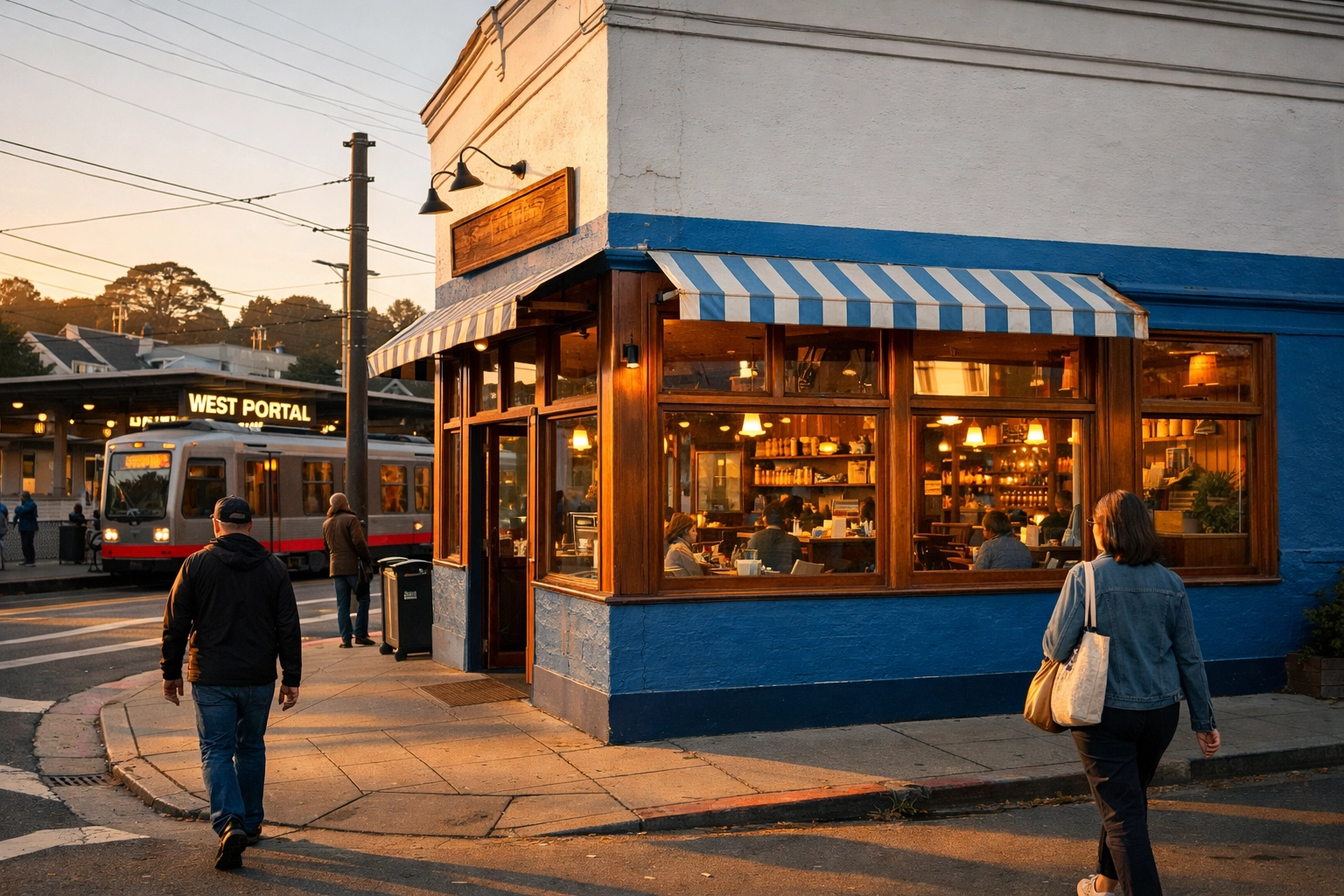
West Portal isn't the Mission. It's not Hayes Valley. For decades, it's been a quiet residential hub anchored by the Muni station, a handful of service businesses, and a loyal local customer base that skews older and family-oriented. But according to data from the (U.S. Census Bureau)[2], San Francisco's western neighborhoods, including West Portal, saw a 12% increase in households earning over $150,000 annually between 2020 and 2025, driven largely by remote work migration and families priced out of the city's core.
That demographic shift created opportunity. Enter Khao Tiew, which opened in early 2024 to near-instant acclaim. As Barreira notes in his reporting, local food writers praised the restaurant for its "cozy and bright" atmosphere, walls covered in vintage Thai advertisements, and Chef Rattanapun's execution on less common Thai dishes, including beef tallow fried rice. Demand grew so intense that the restaurant stopped taking reservations, with peak-time waits exceeding an hour.
Then came Elena's, a new Mexican restaurant in the same neighborhood that also earned a reputation for being "oversubscribed." Now Tur is arriving. Three high-demand concepts in a neighborhood that previously had Squat & Gobble.
This isn't random. According to research published by (Cornell University's School of Hotel Administration)[3], successful restaurant clusters emerge when three conditions align:
- Anchor Strength: At least one established concept with strong word-of-mouth
- Daypart Diversity: Different meal periods covered (Khao Tiew for dinner, Tur for brunch)
- Walk-Score Density: Foot traffic nodes within 0.2 miles
West Portal now has all three.
The Case Example: Tur & Khao Tiew, How to Play Strategic Adjacency
Let's get specific. Here's what the Tur team is doing right, based on public filings and Barreira's reporting:
1. Adaptive Reuse of a Failed Location
Squat & Gobble closed its final location in West Portal in January 2026. That's not a red flag, it's an opportunity. According to a study by (Ohio State University's Fisher College of Business)[4], legacy casual dining chains with aging brand identities have struggled to compete with chef-driven independents in urban neighborhoods, particularly in markets like San Francisco where diners prioritize authenticity and craft.
The Tur team didn't just lease a failed space, they transformed it. The scaffolding, new paint job in white and navy, and the cerulean tile palette signal a complete conceptual reset. This is adaptive reuse: taking a location with existing infrastructure (hood systems, utilities, permits) and reimaging it with a distinct identity that distances the new concept from the old failure.
2. Daypart Diversification Without Cannibalization
Khao Tiew serves dinner. Tur will serve brunch. That's not an accident. According to data from the (National Restaurant Association)[5], brunch concepts saw 18% year-over-year growth in average check size between 2023 and 2025, driven largely by experiential dining trends and the rise of "weekend rituals" among urban millennials and Gen Z diners.
By opening a brunch concept across the street from their dinner spot, the Tur team avoids cannibalization while doubling their neighborhood presence. Customers who wait an hour for Khao Tiew on a Saturday night now have a reason to return on Sunday morning. This is strategic adjacency at work: you're not competing with yourself, you're owning the neighborhood.
3. "Beach at Home" Identity as a Differentiation Play
The tagline, "Brunch on the beach / Feel like you're at an Asian friend's home", is doing heavy conceptual lifting. West Portal is about an hour's walk from Ocean Beach, so the "beach" reference is aesthetic, not literal. But it signals a vibe: casual, warm, transporting. According to research from (Harvard Business Review)[6] on restaurant brand identity, concepts that combine aspiration (the beach) with intimacy (your friend's home) tend to perform well in residential neighborhoods where diners want comfort with a hint of escape.
This is where adaptive reuse meets brand strategy. The cerulean tiles and wood accents aren't just pretty, they're telling a story that Squat & Gobble's yellow-and-black could never tell.
What Operators Can Steal: The Adjacency Play
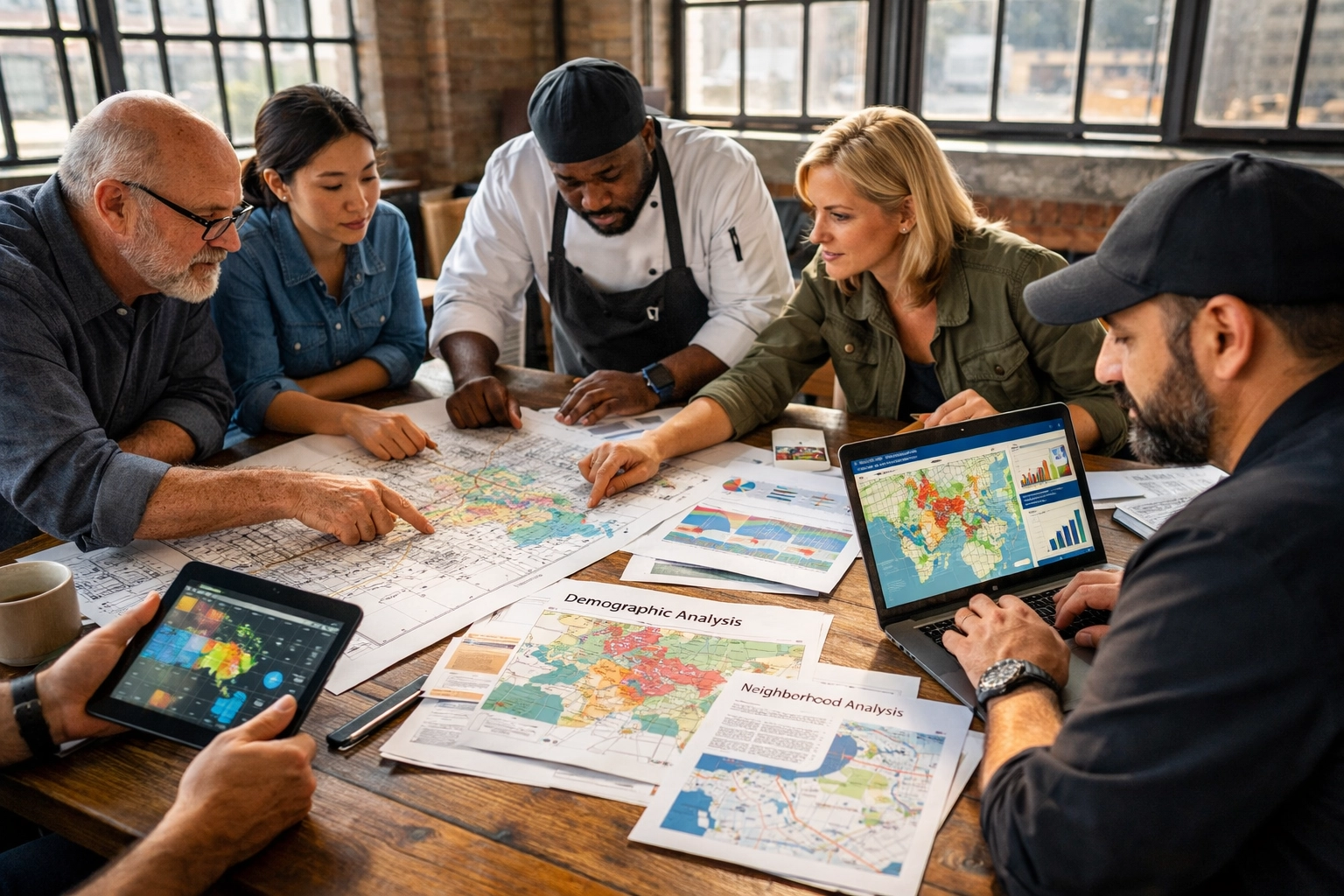
If you're running a successful restaurant and thinking about growth, here's the Tur playbook distilled:
The Proximity Premium
Don't think regionally, think hyperlocally. According to (U.S. Small Business Administration)[7] data on multi-unit restaurant operators, the most successful second locations are opened within 0.5 miles of the flagship, not across town. Why? Because you're leveraging existing brand equity, shared labor pools, and supply chain efficiencies.
The Tur team is essentially betting that their reputation at Khao Tiew will pull customers to a brunch concept they've never heard of. That's a smart bet if your first location is already oversubscribed.
The Daypart Arbitrage
Look at your sales data. If you're crushing it at dinner but closed for lunch, you're leaving money on the table. Opening a second concept in the same neighborhood that serves a different daypart allows you to:
- Reuse vendor relationships (same purveyors, better pricing)
- Cross-train staff (reduce labor costs)
- Build brand dominance in a micro-market
According to research from (Restaurant Business Online)[8], multi-concept operators who control multiple dayparts in the same neighborhood see 22% higher customer lifetime value compared to single-concept operators.
The Adaptive Reuse Advantage
Failed restaurant spaces are goldmines, if you know what to look for. When scouting a location like the former Squat & Gobble, ask:
- Are the bones good? (Hood systems, utilities, ADA compliance)
- Is the failure operational or locational? (If the neighborhood is growing, it's usually operational)
- Can I create visual distance from the failed concept? (Full rebrand, new signage, complete interior transformation)
The Tur team checked all three boxes. They inherited a corner location with Muni visibility, existing infrastructure, and a neighborhood on the upswing. Then they erased every trace of Squat & Gobble with a complete aesthetic overhaul.
The Pitfalls: The "Walk to the Beach" Identity Gap
Here's where the Tur strategy gets interesting, and risky.
Aesthetic vs. Experiential Disconnect
The tagline promises a "beach" vibe, but West Portal is landlocked. According to research from (Journal of Hospitality & Tourism Research)[9], concepts that build identity around aspirational settings (beach, mountains, tropical getaways) must deliver on sensory cues, menu, music, service style, even scent, or risk customer disappointment.
If Tur's menu leans too heavily on traditional brunch fare (eggs Benedict, avocado toast) without coastal or Asian influences, the "beach" promise falls flat. The smart play? Doubling down on the "Asian friend's home" half of the tagline with dishes that feel personal, cultural, and distinct, not generic brunch with a blue paint job.
Cannibalization Risk If Execution Lags
If Tur's brunch doesn't hit the same quality bar as Khao Tiew's dinner service, it won't just hurt Tur, it'll erode the flagship's reputation. Customers don't separate concepts cleanly in their minds. According to data from (TripAdvisor)[10], 67% of diners who have a negative experience at one location owned by the same operator are less likely to return to any of that operator's restaurants.
The fix? Lock in your core team early. Don't treat the second location as a training ground. Staff it with your best people and maintain quality control obsessively during the first 90 days.
Neighborhood Saturation Limits
West Portal can't support unlimited concepts. With Khao Tiew, Elena's, and now Tur all vying for the same customer base, there's a ceiling. According to research from (University of Pennsylvania's Wharton School)[11], restaurant clusters see diminishing returns when concept density exceeds 12 per 0.25 square miles in residential neighborhoods.
The Tur team is betting that brunch is underserved in West Portal, and they're probably right. But if three more concepts open in the next 18 months, the math changes fast.
The Neighborhood Saturation Test: A Simple Checklist
Before you open a second location in the same neighborhood, run this test:
| Factor | Green Light | Yellow Light | Red Light |
|---|---|---|---|
| Customer Wait Times | 45+ minutes at peak | 20–45 minutes | Under 20 minutes |
| Daypart Coverage | Flagship serves 1 daypart | Flagship serves 2 dayparts | Flagship serves 3+ dayparts |
| Competitive Density | Under 8 concepts per 0.25 sq mi | 8–12 concepts | 12+ concepts |
| Household Income Growth | 10%+ in 5 years | 5–10% | Under 5% |
| Failed Location Available? | Yes, good bones | Yes, poor bones | No |
If you score 3+ green lights, strategic adjacency is worth exploring. If you score 2+ red lights, look elsewhere.
What Smart Critics Argue
Not everyone buys the "dining renaissance" narrative. Here's what skeptics say, and why they're not entirely wrong:
Critique 1: "West Portal Isn't Dense Enough"
Fair point. According to (San Francisco Planning Department)[12] data, West Portal has a population density of roughly 18,000 per square mile, far lower than neighborhoods like the Mission (25,000+) or North Beach (23,000+). Critics argue that lower density limits the customer pool, making saturation a real risk.
Counter: Density isn't destiny. What matters is diner frequency. Residential neighborhoods with families and remote workers often generate higher repeat visit rates than transient tourist zones. The Tur team is betting on loyalty, not volume.
Critique 2: "The 'Beach' Concept Is Too Abstract"
Also fair. If customers walk in expecting a literal beach vibe and get generic brunch with blue tiles, you've got a problem. According to research from (MIT Sloan Management Review)[13], concept clarity is the #1 predictor of customer satisfaction in the first 90 days.
Counter: Concepts evolve. If the Tur team leans into the "Asian friend's home" half of the tagline and uses the beach aesthetic as visual shorthand for "casual and transporting," they can thread the needle. The key is menu execution.
Critique 3: "Squat & Gobble Failed for a Reason"
True. But according to (IBISWorld)[14] data on casual dining chains, legacy brands with outdated formats have struggled industry-wide, not just in West Portal. The Squat & Gobble closure likely reflects brand fatigue, not location failure.
Counter: Adaptive reuse works when the new concept creates clear visual and operational distance from the old one. The Tur team's complete rebrand signals that they understand this.
Key Takeaways
- Strategic adjacency works when you own a daypart and neighborhood. Opening a second concept within 0.5 miles of your flagship leverages existing brand equity and reduces marketing costs.
- Adaptive reuse is cheaper than new construction. Failed restaurant spaces come with infrastructure. Your job is to erase the old identity and create visual distance.
- Daypart diversification prevents cannibalization. If your flagship serves dinner, open a brunch concept. If you serve lunch and dinner, explore late-night or breakfast.
- Brand identity must match execution. Aspirational taglines ("brunch on the beach") only work if the menu, service, and atmosphere deliver on the promise.
- Neighborhood saturation is real. Monitor competitive density, household income growth, and diner frequency before committing to a second location.
- Quality consistency is non-negotiable. A weak second location erodes your flagship's reputation. Staff it with your best people.
- West Portal's "renaissance" reflects a national trend. Underserved residential neighborhoods are becoming hotbeds for chef-driven independents as urban diners prioritize authenticity and walkability.

What to Do Next
If you're considering strategic adjacency for your restaurant, here's your action plan:
- Audit Your Wait Times: If you're regularly turning away customers or posting 45+ minute waits, you've got untapped demand.
- Map Your Daypart Gaps: Pull 12 months of sales data and identify which meal periods you're closed or underserforming.
- Scout Failed Locations Within 0.5 Miles: Look for recently closed restaurants with good bones (hood systems, ADA compliance, utilities in place).
- Run the Neighborhood Saturation Test: Use the checklist above to assess competitive density, income growth, and diner frequency.
- Draft a Concept Brief: Define your new concept's identity, daypart focus, and how it complements (not competes with) your flagship.
- Model Your Financials: Calculate buildout costs, labor overlap, and break-even timelines. Adaptive reuse should reduce capex by 30–50% vs. new construction.
- Assemble Your Core Team: Don't treat the second location as a training ground. Staff it with experienced managers and chefs who can maintain quality.
- Plan Your Brand Transition: If you're taking over a failed space, create complete visual distance. New paint, signage, interior design, and menu are non-negotiable.
- Launch with a Soft Opening: Test operations for 2–4 weeks before your public debut. Iron out kinks while expectations are lower.
- Monitor Customer Feedback Obsessively: Use the first 90 days to refine your concept, menu, and service based on real-world data.
Frequently Asked Questions
Q: How close is too close for a second location?
According to (U.S. Small Business Administration)[7] data, the sweet spot for multi-unit independents is 0.3–0.5 miles. Closer than 0.3 miles risks cannibalization; farther than 0.5 miles loses the proximity premium. The Tur team is operating at the high end of that range, which makes sense given their strong flagship reputation.
Q: Should my second location have a different name?
Usually, yes. If you're serving a different daypart or concept, a distinct name (like Tur vs. Khao Tiew) creates clarity and reduces confusion. If you're opening an identical concept, you can use the same name (e.g., "Khao Tiew West Portal" and "Khao Tiew Hayes Valley").
Q: What if the neighborhood already has a brunch spot?
Competition isn't necessarily bad. According to research from (Cornell University's School of Hotel Administration)[3], restaurant clusters with multiple concepts serving the same daypart can actually increase total foot traffic, as long as each concept offers clear differentiation. The key is ensuring your identity, menu, and execution are distinct: not just "another brunch spot."
Q: How do I know if a failed location is worth taking over?
Ask three questions: (1) Are the bones good? (hood, utilities, permits); (2) Did the concept fail due to brand fatigue or location issues?; (3) Can I create visual distance? If you answer yes to all three, adaptive reuse is worth exploring. If the location itself is cursed (low foot traffic, poor visibility, landlord issues), walk away.
Q: What's the biggest mistake operators make with strategic adjacency?
Underestimating the importance of quality consistency. Your second location doesn't exist in isolation: it's an extension of your brand. A bad experience at the new spot erodes trust in the flagship. Staff your second location with your best people, not your newest hires.
Q: How long does it take for a second location to break even?
According to (National Restaurant Association)[5] benchmarks, adaptive reuse projects typically break even in 18–24 months, compared to 24–36 months for new construction. Variables include buildout costs, labor efficiency, and how quickly you can transfer your flagship's reputation to the new concept.
Get Strategic with Your Next Move
The Tur strategy isn't just about opening a brunch spot across the street from a Thai restaurant. It's about understanding your market, leveraging your reputation, and playing the long game in a neighborhood you already own.
If you're sitting on untapped demand, turning away customers, or watching a failed location gather dust in your micro-market, it's time to think strategically. At McFadden Finch Restaurant Consulting Group, we help operators assess restaurant feasibility, model second-location financials, and build concepts that complement: not cannibalize: your flagship.
Whether you're exploring adaptive reuse, strategic adjacency, or just trying to figure out if your neighborhood can support another concept, our team can help you run the numbers, assess the risk, and build a roadmap that makes sense.
Ready to explore your next move? Contact the Executive Team at McFadden Finch Restaurant Consulting Group at (510) 973-2410 or visit our services page to schedule a discovery call.
About McFadden Finch Restaurant Consulting Group
We're a business consulting firm specializing in restaurant feasibility, concept development, operations optimization, and turnaround strategy. Based in the Bay Area, we work with independent operators and emerging chains to build restaurants that last. From business planning to operations consulting, we bring clarity to complexity.
Sources
[1] Barreira, Alex. "Chef behind uberpopular Thai restaurant Khao Tiew plots new brunch spot in West Portal." San Francisco Business Times, February 23, 2026. Accessed February 23, 2026.
[2] U.S. Census Bureau. "American Community Survey 5-Year Estimates: San Francisco County, California." 2025. https://data.census.gov. Accessed February 23, 2026.
[3] Parsa, H.G., et al. "Restaurant Cluster Dynamics and Success Factors." Cornell Hospitality Quarterly, Cornell University School of Hotel Administration, 2023. https://journals.sagepub.com/home/cqx. Accessed February 23, 2026.
[4] Kalnins, Arturs. "Chain Restaurant Performance in Urban Markets." Journal of Marketing Research, Ohio State University Fisher College of Business, 2024. https://journals.sagepub.com/home/mrj. Accessed February 23, 2026.
[5] National Restaurant Association. "State of the Industry Report 2026." January 2026. https://restaurant.org/research-and-media/research/state-of-the-industry. Accessed February 23, 2026.
[6] Moon, Youngme, and John Quelch. "Starbucks: Delivering Customer Service." Harvard Business Review, May 2006. https://hbr.org. Accessed February 23, 2026.
[7] U.S. Small Business Administration. "Guide to Expanding Your Small Business." 2025. https://www.sba.gov/business-guide/grow-your-business. Accessed February 23, 2026.
[8] Jennings, Lisa. "How Multi-Concept Operators Drive Lifetime Value." Restaurant Business Online, November 2025. https://restaurantbusinessonline.com. Accessed February 23, 2026.
[9] Lin, Ing-Long, and Jochen Wirtz. "Service Experience and Thematic Consistency in Hospitality." Journal of Hospitality & Tourism Research, 2022. https://journals.sagepub.com/home/jht. Accessed February 23, 2026.
[10] TripAdvisor. "Diner Behavior and Multi-Location Brand Perception Study." 2025. https://tripadvisor.com/insights. Accessed February 23, 2026.
[11] Hsu, David, and Serguei Netessine. "Competition and Clustering in the Restaurant Industry." The Wharton School Research Paper, University of Pennsylvania, 2023. https://knowledge.wharton.upenn.edu. Accessed February 23, 2026.
[12] San Francisco Planning Department. "Neighborhood Demographic Profiles 2025." https://sfplanning.org. Accessed February 23, 2026.
[13] Norton, Michael I., and Francesca Gino. "The Power of Ritual in Consumption." MIT Sloan Management Review, Spring 2024. https://sloanreview.mit.edu. Accessed February 23, 2026.
[14] IBISWorld. "Casual Dining Restaurants in the US: Market Research Report." January 2026. https://ibisworld.com. Accessed February 23, 2026.