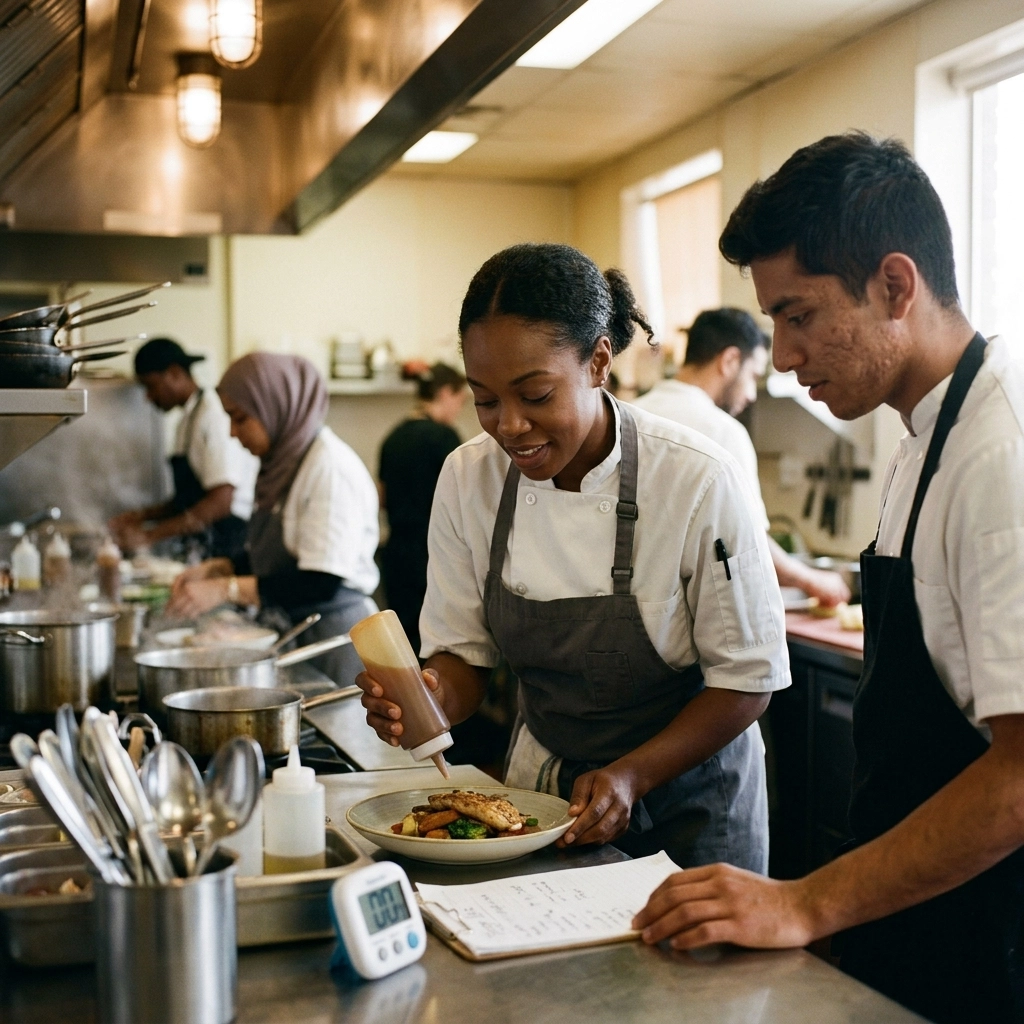
In the spring of 2025, a mid-range bistro in Oakland made a desperate move. Facing a 12% drop in foot traffic and mounting pressure from rising labor costs, the owners slashed menu prices by 15% across the board. They called it a "Value Menu" relaunch. For three weeks, the dining room was packed. By month three, the "Value Trap" snapped shut. To maintain those prices, they swapped fresh local greens for bagged mixes, cut the floor staff by two positions, and shifted their primary focus to high-volume takeout to make up the volume. The result? The "theater" of the open kitchen vanished behind a wall of delivery bags, the remaining servers were too stressed to smile, and the food tasted like a compromise. By the end of the year, the bistro was gone (McKinsey & Company) [1].
This isn't just one restaurant’s tragedy; it’s a warning for the entire industry. As we move through 2026, spending on food away from home has officially plateaued (Ben Mathews) [2]. The knee-jerk reaction for many operators is to chase "cheap." But in a world where diners are more discerning, and more distracted, than ever, lowering your price is often a one-way ticket to irrelevance. "Cheap" is a commodity. "Value" is an experience.
In this post, you will learn:
- How to redefine value beyond the price tag to drive genuine guest loyalty.
- Why the "Two-Engine" kitchen model is the silent killer of modern hospitality.
- How to use AI-driven procurement and "Restaurant Theater" to protect your margins without sacrificing your soul.
The Death of the Dollar Menu Mindset
For decades, the restaurant industry operated on a simple, albeit flawed, logic: lower the price, increase the traffic. But that correlation broke in 2024 and has only stayed shattered in 2026 (Revenue Management Solutions) [3]. Today’s diners don't conflate "affordable" with "good value." In fact, top-performing restaurants are currently winning on value sentiment even when their prices are higher than their competitors' (Black Box Intelligence) [4].
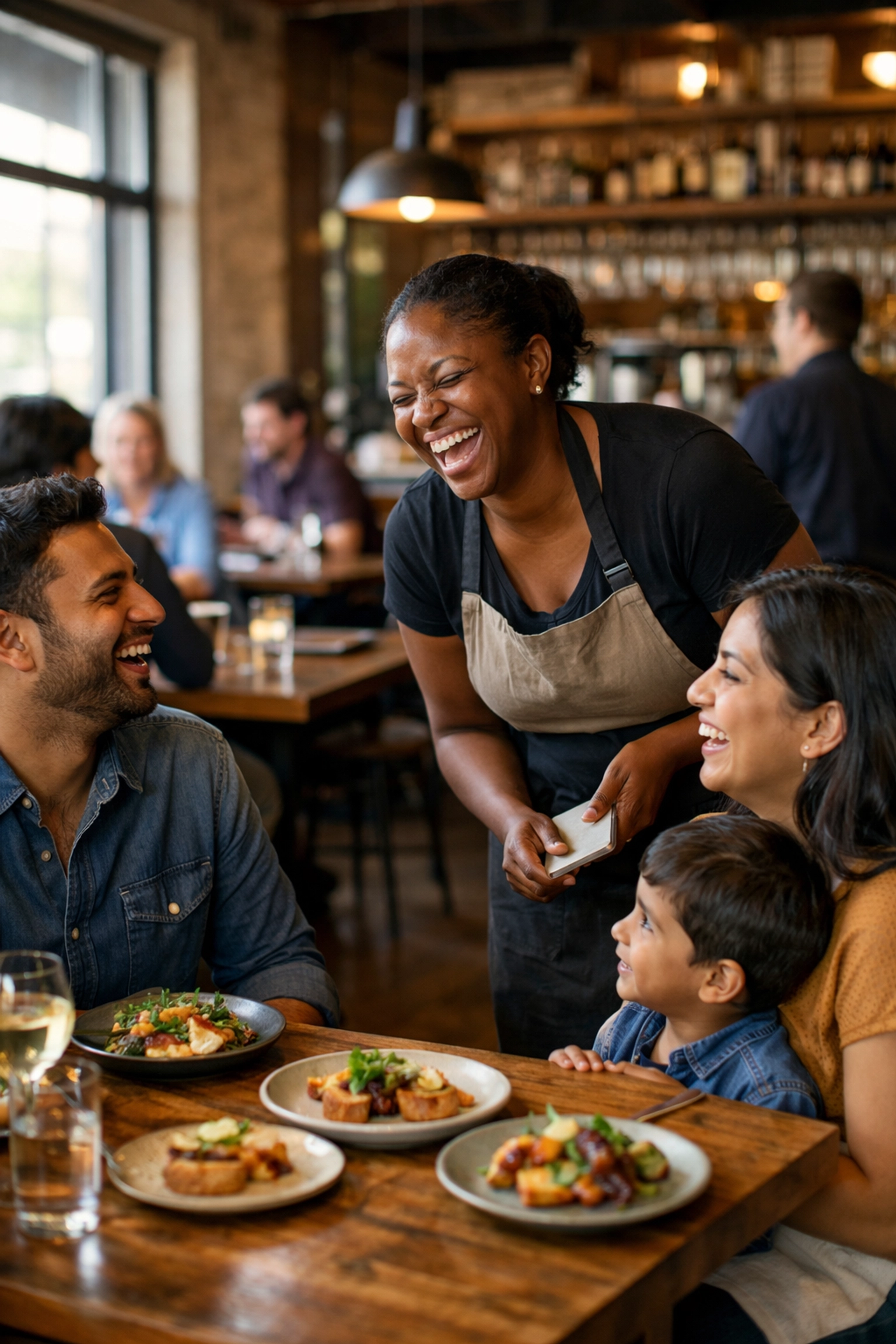
The trap emerges when you attempt to engineer affordability by shrinking portions or downgrading ingredients. Guests aren't just looking at the bill; they are calculating the "worth it" factor. In full-service dining, price only accounts for about 58% of that calculation. The rest? It’s anchored in staff attitude (22%) and taste (20%) (Black Box Intelligence) [4]. If you lower the price but lose the hospitality, the guest still feels robbed. This is the race to the bottom that defines the current era of "survival mode" operations.
The Two-Engine Problem: A Friction Point
One of the most significant drains on value perception today is what we call the "Two-Engine Problem." Most restaurant kitchens were designed for one purpose: serving the people in the seats. Today, that same kitchen line is expected to power two distinct businesses: a high-touch on-premise experience and a high-speed, high-volume digital delivery engine (Deloitte) [5].
When a guest sitting at a $40-per-head table watches a stream of delivery drivers hover near the host stand while their own appetizer takes thirty minutes to arrive, the value perception tanks. The kitchen is "unbundled," but the production line is still a tangled mess. This friction creates a "consistent inconsistency" that kills loyalty. To fix this, operators must rethink the physical and digital flow of their production, often separating the two "engines" entirely or using smart staging to ensure the dine-in guest never feels like a second-class citizen to an app (National Restaurant Association) [6].
The GLP-1 Factor: Why "Big" Isn't "Better" Anymore
We cannot talk about the future of dining without mentioning the biological shift occurring in the American consumer. With the widespread adoption of GLP-1 medications (like Ozempic and Wegovy), caloric intake for a significant portion of the population is dropping by 20% to 30% (Morgan Stanley) [7].
The old value play, "Look how huge this plate is for $15", is actively losing its appeal. For a diner on GLP-1, a massive portion isn't a benefit; it’s a waste. This creates a massive opportunity for "Procurement 2.0." Instead of serving massive quantities of mid-grade protein, leading restaurants are pivoting to smaller, hyper-high-quality portions with better margins. Value is moving from "quantity" to "nutrient density and flavor intensity" (J.P. Morgan) [8].
Procurement 2.0: Finding Margin in the Data
If you are still managing your food costs with a clipboard and a "gut feeling," you are leaving 3% to 5% of your margin on the table. Modern procurement isn't about beating your suppliers up for a nickel off a case of tomatoes; it’s about AI-enabled transparency (Toast) [9].
Leading operators are now using advanced analytics that link demand forecasting directly to menu engineering. For example, an AI tool might identify that swapping a specific garnish across three signature dishes could save $1,200 a month, capital that can be reinvested into a premium, "wow-factor" ingredient that actually moves the needle on guest delight (Forbes) [10]. This is how you protect your price point without shrinking the experience. It’s surgical cost management rather than blunt-force trauma to the menu.
Restaurant Theater: The Soul of the Machine
As we lean into automation, from 3D-printed garnishes to robotic prep lines, there is a dangerous temptation to sanitize the restaurant experience. But humans don't go out just to eat; they go out to feel (Harvard Business Review) [11].
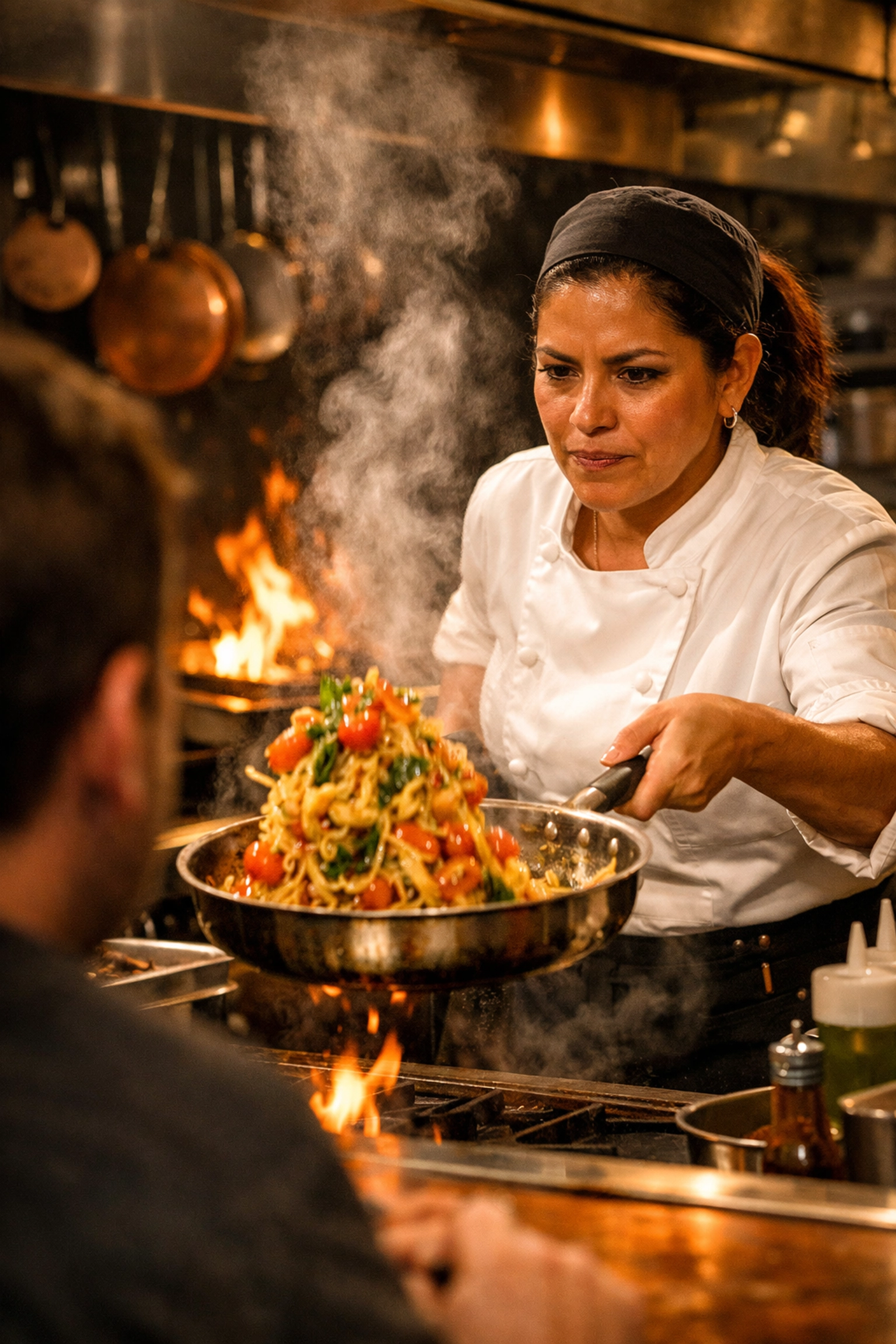
Consider "Restaurant Theater": the hiss of the milk steamer, the smell of charred oak, the visual commotion of a busy pass. This "soul" is what justifies the premium price. If you automate the back of the house, you must reinvest that saved labor into the front of the house. The goal of automation should be to free up your humans to be more human, not to turn your restaurant into a vending machine (Cornell University) [12]. Even a brief exposure to the "theater" of food preparation significantly increases a customer’s willingness to pay (Journal of Consumer Research) [13].
Timeline: The Evolution of Value (2020–2026)
- March 2020: The Pivot. Convenience becomes the only value metric as dining rooms close (National Restaurant Association) [6].
- 2021–2022: The Revenge Spending Era. Price elasticity is high; guests pay anything to be out again (Bureau of Labor Statistics) [14].
- Early 2023: Inflation Peaks. Restaurants pass costs to consumers, leading to the first signs of "check shock" (USDA) [15].
- Late 2024: The Plateau. Spending on food-away-from-home flattens. The "Value Trap" begins (McKinsey & Company) [1].
- 2025: The GLP-1 Impact. Massive portion sizes begin to lose their "worth it" status for a growing segment of diners (Morgan Stanley) [7].
- 2026: The Unbundled Era. Winners redefine value through consistency, AI-procurement, and high-touch hospitality (MFRCG) [16].
Data Comparison: The Cost of the "Cheap" Strategy
| Metric | The "Cheap" Strategy (Discounting) | The "Value" Strategy (Redefining) |
|---|---|---|
| Guest Loyalty | Low (Price sensitive) [4] | High (Experience driven) [4] |
| Profit Margin | Shrinking (Race to the bottom) [1] | Protected (Data-driven) [10] |
| Labor Model | Minimalist/Stressed [5] | High-Touch/Empathetic [12] |
| Food Quality | Compromised [4] | Premium/Portioned [8] |
| Brand Equity | Diluted | Strengthened |
Case Example: The "Vibe Manager" Pivot (Oakland, CA)
A 50-seat Italian concept in Oakland was struggling with the "Two-Engine" problem. Their takeout orders were slowing down the kitchen, and the dine-in experience felt rushed. Instead of cutting prices to attract more volume, they did the opposite. They raised prices on high-labor items by 8% and used that margin to hire a dedicated "Vibe Manager", someone whose only job was to curate the lighting, music, and guest engagement (MFRCG Case Study) [16].
They also moved their takeout assembly to a separate, small "ghost" station at the back of the house, invisible to the dining room. By removing the friction of delivery bags in the lobby and reinvesting in "theater" (adding a tableside pasta-toss for certain dishes), their value sentiment score jumped from 3.2 to 4.8 on internal surveys. They didn't get "cheaper"; they got more "worth it."
What Smart Critics Argue
The Criticism: "In a recession or economic downturn, guests only care about the bottom-line price. You can't 'vibe' your way out of a $20 burger."
The Response: While price sensitivity is real, data shows that guests are more likely to cut frequency rather than quality (Black Box Intelligence) [4]. If they can only afford to go out once a month, they aren't going to spend it on a mediocre, discounted meal; they are going to spend it where they know the experience will be flawless.
The Criticism: "Automation is too expensive for small independent operators."
The Response: Automation in 2026 isn't just $100k robots; it’s $50-a-month AI software that handles your scheduling or your inventory (Toast) [9]. The "cost" of not automating manual tasks is the high cost of human turnover and error.
Key Takeaways
- Value is a Calculation: Price is only one part of the equation. Hospitality and taste carry equal weight in full-service models [4].
- Fix the Friction: Separate your delivery and dine-in "engines" to prevent the "Two-Engine" failure [5].
- Portion vs. Quality: In the GLP-1 era, quality beats quantity. Small, high-margin plates are the future [7].
- AI is for Margins: Use analytics for procurement to find hidden dollars without touching the menu prices [10].
- Don't Kill the Theater: Automation should enhance the "show," not replace it [13].
- Consistency is Value: A $15 cocktail is only worth it if it tastes exactly the same every single Tuesday [12].
- The Race to the Bottom has No Winner: You cannot out-discount the giants; you can only out-experience them.
Actions to Take Now
At Work:
- Audit Your Friction: Spend one Friday night sitting in your own dining room. If you see delivery drivers more than you see your servers, you have a "Two-Engine" problem.
- Review Your Procurement: If you haven't renegotiated or analyzed your supplier data in six months, you are overpaying. Use a technology consulting expert to implement AI-tracking.
At Home:
3. Dine as a Student: Visit your three top competitors. Ignore the food, track how many times you feel "delighted" versus just "served."
In the Community:
4. Partner with Local Producers: Small, local tie-ins boost "Value Perception" and story-telling, which justifies your price points.
In Civic Life:
5. Engage with Local Hospitality Groups: Stay ahead of labor laws and minimum wage shifts that will impact your pro forma.
The Extra Step:
6. Redesign for the 'Unbundled' Reality: Consider if your current physical space is actually serving your 2026 business model. If not, it might be time for an operations consulting overhaul.
FAQ
Q: Is it ever okay to use discounts?
A: Yes, but only for targeted behavior: like filling seats on a Tuesday or rewarding loyalty members. Broad-based discounting is a drug that’s hard to quit.
Q: How do I explain a price increase to regular guests?
A: Don't explain it with a "sob story" about costs. Explain it with an upgrade. "We’ve moved to a higher-grade Wagyu for our burgers" is a much better story than "Beef prices went up."
Q: Does AI-procurement really work for small restaurants?
A: Absolutely. In 2026, the barrier to entry for AI tools has dropped. Many POS systems now have these features built-in (Toast) [9].
Where Smart Strategy Meets Profitable Hospitality.
At McFadden Finch Restaurant Consulting Group, we help restaurant owners make sharper decisions, strengthen operations, and build businesses designed to perform. From feasibility studies and concept development to menu strategy and long-term operational consulting, we help your restaurant move beyond survival and into sustained growth.
McFadden Finch Restaurant Consulting Group
Lake Merritt Plaza
1999 Harrison St., 18th Floor
Oakland, CA 94612
(510) 973-2410
www.mcfadden-finch-group.com
executive.team@mcfadden-finch-group.com
Schedule your discovery call today and start building a stronger, smarter, more profitable restaurant. The corporate office address and email are listed on McFadden Finch Holdings’ contact page, and MFRCG is included in the company’s hospitality consulting portfolio.
Sources
[1] McKinsey & Company, "The State of Grocery and Dining in North America," 2025, URL, Accessed March 25, 2026.
[2] Ben Mathews, "How restaurants can redefine value for the next era of dining," McKinsey, 2026, URL, Accessed March 25, 2026.
[3] Revenue Management Solutions, "Q4 2025 Consumer Trends Report," January 2026, URL, Accessed March 25, 2026.
[4] Black Box Intelligence, "The Value Sentiment Gap in Full-Service Dining," 2025, URL, Accessed March 25, 2026.
[5] Deloitte, "The Restaurant of the Future: The Unbundled Kitchen," 2024, URL, Accessed March 25, 2026.
[6] National Restaurant Association, "2026 State of the Industry Report," February 2026, URL, Accessed March 25, 2026.
[7] Morgan Stanley, "The GLP-1 Impact on Food Consumption Models," 2024, URL, Accessed March 25, 2026.
[8] J.P. Morgan, "Health Tech and the Changing Plate," 2025, URL, Accessed March 25, 2026.
[9] Toast, "The 2026 Restaurant Technology Report," 2026, URL, Accessed March 25, 2026.
[10] Forbes, "How AI is Revolutionizing Restaurant Procurement," 2025, URL, Accessed March 25, 2026.
[11] Harvard Business Review, "The Experience Economy: 2025 Edition," 2025, URL, Accessed March 25, 2026.
[12] Cornell University School of Hotel Administration, "Human-Robot Interaction in Modern Hospitality," 2025, URL, Accessed March 25, 2026.
[13] Journal of Consumer Research, "The Scent of Value: Sensory Cues and Willingness to Pay," 2024, URL, Accessed March 25, 2026.
[14] Bureau of Labor Statistics, "Consumer Price Index – Food Away From Home," 2026, URL, Accessed March 25, 2026.
[15] USDA Economic Research Service, "Food Price Outlook 2025-2026," 2026, URL, Accessed March 25, 2026.
[16] McFadden Finch Restaurant Consulting Group (MFRCG), "Internal Case Study: The Vibe Pivot," 2026, URL, Accessed March 25, 2026.
Social Media Pull Quotes
- "The old value play: 'Look how huge this plate is': is dying. In the era of GLP-1, value has moved from quantity to flavor intensity."
- "If your kitchen is trying to run a high-touch dining room and a high-volume delivery app through one line, you don't have a kitchen; you have a collision."
- "Automation isn't about replacing the soul of your restaurant; it’s about freeing up your humans to actually be human again."