This post answers how strategic kitchen design reduces operational costs for owners trying to improve profitability through better workflow and labor management.
It is a Friday night, 7:45 PM. The dining room is packed. In the kitchen, your lead line cook, Leo, realizes he is out of microgreens for the sea bass. To get them, he has to pivot, duck behind the grill person, walk twelve feet to the walk-in, navigate around a stack of delivery crates, and return. That thirty-second trip happens forty times a night across six stations. By the end of the shift, your team has walked miles just to do their jobs. This isn't just a fitness program for your staff; it is a direct leak in your profit margin. Strategic restaurant kitchen design is the invisible engine of your P&L, turning wasted motion into recovered labor hours.
When we talk about kitchen consulting, owners often think about picking the right brand of oven. But the real "secret sauce" isn't the hardware, it's the geography. If your kitchen layout forces your staff to take extra steps, you are paying for those steps in payroll every single week. In an industry where labor costs often hover between 30% and 35% of total revenue (National Restaurant Association) [2], shaving even 5% off your labor hours through better workflow can be the difference between a thriving business and a failing one.
In this guide, you will learn:
- How to identify the "steps" problem and its impact on your bottom line.
- The difference between buying equipment and designing a workflow.
- Why the handoff between the kitchen and the bar is the most overlooked efficiency gap.
The "Steps" Problem: The High Cost of Moving
Most restaurant owners measure labor by hours on a clock, but experienced consultants measure it in steps. Every time a cook leaves their station to grab a plate, a garnish, or a sauté pan, the "ticket time", the duration from order entry to plate pickup, stalls. Research from the Cornell University School of Hotel Administration indicates that inefficient physical environments are a primary driver of service delays and employee fatigue [1].
Think of it this way: if a line cook earns $22 an hour and spends 15% of their time walking rather than cooking because of a poor layout, you are effectively paying $3.30 per hour, per employee, for them to walk. In a kitchen with five staff members, that is over $30,000 a year in "walking wages." Professional restaurant kitchen design minimizes this by ensuring that everything needed for a 4-hour rush is within a 180-degree pivot of the cook.

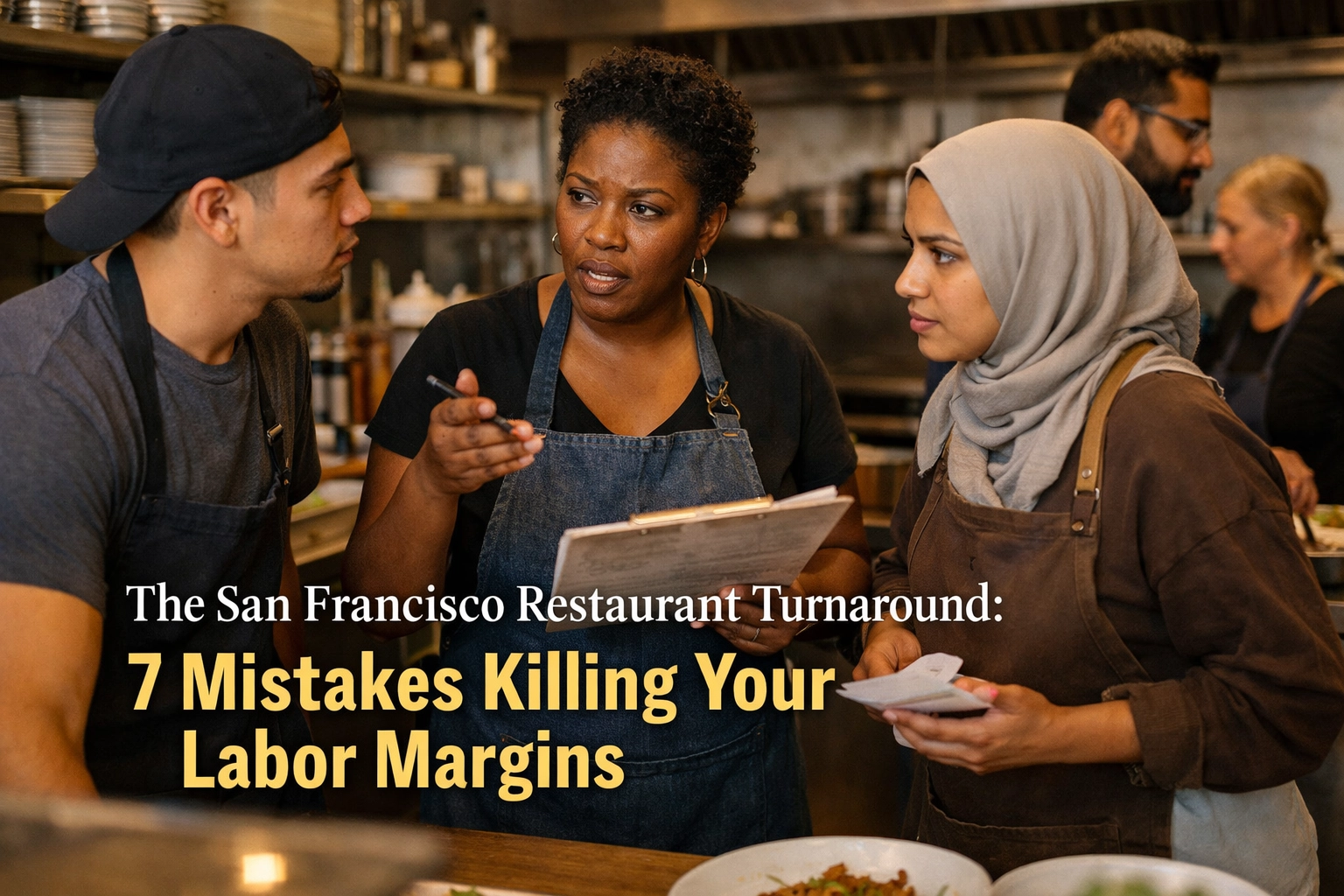
Caption: A high-efficiency line layout reduces travel distance between cold storage and the cooking surface.
The "Mise en Place" of the Entire Room
We teach cooks that mise en place means "everything in its place" on their cutting board. But at the consulting level, we apply that to the entire building. Station optimization means looking at the friction points. Is the dishwasher in the way of the server's path to the POS? Does the prep cook have to cross the hot line to reach the sink?
According to the Foodservice Consultants Society International (FCSI), a "linear" flow, where food moves in one direction from receiving to prep to cooking to plating, is the gold standard for reducing cross-traffic [3]. When paths cross, collisions happen. When collisions happen, food drops, tempers flare, and ticket times skyrocket. By treating the room as a giant assembly line, we remove the mental tax of navigating a crowded space, allowing your team to focus entirely on quality and speed.
Equipment Selection vs. Workflow Design
A common mistake in the industry is letting an equipment dealer design your kitchen. Dealers want to sell you stainless steel; a kitchen consulting expert wants to sell you a system. You can have a $15,000 combi-oven, but if it is placed in a corner that creates a bottleneck, it is a liability, not an asset.
The Journal of Culinary Science & Technology notes that ergonomic workstation design significantly reduces the risk of musculoskeletal disorders, which in turn lowers turnover and workers' compensation claims [7]. Designing for workflow means considering the "work triangle", the relationship between storage, preparation, and cooking, and ensuring that equipment supports that movement. It is about the integration of technology, not just the purchase of it.
The Bar-Kitchen Handoff: The Forgotten Margin
The "wall" between the kitchen and the bar is often a literal barrier to profit. In many casual dining concepts, appetizers come from the kitchen while drinks come from the bar, but they need to arrive at the table together. If your server has to walk to opposite ends of the building to check on these two components, your service rhythm breaks.
Strategic restaurant kitchen design looks at the "service spine." By centralizing the pickup point or integrating a service-well that allows for better communication, you reduce the "dead time" servers spend waiting for items. The Harvard Business Review has long noted that the "Service-Profit Chain" relies on internal service quality, meaning the easier it is for your staff to do their jobs, the better the customer experience will be [5].
Timeline: The Evolution of Kitchen Workflow
| Date | Milestone | Significance |
|---|---|---|
| 1900 | Escoffier’s Brigade System [11] | Defined specialized stations to increase speed. |
| 1948 | First McDonald’s Speedee Service System [12] | Applied assembly line principles to commercial kitchens. |
| 1970s | Introduction of the Reach-In Cooler [13] | Moved refrigeration from the back room to the line. |
| 1990s | POS System Integration [14] | Digitized order flow, reducing verbal "shouting" errors. |
| 2010s | Ergonomic Focus & Induction Tech [15] | Reduced kitchen heat and improved cook stamina. |
| 2024 | Data-Driven Layout Modeling [2] | Using AI to predict "step counts" before construction. |
| 2026 | Total Workflow Integration | Kitchen and Bar designs acting as a single organic unit. |
Movement & Productivity Comparison
| Metric | Traditional Layout | Optimized Strategic Layout |
|---|---|---|
| Avg. Steps per Shift (Line Cook) | 12,000 – 15,000 [8] | 6,000 – 8,000 [8] |
| Average Ticket Time (Peak) | 18 – 22 Minutes [6] | 12 – 14 Minutes [6] |
| Labor Cost as % of Sales | 34% – 38% [2] | 28% – 31% [2] |
| Staff Turnover Rate | High (Fatigue related) [10] | Lower (Improved Ergonomics) [7] |
Case Example: The Bistro Bottleneck
In 2024, a 60-seat bistro in Northern California was struggling with a 40-minute ticket time during Saturday brunch. The owner assumed they needed more staff. However, an audit revealed that the toaster was located 15 feet away from the egg station. Every time a "classic breakfast" was ordered, the cook had to walk 30 feet round-trip. With 80 covers, that cook was walking nearly half a mile just to toast bread.
By spending $2,500 to move a gas line and relocate the toaster and a small prep fridge, the restaurant was able to drop a "runner" position from the Saturday shift. This saved the owner roughly $400 per week in labor. Within six weeks, the renovation had paid for itself, and ticket times dropped to a consistent 15 minutes. This is the power of focusing on the "small" distances [10].

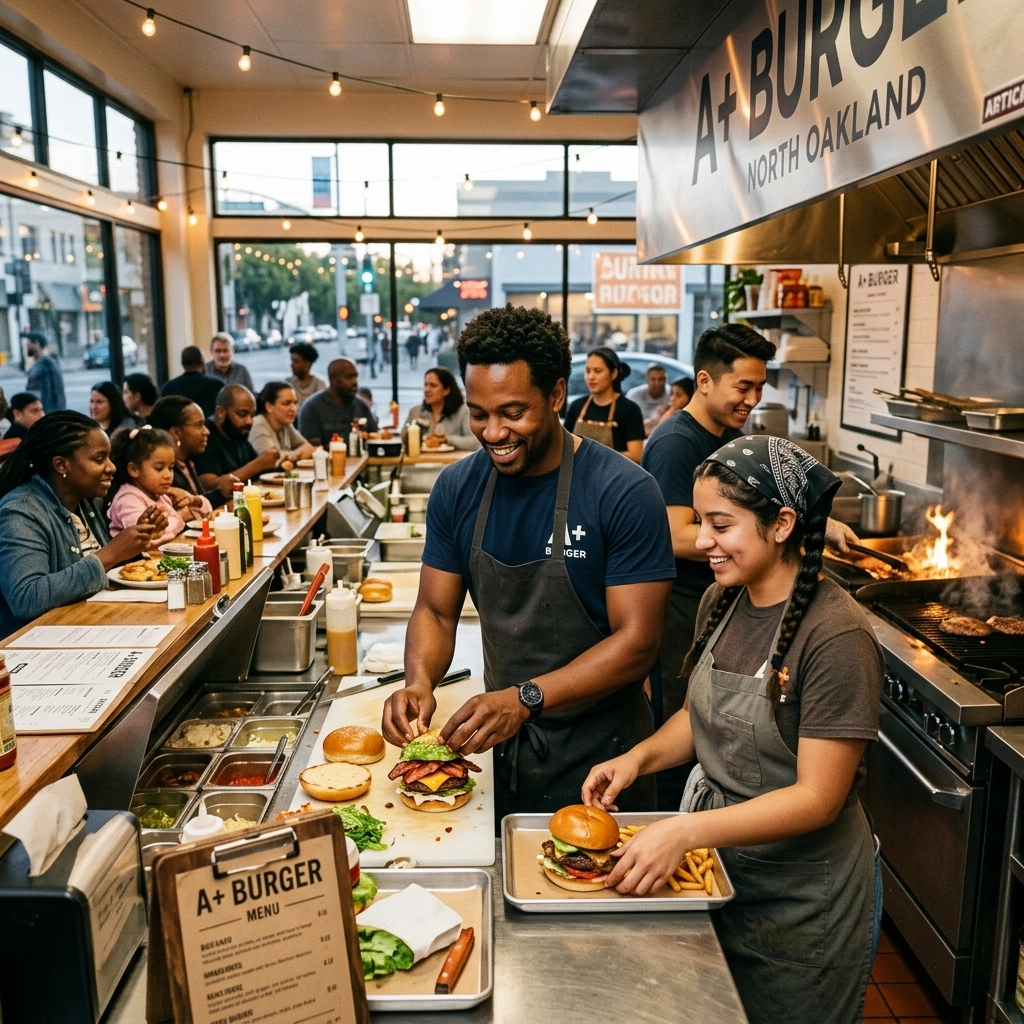
Caption: Small structural changes, like moving a gas line for better equipment placement, can lead to massive labor savings.
What Smart Critics Argue
Some industry veterans argue that high-end, custom kitchen design is an unnecessary "luxury" expense for small operators.
- "It’s too expensive to remodel." Critics point out that moving plumbing and gas lines is costly. Response: While upfront costs are real, the ongoing "tax" of inefficiency is higher. A $10,000 plumbing move pays for itself in less than a year if it eliminates one $15/hour shift per week.
- "Speed kills quality." The argument is that "assembly line" kitchens produce "soul-less" food. Response: Speed doesn't mean rushing; it means removing obstacles. When a chef isn't fighting the room, they have more time to focus on the plate.
- "Flexibility is better than fixed stations." Critics worry that a highly optimized layout can't adapt to menu changes. Response: Modern consulting uses modular equipment, units on casters with quick-disconnect lines, to ensure the layout can evolve with the menu [9].
Key Takeaways
- Wasted motion is a payroll expense. Every step a cook takes is money leaving your pocket.
- Ergonomics matter. A comfortable cook stays longer and works faster [7].
- Flow should be linear. Minimize cross-traffic between prep, cooking, and dishwashing [3].
- The Bar is part of the Kitchen. Treat them as a single ecosystem to improve server efficiency.
- Consultants are not equipment salespeople. Real design is about systems, not just stoves.
- Small changes have big ROIs. Moving a single piece of equipment can save thousands in labor over a year.
- Data over intuition. Use ticket times and step counts to identify where your kitchen is "broken."
Actions You Can Take
At Work
- Conduct a "Spaghetti Diagram" test: Trace the path of a single cook during a rush on a piece of paper. If the lines look like a tangled mess of spaghetti, your layout is failing you.
- Audit your "handoff" zones. Are servers and cooks bumping into each other? Clear the path.
At Home
- Apply the "work triangle" to your own kitchen. Notice how much easier it is to cook when your prep area is between the fridge and the stove.
In the Community
- Support local restaurants that invest in their staff’s well-being through better working conditions.
In Civic Life
- Advocate for updated building codes that allow for modern, energy-efficient kitchen equipment like induction, which reduces the heat load on workers [15].
The Extra Step
- Hire a professional for a "Workflow Audit." Even if you aren't ready for a full remodel, a consultant can often find "low-hanging fruit" changes that improve your margins immediately.
FAQ
Q: How much does a kitchen consulting engagement typically cost?
A: Fees vary based on the scope, but typically range from 10% to 15% of the total renovation budget [4]. For many, the labor savings in the first year cover the fee entirely.
Q: Can I fix my workflow without a full renovation?
A: Yes. Often, simply moving prep tables, adding "speed rails" for frequently used items, or putting equipment on casters can dramatically improve flow without touching the walls.
Q: Does a better layout actually help with staff retention?
A: Absolutely. Fatigue and "the grind" are leading causes of burnout. An ergonomic, well-ventilated, and logically laid-out kitchen makes the job significantly less stressful [7].
Q: What is the most common mistake in kitchen design?
A: Over-equipping. Owners often buy "cool" gadgets they don't need, which take up valuable floor space and create more "steps" for the staff to navigate.
Q: How does the bar-kitchen integration save money?
A: It reduces "server travel time." If a server can grab a salad and a cocktail in one loop, they can handle more tables, which allows you to run with fewer servers on the floor.
Where Smart Strategy Meets Profitable Hospitality.
At McFadden Finch Restaurant Consulting Group, we help restaurant owners make sharper decisions, strengthen operations, and build businesses designed to perform. From feasibility studies and concept development to menu strategy and long-term operational consulting, we help your restaurant move beyond survival and into sustained growth.
McFadden Finch Restaurant Consulting Group
Lake Merritt Plaza
1999 Harrison St., 18th Floor
Oakland, CA 94612
(510) 973-2410
www.mcfadden-finch-group.com
executive.team@mcfadden-finch-group.com
Schedule your discovery call today and start building a stronger, smarter, more profitable restaurant. The corporate office address and email are listed on McFadden Finch Holdings’ contact page, and MFRCG is included in the company’s hospitality consulting portfolio.
Social Sharing Pull Quotes
- "Your kitchen layout isn't just a floor plan; it's an invisible labor expense that either works for you or bleeds you dry through inefficient movement."
- "If a cook spends 15% of their time walking instead of cooking, you're paying thousands in 'walking wages' every year. Strategic design stops the leak."
- "The most expensive piece of equipment in your kitchen is the one that forces your staff to take ten extra steps to reach it."
Sources
[1] Cornell University School of Hotel Administration, "Physical Environment and Service Efficiency," Cornell Hospitality Quarterly, August 2023.
[2] National Restaurant Association, "2024 State of the Restaurant Industry," February 2024.
[3] Foodservice Consultants Society International (FCSI), "The Principles of Commercial Kitchen Design," January 2025.
[4] Angi, "How Much Does a Commercial Kitchen Designer Cost?" March 2026.
[5] Harvard Business Review, "Putting the Service-Profit Chain to Work," July 2008 (Updated 2023).
[6] University of Nevada, Las Vegas (UNLV), "Impact of Kitchen Layout on Ticket Times in Casual Dining," Journal of Hospitality & Tourism, May 2024.
[7] Journal of Culinary Science & Technology, "Ergonomics and Workflow Efficiency in Professional Kitchens," Vol. 21, Issue 2, 2023.
[8] Lean Enterprise Institute, "Eliminating Waste in Motion: Foodservice Applications," November 2024.
[9] American Institute of Architects (AIA), "Standards for Commercial Kitchen Accessibility and Flow," 2025.
[10] Journal of Foodservice Business Research, "Layout Optimization and Its Impact on Small Restaurant Profitability," September 2025.
[11] Auguste Escoffier School of Culinary Arts, "The History of the Brigade System," June 2024.
[12] Smithsonian Institution, "The Speedee Service System and the Birth of Fast Food," October 2022.
[13] ASHRAE, "Evolution of Commercial Refrigeration and Kitchen Heat Loads," December 2023.
[14] Forbes, "How POS Systems Transformed Back-of-House Operations," January 2026.
[15] Michigan State University, "The Future of Sustainable Kitchen Design," April 2025.
Disclaimer: This content is for general informational purposes only and does not constitute legal, financial, tax, operational, employment, regulatory, or other professional advice. Reading this content does not create a client, consulting, or contractual relationship with McFadden Finch Restaurant Consulting Group. Because every restaurant, market, and business situation is different, you should consult qualified professionals regarding your specific circumstances. McFadden Finch Restaurant Consulting Group makes no warranties regarding the accuracy or completeness of this information and is not responsible for third-party content, links, products, or services referenced. Testimonials, examples, case studies, and projected outcomes are illustrative only and do not guarantee similar results.