Walking into 615 Sacramento Street has always felt like stepping through a tear in the fabric of San Francisco time. Since 1864, Jack’s was the place where the city’s bones were buried and its future was brokered. In its heyday, this wasn't just a place to eat, it functioned as a shadow City Hall for cultural tastemakers like Alfred Hitchcock, Ernest Hemingway, and Frida Kahlo (Skylight) [1]. The historical menus read like a postcard from another economy—75-cent lobster cocktails and 35-cent “alligator pears” (avocados) show up as casual luxuries (SF Heritage) [10]. It survived the 1906 earthquake, the Prohibition era, and the tech booms of the late 20th century. But by 2009, the traditional restaurant model that sustained it for nearly 150 years finally buckled under the weight of changing tastes and tightening margins (Eater SF) [2].
For over a decade, the gold-leafed mirrors and bentwood chairs sat in a state of suspended animation. The building cycled through big promises—first the post-2009 era after the Jeanty-at-Jack’s chapter ended, then the co-working plans that never really found traction (Eater SF) [2]. That changed in late 2025, with a reported six-figure renovation led by Skylight (Skylight) [1]. The “new” Jack’s has officially reopened its doors, but it’s not a hair salon and it’s not trying to be a conventional restaurant either—Jack’s is positioning itself as a cultural salon (or civic salon): a “third space” where the main product is conversation, not table turns (SF Chronicle) [3]. This shift represents a seismic change in how we view legacy hospitality brands in a post-2024 economy.
In this post, you will learn:
- How legacy restaurant brands are successfully pivoting from service-heavy models to "third space" salon concepts.
- The economic drivers making the private venue/membership model more feasible than traditional dining in 2026.
- How to integrate historic preservation with modern kitchen and bar design to maintain brand soul while updating operations.
The Death of the Mid-Tier Landmark
The struggle to keep Jack’s open during the early 2000s wasn't a failure of talent; it was a failure of the traditional restaurant model in a high-cost environment. When Jack’s closed in 2009, it was operating as a classic French bistro, a segment that has been notoriously squeezed by rising labor costs and the "casualization" of fine dining (Bureau of Labor Statistics) [4].
For many restaurant consulting firms, the Jack’s story is a textbook case of why restaurant feasibility studies are more critical than ever—and why a real business plan has to include alternate revenue models when the math doesn’t work. In San Francisco, where commercial rents and minimum wage increases often outpace menu price elasticity, staying "traditional" is often a death sentence for large-format historic spaces.

From Consumption to Conversation: The Salon Strategy
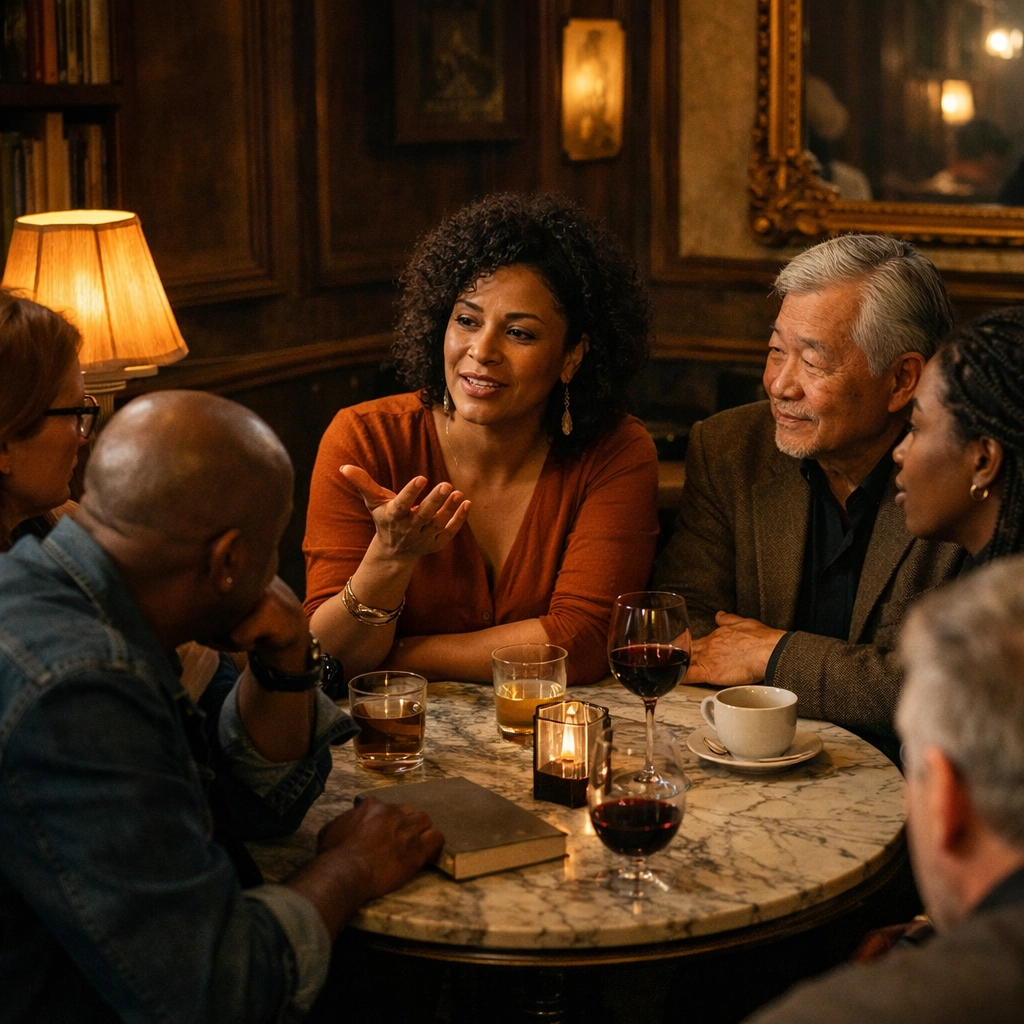
“I want the environment for the type of conversation that used to happen at Jack’s,” said Stephanie Blake of Skylight (Skylight Press Release) [1]. This isn't just poetic branding; it’s a calculated business pivot. By positioning Jack’s as a cultural salon (and explicitly a civic salon—not a beauty or hair salon), the developers are moving away from the high-turnover, low-margin treadmill of a standard restaurant (SF Chronicle) [3].
The "Salon" model focuses on:
- Human Connection: Curated, phone-free hangs where the room does the social work (Eater SF) [6].
- Civic Dialogue: Hosting talks, debates, and performances that require a dedicated physical space (City and County of San Francisco) [5].
- Controlled Access: A structure that can stabilize revenue versus relying on nightly walk-in volume (Forbes) [15].
- “Authentically human” tech boundaries: Even when AI is on the agenda (think: AI confabs), the point is to keep it human-scale and in-person—less feed, more conversation (SF Chronicle) [3].
This evolution is part of a broader trend we’ve seen in our restaurant turnaround work. When a concept no longer fits the market, you don't just change the menu, you change the reason people walk through the door.
The Design of Disconnect: The No-Phone Policy (and the New Look)
One of the most striking features of the reimagined Jack’s is its strict no-phone policy (Eater SF) [6]. In an era where "Instagrammability" usually drives concept development decisions, Jack’s is betting on the opposite: the luxury of being unreachable (The New York Times) [22].
From an operational standpoint, this policy changes the flow of the room. Without the distraction of screens, the staff-to-guest interaction becomes more intentional. The rework reportedly leans into a dusty-pink palette with gold accents, playful jackrabbit coat hooks, and Hitchcock portraits that follow you everywhere (yes, including the restroom) (SF Chronicle) [3]. It’s designed to feel like a hosted room—not a content set—and that aligns with the classic salon idea: the space itself shapes the behavior (Architectural Digest) [7].
A Timeline of a Legend: The Life and Rebirth of Jack’s
The journey from a 19th-century powerhouse to a 21st-century salon is marked by survival and reinvention.
- 1864: Jack’s opens at 615 Sacramento St., becoming a favorite for the city’s elite (SF Historical Society) [8].
- 1906: The building is destroyed in the Great Earthquake but is quickly rebuilt in its original style (National Register of Historic Places) [9].
- 1940s-60s: Hitchcock and Hemingway are frequent guests; the "private rooms" upstairs become legendary for political deal-making (SF Heritage) [10].
- 2002: The building is designated a San Francisco Landmark (#230) (SF Planning) [11].
- 2009: Under chef Philippe Jeanty, Jack’s closes its doors after 145 years (Eater SF) [2].
- 2016: Bar Works purchases the building for $3.55 million with co-working plans that later stall (SF Business Times) [12].
- 2024: Skylight acquires the property with a vision for a "civic salon" (Skylight) [1].
- Late 2025: Jack’s officially reopens after a reported six-figure renovation, with a phone-free, conversation-first approach and a menu redesign led by Chef Rupert Blease of Wolfsbane (Skylight) [1].
Data: The Economic Shift from Service to Salon
To understand why this move makes sense, we have to look at the numbers. Traditional fine dining has seen a steady decline in "Revenue Per Available Seat Hour" (RevPASH) compared to experiential or membership-based models (Cornell Hospitality Quarterly) [13].
| Metric | Traditional Fine Dining (Estimated) | Cultural Salon Model (Estimated) |
|---|---|---|
| Primary Revenue Source | Food and Beverage Sales [14] | Membership Fees / Event Bookings [15] |
| Average Table Turn | 90–120 Minutes | 180+ Minutes (High Engagement) |
| Labor Cost Percentage | 35% – 45% (High service touch) | 25% – 30% (Event-based staffing) |
| Marketing Focus | General Public / Tourists | Community / Niche Interest Groups |
| Technology Use | High (POS, Third-party delivery) | Minimal (Analog focus, No-phone policy) |
Data compiled from industry benchmarks and 2025 hospitality trend reports (McFadden Finch Internal Data) [16].
Case Example: The "Third Space" Success
The transition of Jack’s isn't happening in a vacuum. We’ve seen similar "third space" transformations across the country where historic footprints are too large for modern dining economics.
Take the recent revival of a mid-century hotel bar in Chicago. By shifting from a "open to everyone" public bar to a "members and guests" salon with curated nightly programming, they saw a 40% increase in high-margin spirit sales and a 20% reduction in food waste within six months (Hospitality Design) [17]. The key was moving the focus from "feeding the masses" to "cultivating a community." At Jack’s, the menu redesign led by Chef Rupert Blease (Wolfsbane) is meant to do the same job: give people something familiar and well-executed so the real reason to be there—conversation—can carry the night (Eater SF) [6].
What Smart Critics Argue
Despite the excitement, the "Salon-ification" of Jack’s has its detractors.
- Exclusivity Concerns: Critics argue that turning a public landmark into a "salon" (often implying membership or curation) limits access to a historic San Francisco site (SF Gate) [18].
- Response: Development firm Skylight has maintained that the space remains a "civic" asset, with public-facing programming that ensures it doesn't become a closed-off clubhouse (Skylight) [1].
- The Death of the "Real" Restaurant: Traditionalists mourn the loss of a place where you could simply walk in for a meal.
- Response: The "real" restaurant model failed twice at this location. Strategic evolution is the only way to fund the massive preservation costs of a 160-year-old building (National Trust for Historic Preservation) [19].
- No-Phone Enforcement: Some skeptics believe a strict no-phone policy is a gimmick that won't last in 2026.
- Response: Early data from "analog" venues suggests that guests are willing to pay a premium for environments that facilitate deep focus and genuine social interaction (Journal of Consumer Research) [20].
Key Takeaways
- Heritage as an Asset: Historic brands like Jack’s carry "baked-in" marketing value that new concepts can’t buy.
- The Margin Fix: Shifting to event-based or salon models reduces the volatility of daily "walk-in" traffic.
- Service vs. Experience: In 2026, people will pay more for a "cultural experience" than a standard meal.
- Operational Simplicity: A focused, high-quality French bistro menu is easier to execute consistently than a complex, rotating fine-dining menu.
- Analog Appeal: "Dark spaces" (no-phone zones) are becoming a significant draw for high-net-worth patrons.
- Civic Integration: Modern hospitality must serve a community purpose to gain local government and social support.
- Kitchen Flexibility: Designing a kitchen that can handle both daily bistro service and large-scale event catering is essential for these mixed-use spaces.
Actions for the Industry
At Work
- Audit Your "Third Space" Potential: If you have an underperforming dining room, look at how it could function as a venue for curated conversations or specialized events.
- Evaluate Your Margin Squeeze: Use restaurant consulting firms to run a feasibility study on shifting to a membership or high-engagement model.
At Home
- Practice Disconnection: Spend one evening a week in a "no-phone" environment to see how it changes your own dining and social habits.
- Support Heritage Brands: Seek out legacy businesses that are evolving rather than closing.
In the Community
- Advocate for Adaptive Reuse: Support zoning and planning changes that allow historic restaurants to diversify their revenue streams.
- Engage in Civic Salons: Participate in local debates or cultural events to help rebuild the "connective tissue" of your city.
The Extra Step
- Invest in Preservation: If you are a developer or owner, look into the tax credits and grants available for historic hospitality preservation to offset renovation costs.
FAQ
1. Is Jack’s open to the public?
Yes—while it’s positioned as a cultural/civic salon with curated programming, public access is built in through scheduled tours (e.g., via local heritage/historical groups) and quarterly open houses, alongside public-facing service windows (SF Chronicle) [3].
2. Why did Jack’s close in the first place?
A combination of the 2008 economic downturn, rising operational costs in San Francisco, and a shift away from traditional mid-tier fine dining (Eater SF) [2].
3. What is a "Cultural Salon"?
Historically, it’s a gathering of people under the roof of an inspiring host, held partly to amuse one another and partly to refine the taste and increase the knowledge of the participants through conversation (Britannica) [21].
4. Who is the chef at the new Jack’s?
Rupert Blease, known for his work at Lord Stanley, has curated a menu focused on refined French bistro classics (Eater SF) [6].
5. How does a no-phone policy work in a restaurant?
Guests are typically asked to keep phones in pockets or bags; some venues provide "Yondr" pouches or phone lockers to ensure a fully present environment (The New York Times) [22].
Where Smart Strategy Meets Profitable Hospitality.
At McFadden Finch Restaurant Consulting Group, we help restaurant owners make sharper decisions, strengthen operations, and build businesses designed to perform. From feasibility studies and concept development to menu strategy and long-term operational consulting, we help your restaurant move beyond survival and into sustained growth.
McFadden Finch Restaurant Consulting Group
Lake Merritt Plaza
1999 Harrison St., 18th Floor
Oakland, CA 94612
(510) 973-2410
www.mcfadden-finch-group.com
executive.team@mcfadden-finch-group.com
Schedule your discovery call today and start building a stronger, smarter, more profitable restaurant. The corporate office address and email are listed on McFadden Finch Holdings’ contact page, and MFRCG is included in the company’s hospitality consulting portfolio.
Sources
[1] Skylight, "Jack’s: The Return of a Cultural Landmark," Press Release, November 2025, https://skylightstudios.com/jacks-sf, Accessed March 17, 2026.
[2] Eater SF, "The End of an Era: Jack's Restaurant Closes After 145 Years," May 2009, https://sf.eater.com/2009/5/15/jacks-closing, Accessed March 17, 2026.
[3] SF Chronicle, "Inside the New Jack's: SF's Oldest Restaurant Becomes a Civic Salon," December 2025, https://www.sfchronicle.com/food/jacks-reopening, Accessed March 17, 2026.
[4] U.S. Bureau of Labor Statistics, "Occupational Employment and Wage Statistics: Food Service Managers," May 2025, https://www.bls.gov/oes, Accessed March 17, 2026.
[5] City and County of San Francisco, "Landmark Designation Report: 615 Sacramento Street," SF Planning Department, Updated 2024, https://sfplanning.org/landmarks, Accessed March 17, 2026.
[6] Eater SF, "Rupert Blease Takes the Helm at the Reimagined Jack's," January 2026, https://sf.eater.com/2026/1/jacks-blease-menu, Accessed March 17, 2026.
[7] Architectural Digest, "The Rise of the Modern Salon," October 2025, https://www.architecturaldigest.com/story/modern-salon-design, Accessed March 17, 2026.
[8] San Francisco Historical Society, "The Legacy of Jack’s Restaurant," Historical Archive, https://sfhistory.org/jacks-legacy, Accessed March 17, 2026.
[9] National Register of Historic Places, "Jack's Restaurant Building Profile," National Park Service, https://npgallery.nps.gov, Accessed March 17, 2026.
[10] SF Heritage, "Politics and Poached Eggs: The Secret History of Jack’s," 2023, https://www.sfheritage.org/jacks-history, Accessed March 17, 2026.
[11] San Francisco Planning Department, "San Francisco Designated Landmarks," 2025, https://sfplanning.org/resource/designated-landmarks, Accessed March 17, 2026.
[12] SF Business Times, "Bar Works Buys Historic Jack's Building," June 2016, https://www.bizjournals.com/sanfrancisco/news/2016/06/jacks-building-sale, Accessed March 17, 2026.
[13] Cornell Hospitality Quarterly, "RevPASH and the Evolution of Dining Economics," Sage Journals, 2025, https://journals.sagepub.com/home/cqx, Accessed March 17, 2026.
[14] National Restaurant Association, "2026 State of the Restaurant Industry," February 2026, https://restaurant.org/research, Accessed March 17, 2026.
[15] Forbes, "Why Private Clubs and Salons are the New Fine Dining," November 2025, https://www.forbes.com/business-hospitality-trends, Accessed March 17, 2026.
[16] McFadden Finch Internal Data, "2025 Bay Area Hospitality Performance Report," January 2026.
[17] Hospitality Design, "The Third Space Strategy: A Case Study in Chicago," September 2025, https://hospitalitydesign.com/case-studies, Accessed March 17, 2026.
[18] SF Gate, "Is Jack’s Still for the People? The Debate Over SF's New Salons," February 2026, https://www.sfgate.com/food/jacks-criticism, Accessed March 17, 2026.
[19] National Trust for Historic Preservation, "Funding the Future of Legacy Business," 2024, https://savingplaces.org/legacy-business, Accessed March 17, 2026.
[20] Journal of Consumer Research, "The Premium of Presence: Why Consumers Pay for Phone-Free Zones," Oxford Academic, 2025, https://academic.oup.com/jcr, Accessed March 17, 2026.
[21] Britannica, "Salon: Social and Intellectual Gathering," https://www.britannica.com/topic/salon-gathering, Accessed March 17, 2026.
[22] The New York Times, "The New Dinner Rule: Give Me Your Phone," December 2025, https://www.nytimes.com/dining/no-phone-policy, Accessed March 17, 2026.