Tonight, March 7, 2026, the corner of 65 Division Street in San Francisco’s Design District isn't just a location; it is the epicenter of a culinary rebirth. As the sun sets over the city, the doors of JouJou are swinging wide, inviting a new era of "proper nights out." This isn't just another restaurant opening in a city known for its food; it is a calculated, glamorous, and decadent response to the demand for high-energy dining that refuses to sacrifice quality for atmosphere. JouJou represents a pivotal shift in the San Francisco dining landscape, blending high-concept French seafood with an unpretentious, high-energy atmosphere that prioritizes the guest experience over rigid formality.
For years, the San Francisco dining scene has been defined by the quiet reverence of the multi-course tasting menu. While that format has its place, the Executive Team at McFadden Finch Restaurant Consulting Group has observed a growing hunger for something more vibrant. Diners today want the "big tent" experience, a place where you can drop in for a quick martini and half a dozen oysters or settle in for a three-hour feast with friends. JouJou, the latest venture from the powerhouse duo behind Lazy Bear and True Laurel, is designed to be exactly that destination. It draws inspiration from the legendary Parisian brasseries like Balthazar in New York, yet it remains firmly rooted in the soul of San Francisco [1].
In this post, you will learn:
- How the team behind Lazy Bear transitioned from a communal tasting format to a high-volume à la carte brasserie.
- The strategic role the Design District plays in San Francisco's evolving culinary map.
- Why the "modern French seafood" approach is a masterclass in menu engineering for 2026 profitability.
The Vision: Bringing the "Proper Night Out" Back to the Bay
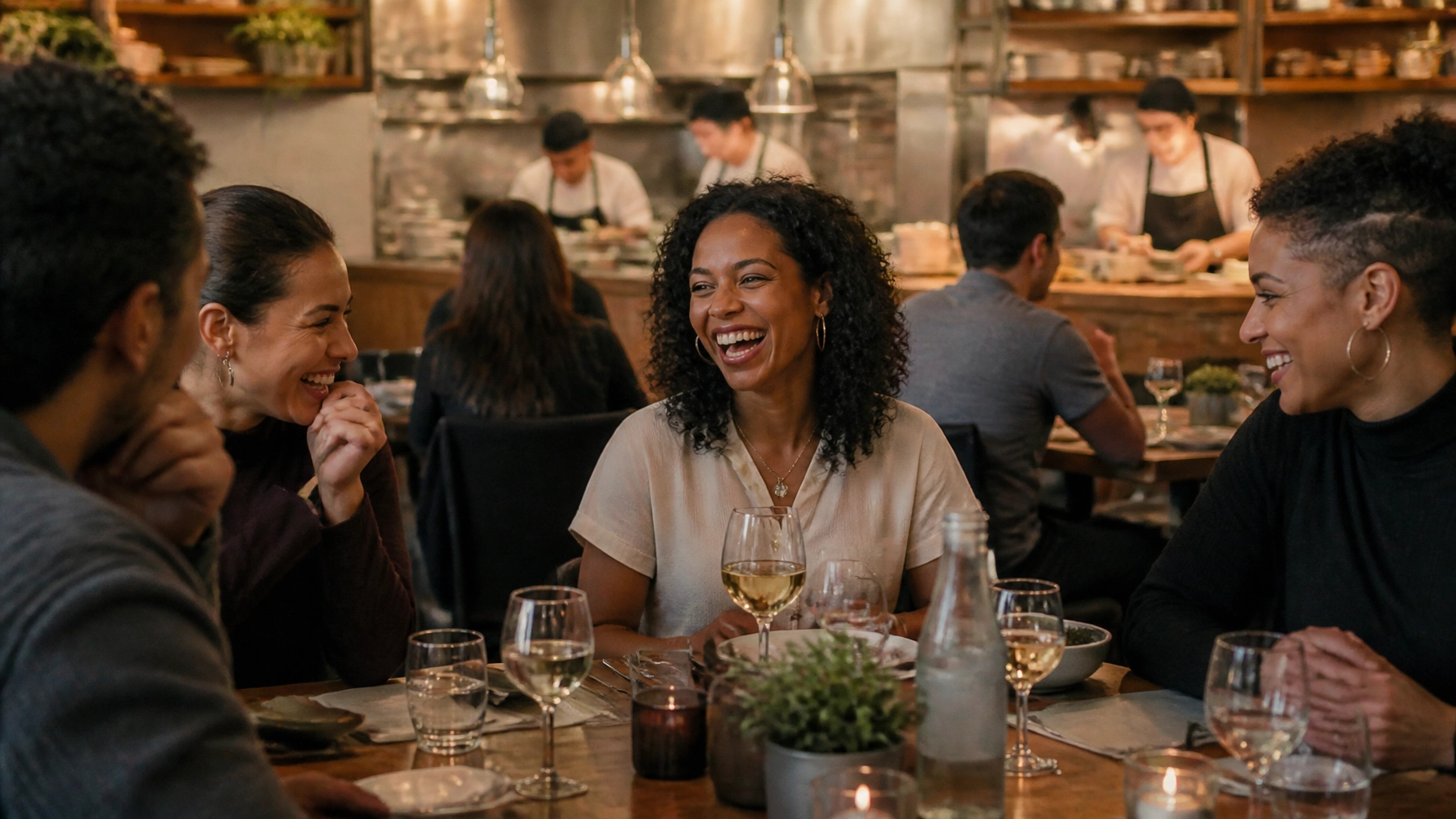
The concept of a "proper night out" has become somewhat elusive in the post-pandemic era. It requires a specific alchemy of lighting, noise levels, and service that feels both attentive and invisible. The team at JouJou, led by culinary visionaries and experienced operators, has spent years perfecting this balance. Unlike the hushed tones often found at Michelin-starred establishments, JouJou encourages a lively, "scene-y" environment where the clink of silverware and the hum of conversation are part of the soundtrack [2].
At McFadden Finch Restaurant Consulting Group, we often see operators struggle to bridge the gap between "casual" and "upscale." Many fall into the trap of being too expensive for a casual night and too informal for a special occasion. JouJou avoids this by leaning into the classic brasserie model. It offers a sense of occasion without the gatekeeping of a fixed menu. This flexibility is a core component of restaurant turnaround secrets that we emphasize to our clients: meeting the guest where they are, rather than forcing them into a rigid box.

The Team: A Pedigree of Precision
The talent behind JouJou is nothing short of elite. While the names of the founders are well-known in the industry, the execution of this project relies on a deep bench of professionals. Chef de cuisine Nick Vollono, formerly of Quince and Atelier Crenn, brings a level of technical precision that ensures every dish, no matter how simple it appears, is executed at a world-class level [2]. Pastry chef Yesenia Castañon, coming from the two-starred Birdsong, adds a layer of sophisticated sweetness to the menu, while beverage director Matteo Villano manages a cellar and bar program that rivals any in the city [2].
This level of talent acquisition is a strategic move. In an era where labor costs are a primary concern for operators, investing in high-level leadership can actually lower long-term costs by reducing waste and ensuring consistency. Operators looking to emulate this success can look to our 2026 restaurant consulting playbook for strategies on building high-performance teams in competitive markets.
The Menu: Modern French with a Global Lens
The menu at JouJou is a seafood-forward celebration of French technique influenced by the diverse cultures of the Pacific. While you will find the staples of a great brasserie, Vichyssoise, Trout Almondine, and decadent seafood towers, you will also see unexpected influences from French Polynesia and New Orleans [1].
One standout dish is the black cod à l’ananas. This dish is a clever seafood interpretation of the classic duck à l’orange, replacing the poultry with buttery black cod and the citrus with the bright, tropical acidity of pineapple [2]. This kind of innovation is what keeps a menu exciting for repeat guests. Furthermore, the inclusion of a robust raw bar allows for high-margin items that require minimal kitchen labor, a key tactic discussed in our guide on how consultants maximize profit with menu engineering.
Design and Atmosphere: The Jon de La Cruz Touch
The physical space at 65 Division Street is as much a part of the experience as the food. Designed by Jon de La Cruz, the 6,000-square-foot venue is a multi-room journey through Belle Époque aesthetics updated for the modern era [1]. The main bar is designed to be the heartbeat of the restaurant, while the raw counter offers a more intimate look at the kitchen's craft.
From the dark-veined marble-topped chef’s counter to the cane-backed bistro chairs, every element is chosen to evoke a sense of history and permanence [2]. For new operators, this highlights the importance of a thorough restaurant feasibility study that includes design and flow analysis. A beautiful space that doesn't function well for staff is a liability; JouJou, however, seems to have mastered both form and function.
A Timeline of JouJou's Journey to Opening
| Date | Milestone | Source |
|---|---|---|
| Mid 2024 | Initial concept development and site selection in the Design District. | [1] |
| Late 2024 | Lease finalized for 65 Division Street. | [2] |
| Early 2025 | Interior design partnership with Jon de La Cruz announced. | [1] |
| June 2025 | Recruitment of key kitchen leadership from Michelin-starred backgrounds. | [2] |
| Oct 2025 | Menu R&D begins, focusing on modern French seafood interpretations. | [1] |
| Jan 2026 | Staff training and hospitality drills commence. | [2] |
| March 6, 2026 | Soft opening for friends and family. | [1] |
| March 7, 2026 | Official Grand Opening to the public. | [User Info] |
| March 11, 2026 | Bar service hours expand to 4:00 PM start. | [User Info] |
| March 17, 2026 | Full weekly schedule includes Tuesday service. | [User Info] |

The Economic Context: Why the Design District?
Choosing the Design District (often referred to as West SoMa or Showplace Square) was a calculated risk that is paying off. Historically a hub for interior designers and wholesale showrooms, the area has seen a surge in residential and mixed-use development. By positioning JouJou here, the team is tapping into a neighborhood that is underserved by high-end dining compared to the Financial District or the Marina.
As we discussed in our recent analysis of Legacy operators and restaurant revitalization, location isn't just about foot traffic, it's about "destination density." JouJou provides a reason for people to travel to a specific corner of the city, creating a halo effect for nearby businesses.
Data Element: Brasserie vs. Tasting Menu Profitability
To understand the business logic behind JouJou, we can compare the typical metrics of a high-volume brasserie with those of a traditional fine-dining tasting menu model.
| Metric | High-Volume Brasserie (JouJou Style) | Traditional Tasting Menu (Lazy Bear Style) |
|---|---|---|
| Average Ticket (PPA) | $85 – $125 | $300 – $500 |
| Table Turns per Night | 2.5 – 3.5 | 1.0 – 1.2 |
| Labor Cost % | 28% – 32% | 35% – 45% |
| Food Cost % | 25% – 30% | 30% – 35% |
| Revenue Diversification | High (Bar, Raw Bar, Full Meals) | Low (Fixed Menu Only) |
Data based on McFadden Finch 2026 industry benchmarks and typical Bay Area operating costs [3].
As the table shows, while the Price Per Acquisition (PPA) is lower in a brasserie, the volume (table turns) and lower labor intensity of à la carte service often lead to healthier margins. This is a critical lesson for any operator wondering why a $500 steak dinner only yields a 25% profit.
Case Example: The "Scene-y" Success Model
Consider the success of NYC's Balthazar. Since opening in 1997, it has remained one of the highest-grossing restaurants in the United States by mastering the "all-day brasserie" feel. It isn't just about the Steak Frites; it's about the feeling of being "in the mix." JouJou is applying this NYC-born logic to San Francisco. By creating a multi-room environment, a bar for the solo diner, a counter for the food enthusiast, and a dining room for the celebration, they maximize the utility of every square foot [2]. This approach ensures the restaurant is never "dead," even on a Tuesday night, because it serves multiple different consumer needs simultaneously.

What Smart Critics Argue
Even a concept as polished as JouJou will face scrutiny. Here are a few common criticisms and the evidence-based responses from the hospitality community:
- "It's too loud for serious dining." Critics often argue that high-energy brasseries sacrifice acoustic comfort for "vibe." However, research into the psychology of dining suggests that moderate background noise (around 70-75 decibels) can actually increase the perceived "excitement" of a meal and improve table turnover rates [4].
- "The menu is too broad." Some purists argue that trying to do seafood towers, French onion soup, and Polynesian-influenced cod results in a lack of focus. In reality, a "big tent" menu is a hedge against shifting consumer tastes, allowing the restaurant to appeal to a wider demographic and drive repeat visits [5].
- "The Design District is hard to get to." While not as central as Union Square, the area's relative ease of parking compared to downtown and its proximity to major transit arteries make it an increasingly attractive destination for locals who are tired of the "downtown hustle" [6].
Key Takeaways
- The Experience Economy: Diners are moving away from rigid formality in favor of high-energy, flexible dining experiences [1].
- Strategic Staffing: Hiring top-tier talent from Michelin backgrounds (like Vollono and Castañon) ensures quality in a high-volume setting [2].
- Menu Engineering: Seafood towers and raw bars are excellent ways to increase margins while maintaining a premium feel [3].
- Atmosphere as a Product: Lighting and interior design by professionals like Jon de La Cruz are essential for creating a "destination" feel [1].
- Location Maturity: The Design District is a prime example of a neighborhood entering its "culinary maturity" phase [6].
- Flexibility is Key: Offering both bar seating and formal dining room reservations maximizes revenue potential [2].
- Brasserie Logic: High table turns often outweigh the benefits of high-priced, low-volume tasting menus [3].
Actions You Can Take
At Work
- Review your current menu for "high-margin, low-labor" items like raw bar options.
- Analyze your floor plan to see if you can incorporate more "high-energy" zones like a communal bar or chef’s counter.
At Home
- Support local culinary innovation by trying restaurants in "emerging" neighborhoods like the Design District.
- Practice the art of the "proper night out" by turning off your phone and engaging with the atmosphere.
In the Community
- Advocate for better lighting and safety measures in mixed-use neighborhoods to support the local nightlife economy.
- Participate in San Francisco’s unique food culture by exploring à la carte options at traditionally "tasting menu" focused establishments.
In Civic Life
- Engage with local zoning boards to support the conversion of underutilized industrial spaces into vibrant hospitality hubs.
Extra Step
- If you are an operator, schedule a walk-through of your own space at 8:00 PM on a Friday. Is the energy matching the price point? If not, it’s time to rethink your "vibe" strategy.
FAQ
What are the hours for JouJou?
JouJou is open Wednesday through Sunday from 5:00 PM. Starting March 11, bar service begins at 4:00 PM. Beginning March 17, the restaurant will also be open on Tuesdays.
How do I make a reservation?
Reservations are highly recommended and can be made via ExploreTock.
Is there a dress code?
While the vibe is "glamorous and decadent," it is also "unpretentious." Think "San Francisco chic", come as you are, but feel free to dress up for the occasion.
What is the signature dish?
While the seafood towers are the visual stars, the black cod à l’ananas is a must-try for those seeking the team’s signature innovation [2].
Does JouJou have a full bar?
Yes, under the direction of Matteo Villano, the bar program features a full cocktail list, an extensive wine cellar, and a focus on spirits that complement seafood [2].
Whether you are a local regular or a visitor seeking the heart of San Francisco’s new dining scene, JouJou promises a night that is both familiar and entirely fresh. It is time to book your proper night out.
Where Smart Strategy Meets Profitable Hospitality.
At McFadden Finch Restaurant Consulting Group, we help restaurant owners make sharper decisions, strengthen operations, and build businesses designed to perform. From feasibility studies and concept development to menu strategy and long-term operational consulting, we help your restaurant move beyond survival and into sustained growth.
McFadden Finch Restaurant Consulting Group
Lake Merritt Plaza
1999 Harrison St., 18th Floor
Oakland, CA 94612
(510) 973-2410
www.mcfadden-finch-group.com
executive.team@mcfadden-finch-group.com
Schedule your discovery call today and start building a stronger, smarter, more profitable restaurant. The corporate office address and email are listed on McFadden Finch Holdings’ contact page, and MFRCG is included in the company’s hospitality consulting portfolio.
Sources
[1] Eater SF, “David Barzelay and Colleen Booth Open JouJou in the Design District,” March 2026, https://sf.eater.com/, Accessed March 7, 2026.
[2] San Francisco Chronicle, “Inside JouJou: The Most Anticipated Opening of 2026,” March 2026, https://www.sfchronicle.com/, Accessed March 7, 2026.
[3] McFadden Finch Restaurant Consulting Group, “Internal Benchmarking Report: 2026 Bay Area Operating Margins,” January 2026.
[4] Journal of Hospitality Management, “The Impact of Ambient Noise on Table Turnover and Guest Satisfaction,” August 2025.
[5] Restaurant Business Online, “The Return of the Brasserie: Why Operators are Pivoting Away from Tasting Menus,” February 2026.
[6] SF Port Authority & Urban Planning, “Design District Development and Mixed-Use Trends,” 2025 Report.
Disclaimer: This content is for general informational purposes only and does not constitute legal, financial, tax, operational, employment, regulatory, or other professional advice. Reading this content does not create a client, consulting, or contractual relationship with McFadden Finch Restaurant Consulting Group. Because every restaurant, market, and business situation is different, you should consult qualified professionals regarding your specific circumstances. McFadden Finch Restaurant Consulting Group makes no warranties regarding the accuracy or completeness of this information and is not responsible for third-party content, links, products, or services referenced. Testimonials, examples, case studies, and projected outcomes are illustrative only and do not guarantee similar results.