The chef behind Kin Khao and Nari is planning a new restaurant at 2222 Fillmore Street, and the name, menu, and opening date are still taking shape.
San Francisco’s Upper Fillmore corridor is about to get a serious bowl of noodles.
Chef Pim Techamuanvivit, the chef-owner behind Michelin-starred San Francisco restaurants Kin Khao and Nari, is leading a new restaurant project in the former Starbucks space at 2222 Fillmore Street. A restaurant employee confirmed the project to the San Francisco Business Times, which reported the news on August 10, 2026.
The project does not have a final public name yet. A business registry connected to the address lists Khao Soi Ya, but the restaurant’s team says both the official name and menu remain under development.
That uncertainty is not a bad sign. It is usually the honest part of opening a restaurant.
A new Thai restaurant for Upper Fillmore
The planned restaurant will occupy a two-story, 3,700-square-foot building at 2222 Fillmore Street. The space previously housed Starbucks, which closed in 2024 after more than three decades at the location.
For a neighborhood that has seen storefront turnover, the arrival of a chef with Techamuanvivit’s track record carries real weight. Kin Khao opened in 2014 inside the Parc 55 hotel. Nari followed in 2019 at Hotel Kabuki in Japantown. Both restaurants have earned one Michelin star, giving Techamuanvivit two Michelin-starred San Francisco restaurants under her direction.
Michelin’s current profile of Kin Khao describes the restaurant’s cooking as Thai with a Northern California point of view. The guide’s listing for Nari highlights the chef’s use of California ingredients through a contemporary Thai lens.
That combination matters. This is not simply another restaurant using Thai flavors as a design element. Techamuanvivit has spent years building a restaurant language around Thai food, regional technique, strong seasoning, local produce, and a clear sense of place.

The khao soi connection
The strongest clue about the new project is in its working name.
Khao soi is a Northern Thai curry noodle soup, typically built around a rich, aromatic broth, noodles, pickled mustard greens, herbs, and a protein. It can be creamy and warming, but the dish is not one-dimensional. Its character comes from the layering of curry paste, coconut, stock, acidity, heat, texture, and garnish.
In September 2024, Techamuanvivit launched a full-service Khao Soi Shop pop-up in the mezzanine of Nari. The San Francisco Standard reported that the pop-up centered on the curry noodle soup and offered versions with duck confit, chicken, and short rib.
The pop-up also included a less spicy dish called khao soi mae sai, made with pork broth and rice noodles. That detail is useful because it shows how the team was thinking beyond one signature bowl. Even within a focused concept, there was room for different proteins, spice levels, broths, and dietary needs.
Techamuanvivit also told the Standard that the Khao Soi Shop was connected to another project she was developing around khao soi.
Now, two years later, that earlier hint has a physical address.
The menu is not finished, and that is the point
Sam Zelver, who previously served as Techamuanvivit’s general manager and wine director at Kin Khao, is connected to the business registry at the Fillmore address. He told the Business Times that the restaurant’s name and menu are still being determined.
He also explained that the opening timeline remains uncertain because the team is working through permitting with city officials. Those approvals will help determine what equipment the space can support, which in turn will shape the menu.
For restaurant operators, this is the part of the story that deserves attention.
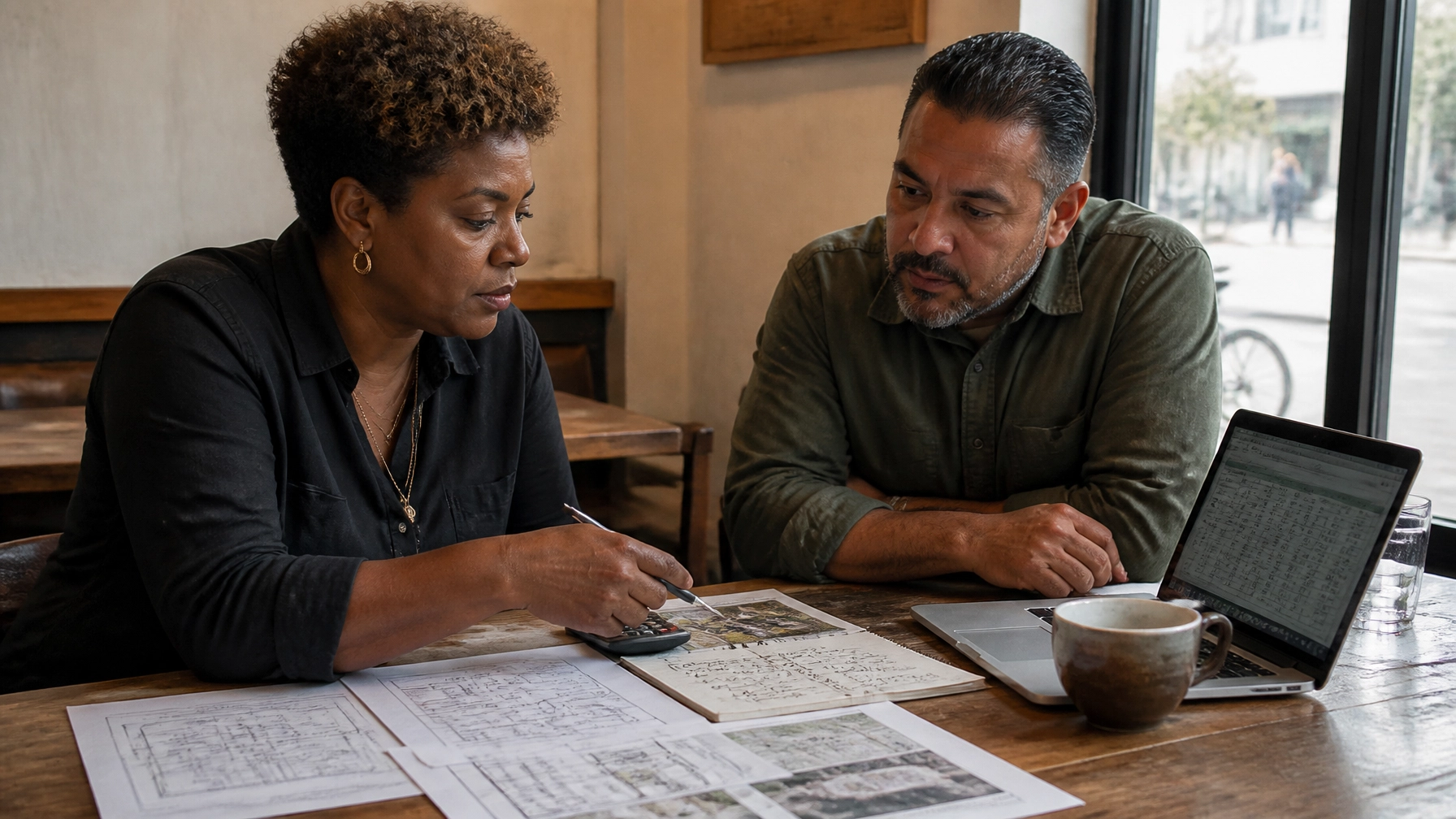
A menu is not developed in isolation from the building. Hood capacity, gas service, electrical load, grease handling, refrigeration, dishwashing, fire protection, accessibility, and other site conditions can all affect what a kitchen can execute. A concept may begin with a culinary idea, but the final menu must fit the actual room.
That is especially true for a focused noodle concept. Broth production, hot holding, noodle cooking, frying, protein preparation, cold garnish storage, and service speed all compete for space and equipment. If the restaurant is designed around lunch traffic, takeout, dinner service, or a combination of all three, the workflow has to support that choice.
The process can feel slow from the sidewalk. Inside the project, it is where the restaurant becomes real.
A strong fit for the corridor
The new restaurant is part of a broader transformation along Upper Fillmore Street led by the Upper Fillmore Revitalization Project.
According to the project’s official website, its goals include restoring Fillmore storefronts, recruiting independent small businesses and food and beverage operators, and reinvesting in the maintenance and appearance of the street.
The project is backed by a $100 million donation from venture capitalist and Fillmore native Neil Mehta, according to the Business Times. It has acquired at least a half-dozen storefronts in the neighborhood since 2024.
The former Starbucks building was purchased by an affiliate of the project for nearly $5 million in March 2024. The investment created an opportunity to bring a new use to a large corner space, but the choice of tenant matters just as much as the real estate.
A national coffee chain could have been replaced by another national chain. Instead, the project is bringing in an established local restaurant team with a distinct culinary identity.
That is a better fit for the street.
The UFRP is also overseeing the rehabilitation of the historic Clay Theatre. The organization plans to restore the cinema as a community and cultural venue, with a projected reopening in early 2027. The New Fillmore reported in 2025 that the former Starbucks space was planned for a Thai noodle restaurant, before the restaurant team publicly confirmed more details.

The neighborhood is collecting high-profile food tenants
Techamuanvivit’s restaurant will not be the only notable food opening connected to the Upper Fillmore project.
Korean steakhouse Monami is preparing to open at 2001 Fillmore Street, another building owned by an affiliate of the revitalization project. The restaurant has Michelin pedigree, adding another serious dining operator to the corridor.
Nearby, golf lifestyle brand Malbon opened its first Bay Area store at 2000 Fillmore Street. That storefront is not owned by the UFRP, but its arrival adds to the broader retail shift taking place around the neighborhood.
The mix is becoming more deliberate: food, nightlife, retail, and culture operating close enough to support one another. A restaurant does not succeed because a neighborhood has attractive storefronts. It succeeds when the location, customer base, menu, service model, labor plan, and financial assumptions line up.
But a strong cluster can help. A movie theater brings evening traffic. A restaurant gives people a reason to stay for dinner. Retail and hospitality create daytime activity. That is the basic neighborhood equation. It only works when the businesses are good enough to earn repeat visits.
What diners can expect, and what they cannot yet
At this stage, diners should not expect a published menu, reservation link, price range, or opening date. None has been announced.
The restaurant’s eventual name may be Khao Soi Ya, but that remains a working business registry reference rather than a confirmed public name. The menu may center on khao soi, given the earlier pop-up and the project’s reported direction, but the final format is still being shaped by permitting and kitchen requirements.
That leaves room for the concept to develop.
A khao soi-focused restaurant could take several forms. It could be a compact lunch and dinner room built around a short menu. It could lean toward counter service and fast casual operations. It could offer a full-service format with cocktails, wine, and a broader Northern Thai menu. It could also land somewhere between those models.
The address can support ambition. The operating plan will determine whether that ambition makes sense.
For diners, the most promising possibility is a restaurant that keeps the focus tight without making the experience narrow. One excellent bowl can be the reason to visit. Good snacks, thoughtful drinks, a comfortable room, and consistent service are what bring people back.
The operator lesson is clear
For anyone opening a restaurant, this project offers a useful reminder: the concept is not finished when the name is chosen.
It is finished when the idea survives contact with the building, the equipment, the permits, the labor plan, the supply chain, the service model, and the numbers.
That does not make the creative work less important. It makes the creative work accountable.
The team behind the Fillmore project has already tested the khao soi idea through a pop-up. It has an experienced chef, a known operating team, a defined neighborhood location, and a history of building restaurants around a strong point of view. The next challenge is converting that point of view into a repeatable business.
That is where restaurant openings are won or lost. Not in the announcement. In the details that follow.
For restaurant owners and founders working through a new concept, McFadden Finch Restaurant Consulting Group’s feasibility studies, business planning, and operations consulting can help connect the food, space, systems, and financial model before costly decisions become permanent.
What happens next
The restaurant team still has several decisions ahead:
- Confirm the official name.
- Complete permitting and site approvals.
- Finalize kitchen equipment and workflow.
- Set the menu and service format.
- Build the staffing plan.
- Establish the opening timeline.
- Prepare the neighborhood and customer communication.
Until then, the Upper Fillmore has something worth watching.
A former Starbucks space is becoming a new Thai restaurant. A chef with two Michelin-starred San Francisco restaurants is taking on a focused concept. And a bowl of khao soi may become one of the reasons diners make their way up Fillmore Street.
That is enough to make us hungry.
Planning a restaurant project of your own? Schedule a discovery call with McFadden Finch Restaurant Consulting Group.
Where Smart Strategy Meets Profitable Hospitality.
At McFadden Finch Restaurant Consulting Group, we help restaurant owners make sharper decisions, strengthen operations, and build businesses designed to perform. From feasibility studies and concept development to menu strategy and long-term operational consulting, we help your restaurant move beyond survival and into sustained growth.
McFadden Finch Restaurant Consulting Group
Lake Merritt Plaza
1999 Harrison St., 18th Floor
Oakland, CA 94612
(510) 973-2410
www.mcfadden-finch-group.com
executive.team@mcfadden-finch-group.com
Schedule your discovery call today and start building a stronger, smarter, more profitable restaurant. The corporate office address and email are listed on McFadden Finch Holdings' contact page, and MFRCG is included in the company's hospitality consulting portfolio.
Disclaimer: This content is for general informational purposes only and does not constitute legal, financial, tax, operational, employment, regulatory, or other professional advice. Reading this content does not create a client, consulting, or contractual relationship with McFadden Finch Restaurant Consulting Group. Because every restaurant, market, and business situation is different, you should consult qualified professionals regarding your specific circumstances. McFadden Finch Restaurant Consulting Group makes no warranties regarding the accuracy or completeness of this information and is not responsible for third-party content, links, products, or services referenced. Testimonials, examples, case studies, and projected outcomes are illustrative only and do not guarantee similar results.