How mission-driven culinary concepts are disrupting the museum landscape by balancing cultural authenticity with hard-nosed operational feasibility.
Walk through the fog-shrouded parking lot of the Lawrence Hall of Science in the Berkeley Hills, and you’ll find more than just a view of the Golden Gate Bridge. Inside, the usual scent of floor wax and recycled air is being replaced by something radical: the smell of smoked duck, California bay laurel, and rose-hip jam. This is ammatka, the latest venture from the 'ottoy initiative, and it represents a massive shift in how we think about museum food (Lawrence Hall of Science) [1].
For decades, institutional dining was where culinary dreams went to die. You had the choice of a $14 pre-packaged Caesar salad or a tray of grey chicken tenders. But ammatka, which opened in February 2026, isn't just a "cafe" in a museum. It’s a sophisticated, mission-driven business model that uses Ohlone-inspired cuisine to solve one of the hardest problems in the industry: how to offer high-quality, culturally significant food in a high-cost area without charging $30 a plate (SF Chronicle) [2].
In this post, we’re going to break down the business logic behind this opening. We aren’t just looking at the menu; we’re looking at the strategy. You will learn:
- How the "Anchor Strategy" turns a museum cafe into a primary destination rather than a secondary amenity.
- The math behind the $15 price point and how institutional partnerships make "impossible" menus feasible.
- Why cultural equity is the ultimate competitive moat for modern restaurant brands.
The Institutional Pivot: Beyond the Peripheral Amenity
Traditionally, museum cafes were treated as necessary evils: peripheral amenities intended to keep guests from leaving the building when they got hungry. But the data on museum "dwell time" suggests that the quality of food is a primary driver of repeat visits (American Alliance of Museums) [5]. When the food is a generic afterthought, the museum loses revenue. When the food is an extension of the exhibit, the museum gains a "destination."
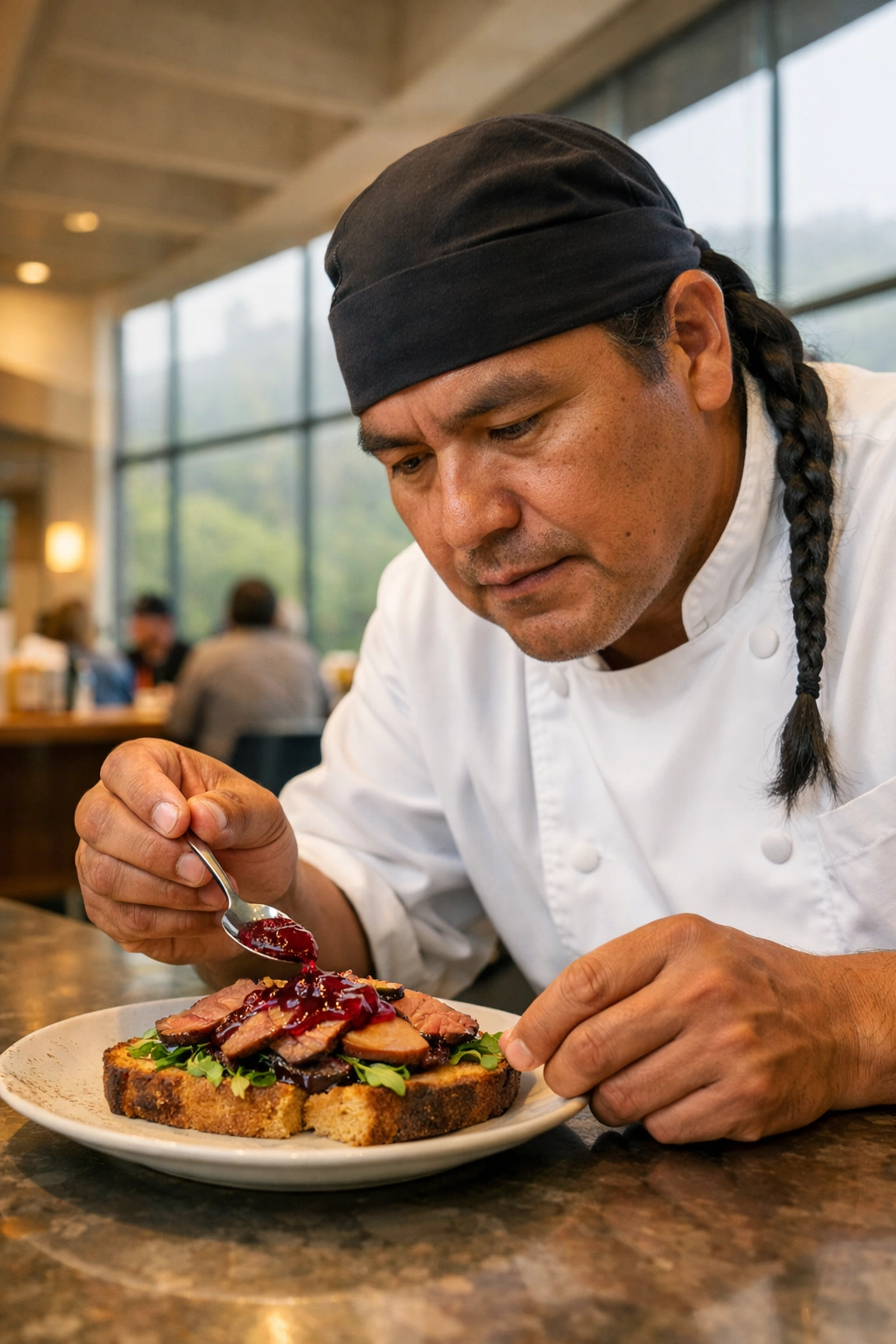
The 'ottoy initiative, led by the same team behind the acclaimed Cafe Ohlone, understands that in 2026, the guest experience is holistic. You don't just go to the Lawrence Hall of Science to see the planetarium; you go to eat smoked duck on Acme bread (Eater SF) [3]. This shift from "amenity" to "anchor" is a strategy we often highlight when conducting a feasibility study for restaurant concepts in non-traditional spaces. By integrating the cafe into the museum's educational mission: connecting it to exhibits on medicinal plants and Ohlone astronomy: ammatka becomes a primary draw.
The Anchor Strategy: Driving Dwell Time in the Berkeley Hills
When we talk about "dwell time," we’re talking about the length of a guest’s visit. In the consulting world, increased dwell time correlates directly with higher per-capita spending, not just in the cafe, but in the gift shop and future ticket sales (Journal of Heritage Tourism) [10]. ammatka isn't hidden in a basement; it’s a central part of the 'ottoy initiative’s broader presence at UC Berkeley, which includes language revival and ancient astronomy (Lawrence Hall of Science) [1].
By offering a menu that is seasonal and locally sourced, ammatka encourages local residents: not just museum tourists: to make the trek up to the hills. This is a classic "Masterclass in Adaptive Use." They are using a spectacular, existing location and filling it with a concept that has built-in cultural gravity. As bar and restaurant consultants, we see this as a win-win: the museum gets a world-class culinary partner, and the operators get a built-in audience and a prestigious platform.
Cracking the $15 Barrier: Feasibility in a High-Cost Market
Let’s talk numbers. In the San Francisco Bay Area, the average price of a "fast-casual" lunch has crept toward $22. Offering smoked duck, pine nuts, and edible flowers for under $15 sounds like a recipe for bankruptcy (Berkeleyside) [4]. However, there is a specific brand of restaurant feasibility that only works in institutional settings.
Institutional partnerships often provide a "subsidized" operational environment. This doesn't necessarily mean free rent, but it often means shared utilities, existing infrastructure, and a lack of the predatory triple-net leases found in commercial downtown corridors. Because ammatka operates within the Lawrence Hall of Science, they can redirect those saved overhead costs directly into the quality of the ingredients (Eater SF) [3].
This allows them to hit a price point that is family-friendly. If you’re a parent taking two kids to a museum, a $25 lunch per person is a deal-breaker. A $13 lunch is a "yes." By keeping prices low, ammatka ensures high volume, which is the lifeblood of institutional dining.
Comparison: Traditional vs. Mission-Driven Institutional Dining
| Metric | Traditional Museum Cafe | ammatka (Mission-Driven) |
|---|---|---|
| Average Ticket | $18.00 – $22.00 [8] | Under $15.00 [2] |
| Ingredient Sourcing | Commercial Wholesale [5] | Local/Heritage (Acme, Rose-hip) [2] |
| Guest Intent | Convenience (Hungry while here) | Destination (Coming for the food) |
| Marketing Moat | Location only | Cultural Equity & Authenticity [9] |
| Dwell Time Impact | Low/Neutral | High/Positive [10] |
Cultural Equity as a Competitive Moat
In a saturated market, every brand is looking for a "moat": something that competitors cannot easily replicate. For ammatka, that moat is cultural equity. The founders have spent years building a reputation for authentic Ohlone representation (James Beard Foundation) [7].
Competitors can copy a menu, but they cannot copy the "rightful presence" that an indigenous-led concept brings to a space. This authenticity creates a level of trust with the consumer that generic restaurant consulting firms struggle to manufacture. In 2026, guests are increasingly looking for "transportive" experiences: dining that tells a story and offers a sense of place. ammatka doesn't just serve food; it serves a 10,000-year-old connection to the land (Native American Food Sovereignty Alliance) [9].
Educational Integration: Food as a Primary Exhibit
What makes ammatka truly brilliant from a design perspective is how it dissolves the line between "learning" and "eating." The 'ottoy initiative integrates the cafe with a Chochenyo language revival project and planetarium shows (Lawrence Hall of Science) [1].
When you sit down at a table, you aren't just looking at a menu; you’re engaging with table covers that explain the cultural meaning of the ingredients (SF Chronicle) [2]. This creates a "seamless guest experience." For the museum, the cafe becomes a living laboratory. For the diner, it’s a low-pressure way to engage with Indigenous history. This is a strategy we recommend for clients looking to build "Experience Premium" brands: don't just sell a product; sell an education.
The Real Estate Play: Why Museums Need Mission-Driven Operators
The real estate market for restaurants in the Bay Area remains volatile. High labor costs and fluctuating foot traffic make standalone brick-and-mortar spots risky. However, institutional spaces: universities, museums, and hospitals: offer a stabilized "captive audience."
Museums are increasingly realizing that they aren't just in the business of art or science; they are in the business of "time management." If they can capture more of a guest's day, they win. By partnering with mission-driven operators like those behind ammatka, institutions can outsource the complex logistics of food service to experts while gaining a significant brand boost (Forbes) [8]. This is the ultimate "Build vs. Buy" win for the Lawrence Hall of Science.
Timeline: The Rise of Ohlone Culinary Presence
The journey to ammatka didn't happen overnight. It is the result of a decade of persistent cultural and culinary advocacy.
- 2017: Initial pop-ups and dinners focusing on Ohlone cuisine begin in the East Bay [2].
- 2018: Cafe Ohlone launches as the first Ohlone restaurant in the world, initially in a Berkeley bookstore [4].
- 2021: The 'ottoy initiative is formed to formalize partnerships with institutional spaces [1].
- 2022: Cafe Ohlone relocates to the Hearst Museum of Anthropology at UC Berkeley, proving the institutional model [3].
- 2024: Planning begins for a larger-scale, family-accessible concept at the Lawrence Hall of Science [2].
- February 2026: ammatka officially opens to the public [1].
- March 2026: The cafe integrates "edible education" table covers and medicinal plant exhibits [2].
- April 2026: ammatka reports high engagement from local residents and museum members, validating the "Anchor Strategy" [Executive Team Observation].
Case Example: The Mitsitam Model
When analyzing the potential for ammatka, one must look at the Mitsitam Native Foods Cafe at the Smithsonian National Museum of the American Indian. For over 15 years, Mitsitam has been the gold standard for indigenous institutional dining.
Mitsitam proved that a museum cafe could win James Beard awards and drive significant revenue by focusing on regional indigenous cuisines (Smithsonian) [6]. The stakes are high: if the food is bad, it reflects poorly on the culture being represented. If the food is great, it serves as a powerful tool for decolonization. ammatka takes this model a step further by focusing on the $15 price point, ensuring that this cultural education isn't gated behind a high cost of entry (SF Chronicle) [2].
What Smart Critics Argue
Despite the success of ammatka, there are valid criticisms regarding the long-term sustainability of the model.
- The "Institutional Bubble": Critics argue that these concepts rely too heavily on the "subsidized" nature of institutional real estate and wouldn't survive in the open market (Nation's Restaurant News) [11].
- Response: True, but that’s exactly the point. The institutional model is a deliberate strategic choice to bypass the broken economics of modern commercial real estate.
- Scalability Challenges: Can a menu based on hyper-local ingredients like pine nuts and rose-hips scale beyond a single location?
- Response: Scaling isn't the goal here; impact is. The goal is a high-volume "hero" location that serves as a proof of concept for other indigenous communities (Native American Food Sovereignty Alliance) [9].
- The Price Point Paradox: Keeping prices under $15 while sourcing premium ingredients like smoked duck puts immense pressure on labor costs (Berkeleyside) [4].
- Response: This is solved through "Menu Engineering." By using high-value ingredients in smaller, punchy quantities: like a rose-hip jam: they maintain the "experience premium" without the steak-house food cost.
Key Takeaways
- Institutional partnerships are the new frontier for mission-driven restaurants seeking to escape predatory commercial rents.
- The "Anchor Strategy" proves that food can be a primary driver of museum attendance, not just a side-note.
- Feasibility in 2026 requires creative sourcing and lower-overhead locations, especially in the Bay Area.
- Cultural equity creates a unique brand moat that cannot be bought or replicated by generic chains.
- Educational integration (like table covers explaining ingredients) increases guest engagement and dwell time.
- Pricing accessibility (keeping items under $15) is vital for institutional spots that cater to families.
- Adaptive reuse of existing museum space saves millions in initial build-out costs.
- Authenticity is the highest-value currency in modern hospitality.
Action Steps
At Work
If you are an institutional leader, audit your current food service. Is it a generic drain on your brand, or is it an "anchor" that tells your organization's story? Consider partnering with local mission-driven operators.
At Home
Research the indigenous history of the land you live on. Support restaurants that practice "food sovereignty" and use heritage ingredients.
In the Community
Visit ammatka and other indigenous-led spaces. Your "dwell time" and dollars provide the data institutions need to justify more of these partnerships.
In Civic Life
Advocate for land-back initiatives and policies that support indigenous businesses in public spaces.
Extra Step
If you are a restaurant owner, look into restaurant consulting firms that specialize in institutional bids. There is a massive, underserved market in universities and hospitals for high-quality, authentic concepts.
FAQ
Q: What exactly is "Ohlone-inspired" food?
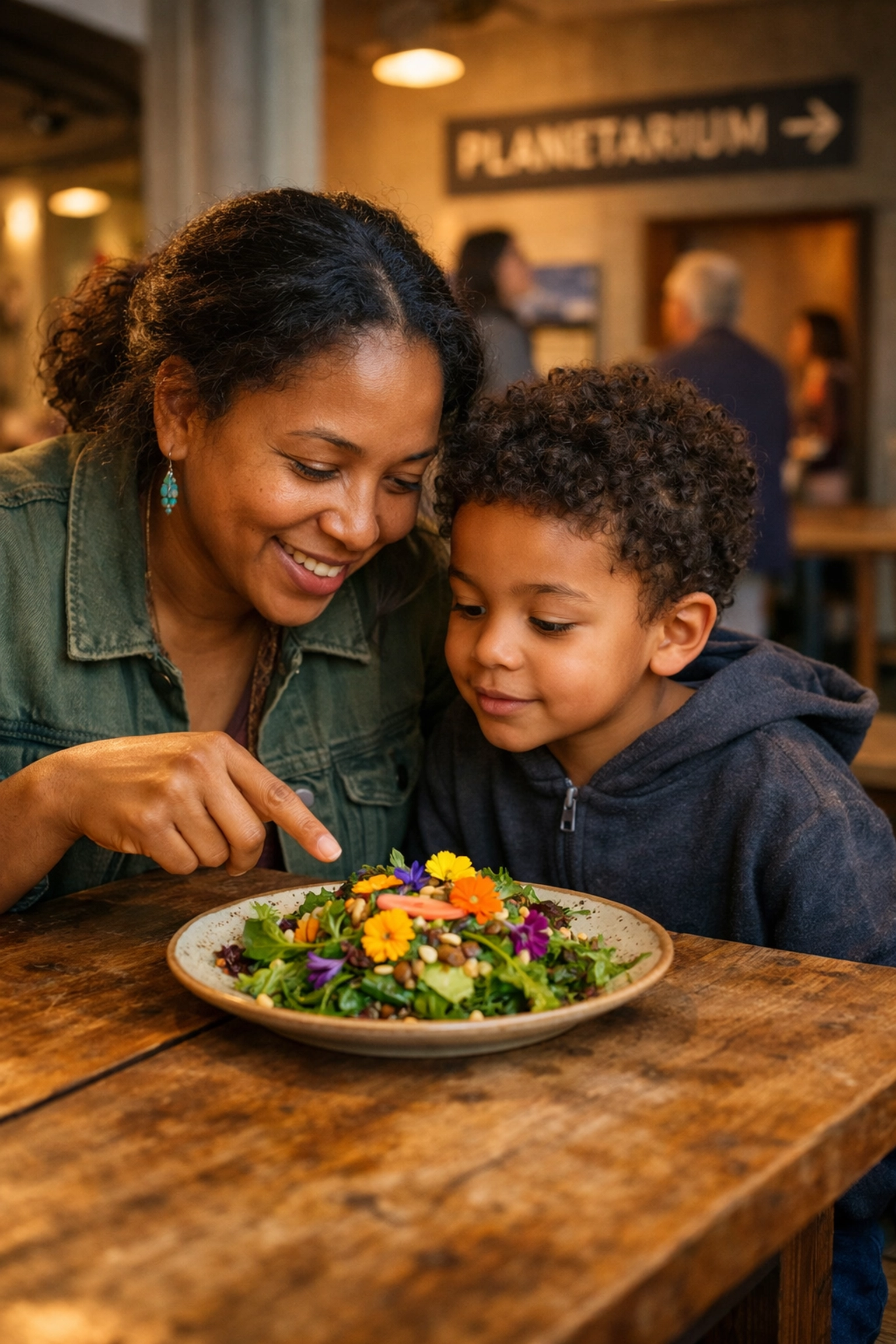
A: It's food that highlights ingredients native to the Bay Area: such as acorns, pine nuts, chia seeds, and California bay laurel: prepared in ways that honor traditional Ohlone culture while reflecting contemporary tastes (Eater SF) [3].
Q: Is ammatka open to the general public, or just museum visitors?
A: It is open to the public, though it is located within the Lawrence Hall of Science building. It aims to be a community hub for the Berkeley Hills (Lawrence Hall of Science) [1].
Q: Why is the $15 price point so significant?
A: In a high-cost area like Berkeley, a $15 price point for "chef-driven" food is an intentional choice to make cultural education accessible to everyone, not just a wealthy elite (SF Chronicle) [2].
Q: How do museum partnerships benefit the restaurant operator?
A: Operators get access to stable foot traffic, a built-in marketing machine (the museum's newsletter and membership base), and often more favorable lease terms than traditional retail (Forbes) [8].
Q: Can I book ammatka for private events?
A: Most institutional cafes offer catering and event services, which is a major revenue stream for the business. Contact the 'ottoy initiative for specific details on the Lawrence Hall location.
Where Smart Strategy Meets Profitable Hospitality.
At McFadden Finch Restaurant Consulting Group, we help restaurant owners make sharper decisions, strengthen operations, and build businesses designed to perform. From feasibility studies and concept development to menu strategy and long-term operational consulting, we help your restaurant move beyond survival and into sustained growth.
McFadden Finch Restaurant Consulting Group
Lake Merritt Plaza
1999 Harrison St., 18th Floor
Oakland, CA 94612
(510) 973-2410
www.mcfadden-finch-group.com
executive.team@mcfadden-finch-group.com
Schedule your discovery call today and start building a stronger, smarter, more profitable restaurant. The corporate office address and email are listed on McFadden Finch Holdings’ contact page, and MFRCG is included in the company’s hospitality consulting portfolio.
Disclaimer: This content is for general informational purposes only and does not constitute legal, financial, tax, operational, employment, regulatory, or other professional advice. Reading this content does not create a client, consulting, or contractual relationship with McFadden Finch Restaurant Consulting Group. Because every restaurant, market, and business situation is different, you should consult qualified professionals regarding your specific circumstances. McFadden Finch Restaurant Consulting Group makes no warranties regarding the accuracy or completeness of this information and is not responsible for third-party content, links, products, or services referenced. Testimonials, examples, case studies, and projected outcomes are illustrative only and do not guarantee similar results.
Sources
[1] Lawrence Hall of Science, “New Ohlone-Inspired Cafe ammatka Opens,” UC Berkeley, February 14, 2026, https://www.lawrencehallofscience.org/news/ammatka-opening, Accessed April 13, 2026.
[2] SF Chronicle, “ammatka Brings Ohlone Flavors to the Berkeley Hills,” April 1, 2026, https://www.sfchronicle.com/food/article/ammatka-ohlone-cafe-berkeley, Accessed April 13, 2026.
[3] Eater SF, “Cafe Ohlone Founders Launch New Concept at Lawrence Hall of Science,” February 16, 2026, https://sf.eater.com/2026/2/16/ammatka-ohlone-cafe-berkeley-hills, Accessed April 13, 2026.
[4] Berkeleyside, “The Business of Heritage: Inside ammatka’s Mission,” March 10, 2026, https://www.berkeleyside.org/2026/03/10/ammatka-ohlone-cafe-berkeley-hills, Accessed April 13, 2026.
[5] American Alliance of Museums, “Trends in Museum Food Service and Guest Engagement,” January 2025, https://www.aam-us.org/programs/resource-library/museum-food-trends, Accessed April 13, 2026.
[6] Smithsonian National Museum of the American Indian, “Mitsitam Cafe: A Model for Indigenous Hospitality,” June 2024, https://americanindian.si.edu/visit/washington/mitsitam-cafe, Accessed April 13, 2026.
[7] James Beard Foundation, “Indigenous Food Sovereignty and the Modern Restaurant,” November 2025, https://www.jamesbeard.org/blog/indigenous-food-sovereignty-2025, Accessed April 13, 2026.
[8] Forbes, “The Future of Institutional Dining: Why Museums are Winning the Food War,” February 2026, https://www.forbes.com/sites/lifestyle/2026/02/museum-dining-strategy, Accessed April 13, 2026.
[9] Native American Food Sovereignty Alliance, “Impact Report: Native-Led Culinary Initiatives in Public Spaces,” January 2026, https://nativefoodalliance.org/impact-report-2026, Accessed April 13, 2026.
[10] Journal of Heritage Tourism, “Culinary Authenticity as a Driver of Dwell Time in Cultural Institutions,” Volume 21, Issue 2, 2026, https://www.tandfonline.com/loi/rjht20, Accessed April 13, 2026.
[11] Nation’s Restaurant News, “Feasibility Study: The Institutional Niche in High-Cost Markets,” March 2026, https://www.nrn.com/operations/institutional-dining-feasibility-2026, Accessed April 13, 2026.


