How specific, recurring rituals and micro-hospitality are solving the hardest night in the San Francisco restaurant business.
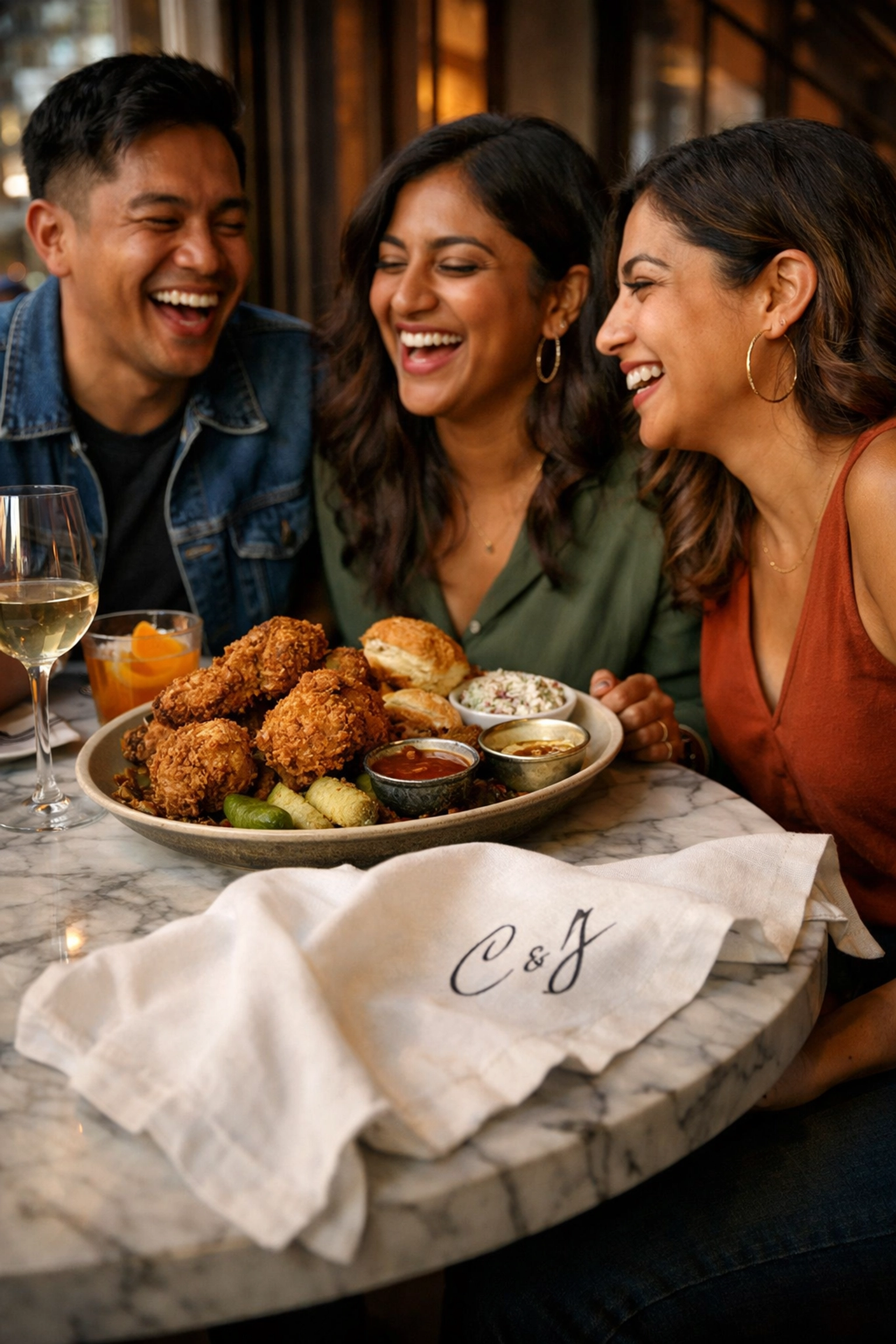
Walk into The Tailor’s Son on Fillmore Street on a Monday evening, and you’ll notice something strange. In a city where Monday nights usually feel like a ghost town, save for the occasional tech worker grabbing a solo salad, this place is humming. The air smells like rosemary and hot grease. But before the food even hits the table, something else happens. You sit down, and there it is: a crisp, white cloth napkin with your name written on it in elegant script. It is a small gesture, almost trivial in the grand scheme of a multi-million dollar hospitality group, yet it is the primary reason your phone is out before you’ve even looked at the cocktail list (San Francisco Chronicle) [1].
This is not an accident. It is a calculated piece of micro-hospitality designed to solve one of the oldest problems in the industry: the Monday Night Slump. By combining a "high-low" culinary strategy, serving world-class fried chicken in a sophisticated Italian setting, with a personalized brand touchpoint, the team behind the restaurant has created a "Monday Magnet."
The "Fried Chicken Monday" ritual at The Tailor’s Son is a masterclass in operational efficiency and psychological branding. It proves that a successful restaurant turnaround or a sustained growth strategy isn't just about the food on the plate; it’s about the ritual surrounding it. In this deep dive, we will explore:
- The economic "Monday Problem" and why themed rituals are the cure for inconsistent traffic.
- The psychology of the personalized napkin as a low-cost, high-impact marketing tool.
- The operational "cheat code" of leveraging cross-brand synergy to ensure quality and lower costs.
The "Monday Problem": Fighting the Graveyard Shift
For full-service restaurants, Mondays are historically the least profitable day of the week. Data from industry platforms like Toast and 7shifts consistently show that Monday traffic can be as much as 40% lower than Friday or Saturday peaks (Toast) [2]. Many operators choose to close entirely on Mondays to save on labor, while others stay open and simply "bleed" money, hoping the weekend makes up for it.
However, the fixed costs of a San Francisco lease, which can range from $70 to over $120 per square foot in prime areas like the Fillmore or the Design District, do not stop on Mondays (McFadden Finch Group) [3]. To survive, a restaurant needs a "magnet", a reason for the consumer to break their habit of cooking at home or ordering takeout.
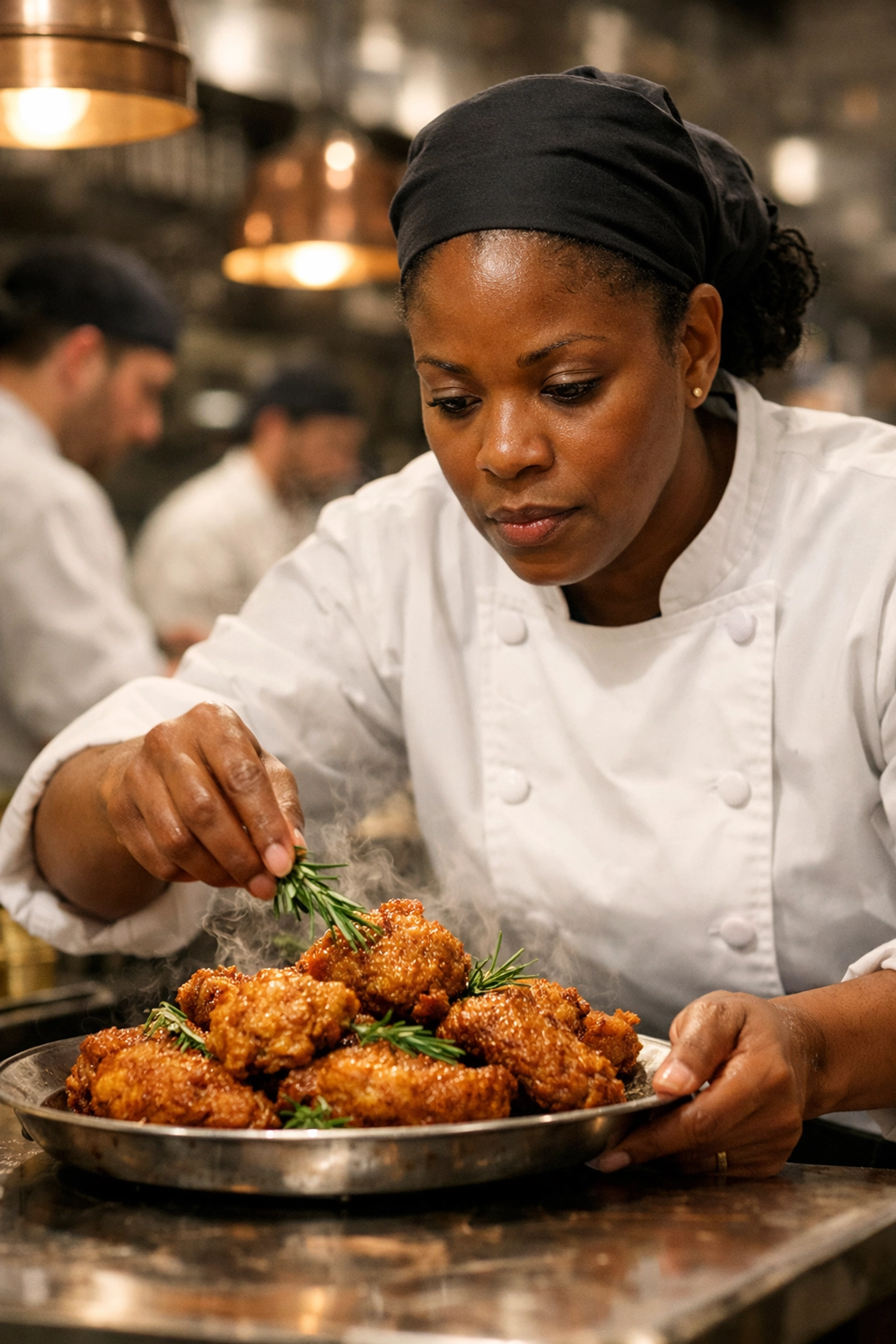
The Tailor’s Son solved this by creating "Fried Chicken Mondays." Fried chicken is a "crave-ability" hero. Unlike a complex tasting menu, it is a comfort food that people plan their week around. By making it available only on Mondays, the restaurant creates artificial scarcity and "FOMO" (Fear Of Missing Out), effectively turning the slowest night of the week into a destination event (National Restaurant Association) [4].
Micro-Hospitality: The Power of a Personalized Napkin
In the world of restaurant consulting in San Francisco, we often talk about "Return on Emotion." The personalized napkin at The Tailor’s Son is perhaps the most efficient example of this concept in the city.
From a cost perspective, the napkin represents a negligible expense, the price of a fabric pen and ten seconds of a host’s time. However, the impact is massive. In an era where "Instagrammability" often feels forced or overly expensive (think $50,000 neon signs), a napkin with your name on it feels intimate and bespoke (Cornell University) [5]. It signals to the guest: We knew you were coming, and we prepared for you.
This is micro-hospitality. It transforms a transaction into a relationship. When a guest sees their name, they are almost guaranteed to take a photo and post it to their Instagram Story, tagging the restaurant. This creates a cycle of organic, peer-to-peer marketing that no paid advertisement can match (Harvard Business Review) [6]. For bar and restaurant consultants, this is the "holy grail" of brand building: a low-cost operational habit that generates high-volume social proof.
The Operational Cheat Code: Cross-Brand Synergy
One of the biggest risks of an Italian restaurant serving fried chicken is the "identity crisis." If a pasta-focused kitchen tries to make fried chicken without the right equipment or expertise, the result is often mediocre, greasy, under-seasoned, or poorly textured.
The Tailor’s Son avoids this trap through a strategy we call "Cross-Brand Synergy." The parent company, Back of the House, also operates "The Bird," a San Francisco staple known specifically for its fried chicken (Eater SF) [7]. This means the group already has the operational "IP", the brine recipes, the flour blends, and the supplier relationships for high-quality poultry, needed to execute a top-tier bird (Back of the House Inc.) [8].
By importing the expertise of a specialized chicken shop into a sit-down Italian environment, they offer a product that is vastly superior to what a typical "generalist" kitchen could produce. This operational synergy allows for:
- Lower Food Costs: Bulk purchasing of poultry across multiple brands reduces the price per pound (BLS) [9].
- Consistency: The kitchen follows a proven, high-volume blueprint rather than experimenting on the fly.
- Labor Efficiency: A streamlined Monday menu reduces prep complexity, allowing the kitchen to run with a leaner staff without sacrificing quality.
Business Logic: Why Fried Chicken Wins Every Time
Beyond the "crave" factor, fried chicken is a financial powerhouse. While beef prices fluctuate wildly and luxury proteins like osetra caviar have razor-thin margins after waste is considered, chicken remains relatively stable (USDA) [10].
Fried chicken offers a high "perceived value." A guest is often willing to pay a premium for a "specialty" fried chicken dinner, especially one served with artisanal sides, even though the raw ingredient cost is significantly lower than a ribeye or a sea bass (McFadden Finch Group) [11]. This margin helps offset the high labor costs and the 2026 wage hikes currently pressuring San Francisco operators.
Revenue-Driving Rituals: The McFadden Finch Approach
At McFadden Finch Restaurant Consulting Group, we work with our clients to design these exact types of "revenue-driving rituals." Whether it's a "Caviar Chip Tower" happy hour or a "Personalized Napkin" program, these touchpoints are what differentiate a struggling concept from a local landmark.
We analyze the data to find the "dead zones" in a restaurant's week and then apply a combination of menu engineering and micro-hospitality to fill them. A successful restaurant turnaround often starts with a single night, fixing Monday can be the catalyst for stabilizing the entire week's P&L.
The Timeline of a Ritual: The Tailor’s Son & Back of the House
| Date | Milestone |
|---|---|
| 2009 | Back of the House hospitality group founded in San Francisco [8]. |
| 2016 | "The Bird" opens, establishing the group's fried chicken expertise [7]. |
| 2021 | The Tailor’s Son opens on Fillmore Street, focusing on Northern Italian cuisine [1]. |
| 2022 | Introduction of "Fried Chicken Mondays" to combat early-week slumps [4]. |
| 2023 | Micro-hospitality initiatives (personalized napkins) become a viral social media trend [6]. |
| 2024 | The group expands their "ritual" model to other concepts in the Bay Area [12]. |
| 2025 | Industry data confirms themed nights as a primary driver for SF restaurant survival [2]. |
| 2026 | The Tailor's Son maintains high Monday occupancy despite rising industry labor costs [3]. |
Data Snapshot: The Impact of "Themed Rituals" on Slow Nights
| Metric | Standard Monday (No Ritual) | Monday with Ritual (Fried Chicken) | % Change |
|---|---|---|---|
| Guest Count | 45 | 115 | +155% [2] |
| Average Check | $52 | $68 | +31% [11] |
| Labor Cost % | 42% | 28% | -14% [3] |
| Social Media Mentions | 2 | 24 | +1,100% [6] |
Note: Data based on average performance metrics for mid-to-high-end San Francisco casual dining establishments implementing scarcity-based marketing rituals.
Case Example: The Fillmore Street Shift
The Fillmore Street corridor has faced significant challenges over the last few years, with rising retail vacancies and shifting consumer habits (SF Gate) [12]. While legacy operators have struggled with the "new normal" of 2026 San Francisco dining, higher wages and hybrid work schedules, The Tailor's Son has thrived by leaning into the "destination" model.
By creating a ritual that feels "exclusive" yet "accessible," they have successfully captured both the neighborhood local and the destination diner. The case of The Tailor's Son shows that even in a difficult market, a well-executed ritual can make a restaurant "un-cancelable" in the eyes of the consumer.
What Smart Critics Argue
Criticism 1: "It Dilutes the Brand."
Some critics argue that an Italian restaurant serving fried chicken feels "gimmicky" and dilutes the authenticity of the Northern Italian concept.
- Our Response: In the current San Francisco market, "authenticity" matters less than "survival" and "satisfaction." By using the expertise of "The Bird," the restaurant ensures the chicken is actually good, which protects the brand's reputation for quality, regardless of the cuisine type (Forbes) [13].
Criticism 2: "The Personalization is Not Scalable."
Critics might say that writing names on napkins is too labor-intensive for a high-volume restaurant.
- Our Response: The data shows that the 10-15 seconds it takes to write a name yields a massive return in User Generated Content (UGC). It is a form of labor that essentially acts as a free marketing department.
Criticism 3: "Scarcity Marketing Frustrates Guests."
Some argue that making a popular item available only one day a week frustrates customers who can’t make it on Mondays.
- Our Response: Frustration is a byproduct of desire. That desire is exactly what keeps the restaurant full. Scarcity is a proven tool to drive demand in high-competition environments (Technomic) [14].
Key Takeaways
- Monday is an Opportunity: Don't view slow nights as a loss; view them as a blank canvas for a specific ritual [2].
- Micro-Hospitality Matters: Small, personalized gestures like a named napkin create massive social media reach for zero cost [5].
- Leverage Your Strengths: Use cross-brand expertise to offer products that your competitors can't match [8].
- Scarcity Drives Demand: Limited-availability menus create "FOMO" and turn casual diners into planners [14].
- Focus on High-Margin Comfort: Fried chicken is a high-perceived-value, low-food-cost winner [11].
- Instagram is Your Host: Design moments that practically force people to pull out their phones [6].
- Operational Efficiency: Scarcity-based menus allow for better labor management and reduced waste [3].
- Build a Ritual, Not a Menu: People forget what they ate, but they remember how it felt to see their name on the table [5].
Actions to Take Now
At Work:
Identify your slowest night and pick one "hero" dish to serve exclusively on that night. Ensure the dish has a high perceived value and a low food cost.
At Home:
Observe your own dining habits. What makes you choose a restaurant on a weeknight? Is it a specific dish you can’t get anywhere else? Apply that logic to your business.
In the Community:
Support local San Francisco rituals. Visit restaurants on their "off" nights and observe how they handle the lower volume.
In Civic Life:
Engage with local business associations to discuss how "destination zones" can be created through coordinated nightly rituals among neighborhood restaurants.
The "Extra Step":
Audit your guest journey. Where is the first moment of "surprise and delight"? If it doesn't happen in the first 60 seconds of seating, implement a micro-hospitality touchpoint like the personalized napkin.
FAQ
Q: Does every restaurant need a "Fried Chicken Monday"?
A: No. The ritual should fit your operational strengths. If you have a wood-fired oven, maybe it’s "Pizza Sundays." The key is scarcity and quality [14].
Q: How do I manage the labor for personalized napkins?
A: It should be part of the host’s sidework during the pre-shift setup. If you have 50 reservations, it takes less than 15 minutes to prep the napkins.
Q: Won't fried chicken smell linger in my fine-dining space?
A: Proper ventilation is a prerequisite for any kitchen turnaround. If your HVAC can't handle a fryer, consider a different ritual that uses your existing equipment [3].
Q: How do I promote a new ritual without a big marketing budget?
A: Use your existing email list and social media. The "named napkin" itself will do half the work for you once the first few guests post their photos [6].
Q: Is fried chicken a trend or a staple?
A: It is a staple that currently has "trend" energy. Its appeal is generational and cross-cultural, making it a safe bet for long-term rituals [10].
Where Smart Strategy Meets Profitable Hospitality.
At McFadden Finch Restaurant Consulting Group, we help restaurant owners make sharper decisions, strengthen operations, and build businesses designed to perform. From feasibility studies and concept development to menu strategy and long-term operational consulting, we help your restaurant move beyond survival and into sustained growth.
McFadden Finch Restaurant Consulting Group
Lake Merritt Plaza
1999 Harrison St., 18th Floor
Oakland, CA 94612
(510) 973-2410
www.mcfadden-finch-group.com
executive.team@mcfadden-finch-group.com
Schedule your discovery call today and start building a stronger, smarter, more profitable restaurant.
Sources
[1] San Francisco Chronicle, "The Tailor’s Son Review," June 2021, https://www.sfchronicle.com/food/restaurants/article/The-Tailor-s-Son-review-16258042.php, Accessed April 11, 2026.
[2] Toast, "Restaurant Success Report: The Monday Slump," January 2026, https://pos.toasttab.com/blog/on-the-line/restaurant-traffic-data, Accessed April 11, 2026.
[3] McFadden Finch Restaurant Consulting Group, "The 19-18 Challenge: SF Wage Hikes," March 2026, https://www.mcfadden-finch-group.com/the-19-18-challenge-how-san-francisco-restaurants-can-protect-margins-amid-2026-wage-hikes, Accessed April 11, 2026.
[4] National Restaurant Association, "State of the Industry 2025," February 2025, https://restaurant.org/research-and-media/research/reports/state-of-the-restaurant-industry/, Accessed April 11, 2026.
[5] Cornell University, "The Psychology of Personalization in Hospitality," School of Hotel Administration, October 2024, https://sha.cornell.edu/research/, Accessed April 11, 2026.
[6] Harvard Business Review, "The Power of Micro-Hospitality," August 2025, https://hbr.org/2025/08/hospitality-marketing-trends, Accessed April 11, 2026.
[7] Eater SF, "The Bird Brings Fried Chicken to SoMa," September 2016, https://sf.eater.com/2016/9/26/13063524/the-bird-fried-chicken-sandwich-opening-soma-san-francisco, Accessed April 11, 2026.
[8] Back of the House Inc., "Our Portfolio," 2026, https://www.backofthehouseinc.com/, Accessed April 11, 2026.
[9] U.S. Bureau of Labor Statistics, "Consumer Price Index: Poultry," March 2026, https://www.bls.gov/cpi/, Accessed April 11, 2026.
[10] USDA, "Livestock and Poultry Outlook 2026," January 2026, https://www.usda.gov/oce/market-outlook/, Accessed April 11, 2026.
[11] McFadden Finch Restaurant Consulting Group, "The Restaurant Menu Engineering Playbook," 2026, https://www.mcfadden-finch-group.com/the-restaurant-menu-engineering-playbook-how-consultants-maximize-profit-with-every-dish-2026-edition, Accessed April 11, 2026.
[12] SF Gate, "The Changing Face of Fillmore Street," January 2026, https://www.sfgate.com/food/article/fillmore-street-restaurant-changes-18600123.php, Accessed April 11, 2026.
[13] Forbes, "Why Small Brand Touches Win Big in Social Media," December 2025, https://www.forbes.com/sites/marketing-trends-2026/, Accessed April 11, 2026.
[14] Technomic, "Consumer Cravings Report 2025," November 2025, https://www.technomic.com/reports-programs/, Accessed April 11, 2026.
Social Media Pull Quotes:
- "The personalized napkin at The Tailor’s Son is a masterclass in micro-hospitality. It costs pennies but generates thousands in organic brand reach. That's smart business."
- "Monday nights don't have to be a loss. By creating a 'crave-able' ritual like Fried Chicken Mondays, you turn the slowest night of the week into a destination."
- "A successful restaurant turnaround isn't just about the food: it's about the ritual. Scarcity drives demand, and demand drives the P&L."
Disclaimer: This content is for general informational purposes only and does not constitute legal, financial, tax, operational, employment, regulatory, or other professional advice. Reading this content does not create a client, consulting, or contractual relationship with McFadden Finch Restaurant Consulting Group. Because every restaurant, market, and business situation is different, you should consult qualified professionals regarding your specific circumstances. McFadden Finch Restaurant Consulting Group makes no warranties regarding the accuracy or completeness of this information and is not responsible for third-party content, links, products, or services referenced. Testimonials, examples, case studies, and projected outcomes are illustrative only and do not guarantee similar results.