Master the transition from street-level hustle to multi-unit enterprise in the competitive Los Angeles and Bay Area markets.
Look, I’ve seen it a hundred times. A food truck owner in Los Angeles hits that "sweet spot." The line is wrapped around the corner in Silver Lake, the Instagram tags are exploding, and for the first time, the bank account looks healthy. Naturally, the first instinct is to buy a second truck or sign a lease on a brick-and-mortar spot in the Bay Area. But here’s the reality: scaling a food truck isn't just about doing more of what you’re already doing. It’s about changing how you do it entirely. If you try to scale a "hustle," you just end up with a bigger, more expensive hustle that keeps you awake at night.
Take the case of Bro-Ritos, a mobile concept that realized early on that a single truck: no matter how popular: has a physical ceiling. They found themselves turning down three to four high-revenue gigs every single weekend simply because they couldn't be in two places at once (QSR Magazine) [2]. They didn't just buy a second truck; they crunched the numbers to ensure the second unit would capture existing, lost demand rather than just hope for new fans. This transition from a single-owner operation to a high-volume powerhouse requires a shift from being a "cook who owns a truck" to a "CEO who runs a food brand."
In this guide, we’re going to break down the exact steps to making that leap. You will learn:
- How to build the systems that allow your truck to run without you standing at the window.
- The logistical secrets of commissary kitchens that solve the prep bottleneck.
- Why "killing your darlings" on the menu is the only way to survive high-volume service.
1. Systems and SOPs: The 'How We Do It' Part
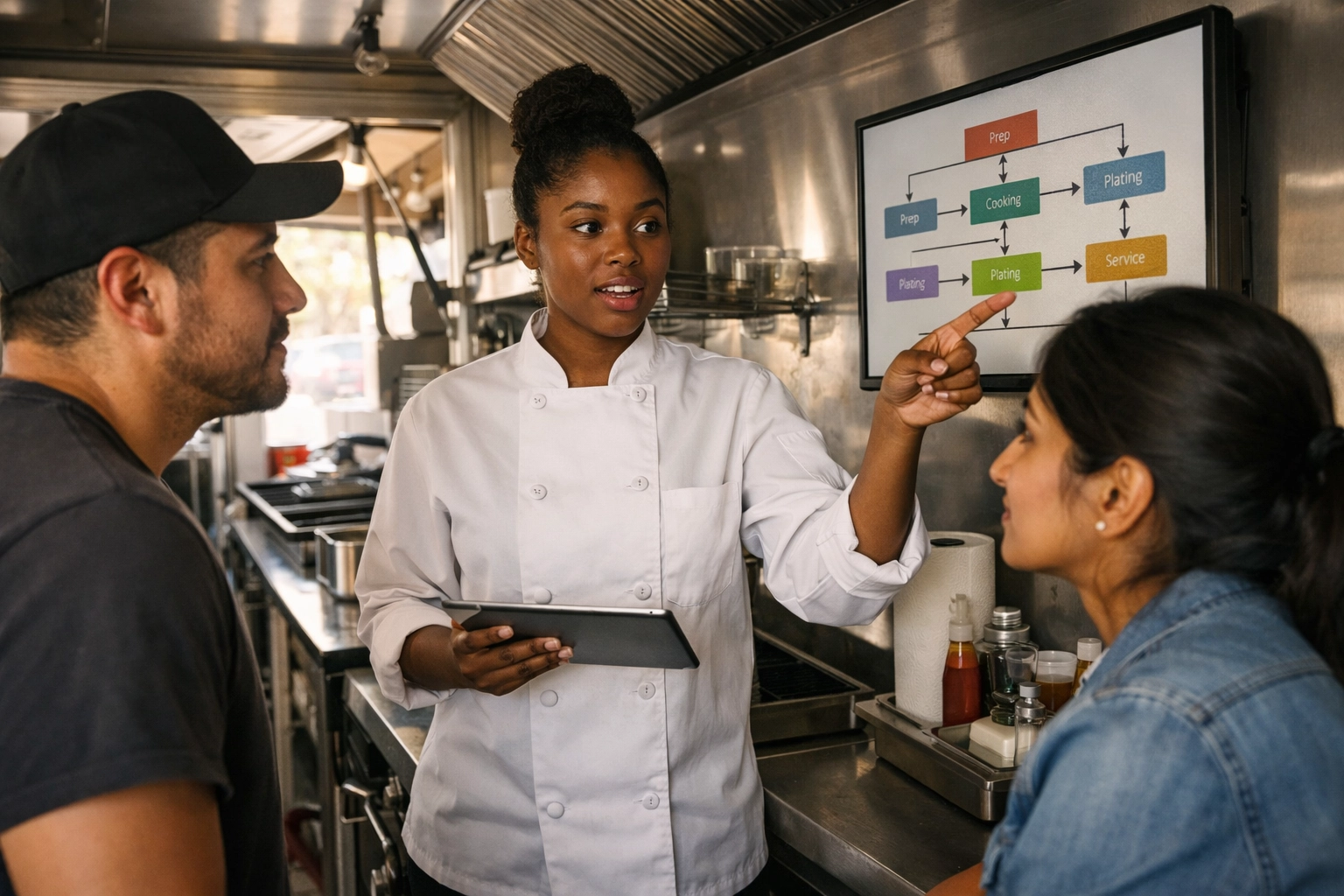
If your food truck relies on you being the one to season the carnitas or the only person who knows how to fix the generator, you don't have a business: you have a job with wheels. To scale, you need Standard Operating Procedures (SOPs). This is the "boring" stuff that actually makes you money.
Standardizing operations means every single task, from morning prep to end-of-night hitching, is documented (Quality Food Trailers) [3]. In major markets like Los Angeles and the Bay Area, labor costs are too high to waste time on "figuring it out" every shift. You need a manual that a new hire can read and execute with 90% accuracy on day one. This includes everything from exact portion sizes to the specific sequence of heating the flat top.
Systems also extend to your tech stack. A los angeles restaurant consultant will tell you that your POS (Point of Sale) isn't just for taking money; it’s your primary data source. You should be able to look at your dashboard and see exactly when your peak hours are, which items have the highest margin, and where your waste is happening. Without these systems, adding a second truck just doubles your chaos. High-volume powerhouses operate on predictability, not "vibes."
2. Commissary and Logistics: Solving the Prep Bottleneck
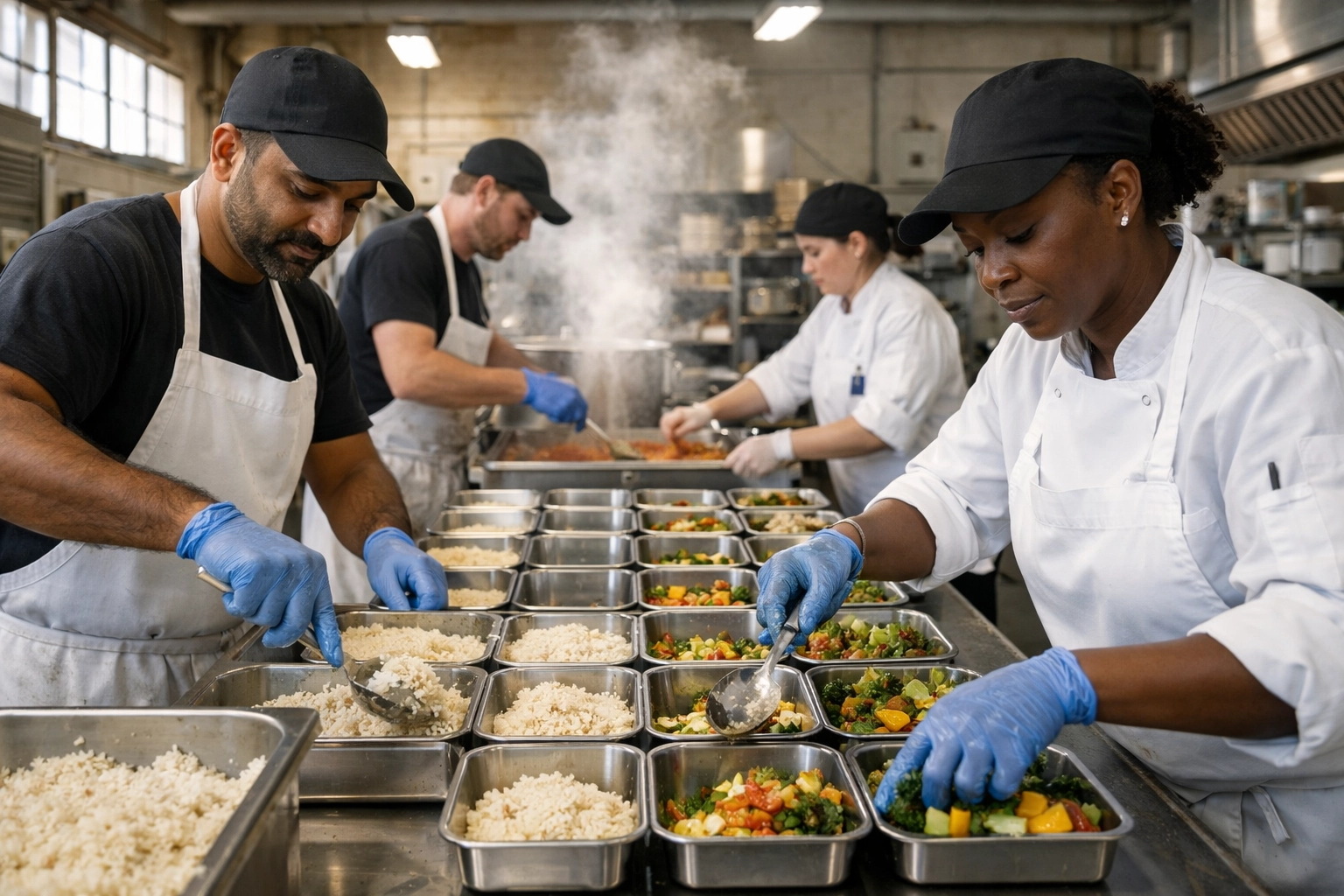
One of the biggest mistakes mobile operators make is trying to do all their prep on the truck. It’s cramped, it’s inefficient, and it limits your volume. In California, health department regulations in counties like San Francisco and LA require food trucks to operate out of a licensed commissary (San Francisco Department of Public Health) [10]. But don't just view the commissary as a legal requirement; view it as your central nervous system.
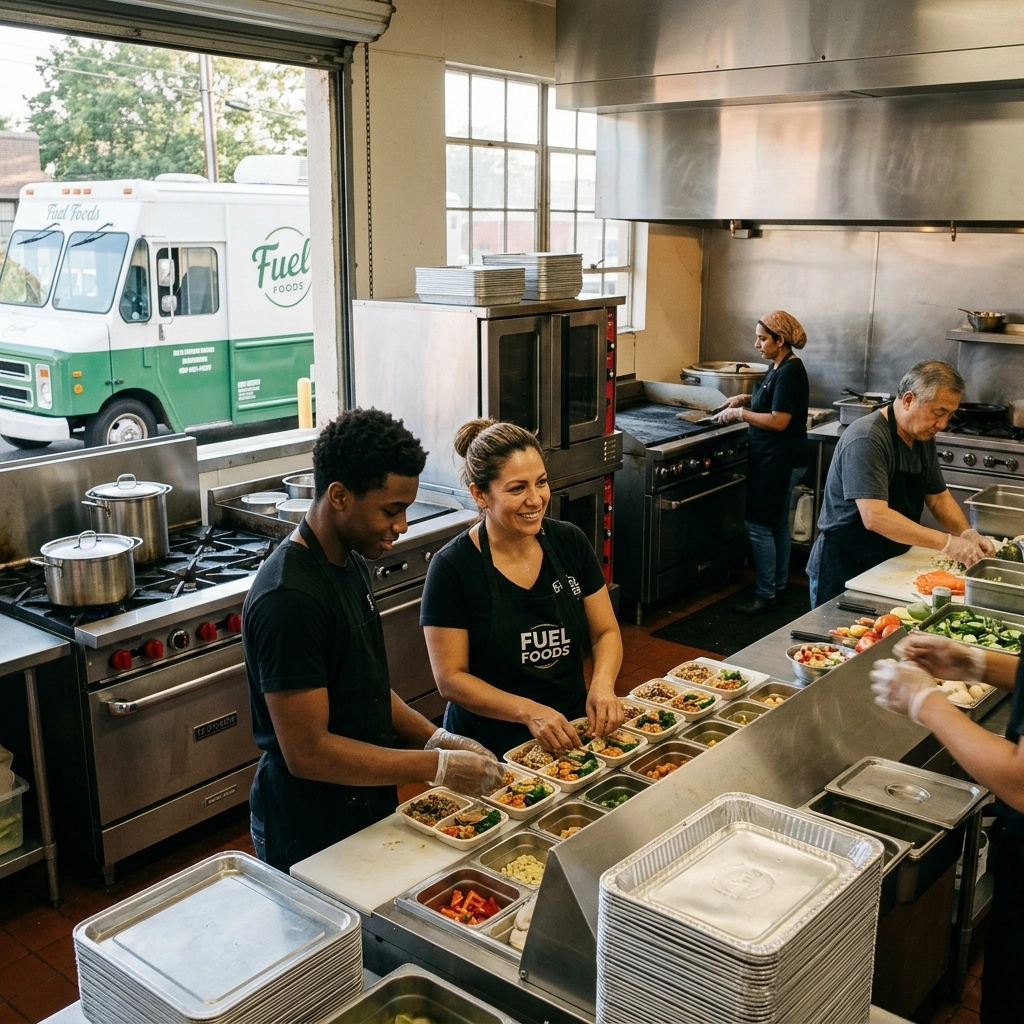
Scaling into a powerhouse means batch prepping. Using a commissary allows you to store larger quantities of inventory, which lowers your food costs through bulk purchasing (New York Street Food) [4]. It also allows you to finish proteins and sauces in a controlled environment, meaning the truck is only used for final assembly and service. This increases your "thru-put": the number of customers you can serve per hour.
Logistics also involves your "fleet" mentality. Whether you are adding a second truck or moving toward a brick-and-mortar, your commissary should be the hub. This is where you maintain portion control and ensure that the salsa in Oakland tastes exactly like the salsa in San Jose (How to Scale Your Menu) [5]. If you want to play in the big leagues, you have to solve the "prep bottleneck" before you add more points of sale.
3. Menu Engineering for Speed
In the food truck world, speed is the only metric that matters during a rush. If your menu is too complex, your line will stall, and people in the Bay Area: who have zero patience for a 20-minute wait at a truck: will walk away. High-volume requires simplicity.
Menu engineering is the process of analyzing your items based on popularity and profitability (Financial Models Lab) [1]. When scaling, you often have to "kill your darlings." That complex dish that takes six minutes to plate? It might be your favorite, but it’s killing your margins. You need "stars": items that are high profit and low effort to produce (The Restaurant Menu Engineering Playbook) [17].
Standardizing equipment is also part of this. If Truck A has a charbroiler and Truck B only has a flat top, you can't have a consistent menu. Every unit in your "powerhouse" should have the same layout and the same capability. This allows you to rotate staff between units without a drop in performance. Simple menus lead to faster ticket times, which leads to higher volume and happier customers.
4. Brand Consistency: Looking Like a Group, Not a Solo Operation
There is a psychological difference between a "guy with a truck" and a "food brand." To scale, your branding needs to be airtight. This means consistent wraps on the vehicles, professional uniforms for the staff, and a unified digital presence. When a customer sees your truck at a festival in Los Angeles or a corporate park in Palo Alto, they should immediately recognize the brand.
Brand consistency also means maintaining your reputation across multiple locations. If Truck 1 has a 4.5-star rating on Yelp but Truck 2 is struggling with 3 stars because the service is slow, it drags the whole brand down (New York Street Food) [4]. This is where training becomes your best marketing tool. You aren't just selling food; you’re selling a predictable experience.
Working with food truck consultants can help you bridge this gap. They look at your brand from the outside in, identifying where the "soul" of the business is getting lost as you grow. Whether you’re moving into a storefront or launching a fleet, the brand is the "glue" that holds the expansion together.
5. The Business Case: Why a Food Truck Consultant is Your Best Investment
Scaling is expensive. Between new equipment, increased labor, and higher insurance premiums, the "burn rate" of a growing food truck business can be terrifying. This is why a food truck consultant is often the difference between a successful expansion and a bankruptcy filing.
A consultant doesn't just give you "advice"; they provide a financial roadmap. They perform feasibility studies to see if that new neighborhood in the Bay Area can actually support your price point (7 Restaurant Feasibility Study Mistakes) [15]. They help you navigate the nightmare of California's labor laws and health permits. Most importantly, they help you lower your "prime cost": the combined cost of labor and food: which is the only way to stay profitable in 2026 (How Restaurant Consultants Lower Prime Cost) [13].
Investing in food truck consulting before you scale saves you from making $50,000 mistakes. It’s about professionalizing the "back of house" so the "front of house" can grow. If you're serious about moving from a mobile unit to a powerhouse, you need an expert who has seen the pitfalls and knows the shortcuts.

The Scaling Timeline: From One Truck to a Powerhouse
Moving from a single unit to a high-volume business usually takes 18 to 36 months if done correctly. Here is a typical roadmap for a successful transition:
| Milestone | Target Date | Key Action | Source Citation |
|---|---|---|---|
| Concept Proof | Month 1-6 | Hit 25% profit margin consistently on single unit. | [1] |
| SOP Documentation | Month 7-9 | Record every process; create the "Truck Bible." | [3] |
| Feasibility Study | Month 10 | Analyze market demand for Truck #2 or Brick-and-Mortar. | [15] |
| Commissary Upgrade | Month 12 | Move to a facility capable of supporting 3x current volume. | [10] |
| Menu Slimming | Month 13 | Remove any item that takes >3 mins to produce during rush. | [5] |
| Management Hire | Month 15 | Hire a dedicated Ops Manager to oversee multiple units. | [2] |
| Unit #2 Launch | Month 18 | Deploy second unit in a proven high-demand zone. | [4] |
| Brand Refresh | Month 20 | Update all digital and physical assets for a "Group" look. | [4] |
| Expansion Phase | Month 24-36 | Evaluate franchising or permanent retail locations. | [3] |
Comparative Prep Efficiency: Truck vs. Commissary
Data shows that moving prep off the truck and into a dedicated space dramatically increases earning potential.
| Metric | Prep on Truck | Prep at Commissary | Impact |
|---|---|---|---|
| Labor Hours per Shift | 4 Hours (on-site) | 1.5 Hours (centralized) | 62% reduction in prep labor [13] |
| Inventory Waste | 8-12% | 3-5% | Better storage & portioning [17] |
| Max Hourly Sales | $400 – $600 | $900 – $1,400 | Faster assembly, more capacity [5] |
| Food Cost (COGS) | 32% | 26% | Bulk buying & precise control [1] |
Case Study: The "Double-Up" Strategy in San Jose
A mobile taco concept in the Bay Area reached a point where they were constantly turning down lucrative corporate catering gigs because their truck was already booked for a lunchtime "pod" in downtown San Jose. Instead of just buying a second identical truck, the owners engaged a food truck consultant to analyze their workflow.
The consultant identified that 40% of their prep time was spent on the truck in a cramped 8×10 space. By moving to a shared commissary kitchen, they were able to prep ingredients for two trucks in the same amount of time it used to take for one. They also simplified their menu from 12 tacos to 5 "signatures."
Within six months of launching the second truck and moving to the commissary, their total monthly revenue tripled, while their food waste dropped by 4%. By focusing on systems rather than just "more food," they successfully transitioned from a local favorite to a regional powerhouse with a permanent catering wing (Inspired by Bro-Ritos & QSR Scaling Models) [2][4].
What Smart Critics Argue
Even with a solid plan, scaling has its detractors and risks. Here is what industry critics often point out:
- "You’ll lose the quality that made you famous." Critics argue that batch prep in a commissary kills the "freshness" of street food. The Counter: Modern high-volume techniques, like sous-vide and rapid cooling, actually increase consistency. A single over-stressed cook on a truck is more likely to make a mistake than a focused prep team in a kitchen [5].
- "The overhead will eat your profits." Some argue that the cost of a commissary and a manager makes the business less nimble. The Counter: While fixed costs rise, the "Prime Cost" (Labor + COGS) usually drops as a percentage of sales due to efficiency and bulk purchasing [13].
- "The market is oversaturated in LA/SF." It's often said there's no room for more trucks. The Counter: The market is only saturated for average trucks. There is always room for high-performing, professionally managed brands that show up on time and deliver a consistent product [2].
Key Takeaways
- Systems over Sweat: You cannot scale if everything relies on your physical presence. SOPs are your ticket to freedom.
- Data-Driven Growth: Use your POS data to decide when and where to add a second unit. Don't guess.
- Centralize Prep: A commissary isn't a burden; it’s a factory that allows your trucks to be high-speed sales outlets.
- Engineer for Speed: A high-volume menu is a simple menu. Kill the items that slow you down.
- Consistency is the Brand: Your second truck must be an exact clone of the first in terms of taste and service.
- Invest in Expertise: A los angeles restaurant consultant can help you navigate the specific regulatory and financial hurdles of the California market.
- Focus on Prime Cost: Scaling is the perfect time to optimize your labor and food costs for long-term health.
Actions You Can Take
At Work
- Start recording "How-To" videos for every task on the truck today. Use these as the basis for your digital SOP manual.
- Review your last three months of sales data. Identify the bottom 20% of your menu (low profit, low popularity) and remove them.
At Home
- Research commissary kitchen options in your target expansion area. Look for facilities that offer 24/7 access and cold storage.
- Set aside two hours this weekend to draft a "Year 2" budget that includes a second unit and a dedicated manager.
In the Community
- Join a local mobile food association (like the Southern California Coastal Food Truck Association). Networking with other "fleet" owners can provide invaluable logistical tips.
- Volunteer or mentor at a local culinary incubator to keep your brand top-of-mind for rising talent you might want to hire later.
Extra Step
- Contact a food truck consultant for a "Stress Test" of your current operation. Identifying the cracks now will save you thousands when you decide to grow.
FAQ
Q: Do I really need a commissary if my truck is huge?
A: Legally, in most California counties, yes. Operationally, it’s about efficiency. Prepping on a truck is 2-3x slower than prepping in a full-sized kitchen [3][10].
Q: When is the "right" time to buy a second truck?
A: When you are consistently turning away revenue (private gigs or catering) that equals at least 50% of your current truck’s monthly intake [2].
Q: How do I find a good food truck consultant?
A: Look for someone who has actual operational experience in high-volume markets like LA or the Bay Area. They should talk more about "margins" and "systems" than "menu items."
Q: Is it better to go to a second truck or a brick-and-mortar?
A: A second truck is usually a lower-risk way to test a new neighborhood. Brick-and-mortar involves long-term leases and higher build-out costs, which requires a much deeper feasibility study [15].
Q: How much does it cost to scale?
A: A second used truck can cost $50k-$100k, while a new one can exceed $150k. Don't forget to budget an additional $20k for initial inventory, staffing, and marketing [3].
Where Smart Strategy Meets Profitable Hospitality.
At McFadden Finch Restaurant Consulting Group, we help restaurant owners make sharper decisions, strengthen operations, and build businesses designed to perform. From feasibility studies and concept development to menu strategy and long-term operational consulting, we help your restaurant move beyond survival and into sustained growth.
McFadden Finch Restaurant Consulting Group
Lake Merritt Plaza
1999 Harrison St., 18th Floor
Oakland, CA 94612
(510) 973-2410
www.mcfadden-finch-group.com
executive.team@mcfadden-finch-group.com
Schedule your discovery call today and start building a stronger, smarter, more profitable restaurant. The corporate office address and email are listed on McFadden Finch Holdings’ contact page, and MFRCG is included in the company’s hospitality consulting portfolio.
Sources
[1] Financial Models Lab, "Food Truck Financial Model & Scaling Strategies," 2024, https://financialmodelslab.com/food-truck-financial-model/, Accessed April 20, 2026.
[2] QSR Magazine, "How One Food Truck Successfully Scaled to a Fleet," January 2024, https://www.qsrmagazine.com/growth/how-one-food-truck-successfully-scaled-fleet, Accessed April 20, 2026.
[3] Quality Food Trailers, "Moving from a Food Truck to a Brick and Mortar," 2025, https://qualityfoodtrailers.com/moving-from-a-food-truck-to-a-brick-and-mortar/, Accessed April 20, 2026.
[4] New York Street Food, "The Secrets to Food Truck Success and Scaling," 2024, https://nystreetfood.com/food-truck-guides/scaling-your-business/, Accessed April 20, 2026.
[5] Mobile Cuisine, "How to Scale Your Menu for High Volume Service," 2025, https://mobile-cuisine.com/menu-development/scale-your-menu/, Accessed April 20, 2026.
[6] Food Truck Startup Checklist, "Scaling into Fleets," 2025, https://foodtruckstartup.com/checklist/, Accessed April 20, 2026.
[7] IBISWorld, "Food Trucks in the US – Market Size 2011–2029," 2024, https://www.ibisworld.com/industry-statistics/market-size/food-trucks-united-states/, Accessed April 20, 2026.
[8] National Restaurant Association, "2026 State of the Restaurant Industry," February 2026, https://restaurant.org/research-and-media/research/state-of-the-industry/, Accessed April 20, 2026.
[9] Los Angeles County Department of Public Health, "Requirements for Mobile Food Facilities," 2025, http://publichealth.lacounty.gov/eh/business/mobile-food-facilities.htm, Accessed April 20, 2026.
[10] San Francisco Department of Public Health, "Mobile Food Facility Permit Guide," 2025, https://www.sfdph.org/dph/EH/Food/MobileFood/default.asp, Accessed April 20, 2026.
[11] Restaurant Business Online, "The Rise of the Centralized Commissary," 2024, https://www.restaurantbusinessonline.com/operations/rise-centralized-commissary, Accessed April 20, 2026.
[12] Forbes, "Five Steps to Scaling Your Small Business Profitably," 2024, https://www.forbes.com/sites/forbesbusinesscouncil/2024/scaling-small-business/, Accessed April 20, 2026.
[13] McFadden Finch Group, "How Restaurant Consultants Dramatically Lower Prime Cost in 2026," https://www.mcfadden-finch-group.com/how-restaurant-consultants-dramatically-lower-prime-cost-in-2026-the-complete-checklist, Accessed April 20, 2026.
[14] McFadden Finch Group, "7 Reasons Food Trucks Fail in Their First Year," https://www.mcfadden-finch-group.com/7-reasons-food-trucks-fail-in-their-first-year-and-how-food-truck-consultants-can-help-you-beat-the-odds, Accessed April 20, 2026.
[15] McFadden Finch Group, "7 Restaurant Feasibility Study Mistakes That Kill Concepts," https://www.mcfadden-finch-group.com/7-restaurant-feasibility-study-mistakes-that-kill-concepts-before-they-open, Accessed April 20, 2026.
[16] McFadden Finch Group, "Food Truck vs Restaurant: Which is Better for Your Launch," https://www.mcfadden-finch-group.com/food-truck-vs-restaurant-which-is-better-for-your-2025-launch, Accessed April 20, 2026.
[17] McFadden Finch Group, "The Restaurant Menu Engineering Playbook," https://www.mcfadden-finch-group.com/the-restaurant-menu-engineering-playbook-how-consultants-maximize-profit-with-every-dish-2026-edition, Accessed April 20, 2026.
Disclaimer: This content is for general informational purposes only and does not constitute legal, financial, tax, operational, employment, regulatory, or other professional advice. Reading this content does not create a client, consulting, or contractual relationship with McFadden Finch Restaurant Consulting Group. Because every restaurant, market, and business situation is different, you should consult qualified professionals regarding your specific circumstances. McFadden Finch Restaurant Consulting Group makes no warranties regarding the accuracy or completeness of this information and is not responsible for third-party content, links, products, or services referenced. Testimonials, examples, case studies, and projected outcomes are illustrative only and do not guarantee similar results.