The fried fish sandwich is having a moment in the Bay Area, but for restaurant operators, this is about more than just a seasonal trend. When the San Francisco Chronicle’s restaurant critic Cesar Hernandez published his definitive ranking on June 19, 2026, it signaled a shift in how we think about "approachable" menu items. From the $8.59 high-volume takeout at Joshua's Seafood to the $24 premium offering at Scoma's, the range of execution proves that a single item can define a brand's entire operational strategy.
At McFadden Finch Restaurant Consulting Group, we look at these rankings through a different lens. We are not just looking for the best bite. We are looking for the "why" behind the "what." Why does one shop thrive with a 30-minute wait while another struggles with an empty dining room? Why does a beer-battered cod command an $18 price point while a cornmeal-dredged basa dominates the neighborhood at $17? The answers lie in menu discipline, technical differentiation, and the strategic use of scarcity.
In this analysis, you will learn:
- How batter and dredge techniques dictate your kitchen’s operational flow and labor costs.
- The psychology of price anchoring in a market where the "same" item spans a $15 price gap.
- Why scarcity and consistency are more powerful marketing tools than a sprawling menu.
The Operational Anatomy of the Top Five
The San Francisco Chronicle’s latest ranking highlights five distinct approaches to the fish sandwich, each revealing a specific operational choice [1].
1. Cole Valley Tavern (San Francisco): The Technical Leader
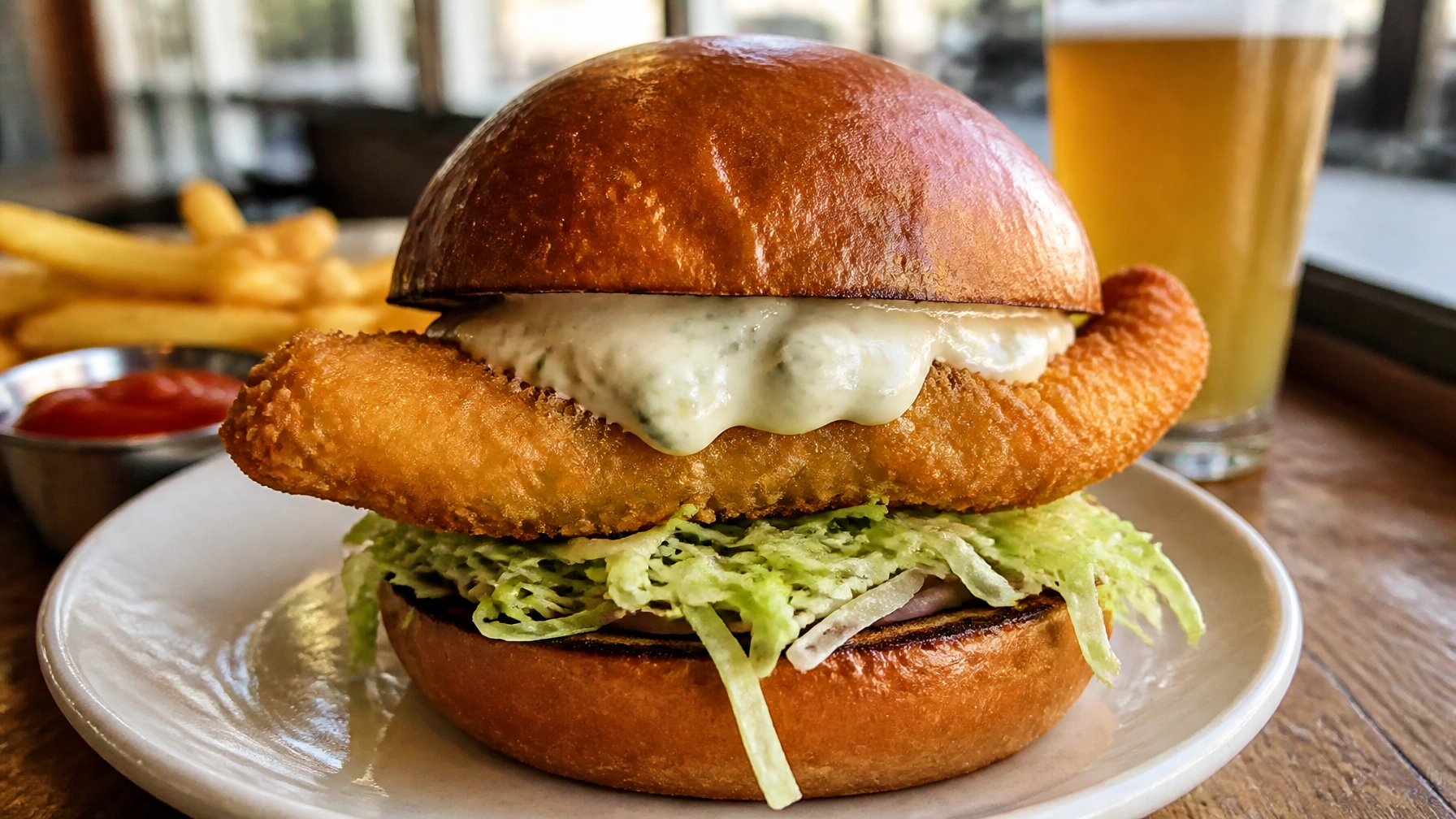
Ranking at number one, Cole Valley Tavern uses a rock cod coated in a beer and yeast batter. Operationally, this is a "technical" play. Yeast-driven batters require careful temperature control and a specific resting window to achieve the "pronounced crackle" noted by critics. At $18, they are pricing for the labor of the batter and the quality of the Alta Mira bun. This is a concept development win where the "technique" is the headline.
2. Valley Swim Club (Sonoma): The Concept Match
Their $18.50 beer-battered cod reflects a roadside seafood shack vibe. By adding a tangy slaw and chopped peppers, they create a flavor profile that justifies a destination-worthy price point. For operators, this shows how toppings can "elevate" a basic protein to meet a specific brand identity.
3. Mama T’s (Oakland): The Scarcity Specialist
Owner Teena Johnson has run this downtown Oakland fixture for nearly 20 years. Her $17 basa sandwich uses a Southern-style cornmeal dredge. The operational takeaway here is the 30-minute wait. By making each sandwich personally, the "wait" becomes part of the brand equity. It signals quality and care in a world of fast-food shortcuts.
4. Scoma’s Restaurant (San Francisco): Premium Anchoring
At $24, Scoma’s is the price anchor of the list. They use panko-crusted flounder and a shaved fennel salad. Using "sustainably caught" flounder allows them to charge a premium. This is a lesson in sourcing as a margin protector. When you pay more for the fish, you must tell the story of the fish to justify the check average.
5. Lovely’s (Oakland & SF): The Efficiency Model
Lovely’s $14.50 rockfish "Fishwich" is a masterclass in American fast-food throwback strategy. Using a panko crust and a potato bun, they mimic the McDonald’s Filet-O-Fish but with higher-quality components. This is a "volume and speed" play that fits perfectly into a burger-centric menu.
Beyond the Ranking: The Street-Level Perspective
While critics focus on the "best," operators must also look at the "most successful" in terms of loyalty and volume. Two Oakland spots, Chef Green and Joshua's Seafood, provide a masterclass in neighborhood operations.
Chef Green, located at 1575 7th Street in West Oakland, operates only three days a week [2]. This limited schedule creates a natural surge in demand. His "Fish Fry Fridays" featuring fresh basa and garlic butter fries are rated 10/10 by the McFadden Finch team. He also uses social media polls to let customers vote on menu ideas. This "feedback loop" is a zero-cost marketing strategy that ensures every new item has a built-in audience.
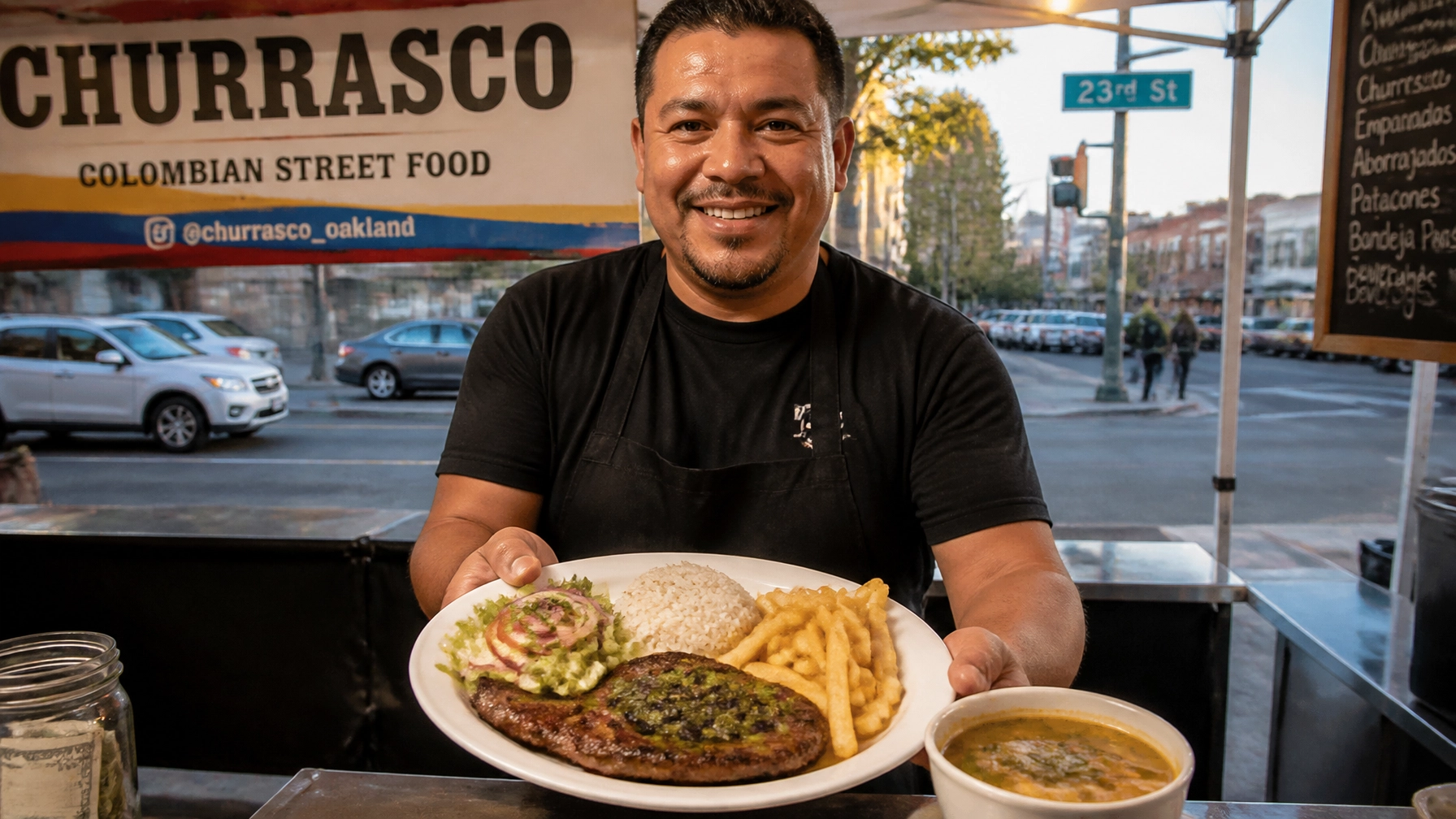
On the other end of the spectrum is Joshua's Seafood at 2907 Fruitvale Avenue. Their two-piece fried fish combo with fries sits at $8.59 [3]. This is high-volume, high-efficiency takeout. By focusing on a simple, consistent, Southern-style fried seafood menu, they have built a business that doesn't need a critic's ranking to stay packed. They are the price floor that every other operator in the city must account for in their menu engineering.
Technique as Brand Identity: Batter vs. Dredge
The choice between a beer batter, a cornmeal dredge, or a panko crust is not just a culinary one. It is a business decision that affects your prime costs and kitchen throughput.

| Coating Type | Operational Complexity | Labor Cost | Prep Time | Best Positioning |
|---|---|---|---|---|
| Beer Batter | High | High | Needs resting/cold temp | Premium pub, "Signature" item |
| Cornmeal Dredge | Low | Low | Toss-and-fry | Southern, high-volume, neighborhood |
| Panko Breading | Medium | Medium | 3-step prep (flour/egg/panko) | Modern casual, high crunch factor |
Beer batters, like those at Cole Valley Tavern and Valley Swim Club, are messy. They require a dedicated fryer station to avoid contaminating other oils and need "batter management" to ensure consistency throughout a shift. Cornmeal dredges, favored by Mama T’s and Chef Green, are incredibly fast to apply but can leave fine sediment in the oil, requiring more frequent filtration. Panko, used by Scoma's and Lovely's, offers the best "hold time" for delivery but takes more hands-on time during the prep shift.
The Evolution of the Bay Area Fish Sandwich
To understand today's market, we must look at how we got here. The fish sandwich has moved from a religious substitute to a culinary flagship.
- 1962: Lou Groen creates the Filet-O-Fish in Cincinnati to save his struggling McDonald's during Lent [1].
- 2006: Mama T’s opens in downtown Oakland, solidifying the cornmeal-dredged basa as a local staple.
- 2015: The "elevated" fast-food trend begins, with local chefs revisiting childhood classics.
- 2022: Cole Valley Tavern opens, placing a high-technique beer-battered sandwich at the center of their menu.
- 2024: High inflation pushes operators toward "value" proteins like rockfish and basa.
- 2026: Cesar Hernandez ranks the region's best, confirming the sandwich as a legitimate culinary category [1].
The Psychology of Price Anchoring
How can a market support a $24 fish sandwich (Scoma's) and an $8.59 combo (Joshua's) in the same county? This is the power of price anchoring. Joshua's sets the "utility" price. It's what a fish sandwich costs for lunch on a Tuesday. Scoma's sets the "experience" price. You aren't just paying for fish; you are paying for the Wharf, the fennel salad, and the legacy.
For the mid-range operator (the $16-$19 zone), the challenge is differentiation. If you are charging $18, you cannot just be "better" than the $8.59 version. You have to be different. This is why Cole Valley Tavern uses a specific yeast batter and why Valley Swim Club uses a signature pepper-slaw. They are moving the item out of the "commodity" category and into the "specialty" category.
Case Example: The "Wait" as a Brand Asset
Consider the "famous fried fish sandwich" at Mama T’s. The 30-minute wait is mentioned in nearly every review [1]. In a traditional efficiency model, a 30-minute ticket time for a sandwich is a failure. However, for a neighborhood institution, this wait is a signal of "cooked-to-order" authenticity.
This mirrors the strategy used by Saints Smokehouse and other elite "low and slow" operators. By purposely limiting production or maintaining a "one person at the helm" approach, you create a perceived value that exceeds the actual cost of the ingredients. It turns a transaction into an event. For the Executive Team at McFadden Finch Restaurant Consulting Group, we often advise struggling concepts to "do less, but do it better" to create this exact type of gravity.
What Smart Critics Argue
Some industry analysts argue that the "fried fish sandwich moment" is a symptom of a struggling industry. They suggest that:
- Protein Inflation: Operators are moving toward fish because beef and poultry prices are volatile.
- Safety in Familiarity: During economic uncertainty, customers retreat to "safe" childhood foods.
- The "Hype" Cycle: Critics tend to over-index on items that are easy to photograph and rank.
While these points have merit, the evidence suggests that the focus on high-quality, singular items is a healthy move toward menu discipline. A restaurant that does one sandwich perfectly is more sustainable than one that does twenty dishes poorly.
Key Takeaways for Operators
- Pick Your Texture: Your choice of batter or dredge defines your labor model and kitchen throughput.
- Lean Into Scarcity: Whether it's a 3-day schedule like Chef Green or a "until we sell out" policy, scarcity drives demand.
- Tell the Sourcing Story: If you are pricing above $20, "fried fish" isn't enough. It must be "Sustainably Caught Flounder" or "Hand-Filleted Rock Cod."
- Use Social Feedback: Like Chef Green, poll your audience. It reduces the risk of new menu launches.
- Value the "Wait": If your ticket times are high because you are cooking to order, make that a part of your brand story.
- Price Anchoring: Know where you sit between the $8.59 "utility" meal and the $24 "luxury" meal.
Actions You Can Take Today
At Work
- Review your fryer station efficiency. If you are using a wet batter, calculate your end-of-shift waste to see if a dry dredge would improve your margins.
- Run a one-week "Fish Friday" special with a limited quantity (e.g., only 30 portions) to test the scarcity model.
In the Community
- Visit Joshua's Seafood and Chef Green. Observe their flow. You can learn more about high-volume efficiency from a $9 combo than a $50 entrée.
In Civic Life
- Support local sourcing. Connect with Bay Area fisheries to see if you can get seasonal rockfish or lingcod directly.
Extra Step
- Map your menu prices against your nearest competitors for the same item. If you are the most expensive, list three reasons why (Technique, Sourcing, Atmosphere) and ensure those reasons are visible on your menu.
Frequently Asked Questions
Why is rock cod so popular on these lists?
Rock cod is a "sweet" flesh fish that holds up well to high-heat frying. It is also a regional staple, which appeals to the Bay Area's preference for local sourcing [1].
Can I use frozen fish and still make a "Best of" list?
Yes, if the handling and battering are superior. Many high-volume shops use high-quality flash-frozen fillets to maintain consistency and price stability.
Is American cheese a requirement for a fish sandwich?
Not a requirement, but it is a "nostalgia trigger." Cole Valley Tavern and Lovely's both use it to reference the classic fast-food profile while using higher-quality components elsewhere [1].
How do I manage the "mess" of a beer batter?
Dedicated fryers and a "drip rack" system are essential. At McFadden-Finch, we recommend specific station layouts to minimize the "sludge" build-up that kills oil life.
Where Smart Strategy Meets Profitable Hospitality.
At McFadden Finch Restaurant Consulting Group, we help restaurant owners make sharper decisions, strengthen operations, and build businesses designed to perform. From feasibility studies and concept development to menu strategy and long-term operational consulting, we help your restaurant move beyond survival and into sustained growth.
McFadden Finch Restaurant Consulting Group
Lake Merritt Plaza
1999 Harrison St., 18th Floor
Oakland, CA 94612
(510) 973-2410
www.mcfadden-finch-group.com
executive.team@mcfadden-finch-group.com
Schedule your discovery call today and start building a stronger, smarter, more profitable restaurant. The corporate office address and email are listed on McFadden Finch Holdings' contact page, and MFRCG is included in the company's hospitality consulting portfolio.
Sources
[1] Cesar Hernandez, "Fried fish sandwiches are having a moment in the Bay Area. We ranked the best," San Francisco Chronicle, June 19, 2026, Accessed June 19, 2026.
[2] Chef Green, social media and MapQuest listing, 1575 7th St, Oakland, @chefgreen510, Accessed June 19, 2026.
[3] Joshua's Seafood / Joshua's Gulfport Seafood, 2907 Fruitvale Ave, Oakland, multiple directory listings, Accessed June 19, 2026.
Disclaimer: This content is for general informational purposes only and does not constitute legal, financial, tax, operational, employment, regulatory, or other professional advice. Reading this content does not create a client, consulting, or contractual relationship with McFadden Finch Restaurant Consulting Group. Because every restaurant, market, and business situation is different, you should consult qualified professionals regarding your specific circumstances. McFadden Finch Restaurant Consulting Group makes no warranties regarding the accuracy or completeness of this information and is not responsible for third-party content, links, products, or services referenced. Testimonials, examples, case studies, and projected outcomes are illustrative only and do not guarantee similar results.