What restaurant succession planning looks like when ownership, facility work, and an aging operation have to move forward together.
A locked restaurant door can tell the wrong story.
In Oakland’s Jack London District, a sign at Ben’s Chinese Restaurant appeared to suggest a 40-year run had ended. The restaurant at 398 Third St. had closed without much warning. Then the family clarified the plan. Ben’s was not closing permanently. It was taking a break for renovations, with an expected reopening in two or three months. Ownership had moved from the founding generation to the second generation, while the restaurant prepared to preserve its recipes, improve the floor, fire escape, and bathroom, and consider evening service in the future. (KQED) [1]
That is not a sentimental profile. It is a useful operating case.
A temporary closure can be a turnaround move when it gives an aging operator room to step back, makes succession explicit, completes necessary facility work, and creates a cleaner platform for the next phase. But the same decision can also expose a hard truth: sometimes the business no longer has a workable next phase.
This article explains how restaurant owners can use a change of hands to:
- Diagnose the operation before changing the menu.
- Document the systems that make the restaurant itself recognizable.
- Build a reopening plan with clear decision rights and financial discipline.
- Decide whether renovation and succession are worth pursuing, or whether walking away is the responsible choice.
Temporary closure is not the same as failure
The Bay Area restaurant news cycle often treats a shuttered door as a final verdict. That is understandable. Customers see the dark windows, the empty dining room, and the sign taped to the glass. They fill in the blanks.
Oaklandside separately reported that Ben’s was temporarily closed and that the family planned to reopen after renovations. The same report listed other East Bay restaurants that were temporarily closed for construction or to rethink their direction. (Oaklandside) [2]
The distinction matters operationally. A temporary closure has a purpose, a scope, and a return condition. A permanent closure has an endpoint.
Ben’s case includes all three elements of a purposeful pause:
- A leadership reason. The founding operator needed a break, and the second generation assumed ownership and day-to-day responsibility.
- A facility reason. The restaurant needed new floors, a new fire escape, and an updated bathroom.
- A continuity reason. The family planned to preserve the recipes and eventually train another chef. (KQED) [1]
That combination is stronger than simply saying, “We are closed for renovations.” It connects the closure to the future operating model.
A restaurant turnaround starts with diagnosis
Owners under pressure often reach for the menu first. Cut ten dishes. Add a new special. Raise prices. Change the logo. Replace the chef.
Sometimes those actions are necessary. Starting there is still usually a mistake.
A proper restaurant turnaround begins by separating symptoms from causes. Is the business losing money because of menu mix, portion drift, weak purchasing, labor inefficiency, slow service, facility limitations, or unclear leadership? The National Restaurant Association reported that food and labor costs each represented approximately 33 cents of every sales dollar in its July 2026 analysis, while 33% of operators said their restaurants were not profitable during the first half of the year. (National Restaurant Association) [5]
Those conditions make instinct expensive.
Before changing the menu, review:
- Current sales by item and daypart.
- Recipe costs based on current invoices.
- Actual portions compared with written standards.
- Waste, substitutions, and stockouts.
- Labor hours by station and service period.
- Ticket times and service bottlenecks.
- Vendor terms and purchasing habits.
- Deferred maintenance that affects safety, speed, or guest experience.
The point is not to make change feel sophisticated. The point is to avoid making the wrong change first.
Succession must be more than a family conversation
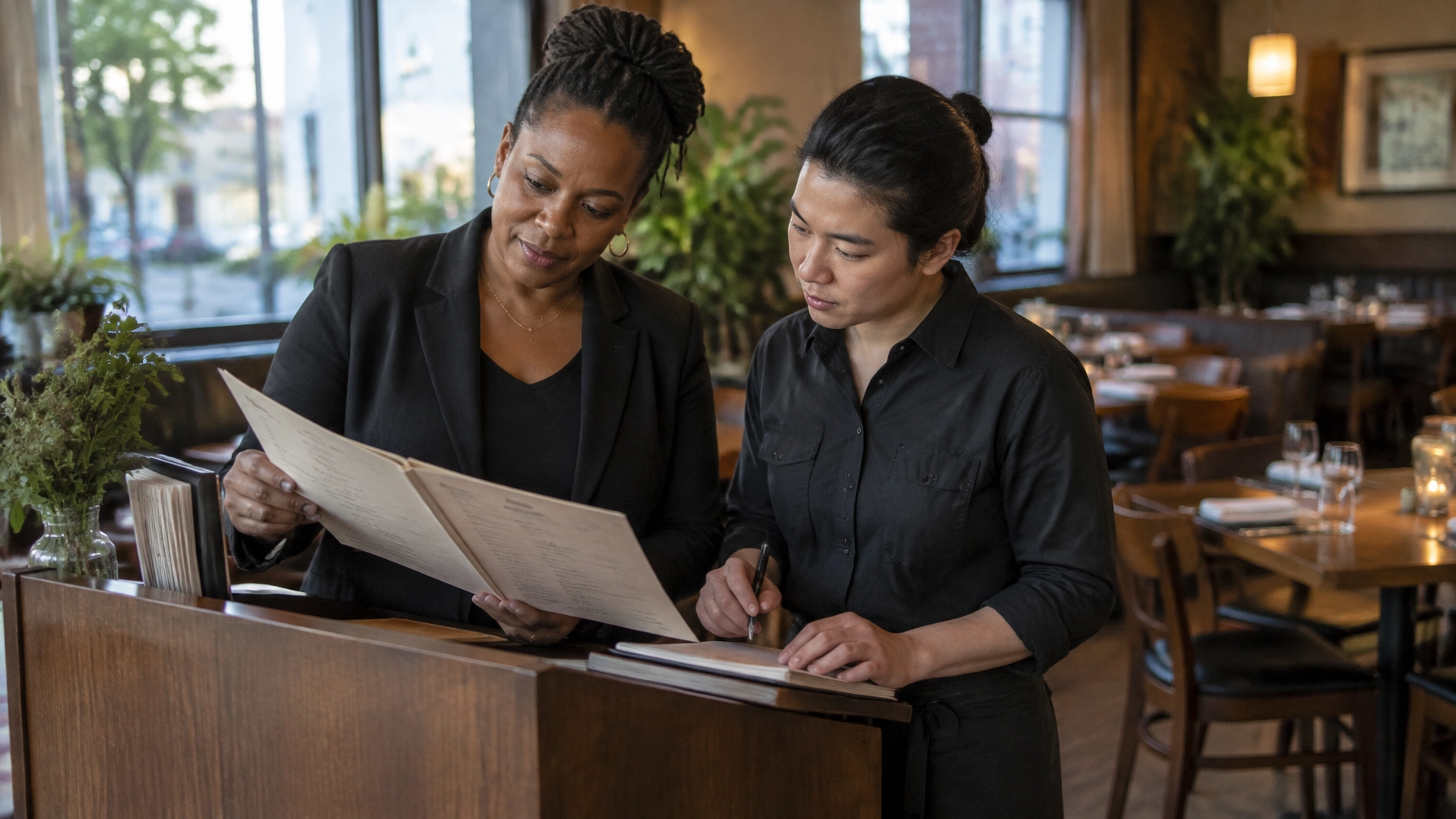
Restaurant management transition is often discussed informally. Someone says, “My daughter will take over.” A chef says, “I know the recipes.” A longtime manager says, “I can run the place.”
That is not yet a plan.
Ownership, authority, and operating responsibility need to be defined separately. The person who owns the restaurant may not be the person who runs the kitchen. The person who knows the recipes may not be ready to manage labor, vendors, cash flow, maintenance, and guest recovery.
Ben’s transition made ownership transfer explicit while also identifying the practical division of work. The founding generation would remain involved in cooking for a limited period, while the second generation would handle the broader daily responsibilities. The family also recognized that future continuity would require training a chef who could eventually carry the food forward. (KQED) [1]
Deloitte Private’s 2026 research on family businesses describes succession as the transfer of leadership, ownership, governance responsibilities, family values, and stewardship. The survey covered 1,587 family businesses worldwide with minimum revenue of US$100 million. It found that 82% reported some form of succession plan for the family business, 46% reported a thorough plan, and 36% said the plan needed updating or improvement. It does not directly measure Bay Area restaurants. It is still a useful warning about the gap between having a plan and having a usable one. (Deloitte Private) [7]
Write down:
- Who owns the business.
- Who approves spending.
- Who controls hiring and termination.
- Who owns vendor relationships.
- Who has final authority over recipes and menu changes.
- Who manages repairs and contractors.
- Who handles payroll, taxes, licenses, and insurance.
- What happens if the intended successor leaves.
Families do not need a thick binder to begin. They do need clear answers.

Document the food and the work behind it
Recipes are only one part of restaurant continuity. A successor also needs the operating knowledge that rarely appears on a recipe card.
Document the following while the founding operator is still available:
- Ingredient specifications and acceptable substitutions.
- Prep sequences and holding times.
- Sauce production and batch sizes.
- Plating and portion standards.
- Equipment quirks and maintenance routines.
- Vendor contacts and ordering patterns.
- Opening and closing procedures.
- Guest service expectations.
- Common complaints and the approved recovery response.
- Which menu items are essential to the restaurant’s identity.
The goal is not to turn a living restaurant into a museum. It is to make the business teachable.
Those systems matter during succession because an operation cannot depend forever on one person remembering everything.
Use the closure to complete essential work
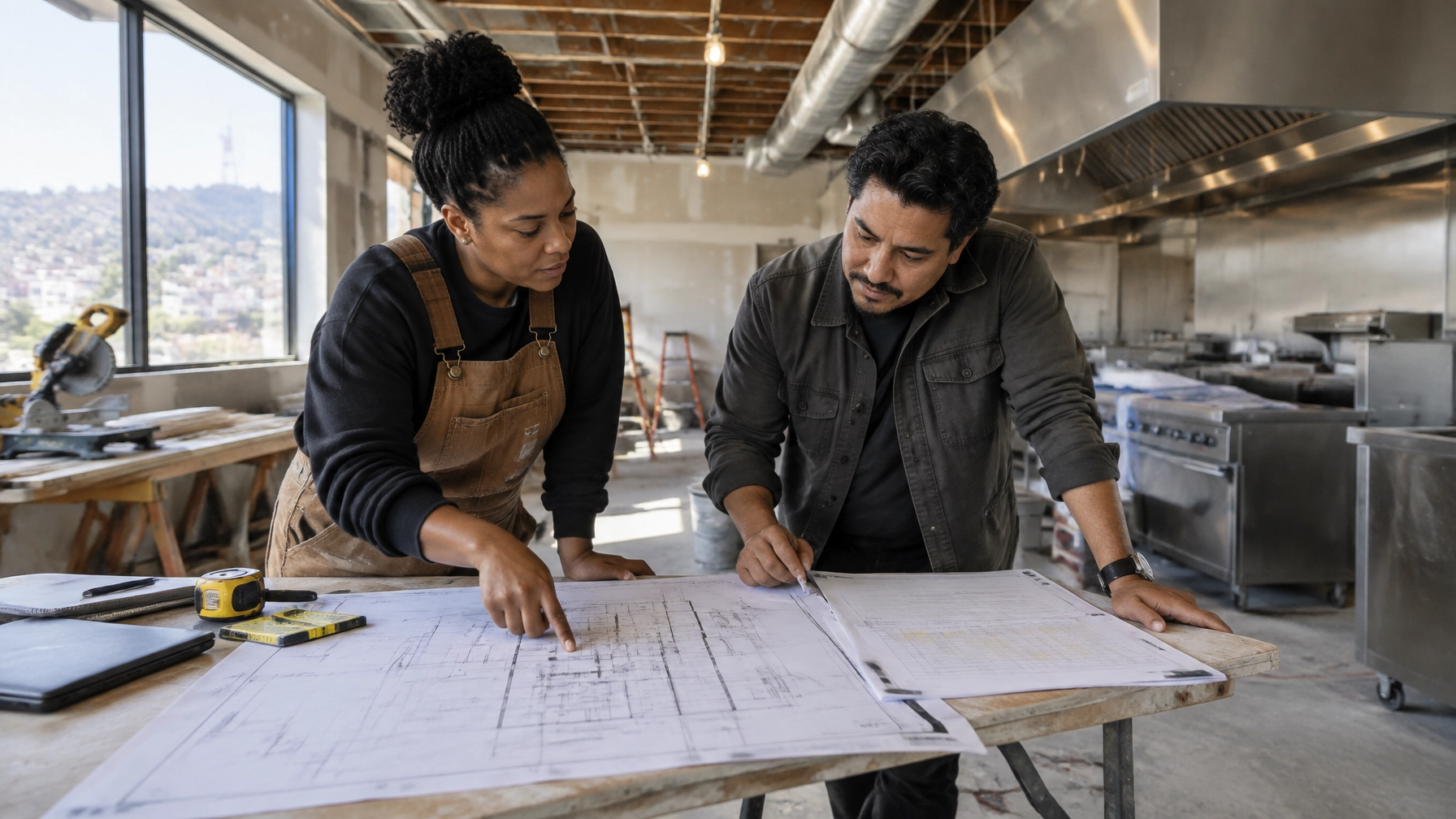
The repair list at Ben’s is instructive because it is not limited to cosmetic improvement. New floors, a fire escape, and an updated bathroom address the building and guest experience at a basic level. The family also wants the space to feel more modern and inviting without abandoning its small, informal character. (KQED) [1]
That is the right order.
Separate the work into three categories:
Essential
Repairs connected to safety, code, sanitation, access, equipment reliability, or the ability to operate legally and consistently.
Productive
Changes that improve workflow, storage, prep capacity, service speed, seating function, or labor efficiency.
Cosmetic
Paint, finishes, decorative upgrades, furniture, signage, and other improvements that may help the guest experience but do not determine whether the restaurant can operate.
A renovation budget should not hide these categories from the successor. If the business cannot fund essential repairs without creating a new financial crisis, the decision is not simply whether the space looks better. It is whether the business can carry the work.
That same discipline applies to a small renovation. A new floor that slows movement or a piece of equipment that creates a bottleneck is not an improvement.
Build a 90-day restaurant reopening plan
A reopening date is not a plan. It is a target.
For a two- or three-month closure, organize the work into a simple 90-day reopening plan:
Days 1 through 30: Diagnose and stabilize
- Confirm ownership and decision rights.
- Complete the facility assessment.
- Lock the essential repair scope.
- Document recipes and procedures.
- Build the reopening budget.
- Contact key employees and explain the timeline.
- Review the menu without making unnecessary changes.
Days 31 through 60: Build and test
- Complete approved repairs.
- Order equipment and operating supplies.
- Test recipes and portion standards.
- Price the menu using current costs.
- Recruit or identify the reopening team.
- Train the successor on purchasing, scheduling, cash controls, and service recovery.
- Test the proposed service model.
Days 61 through 90: Rehearse and reopen
- Run mock services.
- Check ticket times and station flow.
- Confirm staffing for each shift.
- Verify opening and closing checklists.
- Communicate the reopening date clearly.
- Open with a controlled schedule before expanding service.
Do not add a new daypart simply because the dining room is available. Ben’s may eventually add evening service, with the second generation cooking that service. That can be a smart growth opportunity, but it needs to be tested against labor, prep, equipment, purchasing, demand, and management capacity. (KQED) [1]
Preserve identity without freezing the operation
Preserving identity means protecting the elements guests recognize and return for. That may include recipes, flavor profiles, service rituals, pricing philosophy, room character, or the relationship between the restaurant and its neighborhood.
Freezing the operation means refusing to improve anything because change feels like betrayal.
Those are not the same.
Ben’s plans to preserve its recipes while improving the physical space and preparing for a future chef transition. That is continuity with movement, not a museum display. (KQED) [1]
A successor should ask two questions about every proposed change:
- Does this protect what customers actually value?
- Does this help the restaurant operate more reliably?
If the answer to both is no, the change is probably decoration or ego. If the answer to the first is no but the second is yes, the change may still be necessary, but it needs to be explained and managed carefully.
Restaurant leadership is not proving that the past was wrong. It is deciding what the past earned the right to keep.

Know when to walk away
Not every closure is a pause before a comeback.
Oakland’s Home of Chicken & Waffles, which opened in 2004, is scheduled to serve its final meals on August 31, 2026, after more than two decades in business. NBC Bay Area reported that no specific reason for the closure was given publicly. (NBC Bay Area) [3] The San Francisco Chronicle also reported the planned closure and final date. (San Francisco Chronicle) [4]
That is where disciplined analysis matters. Operators should not invent a reason when the public record does not provide one. They should, however, take the broader decision seriously.
Before committing to succession and renovation, ask:
- Can the restaurant support the successor’s required income?
- Does the lease provide a workable operating horizon?
- Can essential repairs be completed without overwhelming the business?
- Is there enough demand for the proposed service model?
- Does the successor actually want the job?
- Can the restaurant function without the founding operator?
- Are the recipes documented well enough to train another chef?
- Would a sale, smaller operation, or planned closure protect more value?
The National Restaurant Association’s July outlook described restaurant sales as resilient but also emphasized uneven customer traffic, elevated operating costs, and pressure on profitability. (National Restaurant Association) [5] Resilience in the sector does not make every individual location viable.
Walking away is not automatically failure. Sometimes it is the clearest leadership decision available.
Put the transition on a weekly scorecard
A succession plan becomes real when the team reviews the same information every week.
Track:
- Sales by daypart.
- Average check.
- Item mix.
- Food purchases and waste.
- Scheduled versus actual labor hours.
- Payroll and other major expenses.
- Ticket times.
- Guest complaints and recoveries.
- Maintenance items still open.
- Cash available for the next operating period.
- Training completed by the successor and key managers.
California’s statewide minimum wage is scheduled to increase to $17.40 per hour on January 1, 2027. The California Department of Industrial Relations also states that the change affects the salary threshold used as part of the test for certain overtime exemptions, with employers required to follow applicable local rates when they are higher. (California Department of Industrial Relations) [6]
That is exactly why succession and restaurant cost control belong in the same conversation. A new owner cannot inherit responsibility without inheriting a current labor model.
What smart critics argue
“Renovations take too long and burn cash.”
Correct. A closure without a locked scope, budget, schedule, and reopening trigger can damage the business. The answer is not to avoid all work. It is to separate essential repairs from cosmetic ambition and assign one person authority over the project.
“The founding operator is the brand.”
Sometimes. But if the entire operation depends on one person, the restaurant has a continuity risk. Documenting recipes and training the next chef does not erase the founder’s role. It gives the business a chance to carry the work forward.
“Adding evening service is an obvious way to grow.”
No. It is an untested operating assumption until demand, labor, prep, purchasing, and management capacity are measured. Pilot the daypart before making it permanent.
“If the numbers are weak, a successor can fix them.”
A new owner can improve decisions. They cannot wish away an unworkable lease, deferred maintenance, poor systems, or insufficient demand. Diagnose before transferring the problem.
Key takeaways for Bay Area operators
- A temporary closure can be a turnaround move when it has a defined purpose.
- Ownership transfer and management transfer should be documented separately.
- Diagnose the operation before changing the menu.
- Recipes need operating procedures behind them.
- Essential repairs come before cosmetic upgrades.
- A reopening date needs a 90-day work plan.
- New dayparts should be tested, not assumed.
- Preserving identity means protecting value, not refusing improvement.
- A weekly scorecard makes succession measurable.
- Walking away can be responsible when the business cannot support a viable next phase.
Three lines worth sharing
A temporary closure is a turnaround move only when it has a purpose, a scope, and a return condition.
Restaurant succession planning is not just the transfer of ownership. It is the transfer of leadership, operating knowledge, and decision rights.
Preserving a restaurant’s identity does not mean freezing it in place. It means protecting what guests value while improving what the operation requires.
Where Smart Strategy Meets Profitable Hospitality.
At McFadden Finch Restaurant Consulting Group, we help restaurant owners make sharper decisions, strengthen operations, and build businesses designed to perform. From feasibility studies and concept development to menu strategy and long-term operational consulting, we help your restaurant move beyond survival and into sustained growth.
McFadden Finch Restaurant Consulting Group
Lake Merritt Plaza
1999 Harrison St., 18th Floor
Oakland, CA 94612
(510) 973-2410
www.mcfadden-finch-group.com
executive.team@mcfadden-finch-group.com
Schedule your discovery call today and start building a stronger, smarter, more profitable restaurant. The corporate office address and email are listed on McFadden Finch Holdings' contact page, and MFRCG is included in the company's hospitality consulting portfolio.
Sources
[1] KQED, “Oakland’s Most Underrated Chinese Restaurant Isn’t Closing After All,” August 13, 2026, https://www.kqed.org/arts/13992743/bens-chinese-restaurant-oakland-not-closing, Accessed August 21, 2026.
[2] Oaklandside, “Coffee Mill, Ben’s, and Nudi Blue temporarily closed,” August 14, 2026, https://oaklandside.org/2026/08/14/coffee-mill-nudi-blue-bens-horn-closed/, Accessed August 21, 2026.
[3] NBC Bay Area, “Oakland’s Home of Chicken and Waffles to close after more than 20 years,” August 13, 2026, https://www.nbcbayarea.com/news/local/oakland-home-of-chicken-and-waffles/4127666/, Accessed August 21, 2026.
[4] San Francisco Chronicle, “Home of Chicken & Waffles is closing,” August 14, 2026, https://www.sfchronicle.com/food/restaurants/article/home-of-chicken-and-waffles-closing-22388712.php, Accessed August 21, 2026.
[5] National Restaurant Association, “Restaurants remain resilient despite challenging business conditions,” July 22, 2026, https://restaurant.org/research-and-media/research/restaurant-economic-insights/analysis-commentary/restaurants-remain-resilient-despite-challenging-business-conditions/, Accessed August 21, 2026.
[6] California Department of Industrial Relations, “ICYMI: California’s minimum wage set to increase to $17.40 per hour on January 1, 2027,” August 13, 2026, http://www.dir.ca.gov/DIRNews/2026/2026-66.html, Accessed August 21, 2026.
[7] Deloitte Private, “Family business succession planning and the next generation, 2026,” 2026, https://www.deloitte.com/content/dam/assets-shared/docs/services/deloitte-private/2026/family-business-succession-planning-and-the-next-generation-2026.pdf, Accessed August 21, 2026.
This content is for general informational purposes and does not constitute professional advice.