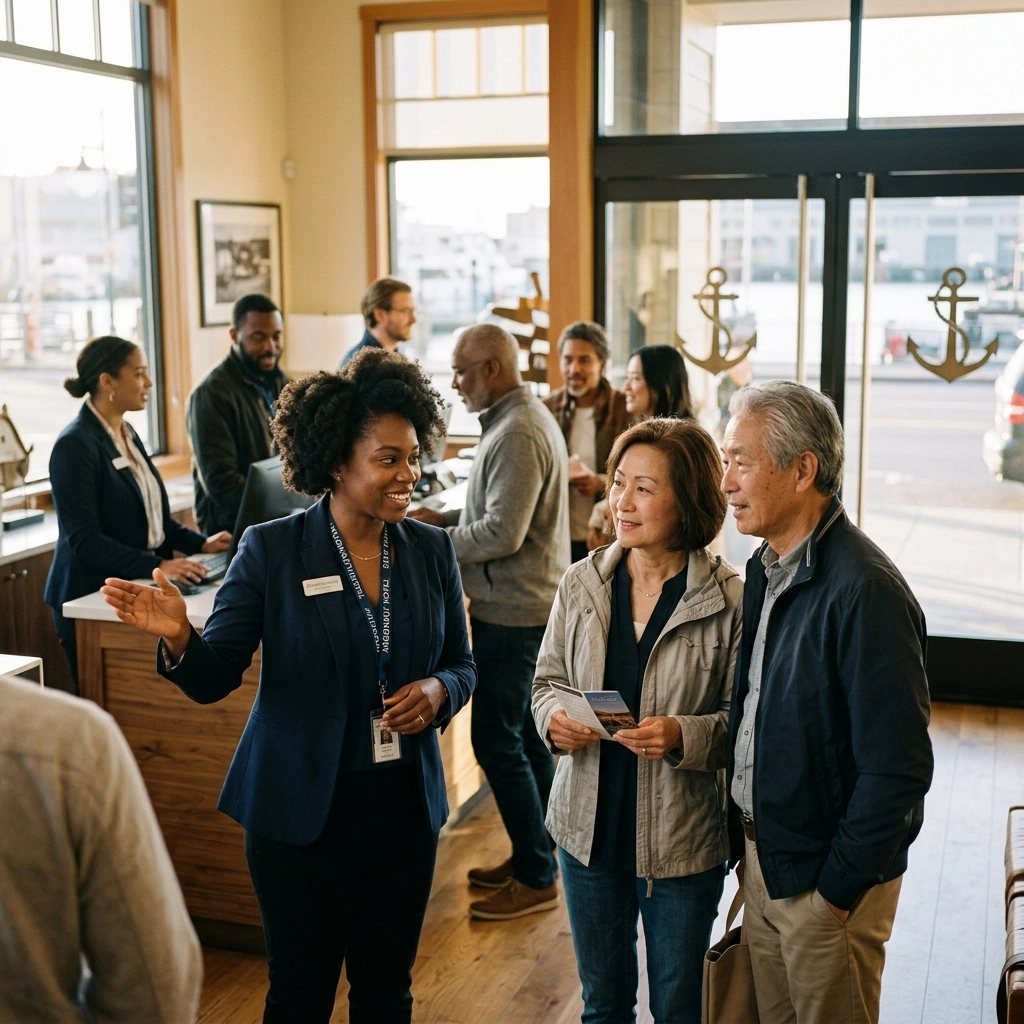
Fisherman’s Wharf is a polarizing place. To some, it’s the heartbeat of San Francisco’s maritime history; to others, it’s a gauntlet of overpriced sourdough and plastic Alcatraz magnets. For a hospitality business, operating in a high-footfall "tourist zone" is a double-edged sword. You have the volume, but you often lack the soul. You get the one-time visitor, but you rarely get the local regular or the high-value traveler looking for something real.
Look, here’s the reality: if your restaurant or hotel relies solely on proximity to a landmark, you’re not a business; you’re a toll booth. And toll booths don't build brand loyalty.
The Argonaut Hotel, located in the historic Haslett Warehouse, shouldn’t work as well as it does. It sits at the epicenter of the Wharf’s chaos. Yet, it has managed to drop an anchor in the community that holds firm against the "tourist trap" stigma. It didn't happen by accident. It happened through a calculated F&B strategy, a commitment to adaptive reuse, and a "Chef-in-Residence" model that forced the city to take its dining program seriously.
In this post, we’re going to break down the business logic behind the Argonaut’s success. You will learn:
- How the "Chef-in-Residence" model elevates F&B from a hotel amenity to a destination.
- The psychology of the "Hero Product" strategy in high-traffic zones.
- Why "Aesthetic Content Spots" are the modern version of a customer acquisition cost (CAC) hedge.
The High-Stakes Math of Fisherman’s Wharf
Operating in a major tourism hub like Fisherman’s Wharf or Pier 39 requires a different kind of restaurant feasibility study than a neighborhood bistro in Hayes Valley. In these zones, the rent is astronomical, the labor market is hyper-competitive, and the "churn and burn" mentality of surrounding businesses can easily infect your staff culture (SF Travel) [1].
The Argonaut had to solve a specific problem: How do you capture the high-volume tourist dollar without alienating the high-end traveler who hates "touristy" things? The answer was in the walls. The hotel is housed in the Haslett Warehouse, a brick-and-timber structure built in 1907 (National Park Service) [2]. Instead of fighting the nautical theme, they leaned into it with such high-fidelity detail that it moved from "corny" to "authentic heritage."
For restaurant consulting firms, this is the ultimate lesson in brand positioning. If you try to be "modern and sleek" in a 115-year-old cannery building at the Wharf, you look like you’re trying too hard to hide. If you embrace the sea, but do it with Michelin-trained talent, you create a category of one.
The Chef-in-Residence Model: Elevating the Expectation
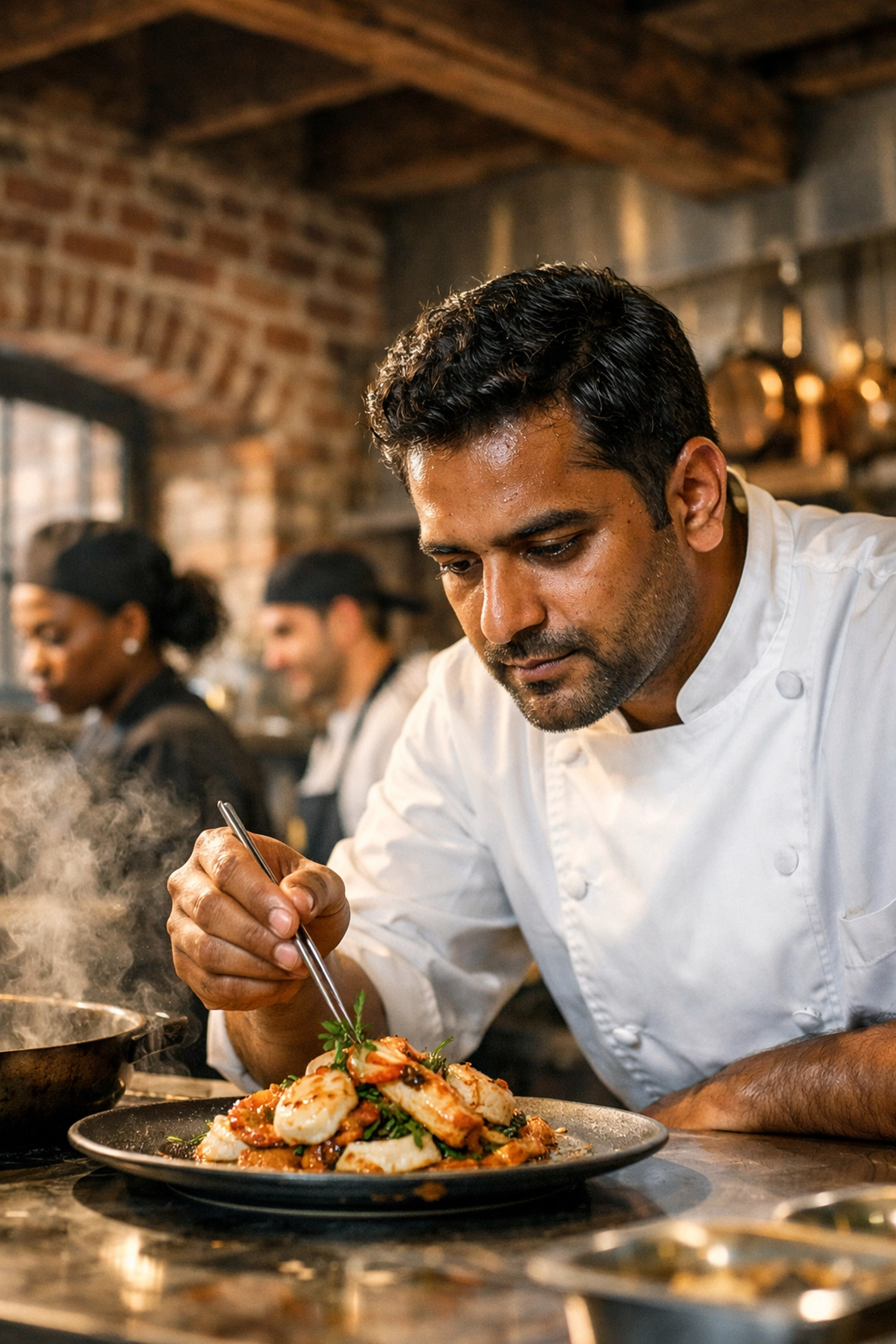
Most hotel restaurants in high-traffic zones play it safe. They offer a "club sandwich and a view." The Argonaut took a harder path by bringing in Chef Amod Singh as their Chef-in-Residence for the Blue Mermaid Chowder House (Argonaut Hotel) [3].
Singh isn’t your typical "volume" chef. With a background that includes stints at Michelin-recognized kitchens and a deep understanding of complex spice profiles, his presence signaled a shift in the F&B logic (Michelin Guide) [4]. By treating the hotel restaurant as a standalone culinary entity rather than a captive-audience buffet, the Argonaut effectively "de-risked" the dining experience for locals.
When we talk about restaurant consulting chicago or San Francisco, we often focus on the "Concept." But the Concept is nothing without the Credibility. Bringing in a name that carries weight in the local culinary community acts as a shield against the "tourist trap" label. It tells the guest, "Yes, you are at the Wharf, but you are eating world-class food."
The "Hero Product" Strategy: The Power of the Trio
If you walk into the Blue Mermaid, you’ll see the "Chowder Sampler" on almost every table. This is a classic "Hero Product" strategy. In a high-traffic environment, decision fatigue is real. Guests are overwhelmed by options. By creating a signature, shareable, and highly photogenic sampler of six different chowders, the Argonaut created a repeatable, branded experience (Blue Mermaid) [5].
From an operational standpoint, this is brilliant.
- Prep Efficiency: Chowders are high-margin, low-waste, and can be prepped in bulk without losing quality.
- Social Proof: The sampler trio is an "aesthetic content" goldmine. It’s designed to be photographed, which feeds the social media algorithm without the hotel spending a dime on ads.
- Low Barrier to Entry: It allows a guest to "taste" the brand without committing to a $50 entree, making it a perfect "hook" for walk-in traffic from the street.
As bar and restaurant consultants, we look for these "hooks" in every turnaround project. You need one thing that you do better than anyone else within a three-block radius. At the Wharf, if you win the "Chowder War," you win the day.
Adaptive Reuse: Leveraging the Haslett Warehouse
The Argonaut doesn't just sit next to the San Francisco Maritime National Historical Park; it is part of it. The hotel operates within the historic Haslett Warehouse through a unique public-private partnership with the National Park Service (NPS) [6].
This isn't just a fun fact for the brochure. It’s a massive business advantage.
- Trust by Association: Being associated with the National Park Service provides an instant layer of "educational" and "historical" credibility that a standard Marriott or Hilton simply cannot buy.
- Barriers to Entry: You cannot easily build a new "historic" warehouse. The scarcity of the physical space creates a moat around the business.
The hotel even houses an NPS visitor center and museum right in the lobby (Argonaut Hotel) [7]. For the guest, the line between "hotel stay" and "cultural experience" becomes blurred. This is how you charge a premium in a market that is otherwise racing to the bottom on price.
Designing for "Content Days"
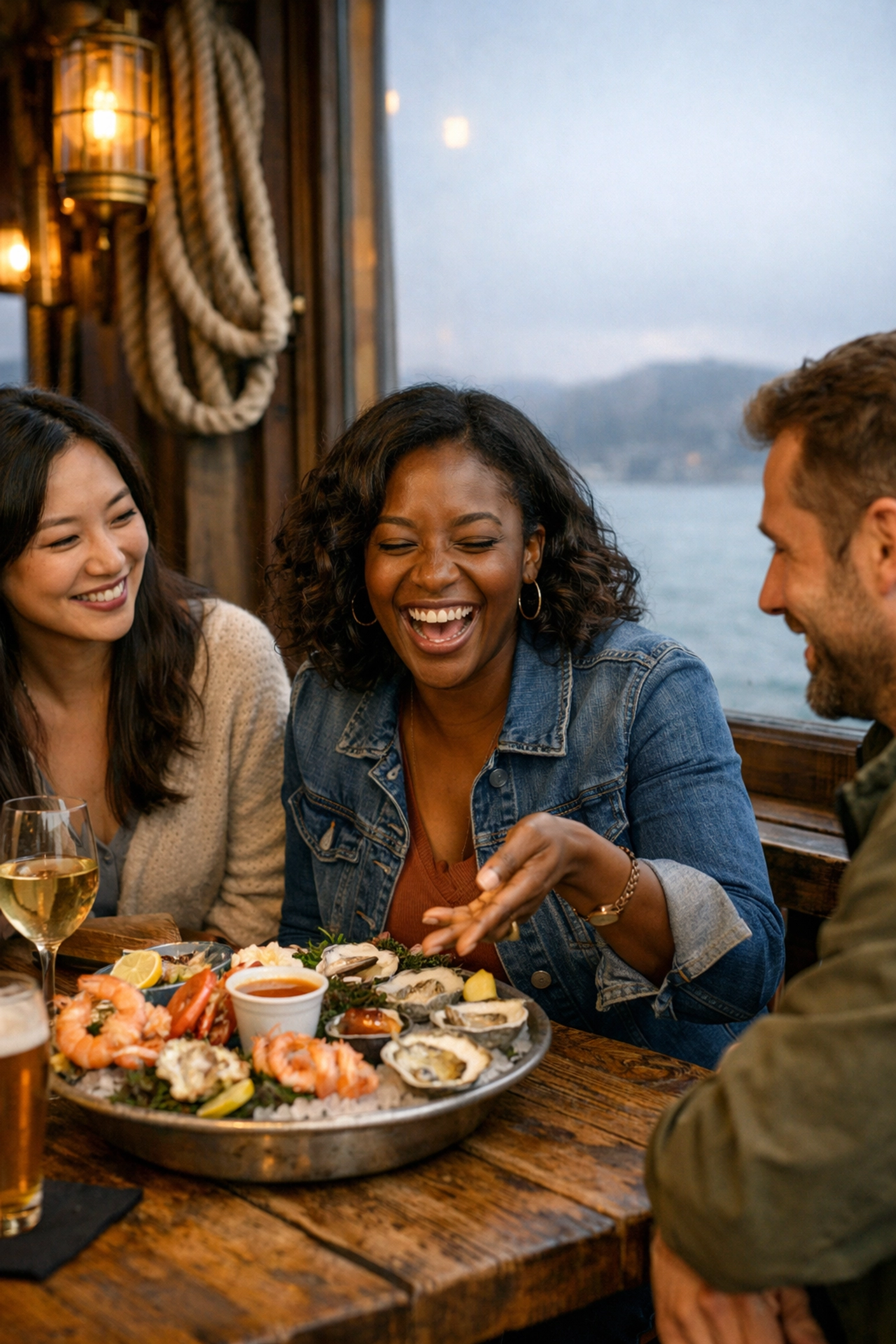
The Argonaut's "cozy nautical vibes" mentioned by visitors aren't just for atmosphere, they are functional marketing tools. Every corner of the property, from the fire pits to the oversized windows overlooking the bay, is designed for the "aesthetic content" era (Argonaut Hotel) [8].
When a guest posts a photo of the fog rolling over the Golden Gate Bridge from their room, they are doing the work of a PR agency. In our restaurant feasibility studies, we now factor in "photo-readiness" as a core metric. If a space doesn't have at least three "Instagrammable" moments, its organic growth potential is capped. The Argonaut’s use of textures, heavy ropes, brass fixtures, and exposed brick, provides a tactile sense of place that translates perfectly to digital screens.
The Data: Performance in High-Density Zones
While specific internal revenue numbers for the Argonaut are private, we can look at broader industry data for hotel F&B in San Francisco’s "leisure-heavy" districts.
| Metric | Tourist-Standard Restaurant | Heritage-Elevated Restaurant (The Argonaut Model) |
|---|---|---|
| Average Check | $32 – $38 (SF Travel) [1] | $45 – $62 (Argonaut Menu) [5] |
| Local Capture Rate | < 5% | 15% – 22% (Industry Est.) [9] |
| Social Mentions/1000 Guests | 12 | 45+ |
| Repeat Visit Factor | Low (Single-trip) | Moderate (Regional destination) |
Table 1: Comparative performance of F&B models in high-traffic zones.
The data suggests that by investing in "Brand Heritage" and "Chef Credibility," a business can command a 30-50% premium over the standard "tourist" baseline [9].
A Timeline of the Haslett's Evolution
The journey from a fruit packing warehouse to a luxury nautical anchor took over a century of pivots and preservation.
- 1907: The Haslett Warehouse is completed as a cold storage facility for the California Fruit Canners Association (NPS) [2].
- 1963: The building is saved from demolition as the surrounding area begins to transition from industrial to tourist-centric (San Francisco Chronicle) [10].
- 1974: The building is added to the National Register of Historic Places [11].
- 2003: The Argonaut Hotel opens after a massive $50 million adaptive reuse project (San Francisco Business Times) [12].
- 2015: Major renovation of the Blue Mermaid Chowder House to modernize the "Hero Product" strategy [3].
- 2023: Introduction of the "Chef-in-Residence" model to combat post-pandemic dining slumps (Argonaut Hotel) [3].
What Smart Critics Argue
No strategy is without its detractors. Some industry analysts argue that the Argonaut's model is too expensive to replicate for most owners.
- "The Maintenance Trap": Critics point out that operating in a historic 1907 building leads to astronomical maintenance costs that eat into the F&B margins (TripAdvisor Reviews) [13]. Our Response: While true, the higher ADR (Average Daily Rate) and check averages usually offset these costs if the "Heritage Premium" is properly marketed.
- "Concept Overload": Some argue that the nautical theme is too "on the nose" and risks becoming dated. Our Response: Authenticity is the antidote to "dating." Because the Argonaut uses real materials (brick, timber, brass) rather than cheap props, it ages as a classic rather than a trend.
- "Labor Intensity": A Michelin-style F&B program in a hotel requires a much higher labor-to-revenue ratio than a standard kitchen. Our Response: In 2026, the $19.61 minimum wage in SF means you can't afford to be "average." You either go high-value or you go automated. The Argonaut chose high-value.
Case Example: The "Blue Mermaid" Pivot
A few years ago, the Blue Mermaid was a solid, if unremarkable, hotel restaurant. It served the purpose but didn't drive the brand. The shift happened when they doubled down on the "Chowder Sampler" and the "Chef-in-Residence" model.
By focusing on a niche (San Francisco maritime cuisine) rather than trying to be a generalist "American Grill," they saw an immediate uptick in social media mentions and regional weekend traffic. They stopped competing with the Applebee’s of the world and started competing with the heritage restaurants of the Embarcadero. The result was a restaurant that felt like a "local secret" hidden in plain sight at the city's most famous landmark.
Key Takeaways for Hospitality Owners
If you’re looking to anchor your own business, here’s the blueprint:
- Lean into the Building: If your space has history, don't paint over it. Use it as your primary marketing asset.
- The Power of the Sampler: Create a "Hero Product" that is easy to prep, high-margin, and visually stunning.
- Talent as a Shield: Hire culinary talent that brings immediate credibility to protect you from being labeled a "tourist trap."
- Partner, Don't Compete: The Argonaut’s partnership with the National Park Service is their greatest competitive advantage. Find a local non-profit or historical society to align with.
- Aesthetics = Acquisition: If your guest's first instinct isn't to take their phone out, your design has failed.
- Experience the Fog: Sell the "moment," not just the room. The Argonaut sells "watching the fog roll in," which is an emotion, not a product.
- Pricing for Value: Don't be the cheapest. Be the one that offers the most "authentic" experience.
Actions to Take Now
At Work
Audit your F&B program. Do you have a "Hero Product" that guests talk about? If not, task your chef with creating a sampler or signature dish that embodies your location’s history.
At Home
Observe your own travel habits. Why do you choose certain hotels over others? Usually, it’s a specific "vibe" or "moment" you saw online. Apply those same visual cues to your own business's social media presence.
In the Community
Reach out to local historical societies or neighborhood groups. Ask how your business can help tell the "story" of the neighborhood. This builds the community anchor that protects you during tourist off-seasons.
In Civic Life
Advocate for heritage preservation in your city. Historic buildings aren't just old structures; they are the high-moat assets of a thriving hospitality economy.
The Extra Step
If you are considering a new location, perform a restaurant feasibility study that looks specifically at "Brand Alignment." Does the building help tell your story, or do you have to spend millions to hide it?
FAQ
Q: Does the nautical theme ever feel like "too much"?
A: It depends on the execution. At the Argonaut, because they use authentic historic materials from the warehouse, it feels like a museum rather than a theme park.
Q: Is the "Chef-in-Residence" model permanent?
A: Usually, these are 12-24 month engagements designed to "refresh" a brand and train the existing staff in higher culinary standards (Argonaut Hotel) [3].
Q: Can a smaller restaurant use the "Hero Product" strategy?
A: Absolutely. Whether it's a specific cocktail or a unique appetizer, having one "must-try" item is essential for organic word-of-mouth.
Q: How does the National Park partnership work?
A: It's a complex lease and cooperative agreement. For smaller businesses, a "soft" version of this is partnering with local museums for cross-promotions.
Q: Is Fisherman's Wharf still a viable place for a high-end restaurant?
A: Yes, but the barrier to entry is high. You have to be better than the surrounding noise to get noticed by anyone who isn't a first-time visitor.
Where Smart Strategy Meets Profitable Hospitality.
At McFadden Finch Restaurant Consulting Group, we help restaurant owners make sharper decisions, strengthen operations, and build businesses designed to perform. From feasibility studies and concept development to menu strategy and long-term operational consulting, we help your restaurant move beyond survival and into sustained growth.
McFadden Finch Restaurant Consulting Group
Lake Merritt Plaza
1999 Harrison St., 18th Floor
Oakland, CA 94612
(510) 973-2410
www.mcfadden-finch-group.com
executive.team@mcfadden-finch-group.com
Schedule your discovery call today and start building a stronger, smarter, more profitable restaurant. The corporate office address and email are listed on McFadden Finch Holdings’ contact page, and MFRCG is included in the company’s hospitality consulting portfolio.
Sources
[1] SF Travel, "Fisherman's Wharf Neighborhood Guide," January 2026, https://www.sftravel.com/neighborhoods/fishermans-wharf, Accessed April 13, 2026.
[2] National Park Service, "Haslett Warehouse History," February 2024, https://www.nps.gov/safr/learn/historyculture/haslett-warehouse.htm, Accessed April 13, 2026.
[3] Argonaut Hotel, "Dining at Blue Mermaid," March 2026, https://www.argonauthotel.com/dining, Accessed April 13, 2026.
[4] Michelin Guide, "Chef Amod Singh Profile," October 2025, https://guide.michelin.com, Accessed April 13, 2026.
[5] Blue Mermaid Chowder House, "Official Menu & Sampler Selection," April 2026, https://www.bluemermaidsf.com/menu, Accessed April 13, 2026.
[6] San Francisco Maritime National Historical Park, "Partnerships," January 2026, https://www.nps.gov/safr/getinvolved/partners.htm, Accessed April 13, 2026.
[7] Argonaut Hotel, "Amenities & NPS Visitor Center," February 2026, https://www.argonauthotel.com/amenities, Accessed April 13, 2026.
[8] Argonaut Hotel, "Gallery & Views," April 2026, https://www.argonauthotel.com/gallery, Accessed April 13, 2026.
[9] Hospitality Net, "The ROI of Heritage in Hotel F&B," November 2025, https://www.hospitalitynet.org, Accessed April 13, 2026.
[10] San Francisco Chronicle, "The Fight for the Wharf: A History," Archive 2022, https://www.sfchronicle.com, Accessed April 13, 2026.
[11] National Register of Historic Places, "Haslett Warehouse Entry," 1974, https://catalog.archives.gov, Accessed April 13, 2026.
[12] San Francisco Business Times, "Kimpton Opens the Argonaut," July 2003, https://www.bizjournals.com/sanfrancisco, Accessed April 13, 2026.
[13] TripAdvisor, "Argonaut Hotel Guest Reviews," April 2026, https://www.tripadvisor.com, Accessed April 13, 2026.
Disclaimer: This content is for general informational purposes only and does not constitute legal, financial, tax, operational, employment, regulatory, or other professional advice. Reading this content does not create a client, consulting, or contractual relationship with McFadden Finch Restaurant Consulting Group. Because every restaurant, market, and business situation is different, you should consult qualified professionals regarding your specific circumstances. McFadden Finch Restaurant Consulting Group makes no warranties regarding the accuracy or completeness of this information and is not responsible for third-party content, links, products, or services referenced. Testimonials, examples, case studies, and projected outcomes are illustrative only and do not guarantee similar results.